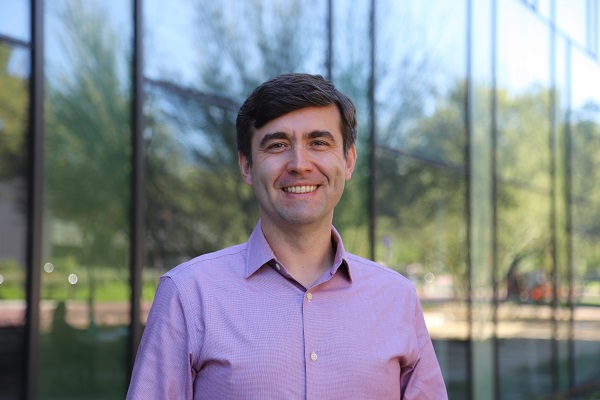
Dr. Konstantin (Kostia) M. Zuev serves as Teaching Professor in the Computing + Mathematical Sciences Department at California Institute of Technology , where he has made significant contributions to network science and computational statistics since 2016. His dual PhDs in Mathematics (Moscow State University, 2008) and Civil Engineering (HKUST, 2009) underpin his interdisciplinary research spanning differential geometry, stochastic simulation, and network dynamics. Education PhD in Mathematics, Lomonosov Moscow State University (2008) PhD in Civil Engineering, Hong Kong University of Science & Technology (2009) His research focuses on network science , particularly course-prerequisite networks and complex financial systems , with recent work extending to network navigability in cosmological models and rare event simulation. Over his career, he has developed innovative Bayesian inference methods and geometric preferential attachment theories while maintaining active collaborations across mathematics, physics, and biomedical domains. Recent publications highlight network analysis in education ( 2023 ), hyperbolic graph theory ( 2024 ), and pandemic-informed cancer mortality studies ( 2023 ). His 15 most recent articles demonstrate methodological innovations across disciplines including statistics, physics, finance, and cosmology. Scientific recognition includes Humboldt Research Fellowship (2021) Carver Mead Seed Fund Grant (2023) ASCIT Teaching Award (2018, 2023) Northrop Grumman Teaching Excellence Prize (2019) As Graduate Option Representative for Information and Data Sciences at Caltech and faculty advisor for multiple student organizations including the Caltech Karate Club and Caltech Chess Club , he actively bridges academic rigor with community engagement through outreach initiatives like the virtual math education channel and university math circles for K-12 students.
Andy McLennan is a Professor in the School of Economics at the University of Queensland since 2007, following roles at the University of Minnesota (1987–2005) and the University of Sydney. His research focuses on mathematical economics and game theory, with contributions to computational game theory, fixed point theory, and algebraic geometry. Notable collaborations include work with Richard McKelvey on the Gambit software package for game analysis. Education: B.A. in Mathematics from the University of Chicago (undergraduate), PhD in Economics from Princeton University (1982). Prior faculty positions included the University of Toronto and Cornell University. Research Interests: Explores intersections between pure mathematics and economics, including applications of topology (Vietoris-Begle theorem), differential geometry (Morse-Sard theorem), and computational complexity in markets. Recent work includes the 'Index +1 Principle' for equilibrium stability and fixed point index theory. Software & Tools: Co-developed Gambit , a widely used open-source toolkit for analyzing finite games. Authored technical software for solving systems of equations and 3D visualization tools for academic use. Books: Authored Advanced Fixed Point Theory for Economics (Springer, 2018), The Algebra of Coherent Algebraic Sheaves , and The Nature and Origins of Modern Mathematics . Personal: Lives in Brisbane with his partner Shino Takayama (also an economist) and their son Sean. Enjoys Japanese language, classical music, and strategic games like Go and chess.
Martin Müller is a Professor in the Department of Computing Science at the University of Alberta, where he conducts research in artificial intelligence, game theory, and heuristic search. He holds the Canada CIFAR AI Chair at Amii and is an Amii Fellow, underscoring his leadership in AI. His research group focuses on Monte Carlo tree search, reinforcement learning, combinatorial game theory, and automated planning, with applications in games such as Go, Hex, and NoGo. His research interests span Monte Carlo and exact methods in game-tree search , exploration in heuristic search and machine learning , and algorithms in combinatorial game theory . He has developed open-source software like MCGS (Minimax-based Combinatorial Game Solver) and contributes to game-playing systems such as Fuego for Go. His work bridges theoretical foundations with practical implementations in AI-driven game solvers. Recent publications show a strong trend in reinforcement learning , particularly in deep Q-learning, policy gradient methods, and anomaly detection in deep RL. His team also explores combinatorial game solving , sparse reward environments , and imperfect information games . The research integrates machine learning with classical AI techniques, emphasizing empirical validation and algorithmic innovation. Canada CIFAR AI Chair Amii Fellow Best student paper award at IEEE Conference on Games 2024 Best paper award at IEEE COG 2021 Outstanding paper award at AAAI-18 Faculty of Science Dissertation Award (2016) Dissertation Award from the Canadian Artificial Intelligence Association (2013) Müller has supervised numerous PhD and MSc students, including Hongming Zhang, Henry Du, and Timo Bertram, many of whose theses focus on game AI, reinforcement learning, and combinatorial optimization. He is funded by NSERC, Mitacs, and Compute Canada. His group collaborates on projects involving neural networks for game playing, SAT solving, and planning algorithms. He is currently on sabbatical but remains academically active, teaching a graduate course on combinatorial games in 2025 and hosting visiting researchers. His lab is involved in the development of MCGS, a solver for sum games, and contributes to open-source AI software. The team publishes regularly in top venues such as NeurIPS, ICML, AAAI, and IEEE Transactions on Games. Future work includes advancing combinatorial game solvers, improving deep RL robustness, and exploring generalization in game representations.
Prof. Dr. Julia Metag is Professor for Communication Science at the Department of Communication, University of Münster, where she heads the chair on 'Forms and Processes of Public Communication.' Her research focuses on political communication, science communication, media effects, and online communication. She is actively involved in major research initiatives such as the 'Hot SciComm Lab' (funded by the Volkswagen Foundation) and 'Global Warming’s Five Germanys,' and has led significant projects including the 'Science Barometer Switzerland.' Julia Metag's research interests include science communication, political communication, media use, public trust in science, science-related populism, climate change communication, and digital media. She investigates how audiences engage with scientific information, the role of visuals and AI in science communication, and the impact of misinformation and conspiracy theories. Her work often employs survey, experimental, and content analysis methods to understand public perceptions and media effects. Her recent publications reflect a strong focus on trust in science, audience segmentation, science literacy in digital environments, and the multimodal nature of science communication. She frequently collaborates with scholars across Europe, particularly with Mike S. Schäfer and other colleagues in Switzerland and Germany. Scientific Awards and Memberships: Member of the Academia Europaea (The Academy of Europe) Member of the German Society for Journalism and Communication Studies (DGPuK) Member of the International Communication Association (ICA) Member of the European Communication Research and Education Association (ECREA) Member of the Center for Higher Education and Science Studies (CHESS), University of Zurich Editorial Board Member of Studies in Communication Sciences , Media and Communication , and Environmental Communication Advisory Board Member of the German 'Wissenschaftsbarometer' Julia Metag supervises student theses and leads collaborative research projects, often involving interdisciplinary teams. She has previously held academic positions at the University of Zurich and the University of Fribourg, and her work is widely published in top journals such as Public Understanding of Science , Science Communication , and Communication Research . She is also involved in public engagement through projects like 'Frag Sophie!' and 'Nachgefragt bei Sophie & Co,' which use creative formats to bridge science and society. She leads the 'Hot SciComm Lab,' which investigates science communication in highly contested, multimodal environments shaped by social media, AI, and deepfakes. Her leadership in research networks such as 'Cultures of Compromise' further demonstrates her interdisciplinary reach and academic influence.
Rainer Sinn is a University Professor (on leave) at Leipzig University, specializing in Applied Algebra within mathematics. His research centers on real algebraic geometry, convex optimization, and sums of squares, with significant contributions to spectrahedra, amplituhedra, and nonnegativity certificates. His primary research interests include real algebraic geometry (focusing on nonnegative polynomials and quadratic forms), convex algebraic geometry (studying convex hulls of algebraic varieties), and combinatorial applications in optimization. He explores geometric structures like amplituhedra in theoretical physics and investigates algebraic solutions to optimization problems. Recent publications (2022-2025) demonstrate a cohesive focus on algebraic approaches to optimization, with recurring themes in nonnegativity certificates, tropical geometry, and combinatorial aspects of algebraic varieties. His German-language works also address the philosophy and public understanding of mathematics, highlighting interdisciplinary impact. No scientific awards were documented in the provided sources. Details regarding academic advising, research grants, laboratories, or collaborative teams were not specified in the available information.
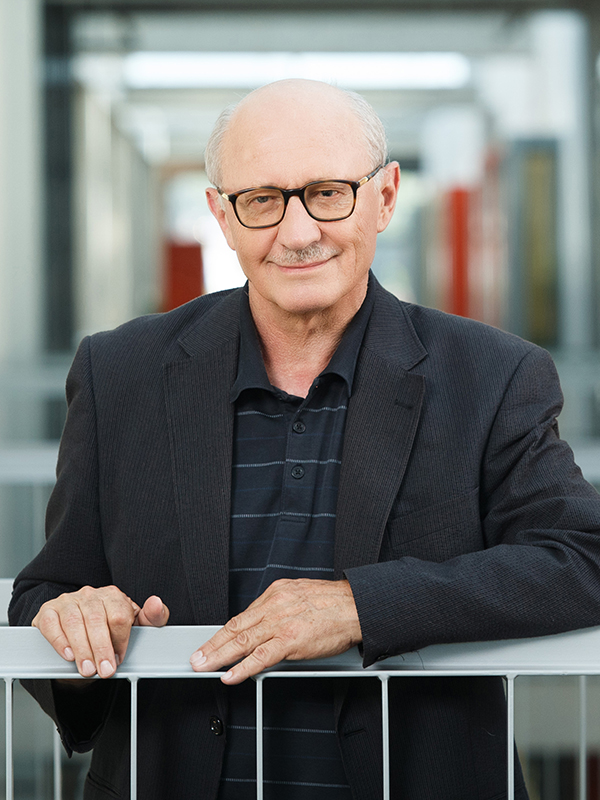
Zoran Gajic is a Professor of Electrical and Computer Engineering at Rutgers University, where he has taught since 1984. He holds academic leadership roles including Graduate Program Director for the Electrical and Computer Engineering Department and President of the Rutgers AAUP-AFT Faculty Union. His expertise spans controls systems, energy systems (including solar, wind, and smart grids), wireless communications, and networking. Education: B.S. and M.S. in Electrical Engineering from University of Belgrade, followed by M.S. in Applied Mathematics and Ph.D. in Systems Science Engineering from Michigan State University (1984). Research focuses on control theory applications for energy systems and communication networks. He has authored/coauthored nearly 100 journal papers and eight books, including best-selling titles like Linear Dynamic Systems and Signals (translated into Chinese) and Lyapunov Matrix Equation in Systems Stability and Control (republished by Dover). His work includes innovations in multirate control systems, singular perturbation methods, and reinforcement learning applications. Professional recognitions include editorial roles across nine journals, five guest-edited special issues, and plenary lectures at international conferences. Ten of his 17 Ph.D. advisees hold faculty positions globally. Beyond academia, he is a chess master with Life Master ranking from the U.S. Chess Federation and World Chess Federation certification. Key contributions include foundational work on optimal control for renewable energy systems, sliding mode control algorithms, and system decomposition techniques. His research has been supported by NSF and industry partners like AT&T Bell Labs. He leads the Rutgers Center for Systems and Controls (SYCON) as Associate Director and actively contributes to standards through IEEE and IEC initiatives, particularly in power system protection and control system reliability.
Stanislav Anatolyev serves as Full Professor of Economics at the New Economic School (NES) since 2009 and holds an Associate Professor position at CERGE-EI in Prague. Affiliated with NES since 2000, he teaches advanced econometrics courses including Econometrics 3, Applied Time Series Econometrics, and Selected Chapters in Econometrics. Education PhD in Economics, University of Wisconsin-Madison (2000) MSc in Economics, New Economic School (1995) Specialist Diploma in Applied Mathematics, Moscow Institute of Physics and Technology (1992) Research Focus : Professor Anatolyev's work centers on econometric theory with expertise in method of moments, time series modeling, and high-dimensional data analysis. His contributions span theoretical developments in factor models, volatility estimation, and instrumental variables methods, alongside practical applications in financial econometrics and portfolio optimization. He maintains active research collaborations across international institutions. Publication Trends : Recent work demonstrates increasing emphasis on ultra-high-dimensional econometrics, with significant contributions to copula-based portfolio allocation, many-instrument regressions, and financial market belief updating mechanisms. His publications bridge theoretical rigor with empirical applications, frequently appearing in top econometrics journals including Journal of Econometrics and Econometric Theory. Awards Econometric Theory Multa Scripsit Award (2022) for exceptional scholarly output Academic Leadership : As founding Editor-in-Chief of the Russian-language journal Quantile since 2006, he has fostered econometric research dissemination in Eastern Europe. His co-authored textbook Methods for Estimation and Inference in Modern Econometrics serves as a key reference in graduate econometrics education. Professional Activities : Regularly presents at international conferences and serves as referee for leading econometrics journals, maintaining active engagement with the global econometrics community through seminar presentations and collaborative research projects.
Djamel E. Khelladi is a CNRS researcher affiliated with the IRISA research lab and the DIVERSE team at University of Rennes 1 , France. Previously, he held postdoctoral and PhD positions at Johannes Kepler University (JKU) Linz, Austria, and Université Pierre et Marie Curie (UPMC), France. Research interests include: Model-Driven Engineering Software Evolution & Co-evolution AI and Generative AI Applications Polyglot Programming Digital Twins Recent article trends focus on integrating Large Language Models (LLMs) for code-metamodel co-evolution, polyglot programming challenges, incremental build optimization in configurable systems, and empirical studies on software evolution. His work often bridges theoretical modeling with practical implementation in industrial contexts. Academic service roles include: Proceedings Co-Chair @MODELS 2025 Co-Organizer of Models and Evolution (ME) workshops (2023-2025) Co-Editor for special issue on Model Driven Engineering for Digital Twins (SoSym 2024/25) PC member in top venues: ICSE , ASE , MODELS , ECMFA , MSR , FSE
Petra Lindfors is a Professor of Psychology, specializing in work and organizational psychology, at the Department of Psychology, Stockholm University. She has held this position since December 2013 and is actively involved in multiple research projects focusing on stress, health, and well-being across various contexts including workplaces, educational settings, and home environments. Her academic journey began with her thesis defense in 2002, which focused on stress, health, and well-being among teleworking women and men as part of the Boundless Work project. She was accepted as an associate professor in psychology at the Faculty of Social Sciences, Stockholm University, in September 2006, and was hired as a lecturer at the Department of Psychology in July 2007. Throughout her career, she has maintained active research collaborations at both the Department of Psychology and the Centre for Health Equity Studies (CHESS) at Stockholm University/Karolinska Institutet. Lindfors' research interests span multiple dimensions of work and organizational psychology. Her primary focus is on self-reported and objective aspects of stress, health, and well-being among adults and young people across various contexts. She has developed significant expertise in workplace interventions related to harmful substance use, work-life balance, gender differences in work environments, and mental health promotion. Her work often examines how organizational structures and policies affect individual health outcomes, with particular attention to vulnerable populations and gender differences. Analysis of her recent publications reveals strong thematic consistency centered on occupational health psychology. Her research employs both variable-oriented and person-oriented approaches to examine job insecurity, work-home interference, stress responses, and health outcomes. A notable trend is her increasing focus on methodological innovation, particularly in studying workplace interventions and mental health among young adults. Her work bridges theoretical organizational psychology with practical workplace applications, often resulting in concrete recommendations for employers and policymakers. Two-year post-doc scholarship from the Anna Ahlström and Ellen Terserus Foundation (2005) Associate editor for the Nordic Journal of Working Life Studies (since 2021) Member of the Quality Council for the Swedish Work Environment Authority (2019-2022) As an academic supervisor, Lindfors has mentored an impressive number of doctoral students, with completions spanning from 2008 to the projected 2025 graduation of Anna S Tanimoto. She has served as main supervisor for numerous successful academics who have gone on to professorial positions, including Ulrica von Thiele Schwarz at Mälardalen University College. Her supervisory approach appears comprehensive, extending beyond thesis completion to postdoctoral mentorship and career development. Regarding research funding, she has secured significant grants from AFA Försäkring for projects examining organizational interventions for health-promoting work, and has been involved with Stockholm Stress Center, a FORTE-financed interdisciplinary research center. Her work demonstrates sustained success in attracting competitive research funding across multiple domains of occupational health. Lindfors leads the research group 'Harmful use in the workplace – prevention and intervention,' which addresses critical issues related to alcohol, drug, and gambling problems in professional settings. She has also been instrumental in shaping the Department of Psychology's strategic direction, serving as chairman of the board of the Stockholm University Department of Psychology (SUPK) from 2016-2024 and currently as a regular member of the Department's board for 2024-2026. Her collaborative approach is evident in her involvement with multiple interdisciplinary projects, including those examining natural environments, cognitive abilities in military contexts, and school environments' impact on youth mental health.
Martin Mozina serves as an Assistant Professor and Researcher at the Faculty of Computer and Information Science, University of Ljubljana, where he has been affiliated with the Artificial Intelligence Laboratory since 2004. His primary institutional role focuses on advancing machine learning methodologies integrated with domain knowledge. His research centers on developing machine learning algorithms that incorporate prior knowledge alongside training data, with significant contributions to model visualization through nomograms and automated chess position analysis. Key innovations include argument-based machine learning frameworks and techniques for resolving knowledge acquisition bottlenecks in intelligent systems. Analysis of his 2004-2009 publications reveals consistent emphasis on interpretable AI, combining symbolic reasoning with statistical learning. His work bridges theoretical machine learning with practical applications in medical diagnostics, game AI, and decision support systems, particularly through nomogram-based classifier visualization and chess tutoring systems. He actively participates in major research initiatives including: DRIFT (L2-4436): Real-time optimization of low-voltage networks using deep incentivized learning (2022-2025) Umetna inteligenca in inteligentni sistemi: Agency-funded AI research program (2015-2020) Strojno učenje v gradnji inteligentnih sistemov: Machine learning for intelligent tutoring systems (2011-2014, 2013-2014) Molecular markers for lung cancer research (2011-2014, 2016-2018) X-MEDIA: Large-scale knowledge sharing across media (EU project, 2006-2009) Mozina's work within the Artificial Intelligence Laboratory demonstrates sustained focus on making machine learning more transparent and applicable to complex real-world problems through hybrid symbolic-statistical approaches.
Laurent Linnemer is a Professor of Economics at CREST (Centre de Recherche en Économie et Statistique) within the Institut Polytechnique de Paris. His research focuses on Industrial Organization, Microeconomics, and Scientometrics, with notable contributions on signaling in markets, vertical integration, and competition policy. He has co-authored studies on topics such as double marginalization, nonlinear pricing, and asymmetric information in real estate markets. His work also includes methodological advancements in scientometrics, particularly in ranking research output via RePEc. Linnemer has held editorial roles at Annals of Economics and Statistics and contributed biographical studies of prominent economists like Jean-Michel Grandmont and Jean-Jacques Laffont. His research spans experimental economics, merger analysis, and policy evaluation, with a strong empirical focus. Education details are not explicitly stated, though his academic positions imply doctoral training in economics. His research interests are structured around core themes: market structures, information asymmetries, and institutional impacts. Recent publications emphasize the interplay between market design and economic theory, with applications to real-world scenarios like parking prices and tournament dynamics. He has received ADRES Best Young Paper Awards in 2022, 2023, and 2024 for impactful contributions. Collaborations include co-authors like Philippe Choné and Michael Visser, and he has led teams analyzing experimental auctions, viager markets, and chess player behavior. Linnemer’s work bridges theoretical frameworks with empirical rigor, contributing to both academic discourse and policy recommendations.
Dr. Preethi Srivathsa is an Assistant Professor - Senior Scale in the School of Computer Engineering at Manipal Academy of Higher Education (MAHE), Bengaluru. She holds a B.Tech, M.Tech, and Ph.D. (awarded by Presidency University in 2022). Her academic career includes positions at Presidency University (2019-2023) and East Point College of Engineering (2008-2019). Her research focuses on: Computer architecture and low-power hardware design IoT applications and cyber-physical systems Cryptography and blockchain security Machine learning implementations in hardware FPGA-based accelerators and optimization techniques Her publication portfolio shows strong emphasis on hardware-efficient algorithms, cryptographic systems (especially elliptic curve applications in blockchain), and emerging IoT architectures. Recent work integrates machine learning with hardware acceleration for smart home systems and agricultural technology. Awards and recognitions: Best Paper Award at IEEE iSES-2021 for low-power sorter design Infosys Bronze Partner Faculty (2013) She has developed intellectual property including IoT-based monitoring systems and blockchain educational frameworks. Technical skills include Verilog, FPGA design, IoT platforms (Arduino/Raspberry Pi), and multiple programming languages.
Ivan Bratko is a Professor of Computer Science at the University of Ljubljana's Faculty of Computer and Information Science. He founded the Artificial Intelligence Laboratory in 1985 and served as its head until 2017, remaining an active member. Until 2002, he also directed the AI group at the Jožef Stefan Institute. His academic journey includes B.Sc., M.Sc., and Ph.D. degrees in electrical engineering and computer science, all from the University of Ljubljana. Bratko's research spans machine learning, knowledge-based systems, qualitative modeling, intelligent robotics, heuristic programming, and computer chess. His work focuses on learning from noisy data, combining learning with qualitative reasoning, constructive induction, Inductive Logic Programming, and applications in medicine and dynamic system control. He has authored over 200 scientific papers and influential books including Prolog Programming for Artificial Intelligence (third edition, 2001), KARDIO: A Study in Deep and Qualitative Knowledge for Expert Systems (MIT Press, 1989), and Machine Learning and Data Mining: Methods and Applications (Wiley, 1998). His publication portfolio demonstrates consistent contributions to AI, with recent work emphasizing argument-based machine learning, qualitative modeling applications, and medical AI systems. These publications reveal strong interdisciplinary connections between theoretical AI and practical applications in environmental science, healthcare, and robotics. Fellow of the European Coordinating Committee for Artificial Intelligence (ECCAI) Member of the Slovene Academy of Arts and Sciences (SAZU) Former editorial board member of Artificial Intelligence , Machine Learning , Journal of AI Research , and other leading journals Co-founder and first chairman of the Slovenian AI Society (SLAIS) Bratko has secured numerous research projects including ARRS programs on artificial intelligence (2009-2020), the PARKINSCHECK project for Parkinson's disease detection, and European projects like X-MEDIA and XPERO. His laboratory serves as the central hub for AI research at the University of Ljubljana, fostering collaborations across medical, environmental, and industrial domains. He has mentored numerous researchers and maintained active collaborations through visiting positions at institutions including Edinburgh University, University of New South Wales, and Delft University of Technology.
Matej Guid serves as an Assistant Professor at the University of Ljubljana's Faculty of Computer and Information Science and conducts research at the Laboratory of Algorithmics. His teaching portfolio includes Topics in Computer and Information Science and specialized Chess instruction. His research spans heuristic search, intelligent tutoring systems, computer game-playing (particularly chess), and argument-based machine learning. He has secured significant funding from the Slovenian Research Agency for projects like 'Artificial intelligence and intelligent systems' (2015-2020) and 'Machine learning for building intelligent tutoring systems' (2011-2014), demonstrating sustained contributions to AI applications in education and gaming. Analysis of his 2012-2016 publications reveals three dominant research trajectories: computational modeling of chess problem difficulty, development of AI-driven educational tools (especially automated chess tutors), and medical knowledge elicitation using argument-based machine learning. His work consistently bridges theoretical AI with practical implementations in game analysis and educational technology. Guid actively participates in research grant initiatives through the Slovenian Research Agency, with current involvement in the 'Artificial intelligence and intelligent systems' program. His laboratory work centers on algorithm development within the Laboratory of Algorithmics, where he collaborates on knowledge refinement systems and adaptive learning tools.
Hasan Ali TEKİN serves as a Lecturer at Trakya University's Kırkpınar Faculty of Sports Sciences, a position he has continuously held since March 25, 1985. His three-decade academic career focuses on empirical sports science research and diverse pedagogical delivery across athletic disciplines. His educational foundation includes a Master's Degree from Marmara University Health Sciences Institute (1990), where his thesis addressed Facility Policy for the Promotion of Mass Sports (Edirne Application) , establishing his early focus on sports infrastructure policy. Dr. TEKİN's research traverses multiple interconnected domains: physiological responses to exercise timing, socialization effects of physical education, performance determinants in adapted sports, and institutional comparisons of sports facilities. His work consistently employs empirical methodologies with student and athlete populations, revealing practical insights for sports pedagogy and health promotion. Notable patterns include longitudinal tracking of student development (2009 socialization study), circadian physiology investigations (2005 blood parameter research), and comparative analyses of sports ecosystems (2005 school facility study). His publication record demonstrates steady scholarly contribution through national and international conference proceedings (2005-2017), though primarily within Turkish academic venues. The research trajectory shows consistent emphasis on measurable outcomes in sports education settings, with increasing complexity from basic facility comparisons (2005) to interdisciplinary entrepreneurship-physical activity linkages (2017). Teaching responsibilities reflect remarkable breadth across 12 distinct subjects including Volleyball (theory and practice), Alpine Skiing, Chess, Theatre Techniques, Health First Aid, and Cultural Heritage studies. This diverse instructional portfolio underscores his commitment to holistic sports education beyond conventional athletic training.