Professor Andrew Johnson at the University of Bath is a leading researcher in materials chemistry for energy applications , specializing in precursor design for advanced thin film growth techniques including Chemical Vapour Deposition (CVD) and Atomic Layer Deposition (ALD) . His work spans sustainable technologies, graphene science, and nanoparticle synthesis, with a focus on enabling next-generation electronics and climate solutions. Department of Chemistry, University of Bath Centre for Sustainable Chemical Technologies (CSCT) Institute of Sustainability and Climate Change Collaborations with University of Leeds, University of California Davis, and industry partners like Pragmatic Printing Research Interests: Development of volatile, non-toxic molecular precursors for metals/oxides ALD/CVD of metastable materials (e.g., SnO, α-Fe2O3) Carborane chemistry for early transition metals and lanthanides Surface engineering for automotive lubricant alternatives Photoanodes for solar water splitting Flexible electronics with sustainable materials Collaborations & Grants: Funded by EPSRC and Innovate UK , with projects on low-power flexible electronics and complementary semiconductor systems. Collaborates with physics, chemical engineering, and industry partners for mechanical property testing and device fabrication.
Massimiliano Delferro is a chemist and group leader of the Catalysis Science Program at Argonne National Laboratory, with a concurrent appointment as a Senior Scientist at the Pritzker School of Molecular Engineering (PME), University of Chicago. He leads the Argonne initiative on 'Science for a Circular Economy,' focusing on chemical recycling of plastics and sustainable catalyst development. Ph.D. in Organometallic Chemistry (University of Parma, 2008) Research Associate Professor (Northwestern University, 2010-2016) His research spans catalysis, chemical recycling of plastics, hydrogen production using earth-abundant catalysts, and valorization of shale gas. He is widely recognized for his work on polymer upcycling, organometallic surface chemistry, and metal-organic framework (MOF) catalysis. Recent publications highlight his leadership in converting plastic waste into high-value products (e.g., lubricants, functional polymers), supported by advanced spectroscopic and computational methods. Trends include C–C bond cleavage, MOF-supported catalysts, and redox-tunable systems. AAAS Fellow (2023) RSC ChemComm Pioneering Investigator (2023) R&D100 Award Finalist (2022) Argonne TCP Rising Star (2022) Delferro has published over 150 peer-reviewed articles, holds 30+ patents, and serves on the editorial board of ACS Applied Materials and Interfaces . He has been actively involved in professional societies, including the American Chemical Society and the Catalysis Society, where he served as President and Program Chair.
Professor Anna C. Peacock is Professor of Photonics at the University of Southampton, where she heads the Nonlinear Semiconductor Photonics group within the Optoelectronics Research Centre (ORC). She serves as Deputy Lead for OPTO6015 Optical Fibres and Waveguides course and Editor-in-Chief for Optics Communications journal. Professor Peacock earned her BSc and MSc in Physics from The University of Auckland (New Zealand), followed by a PhD in Nonlinear Fibre Optics at the ORC. Her academic journey includes a Royal Academy of Engineering Research Fellowship recognizing her pioneering work on fiberized semiconductor photonic devices. Her research focuses on developing innovative semiconductor waveguides that bridge conventional on-chip technologies with emerging platforms incorporating semiconductor materials directly into optical fiber cores. This work addresses the critical challenge of integrating semiconductor technologies with global silica fiber infrastructures. Key research areas include nonlinear optics, fiber optics, silicon photonics, and novel photonic materials for applications in telecommunications, sensing, and optical signal processing. Professor Peacock's recent publications reveal strong trends in silicon core fibers, semiconductor photonic devices, and nonlinear optical applications spanning from fundamental material properties to practical implementations. Her work demonstrates particular expertise in silicon, silicon-germanium, and hybrid material systems across both telecom and mid-infrared wavelengths. Royal Academy of Engineering Research Fellowship Fellow of the Royal Academy of Engineering (FREng) Fellow of the IEEE Photonics Society (FIEEE) Fellow of Optica (FOSA) Fellow of the Institute of Physics (FInstP) Fellow of the Higher Education Academy (FHEA) Professor Peacock currently supervises multiple PhD students including Kun Zhang, Tuoyang Chen, Ying Mu, and Alexander Meek. Her research has secured substantial funding from EPSRC, the Royal Society, and the United States Air Force, supporting numerous projects including 'Silicon core fibres,' 'Photonic Ultra-high-Q REsonators,' and 'Horizon Europe: PIXEurope.' As head of the Nonlinear Semiconductor Photonics group, Professor Peacock leads a dynamic research team working at the forefront of integrated photonics and fiber technology. Her group maintains extensive collaborations with international partners and industry to develop next-generation photonic devices with applications spanning telecommunications infrastructure, environmental sensing, and advanced optical signal processing systems.
Beate Paulus is a Professor for Theoretical Chemistry at the Freie Universität Berlin , affiliated with the Chemistry and Biochemistry college and the Chemistry department. Her research focuses on advanced quantum chemical methodologies and applications to 2D materials, spintronics, and catalysis. Current affiliation: Freie Universität Berlin Key research areas: Quantum Chemistry, Density Functional Theory, 2D Materials, Spintronics, Electrocatalysis Her work spans computational modeling of electronic structures, magnetic properties, and chemical reactions using Density Functional Theory (DFT) with specialized corrections. She investigates systems like MoS2 , graphene heterostructures , and transition metal complexes , aiming to understand and optimize properties for energy applications, biosensors, and nanoelectronics. Recent publications highlight her contributions to quantum mechanical fluorine tunnelling , spin-selective transport in doped nanoribbons , and surface functionalization strategies for 2D materials. Her group also explores mechanically interlocked molecules and redox-responsive polymers with potential biomedical applications. Beate Paulus leads the Paulus Group , which actively publishes in high-impact journals and collaborates on interdisciplinary projects involving experimental and theoretical approaches.
Jay P. Gore is the Vincent P. Reilly Professor in Combustion Engineering at Purdue University's School of Mechanical Engineering, with courtesy appointments in Aeronautics & Astronautics and Chemical Engineering. He holds positions at the West Lafayette campus and leads the Gore Research Group, focusing on combustion, radiation heat transfer, and sustainable energy systems. Education: B.E. from University of Poona (1978), M.S. and Ph.D. from Penn State (1982, 1986), and a Postdoctoral Certificate from University of Michigan (1987). His research spans combustion fundamentals, CO2 recycling via char gasification, laser diagnostics, and propulsion systems. He pioneered the Summer Undergraduate Research Fellowship (SURF) program at Purdue. Research interests include turbulent reacting flows, biomedical heat transfer, and global energy policy. Key subfields are combustion diagnostics, flame structure analysis, and hydrogen storage. His work integrates experimental and computational methods, with applications in aerospace, energy, and environmental sectors. Awards: Purdue Innovator Hall of Fame (2014) Fellowships: AIAA (2009), ASME (2006) Reilly Chair Professor (2000) Presidential Young Investigator Award (1991) Grants & Collaborations: Supported by DoE, NASA, and industry partnerships. Leads interdisciplinary projects on CO2 utilization and renewable energy systems. Labs/Teams: Gore Research Group specializes in combustion diagnostics, laser-based measurements, and sustainable energy solutions. Collaborations include international conferences and policy initiatives.
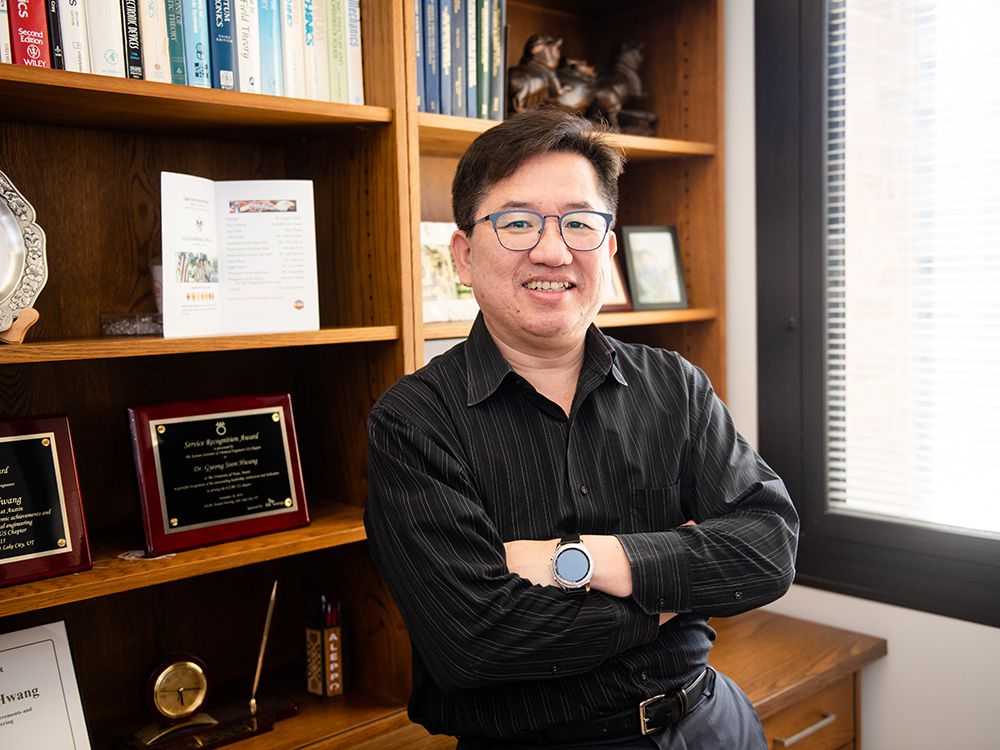
Gyeong Hwang is a Matthew Van Winkle Regents Professor of Chemical Engineering at The University of Texas at Austin. He leads the Hwang Research Group focused on computational materials discovery and design for energy and electronic applications. His work emphasizes multiscale modeling of nanostructured materials, with applications in energy storage/conversion, carbon capture, and semiconductor processing. Educational Qualifications: Ph.D., Chemical Engineering, California Institute of Technology (1999) M.S., Applied Physics, California Institute of Technology (1998) M.S., Chemical Engineering, Seoul National University (1993) B.S., Chemical Engineering, Seoul National University (1991) Research Interests: Hwang's research integrates first-principles modeling with experimental validation to address challenges in: - Surface chemistry and interfacial reactions - Nanostructured materials synthesis - Electrochemical device fabrication - CO₂ capture mechanisms His group develops computational tools for predicting material behaviors at atomic and continuum scales. Recent Publications Trends: Publications (2023-2025) focus on: - Solid-state battery interfaces - Plasma-enhanced material deposition - Ionic liquid interactions - Thermal/spatial transport phenomena - Electrochemical reaction mechanisms Awards: NSF CAREER Award (2005) Electrochemical Society's F.M. Becket Memorial Award (1999) Korean Chemical Engineering Service Award (2010) Advising & Grants: Leads interdisciplinary research funded by NSF, industry partnerships, and regents' endowments. Active in graduate student training through courses like ChE 379 (Molecular Simulation) and ChE 348 (Numerical Methods). Labs/Teams: The Hwang Research Group operates state-of-the-art computational facilities for quantum mechanics simulations and multiscale modeling. Collaborates with experimental groups globally on materials prototyping.
Jamal Lewis, Ph.D., is an Associate Professor in the J. Crayton Pruitt Family Department of Biomedical Engineering at the University of Florida, within the Herbert Wertheim College of Engineering. His Immuno-modulatory Biomaterials Laboratory focuses on developing biomaterial systems to manipulate the immune system for treating autoimmune diseases, allergies, and transplant rejection. His work integrates biomaterials engineering, drug delivery, and immunology. Education: Ph.D. in Biomedical Engineering, University of Florida (2012) M.S. in Biomedical Engineering, North Carolina State University (2007) B.S. in Chemical Engineering, Florida A&M University (2004) Research interests include immunoengineering, biomaterials design for controlled immune responses, and drug delivery systems targeting dendritic cells. His lab explores how mechanical forces and biochemical cues influence immune cell behavior, with applications in vaccines and immunotherapies. Recent publications emphasize biomaterial-based strategies for immunomodulation, including polymeric particle therapies and sustained-release systems. His work spans topics like lactate modulation of immune cells, fungal pathogen interactions, and anti-inflammatory treatments for osteoarthritis. Notable awards include the University of Florida 40 Under 40 (2021), recognition as a 1000 Inspiring Black Scientist in America (2021), and Biomaterial Science RSC Emerging Investigator (2021). He has contributed to over 50 publications and holds multiple patents related to immunomodulatory materials. Dr. Lewis leads interdisciplinary collaborations, bridging engineering and immunology. His lab focuses on translating biomaterial innovations into clinical applications for autoimmune diseases and regenerative medicine. Current projects include developing nanoparticle-based vaccines and microfluidic fabrication methods for precision medicine.
Paul Nealey is the Brady W. Dougan Professor of Molecular Engineering at the University of Chicago's Pritzker School of Molecular Engineering. His research focuses on directed self-assembly of block copolymers for nanolithography, nanopatterning, and energy storage applications. He holds 14 patents and has authored over 180 publications. Notable collaborations include work with Prof. Juan de Pablo on block copolymer systems and Prof. Shrayesh Patel on ion transport in polymer electrolytes. His honors include American Physical Society fellowship and the 2010 Nanoscale Science Award. Education: PhD in Chemical Engineering (MIT), BChE (Rice University, magna cum laude) Previous Affiliation: Shoemaker Professor at UW-Madison Labs/Teams: Nealey Group (focusing on advanced lithography, nanofabrication, and cell-substrate interactions) His research spans interdisciplinary topics such as nanostructured surfaces for corneal prosthetics, polymer electrolytes for batteries, and computational-experimental teamwork with de Pablo. Current projects emphasize ion transport mechanisms in anion exchange membranes and solid electrolyte development. Awards: 2009 Inventor Recognition Award (SRC), 2010 AIChE Nanoscale Science Award Advising includes co-advised doctoral students and a focus on training graduate students in interdisciplinary molecular engineering. His lab employs postdocs and graduate students in areas like directed self-assembly, liquid crystalline polymers, and energy materials.
Professor Ahmed F. Ghoniem is the Ronald C. Crane (1972) Professor of Mechanical Engineering at MIT, directing the Center for Energy and Propulsion Research and the Reacting Gas Dynamics Laboratory. He holds a B.Sc. and M.Sc. from Cairo University and a Ph.D. from the University of California, Berkeley. His research focuses on computational methods in fluid-thermal sciences, turbulent combustion, energy conversion systems, and CO2 capture technologies. He has authored over 500 publications and mentored over 100 students, many of whom are leaders in academia and industry. His research interests include multiscale simulations of turbulent reactive flows, clean energy systems, and advanced combustion technologies. He has pioneered work on oxy-fuel combustion, gasification processes, and ion transport membrane reactors. Ghoniem’s contributions span fundamental science and applied engineering, addressing challenges in sustainable energy and environmental sustainability. Honors: ASME James Harry Potter Gold Medal (2015), AIAA Propellant and Combustion Award (2016), Fellowships from ASME, APS, and The Combustion Institute. Service: Leadership roles in MIT’s Energy initiatives, KAUST collaborations, and advisory boards for energy research centers. Extensive contributions to curriculum development and graduate education in mechanical engineering. Labs/Teams: Directs the Reacting Gas Dynamics Lab and leads the Center for Energy and Propulsion Research, focusing on integrated energy systems and CO2 capture innovations.
Tal Cohen is an Associate Professor in the Department of Civil and Environmental Engineering at the Massachusetts Institute of Technology (MIT), School of Engineering. He joined MIT as an assistant professor in November 2016 after working at Harvard's School of Engineering and Applied Sciences, and was granted tenure in May 2023. He leads the Cohen's Mechanics Group, which focuses on understanding material behavior under extreme conditions including large deformations, dynamic loading, and growth. His educational background includes a Ph.D. (2014), M.Sc. (2011), and B.Sc. (2007) from the Faculty of Aerospace Engineering at the Technion, Israel. Professor Cohen's research centers on nonlinear solid mechanics, material growth, and material instabilities. His work combines theoretical modeling with experimental approaches to explore how materials behave at their extremes. Key research areas include understanding material instabilities (what triggers them, how they can be harnessed or avoided), extreme dynamic loading (shock wave propagation, energy dissipation), and material growth with chemical coupling (how growth leads to residual stresses and morphological changes). His research has significant implications for protective structures, understanding planetary impacts, and biological systems. Analysis of his recent publications (2015-2025) reveals a consistent focus on nonlinear mechanics of soft materials, with increasing emphasis on biological applications in recent years. His work spans theoretical frameworks for material growth, experimental characterization of soft material properties, and computational modeling of complex material behaviors. Key themes include cavitation phenomena, fracture mechanics in soft materials, and the mechanics of biological growth processes. MIT Arthur C. Smith Award, 2024 Eshelby Mechanics Award for Young Faculty, 2023 NSF CAREER Award, 2020 ONR Young Investigator Award, 2020 ARO Young Investigator Award, 2019 MIT-Technion Post-Doctoral Fellowship, 2013-2014 Zonta International Amelia Earhart Fellowship, 2011-2012 Professor Cohen has advised numerous students through their PhD, Master's, and undergraduate research projects. His group includes current PhD candidates working on topics related to material growth, biological mechanics, and extreme loading conditions. He has successfully placed former postdocs in faculty positions at institutions including Harvard, UNH, and Central South University in China. His research has been supported by significant grants including the NSF CAREER Award and Young Investigator Awards from ONR and ARO. The Cohen Mechanics Group maintains an active research program with connections to multiple disciplines including civil engineering, mechanical engineering, materials science, and biomechanics.
Steven R. Hall is a Professor of Aeronautics and Astronautics at the Massachusetts Institute of Technology (MIT), School of Engineering. His research focuses on aerospace control applications and optimal control theory, with significant contributions to helicopter vibration reduction and actuator design. Education: S.B., 1980; S.M., 1982; Sc.D., 1985, all from MIT Dr. Hall's work bridges aerospace systems and electrochemical actuation, exploring innovative methods for vibration control and structural dynamics in rotorcraft. His career spans both technical and administrative roles, including Chair of the MIT Faculty (2013–2015). His recent publications highlight expertise in aerospace controls , rotor dynamics , electrochemical actuators , and engineering education . Notably, his 2024 article on dental prosthetics’ entrepreneurial aspects deviates from his core aerospace themes. Scientific Awards: Tau Beta Pi Member (1983–1985), Hertz Fellow (1998), Raymond L. Bisplinghoff Fellow Dr. Hall has served in leadership positions at MIT, including Assistant Department Head (1997–1998), and is affiliated with the Aerospace Controls Lab . His career demonstrates a commitment to advancing aerospace technology and education.
Professor Ding Jun is a faculty member in the Department of Materials Science and Engineering at the National University of Singapore's College of Engineering. His research spans additive manufacturing and nanomaterials with applications in energy, environment, and healthcare. Contact details include office location E2-03-17 and phone 65164317. His primary research interests include: Additive Manufacturing for multi-material and multi-functional devices Nanomaterials fabrication for energy harvesting/storage, water purification, and sensor development 3D printing of metals, ceramics, and graphene-based structures Analysis of his 10 most recent publications reveals strong focus on practical applications of 3D printing across energy storage (Li-O 2 batteries, water splitting), environmental remediation (air filters, water purification), and advanced manufacturing techniques (robocasting, metallization). Key technological themes include hierarchical porous structures, multi-material integration, and performance optimization at high current densities. No scientific awards were mentioned in the source material. Professor Ding teaches core materials engineering courses including MLE3203 Engineering Materials, MLE3111 Materials Properties & Processing Laboratory, MLE4212 Advanced Structural Materials, and MLE5301 Advanced Metallic and Ceramic Materials in Additive Manufacturing. No information on research grants or student supervision was provided. His work demonstrates strong integration between novel 3D printing methodologies and real-world environmental/energy applications, with particular emphasis on creating functional architectures for electrochemical systems and pollution control.
Amit Sachdeva is an Associate Professor of Bio-Organic Chemistry at the University of East Anglia (UEA), where he leads the School of Chemistry, Pharmacy and Pharmacology's Department of Chemistry. He serves as Director of Postgraduate Research in Chemistry, overseeing doctoral training and academic strategy. His research focuses on Chemical Biology and Synthetic Biology, with a specific emphasis on expanding genetic code capabilities to engineer novel proteins for biomedical applications. Dr. Sachdeva completed his PhD at the University of Illinois at Urbana-Champaign, investigating DNA-based enzymes, followed by postdoctoral work at the MRC Laboratory of Molecular Biology in Cambridge. His current work includes developing light-responsive antibodies for targeted therapies and ultrafast viral diagnostics. Notable achievements include pioneering photoactive antibody fragments and securing patents (e.g., WO-2020193981-A1) for light-controlled antigen binding. Key Projects: Designing cancer biotherapeutics (Leverhulme Trust), fluorescent switches for SARS-CoV-2 detection (Royal Society of Chemistry), and biomolecular wire development (Engineering and Physical Sciences Research Council). Grants: Over £5M from institutions like The Big C Appeal and Wellcome Trust. Research Interests: Genetic code expansion, protein engineering, non-natural amino acids, and their applications in diagnostics/therapeutics. His work contributes to UN Sustainable Development Goals, particularly in health and innovation. Publications: Over 25 peer-reviewed articles in top journals like Nature Chemical Biology , Angewandte Chemie , and Nature Reviews Chemistry , with several highly cited contributions (e.g., 99th percentile in 2023).
Martin Wolke serves as a Research Assistant at the Institute for Chemical and Thermal Process Engineering (ICTV) within the Faculty of Mechanical Engineering at Technische Universität Braunschweig. He works under the supervision of Prof. Dr.-Ing. Stephan Scholl and collaborates with senior researchers including Dr.-Ing. Wolfgang Augustin. His research interests span chemical engineering with specific focus on separation processes, distillation efficiency, and sustainable battery recycling technologies. His work examines how polymer additives affect vapor-liquid equilibrium and separation efficiency in distillation systems, particularly with non-volatile components and elevated feed viscosities. Wolke contributes to the BMWI-funded HVBatCycle project focused on HV battery recycling and resynthesis processes, specifically investigating electrolyte recycling pathways. His publication record demonstrates expertise in experimental measurement techniques for separation efficiency under challenging process conditions. As an educator, he supervises the Educational Lab 'Phase Equilibria' and teaches the 'Ionic Liquids' course, contributing to both practical and theoretical components of chemical engineering education at TU Braunschweig. His laboratory work leverages the university's specialized facilities for thermal process engineering, with potential applications in industrial separation processes and sustainable battery material cycles.
John Miller is a Professor of Chemistry at Western Michigan University (WMU), located in Kalamazoo, MI. He holds a Ph.D. from Princeton University (1992), an M.A. from Princeton (1989), and a B.A. from Harvard University (1986). His research focuses on biofuels, waste reduction, photochemistry of surfaces, atmospheric aerosols, and science communication. He actively engages in developing sustainable energy solutions through algal biofuel research and environmental remediation. Miller is also treasurer of the Kalamazoo Section of the American Chemical Society. Teaching responsibilities include courses in physical chemistry, general chemistry, and chemical kinetics. His work bridges environmental and energy challenges, with notable contributions to odor analysis in biodiesel feedstocks and surface chemistry innovations. The 15 highlighted articles reflect interdisciplinary research spanning from astrophysics instrumentation to biofuel production and atmospheric chemistry. Though no specific scientific awards are listed, his professional roles and extensive publication record underscore his contributions to the field. Collaborations involve environmental engineering and analytical chemistry methodologies, particularly in waste-to-energy processes and sensor technologies.