Professor F. Handan Tezel is a Full Professor of Chemical and Biological Engineering at the University of Ottawa since 1988, with promotions to Associate Professor (1993) and Full Professor (2003). She holds a Ph.D. and M.Sc.E. from the University of New Brunswick (1986, 1981) and a B.Sc. from Worcester Polytechnic Institute (1979). Her research focuses on adsorption-based technologies for energy storage, CO₂ capture, membrane development, and sustainable materials. She has collaborated with industries like Air Products and Chemicals Inc., Axens, and international institutions. Her professional activities include roles such as Director of Conferences for the Canadian Society of Chemical Engineering and membership in the International Adsorption Society Executive Board. Awards include the John V. Marsh Teaching Award (2010), FCIC (2016), and FEIC (2017). She has also held part-time academic roles at institutions like Ecole des Mines de Nantes (France) and Tianjin University (China). Research interests span thermal energy storage, adsorption separations, and biofuel production. Current projects include landfill gas recovery, inorganic adsorbent membranes, and CO₂-to-fuel conversion. She supervises graduate students in these areas and actively engages with industry partnerships.
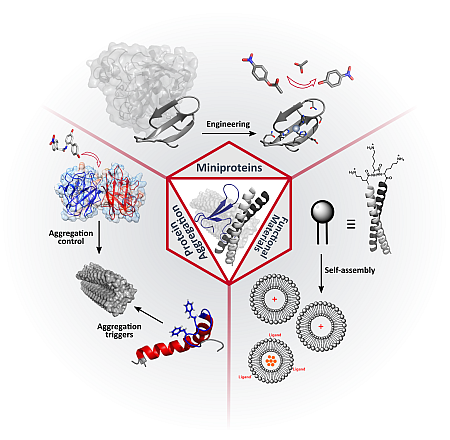
Jun.-Prof. Dr. Franziska Thomas is a Junior Professor at the Institute of Organic Chemistry, Heidelberg University, leading an active research group at the interface of organic chemistry, biochemistry, and biophysics. Her work centers on understanding protein folding mechanisms and their implications for biological function. Dr. Thomas established her independent research group at Georg-August-Universität Göttingen in June 2015 before moving to Heidelberg University in February 2020. She was offered her current tenure track position at Heidelberg on April 26, 2019. Her research program has two primary focuses: (1) designing peptide scaffolds with catalytic activity using de novo designed components that can be chemically synthesized and modified, and (2) studying protein aggregation mechanisms relevant to neurodegenerative diseases such as amyotrophic lateral sclerosis. She employs small, well-characterized self-assembling peptides to create novel materials and understand disease pathways. Analysis of her publication record reveals consistent advancement in peptide and protein engineering, with recent work emphasizing WW domains, β-sheet miniproteins, and innovative solid-phase synthesis techniques. Her research bridges fundamental protein science with applications in materials engineering and disease mechanism understanding. Her work has received significant funding including: The excellence cluster 3DMM2O for the project 'Design of Structured Adhesion Miniproteins for Tissue Engineering' The Deutsche Forschungsgemeinschaft for the research grant 'The WW-domain scaffold as a model system for the de novo design of miniaturized phosphate receptors, phosphatases and sulfatases' Dr. Thomas actively mentors a large research team including 11 PhD students and 2 Master's students, with numerous past students who have successfully completed their theses. She teaches courses including 'Chemische Biologie' and 'OC-Z6 Synthese und Retrosynthese' and participates in seminar series such as IMSEAM and 3DMM2O. The Thomas Lab maintains strong collaborative connections with multiple research groups including the Kivala, Kemerink, Blasco, Klein, Comba, and Gräter groups, reflecting an interdisciplinary approach to peptide and protein science.
Hien Nguyen is the Carl Johnson/Pfizer Professor of Organic Chemistry at Wayne State University, holding joint appointments in the Department of Chemistry and the Department of Oncology's Molecular Therapeutic Program. His research program bridges chemistry and biology to develop novel therapeutic approaches for cancer, Alzheimer's disease, and diabetes through innovative carbohydrate chemistry. His educational background includes: B.S. in Chemistry from Tufts University (1996) Ph.D. in Organic Chemistry from University of Illinois at Urbana-Champaign (2003) NIH Postdoctoral Fellowship at Stanford University (2003-2006) Prof. Nguyen's research focuses on medicinal chemistry, cancer drug discovery, chemical biology, and organic synthesis, with particular expertise in vaccine adjuvant immunotherapy, Alzheimer's disease therapeutics, diabetes treatments, and catalytic stereoselective carbohydrate methods. His lab develops novel methodologies for oligosaccharide assembly and applies them to create carbohydrate-based therapeutics targeting heparanase and other biological pathways involved in disease progression. His recent publications demonstrate a strong focus on phenanthroline-catalyzed stereoselective glycosylations, heparan sulfate mimetics for therapeutic applications, transition-metal catalyzed asymmetric synthesis, and the development of carbohydrate-based inhibitors for heparanase. These works span organic chemistry methodology, medicinal chemistry, and biochemical applications, reflecting his interdisciplinary approach to solving complex biological problems through chemical innovation. Among his notable awards are: 2018 Carl Johnson Endowed Chair 2018 Horace S. Isbell Award for Excellence in Carbohydrate Research 2016 Mitzutani Glycoscience Innovation Award 2012 International Young Carbohydrate Investigator Award Prof. Nguyen has successfully mentored numerous graduate students and postdoctoral fellows who have gone on to successful careers in academia and industry. His research is supported by multiple NIH grants including R01AI169505 "Synthesis and Evaluation of Carbohydrate Vaccine Adjuvants" (2022-2027) and R35GM149213 "Development of Catalytic Glycosylations and Biologically Important Glycosaminoglycans" (2023-2028). His group actively pursues both fundamental methodology development and translational applications of carbohydrate chemistry. The Nguyen research group operates state-of-the-art organic synthesis and biochemical characterization facilities, with strong collaborations across Wayne State University including the School of Medicine. The group maintains active partnerships with researchers at other institutions and pharmaceutical companies to advance their therapeutic discoveries toward clinical applications.
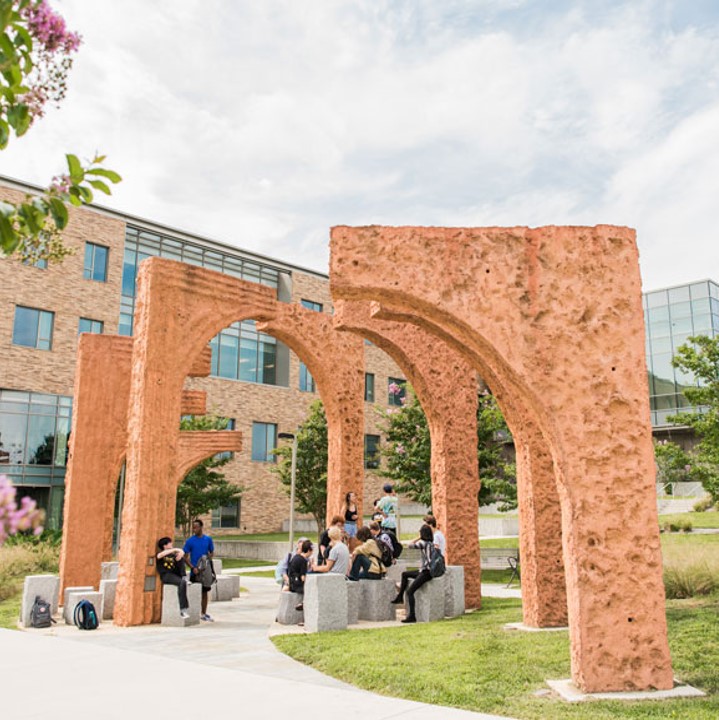
Ramana Vinjamuri is an Associate Professor in the Department of Computer Science and Electrical Engineering at the University of Maryland, Baltimore County (UMBC). He holds a secondary appointment as Visiting Professor at the Indian Institute of Technology, Hyderabad, India. His academic journey includes a Ph.D. in Electrical Engineering from the University of Pittsburgh (2008), M.S. in Bioinstrumentation from Villanova University (2004), and B.Tech. in Electrical and Electronics Engineering from Kakatiya University (2002). Dr. Vinjamuri's research focuses on Brain-Machine Interfaces (BMIs) for upper-limb prostheses control , neuroprosthetics and exoskeletons , machine learning in motor control , and neurophysiological signal processing . His work extends synergy-based models to control 37-dimensional hand movements, addresses human-robot interaction through emotionally intelligent systems, and develops neurotechnologies for substance use disorder using wearable sensors and AI. NSF CAREER Award (2019) NSF IUCRC BRAIN Center Planning Grant (2020) Harvey N Davis Distinguished Teaching Assistant Professor Award (2018) His publications demonstrate expertise in EEG and EMG signal analysis , deep learning for motor decoding , synergy modeling , and humanoid robot control . The Vinjamuri Lab at UMBC involves graduate, undergraduate, and high school researchers, with international collaborations in India and the US.
Dr. Shuya Wei is an Assistant Professor in the Department of Chemical and Biological Engineering at the University of New Mexico (UNM). She holds a Ph.D. in Chemical Engineering from Cornell University (2017) and a B.Eng. in Bioengineering from Nanyang Technological University (2013). Her research focuses on advancing electrochemical energy storage technologies, including next-generation batteries for energy and environmental applications. Key areas include developing high-energy batteries using earth-abundant materials, carbon capture through electrochemical processes, and nanomaterials design. Education: Ph.D., Chemical Engineering, Cornell University, 2017 B.Eng., Bioengineering, Nanyang Technological University, 2013 Research Interests: Electrochemical fundamentals and interfaces Rechargeable batteries (e.g., Li-CO₂, Al-CO₂, iron batteries) Carbon capture and conversion via electrochemical systems Design of nanocomposites and biomaterials for energy storage Notable Awards: Materials Research Society (MRS) Graduate Student Silver Award (2017) UNM Women in STEM Awards (2022) NASA MPLAN Prize (2024) NSF EPSCoR Track 2 Funding (2021) Advising & Grants: Advises graduate students (e.g., Chris Fetrow, Jianda Wang) and postdocs (e.g., Raju Vadthya). Secured grants including NSF awards for electrochemical methane conversion and carbon dioxide management. Lab Activities: The Wei Lab at UNM emphasizes interdisciplinary research, with projects like developing low-cost chemical waste batteries and optimizing porous zinc anodes. Recent achievements include breakthroughs in aluminum-CO₂ batteries and gel polymer electrolytes for sodium-sulfur systems.
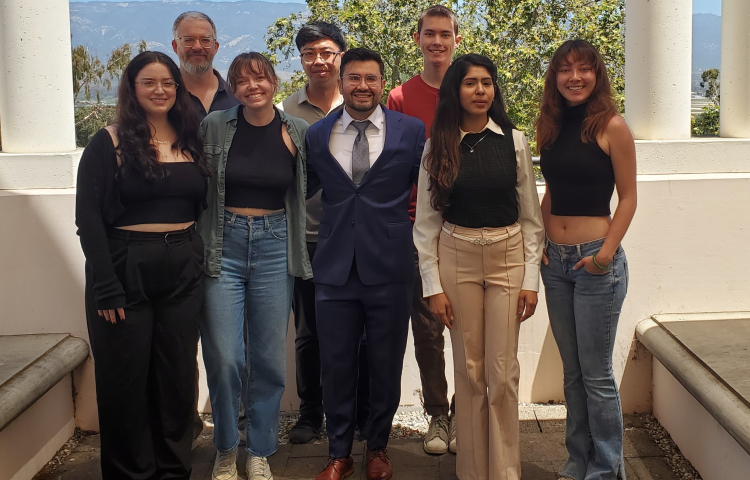
Professor Trevor W. Hayton is a faculty member in the Department of Chemistry and Biochemistry at the University of California, Santa Barbara. He leads the Hayton Research Group, which focuses on solving problems in energy science, nanochemistry, and nuclear fuel clean-up through the synthesis and characterization of transition metal, lanthanide, and actinide complexes, as well as metal nanoclusters. Dr. Hayton's research spans several key areas in inorganic and organometallic chemistry: Actinide chemistry, particularly uranium and thorium complexes Synthesis of transition metal nanoclusters Molecular activation of small molecules Investigation of metal-ligand bonding and covalency Energy-related materials and processes Analysis of Professor Hayton's recent publications (2023-2025) reveals a strong focus on actinide chemistry, particularly uranium and thorium complexes with various ligands. His group has made significant contributions to understanding actinide-ligand bonding, especially through NMR spectroscopy. They also continue to advance the field of transition metal nanoclusters, with recent work on nickel, copper, and iron systems. A notable trend is the increasing use of advanced spectroscopic and computational methods to probe electronic structure. Professor Hayton mentors numerous graduate students and postdoctoral researchers, as evidenced by successful PhD defenses and award-winning research presentations. His group members learn advanced synthetic techniques including air-free procedures, and various spectroscopic and analytical methods. The Hayton Research Group operates state-of-the-art laboratories at UCSB, with dedicated spaces for air-sensitive synthesis and characterization. Group meetings are held weekly to discuss ongoing research and foster collaboration among members.
Timothy K. Minton is a Professor in the Department of Aerospace Engineering Sciences at the University of Colorado, Boulder, and a member of the Aerospace Mechanics Research Center (AMREC). He holds a PhD from the University of California, Berkeley (1986) and a BS from the University of Illinois, Urbana-Champaign (1980). His research focuses on gas-phase and gas-surface reaction dynamics, particularly in hypersonic flow environments and space material degradation. He has held editorial roles at The Journal of Spacecraft and Rockets and The Journal of Physical Chemistry , and has been recognized with prestigious awards including Fellowships from the American Physical Society (2015) and American Association for the Advancement of Science (2012). Dr. Minton’s work emphasizes understanding atomic oxygen interactions with satellite materials, shock layer chemistry, and material durability in low-Earth-orbit environments. His innovations include the development of the Table-Top Shock Tunnel (TTST) for rapid material testing and durable coatings for space applications. He has also contributed to advancing models for carbon oxidation and nitridation processes. His awards highlight leadership in aerospace and chemistry, including the NASA Monetary Award (1995) for semiconductor etching innovations and the Charles & Nora Wiley Award (2002) for meritorious research. He maintains a courtesy appointment in the Department of Chemistry at CU Boulder and actively collaborates with industry (e.g., Skeyeon, Inc.) and international institutions.
Professor Rita Henderson is a Professor in the School of Chemical Engineering at UNSW and Deputy Dean (Societal Impact & Translation) at UNSW Engineering. Her research focuses on water quality and treatment, algal biotechnology, and sustainable engineering solutions. She leads the Algal and Organic Matter (AOM) Lab, collaborating closely with the Australian water industry to address challenges in algal blooms, membrane fouling, and cyanobacteria management. She serves as Editor for Water Research and AWWA Water Science , and chairs UNSW’s Sustainable Development Goal (SDG) Steering Committee. Education: PhD in Water Sciences (Cranfield University, 2008), MSc in Water Pollution Control Technology (2004), and MChem in Environmental Chemistry (University of Edinburgh, 2002). Her work integrates advanced analytical techniques, machine learning, and innovative separation methods to improve water treatment efficiency. Research interests include organic matter characterization, membrane technology optimization, and real-time monitoring of cyanobacterial blooms. Her contributions span algal harvesting via PosiDAF flotation systems, disinfection by-product formation, and sustainable wastewater pond technologies. She actively promotes equity, diversity, and inclusion in engineering education. Grants and collaborations highlight her industry partnerships, particularly in developing scalable solutions for water security. Her lab’s innovations aim to bridge gaps between research and practical applications, ensuring robust water treatment strategies for global challenges.
Roland Larsson is a Professor and Head of Subject in Machine Elements at Luleå University of Technology, Sweden. His research focuses on Tribology, particularly lubrication regimes (boundary to elastohydrodynamic), contact mechanics, surface roughness effects, and applications in rolling element bearings, clutches, hydraulic systems, tires, and sports equipment. He has supervised over 20 doctoral and licentiate students, contributed to advanced courses, and developed teaching methods like Flipped Classroom and Constructive Alignment . Education: Ph.D. (1996, Luleå University of Technology), Docent (2001), M.Sc. in Mechanical Engineering (1988). Research: Central themes include elastohydrodynamic lubrication, surface roughness in contact interfaces, and sustainable lubricants. His work explores water-based lubricants, ionic liquids, and glycerol mixtures. Publications: Recent articles (2025) investigate water-based lubricants' film formation, ski-snow friction dynamics, and tribochemical properties of green lubricants. Earlier works (2024-2023) cover micropitting, wear models, and multi-scale contact analysis. Awards: Recipient of multiple tribology awards including ASME Best Paper, Nordea's Vetenskapliga Pris, and Venture Cup North. He has held leadership roles at Luleå University, including Dean and Vice-Dean of the Faculty of Engineering Board. Collaboration: Active in international research networks as peer-reviewer, faculty opponent, and external examiner. His post-doctoral work includes affiliations with Leeds University and SKF Engineering Research Centre.
Professor Ian Jefferson is a Professor in Geotechnical Engineering at the Department of Civil Engineering, University of Birmingham. He has held academic positions at Loughborough University (lecturer from 1992–1995) and Nottingham Trent University (Lecturer/Senior Lecturer from 1995–2001, Principal Lecturer from 2001–2002, and Reader until 2004 before joining Birmingham). His roles include teaching and research in civil engineering disciplines, with a focus on sustainability and geotechnical practices. He is affiliated with the School of Engineering at the University of Birmingham, located in Edgbaston, Birmingham, UK. Education: BEng (Hons) in Civil Engineering, Loughborough University PhD in Geotechnical Engineering Professor Jefferson’s research interests revolve around collapsible soils , particularly loess , and their geotechnical implications across Eastern Europe, Central Asia, and the UK. He explores ground improvement techniques , including chemical stabilization and vibro-stone columns, with a focus on sustainability. His work also addresses geohazards such as rising groundwater and problematic soils like glacial tills. He investigates sustainability in urban development , sustainable geotechnical processes, and the application of geophysical methods for assessing improved ground conditions. These areas highlight his commitment to integrating environmental and geotechnical challenges in engineering solutions. Professor Jefferson’s recent publications emphasize the intersection of geotechnical engineering and sustainability. His work explores sustainable infrastructure planning, emissions reduction in soil improvement techniques, and geophysical methods for ground assessment. Key themes include the mitigation of collapsible soils, optimizing ground improvement technologies, and sustainability indicators for urban redevelopment. His research frequently addresses environmental impacts, particularly in transportation and utility infrastructure contexts, alongside advancing methodologies for geotechnical practices. Fellow of the Geological Society (FGS) In terms of grants and funding, Professor Jefferson has secured over £4 million in research grants. While his role in advising students is not explicitly stated, he contributes to academic governance through his positions as a Marker/Moderator for the Postgraduate Teaching Certificate and as the Plagiarism Officer for Civil Engineering since 2013. Professor Jefferson is actively involved in several research initiatives, including Loess soil stabilisation , collapsibility in loess soils , and Ground Improvement using stone columns . He also leads projects on Assessment of improved ground using geophysics , Shear strength of glacial tills , and Sustainability Assessments in urban Development . His work contributes to the Sustainable urban redevelopment - Eastside project in Birmingham. These projects reflect his collaboration with interdisciplinary teams and his focus on practical, sustainable solutions in geotechnical engineering.
Bao-Zhu Yang is a Researcher at Yale School of Medicine , specializing in the Department of Psychiatry . With a PhD from University at Albany (2001), his work focuses on genetic mechanisms underlying psychiatric disorders. Positions: Research Scientist in Psychiatry Labs: Gelernter Lab, Division of Human Genetics His research explores gene-environment interactions , admixture mapping , and comorbid substance use-depression using linkage/association methods. Supported by NIH K01 funding, he investigates genetic bases for conditions including childhood depression , alcoholism , and PTSD . Recent publications highlight: Microbiome studies in methamphetamine use disorder (2023-2025) Genetic polymorphism analyses in NGF and GABAergic pathways (2020-2024) Network approaches to nicotine-alcohol comorbidity (2019) Epigenetic research on child maltreatment effects (2020) Scientific Recognition: Young Investigator Award (2011) from NARSAD Brain and Behavior Research Foundation Active grant support includes NIH K01 career development award for gene-mapping in comorbid disorders. Collaborates with leading researchers including Joel Gelernter and Hongyu Zhao across 30+ joint publications. His work spans 15+ years with recent focus on integrative -omics approaches to addiction psychiatry. Based at 300 George St, New Haven, CT , Yang's laboratory work involves genetic epidemiology , transcriptomic integration , and neurogenetic mapping of substance use disorders.
Tina Shoa is an Associate Professor in the School of Sustainable Energy Engineering at Simon Fraser University. She holds a Ph.D. in Electrical Engineering from the University of British Columbia (2010), an M.Sc. from the University of Manitoba (2004), and a B.Sc. from Iran University of Science and Technology (2000). Her research focuses on battery performance modeling, electrochemical methods for fault detection, sustainable battery manufacturing, and AI-based diagnostics. Education: Ph.D., Electrical Engineering, University of British Columbia, 2010 M.Sc., Electrical Engineering, University of Manitoba, 2004 B.Sc., Electrical Engineering, Iran University of Science and Technology, 2000 Research Interests: Battery performance modeling, analysis, and optimization Electrochemical and ultrasound-based battery fault detection Sustainable battery manufacturing processes AI-driven battery diagnostics Teaching and Courses: Advanced Battery and Fuel Cell Technologies Power Plant Systems Smart Grids Practicum SEE 354 D100 Energy Storage (Summer 2025) Patents: Battery State-of-health Determination upon charging (US Patent 11079437B2, 2022) Battery State-of-health Determination using multi-factor normalization (US Patent 10,302,709, 2019) Apparatus and Method for testing electrochemical systems (US Provisional Patent 62/994687, 2020) Key Contributions: Her work integrates electrochemical principles and AI to advance battery diagnostics and sustainable energy storage solutions. She has authored over 15 publications in top-tier journals and conferences, addressing battery aging, state estimation, and novel manufacturing techniques.
Savas Ceylan is a Researcher at ETH Zurich's Institute of Geophysics, affiliated with the Swiss Seismological Service (SED) and the Department of Earth and Planetary Sciences. His work focuses on planetary seismology, particularly analyzing seismic data from Mars using advanced techniques like deep learning. Ceylan's research addresses Martian tectonic activity, impact cratering, and seismic event characterization, contributing to understanding Mars' geological dynamics through missions like InSight. Key research interests include seismic denoising, fault rupture modeling, and planetary interior structure analysis. He has collaborated on studies of large earthquakes in Turkey and Martian seismicity patterns, emphasizing real-time seismic analysis and planetary hazard assessment. Publications highlight innovations in seismic data interpretation, from denoising algorithms to impact rate estimation on Mars. His work bridges computational methods with geophysical observation, advancing knowledge of extraterrestrial seismology.
Frederic Meunier is a CNRS researcher based at IRCELYON (Institute of Chemistry of Lyon), part of the University of Lyon. He holds a European PhD in Physical Chemistry from the Universities of Strasbourg (France) and Limerick (Ireland), and a Habilitation to Direct Research from the University of Caen (France). His research focuses on heterogeneous catalysis, with expertise in operando FT-IR spectroscopy and reaction mechanisms, particularly in syngas chemistry and CO₂ conversion. He leads the ATARI team (Integrated thermodynamic, analytical, and reactional approaches) and has published over 100 papers (H-factor 35) and holds two worldwide patents. Key research interests include catalytic materials for environmental applications, such as CO₂ capture/methanation, water treatment, and sustainable chemistry. He has supervised 16 PhD theses and is an editorial board member of Catalysis Today and Applied Catalysis B: Environmental . In 2009, he received the Catalytic Division Award from the French Chemical Society. His work also explores microwave-assisted catalysis, nanomaterial synthesis, and advanced oxidation processes for pollutant remediation. Collaborative projects include studies on biochar-based materials, microwave-enhanced reactions, and catalyst stability under industrial conditions.
Dr. Jonathan Hu is a Professor in the Department of Electrical and Computer Engineering at Baylor University's School of Engineering and Computer Science. He holds a PhD from the University of Maryland Baltimore County (2008) and completed a postdoctoral fellowship at Princeton University (2009–2011). He is an active researcher in optics and photonics, leading the Photonics Research Laboratory and advising both graduate and undergraduate research assistants. Research Interests: Nanophotonics and metamaterials for photovoltaic and biomedical applications Mid-IR supercontinuum generation using chalcogenide photonic crystal fibers 2D materials such as graphene and their alignment via magnetic fields Coherent optical communication and quantum optical Fredkin gates Numerical simulation of electromagnetic problems and leaky mode analysis His recent publications (2019–2024) demonstrate a strong focus on quantum plasmonics, specialty optical fibers, optofluidics, and nonlinear optical phenomena, with high-impact work in journals like Science Advances , ACS Photonics , and Advanced Materials . The research shows a clear trend toward integrating photonics with 2D materials and quantum systems, with applications in sensing, communication, and materials characterization. Scientific Awards and Recognition: 35 Baylor faculty named among top 2% most cited researchers (2023) Editor’s Pick, Journal of Applied Physics (2018) Top three downloads in OSA journals for three consecutive months (2009) NSF Graduate Research Fellowship (awarded to advisee) Chinese Government Award for Outstanding Self-Financed Students Abroad (awarded to advisee) Second Place in FiO + LS Student Competition (awarded to advisee) Advising and Grants: Dr. Hu actively mentors students at all levels, with current graduate research assistants including Wei Zhang, Zhihao Hu, and Sterling Walzel. His lab is supported by external funding, though specific grants are not detailed in the text. He has advised PhD students such as Joshua Young, Chao Niu, and Chengli Wei, many of whom have gone on to successful academic and industry careers. His teaching includes core courses like EGR 1302, ELC 2320, and ELC 4320, as well as advanced topics in computational photonics and integrated photonics. Labs and Teams: He leads the Photonics Research Laboratory at Baylor University, located at the BRIC facility. He is also involved with the Baylor University Optica Student Chapter, promoting optics outreach and networking among students and researchers.