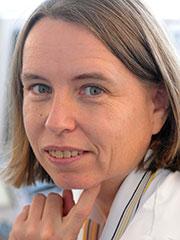
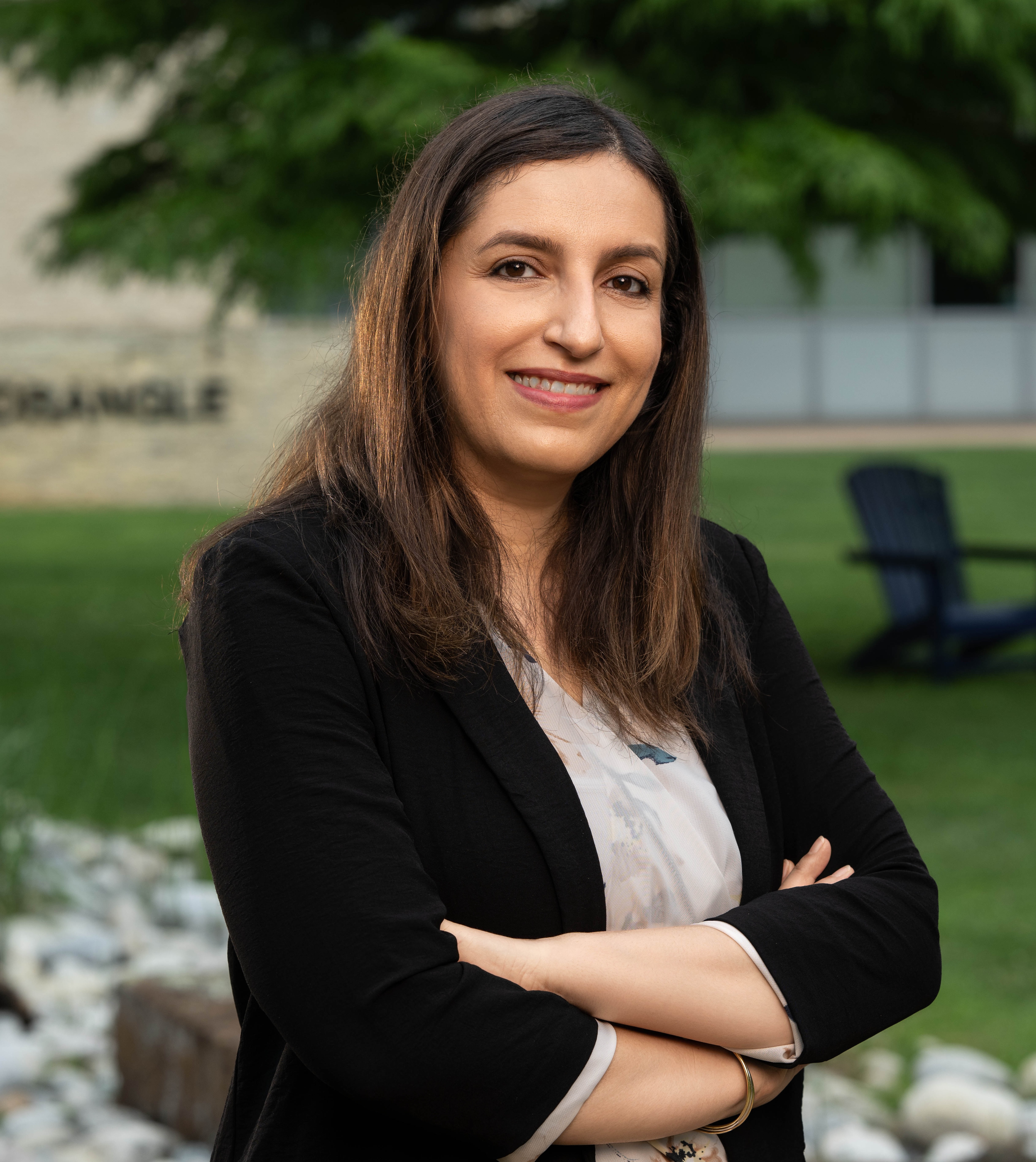
Dr. Swati Chandna is a Senior Lecturer at the School of Computing and Mathematical Sciences, Birkbeck, University of London. She holds an honorary position as an Honorary Lecturer in Statistics at University College London (UCL) from January 2023 to January 2026. She earned her PhD in Statistics from Imperial College London in 2013. Her research focuses on statistical modeling, network analysis, and bioinformatics, with notable contributions to stochastic networks, single-cell genomic data analysis, and complex-valued signal processing. Teaching responsibilities include modules such as Bayesian Methods, Analysing Data, Statistical Analysis, and Project Applied Statistics. She serves as Admissions Tutor for Graduate Certificate and Diploma in Statistics for Data Science and as School Ethics Lead at Birkbeck. Her work bridges theoretical statistics with practical applications in genomics, environmental modeling, and biomedical research. Dr. Chandna’s recent research explores topics like covariate-driven network estimation, stochastic modeling of genomic data, and bootstrap techniques in source separation. Her publications reflect interdisciplinary collaboration across statistics, computer science, and life sciences.
Anja Feldmann is Director at the Max Planck Institute for Informatics in Saarbrücken and Professor of Internet Network Architectures at Technische Universität Berlin (since 2006). Previously she held a full professorship at Technische Universität München (2002–2006) and conducted research at AT&T Labs Research , Saarland University , and Carnegie Mellon University , where she earned her Ph.D. in 1995. Education Ph.D. in Computer Science, Carnegie Mellon University, 1995 M.Sc. in Computer Science, Carnegie Mellon University, 1991 Diplom in Computer Science, Universität Paderborn, 1990 Research Interests Anja Feldmann’s research centers on measurement-driven understanding of the Internet. She tackles challenges such as software-defined networking , cloud-network interactions , performance debugging , and traffic characterization . A growing focus is the privacy and security of networked systems, evidenced by recent studies on online tracking, DNS security, and disinformation ecosystems. Her group designs scalable measurement platforms that combine passive and active monitoring , programmable data planes , and machine-learning analytics to dissect phenomena ranging from terabit-scale traffic to covert tracking on illegal streaming sites. Recent Publication Themes The 2021-2025 publications reveal a methodological evolution toward large-scale, longitudinal measurement . Topics include: Impact of global events (COVID-19, CrowdStrike outage) on Internet traffic Cross-country tracking ecosystems and privacy leaks DNS root and routing plane stability and security ML-driven real-time monitoring at terabit speeds Disinformation campaigns on encrypted messaging platforms Scientific Awards Gottfried Wilhelm Leibniz Prize (2011) – Germany’s highest research honor Berliner Wissenschaftspreis (2011) Elected Member of the German National Academy of Sciences Leopoldina (2009) Advising & Grants While individual student names are not listed, Prof. Feldmann leads a vibrant team at MPI-INF’s Internet Architecture department. She has supervised numerous doctoral candidates and post-doctoral researchers whose work is reflected in the co-authored papers. Funding sources include the German Research Foundation (DFG) via the Leibniz Prize and EU Horizon projects, although explicit grant numbers are not provided in the source material. Labs & Teams She heads the Internet Architecture department at MPI-INF, located at the Saarland Informatics Campus . The department operates state-of-the-art measurement infrastructure—including programmable switches, honeynets, and global vantage points—to support empirical network science.
Brian Walsh is an Associate Professor of Mechanical Engineering at Boston University, with affiliations in the Departments of Astronomy and Electrical and Computer Engineering. He holds a Ph.D. in Mechanical Engineering from Boston University (2011) and a B.A. from Colgate University (2006). His research focuses on experimental space physics and spacecraft instrumentation, particularly studying solar wind-magnetosphere interactions, magnetopause reconnection, and X-ray imaging techniques. His work investigates energy transfer from the Sun to Earth's space environment, with a primary focus on the magnetopause. Walsh develops instruments for NASA and ESA missions, including the LEXI lunar X-ray imager and the CuPID CubeSat. He has contributed to missions like SMILE and pioneered compact solar energetic particle telescopes. His research spans CubeSat-based observations and large-scale space missions, emphasizing cross-scale coupling and global magnetospheric dynamics. Key research interests include plasma turbulence, magnetosheath dynamics, and exosphere variability. Walsh collaborates on projects like the Trans-Heliospheric Survey and the Magnetospheric Constellation (MagCon), aiming to advance understanding of heliospheric plasma behavior. His work also addresses space weather prediction and instrument calibration, such as the Carruthers Observatory Student Solar Monitor (COSSMo). Walsh's recent studies explore solar wind acceleration, ionospheric outflow asymmetry, and the role of recirculated plasmasphere material in ring current dynamics. His contributions to instrumentation and mission design highlight his dual role as a researcher and engineer in aerospace and space physics.
Mohamed-Slim Alouini is a Professor of Electrical Engineering and Associate Dean of the Computer, Electrical and Mathematical Science and Engineering (CEMSE) Division at King Abdullah University of Science and Technology (KAUST) in Saudi Arabia. He also serves as the Associate Vice President for Research and holds the UNESCO Chair in Education to Connect the Unconnected. With over 500 journal publications and more than 46,000 citations, he is a world-renowned expert in wireless communications who was elected IEEE Fellow in 2009 at the age of 39. Education: PhD in Electrical Engineering, California Institute of Technology (Caltech), 1998 MS in Electrical Engineering, Georgia Institute of Technology (Georgia Tech), 1995 Diplôme d'Etudes Approfondies (DEA) in Electronics, Université Pierre & Marie Curie (Sorbonne University), 1993 Diplôme d'Ingénieur, École Nationale Supérieure des Télécommunications (Télécom Paris Tech), 1993 Habilitation, Université Pierre & Marie Curie (Sorbonne University), 2003 Dr. Alouini is a world-renowned expert in wireless communication and networking with research interests spanning diversity combining techniques, MIMO systems, multi-hop/cooperative communications, optical wireless systems, cognitive radio, UAV communications, and advanced modulation schemes. His current focus addresses the technical challenges of uneven information and communication technology distribution, particularly targeting rural, low-income, disaster-prone, and hard-to-reach areas through integrated ground-airborne-space networks. His work bridges theoretical foundations with practical implementations to solve real-world connectivity problems. His recent publications (2020-2024) demonstrate a clear research trajectory toward integrated communication networks combining terrestrial, aerial, and space components. There's growing emphasis on UAV communications, satellite systems, optical wireless technologies, and rural connectivity solutions, with increasing integration of machine learning techniques for network optimization. His work shows consistent focus on addressing the digital divide, with several publications specifically targeting 6G challenges for connecting underserved populations and recycling existing infrastructure for enhanced rural connectivity. Scientific Awards: Member of the European Academy of Sciences and Arts (2019) Fellow of the African Academy of Sciences (2018) IEEE Fellow (2009) Abdul Hameed Shoman Award for Arab Researchers (2016) OIC Science & Technology Achievement Award (2017) Multiple recognitions as Highly Cited Researcher NSF CAREER Award (1999) Dr. Alouini has mentored numerous successful students and post-doctoral fellows who have secured positions at top institutions worldwide including Harvard, Caltech, Imperial College, and faculty positions at Korea University, Hanyang University, and universities across the Middle East. His December 2018 PhD graduate Qurrat-Ul-Ain Nadeem received the prestigious Marconi Society Paul Baran Young Scholars award, while post-doctoral fellows have won IEEE ComSoc Young Professionals Best Innovation Award and attended the Lindau Nobel Meeting. His Communication Theory Lab at KAUST drives significant research in wireless communications with funding supporting extensive publication output and innovative projects. Dr. Alouini leads the Communication Theory Lab at KAUST and holds the UNESCO Chair in Education to Connect the Unconnected, focusing specifically on technical solutions for connecting underserved communities. His lab works on integrated ground-airborne-space networks to bridge the digital divide, with particular emphasis on rural, low-income, and hard-to-reach areas. The team develops practical solutions using UAVs, satellite communications, and recycled infrastructure to provide cost-effective connectivity where traditional approaches fail.
Jens von Wolfersdorf is a Professor at the University of Stuttgart's Faculty of Engineering, Department of Mechanical Engineering. His research focuses on advanced thermal management systems for high-speed aerospace applications, particularly in the areas of heat transfer, fluid dynamics, and combustion. He specializes in experimental and numerical methods for analyzing complex flows in rotating and stationary cooling channels, transpiration cooling for rocket engines, and turbulence modeling. His work integrates cutting-edge techniques such as thermochromic liquid crystal (TLC) measurements, particle image velocimetry (PIV), and computational fluid dynamics (CFD) to validate novel cooling configurations. Key projects include the COOREFLEX-Turbo initiative and contributions to the European ATLLAS-II program for high-speed vehicle materials. Recent studies emphasize rotational heat transfer effects in two-pass cooling channels, additive manufacturing of ribbed cooling structures, and validation of coupled FEM-CFD frameworks. His research addresses challenges in aerospace thermal protection, turbine blade cooling, and scramjet combustor efficiency. Publications span over 15 years, with a focus on transient heat transfer, flow visualization, and material characterization for transpiration-cooled systems. Collaborations involve experimental facilities for high-speed flows and advanced thermal measurement systems.
Manoj Upadhya is a Postdoctoral Research Associate at the Aston School of Life and Health Sciences, Aston University (UK). His research focuses on epilepsy, neuropharmacology, and neurodegenerative diseases, with expertise in rodent models, electrophysiology, and molecular biology. He holds a PhD from RTM Nagpur University (India) and has held roles including Assistant Professor in Pharmacology and Research positions at IISER Pune and Sun Pharma. Education : PhD (Role of CART peptide in Neurodegeneration), RTM Nagpur University, 2009–2013 Research Interests : Translational epilepsy research, autoimmune encephalitis, pain mechanisms, and neurodegenerative diseases using rodent models. Techniques include behavioral paradigms, electrophysiology, and confocal imaging. Key contributions include identifying therapeutic targets for Parkinson's, Alzheimer's, and Huntington's diseases. Articles Trends : Recent work emphasizes autoimmune epilepsy mechanisms, neuroprotective therapies (e.g., AP39), and pain modulation via TRP channels. Studies utilize rodent models, monoclonal antibodies, and neurosteroid interventions. Awards : Best Publication in Peer-Reviewed Journal Category (2016) Executive Master of Business Administration (EMBA) (2015) Best Poster Award (2013) Grants & Advising : Accepting PhD students for projects like 'Brain on fire – investigating microglia in epilepsy.' Active in drug discovery collaborations, including patents for Parkinson's therapies. Labs/Teams : Maintains research collaborations with institutions like IISER Pune and the Encephalitis Society (UK). Active in professional bodies such as the Society for Neuroscience.
Matthew Heins is an Associate Professor of Instruction in Electrical Engineering at The University of Texas at Dallas, affiliated with the Erik Jonsson School of Engineering and Computer Science. He holds an office in ECSN 4.608 and can be reached via email at Matthew.Heins@utdallas.edu or phone at +1 (972) 883-3846. His research interests focus on high-speed electronics, semiconductor device applications, and advanced amplifier design for optical and microwave systems. Key areas include transimpedance amplifiers, GaAs-based HEMT technologies, and millimeter-wave systems. Matthew has contributed to the development of high-performance integrated circuits for fiber-optic communications, coherent optical receivers, and low-noise amplifiers operating at Ka-band and beyond. His publications highlight advancements in SiGe BiCMOS technology for optical receivers (2017), quad-channel transimpedance amplifiers (2016), and X-band GaAs mHEMT LNAs (2004). Earlier work includes pioneering contributions to metamorphic HEMT applications (2003), 40-Gb/s optical driver amplifiers (2002), and W-band HBT frequency sources (1999). Matthew’s research emphasizes practical implementations of semiconductor devices in high-frequency systems, blending theoretical analysis with hands-on circuit design. No awards or grants are explicitly mentioned in the text, though his extensive publication record reflects sustained contributions to the field.
Dr. Shirin Nilizadeh is an Associate Professor in the Department of Computer Science and Engineering at The University of Texas at Arlington's College of Engineering. She leads the Security and Privacy Research Lab, conducting interdisciplinary research at the intersection of cybersecurity, privacy, machine learning, and social media analysis. Her work addresses critical societal issues related to online security, privacy, and safety through data-driven approaches. Dr. Nilizadeh received her PhD in Computer Science from Indiana University in 2014, followed by MS in Computer Science from Amirkabir University (2007) and BS in Computer Engineering from Islamic Azad University (2004). Her research focuses on security and privacy in systems and social networks, employing techniques from machine learning and big data analytics. She takes a highly interdisciplinary approach, integrating AI, NLP, social sciences, and public health to address societal issues in cybersecurity and privacy. Her research objectives include: (1) detecting and characterizing emerging threats in online social networks like social engineering attacks, misinformation, and online hate speech; (2) advancing the adversarial robustness and fairness of ML and NLG systems; and (3) studying humans' online behaviors through data-driven interdisciplinary research. Analysis of her recent publications reveals a strong focus on AI-generated security threats, particularly phishing scams using LLMs, NFT fraud detection, social media toxicity analysis, and content moderation systems. Her work bridges theoretical security research with practical applications, often addressing real-world security challenges through innovative technical solutions. Among her notable scientific achievements are the prestigious NSF CAREER award (2023), Comcast Innovation Awards (2022 and 2024), College of Engineering Outstanding Early Career Research award (2024), and IEEE SP 2024 Distinguished Paper Award. Her work has also received best paper and technical poster awards at eCrime 2021 and NDSS 2022. Dr. Nilizadeh has successfully mentored numerous doctoral and master's students while securing significant research funding, including multiple NSF grants and Comcast Innovation Fund awards. She leads a vibrant research group that has produced impactful work cited in official reports submitted to The Supreme Court and the EU Committee on Civil Liberties, Justice, and Home Affairs. Her lab has also received coverage from WIRED, MIT Technology Review, Orange's Hello Future, and Communications of the ACM. She serves on numerous program committees for top international conferences including ACM CCS, USENIX Security, and POPETS, and has organized outreach programs like OurCS@DFW to broaden participation of underrepresented students in computing.
John Di Bartolo is an Industry Professor and Department Chair of Applied Physics at New York University Tandon School of Engineering , with a career spanning computational physics, sports biomechanics, and educational software development. His work bridges theoretical physics with practical applications in technology and pedagogy. Bachelor of Arts in Mathematics, Boston College (1991) Master of Science in Physics, Boston College (1993) Doctor of Philosophy in Physics, University of Virginia (1997) Research interests include Type-II superconductors , physics of sports , and innovative educational software like Physics of Sports 3.0 and Quantum Sandbox . He has pioneered computational methods in teaching and developed interactive tools for optics and quantum mechanics. His publications span from superconductivity studies in Physical Review B to cutting-edge educational software. Notable awards include the 2013 Distinguished Teacher Award . He has presented at conferences including AAPT Summer Meetings and NYU-Poly Research Expo, and featured in media outlets like WIRED Magazine and Science Channel.
Frans N. van de Vosse is a full Professor at the Department of Biomedical Engineering , Eindhoven University of Technology. He leads the Cardiovascular Biomechanics research group, focusing on computational and experimental analysis of cardiovascular systems, medical devices, and clinical applications. Academic Background: MSc in Applied Physics (1982), PhD in Numerical Carotid Artery Flow Analysis (1987) from TU/e Professional Affiliations: Full Professor (since 2001), Lecturer in Fluid Mechanics (1987–2001) Research Interests span cardiovascular biomechanics, including Blood in Motion , Heart at Work , and Vessels under Stress . His work emphasizes computational models, experimental techniques, and medical devices for clinical diagnosis and intervention. Key Article Trends include fetal hemodynamics, virtual patient cohorts for coronary disease, abdominal aortic aneurysm progression, and fluid-structure interaction studies in heart valves. Many publications align with UN Sustainable Development Goals related to health and well-being. Media and Public Engagement highlights his contributions to artificial womb technology discussions and clinical device validation studies. His research has been featured in Professional Commentary and PR Activities in cardiovascular engineering.
Professor Jagjit S. Chadha is a distinguished academic and policy adviser serving as Professor of Economics at the University of Cambridge's Faculty of Economics. He concurrently serves as Director of the National Institute of Economic and Social Research (NIESR) until December 2024, and holds advisory roles with the Bennett Institute of Public Policy and the Productivity Institute. His career spans academic appointments at the University of Kent and St Andrews, and professional roles including Chief Quantitative Economist at BNP Paribas and Specialist Adviser to the UK Treasury Committee. His research focuses on macroeconomics, monetary policy, fiscal frameworks, and historical business cycles. Notable contributions include analyses of quantitative easing impacts, debt management strategies, and long-term UK economic data. Chadha has authored A Century of High Frequency UK Macroeconomic Statistics and frequently publishes in journals like Journal of Economic Surveys and Economic History Review . He has received an OBE (2021) and Royal Economic Society Founding Fellowship (2025). His work bridges academia and policy, advising central banks, HM Treasury, and international institutions. Recent media engagements include commentary on UK fiscal rules, China-UK economic relations, and post-pandemic productivity challenges.
Marcel Böhme is a faculty member at the Max Planck Institute for Security and Privacy (MPI-SP) , leading the Software Security research group. His work focuses on foundational advancements in fuzzing , statistical program analysis, and scalable vulnerability discovery. Education: PhD from National University of Singapore (NUS) Research interests span: Statistical and causal frameworks for software testing Efficiency/Scalability of automated testing Fundamental limits of vulnerability detection Practical fuzzing technology (e.g., Entropic in LibFuzzer) Recent publications highlight trends in: Machine learning for security analysis Privacy-preserving statistical methods Future-proof security frameworks Protocol fuzzing with large language models Scientific accolades include: ERC Consolidator Grant (2024) NUS Outstanding Young Alumni Award (2022) ARC DECRA (2019) Multiple ACM Distinguished Paper Awards He serves as: Spokesperson for Research Group Leaders at Max Planck Society Guest Editor-in-Chief for ACM TOSEM PC Chair for ASE'25 and ISSTA'26
Prof. Nan Yang is a Professor at the Australian National University's ANU College of Engineering, Computing and Cybernetics, leading the Information and Signal Processing Cluster and the Emerging Communications Laboratory. He holds a PhD in Electronic Engineering from Beijing Institute of Technology (2011) and has held postdoctoral roles at CSIRO and UNSW before joining ANU in 2014. His research focuses on terahertz communications, ultra-reliable low-latency systems, and cyber-physical security, with notable contributions to molecular communications and massive MIMO systems. Education: B.S. in Electronics, China Agricultural University (2005) M.S. in Electronic Engineering, Beijing Institute of Technology (2007) Ph.D. in Electronic Engineering, Beijing Institute of Technology (2011) Key Roles: Associate Dean for Higher Degree Research (2019–2021) Editorial Board Member of IEEE Transactions on Molecular, Biological, and Multi-Scale Communications, IEEE Communications Letters, and others Organizer of workshops at IEEE ICC, GlobeCOM, and ACM MobiCOM His research interests span terahertz communication systems, cyber-physical security, and intelligent communications. Recent work emphasizes secure beamforming, UAV-assisted networks, and molecular communication protocols. He has authored over 180 publications and secured grants totaling millions in funding for projects like the Ultra-Fast and Secure Terahertz Communications for 6G Wireless Systems (2023–2026). Awards & Recognition: IEEE ComSoc Distinguished Lecturer (2023–2024) Best Paper Awards at IEEE ICC 2024, GlobeCOM 2022, and VTC Spring 2013 Exemplary Editor/Reviewer Awards from IEEE Transactions Grants & Projects: iLAuNCH: SWIFT-iLAuNCH Project A (SC-9) (2024–2026) Ultra-Fast and Secure Terahertz Communications for 6G (2023–2026) Facility for Energy Security and Resilience Research (2022) His lab, the Emerging Communications Laboratory, develops cutting-edge solutions for 6G networks, including hybrid beamforming for terahertz systems and secure short-packet protocols. Collaborations span global institutions, emphasizing interdisciplinary research in communications and signal processing.
Gregory Dick, PhD, is a Research Professor in the Department of Physiology & Anatomy at the University of North Texas Health Science Center's College of Biomedical and Translational Sciences. His research focuses on ion channel regulation in coronary arteries, particularly how potassium channels control vascular tone under normal and pathological conditions (e.g., obesity, diabetes). He has led multiple NIH-funded projects exploring coronary vascular dysfunction and metabolic signaling. Education: Bachelor of Science in Physiology, Oklahoma State University Doctor of Philosophy in Physiology, University of Missouri Research Interests: Electro-metabolic signaling in coronary vasodilation Role of K+ channels in coronary blood flow regulation Impact of metabolic syndrome and obesity on cardiovascular health Vascular smooth muscle plasticity in disease states Key Projects (2024–2026): Role of potassium as a coronary metabolic vasodilator (Principal Investigator) Disentangling the Mechanisms of Coronary Dysfunction (Co-Investigator) Grants & Funding: NIH R01 Grant: Mineralocorticoid Receptor-Dependent Coronary Vascular Dysfunction in Obesity Multiple collaborative grants with University of Michigan and University of Missouri Collaborations: Active partnerships with institutions studying coronary autoregulation, metabolic syndrome, and swine models of cardiovascular disease.
Dr. Xinxin Hu is an Associate Professor at the University of Houston-Downtown in the Department of General Business, Marketing, and Supply Chain under the Marilyn Davis College of Business. Her research focuses on decision-making under uncertainty, supply chain contracts, and retail management. PhD in Operations Management, University of Michigan MA in Statistics, University of Michigan BA in Operations Research, Fudan University Her research interests center on supply chain optimization, with a focus on lateral transshipment strategies, risk management, and sustainable operations. She has published in top journals like Management Science , OMEGA , and Production and Operations Management . Recent publications highlight her work in wind energy integration, decentralized inventory systems, and competitive distribution strategies. Her service roles include leadership positions in university academic policy and college-level scholarship committees.