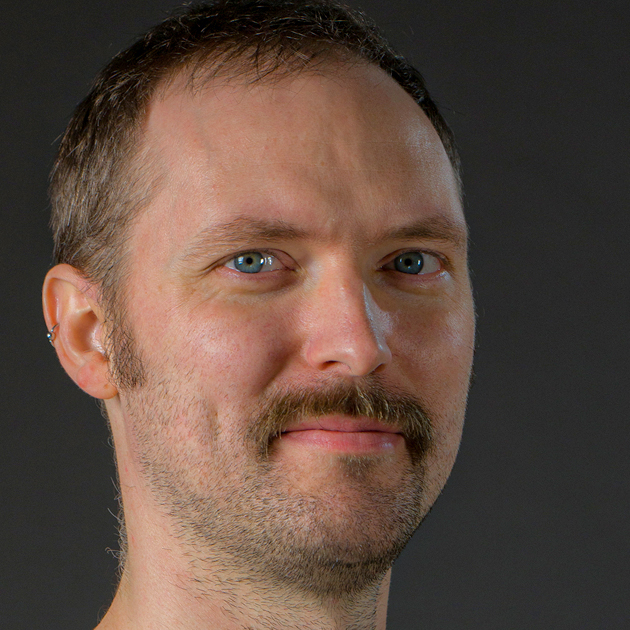
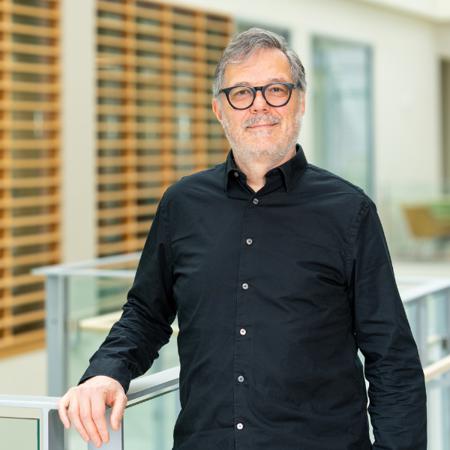
Giuseppe Durisi is a Professor at Chalmers University of Technology in Gothenburg, Sweden, specializing in information theory and communication systems. His research bridges mathematically rigorous solutions with practical engineering applications in wireless and optical communication. Primary affiliation: Communication Systems Group , Chalmers University. Research focus: Optimal information transmission, 6G network design, and theoretical foundations of deep learning. Research Interests: Durisi investigates the interplay between latency, reliability, and throughput in digital communication, particularly in millimeter-wave and optical fiber channels . He develops finite-blocklength theory for efficient coding and explores how information theory can explain deep learning performance. Recent Article Trends: His 2025–2024 work emphasizes 6G distributed MIMO networks , energy-harvesting protocols , and machine learning integration into communication theory. Key themes include random access protocols , privacy in wireless aggregation , and hardware-constrained massive MIMO . Scientific Recognition: An IEEE Senior Member, Durisi has published extensively in top journals like IEEE Transactions on Communications and IEEE Transactions on Wireless Communications . Notable Collaborations: Work with teams on radio-over-fiber fronthaul , unsourced multiple access , and time-synchronized URLLC links .
Gilles Brassard is a Full Professor in the Department of Computer Science and Operations Research at the Université de Montréal's Faculty of Arts and Sciences. He holds the Canada Research Chair in Quantum Computing and serves as Scientific Director of INTRIQ (Institut transdisciplinaire d'information quantique). His affiliations include membership in the Centre de recherches mathématiques (CRM), Institut Courtois, LITQ (Laboratoire d’informatique théorique et quantique), and talents (Laboratoire d'Intelligence Artificielle pour la Cybersécurité). Brassard's research spans quantum computing, quantum and classical cryptography, foundations of quantum mechanics, and privacy protection. He pioneered quantum teleportation and quantum cryptography, demonstrating how quantum mechanics enables unconditionally secure communication. His work explores quantum advantages in computation, including algorithms that could break classical cryptography while quantum cryptography provides countermeasures. Key concepts he developed include quantum teleportation (inspiring Star Trek-like applications) and quantum pseudo-telepathy games. His recent publications reveal strong focus on quantum key distribution security proofs, relativistic cryptography for secure positioning, and privacy protection against data brokers. Trends show increasing emphasis on practical quantum cryptography implementations, noise resilience in quantum communication, and intersections with machine learning. The 2023-2025 articles particularly address real-world quantum security challenges and foundational quantum information questions. Gerhard-Herzberg Canada Gold Medal for Science and Engineering Killam Prize in Natural Sciences Officer of the Order of Canada Fellow of the Royal Society Brassard has supervised over 40 graduate students across quantum information topics, including quantum algorithms, entanglement simulation, and privacy-preserving systems. His current research is funded by major Canadian grants including NSERC Discovery Program ($20965), FRQNT Strategic Regroupments, and CIFAR. Recent projects include QUORUM (Québec Ontario Consortium on Quantum Protocols) and quantum machine learning initiatives. He leads the theoretical quantum information group within LITQ, focusing on quantum communication complexity and cryptographic applications of quantum phenomena.
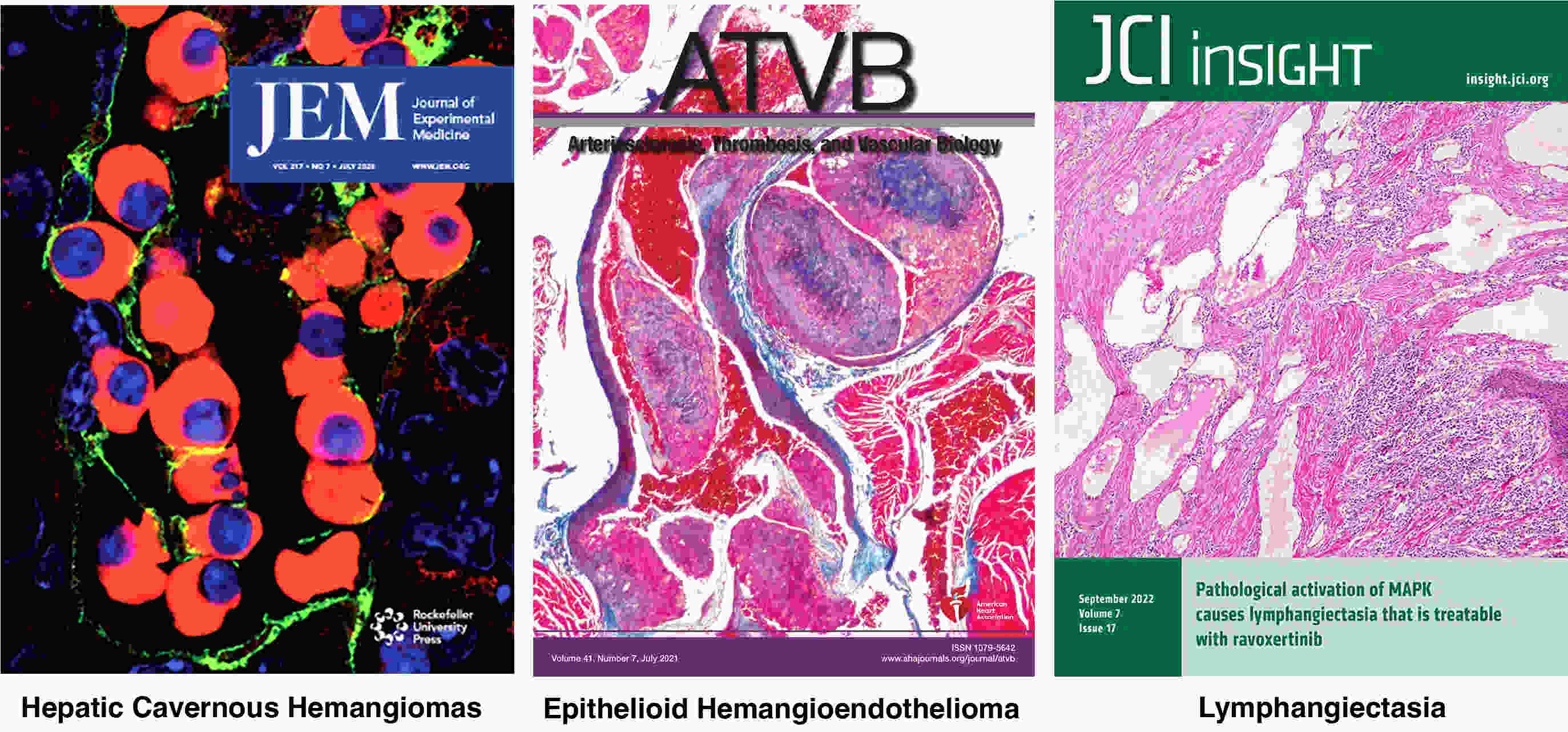
Dr. Chinmay Trivedi is a Professor of Medicine at UMass Chan Medical School , with additional affiliations in Molecular, Cell and Cancer Biology, and Translational Science programs. His research focuses on elucidating chromatin-modifying mechanisms in congenital cardiovascular and lymphatic diseases. Director, Division of Cardiovascular Medicine Research Research Director, Translational Science Program (Morningside Graduate School) Principal Investigator in Trivedi Lab Research Highlights: His laboratory established causal links between: Hdac3 mutations and Emberger syndrome (lymphedema) through non-coding DNA element analysis KRAS/BRAF mutations and hepatic vascular cavernomas with RAS-MAPK1 pathway inhibition as treatment Hdac1/Hdac2 roles in cryptic transcription suppression during cardiogenesis Tbx5-Hdac3 interactions in Holt-Oram syndrome pathogenesis YAP1 activation in vascular tumor epithelioid hemangioendothelioma Publication Trends show consistent work across Journal of Clinical Investigation , Science Advances , and Circulation Research , with recent emphasis on: Epigenetic regulation of cardiovascular development Signaling pathway modulation in lymphatic diseases Translational models for congenital defects Metabolic basis of cardiac pathologies Training Opportunities: The lab offers rotation projects for graduate students and postdoctoral positions requiring expertise in: Murine models ChIP-seq and epigenetic analysis Biochemical signaling assays Translational biology techniques Key Concepts: Histone deacetylases, non-coding DNA, RAS-MAPK1 pathway, oscillatory shear stress, cryptic transcription, enhanceosome complexes
Fernando José Figueiredo Bento serves as a Visiting Assistant Professor in the Department of Electromechanical Engineering at the University of Beira Interior (UBI), Portugal. His primary teaching assignment includes the course 'Automation and Control' (curricular unit code 15365) for the 2025 academic year. His professional focus centers on Automation and Control systems within Electromechanical Engineering , emphasizing the integration of mechanical systems with electronic control mechanisms. This specialization addresses industrial automation, robotic control systems, and precision electromechanical device design. Available contact channels include university extension 1883 and professional profile documentation via CienciaVitae.pt, though no research grants, laboratory affiliations, or supervisory activities are documented in the source material.
Prof. Dr. Ning Cai is a Visiting Professor at the Chair of Theoretical Information Technology at the Technical University of Munich (TUM). His research focuses on quantum communication, information theory, and secure communication systems. Key research areas include: Quantum channel capacity and coding Information-theoretic security Secure key generation with jamming Interference modeling in wireless networks Resource allocation in classical-quantum systems Compound and varying channel analysis His recent publications address challenges in classical-quantum channels with jammers, common randomness generation, and secrecy capacities in wireless systems. Collaborators include Prof. Holger Boche and other researchers at TUM.
Dr. Michael Schwarz is a tenured faculty member at the CISPA Helmholtz Center for Information Security in Saarbrücken, Germany, where he leads the RootSec research group. Since 2020 he has been investigating microarchitectural side-channel attacks, system security, CPU security, transient-execution vulnerabilities, and corresponding defense mechanisms. He previously served as a post-doctoral researcher (2019–2020) and PhD student (2016–2019) at Graz University of Technology, after earning two master’s degrees in computer science and software engineering with a security focus. Education PhD, Graz University of Technology, 2019 — “Software-based Side-Channel Attacks and Defenses in Restricted Environments” (Advisor: Daniel Gruss) MSc, Computer Science, Graz University of Technology MSc, Software Engineering, Graz University of Technology Research Interests Dr. Schwarz’s work centers on microarchitectural side-channel attacks and system security , spanning: CPU security and transient-execution vulnerabilities (Meltdown, Spectre, Fallout, LVI, ZombieLoad, ÆPIC Leak, CacheWarp) Detection, mitigation, and formal guarantees against microarchitectural leakage Hardware–software co-design for secure operating systems and trusted execution environments Reverse engineering of CPU internals, cache architectures, and prefetchers Browser and web-platform security, including sandbox bypasses and fingerprinting Compiler security and constant-time programming enforcement Scientific Awards & Recognition 2022 Busy Beaver Award for “Foundations of Cybersecurity II” 2021 Busy Beaver Award for “Side-Channel Attacks and Defenses” 2020 EuroSys Roger Needham PhD Award 2019 IEEE S&P Distinguished Paper Award (Spectre) 2019 NSA Best Scientific Cybersecurity Paper Competition Honorable Mention (Meltdown) 2019 Open Exploit Award (Meltdown & Spectre) 2018 CSAW Best Paper Award (Meltdown) 2018 Pwnie Awards: Best Privilege Escalation Bug & Most Innovative Research 2023 USENIX Security Noteworthy Reviewer Award 2023 WOOT Best Paper Award (CustomProcessingUnit) 2022 Pwnie Award for Best Desktop Bug (ÆPIC) 2022 AI 2000 Security & Privacy Honorable Mention 2021 CCSW Best Paper Award & CSAW Best Paper 3rd Place Advising & Collaborations Dr. Schwarz currently mentors numerous PhD students and post-docs within the RootSec group. His collaborations extend across CISPA, Graz University of Technology, and an international network visible through extensive multi-author publications at top-tier venues including USENIX Security, IEEE S&P, ACM CCS, NDSS, ESORICS, DIMVA, ASPLOS, WWW, FC, and specialized microarchitecture security conferences. Labs & Teams He heads the RootSec Research Group at CISPA, whose core mission is to uncover, analyze, and mitigate microarchitectural and system-level security threats. The group maintains close links with industry partners, open-source communities, and policy makers to ensure that research findings are rapidly translated into practical defenses deployed in modern operating systems and processors.
Michael L Skowyra is an Assistant Professor in the Department of Biochemistry at the University of Texas Southwestern Medical Center (UTSW), where he joined as an Endowed Scholar in spring 2025. His laboratory investigates fundamental mechanisms of peroxisome biogenesis, protein import, and membrane repair using innovative biochemical and cell biological approaches. His educational background includes a doctoral degree from Washington University School of Medicine in St. Louis, where he trained with Phyllis I. Hanson and discovered a lysosomal membrane-repair pathway. He subsequently conducted postdoctoral research with Tom A. Rapoport at Harvard Medical School as a Howard Hughes Medical Institute Fellow of the Helen Hay Whitney Foundation, where he elucidated the mechanism of peroxisomal protein import. Dr. Skowyra's research focuses on how cellular organelles like peroxisomes form, maintain their identity, and execute critical metabolic functions including myelin synthesis, fat breakdown, and toxin processing. His lab employs intact cells , biochemical reconstitution with purified components , and a novel cell-free system derived from Xenopus egg extracts to study peroxisomal protein import through nuclear pore-like conduits, organelle growth/division mechanisms, and damage response pathways. Defects in these processes are linked to fatal human diseases, which his work aims to understand and cure. His publication record reveals a consistent focus on organelle biology, with recent work (2022-2025) centered on peroxisomal protein translocation mechanisms using structural and biochemical approaches, while earlier research (2011-2018) examined membrane repair pathways and fungal pathogenesis. This progression demonstrates a shift from studying ESCRT machinery in lysosomal repair to specialized investigation of peroxisome biogenesis. 2023 Porter Prize for Research Excellence (American Society for Cell Biology) Spencer T. and Ann W. Olin Medical Science Fellow (2019) Howard Hughes Medical Institute Fellow of the Helen Hay Whitney Foundation Dr. Skowyra has demonstrated leadership in academic community development as Chair of the Harvard Medical Postdoc Association (2023-2025), where he advocated for equitable postdoc compensation and career development resources. His laboratory, located in room K3.502 of UTSW's Jonsson Building, utilizes high-speed fluorescence imaging and in vitro reconstitution techniques to explore fundamental questions in organelle biology with direct implications for understanding human disease mechanisms.
Sven Schäge is an Assistant Professor at the Department of Mathematics and Computer Science at Eindhoven University of Technology (TU/e). His research focuses on cryptographic protocols, particularly on developing robust theoretical frameworks for secure digital signatures and key exchange mechanisms with strong security and efficiency guarantees. Specializes in tight cryptographic reductions and realistic security models Works on authenticated key exchange protocols and post-quantum cryptography Part of the Coding Theory and Cryptology group Research Interests: Schäge investigates fundamental limitations in cryptographic tasks, using provable security paradigms and meta-reductions to establish theoretical boundaries. His work includes optimizing communication complexity in key exchange protocols (e.g., the TOPAS protocol) and analyzing algebraic signature schemes vulnerable to linear combination attacks. He emphasizes practical instantiations of cryptographic primitives without relying on random oracles. Grants: Funded by the German Federal Ministry of Education and Research (BMBF) for projects DigiSeal (16KIS0695) and Huawei Technologies Düsseldorf for vHSM. Also supported by the European Union's Horizon Europe program (101096435) for CONFIDENTIAL6G. Collaborations: Collaborated with leading cryptographers like Eike Kiltz, Tibor Jager, and Tanja Lange. Key contributions include the TOPAS protocol and evaluations of post-quantum cryptographic candidates.
Professor Alan Tennant is a leading academic in applied electromagnetics at the University of Sheffield , School of Electrical and Electronic Engineering. His career spans industry (BAE Systems, Defence Research Agency) and academia (Hull University, returning to Sheffield in 2001). He pioneered research in active radar absorbers , nonreciprocal metasurfaces , and secure wireless communication using directional antenna modulation. Research trends in his work include orbital angular momentum (OAM) beams for radio communications, textile-based electromagnetic structures , and time-modulated antenna arrays . Key collaborations involve BAE Systems, QinetiQ, and DSTL. Supervised students include Kaleeba P N , Mufti S , and Wang Y . He contributes to the Electrical Machines and Drives Research Group and teaches modules like EEE334 and EEE6220.
Dr. Michael Schwarz is a tenured professor at CISPA Helmholtz Center for Information Security in Saarbrücken, Germany. His research focuses on microarchitectural side-channel attacks and system security , with notable contributions to vulnerabilities like Meltdown , Spectre , and ZombieLoad . He leads the RootSec Research Group and is a regular speaker at top-tier conferences including Black Hat and IEEE S&P. PhD in Computer Science from Graz University of Technology (2019) Two master’s degrees in Computer Science and Software Engineering His work spans CPU security , transient execution attacks , and side-channel defenses , with 15 recent publications on topics like cache timing analysis, browser sandbox breaches, and compiler-induced vulnerabilities. Awards include multiple Busy Beaver Awards , Pwnie Awards , and recognition for foundational papers like Meltdown . Collaborated with Daniel Gruss (PhD advisor) Advises on hardware-software security interactions Publications reveal a trend toward microarchitectural attack surfaces and practical exploitation frameworks , often leveraging hardware features (e.g., CPU caches, prefetchers) for security analysis. He has also contributed to secure memory allocation and browser-based fingerprinting research.
Claus Pahl is a Full Professor of Software Engineering at the Free University of Bozen-Bolzano , Italy, affiliated with the Faculty of Computer Science . He leads the CECL Cloud and Edge Computing Lab and is a member of the SEAS Software Engineering and Autonomous Systems research group. Ph.D. from the University of Dortmund Academic positions in Germany, Denmark, Ireland, and Italy since 2016 Principal Investigator at Irish Centre for Cloud Computing and Commerce (IC4) and Lero Software Research Centre Over 5 million Euro in research funding 440+ publications with 364,714 reads and 9,736 citations His research focuses on Software Architecture for Cloud and Edge Computing , Autonomous and Adaptive Systems , and Blockchain-based architectures . He explores Model-driven development and AI-driven controllers for self-adaptive systems, emphasizing dependability and quality management . Recent publications highlight trends in blockchain scalability , zero-knowledge proofs , container orchestration , and AI quality engineering for edge environments. He has served as PC Chair for ECOWS 2007 and ICSOC 2018, and General Chair for CLOSER 2017-2018. His work appears in 7 editorial boards, and he leads educational initiatives in software engineering principles.
Ulrich Kühne is a Lecturer at Télécom Paris , affiliated with the Secure and Safe Hardware (SSH) team and the Information Processing and Communication Laboratory (LTCI) . His research focuses on embedded systems security and formal methods for security guarantees. Research Interests: Embedded systems security, formal verification of protection schemes, and mitigation of hardware/software attacks. Publications: His work spans moving target defense for connected cars, side-channel attack mitigation in neural networks, and hardware-assisted security mechanisms. Labs & Teams: Active in LTCI and SSH, focusing on hardware-software co-design for security.
Dr. José Mairton Barros da Silva Júnior is an Assistant Professor at the Department of Information Technology , Uppsala University , Sweden. His work integrates Wireless Communications and Machine Learning to advance future network technologies. Ph.D. in Electrical Engineering and Computer Science, KTH Royal Institute of Technology (2019) M.Sc. and B.Sc. in Teleinformatics Engineering, Federal University of Ceará (2014, 2012) His research bridges distributed optimization and machine learning for wireless systems, focusing on federated learning , vehicular communications , and full-duplex architectures . He investigates communication efficiency via novel modulation techniques and privacy-preserving frameworks. Recent publications address over-the-air computation , resource-constrained federated learning , and differential privacy in multi-base station systems. His work spans 6G network design , IoT applications , and wireless sensor networks . Scientific Awards : Exemplary Reviewer , IEEE Open Journal of the Communications Society (2021) He supervises PhD and Master's students including Metehan Karatas and Saeed Razavikia . He organizes IEEE conferences and develops open-source MATLAB toolboxes for mmWave beamforming.
John A. White serves as Professor and Deputy Chair in the Department of Biomedical Engineering at Boston University, with joint appointments in Pharmacology and Experimental Therapeutics and Neuroscience. He directs the Neuronal Dynamics Lab and maintains affiliations with the Center for Systems Neuroscience, Neurophotonics Center, and Photonics Center. Education: PhD, Biomedical Engineering, Johns Hopkins University B.S., Biomedical Engineering, Louisiana Tech University His research integrates engineering principles with neuroscience to decode brain information processing mechanisms. Key focus areas include episodic memory formation, epilepsy pathophysiology, computational modeling of neural networks, real-time instrumentation design, and advanced imaging of neuronal and astrocytic activity. Current work targets therapeutic interventions for memory disorders through precisely timed brain stimulation and develops computational frameworks for understanding cortical coherence in cognitive functions. Analysis of his 2022-2025 publications reveals dominant themes in hippocampal memory coding (time/distance representation, engram segregation), theta-gamma oscillation dynamics, and neurotechnology development. Recent work emphasizes ultrasound-based deep brain stimulation, calcium imaging analysis toolboxes, and computational models of inhibitory networks, demonstrating consistent innovation at the engineering-medicine interface. Scientific Awards: 2019: Elected Fellow of the International Academy of Medical and Biological Engineering 2019: Elected President of the Biomedical Engineering Society 2014: Meeting Chair, Biomedical Engineering Society Fall Meeting 2011: Distinguished Alumnus Award, Dept. of BME, La. Tech U. 2006: Elected Fellow, Biomedical Engineering Society 2005: Elected Fellow, American Institute for Medical and Biological Engineering 2003-2008: Co-Director, Methods in Computational Neuroscience, Marine Biological Lab Professor White actively collaborates across Boston University's interdisciplinary centers while advancing his lab's mission to translate neural dynamics research into clinical applications, particularly for memory restoration in neurological disorders. His leadership in the Biomedical Engineering Society and ongoing development of real-time electrophysiology tools underscore his commitment to bridging engineering innovation with neurological therapeutics.
Lucas Pozzo-Miller is a Professor at Michigan State University, affiliated with the Neuroscience Program, BioMolecular Science Gateway, Cell & Molecular Biology Program, and Genetics & Genome Sciences Program. His research centers on neurodevelopmental disorders, synaptic plasticity, and molecular neuroscience, with a specialized focus on Rett syndrome pathophysiology and therapeutic interventions. Research interests span multiple domains: Neurodevelopmental Disorders : Mechanisms of Rett syndrome (MECP2 dysfunction), autism spectrum disorders, and dendritic spine pathologies. Synaptic Plasticity : BDNF/TrkB signaling, glutamate receptor trafficking, and structural remodeling of dendritic spines in learning/memory contexts. Molecular Neuroscience : Epigenetic regulation, ion channel dynamics (e.g., TRPC, ASIC1a), and kinase signaling pathways (PKA, ERK) in neuronal function. His recent publications (2020-2025) predominantly investigate Rett syndrome models, emphasizing: (1) MeCP2 gene rescue strategies, (2) dendritic spine restoration via TrkB ligands, (3) hippocampal/cortical circuit dysfunction, and (4) novel therapeutic targets. No awards, grants, or student advisees are documented in available sources.