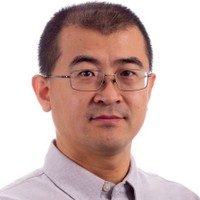
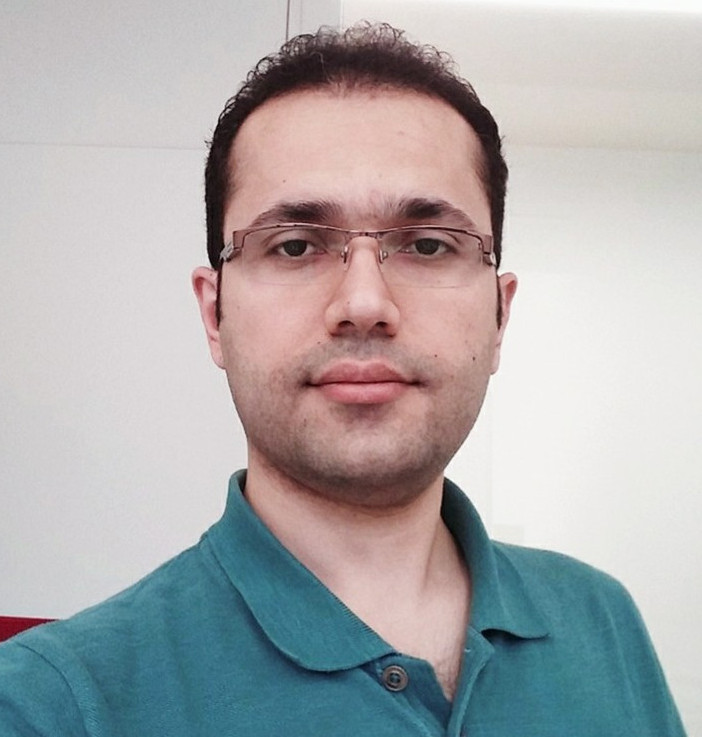
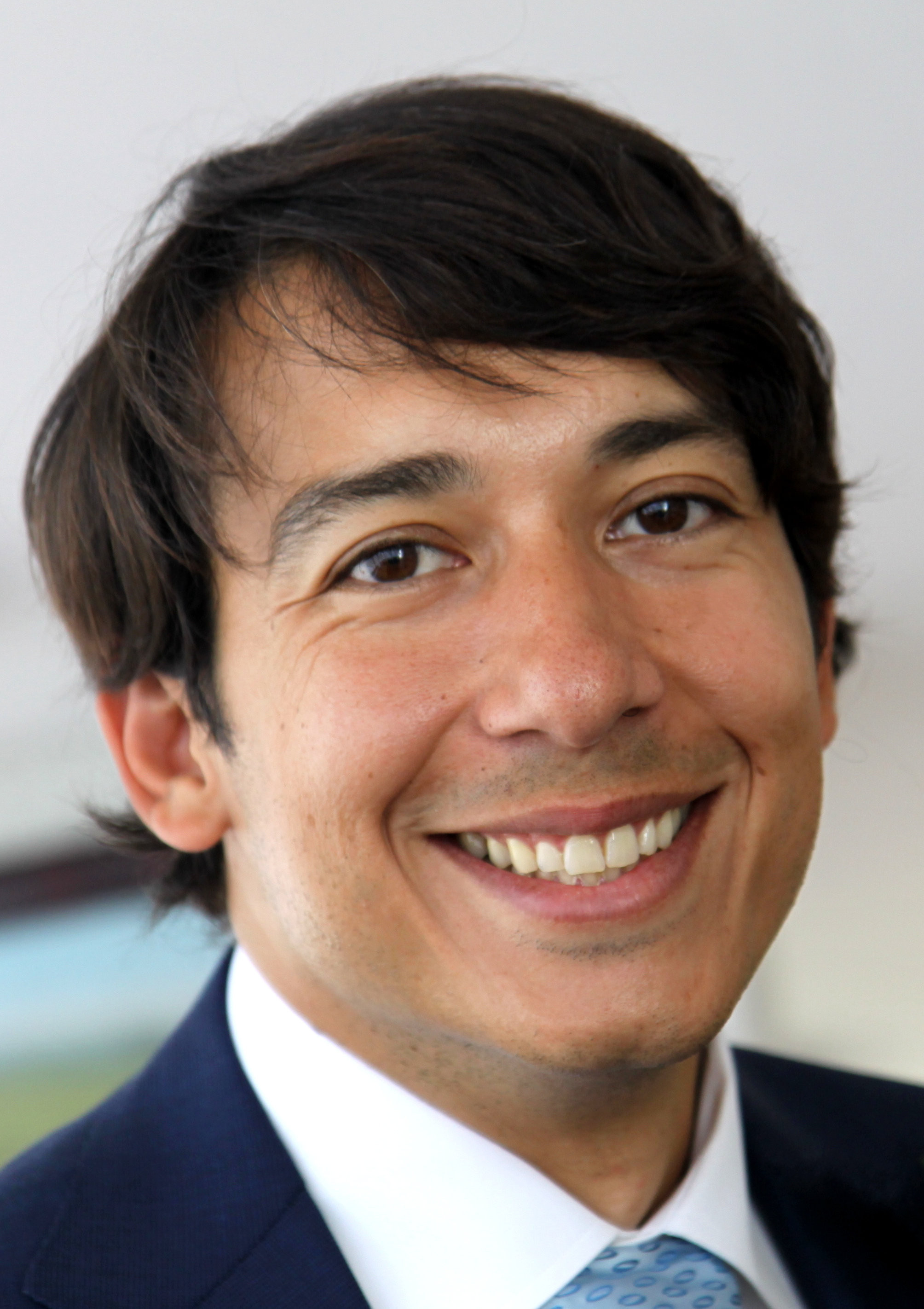
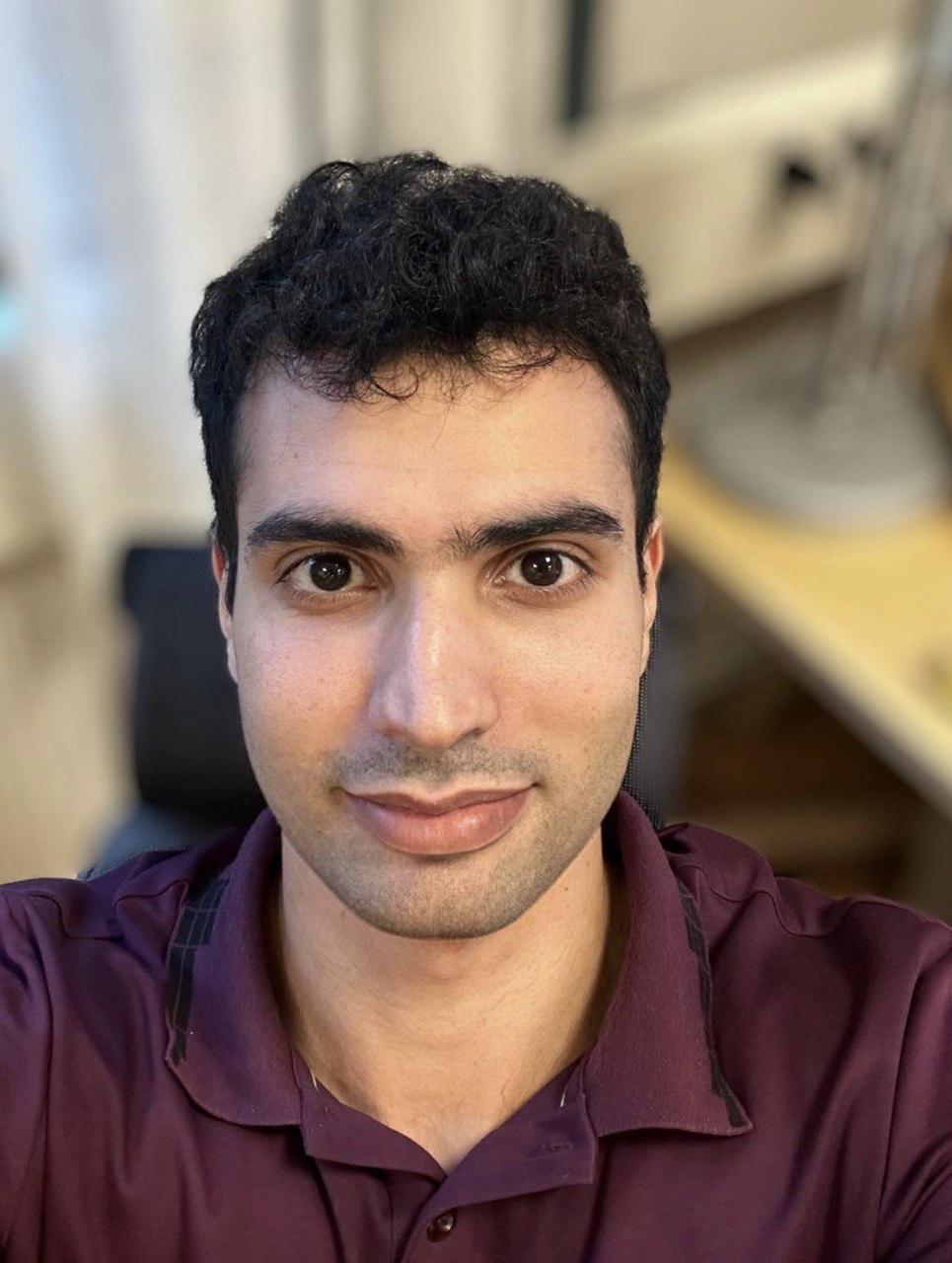
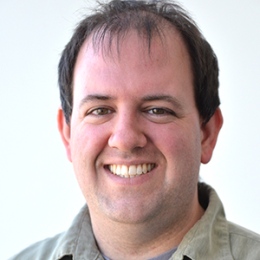
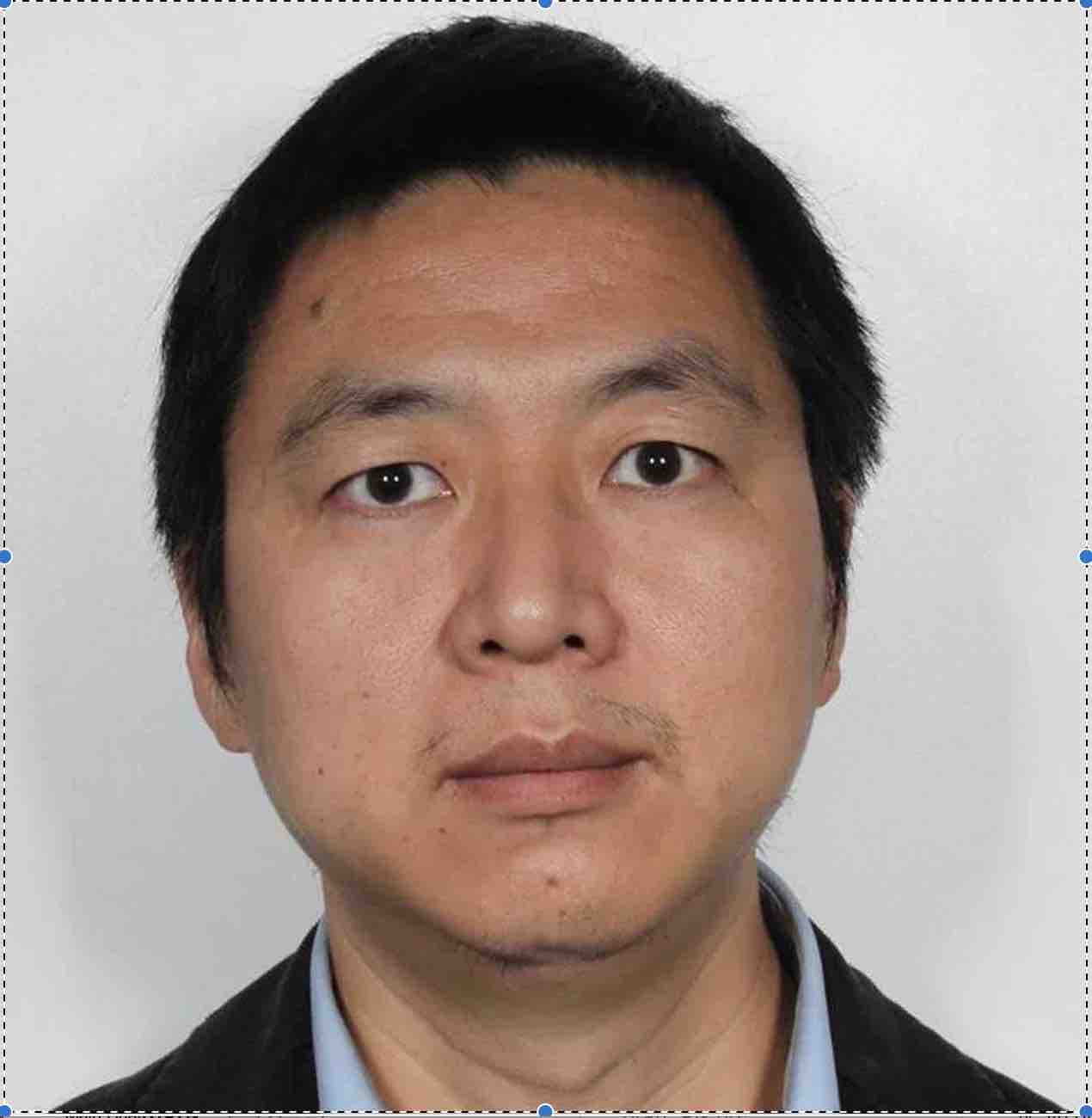
Zhibo Pang is an Adjunct Professor at KTH Royal Institute of Technology's Department of Intelligent Systems (EECS) and Senior Principal Scientist at ABB Corporate Research Sweden. His work focuses on digital transformation in industry and healthcare, spanning robotics, AI, control systems, and wireless communication. He leads projects in embodied intelligence, Industry 4.0, and Healthcare 4.0, with 23 granted patents and over 120 journal papers. Education: PhD in Electronic and Computer Systems (KTH, 2013), MBA in Innovation & Growth (University of Turku, 2012). Key Roles: IEEE Technical Committee Chair, Editor of 6 IEEE journals, ABB Inventor of the Year (2016, 2018, 2021). Research Interests: Robotics safety, wireless automation, federated learning, digital twins, and IoT security. Recent Projects: Cloud-fog automation frameworks, robot skin systems for healthcare, and latency-aware industrial control. His work bridges academia and industry through cross-functional collaborations.
Mikael Johansson is a Professor at Kungliga Tekniska Högskolan (KTH), specializing in Control Technology . He teaches and coordinates courses such as Distributed Optimization (FEL3311) and various advanced-level degree projects in computer science, electrical engineering, and systems engineering. His research spans Control Systems , Machine Learning , and Optimization , with a focus on asynchronous algorithms, federated learning, and applications in energy systems and construction. His work includes 15 recent publications on topics like neural networks, distributed optimization, and battery technology. Notable areas of contribution are in asynchronous learning, federated learning with privacy constraints, and quasi-Newton methods for optimization. His research bridges theoretical advancements with practical applications in urban design, healthcare, and autonomous systems.
Tobias Oechtering is a Professor at the Division of Information Science and Engineering within the School of Electrical Engineering and Computer Science at KTH Royal Institute of Technology. His research focuses on information theory, privacy-preserving technologies, statistical signal processing, machine learning, and smart grid systems. He has held academic positions at KTH since 2008, advancing from Post-Doctoral Researcher to Assistant Professor (2010–2013), Associate Professor (2013–2018), and Professor (2018-present). He has supervised over 20 PhD students and contributed to numerous postdoctoral programs. Research Interests: - Network information theory and physical-layer security - Privacy mechanisms with provable guarantees - Distributed statistical inference and sensor calibration - Reinforcement learning and privacy-aware machine learning - Smart grid privacy and energy management - Wireless communication algorithms and signal processing - Networked control systems and stability analysis He currently supervises 7 PhD students and hosts 3 postdocs. His work has led to over 150 peer-reviewed publications, with recent contributions in privacy-preserving smart grid strategies, adversarial inference control, and information-theoretic security. He has served as editor for IEEE Transactions on Information Forensics and Security and held leadership roles in KTH's Digitalisation Research Platform.
Jonas Strandberg is an Associate Professor at KTH Royal Institute of Technology's Department of Physics, part of the School of Engineering Sciences. His research focuses on particle physics, particularly within the ATLAS Collaboration at the Large Hadron Collider (LHC). He contributed to the Higgs boson discovery and currently studies its properties. Strandberg has been involved in detector development, including the HGTD timing detector for the LHC upgrade. He holds a PhD from Stockholm University (2006) and worked as a postdoc at the University of Michigan (2006-2011) before joining KTH. His teaching responsibilities include courses on experimental particle physics, statistical methods, and engineering skills. Research interests span high-energy physics, collider technology, and detector systems. Research Highlights: Member of the ATLAS Collaboration since 2011 Key contributor to Higgs boson measurements Developed timing detector systems for LHC upgrades Published extensively on particle physics and accelerator technology Teaching & Supervision: Course responsible for Experimental Particle Physics (SH2203) Teaching roles in Applied Modern Physics (SH1015), Embedded Systems Design (IL2232), and more Professional Activities: ATLAS Data Preparation Coordinator (2015-2017) Member of the Particle and Astroparticle Physics Group at AlbaNova University Centre
Lars Davidson is a Professor in the Department of Fluid Dynamics at Chalmers University of Technology. His research focuses on numerical simulations of fluid flow and heat transfer, with an emphasis on turbulence modeling for Large Eddy Simulation (LES) and hybrid LES/RANS methods. He has developed computational codes CALC-BFC and CALC-LES based on finite-volume techniques, and recently integrated machine learning to enhance wall functions and turbulence models. Key projects include Hybrid LES/RANS for wall-bounded flows Machine learning applications in fluid dynamics Aeroacoustic noise reduction in automotive and aerospace systems Wind turbine load analysis in forested regions . His publications span 302 articles in journals and conferences, with recent work on Neural networks for turbulence closure Plasma actuators for drag reduction Lattice Boltzmann wall-modeled LES . Collaborations include teams at Volvo, Siemens, and international research groups.
Emil Björnson is a Professor of Wireless Communications and Head of the Communication Systems Department at KTH Royal Institute of Technology since 2024. He received his Master of Science in Engineering Mathematics from Lund University (2007) and PhD in Telecommunications from KTH (2011). After postdoctoral work at SUPELEC, France (2012-2014), he held faculty positions at Linköping University (2014-2021) before returning to KTH in 2020. Research Focus: MIMO communications, reconfigurable intelligent surfaces, radio resource allocation, machine learning for communications, and energy efficiency Editorial Roles: Editor for multiple IEEE transactions and magazines His research has significantly advanced wireless communication technologies, particularly in Massive MIMO and cell-free systems. He has authored four textbooks, including Massive MIMO Networks (2017) and Introduction to Multiple Antenna Communications and Reconfigurable Surfaces (2024). Scientific awards include: IEEE Fellow Clarivate Highly Cited Researcher Wallenberg Academy Fellow Digital Futures Fellow Multiple IEEE and EURASIP awards (2014-2024)
Hamed Nemati is an Assistant Professor at the Division of Network and Systems Engineering under the School of Electrical Engineering and Computer Science at KTH Royal Institute of Technology in Stockholm, Sweden. He was previously a Visiting Assistant Professor at Stanford University and a Research Group Leader at the Helmholtz Center for Information Security (CISPA) , where he also worked as a PostDoc and Research Fellow. Education : PhD in Computer Science from KTH Royal Institute of Technology Research Interests : Security of systems software, formal methods and program logics, interactive theorem proving, machine code analysis, applied machine learning Current Projects : Systematic verification of multi-language security protocols, hardware-software co-design for Spectre mitigation, capability-based access control models Scientific Awards : WASP (Wallenberg AI, Autonomous Systems and Software Program) faculty member Teaching Activities : Formal Methods in Security (Fall 2020-2023) at CISPA/Saarland University Digital Forensics and Incident Response (EP2780) (Fall 2024) at KTH
Elena Troubitsyna is a Professor of Computer Science with specialization in Software Engineering at KTH Royal Institute of Technology. Her research focuses on developing dependable, autonomous systems that ensure safety and reliability, particularly in complex environments like self-driving cars and drones. She employs rigorous mathematical modeling and verification techniques to address system complexity and real-time adaptability challenges. Her work emphasizes the co-engineering of safety and security in cyber-physical systems, integrating formal methods such as Event-B modeling with AI-driven solutions. Key research areas include cybersecurity for embedded systems, formal analysis of safety-security interactions, and resilient multi-agent systems. Elena has contributed to advancing methods for autonomous system navigation, fault tolerance, and privacy-preserving microservices architectures. Elena has organized international workshops like SENSEI (Safety-Security Interaction) and published extensively on topics such as model-driven engineering, formal verification of critical systems, and optimizing scheduling for distributed computing. Her research bridges theoretical foundations with practical applications, aiming to enhance societal trust in autonomous technologies.
Alejandro Russo is a Professor at Chalmers University of Technology , specializing in Information Flow Control (IFC) , Secure Programming Languages , and Functional Programming . His research bridges theoretical foundations and practical implementations, focusing on mitigating timing channels , covert channels , and data leakage in concurrent systems. Developed novel frameworks for Differential Privacy with provable accuracy bounds Pioneered COWL integration for browser security and instruction-based scheduling to prevent cache timing attacks Led major projects like HIPSTER (hybrid static/dynamic IFC) and AppFlow (practical IFC deployment) His publications reveal expertise in security libraries for Haskell and Python , with a focus on faceted execution , label manipulation , and mechanized security proofs . Students under his supervision have explored topics ranging from secure eDSLs to privacy-preserving compilation techniques . Scientific awards : Google Research Award (2011) for Python taint analysis Advising and grants : Principal Investigator for VR , STINT , and Google Research Award Supervised 12+ PhD and Master’s students in security and functional programming research
Seyedsaeed Razavikia is a Ph.D. candidate at the KTH Royal Institute of Technology , affiliated with the School of Electrical Engineering and Computer Science and the Division of Network and Systems Engineering . His work is supervised by Carlo Fischione , with co-supervision by Mairton Barros , and funded by the WASP project . B.Sc. and M.Sc. in Electrical Engineering from Iran University of Science and Technology and Sharif University of Technology , respectively. Visiting researcher at Imperial College London with Deniz Gündüz in the Information Processing and Communications Lab . Research interests span machine learning over networks , optimization , statistical signal processing , and communication theory . His work focuses on over-the-air computation , federated learning , and low-rank matrix recovery . Publications highlight advancements in digital communication , networked machine learning , and signal processing , with applications in massive connectivity and blind demixing . Awards : IEEE Sweden VT-COM-IT Best Student Journal Paper Award 2024 IEEE Sweden VT-COM-IT Top-5 Student Conference Paper Award 2024 Hans Werthén Foundation Visiting Abroad Scholarship Wallenberg AI, Autonomous Systems and Software Program Ph.D. Admission Collaborations include institutions like Imperial College London and Ericsson Research , with contributions to patents on digital channel computation .
Evan Patrick O'Connor is an Associate Professor in the Department of Astronomy at Stockholm University. His research focuses on computational astrophysics, particularly core-collapse supernovae, neutrino physics, and black hole formation. He leads research in the Computational Astrophysics group at the Department of Astronomy, where development of computational tools spans research areas from solar physics to cosmology. Dr. O'Connor received his Ph.D. from Caltech in the TAPIR group, following a bachelor's degree in Science (Physics, Honours, Co-op) from the University of Prince Edward Island. He was a postdoctoral fellow at the Canadian Institute of Astrophysics from 2012-2014 and a Hubble Fellow at North Carolina State University from 2014-2017 before joining Stockholm University. His research interests span computational astrophysics with a focus on core-collapse supernovae mechanisms, black hole formation, neutrino physics, gravitational waves, and the nuclear equation of state. He develops and utilizes sophisticated computational models to study the dynamics of compact objects and their connection to detailed microphysics. His work often involves multimessenger approaches, connecting theoretical models with potential observational signatures across neutrino, electromagnetic, and gravitational wave channels. Dr. O'Connor has made significant contributions to open-source scientific software development, creating tools like NuLib, GR1D, and various equation of state resources that have become valuable community resources. Analysis of his recent publications reveals a strong focus on understanding the complex interplay between stellar structure, nuclear physics, and explosion mechanisms in core-collapse supernovae. His research increasingly incorporates multi-dimensional effects, phase transitions in dense matter, and their observational consequences across multiple messenger channels. Recent work shows growing attention to data-driven approaches for connecting simulations with potential observations. Dr. O'Connor has received notable recognition including: Hubble Fellowship (2014-2017) He has developed and maintains several open-source tools including NuLib (neutrino interaction library), GR1D (spherically-symmetric general-relativistic hydrodynamics code), and various equation of state resources. His research group collaborates extensively with international teams studying supernova mechanisms and related phenomena, contributing to projects like SNEWS (Supernova Early Warning System). Dr. O'Connor leads the Computational Astrophysics group at Stockholm University's Department of Astronomy, which develops computational tools spanning research areas from solar physics to cosmology. The group maintains strong connections with international supernova research communities and contributes to global efforts in multi-messenger astronomy.
Ming Xiao is an Associate Professor in the Division of Information Science and Engineering at KTH Royal Institute of Technology's School of Electrical Engineering and Computer Science (EECS). He is affiliated with the Digital Futures Faculty and leads research in wireless communications, machine learning, and network coding. His work focuses on 6G networks, distributed learning, and secure communications. Affiliations: KTH EECS, Digital Futures, Swedish Research Council, EU Horizon Europe projects Roles: Editor for IEEE Transactions on Wireless Communications, TPC Co-Chair for VTC Fall Research Interests: Dr. Xiao's expertise spans wireless communication systems (e.g., mmWave, NOMA), network coding, machine learning applications in communications, and energy-efficient distributed systems. He has pioneered work on intelligent reconfigurable surfaces (RIS), federated learning in edge computing, and integrated sensing-communications (ISAC). Projects: Ongoing EU-funded projects include ASCENT (autonomous vehicular networks) and COVER (unmanned aerial vehicles for emergency response). Past projects include 6G channel coding and intelligent energy management in smart communities. Grants: Over 12 active grants from VR, EU Horizon Europe, FORMAS, STINT, and VINNOVA Awards: IEEE Vehicular Technologies Society Best Paper Award (2023), World Top 2% Researcher (2020–2023), Highly Cited Researcher in Computer Science/Engineering. Labs/Teams: Leads the KTH Digital Futures initiative, collaborates with RISE Research Institutes, and manages a team of 12 PhD students/postdocs focusing on 6G, distributed ML, and secure IoT.
Paul Stankovski Wagner is an Associate Professor and Senior Lecturer at Lund University's Faculty of Engineering (LTH), Department of Electrical and Information Technology. He serves as a Project Manager for the Department and is affiliated with several research initiatives including ELLIIT: the Linköping-Lund initiative on IT and mobile communication, LTH Profile Area: AI and Digitalization, and the Secure and Networked Systems research group. His research focuses on cryptography and information security , with particular expertise in post-quantum cryptography, lattice-based cryptographic systems, and side-channel analysis. His work spans theoretical foundations of cryptographic security as well as practical implementations for real-world applications. Key research areas include: Learning with Errors (LWE) problem and related algorithms BKW algorithm optimization for lattice-based cryptography Key management systems and secure communication protocols Anonymous credentials and privacy-preserving technologies Post-quantum cryptographic implementations Stream cipher analysis and nonrandomness detection Analysis of his recent publications (2023-2025) reveals a strategic expansion of his research from theoretical cryptography into applied security domains. While maintaining strong contributions to lattice-based cryptography (particularly the LWE problem and BKW algorithm), he has increasingly focused on practical applications in healthcare technology, pharmaceutical research, and vehicle networks. His 2025 paper on hospital-at-home security architecture demonstrates this applied direction, while his 2024 work on NFT frameworks for pharmaceutical R&D shows interdisciplinary innovation at the intersection of blockchain technology and healthcare. Dr. Stankovski Wagner has supervised 8 graduate students and has been involved in multiple significant research projects: SMARTY (2018-2024): A major project on secure software updates for smart cities funded by the Swedish Foundation for Strategic Research Side channels on post-quantum cryptographic algorithms (2017-2023): Dissertation project as assistant supervisor Developing tools for secure software patch deployment (2018-2022): Dissertation project as assistant supervisor Artificial Persons (2021): Advanced study group at Pufendorf IAS He is a core member of the Secure and Networked Systems research group at Lund University, which focuses on developing robust security solutions for emerging networked technologies. The group maintains strong collaborations with industry partners working on IoT security, healthcare technology, and smart city infrastructure.
Hasan Basri Celebi is a researcher at KTH Royal Institute of Technology's School of Electrical Engineering and Computer Science (EECS), active in the field of wireless communication systems. His work focuses on ultra-reliable low-latency communication (URLLC) for mission-critical IoT applications, with a particular emphasis on decoding complexity constraints and computational efficiency in next-generation networks. PhD in Electrical Engineering from KTH (2021) Key research areas: Channel coding, Finite blocklength regime, Industrial IoT, Signal processing, Biomedical sensor development Celebi's publications span telecommunications journals and conferences, addressing theoretical limits in low-latency communication and practical implementations for complexity-constrained receivers. His interdisciplinary work includes developing medical devices like transcutaneous bilirubinometers and optical probes for diffuse spectroscopy applications. A notable grant from the Swedish Foundation for Strategic Research (SSF) supported his work on low-complexity receivers.
Slimane Ben Slimane is an Associate Professor and University Lecturer at the Royal Institute of Technology (KTH) in Stockholm, Sweden, where he is affiliated with the School of Electrical Engineering and Computer Science. His academic position combines teaching responsibilities with active research in communication systems. Dr. Ben Slimane's research focuses on critical areas of modern wireless communications: Wireless Communication Systems and 5G/6G Technologies Radio Network Design and Optimization Signal Processing for Communication Systems Network Coding and Cooperative Communications IoT Security and Industrial Wireless Networks Cognitive Radio and Spectrum Management His publication record demonstrates a strong progression from fundamental wireless communication research to addressing contemporary challenges in next-generation networks. Recent work focuses on mmWave communications, beam alignment issues in 3GPP standards, C-RAN architectures for beyond 5G, and security solutions for industrial IoT deployments. His research consistently bridges theoretical frameworks with practical implementation challenges faced by industry. At KTH, Dr. Ben Slimane serves as examiner and course coordinator for numerous advanced courses including Wireless Communication Systems (IK2507), Radio Networks (IK2510), and Signal Processing (II1303). He also oversees degree projects across multiple programs in computer science, electrical engineering, and information technology. Dr. Ben Slimane actively contributes to academic development through examination of bachelor's and master's theses, with particular focus on communication systems, embedded systems, and ICT innovation specializations. His teaching portfolio reflects the interdisciplinary nature of modern communication engineering education at KTH.