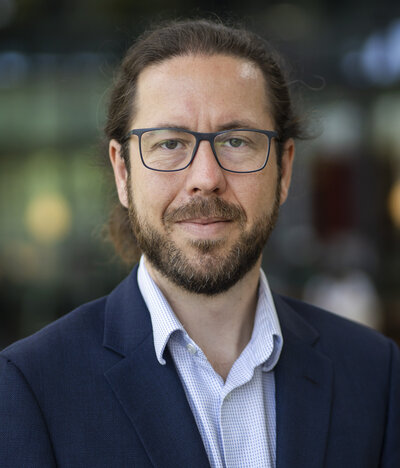
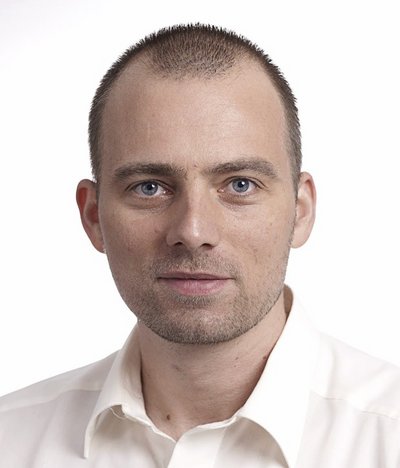
Boris KaranovView profile
Research Fellow
Boris Karanov is a post-doctoral research member at the Signal Processing Systems Group within the Department of Electrical Engineering at Eindhoven University of Technology since October 2020. His research focuses on applying deep learning techniques to digital signal processing in optical fibre communications. His academic background includes a Ph.D. in Electrical Engineering from University College London (awarded December 2020), where his research focused on developing new coding and detection methods for communication over the nonlinear dispersive optical fibre channel using deep learning. He also holds joint M.Sc. degrees in Photonic Networks Engineering from Aston University, Osaka University, and Technical University of Berlin (2016), and a B.Sc. in Telecommunication Engineering from Technical University of Sofia (2014). Dr. Karanov's research interests span optical fiber communications, digital signal processing, deep learning applications in communications, nonlinear fiber effects, and transceiver design. His work bridges theoretical communication principles with practical AI-driven solutions for next-generation communication systems. His recent publications demonstrate a strong trend toward applying neural networks and deep learning techniques to solve challenging problems in optical communications, radar signal processing, and speech enhancement. The research shows increasing focus on robustness of AI solutions under real-world constraints and imperfect channel conditions. Nokia 'Most innovative AI solution' award (2018) for pioneering work in machine learning applications to communication systems 'Best paper award' from IEEE/OSA Journal of Lightwave Technology (2021) Lombardi prize from Electronic and Electrical Engineering department at UCL (2021) for the most impactful thesis Dr. Karanov is actively involved in multiple research projects including RAISE SPS (Robust AI for Safe radar signal processing), RAIDAR (AI for RaDAR), and ICONIC (Increasing the Capacity of Optical Nonlinear Interfering Channels), collaborating with institutions across Europe. His work in the Signal Processing Systems Group at Eindhoven University of Technology continues to push the boundaries of applying AI to communication challenges.