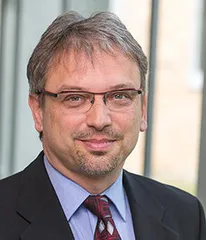
Prof. Wolfgang Utschick is a full Professor at the Technische Universität München (TUM), holding the professorship for Methods of Signal Processing since 2002. He is affiliated with the TUM School of Computation, Information and Technology and the Department of Electrical Engineering and Information Technology (EI). Since 2017, he has served as Dean of the EI Department, overseeing academic and research activities. His research integrates applied mathematics into signal processing applications across wireless communications, radar technology, vehicle safety, and machine learning. Prof. Utschick earned his doctorate after industry experience and completed postdoctoral studies at TUM and ETH Zurich. He has led numerous industrial and DFG-funded projects, resulting in patents in signal processing and over 150 peer-reviewed publications. Notable contributions include advancements in channel estimation, MIMO systems, and quantum radar technology. His research interests emphasize the intersection of mathematical theory and practical engineering, with a focus on optimizing communication systems and safety-critical applications. Awards include IEEE Fellow (2021), TUM Sabbatical for Teaching Excellence (2014), and multiple IEEE publication awards. Prof. Utschick’s work bridges academia and industry, addressing challenges in 5G/6G networks, radar innovation, and machine learning-driven signal processing. He remains active in curriculum development and departmental leadership at TUM.
Lisa Fenk is a Lise Meitner Research Group Leader at the Max Planck Institute for Biological Intelligence in Martinsried, Germany. Her work bridges Behavioral & Cognitive Neuroscience and Cellular & Systems Neuroscience , using Drosophila and zebrafish to study sensory processing. Education: PhD in Neurobiology (2007–2011), University of Vienna; Diploma in Biology (2005–2007), Physics & French (1999–2005). Prior Positions: Postdoc at Rockefeller University (2015–2021), IMP Vienna (2012–2015). Her research explores how brains differentiate self-generated sensory input from external stimuli, focusing on retinal movements and efference copy mechanisms. She employs electrophysiology , calcium imaging , and behavioral genetics to decode neural circuits. Key trends in her 15 most recent articles (2007–2025) include: Visual processing in Drosophila and spiders Role of retinal muscles in sensory augmentation Asymmetric neural coding for object-background distinction Transcriptomic and optogenetic analysis of neural circuits Evolutionary neuroethology across species
Lars Kunz is a research group leader at the Division of Neurobiology, Faculty of Biology, Ludwig-Maximilians-University Munich . He holds the title of PD Dr. (Privatdozent) and is a regular member of the Munich Center for Neuroscience (MCN) and full member of the Graduate School of Neuroscience (GSN). His work bridges neuroenergetics and reproductive endocrinology through experimental and theoretical approaches. Key research areas: Neuronal metabolism , Reactive oxygen species (ROS) , Auditory system physiology , Gonadal ion channels Current affiliates: LMU Research Group , collaborations with Artur Mayerhofer (LMU), Martin Biel (LMU), Hans Straka (LMU), and Magdalena Götz (LMU & HelmholtzZentrum München) His research focuses on metabolic costs of neuronal activity using Mongolian gerbils for auditory studies and amphibian models for in vivo-like neuroenergetics. Techniques include patch-clamp recordings , fluorescence imaging of NADH/FAD/ATP/ROS, and computational modeling . Recent work explores photodynamic therapy , TRPM2 channels , and endocannabinoid regulation in neural circuits. Article trends show interdisciplinary work across neuroscience (38%), reproductive biology (32%), and cell signaling (30%). Subfields include neural energy demand , ROS signaling , ion channel physiology , steroidogenesis , optogenetics , and cell death mechanisms . Collaborators span neurophysiology (Grothe, Straka) and reproductive endocrinology (Mayerhofer, Dissen). Students include Dr. Barbara Trattner and Dr. Stefanie Götz . His lab investigates juxtavascular astrocyte properties , ovarian neuroendocrinology , and photodynamic membrane effects . Methods: whole-cell patch-clamp , live fluorescence imaging , immunohistochemistry , and computational modeling .
Lucas Vincenzo Davi is a Professor of Computer Science at the University of Duisburg-Essen and Director of the paluno - the Ruhr Institute for Software Technology . He leads the SYSSEC research group and is a Principal Investigator (PI) in the SFB CROSSING and CASA excellence cluster. His work focuses on practical software and systems security, including memory corruption vulnerabilities, exploit mitigation, and blockchain smart contract security. Davi holds an ERC Starting Grant for Smart Contract Security research. Education: PhD in IT Security, TU Darmstadt (2011–2015), Dissertation: "Code-Reuse Attacks and Defenses" Master of Science in IT Security, Ruhr-Universität Bochum (2007–2009) Diplom (FH) in Business Informatics, FOM Neuss (2003–2007) Research: Davi's work emphasizes real-world security challenges like runtime attacks, trusted execution environments (TEE), and secure embedded systems. His contributions include Wemby (WebAssembly security analysis), HCC (smart contract hardening), and rowhammer mitigations like CATT. His research has influenced industry practices, e.g., Microsoft EMET v5.1 improvements. Awards: Best Teacher Award (2025) Finalist German IT Security Prize (2022, 2020) ACM SIGSAC Dissertation Award (2016) CAST Förderpreis (2010) Grants & Leadership: ERC Starting Grant (Smart Contracts), SFB CROSSING PI, CASA Cluster PI, and leadership in interdisciplinary initiatives like Nano Security (DFG Priority Program). Labs/Teams: Director of paluno, SYSSEC group leader, and collaborator in projects like HERA (hotpatching for embedded systems) and DMA’n’Play (DMA-based attestation).
Martin Göpfert is Professor of Cellular Neurobiology at the University of Göttingen, where he leads a research group focused on the molecular and biophysical mechanisms of hearing. He is affiliated with the Department of Cellular Neurobiology and the Faculty of Biology and Psychology, and also contributes to several interdisciplinary programs under the Göttingen Graduate School for Neurosciences (GGNB), including Sensory and Motor Neuroscience, Theoretical and Computational Neuroscience, and Molecular Biology of Cells. Education and Career: Degree in Biology, University of Erlangen-Nuremberg (1998) DAAD and Leopoldina Research Fellow, University of Zurich and University of Bristol (1998–2002) Royal Society University Research Fellow, University of Bristol (2002–2003) Independent Group Leader, Volkswagen Foundation, University of Cologne (2003–2008) Associate Professor for Molecular Biology and Biophysics of Sensory Systems, University of Cologne (2008) Full Professor for Cellular Neurobiology, University of Göttingen (2008–present) His research centers on understanding how molecular processes govern auditory function, using Drosophila melanogaster as a model organism. His lab integrates genetics, electrophysiology, calcium imaging, immunohistochemistry, mechanical measurements, and biophysical modeling to dissect the mechanisms of mechanosensation and auditory transduction. A major focus is on TRP ion channels and their role in hearing, force generation, and sensory adaptation. His work has revealed deep evolutionary parallels between insect and vertebrate hearing systems, particularly in the function of auditory hair cells and transduction machinery. The recent publications reflect a strong trend in mechanotransduction, sensory biophysics, and genetic dissection of hearing . His team has pioneered methods such as electrostatic actuation to probe auditory mechanics and is developing computational models for high-throughput screening of hearing-related genes. The work spans from molecular channel function (e.g., NOMPC, TRPN1, TMC) to system-level behaviors like aggression and locomotion modulated by hearing. Scientific Awards and Recognitions: Royal Society University Research Fellow DAAD Research Fellow Leopoldina Research Fellow Volkswagen Foundation Group Leader Martin Göpfert has supervised numerous PhD and postdoctoral researchers, many of whom are co-authors on his publications, indicating an active mentoring role. His lab receives funding from national and international sources, supporting interdisciplinary research in sensory neuroscience. He is involved in multiple graduate programs, contributing to training the next generation of neuroscientists. His research group maintains strong collaborations across institutions and disciplines, particularly in biophysics and computational modeling. The lab is equipped for advanced mechanical and electrophysiological measurements and continues to innovate in methods for studying sensory systems. Future work aims to build a comprehensive "molecules-to-system" model of auditory function, integrating genetic, molecular, and systems-level data.
Changho Suh is a Professor in the Department of Electrical Engineering at Korea Advanced Institute of Science and Technology (KAIST), College of Engineering. His research spans information theory, machine learning, and data science with significant contributions to matrix completion, fairness in AI, and network communications. Dr. Suh's research interests focus on the theoretical foundations of information processing and machine learning. He has pioneered work in matrix completion with graph side information, developing efficient algorithms that leverage hierarchical structures and similarity graphs. His recent work emphasizes fairness in machine learning systems, addressing correlation shifts and developing methods for fair training and generative modeling. He has also made significant contributions to information theory, particularly in interference channels, network coding, and quantum key distribution. Analysis of his recent publications reveals a strong trend toward addressing fairness challenges in AI systems while maintaining theoretical rigor. His work bridges information theory with practical machine learning applications, particularly in recommender systems and community detection. Suh's research demonstrates how graph structures can enhance data recovery and how theoretical insights from information theory can improve modern machine learning systems. Dr. Suh has received recognition for his scholarly contributions through numerous publications in top-tier venues including IEEE Transactions on Information Theory, NeurIPS, ICML, and AAAI. His work has influenced both theoretical understanding and practical implementations in data science. As an academic advisor, Suh has mentored numerous graduate students who have gone on to publish significant research in their own right. His collaborative approach is evident in the diverse range of co-authors across his publications, indicating strong research partnerships both within KAIST and internationally. His laboratory work appears to focus on information-theoretic approaches to machine learning problems, with particular emphasis on structured data analysis, fairness considerations, and efficient algorithm design for large-scale data processing tasks.
Nevena Stajkovic is a postdoctoral researcher at Forschungszentrum Juelich (IBI-3) since November 2023. She previously held a postdoctoral position at the Hertie Institute for Clinical Brain Research and the Centre for Integrative Neuroscience in Tuebingen, Germany (April-October 2023), and is currently affiliated with RWTH Aachen since October 2023. Her research focuses on neuroelectronic interfaces and advanced imaging techniques. Education: Bachelor’s in Molecular Biology and Physiology (2011-2015), University of Belgrade. Master’s in Neurobiology (2015-2016), University of Belgrade. Ph.D. in Cellular and Molecular Neuroscience (2017-2023), University of Tübingen. Nevena specializes in genetically encoded enhancers for electron microscopy, voltage-gated sodium channels, and biorthogonal click chemistry. Her expertise spans super-resolution microscopy , fluorescent protein tagging , and molecular/cell biology . She previously developed methods to label neuronal proteins and optimize imaging media for advanced microscopy applications. Scientific Awards: Award for the best Master's thesis in Physiology (2016).
Sadra Seyedmasoumian Charandabi is a Researcher at the Chair of Information Theory and Data Analytics, RWTH Aachen University, Germany. His work focuses on machine learning integration in communication systems, polar code optimization, and novel multiple access techniques. M.Sc. in Electrical and Electronics Engineering from Bilkent University, Ankara, Turkey (2022). Thesis: "On polarization adjusted convolutional codes over fading and additive white Gaussian noise channels." B.Sc. in Electrical Engineering-Telecommunications from University of Tabriz, Iran (2017). He contributes to research on Machine Learning-based resource allocation , Non-Orthogonal Multiple Access (NOMA/RSMA) , and Polar Codes , with applications in modern communication systems. Previous collaborations include Bilkent University and ASELSAN on channel coding solutions, and Amirkabir University of Technology on random access networks.
Professor Marc Spehr is a principal investigator at the Department of Chemosensorics, Institute for Biology II, RWTH Aachen University. His research focuses on neurophysiology and reproductive physiology, particularly the molecular and cellular mechanisms underlying chemosensory signal transduction in the vomeronasal and olfactory systems. Using advanced methods such as electrophysiology, life-cell imaging, histology, and confocal microscopy, Spehr's work explores sensory adaptation, ion channel function, and chemical communication. His recent publications highlight studies on vomeronasal pumping, temperature-sensitive ion channels in human sperm, and neural coding of olfactory stimuli. Spehr's research spans interdisciplinary domains including neuroscience, reproductive biology, and biophysics. Key themes in his work include the role of TRPV4 in sperm thermosensitivity, HCN channels in vomeronasal signaling, and the evolutionary conservation of transmembrane proteins like TMEM16.
Ali Dziri is a permanent researcher at CentraleSupélec's Cedric Laboratory , focusing on wireless communications, signal processing, and embedded systems. His work spans 2004–2023 with key contributions in UWB communication, IoT networks, video/image transmission, and real-time tracking algorithms. His research interests include: Wireless Communications Signal Processing Embedded Systems Machine Learning IoT Networks Video/Image Compression Recent publications highlight trends in neural networks for channel equalization, MIMO relays for WSNs, and 5G D2D communication protocols. He has no listed scientific awards or advisees.
Marc Adrat is an Honorary Professor at RWTH Aachen University and Head of the Software Defined Radio research group at Fraunhofer Institute for Communication, Information Processing and Ergonomics (FKIE). His dual role combines academic teaching with cutting-edge industrial research in communications engineering. Education: Diplom-Ingenieur in Electrical Engineering (1997), RWTH Aachen University Dr.-Ing. (PhD) in 2003 from Institute of Communication Systems and Data Processing (IND), RWTH Aachen Research Focus: Prof. Adrat specializes in channel coding , modulation techniques , and iterative decoding with particular emphasis on polar codes , BICM-ID systems , and EXIT chart analysis . His work bridges theoretical foundations with practical implementations in software-defined radio systems. His recent research directions include applying machine learning techniques (particularly genetic algorithms) to optimize communication systems, developing autoencoder-based signal enhancement methods, and advancing spectrum monitoring technologies for cognitive radio applications. Awards & Recognition: Best Paper Award at ICMCIS 2022 for work on spectrum monitoring techniques Appointed Honorary Professor by RWTH Aachen University in June 2024 Teaching & Supervision: Since 2009, he has taught courses on Modern Channel Coding for Wireless Communications and Advanced Coding and Modulation at RWTH Aachen. His teaching covers both theoretical foundations and practical implementations of modern communication systems. Laboratories & Teams: At Fraunhofer FKIE, he leads the Software Defined Radio research group, focusing on developing flexible, reconfigurable radio systems for military and civilian applications. The group works extensively on real-time implementations of advanced coding and modulation schemes.
Prof. Ofer Shayevitz is a faculty member at the School of Electrical Engineering , Tel Aviv University , holding the academic rank of Professor . He is affiliated with the Department of Systems and leads interdisciplinary research at the intersection of information theory , statistical inference , and data science . His research explores theoretical challenges in interactive communication , machine learning , and quantum information , with applications to communication complexity , graph analysis , and non-stationary environments . Notable work includes advances in high-dimensional regression , entropy estimation , and memory-constrained algorithms . The trends in his recent publications highlight information-theoretic bounds , statistical inference under constraints , and interactive protocols . His group has made significant contributions to quantum key distribution , planted graph detection , and guesswork analysis . Scientific awards include the Best Student Paper Award at ISIT 2020 . His research is supported by major grants from the Israel Science Foundation (ISF) , ERC Starting Grant , and Israel Innovation Authority . Prof. Shayevitz advises current PhD students Assaf Ben-Yishai , Uri Hadar , and Shahar Stein Ioushua , as well as M.Sc. students Inbar Pinsly and Oz Ben Hamo . Former advisees include faculty members at institutions like Kyushu University and University of British Columbia .
Frank Jenko is an Honorary Professor for Computational Physics at the Technical University of Munich and a Scientific Member and Head of the Tokamak Theory Division at the Max Planck Institute for Plasma Physics (IPP) since January 2017. His research focuses on plasma physics and fusion energy, with particular expertise in tokamak theory, turbulence simulation, and computational physics. Dr. Jenko was born in 1968 in Landshut and studied physics at the Technical University of Munich. After completing his doctorate, he joined IPP as a research associate in 1998. Following research stays in the USA, he completed his habilitation at the University of Ulm in 2005 and led an IPP junior research group focused on simulating plasma turbulence on supercomputers. From 2014 to 2017, he served as a professor of physics and astronomy and director of the Plasma Science and Technology Institute at the University of California, Los Angeles. His research interests span plasma physics, fusion energy, and computational methods for simulating complex plasma phenomena. Jenko's work particularly emphasizes gyrokinetic modeling of plasma turbulence in magnetic confinement devices, with applications to both tokamaks and stellarators. His research group develops and utilizes advanced computational tools like the GENE code for high-fidelity plasma simulations. Analysis of his recent publications reveals a strong focus on advancing computational methods for plasma turbulence simulation, with applications to both tokamak and stellarator configurations. His work spans fundamental plasma physics, computational algorithm development, and practical applications to fusion energy research, particularly in validating simulation codes against experimental data and applying these validated models to predict and optimize fusion plasma performance. Starting Grant from the European Research Council (2011) Hans Werner Osthoff Prize from the University of Greifswald (2004) Otto Hahn Medal from the Max Planck Society (1999) As head of the Tokamak Theory Department at IPP, Dr. Jenko leads a research group focused on computational plasma physics and turbulence simulation. His team has secured significant funding through European Research Council grants and maintains strong international collaborations with major fusion facilities worldwide, including JET, ASDEX Upgrade, and Wendelstein 7-X. The group plays a key role in the development of the GENE code, a leading gyrokinetic turbulence simulation tool used by researchers globally. The Tokamak Theory Department under Dr. Jenko's leadership operates advanced computational facilities for plasma turbulence simulation and maintains close ties with experimental teams at major fusion facilities. The department is instrumental in bridging theoretical plasma physics with experimental results, contributing to the advancement of magnetic confinement fusion research worldwide.
Jan Benda , PhD, is a Professor at the University of Tübingen within the Faculty of Mathematics and Natural Sciences , specifically affiliated with the Department of Biology and the Institute of Neurobiology , leading the Neuroethology working group. His research focuses on neuroethology, computational neuroscience, and sensory processing mechanisms in weakly electric fish and other species. Research Interests: Jan Benda investigates how sensory systems encode natural signals, emphasizing neural adaptation, burst spiking, and synchronization in weakly electric fish. His work bridges biological experiments with computational modeling to understand the interplay between stochastic and deterministic neural processes. Article Trends: His recent publications (2025-2022) explore statistical regularities in sensory processing across species, nonlinear signal transmission in spiking neurons, neural synchronization in electrosensory systems, genotype-phenotype correlations in ion channel mutations, and advanced methodologies for sensory system analysis. These studies highlight his integrative approach combining experimental neuroethology with computational frameworks. Academic Roles: As a full professor, Benda oversees teaching modules like Weakly Electric Fish (BIO3146) and Introduction to Scientific Computing and Statistics (BIO4201) . He contributes to the Neuroethology working group seminar and Integrative Neurobiology tutorials, reflecting his commitment to interdisciplinary education.
Philippe Bastiaens is Director of the Department for Systemic Cell Biology at the Max Planck Institute of Molecular Physiology and Full Professor at the Faculty of Chemistry and Chemical Biology , Technische Universität Dortmund. His research bridges biochemical network dynamics membrane-organized signaling synthetic cell reconstitution . Key research themes include: Pattern formation in cell signaling Membrane-coupled oncogenic pathways Redox-regulated phosphatases Self-organizing synthetic morphogenic systems Quantitative imaging of molecular gradients . His 2023 EMBO Journal article revealed redox control of EGFR phosphatase RPTPγ in cancer migration. Scientific achievements: 2013 ERC Advanced Grant 2008 EMBO Membership 2007 Leica Scientific Forum Speaker 1993 NVBMB Prize . He pioneered reversible cryo-arrest for dynamic molecular imaging and developed PDEδ inhibitors to target Ras oncogenes. Current affiliations: Max Planck Institute for Molecular Physiology (Dortmund) Technische Universität Dortmund with collaborative teams including Malte Schmick and Julaine James (secretary). Contact: philippe.bastiaens@mpi-dortmund.mpg.de