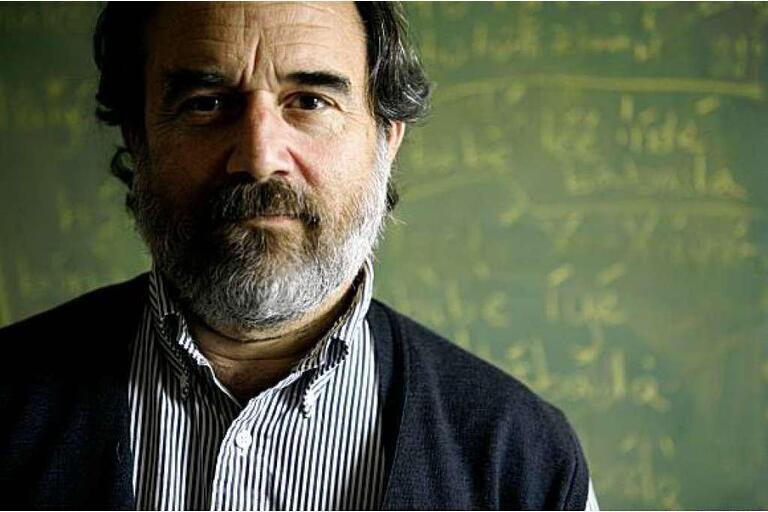
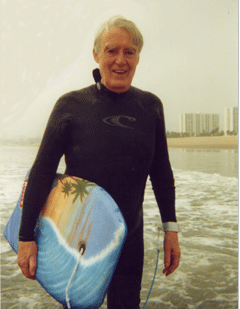
Larry M. Hyman is Distinguished Professor of Linguistics at University of California, Berkeley, specializing in phonological theory and African language studies. His research analyzes tone systems, Bantu morphophonology, and Niger-Congo historical linguistics. Research focuses on tonal patterns in Bantu languages, morphotactic structures, and historical development of African tone systems. Recent work examines Tiania tonology, Luganda noun phrase prosody, and Runyankore verb morphology. Publications demonstrate methodological rigor in phonological analysis and language documentation, contributing to theoretical understanding of tone, prosody, and morphological complexity in understudied languages. Editorial contributions include honor volumes and theoretical studies advancing autosegmental phonology and morphological analysis.
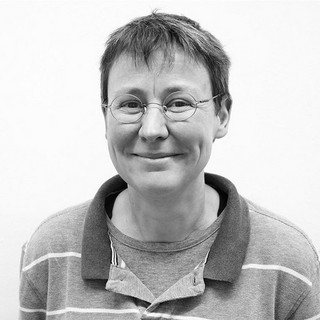
Prof. Birgit Hellwig is a Professor in the Department of Linguistics at the University of Cologne, specializing in language documentation, child language acquisition, and anthropological linguistics. Her research focuses on understudied languages such as Qaqet (Papua New Guinea), Tabaq (Sudan), and Goemai (Nigeria). She holds the Lichtenberg Professorship since 2014, funded by the Volkswagen Foundation. Her work integrates fieldwork, corpus linguistics, and cross-linguistic comparison to address issues in language endangerment, acquisition, and typology. Educational Background: PhD (Linguistics) 2003: Max Planck Institute for Psycholinguistics & Radboud University Nijmegen M.A. (African Linguistics) 1998: Universität Hamburg Research Interests: Language documentation and revitalization Child language acquisition in multilingual contexts Semantic typology of motion events Language contact in West Chadic and Nilo-Saharan languages Corpus-driven linguistic analysis Key Projects: "Documenting child language: The Qaqet Baining of Papua New Guinea" (longitudinal corpus) "The Acquisition Sketch Project" (cross-linguistic documentation framework) Documentation of Tabaq (Nubian) and Katla (Kordofanian) Grants and Funding: Lichtenberg Professorship (2014–present) ARC Discovery Grant for Qaqet language documentation Labs/Teams: Leading the Cologne Language Documentation Group Collaborator in the Language Documentation Reference Corpus (DoReCo)
Nina Hagen Kaldhol is a Lecturer at the University of Oslo, specializing in theoretical linguistics with a focus on phonology and morphology. She holds a Ph.D. in Linguistics from the University of California San Diego (2024). Her research emphasizes tone systems, grammatical tone interactions, and morphological complexity across diverse languages including Somali, Norwegian, Rere/Koalib, Tira, and others. Her work explores topics like compounding processes, grammatical gender, loanword adaptation, and bilingualism effects. Key research areas include: Tonal typology and morphological tone systems Grammaticalization processes in African languages Phonological interfaces in Scandinavian languages Sociolinguistic aspects of immigrant dialects Her recent articles (2021–2025) investigate Somali gender agreement patterns, tonal exponence typology, and cross-linguistic processing in L2 Norwegian acquisition. She has contributed to conference volumes on African linguistics and published extensively on Scandinavian tonal accents and loanword phonology. Outside academia, Kaldhol has been a musician, previously playing guitar in the Norwegian progrock band Suburban Savages.
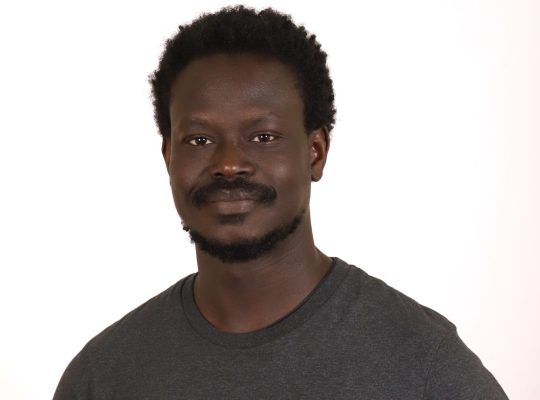
Dr. Guillaume Guitang is a Researcher at Jesus College, University of Oxford, working with Prof. Daniel Altshuler. He holds a PhD from Université libre de Bruxelles (ULB) as a MINI-ARC Research Fellow and completed his BA and MA at the University of Buea, Cameroon. His research focuses on language documentation, typology, and the Masa languages within the Chadic branch of Afroasiatic. He teaches courses in Modern Languages and Linguistics, and Psychology, Philosophy and Linguistics. Education: BA/MA: University of Buea, Cameroon PhD: Université libre de Bruxelles (ULB) His research interests emphasize endangered language preservation, particularly in African linguistic landscapes. He has been supported by prestigious fellowships including the MINI-ARC and Wiener-Anspach programs. His work bridges theoretical linguistics with applied documentation efforts, contributing to the understanding of Chadic language structures. Awards: MINI-ARC Research Fellowship Wiener-Anspach Postdoctoral Researcher Teaching responsibilities include supervision in linguistics modules at Jesus College. His research and postdoctoral work are part of a broader initiative to document under-studied languages, ensuring their academic and cultural preservation.
Prof. Dr. Dymitr Ibriszimow is a full Professor of African Linguistics (Chair of Afrikanistik II) at the University of Bayreuth since 1999. He holds a Doctorate from the University of Warsaw (1986) and Magister degrees in Arabic and African Linguistics from Jagiellonian University (1981). His professional journey includes roles as Research Fellow and Lecturer at Goethe University Frankfurt (1990–1999), and visiting positions at Sophia Antipolis University (2001, 1996). Research focuses on Chadic Comparative and Historical Linguistics, Berber studies, and broader Afro-Asiatic language families. He explores Cognitive Semantics, Ethnolinguistics, Linguistic Geography, and sociohistorical dynamics of the Lake Chad basin. Key contributions include co-editing the Chadic Linguistics series (2001–2007) and leading projects like the Bavarian Research Institute of African Studies (BRIAS, 2014–2017). Recipient of the Universitätsmedaille (2018) and former Dean of BIGSAS (2009–2018). His work bridges language reconstruction, cultural history, and interdisciplinary collaborations. Current affiliations include Vice Presidency of Méga-Tchad Association and editorial roles in linguistic publications.
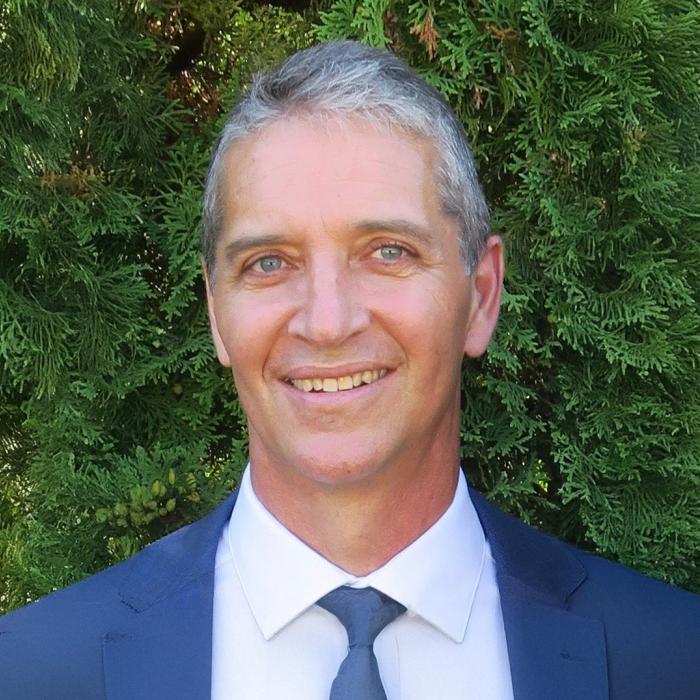
Dr. Sean Allison is a Professor and co-chair of the Linguistics and World Languages department at Trinity Western University's Faculty of Humanities & Social Sciences. He has taught French since 2015 and served as French Program coordinator since 2020. His research focuses on Chadic languages (e.g., Makary Kotoko), functional/typological linguistics, and French linguistics. He co-leads Bible translation projects in French-speaking Africa with Wycliffe Bible Translators since 1998, combining academic work with applied linguistic fieldwork. Education: PhD in Linguistics (University of Colorado, 2012), DEA and Master's in Linguistics (Université Marc Bloch, Strasbourg, 1996-1993), and certifications in French language studies. Awards include TWU's Davis Distinguished Teaching Award (2023-24) and a teaching excellence award from CU Boulder (2011). Research spans Makary Kotoko grammar, language contact in West Africa, and sociolinguistic impacts of Bible translation. Recent work includes a 2023 paper linking Bible translation to church health, a major 2020 grammar publication, and 2017 studies on conditional clauses and language contact dynamics. Teaching includes FREN 101-380 courses, emphasizing practical language skills and advanced grammar. His work integrates field linguistics with pedagogical innovation, supported by affiliations with SIL International and Wycliffe. Ongoing projects focus on Chadic language documentation and African language policy.
Peter Ladefoged (1925–2006) was a Distinguished Professor of Linguistics at UCLA, specializing in phonetic documentation of endangered languages. He directed the UCLA Phonetics Laboratory and authored foundational texts like A Course in Phonetics and The Sounds of the World’s Languages . His NSF-funded fieldwork spanned Africa, India, and Australia, resulting in dictionaries and grammars for Chadic languages. He expanded the International Phonetic Alphabet and consulted for My Fair Lady . Ladefoged contributed to speech technology, forensic phonetics, and respiratory physiology in speech. He trained 20+ PhD students, including Ian Maddieson, and received honors like the Gold Medal at ICPhS. He died during fieldwork in India in 2006.
Russell G. Schuh (1941–2016) was a Distinguished Professor of Linguistics at UCLA, known for his groundbreaking work on Chadic languages and African poetic metrics. He served as Chair of the Linguistics Department (1989–94) and the final Chair of Applied Linguistics at UCLA. His research focused on documenting understudied African languages, particularly in Northern Nigeria, Cameroon, and Niger. Education: BA in French, University of Oregon (1963) MA in French, Northwestern University (1964) MA in Linguistics, UCLA (1968) PhD in Linguistics, UCLA (1972) Research Interests: Schuh specialized in descriptive and historical comparative linguistics of Chadic languages (e.g., Hausa, Bole, Ngizim), African poetic metrics, and language documentation. His work extended to West African languages like Fula, Ewe, and Wolof. He also explored linguistic structures in Korean later in his career. Grants & Collaborations: Supported by National Science Foundation grants, he conducted fieldwork in Nigeria, collaborating with Dr. Alhaji Maina Gimba on projects such as the Yobe Languages Research Project. His work produced lexicons, grammars, and text collections for languages like Bole and Bade. Labs/Teams: His research involved creating lexical databases using FileMaker Pro and contributing to the Aflang website, managed by Dr. Olga Ivanova. He pioneered online teaching, digitizing UCLA's Linguistics 1 course. Legacy: Remembered for his scholarly rigor, administrative leadership, and kindness, Schuh’s legacy includes extensive linguistic archives and educational innovations. His fieldwork and publications remain foundational for Chadic studies.
Prof. Dr. Malte Zimmermann is a Full Professor of Semantics and Theory of Grammar at the Department of Linguistics, University of Potsdam. He is also a faculty and board member of the African Linguistics School (ALS), which biannually convenes in West African countries to advance formal linguistics knowledge among African scholars. His editorial roles include Associate Editor for Natural Language and Linguistic Theory and former Associate Editor for Linguistics and Philosophy . His educational background includes: Ph.D. in General Linguistics, Universiteit van Amsterdam (2002) M.A. in German Language and Linguistics/English/Anglistic/Philosophy, Universität zu Köln (1998) Abitur, Gymnasium Athenaeum, Stade/Niedersachsen (1989) Zimmermann's research centers on the interface between linguistic form and meaning, with specialization in formal semantics and grammar theory. His work spans quantification, tense, question semantics, discourse particles, and information structure, with particular emphasis on semantically under-researched West African languages (Chadic, Kwa, Grassfield Bantu). His research combines theoretical analysis with experimental methods, notably through projects like 'ExQ' examining embedded question interpretation across European and Non-European languages. He has led field research in Ghana, Cameroon, and Nigeria, challenging assumptions about language universals through empirical investigation of linguistic diversity. His publication trajectory reveals consistent focus on cross-linguistic semantic variation, particularly in focus interpretation, quantifier scope, and information structure phenomena. Recent work demonstrates growing integration of experimental methodologies with traditional formal approaches, with frequent comparisons between German, English, and diverse African languages. His investigations into serial verb constructions have been especially influential, uncovering hidden syntactic variability beneath surface similarities across languages like Akan and Igbo. As a supervisor, Zimmermann has guided numerous doctoral students to completion, with recent graduates including Giuliano Armenante (2024), Eva Shipova (2024), and Mareike Philipp (2023). His research has been supported by substantial funding including: SFB1287 Limits of Variability in Language, 'Limits of variability in interpretation' (2017-2021) SPP 1727 XPRAG.de, 'Exhaustiveness in embedded questions across languages' (2017-2020) SPP 1727 XPRAG.de, 'Exhaustivity in it-clefts' (2014-2017) DFG-Network 'Questions in Discourse' (2012-2016) SFB632 Information Structure projects (2007-2015) He leads the Potsdam semantics group (including Peter Sutton, Giuliano Armenante, Jeanne Lecavelier, Anna Struck, and Carla Bombi) which conducts fieldwork in West Africa. Currently, he co-directs the SFB-project on the 'Limits of Variability in Interpretation,' examining scope ambiguities, reconstruction, and bare NP interpretation across German, English, Akan, Igbo, and Medumba. His collaborative work with Edgar Onea (Graz) and Tatjana Scheffler exemplifies his commitment to bridging theoretical linguistics with empirical fieldwork and experimental validation.
Georg Ziegelmeyer serves as Senior Lecturer for African Linguistics and Lecturer for Hausa at the Department of African Studies, University of Vienna. His teaching portfolio includes Hausa language courses at multiple proficiency levels and specialized seminars on African linguistics, with active course offerings scheduled through 2025. His research centers on West African languages, with geographical specialization in Hausa and Chadic languages, Kanuri and Saharan relatives, and Atlantic languages (Fulfulde, Wolof, Cangin). Thematically, he investigates contact linguistics, language typology, and documentation, with two decades of fieldwork focused on linguistic contact scenarios in the Wider Lake Chad Region—including dynamics of change in northeastern Nigeria and Gashua Bade language data collection. Scientific Awards: None listed in source material. He has collaborated on major research projects (2002-2010) examining linguistic change in Nigeria. Professionally, he organized SYWAL2016 at the University of Vienna, led the 14th Nilo-Saharan Linguistics Colloquium (2019), serves on BICCL and SYWAL scientific committees, and co-edits Schriften zur Afrikanistik/Research in African Studies since 2019.