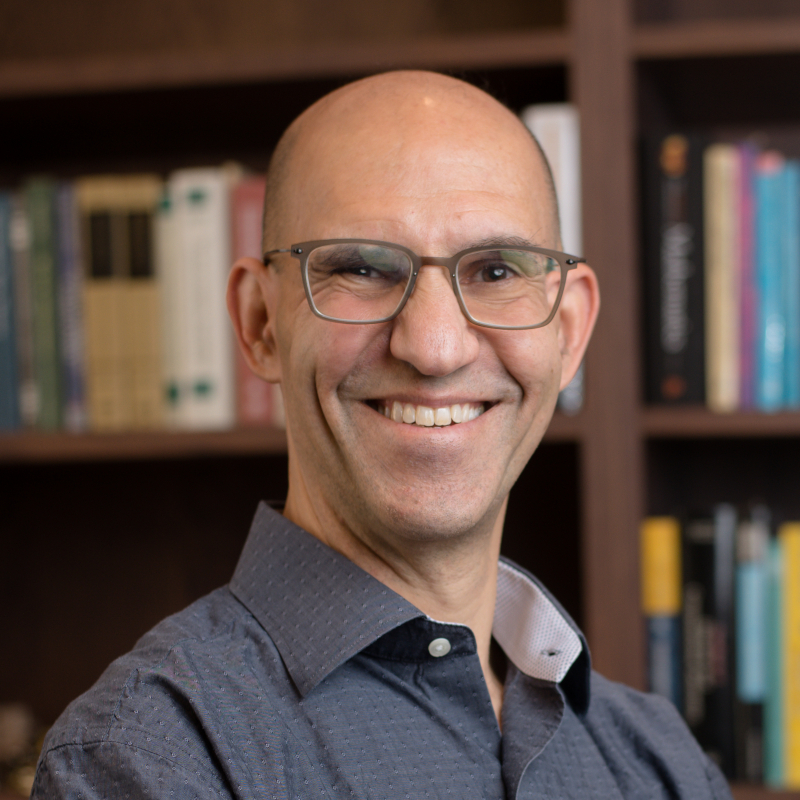
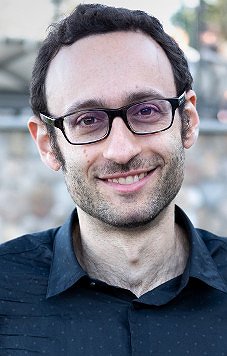
Jeremy Avigad is a Professor in the Department of Philosophy and the Department of Mathematical Sciences at Carnegie Mellon University, where he serves as Director of the Hoskinson Center for Formal Mathematics and holds a Dean's Chair in Logic and Philosophy of Mathematics. His primary research interests include Formal Methods and AI for mathematics, mathematical logic, and the history and philosophy of mathematics. His work bridges deep theoretical inquiry with practical applications, particularly in formal verification and automated reasoning. His recent publications reflect a strong focus on the formalization of mathematics, automated reasoning, and the integration of AI techniques into theorem proving. Key themes include the development and application of the Lean theorem prover, premise selection, proof optimization, and the formal verification of computational claims, especially in the context of blockchain technology. CADE-25 Skolem Award Avigad advises PhD students, such as Chase Norman, and is involved in significant research grants and collaborations, including work with StarkWare. He is an active organizer of major academic events like Big Proof and the Formalization of Mathematics workshops. He leads the Hoskinson Center for Formal Mathematics, a research hub dedicated to advancing the field of formal mathematics.
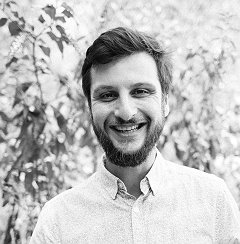
Thirimadura Charith Yasendra Mendis serves as an Assistant Professor at the University of Illinois Urbana-Champaign with dual appointments in the Siebel School of Computing and Data Science and the Department of Electrical and Computer Engineering. He maintains a strong affiliation with the Coordinated Science Lab, where he conducts interdisciplinary research bridging computer architecture, compilers, and artificial intelligence systems. His research program centers on deep neural networks, compiler design, and program verification, with significant contributions to soundness verification of DNN certifiers, domain-specific language development for neural network certification, and hardware-aware compiler optimizations. His work in parallel computing and graph neural networks specifically targets efficiency bottlenecks in AI infrastructure through novel vectorization and level parallelism techniques. Recent 2025 publications reveal a cohesive research trajectory focused on enhancing AI system reliability through formal methods and compiler innovation. Key themes include automated verification frameworks for tensor operations, declarative approaches to neural network certification, and GPU-optimized code generation for sparse attention mechanisms in transformer architectures—collectively advancing trustworthy AI deployment. Dr. Mendis has earned two prestigious national awards: DARPA Young Faculty Award (2024) NSF CAREER Award (2024) These competitive grants fund his research program investigating foundational aspects of AI safety and compiler technology, likely supporting graduate student mentorship in systems and programming languages research. Within the Coordinated Science Lab ecosystem, Mendis collaborates with cross-disciplinary teams on projects spanning hardware acceleration, programming language design, and neural network verification—leveraging this environment to drive innovation in computing systems reliability and performance.
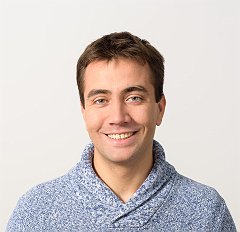
Derrick Warren is Dean of the College of Business and tenured Professor at Grambling State University, appointed in 2023. With 30+ years of leadership in higher education, technology, and industry, he drives innovation in business education, specializing in data science, blockchain, and digital transformation. Education : Doctor of Business Administration (DBA), Georgia State University MBA in Business Administration, University of South Florida Bachelor of Science in Computer Science, Southern University and A&M College His research bridges business strategy and emerging technologies , focusing on digital credentialing, cybersecurity, and AI. He emphasizes inclusive innovation, workforce readiness, and student support in HBCUs, aligning with his role as IBM-certified instructor training students and faculty nationwide. Publications trend toward cloud computing , digital transformation , and HBCU institutional advancement , with peer-reviewed work on risk management models and editorial contributions to HBCU-focused literature. His articles and talks often intersect with IBM initiatives and experiential learning. Scientific and Leadership Awards : TEDx Speaker (2021) National Alumni Director of the Year (2018) President’s Award (2018, 2019) IBM Golden Circle and Hundred Percent Club Over $200,000 in competitive grants secured for HBCU programs Dr. Warren’s academic leadership includes founding the GRAMPreneurs program, advocating for financial literacy, and expanding student organizations. He serves on the Louisiana Computer Science Education Advisory Commission, reinforcing his commitment to community collaboration and digital literacy.
João Seco is an Associate Professor at the Computer Science Department of the Faculty of Science and Technology at Universidade Nova de Lisboa (FCT/UNL). He serves as a researcher at NOVA-LINCS (NOVA-Laboratory for Computer Science and Informatics) and is a member of the PLASTIC Research Team. His research interests focus on programming language theory with special emphasis on type systems, including type-based concurrency and aliasing control, spatial-behavioural type logics, and component programming languages. His work spans theoretical foundations and practical applications in programming language design. Prof. Seco has been actively involved in several significant research projects including CLAY, Flex-Agile, Certified Interfaces, StreamLine (where he served as Principal Investigator), IP Sensoria, ComponentGlue, and DataBricks. He has developed prototypes such as the ComponentJ Compiler and LiveWeb for Interfaces. He has held visiting positions at prestigious institutions including ITU Copenhagen (May-June 2016) and Carnegie Mellon University (Fall 2012). Previously, he was a researcher at CITI (until 2014) and a member of ICTI (CMU-Portugal) (until 2013). Prof. Seco serves as MC Substitute for the EUTypes COST Action IC15123 and is a member of the BETTY COST Action IC1201. He has organized major conferences including ICALP'05, Concur'07, and DisCoTec'09, and has served on program committees for OOPS@SAC (2013-2016) and SOFT-PT@INForum.
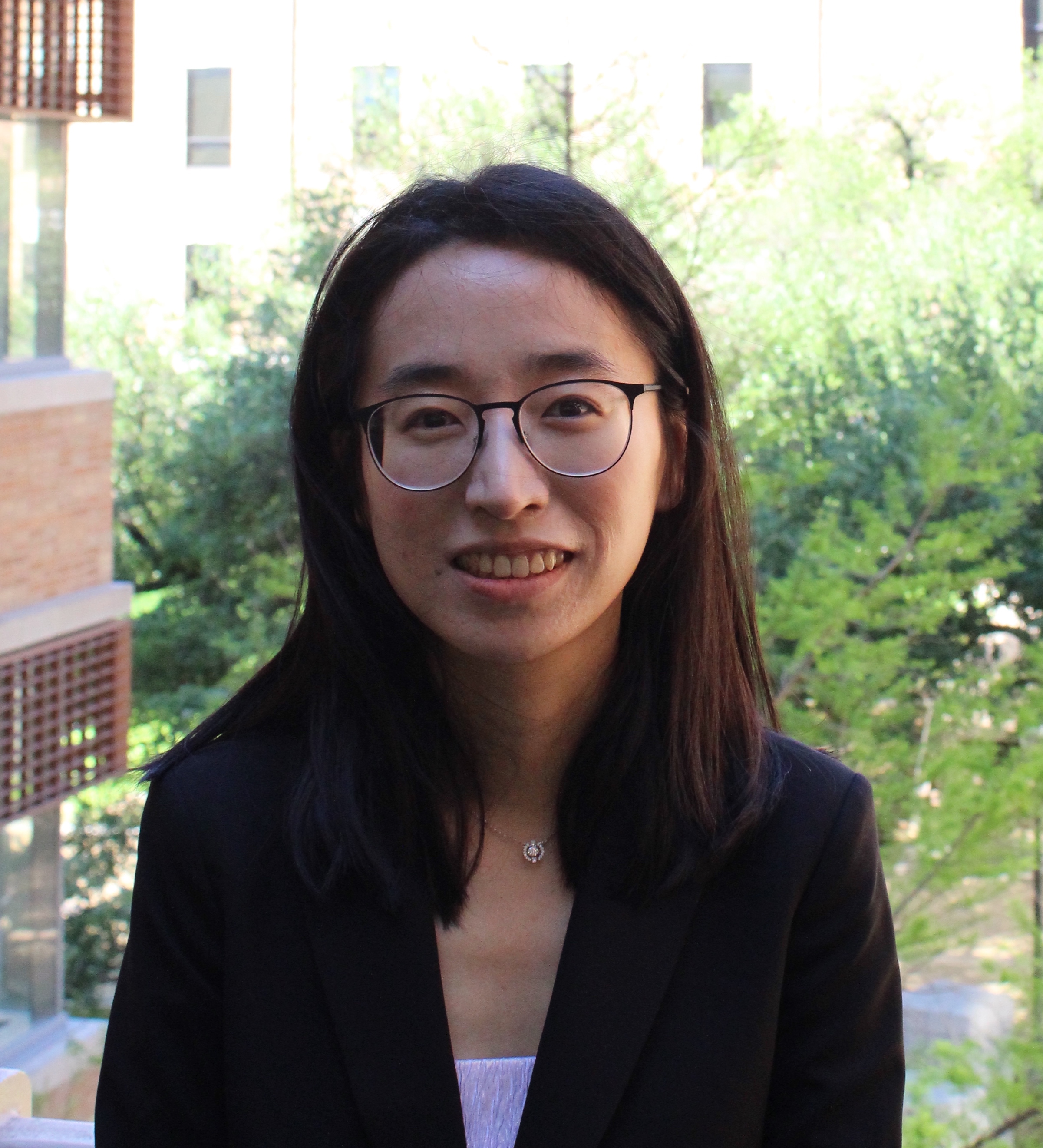
Jingbo Wang is an Assistant Professor in the Elmore Family School of Electrical and Computer Engineering at Purdue University, where he conducts research at the intersection of software engineering and formal methods. His work emphasizes developing rigorous program analysis and verification techniques to improve the security, robustness, and fairness of software systems. Prior to joining Purdue in August 2024, he was a Postdoctoral Researcher in the Department of Computer Science at University of Texas, Austin, working with Professor Isil Dillig. He obtained his PhD in Computer Science from the University of Southern California in 2023 under the supervision of Professor Chao Wang. Dr. Wang's educational background includes: PhD in Computer Science, University of Southern California, 2023 Postdoctoral Researcher, University of Texas, Austin, 2023-2024 Dr. Wang's research focuses on bridging software engineering and formal methods to create more secure, robust, and fair software systems. His work spans several key areas: Program Analysis and Verification : Developing techniques for static and dynamic analysis of software systems Security and Privacy : Creating methods to detect and prevent security vulnerabilities and privacy leaks Fairness in Machine Learning : Certifying and quantifying fairness properties of AI systems Formal Methods for Neural Networks : Verification techniques for deep learning models His recent publications demonstrate a strong trend toward applying formal methods to machine learning systems, particularly in ensuring fairness and robustness. He has published extensively in top-tier venues including PLDI, POPL, ICSE, and CAV, with multiple papers on verifying properties of neural networks and decision trees. His work often combines program analysis techniques with constraint solving and optimization approaches. Dr. Wang has received numerous awards and recognitions for his research: ACM SIGPLAN Distinguished Paper Award, PLDI, 2023 MIT EECS Rising Star, MIT, 2021 WiSE Merit Award, USC, 2021 Selected to participate in the 7th Heidelberg Laureate Forum, 2019 Selected for CRA-W Grad Cohort for Women Workshop, 2019 Multiple conference scholarships including VMW Scholarship (CAV'19) and PLMW Scholarship (PLDI'19) Dr. Wang is actively mentoring students and planning to recruit PhD students for Fall 2025. He currently advises: Siyu Chen (PhD student, 2024 Fall -- present) Xuyang Li (PhD student, 2024 Fall -- present) Multiple undergraduate researchers including Weiyi Chen, Yaoyang Ye, Paul Jiang, and Sarthak Tandon He has also served as a mentor for the PLMW @ PLDI'21 and USC Viterbi Graduate Mentorship Program. Dr. Wang is deeply involved in the programming languages and formal methods research community, serving on multiple program committees including OOPSLA, PLDI, CAV, ICSE, and ISSTA. His GitHub repository shows active work on fair decision trees and formal verification techniques, indicating an active research lab focused on the intersection of formal methods and machine learning.
Xinyu Feng is a Professor at the Department of Computer Science and Technology , Nanjing University , and collaborates with Huawei . His work focuses on programming languages and formal methods , particularly concurrent system software verification , separation logic , and certified compilation . His research has produced influential contributions in verifying low-level system software with hardware interrupts, preemptive threads, and concurrent data structures. Notable publications include work on progress guarantees for concurrent objects modular verification of synchronization primitives parameterized memory models . In professional activities, he has served on program committees for major conferences like PLDI'21 , POPL'18 , and CAV'16 . He received a Distinguished Paper Award at PLDI'19 .
Yizhou Zhang is an Assistant Professor at the Cheriton School of Computer Science, University of Waterloo. He specializes in programming language design and implementation, focusing on balancing expressive power with strong guarantees through language abstractions and compiler verification. Designing modular, type-safe language systems Probabilistic programming and inference optimization Algebraic effects and control flow management His recent publications explore lexical effect handlers, certified compiler frameworks, and nested polymorphism models. Awards include the ACM SIGPLAN Distinguished Paper Award (2023) for his work on probabilistic program compilation. Current advisees include PhD candidates Cong Ma, Zhaoyi Ge, Jianlin Li, and Ende Jin. He has served on program committees for POPL, PLDI, and OOPSLA conferences.
Farzaneh Derakhshan is an Assistant Professor in the Computer Science Department at Illinois Institute of Technology . Her research focuses on Programming Languages , Type Theory , and Formal Methods , with applications to concurrent programming , security verification , and intermittent computing . PhD in Pure and Applied Logic from Carnegie Mellon University (2021) Postdoctoral Fellow at Carnegie Mellon University Her research projects include: Designing modal logic for system verification Relational logic for GPU side-channel security Type systems for intermittent computing Behavioral types for security Advising : PhD Students: Godha Pallavi Bhogadi (co-advised with Stefan Muller), Myra Dotzel (co-advised with Limin Jia), Lang Liu Master's Students: Akash Madhu (co-advised with Minxuan Zhou) Scientific Awards : NSF Collaborative Award #2350217 for "Mixed Assurance Reasoning via Modal Logic" (2024) Teaching : Courses include CS595. Language-based Security , CS534. Types and Programming Languages , and CS440. Programming Languages and Translators at Illinois Tech.
Thomas P. Jensen is a Researcher at INRIA Rennes , France, specializing in program analysis , software security , and abstract interpretation . With a Cand. scient. in Computing and Mathematics from the University of Copenhagen (1990) and a PhD from Imperial College, University of London (1992), he has led research teams at INRIA, including the Celtique project-team (2010-2022) and currently the Epicure project-team (since 2022). He holds a Habilitation à diriger des recherches from Université Rennes 1 (1999). Research Focus Program analysis with type-based and big-step semantics approaches Certification of static analysis tools for embedded systems Software fault isolation and language-based security Information flow control through hybrid static-dynamic analysis His work spans Java security (including Java Card and mobile telephony) and formal verification of compilers and sandboxes. Notable projects include JavaSec , AJACS , and the CominLabs cybersecurity network. He received a Best Paper Award at GPCE 2018. Publications & Editorial Recent publications focus on algebraic data types , automata-based verification , and control-flow analysis with applications in cybersecurity . He has contributed to the Strategic research and innovation roadmap for SPARTA (2022) as editor. His work appears in top venues like POPL , PLDI , ICFP , and ESOP . Leadership Director of Laboratoire d'Excellence CominLabs (since 2022) Co-chair of VMCAI 2026 and member of PriSC 2024 Program Committee
Adam Chlipala is a Professor at the Massachusetts Institute of Technology working at the intersection of programming languages, formal methods, and computer systems. His research focuses on building practical verified systems with end-to-end machine-checked proofs, particularly using the Coq proof assistant. His educational background includes a Computer Science undergraduate degree from Carnegie Mellon University (2003) and a PhD in Computer Science from the University of California, Berkeley (2007). Following a postdoctoral position at Harvard University through 2011, he joined MIT as faculty. Chlipala's research spans multiple domains with strong emphasis on dependent types , verified compilation , and hardware-software co-verification . His work consistently bridges theoretical foundations with practical implementation, as evidenced by his development of the Ur/Web programming language and his focus on creating clean-slate hardware-software stacks with formal guarantees. Key research thrusts include cryptographic constant-time verification, side-channel security, and verified tensor compilation. His recent publications (2020-2025) reveal a clear trajectory toward increasingly complex verified systems, with growing emphasis on hardware-software integration, cryptographic implementations, and performance-critical applications. The work consistently leverages Coq for machine-checked proofs while addressing real-world constraints like timing channels and hardware interfaces. Chlipala is the author of the influential textbook Certified Programming with Dependent Types , which serves as a primary educational resource for Coq at numerous institutions worldwide. His professional activities include significant service to the PL community through program committees for major conferences including PLDI, POPL, ICFP, and CPP. He leads research initiatives connecting hardware and software verification, most notably through the DeepSpec project which aims to build fully verified computing stacks. His current work focuses on practical applications of dependent types for business applications through Ur/Web and verified cryptographic implementations.
Guilhem Jaber is an Associate Professor at University of Nantes , affiliated with the Gallinette team in the LS2N research laboratory . His work focuses on operational game semantics, contextual equivalence, and formal verification of higher-order programs with computational effects. Research Grants RECIPROG (2021-2025): ANR PRC Project, local coordinator CAVOC (2021-2025): Inria-Nomadic Labs agreement, project investigator CANofGAS (2022-2025): Inria Exploratory Action, co-investigator Scientific Awards Distinguished Paper Award at ICFP'21 Supervision Axel Kerinec: Postdoc on CANofGAS project Hamza Jaafar: PhD on CAVOC project Peio Borthelle: PhD co-advised with Beniamino Accattoli His research bridges game semantics with operational techniques, particularly for algebraic effects, parametric polymorphism, and separation logic. He actively participates in program committees for POPL, GALOP, and HOPE workshops.
Nate Foster is a Professor of Computer Science at Cornell University and a Visiting Researcher at Jane Street . During 2023-24, he also holds a Visiting Professor position at EPFL in the Data Center Systems Laboratory. His research focuses on Programming Languages and Networking , with significant contributions to formal verification of network data planes and domain-specific language design. Awarded NSF CAREER Award , Sloan Research Fellowship , ACM SIGCOMM Rising Star Award , and ACM SIGPLAN Robin Milner Award Active in program committees for conferences like POPL, PLDI, SPLASH, and ICFP Research Trends : His recent work explores intersections of programming language theory with networking, including symbolic verification tools like KATch , infinite-state network analysis with StacKAT , and active learning frameworks for network automata. He applies formal methods to practical challenges in software-defined networking and hypervisor verification. Scientific Awards : NSF CAREER Award Sloan Research Fellowship ACM SIGCOMM Rising Star Award ACM SIGPLAN Robin Milner Award Academic Leadership : Serves as Session Preview Co-Chair for POPL 2024 and organizes workshops like RPLS 2025. He has chaired tutorials on P4 programming and mentored researchers through PLMW programs.
Đorđe Žikelić is an Assistant Professor of Computer Science at the School of Computing and Information Systems at Singapore Management University (SMU) in Singapore. He completed his PhD in 2023 at the Institute of Science and Technology Austria (ISTA) under Krishnendu Chatterjee and Petr Novotný, receiving both Outstanding PhD Thesis and Outstanding Scientific Achievement awards. Prior to his doctorate, he earned bachelor's and master's degrees in mathematics from the University of Cambridge. His educational background includes: PhD in Computer Science, Institute of Science and Technology Austria (ISTA), 2023 Bachelor's and Master's in Mathematics, University of Cambridge Dr. Žikelić's research focuses on advancing formal methods to ensure software and AI systems are correct, safe, and trustworthy. His work bridges theoretical aspects of formal reasoning about probabilistic systems with practical automated verification methods. His primary research interests span three interconnected areas: Program Analysis and Verification: He develops techniques for analyzing probabilistic programs, numerical programs, and efficient quantifier elimination methods, addressing fundamental challenges in verifying complex software systems. Trustworthy AI and Safe Autonomy: He creates formal verification frameworks for learning-enabled control systems and neural networks, ensuring AI operates safely in uncertain environments through methods like runtime monitoring and certificate repair. Probabilistic System Verification: He explores broader applications including bidding games on graphs and blockchain protocol analysis, extending formal methods to novel domains beyond traditional finite-state verification. His publication trajectory shows a consistent progression from theoretical foundations to practical applications, with recent work increasingly focused on integrating formal verification with machine learning. His 2024-2025 publications demonstrate growing expertise in verifying learning-based systems and developing practical tools like PolyQEnt for quantified entailment solving. His scientific achievements have been recognized with: Outstanding PhD Thesis Award at ISTA Outstanding Scientific Achievement Award at ISTA Distinguished Paper Award at FM 2024 Dr. Žikelić serves on program committees for major conferences including TACAS, PLDI, AAAI, and CAV. He actively mentors through the Programming Languages Mentoring Workshop (PLMW) at PLDI 2025. His research group at SMU focuses on developing novel algorithms for verifying correctness of programs and AI systems, with current projects spanning formal methods, artificial intelligence, and programming languages.