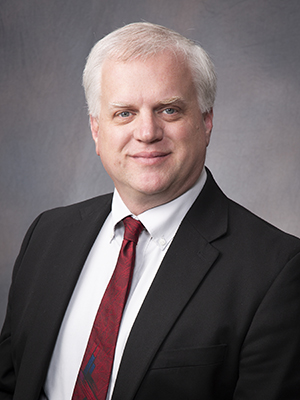
Sean M. McDeavitt is a Professor in Nuclear Engineering at Texas A&M University and serves as Director of Strategic Initiatives for the Texas A&M University System. His research focuses on nuclear materials science, including nuclear fuel behavior, high-temperature materials processing, and nuclear fuel cycle materials. Ph.D., M.S., and B.S. in Nuclear Engineering from Purdue University His work spans experimental and computational studies of nuclear fuel properties, reactor materials, and radiation effects. Recent publications emphasize thermal conductivity modeling, test reactor systems, and fuel behavior under irradiation. Key research areas include: Thermal conductivity of metallic and composite fuels Neutronics and radiation shielding Materials processing for advanced reactors Multiphysics modeling of nuclear systems Uranium-zirconium alloy characterization Test reactor experimental design
Jill Shea, PhD is a Research Assistant Professor in the Department of Surgery at the University of Utah School of Medicine and an investigator at the Huntsman Cancer Institute. Her research focuses on improving surgical outcomes through translational research, spanning three core areas: surgical intervention, imaging, and drug treatment. Key projects include developing nerve guide conduits for traumatic injuries, advanced imaging techniques for pancreatic cancer, and animal models for therapeutic development in surgical oncology. Primary Affiliation: Department of Surgery, University of Utah School of Medicine Research Areas: Translational research, peripheral nerve regeneration, cancer imaging Education: PhD and postdoctoral training at University of Utah, BS at University of Oregon Patent: Methods and devices for connecting nerves (U.S. Patent No. 10842494, 2018)
Ezio Santagata is a Full Professor at the Department of Environment, Land and Infrastructure Engineering (DIATI) at the Polytechnic University of Turin. He is a member of the SISCON Interdepartmental Center for Infrastructure Safety. His research focuses on roads, railways, and airports , with expertise in asphalt pavement design and sustainable materials. Scientific Branch : CEAR-03/A - Roads, Railways, and Airports Skills : Aligns with SDG 9 (Industry, Innovation, Infrastructure) and SDG 13 (Climate Action). Key research areas include asphalt binder characterization, cold recycling of bituminous materials, and integration of waste products like tire rubber and biomass ash into pavement systems. Recent publications highlight advancements in rheological testing , sustainable infrastructure , and material optimization for roads and airports. He supervises PhD students in Civil and Environmental Engineering, focusing on topics such as asphalt workability, analogical modeling, and innovative testing methods. Notable projects involve EU-funded initiatives (LIFE), national PRIN grants , and commercial research with industry partners. His laboratory, Road Materials (DIATI) , conducts experimental analyses on bituminous mixtures and recycled composites. Patents include BIT 18446 for using paint sludge in bituminous conglomerates and methods for certifying tire-derived materials in highway applications. Teaching roles span courses on Pavement and Track Engineering and Transportation Infrastructure Construction in Turin's Master's and PhD programs.
Cristina Balagna is an Associate Professor at the Department of Applied Science and Technology (DISAT) , Politecnico di Torino , with over 26 peer-reviewed publications and a co-author of an international patent. Her research focuses on nanostructured antimicrobial/virucidal coatings for aerospace, biomedical, and civil applications. Education: PhD in Materials Science and Technology (2011), Master in Biomedical Engineering (2007), both from Politecnico di Torino Her work includes innovative glass/glass-ceramic matrix composites with metal nanoparticles (silver, zinc, copper) deposited via co-sputtering , achieving thermal/chemical/mechanical resistance up to 450°C. These coatings are applied to filters, textiles, and biomedical devices, with recent licensing of royalties. Recent research projects include EU-funded NANOBLOC (2023-2025) and BIO-KILLER (2019-2021). She co-organizes the Bioceramics Symposium at ICACC since 2021 and supervised two PhD students. Awards: ECD Jubilee Global Diversity Award (2022) Teaching: Course Lecturer for Materials Science and Technology in multiple engineering programs Labs: Advanced Electron Microscopy Laboratory (DISAT)
Federica Bondioli is a Full Professor of Materials Science and Technology at the Department of Applied Science and Technology (DISAT) of the Polytechnic University of Turin. She serves as a member of the Interdepartmental Center IAM@PoliTo - Integrated Additive Manufacturing, the University Quality Assurance Committee, and is the Scientific Contact of the High-level group Technology Council for Advanced Materials. She was President of the National Consortium for Materials Science and Technology (INSTM) from 2020-2023 and is a member of the Board of Directors of the Italian Association for Materials Science and Technology (AIMAT). Education: Graduated in Chemistry from the University of Modena in 1995 PhD in Chemical Sciences from the University of Modena in 1999 Federica Bondioli's research focuses on additive manufacturing and advanced materials. Her work spans functional and structural ceramic materials (primarily for construction), functional coatings, nanomaterials, and innovative materials for additive manufacturing technologies. She has authored or co-authored over 160 scientific papers in international journals. Her research has evolved from traditional ceramic materials to cutting-edge additive manufacturing applications, reflecting her adaptability and forward-thinking approach to materials science. Her recent publications demonstrate expertise across metal additive manufacturing processes, bio-based photopolymers, lignin-based composites, and refractory metals processing. The research shows particular strength in laser powder bed fusion, directed energy deposition, and vat photopolymerization techniques, with emphasis on process optimization, material characterization, and sustainable material development. Scientific Awards and Recognitions: President of the National Consortium for Materials Science and Technology (INSTM) (2020-2024) Member of the Board of Directors of the Italian Association for Materials Science and Technology (AIMAT) (2017-2021) Member of the Board of Directors of the Italian Ceramic Society (multiple terms) Editorial Board Member for MATERIALS journal (2019-present) Editorial Board Member for INDIAN JOURNAL OF MATERIALS SCIENCE (2015-2018) Chairman of the organizing committee for XIII INSTM Conference (2022) Recipient of the Learning to Teach (L2T) Open badge (2023) Federica Bondioli has supervised numerous PhD students across multiple cycles. She has been Principal Investigator of many national and international research projects, including PISCO and IMPACT regional projects. In technology transfer, she has led research with partners like Marazzi Group, Ceramiche Polis, Prima Industrie, and 3DNT. She is a founding member of the spin-off MAT3D, which develops innovative photocurable resins for DLP and SLA additive manufacturing technologies. Her current research projects include BIG - Blue Is Green (2024-2026), LUX-CER-3DPRINTING (2023-2026), ECOBAM (2023-2025), and 3A-ITALY-Spoke 6 (2022-2025), all funded through the PNRR. She leads research teams focused on Additive Manufacturing within DISAT and oversees laboratories including the Material Engineering Didactic Laboratory and the Metallographic Preparation Laboratory.
Simonetta Lucia Pagliolico is an Associate Professor at the Department of Applied Science and Technology (DISAT) within the College of Architecture and Design at the Polytechnic of Turin. She holds a tenured position and serves as a Scientific Manager for research projects while also teaching various courses related to materials science and sustainable architecture. Her research interests span across multiple areas of sustainable building materials including chemical reactors, clay bricks, coatings, high performance eco-friendly concrete, photobioreactors, strengthening mortars, technical ceramics, and thermal storage in buildings using phase change materials. Her scientific work falls under the disciplinary sector IMAT-01/A - Materials Science and Technology within Area 0009 - Industrial and Information Engineering. Professor Pagliolico's publications demonstrate a consistent focus on sustainable building technologies, with recent work emphasizing photobioreactor applications for microalgae production as shading systems in buildings, characterization of phase change materials, and innovative approaches to concrete technology. Her research aligns with UN Sustainable Development Goals 7 (Affordable and Clean Energy), 9 (Industry, Innovation, and Infrastructure), 11 (Sustainable Cities and Communities), and 13 (Climate Action). Her scientific contributions span ERC sectors including Chemical Engineering, Civil Engineering, Materials Engineering, and Sustainable Design. She has been actively involved in teaching Materials Science and Technology courses for Architecture students and has served on doctoral colleges for Technological Innovation for the Built Environment. Professor Pagliolico has managed commercial research projects including the Turin Automatic Metro Line 1 project and investigations into building plaster deterioration. Her work bridges theoretical research with practical applications in sustainable construction materials and energy-efficient building systems.
Tonia Tommasi is an Associate Professor at the Department of Applied Science and Technology (DISAT) within the Polytechnic University of Turin , Italy. Her research focuses on circular economy , CO2 mitigation , and biowaste valorization for energy and material recovery. Scientific Director of ReSOIL Foundation (2022-2026) Project Leader for Valpo4Circular Economy (with PUCV, Chile) Principal Investigator for Agroforestry Project (Lavazza Spa) Task Leader for BioroburPlus and SATURNO Projects Dr. Tommasi contributes to multiple journals in Environmental Chemistry and Bioprocess Engineering . She supervises PhD students in chemical engineering and teaches courses on Polygeneration Systems , Circular Economy Platforms , and Biowaste Management . Key research areas include: Anaerobic Digestion, Biohydrogen Production, Life Cycle Assessment, and CO2 Valorization Her publications show trends in converting food industry waste into biofuels, biopolymers, and soil amendments Scientific Honors: 2014 Culture Award (Premio Teknè, Calimera) 2012 Best Science Transfer Experience (Researcher's Night, Italy) Advising: Currently supervising 6 PhD students across multiple cycles (2021-2025) focusing on topics like microalgal biomass valorization , Opuntia biorefinery , and biopolymer production . Labs & Teams: Works in DISAT's Anaerobic Fermentation (FERMAN), Environmental Catalysis (Blu Nox), and Biorefinery Processes laboratories. Leads research teams in Circular Economy , CO2 Reduction , and Biorefinery Processes .
Chandra L. Reedy is a Professor and Director of the Center for Historic Architecture & Design (CHAD) at the University of Delaware’s Joseph R. Biden, Jr. School of Public Policy and Administration. She oversees the graduate certificate program in historic preservation, teaches courses for the MA in Urban Analytics and Policy, and collaborates with the Asian Studies Program. Her research integrates laboratory analysis with fieldwork in Asia, focusing on cultural materials and intangible heritage. PhD, UCLA (1986) MA, UCLA (1982) BA, UC Davis (1975) Her research spans historic preservation , cultural heritage conservation , and materials science , with a focus on traditional technologies in India, China, Japan, and Cambodia . She employs 3D imaging , petrography , and digital analysis to study ceramic porosity, metalworking, and intangible practices. Recent projects examine Tibetan blacksmithing , coal-clay ceramics , and RTI imaging for conservation. Reedy has authored four books, three edited volumes, and 85 articles, serving as Editor-in-Chief of Studies in Conservation since 2010. Her collaborations extend to the Departments of Anthropology and Art History, emphasizing interdisciplinary approaches to cultural heritage.
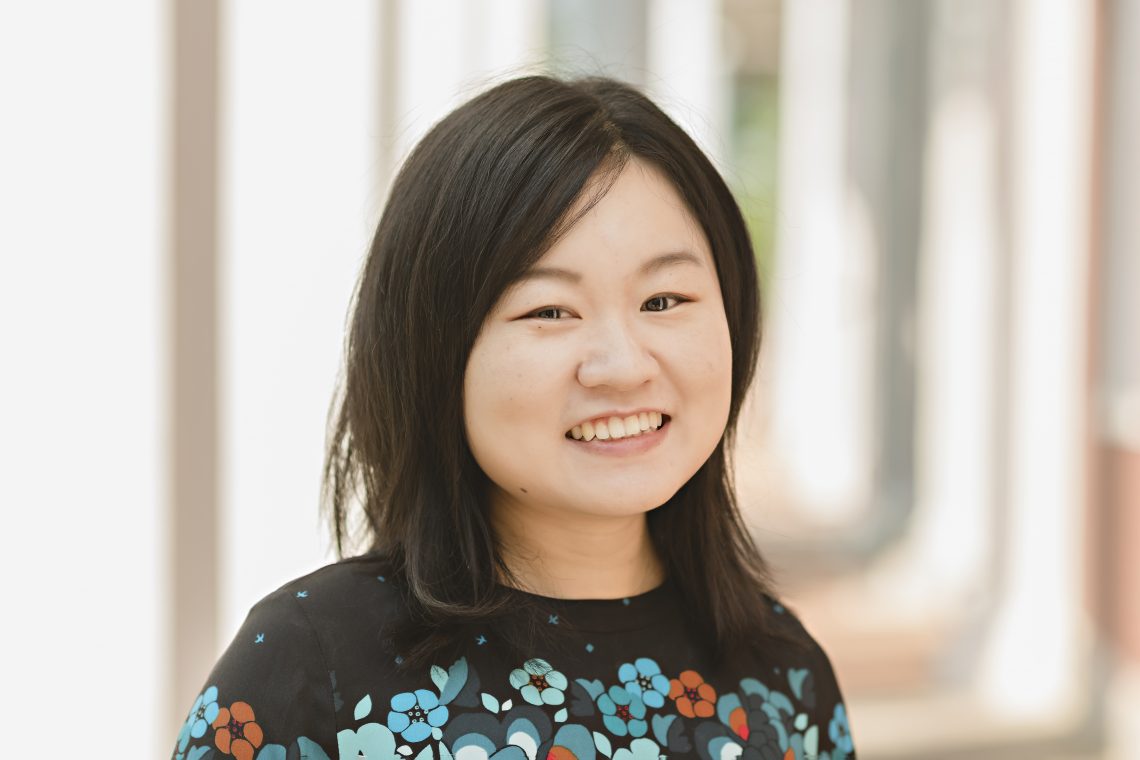
Mengying Liu is an Assistant Professor of Engineering at Washington and Lee University (W&L), where she investigates the environmental degradation of metallic materials. Her work combines scanning electron microscopy (SEM) with digital image correlation (DIC) to explore the structure-properties relationship in materials such as Ni-based alloys and pure nickel. Education: B.Sc. from Tianjin University (China) Graduate research at Virginia Tech Ph.D. from Texas A&M University (2021) Research focuses on hydrogen embrittlement and localized corrosion, with current efforts to acquire 3D DIC equipment for advanced deformation analysis. She teaches Solid Mechanics and lab courses, emphasizing hands-on learning and mentorship. Scientific Awards: American Association of University Women Grant (2023) for high-throughput crystallographic mapping research in the UK Her publications span topics like crack initiation mechanisms, thermal decomposition of nanomaterials, and metrology in DIC analysis. She is passionate about student mentoring and enjoys culinary experimentation and marathon training.
Dr. Carolina Tallon is an Associate Professor in the Department of Materials Science and Engineering at Virginia Polytechnic Institute and State University (Virginia Tech). She leads the Tallon Research Group, focusing on advanced ceramic materials for extreme environments. Her work emphasizes colloidal processing techniques, near-net-shaping methods, and modeling of materials properties. Education: B.E. in Chemical Engineering, Universidad de Granada, Spain Ph.D. in Chemistry (joint program), Universidad Autonoma de Madrid & Institute of Ceramics and Glass (CSIC) Research Interests: Ceramics Processing Ultra-High Temperature Ceramics (UHTCs) Multi-Scale Porous Materials Near-Net-Shaping Techniques Surface Science & Rheology Materials Properties Modeling Recent Research Trends: Dr. Tallon's work highlights innovative methods to fabricate complex ceramic geometries with controlled microstructures. Key areas include optimizing solvent systems for UHTC shaping, developing HERO coatings for refractory alloys, and simulating thermomechanical behavior of porous ceramics under extreme conditions. Awards: Jubilee Global Diversity Award (ACerS Engineering Ceramics Division, 2020) Advising & Grants: Supervises graduate students like Sydney Hulse and Hui-Chun (June) Yu. Active in securing grants, including a 2021 award for additive manufacturing infrastructure. Collaborates on projects involving cellulose nanomaterials and laser powder bed fusion. Labs & Facilities: Leads the Tallon Research Lab at Virginia Tech, equipped for advanced ceramic processing, thermal analysis, and microstructural characterization. Engages in outreach to promote STEM education and sustainable manufacturing practices.
Professor Nick Taousanidis holds a dual affiliation: serving as Professor at the Department of Mechanical Engineering at the University of Western Macedonia (UoWM) since 2019, and previously at TEI Western Macedonia. He is currently Deputy Head of the Mechanical Engineering Department and Director of the Interdepartmental MSc Program in Renewable Energy Sources & Buildings Energy Management. His career spans over three decades in academia, with roles including Head of the Mechanical Engineering Department (TEIWM) and leadership in research initiatives. Education: PhD in Combined Solar Thermal Systems (2008) MSc in Energy Conservation (1985) Degree in Business Administration (1989) Mechanical Engineer (1978) Research Focus: Specializes in renewable energy systems, particularly solar thermal applications, energy production from salinity gradients, and waste management. He also contributes to higher education strategy and curriculum development. His laboratory work includes the Centre of Renewable and Alternative Energy Forms and Rational Energy Use, and he pioneered testing facilities for boilers and radiators. Advising & Grants: Leads the Interdepartmental MSc program and has managed accreditation processes for laboratory standards (ELOT, ISO). His research spans energy systems, environmental engineering, and educational policy, supported through multiple institutional and collaborative projects. Labs & Teams: Oversees the Centre of Renewable Energy and Building Energy Management, and previously directed the Boilers Testing Laboratory (TEIWM) according to ELOT standards.
Reijo Kouhia is a Professor of Civil Engineering at Linköping University. His research focuses on computational mechanics, fatigue analysis, and material modeling. He has contributed significantly to the development of continuum-based fatigue models, anisotropic material behavior, and finite element methods applied to structural and material analysis. Key research areas include high-cycle fatigue of metals, concrete fracture mechanics, magneto-mechanical systems, and functionally graded materials. His work integrates experimental and numerical approaches to address challenges in civil, mechanical, and materials engineering. Recent publications highlight advancements in mesoscale concrete fracture models under dynamic loading, mechanical analysis of HTS tapes, and vibration analysis of complex structures. Collaborations span international institutions, focusing on sustainable materials and energy systems. Dr. Kouhia actively participates in academic activities, including editorial roles, conference presentations, and peer review. His contributions bridge theoretical and applied mechanics, emphasizing practical engineering solutions.
Ayman Ellakwa is an Associate Professor and Director of the Sydney Dental Program at the University of Sydney, leading the Department of Prosthodontics. He holds dual roles as Chair for Oral Rehabilitation and Coordinator for the DMD4 academic year. His academic journey includes a PhD in prosthodontics from the University of Birmingham (2001) and a Master’s degree in prosthodontics. Ellakwa has over 15 years of experience in academic leadership, curriculum development, and integrating CAD/CAM technology into dental education. He pioneered digital denture training in Australia and has authored over 50 research papers. Research interests focus on dental materials innovation, including polymerization shrinkage, fiber-reinforced composites, and digital denture technologies. Collaborations span institutions in Brazil, Japan, South Korea, and Saudi Arabia. Ellakwa has received awards such as the Roland Bryant Teaching Award (2010) and holds fellowships with the Royal Australasian College of Dental Surgeons. He reviews for high-impact journals like Dental Materials and Journal of the American Dental Association . Education: PhD (Prosthodontics, Birmingham University, 2001), Master’s in Prosthodontics. Grants: CRC-P: Dentistry without Mercury (2019), Flowable Composite System (2016). Awards: Excellence in Teaching (2010), Multiple Academic Distinctions (1987–1990). Labs/Teams: Leading research in prosthodontic materials and digital dentistry within the Sydney Dental School.
Johan Moverare is a Professor in Engineering Materials at the Department of Management and Engineering (IEI) at Linköping University. His research focuses on the mechanical properties of metallic materials, particularly in structural and high-temperature applications. He leads the research group in mechanical properties of structural materials, emphasizing interdisciplinary approaches combining advanced mechanical testing, microscopy, and material modeling. His work often involves close collaboration with Swedish industry to advance additive manufacturing technologies and address challenges in material degradation and performance optimization. Research Interests: Mechanical properties of metallic materials Additive manufacturing (3D printing) of superalloys and stainless steel Thermomechanical fatigue of high-temperature materials Material modeling and microstructure-property relationships In-service degradation effects on material performance Scientific Contributions: Listed as one of the top 2% most cited scientists globally by Stanford University (2023, 2022) Key projects include microstructure control in additive-manufactured superalloys and aeronautical applications Industry Collaboration: 10 years of industrial experience at Siemens Industrial Turbomachinery AB Advocates for industrial partnerships to bridge academic and practical material challenges Labs/Teams: Research group in Engineering Materials (KMAT) at Linköping University Focus on additive manufacturing innovation and material characterization
Zihe Li is a Research Associate at the Department of Mechanical Engineering, University of Bath, and a Postgraduate Research Student within the same department. His work focuses on advanced materials for energy harvesting applications, particularly in the realm of piezoelectric and porous ceramics. He is affiliated with the Centre for Integrated Materials, Processes & Structures (IMPS) and contributes to UN Sustainable Development Goals related to sustainable energy and environmental protection. Research Interests Li's research specializes in piezoelectric materials, energy harvesting systems, and porous ceramic fabrication. His work explores how microstructures enhance electromechanical coupling and durability in lead-free ceramics, while also addressing applications in water monitoring and self-powered devices. He investigates digital light processing and freeze-casting techniques to optimize material properties for energy technologies. Recent Publications Li's publications highlight advancements in porous ceramics for energy harvesting, including composites for water flow monitoring, bioinspired piezoceramics, and high-strength mullite-bonded SiC ceramics. His work spans materials processing, functional properties, and sustainable design principles. Labs & Collaborations Li collaborates extensively within the IMPS center at the University of Bath. His work involves partnerships with researchers in energy engineering, materials science, and robotics, focusing on interdisciplinary applications of piezoelectric materials in sustainable technologies.