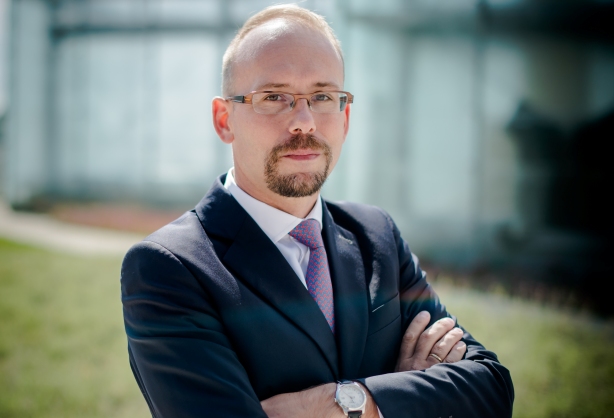
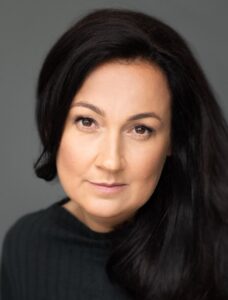
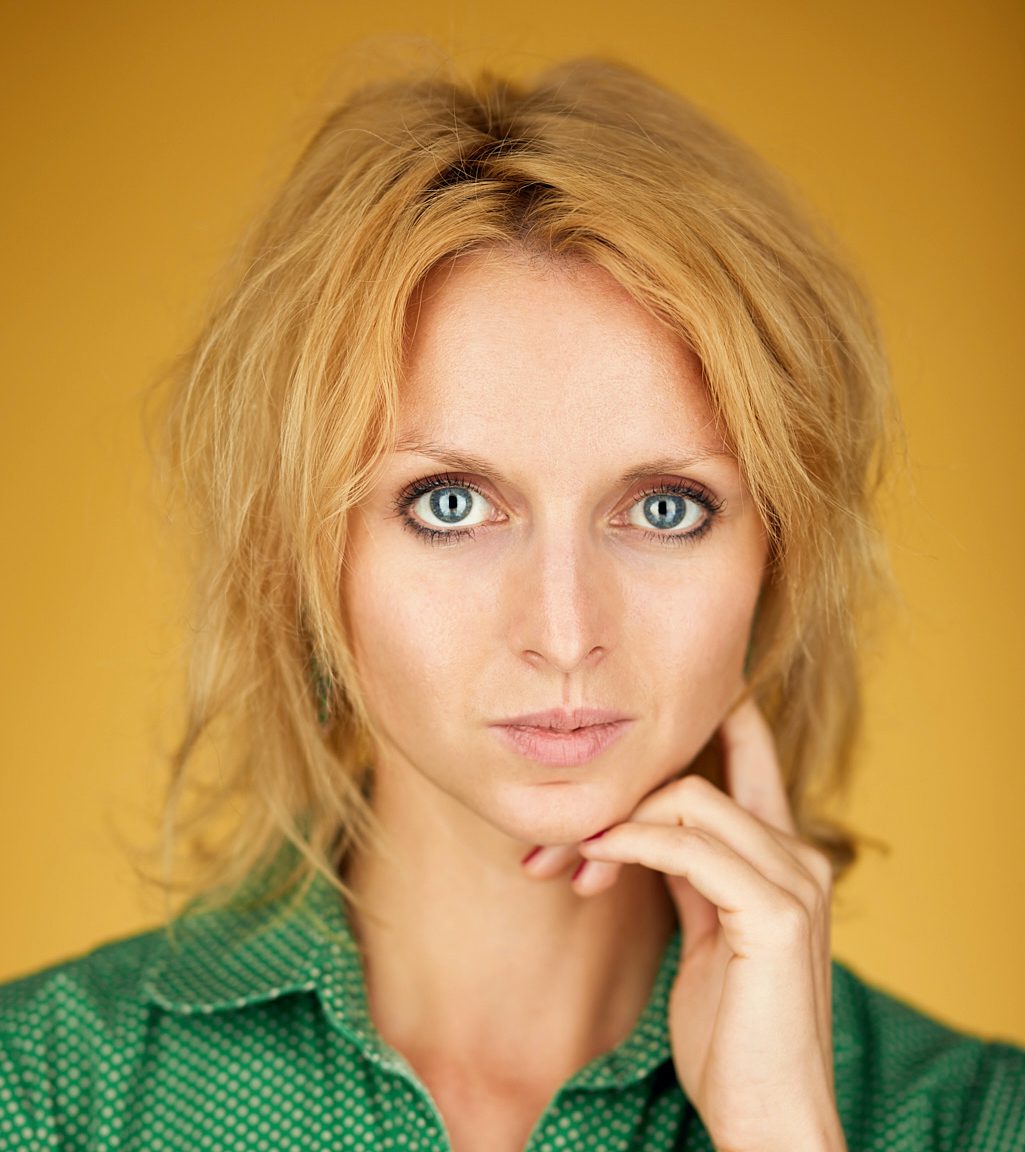
Professor Agnieszka Zabłocka-Kos is a faculty member at the Institute of Art History, University of Wrocław, specializing in Central European architectural history and urbanism. Her work focuses on 19th-20th century architecture, with particular emphasis on Wrocław/Breslau, including post-war reconstruction, national identity construction, and sacred space design. Professor, University of Wrocław Specialist in 19th-20th century Central European architecture Director of postdoctoral internships (NCN FUGA III) Recipient of multiple Rector's awards for research and teaching Research Themes: Urban development in Central Europe, political architecture in Poland/Germany, sacred architecture of the 19th century, post-war modernism, industrial architecture revitalization. Her students have produced award-winning theses on topics like Wrocław urban blocks, Silesian architects, and post-industrial adaptations. Scientific Contributions: Notable works include the edited volume Architecture in the 'long' 19th century (2019), multiple articles on Breslau's architectural conflicts, and international projects on Central European sacred architecture. She has supervised 33 master's and 5 doctoral theses, with several student works published as books. Dettloff Prize for dissertation (1992) Rector's awards for research and didactic achievements International projects with universities in Berlin, Freiburg, and Leipzig Advisor for Wrocław's Monument Office and City Development Bureau Her teaching integrates interdisciplinary approaches, linking art history with political, economic, and social contexts. She promotes student research popularization through conferences, exhibitions, and publications.
Jerzy Gorzelik is an Associate Professor at the Institute of Arts Studies within the Faculty of Humanities at the University of Silesia in Katowice. He holds a doctorate from the University of Wrocław and graduated from Jagiellonian University. His academic work centers on art history with a focus on Central European art, particularly in Upper Silesia from the 16th to the 20th centuries. His research explores the intersections of art, national and confessional identities, cultural heritage, and collective memory. He investigates how artistic expressions have been used in the discursive construction of imagined communities, especially in contested borderlands like Upper Silesia. His interests include wooden and industrial architecture, sacred art, museum practices, and the role of art in nationalist narratives. The recent publications highlight a consistent focus on heritage discourse, national identity formation, and the symbolic use of architecture and sculpture in Central Europe. His work analyzes how nationalisms—Polish, German, and Silesian—have instrumentalized art and heritage to legitimize political claims and shape regional identity. Themes such as the postcolonial critique of museum curation, the historiography of art history, and the interplay between Catholicism and nationalism recur across his scholarly output. Jerzy Gorzelik is actively engaged in public outreach, having conducted lectures, workshops, and educational projects on Silesian art history in collaboration with institutions such as the House of Polish-German Cooperation and the Foundation Dom Modernisty. He has also contributed to academic discourse through platforms like ResearchGate, Academia.edu, and Google Scholar, and maintains an ORCID profile (0000-0001-6405-9835).
Prof. Tomasz Torbus is an Associate Professor at the University of Gdańsk's Faculty of History, Institute of Art History. His research focuses on medieval and early modern architecture in Central Eastern Europe, particularly Teutonic Order castles, Jagiellonian dynasty residences, and post-1945 monument reconstruction. He has directed the Institute of Art History since 2010. Fields of Interest: Medieval Architecture, Early Modern Architecture, Teutonic Order Studies, Nationalism in Art, Post-War Reconstruction Key Projects: Jagiellonian Residences Project (1990-1997), Saxon-Polish Union Architecture (2006-2011), Mannerist/Baroque Public Architecture Research His publications include monographs on Teutonic castles and collaborations on Polish-German cultural history. Current work includes synthesizing research on Golden Age public architecture through archival analysis. Contact: t.torbus@ug.edu.pl | Office: Room 52, Faculty of History
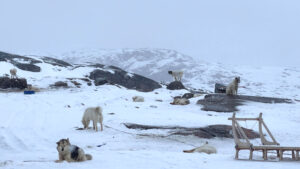
Dr. Sonia Rammer is a Professor at the University of Arts in Poznań, serving as Head of the Art Studio in an Intercultural Perspective at the Faculty of Artistic Education and Curating. She also holds significant administrative positions including Vice-Dean of the Faculty and Member of the Scientific Council. Her work uniquely bridges artistic practice with psychological insights, creating an interdisciplinary approach to art creation and education. Dr. Rammer's educational background demonstrates her dual expertise in both psychology and fine arts. She completed psychology studies at Adam Mickiewicz University (2003-2010), specializing in clinical psychology, alongside concurrent studies in painting and art education at the Academy of Fine Arts in Poznań. She earned her habilitation degree in visual arts and art conservation in 2019. Her research interests focus on the psychological dimensions of creativity, cross-cultural artistic exchange, and posthumanist perspectives. Rammer critically examines anthropocentric views through works that explore interspecies relationships and the fluid boundaries between human and non-human entities. Her art often emerges from international residencies in extreme environments like Greenland, Nepal, and Iceland, where she engages with local cultures and ecological contexts. Her recent artistic output shows a consistent exploration of Arctic themes, cultural translation, and identity transformation. The 'Woman Who Thought She Was a Dog' series (2022-2024) from her Greenland residency exemplifies her approach, using minimalist video installations to provoke reflection on species boundaries and human exceptionalism. Her work spans performance, video, photography, and installation, often incorporating cross-cultural misunderstandings as conceptual frameworks. As an educator since 2011, Rammer teaches psychology and psychology of creativity while mentoring students through her studio practice. Her leadership roles include chairing the Faculty Recruitment Committee and serving on the University Senate, demonstrating her commitment to academic development. Dr. Rammer maintains active international collaborations through prestigious residencies including Arctic Culture Lab (Greenland), Marpha Foundation (Nepal), and Baer Art Center (Iceland). She also collaborates with the Faculty of Geographical and Geological Sciences of Adam Mickiewicz University on artistic research in Spitsbergen, reflecting her commitment to interdisciplinary work.
Zbigniew Landowski is an Adjunct Professor at the University of Gdańsk within the Faculty of History , specifically the Division of Methodology of History, History of Historiography and Archival Science . His research focuses on the intersection of Islamic political thought with constitutional practices in the 19th and 20th centuries, the ideology and history of Hizb ut-Tahrir, and the integration of Islam into multicultural societies such as the Balkans, Southeast Asia, and China. Email: zbigniew.landowski@ug.edu.pl Research Interests include: History of Islamic Political Thought Constitutional Integration of Islam Hizb ut-Tahrir Ideology Islam in Multicultural Contexts Historiography of the Balkans, Southeast Asia, and China Recent Publications highlight his exploration of: Medieval Islamic bestiaries and cultural symbolism Polish Orientalist networks in interwar Vilnius and Gdańsk Historical epidemiology of cholera in Tsarist Russia Identity dynamics in Arab literature State-Islam relations in post-Soviet Kazakhstan Sociopolitical transformations in Ottoman-era women's daily life
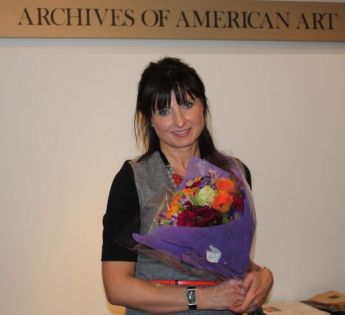
Dr. Edyta Frelik is a Senior Lecturer at the Department of American Studies, Faculty of Languages, Literatures and Cultures, Maria Curie-Skłodowska University. Her academic career spans research and teaching in American art history, visual culture, and interdisciplinary intersections between literature and visual arts. She holds a PhD in Humanities (UMCS, 2013) and has been recognized with prestigious awards including the Terra Foundation Award (2013) and Georgia O’Keeffe Museum nomination (2018). Her research focuses on: Modernist artists' intellectual engagements Interactions between textual and visual media Anti-intellectualism in American art and culture Gender dynamics in avant-garde practice Relationships between science/technology and artistic expression Recent publications highlight her expertise in artists like Georgia O’Keeffe, Ad Reinhardt, and Frank Lloyd Wright, with thematic clusters in: American cultural identity formation Artistic self-representation strategies Transatlantic modernist dialogues Architectural language theory Visual epistemology Post-historical cultural analysis Scientific recognitions include: 2013 : Terra Foundation Award for Best Essay by International Scholar 2018 : Georgia O’Keeffe Museum Book Prize Nomination 2022 : NCN MINIATURA 5 Grant Dr. Frelik has organized international conferences like Wordstruck (2015) and actively participates in academic exchanges across Europe and North America.
Dr. hab. Gabriela Świtek is a Professor and Chair of Art Theory at the Institute of Art History, University of Warsaw (IHS UW), and Vice-President of its Scientific Council. She holds a post-doctoral habilitation from the Faculty of History, University of Warsaw (2013). Her academic journey includes a PhD (1999) and MPhil (1996) from the University of Cambridge, an MA from the Institute of Art History, University of Warsaw (1992), and studies at the Central European University in Prague (1994). Since 2001, she has been an Assistant Professor at IHS UW, though her current role reflects a promotion. She has held leadership positions, including Head of the Documentation Department at Zachęta – National Gallery of Art (since 2005) and Academic Plenipotentiary of the Director (since 2018). Her research focuses on modern/contemporary art, architectural history/philosophy, and art-historical methodologies. Notable projects include leading the History of Exhibitions at the Zachęta – Central Office of Artistic Exhibitions (1949–1970) (funded by Poland’s National Programme for Humanities Development, 2014–2018). As a curator, she organized exhibitions like Transfer by Jarosław Kozakiewicz at the Venice Architecture Biennale (2006) and Memory Foundations by Daniel Libeskind (Zachęta, 2004). Świtek is also Vice-President of Poland’s AICA Section (International Association of Art Critics, since 2015). Her work bridges academic research and institutional curatorial practice, emphasizing exhibition historiography and 20th-century art politics.
Júliusz Huth is a Budapest-based art historian and lecturer at the Hungarian University of Fine Arts, concurrently serving as a researcher at the Central European Research Institute for Art History (KEMKI). His academic work centers on institutional frameworks and visual art discourses in 20th-century Hungary, with specific focus on the 1980s-1990s transition period. His educational journey includes studies at Babes-Bolyai University in Cluj, Romania, and Eötvös Loránd University in Budapest, Hungary, culminating in a 2024 PhD from Eötvös Loránd University. Huth's research critically examines the intersection of political transformation and artistic production in Central Europe, particularly analyzing how socialist-era art institutions evolved during Hungary's post-1989 democratization. His methodology combines archival analysis with discourse studies to unpack power dynamics in curatorial practices and art policy formation. His 2024 publication exemplifies his scholarly focus, investigating how managerial capitalism reshaped Hungary's visual arts infrastructure while fueling contemporary culture wars, revealing continuities between socialist-era bureaucratic structures and neoliberal cultural governance. As an active art critic and member of AICA's Hungarian Section (International Association of Art Critics), Huth bridges academic research with contemporary art criticism, contributing to ongoing debates about cultural memory and institutional legacy in Central Europe.
Ignacy Jan Paderewski Academy of Music in PoznańPoland
Julia Rosińska-Kopala serves as a Lecturer at the Ignacy Jan Paderewski Academy of Music in Poznań, affiliated with the Institute of Jazz and Popular Music (IJiME). Holding a Master of Arts degree, she specializes in jazz vocal performance within the musical arts discipline and teaches core courses including jazz vocal, vocal emission, and subject methodology. Her educational background spans both artistic and medical fields, with degrees from the Karol Szymanowski Academy of Music in Katowice and the Faculty of Health Sciences at Karol Marcinkowski Medical University in Poznań. This dual foundation informs her interdisciplinary approach to vocal pedagogy and art therapy. Rosińska-Kopala's research focuses on jazz vocal techniques, smooth jazz interpretation, and therapeutic applications of vocal performance. Her work bridges artistic practice with academic inquiry, particularly in vocal emission methodologies and the cultural significance of Polish jazz traditions. She actively explores the intersection of physiological vocal production and expressive musical interpretation. Her scholarly output centers on jazz vocal analysis, exemplified by her 2024 publication examining the NOVI Singers phenomenon in Polish jazz history. This research demonstrates consistent engagement with vocal pedagogy, historical jazz performance practices, and the evolution of vocal techniques within Central European jazz contexts. No scientific awards or honors are documented in available records. While specific advising details remain unreported, her teaching responsibilities in jazz vocal methodology indicate active mentorship of music students. Her dual institutional background suggests potential cross-disciplinary grant collaborations between music and health sciences, though specific funding sources aren't disclosed. Artistically, she co-leads the longstanding vocal duo 'Julia and Grzegorz', which has produced five albums over two decades and performed internationally across Europe and Canada. Her collaborative work spans diverse musical projects including gospel, smooth jazz, and Polish contemporary music ensembles.
Prof. Dr. hab. Joanna Orska is a faculty member at the Institute of Polish Philology , University of Wrocław, specializing in modernism, postmodernism, and avant-garde studies. She oversees the Contemporary Critical Forms Workshop and co-founded the Textual Culture and Practice program. Her research bridges literary criticism, poetry analysis, and translation theory. Department of Post-1918 Literature (since 2004) Key focus: Avant-garde syntax, poetic constructivism, and transnational literary discourse Her publications analyze Polish poetry (1989–present), avant-garde manifestos, and intermediality in literary works. She co-edited Learning to Walk: Programmatic Texts of the Late Avant-garde (2019) and participates in international conferences on mountain humanities and literary culture. As a juror for the Wisława Szymborska and Silesius Poetry Awards, she shapes contemporary Polish literary criticism. Recent trends in her work include metalepsis in translation, retro-avant-garde movements, and intersections of politics and poetic form. She collaborates with European institutions like the German Historical Institute and Leibniz-Institut, with articles appearing in Teksty Drugie , Ruch Literacki , and Nowe Książki .
Olena Babakova, PhD is a Lecturer at Vistula University's Faculty of Art, Technique and Communication, specializing in Journalism and Social Communication. She holds a PhD from the University of Białystok and a Master's from Taras Szewczenko University in Kiev. Her research focuses on migration in Central/Eastern Europe, Polish-Ukrainian relations, and women's roles in public life. Member: FemGlobal association (Poland) Co-founder: Research/media projects at Warsaw WOT Foundation since 2017 Professional Experience 2011-2016: Editor for Ukrainian section at Polish Radio Abroad Covered pivotal events including Ukraine's 2014 Dignity Revolution and 2014-2015 elections Freelance contributions to: Krytyka Polityczna (Poland) Europejska Prawda (Ukraine) Nowa Europa Wschodnia (Poland) Hromadske (Ukraine) Research Focus Explores: Elite dynamics in post-Soviet states EU migration policies Gender representation in international policy Affiliations Active in Vistula University's: Management Business and Security Analytics International Relations programs
Dr. Anna Głowa serves as Assistant Professor in the Department of Art History at the Institute of Art Sciences, Faculty of Humanities, John Paul II Catholic University of Lublin (KUL), with active research continuing through 2025. Her institutional profile lists her office at Al. Racławickie 14, Lublin, and she maintains scholarly visibility through ORCID (0000-0002-0478-7563) and peer-reviewed publications. Primary research interests focus on Late Antique textiles from Egypt , avian iconography (eagles, parrots), and provenance studies of Polish museum collections. She examines cultural syncretism through motifs in mosaics and fabrics, connecting Byzantine, Roman, and early Christian contexts. Specific expertise includes Władysław Czartoryski's collection , Robert Forrer's textile trade , and spolia practices in Constantine-era architecture. Analysis of her 15 most recent articles reveals obsessive attention to Egyptian textile fragments in Central European collections, particularly Polish institutions like the Jagiellonian University Museum. She consistently identifies iconographic motifs (eagles, parrots) across mosaics and textiles to demonstrate cultural fluidity, while her architectural work challenges decadence narratives about Late Antique spolia through empirical provenance research. No scientific awards, prizes, or medals were documented in the provided texts. Głowa leads major NCN-funded projects including SONATA BIS (2021) for 'Common Threads: Late Antique Egyptian Textiles at Jagiellonian University Museum and Their European Links', OPUS (2019) on 'Scattered Heritage: Provenance of 19th-Century Late Antique Textile Collections', and MINIATURA (2018) for Egyptian textile provenance research. She secured a 2021 Research Grant from Staatliche Museen zu Berlin. Supervision of diploma theses is noted without specific student names. She actively participates in the international Textiles from the Nile Valley Study Group and serves as thematic editor for early Christian art history in the journal 'Vox Patrum'. Głowa co-organizes the Kazimierz Symposia on Late Antiquity and Early Christianity, and delivered lectures at the University of Silesia and Lublin Art Secondary School on textile symbolism and weaving techniques.
Karolina Maria Kotkowska is an Assistant Professor in the Department of Comparative Civilization Studies at the Faculty of Philosophy, Jagiellonian University in Kraków, Poland. Her academic career centers on interdisciplinary research at the intersection of esoteric studies, intellectual history, and cultural phenomena with a focus on Central and Eastern Europe. Her educational background includes degrees in pedagogy, ethnology, and philosophy. She earned her Ph.D. in Philosophy with distinction from the Jagiellonian University in 2021, with a doctoral dissertation on Polish theosophy. Her academic journey includes a six-month internship at the HHP Centre at the University of Amsterdam funded through her National Science Centre Etiuda 4 grant. Dr. Kotkowska's research primarily explores Western esotericism, with particular emphasis on Theosophy and the Theosophical Society in Poland and globally. Her work investigates the boundaries between scientific discourse and occultism at the turn of the 19th and 20th centuries, new religious movements from a comparative perspective, and the role of esoteric ideas in shaping cultural phenomena. She employs intellectual history as her primary methodology to examine alternative spirituality and its cultural manifestations. Her extensive publication record demonstrates consistent scholarly output across multiple journals and edited volumes, with a clear focus on Central and Eastern European esoteric traditions. Her work bridges historical analysis with contemporary relevance, examining how esoteric ideas continue to influence modern culture. The thematic progression of her research shows increasing sophistication in methodology and expanding geographical scope, from specifically Polish contexts to broader Central and Eastern European frameworks. Doctoral dissertation defended with distinction at Jagiellonian University National Science Centre Etiuda 4 scholarship recipient Coordinator of EU-funded CEMORY project (2025-2027) Project leader for National Science Centre grants (Sonata 19, Opus 23, Preludium 6) Co-founder of CEENASWE (Central and Eastern European Network for the Academic Study of Western Esotericism) Co-founder of Polish Association for the Study of Western Esotericism Dr. Kotkowska leads multiple significant research projects including the EU-funded 'Central European Memory of the Holocaust in a Multicultural and Multidimensional Perspective' (CEMORY) as coordinator, and several National Science Centre projects including 'Blurred Boundaries Between Scientific and Occult Discourse at the Turn of the 20th Century' and 'Theosophical Pedagogy: Relationships of a 19th-Century Project to Spirituality and Educational Theory.' She has established herself as a key figure in her field through her organizational roles in academic networks and editorial contributions to scholarly publications. As a co-founder and board member of CEENASWE (the Central and Eastern European Network for the Academic Study of Western Esotericism) and the Polish Association for the Study of Western Esotericism, Dr. Kotkowska has helped establish institutional frameworks for esoteric studies in the region. Her work connects with the European Society for the Study of Western Esotericism (ESSWE), positioning her research within broader international scholarly conversations.
Ronald Kim is an Associate Professor of Linguistics in the Department of Older Germanic Languages within the Faculty of English at Adam Mickiewicz University in Poznań, Poland. Born and raised in New Jersey, USA, he completed his undergraduate studies at Princeton University in 1996 before earning his Ph.D. in Linguistics from the University of Pennsylvania in 2002. After a postdoctoral fellowship at Cornell University, he taught at several US institutions including Penn, Temple, and Swarthmore before joining Adam Mickiewicz University in 2009 as a Visiting Professor, eventually securing his current position as Associate Professor. Kim's academic credentials include an AB in Astrophysical Sciences from Princeton University (1996), a Ph.D. in Linguistics from the University of Pennsylvania (2002), and a D. Litt. in English Linguistics from Adam Mickiewicz University in Poznań (2015). His research spans multiple areas of historical linguistics with particular focus on Indo-European languages including Tocharian, Iranian, Balto-Slavic, Greek, Celtic, and Anatolian, as well as Semitic languages like Aramaic. His work encompasses sociolinguistics, language variation, language contact phenomena, dialect geography, phonology (particularly autosegmental, nonlinear, and prosodic approaches), morphology, and pidgin and creole linguistics with emphasis on English-based contact languages of the Pacific. Analysis of Kim's recent publications reveals a clear trajectory in his scholarly work, with increasing focus on Iranian languages, particularly Ossetic, while maintaining strong connections to broader Indo-European studies. His work demonstrates sophisticated integration of comparative linguistic methods with computational approaches to language evolution, particularly evident in his contributions to phylogenetic studies of Indo-European languages. There's also a consistent thread of interest in suppletion phenomena across multiple language families. His research often bridges theoretical linguistic concerns with historical and geographical contexts, particularly the linguistic landscape of Central Asia and the Silk Road region. Erasmus+ teaching exchange, Ludwig-Maximilians-Universität München, January 2020 Heiwa Nakajima Foundation fellowship, Graduate School of Humanities and Sociology, The University of Tokyo, Spring 2017 AMU research travel grant, Department of Linguistics, University of Pennsylvania, September 2013 Junior Research Grant, Swarthmore College, Spring 2007 Mellon Postdoctoral Fellowship in the Humanities, Cornell University, 2002-03 University of Pennsylvania Graduate School of Arts and Sciences Dissertation Fellowship, 2001-02 William Penn Graduate Fellowship, University of Pennsylvania, 1996-2000 Adam Mickiewicz University rector's prize for publications, 2019 Kim serves in multiple editorial capacities, including General Editor of Indo-European Linguistics (with Joseph F. Eska) and Chatreššar: International Journal for Indo-European, Semitic, and Cuneiform Languages (with Petr Zemánek). He also sits on the Editorial Board of Brill's Studies in Indo-European Languages & Linguistics, the Editorial Advisory Board of Lingua Posnaniensis, and serves as a Board of Reviewer for Tocharian and Indo-European Studies and the Academic Journal of Modern Philology. His research has been supported by numerous grants including projects on Ossetic Historical Grammar funded by the National Science Centre Poland (2020-23), The Historical Morphology of the Old Armenian Verb funded by the Czech Science Foundation (2017-19), and participation in the Indo-European Cognate Relationships project at the Max Planck Institute for the Science of Human History (2015-). Kim maintains an active international presence through frequent conference participation and invited lectures at major institutions worldwide including University of Pennsylvania, Princeton University, Harvard University, Kyoto University, and Ludwig-Maximilians-Universität München. His scholarly network spans multiple continents, reflecting the international nature of Indo-European linguistic research.
Professor Jerzy Koch is a distinguished academic at Adam Mickiewicz University in Poznań, serving as Professor Ordinarius since 2012 and head of the Department of Dutch and South African Studies. He also maintains an active research fellowship at the University of the Free State in South Africa since 2001. His academic journey includes degrees from Wrocław University (MA in Dutch/Flemish and German, 1982), Catholic University of Leuven (Ph.D. in Dutch/Flemish literature, 1991), and Wrocław University again (D.Litt. in Afrikaans literature, 2002). He earned full professor status in 2005 and Professor Ordinarius title in 2012. Professor Koch's research focuses on Dutch and Flemish literature of the 19th and 20th centuries, Afrikaans literature, post-colonial literature from South Africa, Suriname, and the Caribbean, and the culture of the Low Countries and South Africa. His scholarly approach combines historical, comparative, and post-colonial perspectives, with particular attention to xenofania (strangeness) in literature and the representation of 'the other' in South African texts. His work often bridges European and African literary traditions, examining cross-cultural influences and translations. An analysis of his 15 most recent publications reveals a consistent focus on Afrikaans literary history, with particular emphasis on the development of Afrikaans literature from colonial to post-colonial periods. His scholarship demonstrates expertise in both historical literary analysis and contemporary theoretical frameworks, including affect theory and canon formation. His work on writers like Marie Linde, Olga Kirsch, and Joan Hambidge shows his commitment to recovering marginalized voices in literary history. Second prize in the Multatuli-Competition, Amsterdam, 1991 M. Nijhoff-Award for Translations from Dutch Literature, Amsterdam, 1995 Minister of National Education Award for outstanding research results (2004, 2005) ANV-Visser-Neerlandiaprijs, 2008 Nagroda Ministerstwa Spraw Zagranicznych Królestwa Holandii for promoting Dutch culture in Poland, 2009 Order Oficerski Leopolda I (Leopoldsorde), 2010 aFrykas Roku 2015 in the Science category GDYNIA Literary Award for translation, 2023 Professor Koch has supervised numerous academic projects and edited the scholarly journal 'Werkwinkel. Journal of Low Countries and South African Studies.' His international collaborations include work with scholars across Central Europe, South Africa, and the Caribbean. He has been instrumental in establishing academic connections between Polish institutions and universities in South Africa, particularly through his role as Research Fellow at the University of the Free State. His editorial work includes co-founding and editing the 'Werkwinkel Library' series, which has published significant works on Low Countries and South African studies. Professor Koch maintains strong connections with academic communities in South Africa, particularly through his membership in the South African Academy for Science and Arts and the Afrikaanse Letterkundevereniging. His work demonstrates a commitment to building bridges between Polish and South African academic communities, with particular attention to translation studies and comparative literature. His contributions to understanding the cultural connections between the Low Countries and South Africa have been particularly noteworthy.