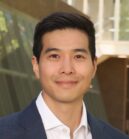
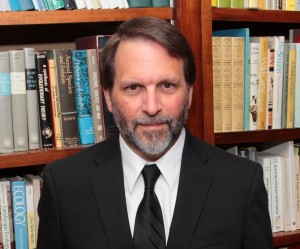
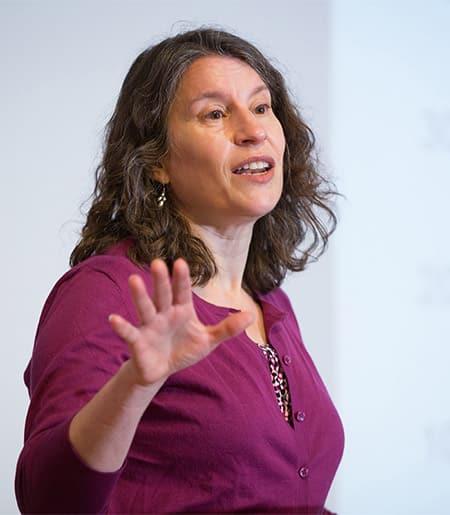
Tania Burchardt is an Associate Professor of Social Policy at the London School of Economics (LSE) , where she serves as Deputy Director of STICERD and Associate Director of CASE (Centre for Analysis of Social Exclusion). Her work bridges theoretical frameworks like the capability approach with empirical analyses of inequality , disability policy , and applied welfare policy . Key Research Areas : Theories of justice, inequality measurement, time poverty, and social care systems Leadership Roles : Co-led projects on multidimensional inequality, intergenerational exchanges, and child poverty Her recent work explores intra-household resource allocation , social care inequities , and public engagement in policymaking . She has collaborated with organizations like the Nuffield Foundation and Sense about Science to translate research into practice. Scientific Contributions span empirical studies on: Long-term care funding reforms (2015–2020) Disability-related income disparities Time poverty intersections with economic hardship Data-driven policy recommendations for Roma/Gypsy/Traveller communities Multidimensional child poverty frameworks
J. Daniel Kim is an Assistant Professor of Management at the Wharton School, University of Pennsylvania, where he teaches MBA and PhD courses on entrepreneurship and innovation. His research focuses on high-growth entrepreneurship, venture scaling, strategic human capital, mergers and acquisitions, innovation, and labor markets. PhD - MIT Sloan School of Management BA - Dartmouth College His research explores: Startup hiring challenges and firm-driven search strategies Timing and risks of venture scaling Post-acquisition employee retention patterns Founder impact on organizational change Immigrant founder contributions to entrepreneurship Key article trends show: Focus on talent dynamics in high-growth firms Analysis of organizational antecedents in acquisitions Quantitative approaches using population-level data Interdisciplinary connections between entrepreneurship, strategy, and economics Debunking myths about founder demographics Linkage between labor market mechanisms and startup performance Scientific recognition includes: Multiple Teaching Excellence Awards at Wharton (2024-2020) Best Paper Prize from Strategic Management Society (2020) Kauffman Dissertation Fellowship (2017) MIT Sloan Doctoral Thesis Prize (2019) Prof. Kim serves as an economist with the United States Census Bureau and has published in top journals including Strategic Management Journal , Organization Science , and American Economic Review: Insights . His work has been featured in The Wall Street Journal , New York Times , and Financial Times .
Andrew Gersick is a Lecturer in the Department of Ecology and Evolutionary Biology at Princeton University. His research focuses on animal behavior, particularly in large social species such as spotted hyenas, zebras, and cowbirds. He explores topics including collective behavior, social dynamics, communication systems, and ecological adaptations. His work integrates field studies with technological tools like accelerometers to analyze activity patterns and signaling mechanisms. Notably, he investigates how zebra stripes repel biting flies and how hyenas use vocalizations for individual recognition. Gersick also contributes to conservation efforts, such as the Great Grevy’s Rally in Kenya, and studies social learning in avian species like cowbirds. His recent articles highlight interdisciplinary approaches, combining ecology, physiology, and technology to understand animal behavior in natural and social contexts. While no awards are explicitly listed, his contributions to understanding collective behavior and conservation biology are significant. Advising and grants: No formal advisees or grant details are provided in the text. His work appears to focus on collaborative research and field-based methodologies. Labs/Teams: No specific laboratory or team affiliations are mentioned beyond his departmental role at Princeton.
Dr. Samuel Cheng is an Associate Professor at the Gallogly College of Engineering , University of Oklahoma , specializing in Electrical and Computer Engineering . He holds a Ph.D. in Electrical Engineering from Texas A&M University (2004), preceded by M.S. and M.Phil. degrees from the University of Hawaii and Hong Kong University of Science and Technology. Education: B.S. (University of Hong Kong, 1995), M.Phil. (HKUST, 1997), M.S. (University of Hawaii, 2000), Ph.D. (Texas A&M, 2004) Professional Experience: Senior Research Engineer at Advanced Digital Imaging Research (2004-2005), prior internships at Microsoft Asia and Panasonic Technologies His research focuses on Information Theory , Signal and Image Processing , and Pattern Recognition , with applications in remote sensing, urbanization analysis, and disaster monitoring. His publications span topics including urban impervious surface mapping , nighttime light analysis , and machine learning for environmental data . His work often integrates multi-source datasets (e.g., Landsat, LiDAR, social media) for spatiotemporal modeling. Technical Expertise: Spectral unmixing, machine learning, thermal remote sensing, GIS integration Key Applications: Power outage detection, vegetation-crime correlation, PM2.5 estimation, smart meter data fusion Dr. Cheng holds three US patents in digital watermarking and is affiliated with IEEE, Sigma Xi, and AAAS. His recent articles demonstrate a trend toward leveraging AI for remote sensing challenges and analyzing urbanization impacts on ecosystems.
Deborah Balk is a Professor at the Marxe School of Public and International Affairs at Baruch College, part of the City University of New York (CUNY). She also serves as Director of the CUNY Institute for Demographic Research and holds appointments in the CUNY Graduate Center's Sociology and Economics programs, as well as the CUNY School of Public Health's Epidemiology Program. Her expertise lies in spatial demography, integrating earth and social science data to address policy challenges related to urbanization, climate change, and population dynamics. Dr. Balk has led significant roles in climate assessments, including Co-Chair of the New York City Panel on Climate Change’s 4th Assessment (2019–2024) and membership in the U.S. National Climate Assessment’s 6th Health Chapter (2025). She holds a PhD in Demography from UC Berkeley and degrees from the University of Michigan (MPP and AB in International Relations). Her research focuses on urbanization, migration, poverty, health, and environmental interactions, particularly climate adaptation and equity. Notable projects include analyzing population vulnerability in coastal zones and developing spatial demographic tools for global health and policy. Awards include the Andrew Carnegie Fellowship (2016–2018) and the William and Flora Hewlett Foundation Fellowship (1991). Dr. Balk has secured grants exceeding $6 million from NSF, NASA, and others, supporting work on urbanization, climate justice, and demographic data integration. She advises multiple institutions, including the U.S. Census Bureau and National Academy of Sciences. Her teaching spans spatial demography, urban policy, and statistical methods, reflecting her commitment to bridging demographic science and real-world applications.
Daniel Kifer is a Professor in the Computer Science and Engineering department at Pennsylvania State University, with affiliations to the Huck Institutes of the Life Sciences. His work bridges computer science, privacy-preserving machine learning, and geoscience applications. With over 10,000 citations and a high h-index, he focuses on methods to unify theoretical and applied research. Research Interests: Differential Privacy, Privacy-Preserving Machine Learning, Physics-Informed Neural Networks, Landslide Prediction, and Formal Verification of Privacy Systems. Recent projects include grants from the National Science Foundation: SaTC: CORE: Small (2024): privacy-preserving user data embedding in machine learning pipelines. SaTC: CORE: Medium (2017-2023): formal methods for differential privacy and accuracy optimization. His research outputs span domains like geoscience, database systems, and policy analysis, emphasizing precision and scalability of privacy-preserving algorithms.
Hsei Di Law is a Research Fellow at the National Centre for Epidemiology and Population Health (NCEPH), part of the Australian National University (ANU). She is concurrently pursuing an MSc in Computational Data Analytics at the Georgia Institute of Technology . Her work focuses on data linkage, machine learning, and epidemiological study design using whole-of-population linked datasets. Research Affiliations National Centre for Epidemiology and Population Health (ANU) Centre of Epidemiology for Policy and Practice Linked Data for Better Health group Health Experience and Health Services Research collaborator Research Interests : Hsei Di Law's work centers on large-scale linked administrative datasets and longitudinal data analysis , with applications in environmental contamination (PFAS, asbestos), healthcare economics (out-of-pocket costs), and epidemiology of diseases. She specializes in integrating machine learning techniques with epidemiological study design to address policy-relevant questions. Publication Trends : Her recent publications (2025–2023) analyze healthcare affordability in Australia, PFAS environmental health impacts , and data linkage methodologies . Over 2022–2015, she studied cardiovascular risk under-treatment , COVID-19 healthcare outcomes , and immune system disorders using mouse models. Projects Led : She is involved in multiple projects, including the ACT Asbestos Health Study II , PFAS Health Study , and Whole-of-population linked data project . These projects examine the health effects of asbestos and PFAS contamination , healthcare utilization, and epidemiological modeling . Contact : Email: hsei-di.law@anu.edu.au Phone: +61 2 6125 0547 Location: Building 62A, Room 2.56, ANU
Bryan Watts is the Director of the Center for Conservation Biology and holds the Mitchell A. Byrd Research Professorship in Conservation Biology at William & Mary. He has a B.S. in Biology from Virginia Tech, an M.A. in Biology from William & Mary, and a Ph.D. in Ecology from the University of Georgia. His research focuses on avian conservation, wetland ecosystems, and the impacts of environmental changes on bird populations, particularly in coastal regions. He leads long-term monitoring programs for species like ospreys, red knots, and black rails, emphasizing habitat conservation and population dynamics. His work integrates citizen science, toxicology assessments, and climate adaptation strategies for vulnerable species. Watts collaborates with federal agencies and NGOs to inform policy decisions and habitat management. His projects include the Virginia Marshbird Survey, Whimbrel migration tracking, and assessments of contaminants in apex predators like peregrine falcons and bald eagles. Key areas of focus include the demographic responses of birds to fluctuating fish stocks, the effects of human activity on nocturnal roosting behaviors, and the development of conservation strategies for coastal wetlands under climate change. His research outputs span over three decades, addressing both applied and theoretical questions in conservation biology. Watts also advises on wildlife management policies, such as landfill use by bald eagles and wind energy siting to minimize bird collisions.
Pawel Janas is an Assistant Professor of Economics at the California Institute of Technology (Caltech) since 2022. He is also a Faculty Research Fellow at the National Bureau of Economic Research (NBER). His research combines historical data analysis with modern quantitative methods at the intersection of finance and public economics. Education : B.A./B.S. in Economics and Mathematics from the University of Colorado, Boulder (2016); M.S. in Economics (2016); Ph.D. in Economics from Northwestern University (2022). Janas explores how financial crises impact long-term economic outcomes, focusing on: Municipal fiscal responses during economic downturns Educational attainment during the Great Depression Financial stabilization policies and labor market trajectories Insurance industry-driven capital flows across U.S. regions His empirical work leverages newly digitized datasets spanning 1880-1950, including: County-level manufacturing statistics (1927-1937) City-level financial records (1924-1938) Historical insurance industry data Scientific achievements include: NBER Faculty Research Fellowship Publication in Journal of Public Economics (2025) Upcoming article in Journal of Economic History (2026) He teaches Data Science for Finance and Economics at the undergraduate level and U.S. Economic History at both B.S. and Ph.D. levels. Janas' work provides critical insights into financial market frictions, fiscal austerity mechanisms, and the role of household resources during economic crises.
Ryan Engstrom is a Professor and Director of Data Science in the Department of Geography at George Washington University (GW). He is affiliated with the Columbian College of Arts and Sciences and holds a Ph.D. from the joint program at San Diego State University and UC Santa Barbara. His research focuses on Remote Sensing, GIS applications, Climate Change impacts, Arctic environments, and Population Estimation, with an emphasis on poverty mapping and urban deprivation analysis. Engstrom has led major initiatives such as YouthMappers and IDEAMAPS, leveraging geospatial data and satellite imagery to address global development challenges. His work includes developing methodologies for georeferencing historical imagery, estimating non-monetary poverty, and mapping population density in regions like Sri Lanka and Ghana. He has published extensively in Remote Sensing , World Bank Economic Review , and Global Change Biology , among others. Key research trends in his publications involve integrating satellite-derived features with machine learning to model urban poverty, climate-driven land-use changes in Arctic regions, and applications of open-source geospatial tools for international development. Engstrom collaborates globally, contributing to projects like the World Bank’s welfare tracking in disaster-affected regions.
Kathy Fontaine serves as Senior Lecturer in Information Technology and Web Science at Rensselaer Polytechnic Institute and Program Manager for the RPI-IBM AI Research Collaboration. She joined RPI in 2014 after 25 years at NASA Goddard Space Flight Center where she developed international data access policies through CEOS WGISS, GEO, and USGEO. Her educational background includes: B.S. in Physics with Astrophysics Option from New Mexico Institute of Mining and Technology (1984) M.A. in Science, Technology and Public Policy from The George Washington University (2002) Ph.D. in Public Policy and Public Administration from Walden University (2013) Dr. Fontaine's research integrates data science policy with ethical frameworks, focusing on international data sharing cultures and volunteer organization dynamics. She develops courses like Big Data Policy and Ethical Informatics that address data scientists' societal responsibilities. Her work examines how policy implementations affect global earth observation systems and research data ecosystems, with particular attention to cross-cultural collaboration challenges in scientific consortia. Analysis of her publications reveals strong interdisciplinary connections between earth sciences and computer science, with emerging trends in data dexterity training, knowledge graph applications for social equity, and mineral inventory data legacies. Her research increasingly bridges technical data infrastructure with ethical considerations in data sharing. Dr. Fontaine actively contributes to scientific communities through the Earth Science Information Partners (ESIP), where she serves on GEO's Programme Board, and maintains affiliations with AGU, ACM Web Science, IEEE GRSS, and IEEE SSIT. Her current leadership in the RPI-IBM AI Research Collaboration extends her mission to develop responsible AI frameworks.
Lynn Blewett is a Professor in the Division of Health Policy and Management at the University of Minnesota's School of Public Health. She directs the State Health Access Data Assistance Center (SHADAC), a Robert Wood Johnson Foundation-funded initiative supporting state-level health access evaluation. Her work focuses on health insurance coverage, Medicaid/CHIP, immigrant health, and international health systems. PhD, Health Services Research, Policy, and Administration, University of Minnesota MA, Public Affairs, Hubert H. Humphrey School of Public Affairs BA, Psychology, University of Wisconsin Her research examines disparities in healthcare access, state policy impacts on coverage, and data infrastructure development. She led the creation of the University of Minnesota's Census Research Data Center, the only health-focused RDC in the U.S. Key publication themes include pandemic healthcare resilience (2020), all-payer claims databases (2023), and long-term Medicaid eligibility modeling (2022). Trends show sustained focus on data-driven policy solutions and equity in healthcare access. Member, National Academy of Social Insurance Board of Scientific Counselors, National Center for Health Statistics Board member, AcademyHealth She has secured grants from the Robert Wood Johnson Foundation and directed SHADAC's federal survey access initiatives. Her advocacy for data transparency extends to global health systems analysis, informed by her Senate legislative experience in health policy. As SHADAC director, she manages teams analyzing state health programs and collaborates with the University of Minnesota Medical Center. The Census RDC under her leadership provides critical infrastructure for health services research.
Sharon Sassler is a Professor in the Department of Policy Analysis and Management at Cornell University's Brooks School of Public Policy. She joined the Cornell faculty in 2005 and holds a Ph.D. in Sociology/Demography from Brown University (1995). Her research examines life course transitions of young adults across education, work, relationships, and parenthood, with critical attention to gender, race/ethnicity, and social class disparities. Education: Post-Doctoral Fellowship, Johns Hopkins University, Department of Population Dynamics (1995-96) Ph.D. in Sociology/Demography, Brown University (1995) M.A. in Sociology/Demography, Brown University (1991) B.A. in English & American Literature and Politics, Brandeis University (1984) Professor Sassler's research spans two interconnected domains: family demography and STEM gender dynamics. In family studies, she investigates cohabitation, marriage, and non-marital childbearing through publications like Cohabitation Nation: Gender, Class, and the Remaking of Relationships (2017), which demonstrates how cohabitation patterns exacerbate family inequality. Her work reveals how union transitions affect maternal health, child educational outcomes, and relationship stability across racial and socioeconomic lines. Concurrently, she examines women's retention in STEM fields, analyzing gender wage gaps, occupational attrition, and the impact of family formation on career trajectories in science and engineering professions. Her 2022-2025 publications reveal intensifying focus on cross-national comparisons of union formation and STEM career dynamics, with growing attention to policy impacts. Notable trends include state abortion policy effects on pregnancy outcomes, the retreat from marriage among college-educated STEM professionals, and intersectional analyses of job search strategies. Her work consistently centers gendered power dynamics within cohabiting relationships while documenting how racial and class inequalities shape family formation and STEM participation. Scientific Awards: No specific awards mentioned in source materials Professor Sassler actively mentors through collaborative research projects like Collaborative Research: Early Career Transitions into STEM Employment (2014), indicating grant-funded work examining structural barriers for women in technical fields. Her extensive co-authorship network suggests significant graduate student supervision, though formal advisee lists aren't documented. She teaches core sociology courses including Population and Public Policy (SOC 2030) and Population Controversies in Europe (SOC 3620), connecting demographic theory with contemporary policy debates. Based in Martha Van Rensselaer Hall, she contributes to Cornell's interdisciplinary research ecosystem through affiliations with both the Sociology program and Policy Analysis and Management department, bridging demographic methods with public policy applications to address pressing social inequalities.
Prof. Dr. iur. Dipl.-Soz. Marion Albers holds the Chair for Public Law, Information and Communication Law, Health Law and Legal Theory at the Faculty of Law, University of Hamburg. She has been a Full Professor at Hamburg University since October 2009 and serves as Managing Director of multiple research institutions including the Cyber Law Clinic and the Hamburg Center for Bio-Governance. Her academic career spans prestigious positions at the University of Augsburg, Humboldt-University Berlin, and international collaborations with institutions in Brazil, Japan, and the United States. Education: Studies of Law, Sociology, Political Sciences and Economy at the Free University of Berlin and University of Bielefeld State Exam in Law and Diploma in Sociology Doctorate of Law in Crime Prevention and Provisions for Prosecution at University of Bielefeld Habilitation in Informational Self-Determination at Humboldt-University Berlin Professor Albers' research focuses on the intersection of law, technology, and human rights, with particular expertise in data protection law, digital constitutionalism, bioethics, and health law. Her work examines how traditional legal frameworks adapt to emerging technological challenges, especially regarding informational self-determination in the digital age. She has pioneered research on the horizontal effect of fundamental rights, the legal implications of biotechnologies, and the balance between security measures and privacy protections. Her scholarship consistently bridges theoretical legal concepts with practical applications in rapidly evolving technological contexts. Analysis of her recent publications reveals a strong trajectory toward digital constitutionalism, with increasing focus on data subject rights within digital governance frameworks. Her work demonstrates sophisticated engagement with EU data protection regulations while simultaneously exploring comparative approaches across jurisdictions including Japan and Brazil. A consistent thread throughout her scholarship is the exploration of how constitutional principles apply in digital environments, particularly regarding the protection of personal data as a fundamental right. Scientific Awards and Fellowships: Scientific award of the Claussen-Simon-Foundation (2015) Opus Magnum-Fellowship of the Volkswagen Foundation (2015-2016) Fellow at Alfried Krupp Wissenschaftskolleg Greifswald (2014) Fellow at the Institute for Advanced Study Berlin (2017/2018) Professor Albers has secured significant research funding including the Volkswagen Foundation's Opus Magnum Fellowship and has served as Principal Investigator for the German/Brazilian DAAD/CAPES PROBRAL Research Project "Internet regulation and internet rights" (2015/2018). She has supervised numerous doctoral candidates and established productive international research collaborations, particularly with Brazilian institutions. Her advisory work extends to governmental bodies including service as an expert in the German Council for Scientific Information Infrastructures (RfII) since 2018 and previous membership on the Bundestag's Advisory Committee "Ethics and Law of Modern Medicine" (2003-2005). She directs the Hamburg Center for Bio-Governance (since 2013) and the Cyber Law Clinic at the Faculty of Law (since 2012), creating interdisciplinary research environments that bridge legal scholarship with practical applications in bioethics, health law, and digital governance. Her leadership extends to editorial roles including the book series "Schriften zum Bio-, Gesundheits- und Medizinrecht" and numerous edited volumes on data protection and constitutional law.
Professor Alistair Duff is a faculty member in the School of Arts and Creative Industries at Edinburgh Napier University , specializing in information policy and its societal implications. His research spans the intersection of technology, ethics, and public governance. Key Research Themes: Information society theory, digital ethics, privacy in the age of surveillance, and the role of public institutions like libraries in fostering citizenship. Notable Projects: Informing the Good Society (AHRC-funded), analysis of census data in policy-making, and studies on ePunditry. Media Engagement: Regularly contributes to public discourse through interviews (e.g., Radio Sputnik, Sunday Express) and expert testimony to the Scottish Parliament Justice Committee . Students Supervised: Nicole van Deursen (HI-Risk method), Aonghus Ferguson (Tony Blair interviews), Hayes Mabweazara (Zimbabwe journalism). Scientific Contributions: Published extensively on topics like Silicon Valley’s societal impact, Bentham’s panopticon in modern surveillance, and the normative theory of information society.