Hugo Duminil-Copin is a renowned mathematician holding half-time appointments as Professor at the Institut des Hautes Études Scientifiques (IHÉS) and the Université de Genève . He has been recognized with prestigious awards, including the Fields Medal (2022) and the New Horizons Prize in Mathematics (2017) . His research focuses on probability theory and statistical mechanics, particularly phase transitions, percolation, and critical phenomena. Education: He earned his Ph.D. in Mathematics from the University of Geneva in 2012. Key academic milestones include a Full Professorship at IHÉS from 2015 and prior roles as Assistant and Associate Professor at Geneva. Research: Duminil-Copin explores foundational questions in statistical physics, such as the rigorous analysis of lattice models and phase transitions in dimensions three and four. His work bridges probability, combinatorics, and mathematical physics, with notable contributions to percolation theory and the Ising model. Awards: Beyond the Fields Medal, he has received the EMS Prize (2016), the Loeve Prize (2017), and an ERC Consolidator Grant (CRIBLAM, 2018–2023). Grants & Leadership: He led the ERC-funded CRIBLAM project, investigating random-cluster models and related topics. His collaborations span global institutions, emphasizing interdisciplinary approaches to complex systems.
Professor Tony Roberts is the Head of School in the School of Mathematical Sciences at Queensland University of Technology (QUT). He holds a PhD from the Australian National University and is a Fellow of the Australian Mathematics Society. His research focuses on the interplay between material microstructure and macroscopic properties, with emphasis on topology optimization, random structure modeling (e.g., Gaussian fields, percolation models), and material property analysis such as conductivity, diffusion, and fluid flow. He develops computational methods for analyzing experimental techniques like 3D statistical reconstruction and small-angle scattering. His recent work includes optimizing piezoelectric materials for robotics, studying diffusion dynamics in fractal networks, and modeling material failure mechanisms. Key contributions span multi-functional piezoelectric components, anisotropic elastic properties of additively manufactured alloys, and fracture mechanics in perforated materials. Awards include his fellowship in the Australian Mathematics Society. Supervision interests include structural optimization, diffusion in random media, and porous material failure modeling. Education: PhD (Australian National University) Affiliations: Faculty of Science, School of Mathematical Sciences Research Themes: Material science, computational modeling, fracture mechanics, stochastic systems
Dr. Erika Tsingos serves as an Assistant Professor in the Department of Theoretical Biology and Bioinformatics at Utrecht University's Faculty of Science. She leads the Computational Animal Development Group focusing on computational approaches to developmental biology questions. Her research spans animal developmental biology with emphasis on Computer modeling of cell fate decisions Pattern formation in tissues Cell migration mechanics Thymus development and leukemogenesis C. elegans developmental precision She employs diverse modeling approaches including ordinary differential equations and multiscale cell-based models using cellular Potts or center-based formalisms. Analysis of her 15 most recent publications reveals strong focus on computational modeling of developmental processes, particularly examining extracellular matrix effects on cell migration, thymic niche architecture in leukemia development, and precise cell fate specification in C. elegans. Her work consistently bridges computational modeling with experimental validation through collaborations. Scientific recognition includes: NWO grant VI.Veni.222.323 for research on extracellular matrix effects on cell migration Dr. Tsingos actively mentors the next generation of computational biologists through supervision of postdoctoral researchers and students. Current team members include Benjamin Planterose Jiménez (post-doc modeling C. elegans development), Saber Shakibi (post-doc developing hybrid migration models), and Nikki Landzaat (Master's student studying mesoderm cell state transitions). Former students include Bidayatul Masulah (Master's in Applied Mathematics) and Heleen van Osch (bachelor researcher). Her research group operates within Utrecht University's Department of Theoretical Biology and Bioinformatics, collaborating extensively with the Ten Tusscher group and experimental labs. Current projects investigate how extracellular matrix affects cell migration phenotypes in cancer and the molecular control mechanisms behind C. elegans' precise cell division patterns.
Dr. V. Menkovski serves as an Associate Professor in Data Mining at Eindhoven University of Technology's Department of Mathematics and Computer Science. He also holds associate professor positions with EAISI Health and EAISI High Tech Systems, and is an ICMS Affiliated member. His work spans multiple domains of artificial intelligence and computational physics, with significant contributions to fusion energy research. Mathematics and Computer Science, Data Mining (Primary Appointment) EAISI Health (Associate Professor) EAISI High Tech Systems (Associate Professor) ICMS (Affiliated Member) Menkovski's research focuses on Graph Neural Networks, Machine Learning, Deep Learning, and their applications in diverse fields from plasma physics to metamaterials. His work demonstrates strong interdisciplinary connections, particularly between computer science and fusion energy research. He has developed novel approaches for crowd simulation, tokamak plasma monitoring, and metamaterials homogenization using advanced neural architectures. His fingerprint reveals expertise in Quality-of-Experience, Autoencoders, Neural Networks, Annotation, Graph Neural Networks, Video Streaming, Adversarial Machine Learning, and Anomaly Detection. Analysis of his recent publications (2023-2025) shows a clear trend toward applying Graph Neural Networks to complex physical systems, particularly in fusion energy research and materials science. His work increasingly integrates symmetry principles with neural architectures, as seen in his research on equivariant networks for metamaterials and symmetry-informed networks for zeolite analysis. There's also significant focus on practical applications in fake news detection, anomaly detection, and plasma state monitoring. Best Paper Award ICPM 2021 (with Sommers and Fahland) Best Paper Award of LoG 2022 (with multiple co-authors including Huang, Chen, Fang, Zhao, Yin, Pei, Mocanu, Wang, Pechenizkiy, and Liu) Menkovski teaches several advanced courses including Deep Learning, Advanced Topics in Artificial Intelligence, and Sociophysics 2, which runs through August 2025. His supervised work portfolio includes 79 projects, indicating substantial mentorship activity. He has received significant media attention for his research, including coverage by 11 news outlets, blog posts, and mentions on social media platforms. His work on 'Supervised Learning of Process Discovery Techniques Using Graph Neural Networks' was particularly noted in media coverage. His research involves collaboration with multiple institutions and teams, particularly in fusion energy research (Eurofusion Tokamak Exploitation Team, ASDEX-Upgrade team, EUROfusion MST1 Team). He works closely with researchers across disciplines, including physicists working on tokamak plasma and materials scientists studying metamaterials and zeolites.
João Carlos Lopes de Carvalho is a Full Professor at the Faculty of Science and Technology of the University of Coimbra, Portugal, where he has held academic positions since 1987. He was promoted to Associate Professor in 2003 and attained Full Professor status in 2022. His research spans computational biology, biophysical modeling of cancer, and experimental particle physics, with extensive participation in international collaborations including CERN (CPLEAR, ATLAS) and DESY (HERA-B). PhD in Experimental Particle Physics, University of Liverpool (1994) Aggregate Title (Habilitation), University of Coimbra (2003) Bachelor’s Degree in Physics, University of Coimbra (1987) His research focuses on the computational modeling of biological systems, particularly the bioelectric mechanisms underlying cancer initiation and progression. He develops discrete models such as cellular automata and cellular Potts models to simulate tissue dynamics in 2D and 3D, with applications in bladder and prostate cancer. Earlier in his career, he contributed to particle detector development, data acquisition, and physics analysis in high-energy experiments. The recent trends in his publication record show a strong emphasis on multiscale modeling of tumor growth, angiogenesis, and the role of bioelectricity in carcinogenesis. His work integrates computational simulations with biological insights, targeting early cancer detection and therapeutic strategies. Articles are published in high-impact journals such as Scientific Reports , PLOS Computational Biology , and Bulletin of Mathematical Biology . Supervised or co-supervised 4 PhD theses and 19 master’s dissertations Participated in over 50 research projects, coordinating 9 Principal investigator on grants including FCT projects PTDC/EMD-TLM/7289/2020 and PTDC/BIA-CEL/31743/2017 Involved in major collaborations: CERN (ATLAS, CPLEAR), DESY (HERA-B), SNO+ João Carlos Lopes de Carvalho has been a key figure in advancing computational approaches in oncology and biophysics. His work bridges physics, engineering, and life sciences, contributing to both fundamental understanding and potential clinical applications in cancer research.
Hugo Duminil-Copin is a Permanent Professor at the Institut des Hautes Études Scientifiques (IHES) since 2016. His research lies at the intersection of probability theory and statistical physics, focusing on critical phenomena in lattice models such as Ising, Potts, percolation, and self-avoiding walks. Fields of Interest: Probability Theory, Statistical Physics, Percolation, Critical Behavior, Mathematical Physics Scientific Awards : Fields Medal (2022) Dobrushin Prize (2019) ERC Starting Grant 'CriBLaM' (2017) European Mathematical Society Prize (2016) Recent Publications highlight his work on critical exponents, conformal invariance, and phase transitions across diverse models (Ising, random-cluster, six-vertex) using probabilistic and geometric methods. He has also advanced the understanding of Gaussian free fields and their connection to percolation theory.
Roeland Merks is a Professor of Mathematical Biology at Leiden University's Faculty of Science, holding dual appointments in the Mathematical Institute (Analysis and Dynamical Systems group) and the Institute of Biology Leiden (Animal Sciences). His research bridges advanced computational modeling with biological questions, focusing on vascular development, tumor angiogenesis, and quantitative developmental biology. His research interests center on mathematical modeling of biological systems , particularly using agent-based approaches like the Cellular Potts Model to simulate lumen formation, tumor vasculature, and developmental processes. Key areas include computational angiogenesis, vascular network dynamics, endothelial cell behavior, and mathematical oncology. His work integrates dynamical systems theory with biological experimentation to unravel complex morphogenetic processes. Analysis of his recent publications reveals a strong trend toward translational computational biology , with increasing focus on tumor vasculature repair mechanisms, infant gut modeling, and plant sensory systems. His work consistently applies mathematical rigor to biomedical problems, particularly in understanding how physical forces and biochemical signals interact during vascular development. Professor Merks actively mentors doctoral candidates including Tessa Vergroesen and David Mattias Versluis, with former students such as Burak Demirbaş and Lisanne Rens contributing to his research legacy. His laboratory operates at the mathematics-biology interface, developing computational frameworks that generate testable biological hypotheses.
Charles Kyriakos Vorkas, MD is an Assistant Professor at Stony Brook University's Renaissance School of Medicine, holding joint appointments in the Department of Medicine and Department of Microbiology and Immunology. He leads the Vorkas Lab, which focuses on innate lymphocyte immunity during early Mycobacterium tuberculosis infection. Dr. Vorkas was born and raised in Astoria, NY, of Greek-Cypriot descent. He attended Stuyvesant High School (1998), studied Philosophy and Biology at Columbia University (2002), and served in the Peace Corps in Mozambique (2002-2005). He earned his MD from Weill Cornell Medical College (2011), completed Internal Medicine Residency at UNC Chapel Hill (2014), and Infectious Diseases Fellowship at Weill Cornell Medicine (2018). His research focuses on innate lymphocyte biology, particularly mucosal-associated invariant T (MAIT) cells, γδ T cells, and Natural Killer cells during tuberculosis infection. He employs systems biology approaches including single-cell transcriptional data and flow cytometry to identify functional immune clusters during Mtb exposure and infection. His work aims to identify candidate targets for host-directed immunotherapy against TB disease. Dr. Vorkas has received significant funding including an NIH K08 award (2018) and a Potts Memorial Foundation award (2020) to study innate lymphocyte biology during initial tuberculosis infection. His publications span tuberculosis immunology, HIV/TB co-infection, and more recently, immune responses to SARS-CoV-2. NIH K08 award (2018) Potts Memorial Foundation award (2020) NIH Fogarty Scholarship (2010) As a physician-scientist, Dr. Vorkas maintains clinical responsibilities while leading his research laboratory. His lab includes postdoctoral associates, graduate students, medical students, and undergraduate researchers. He joined Stony Brook University in August 2021, continuing his work on innate immune responses to infections and cancer.
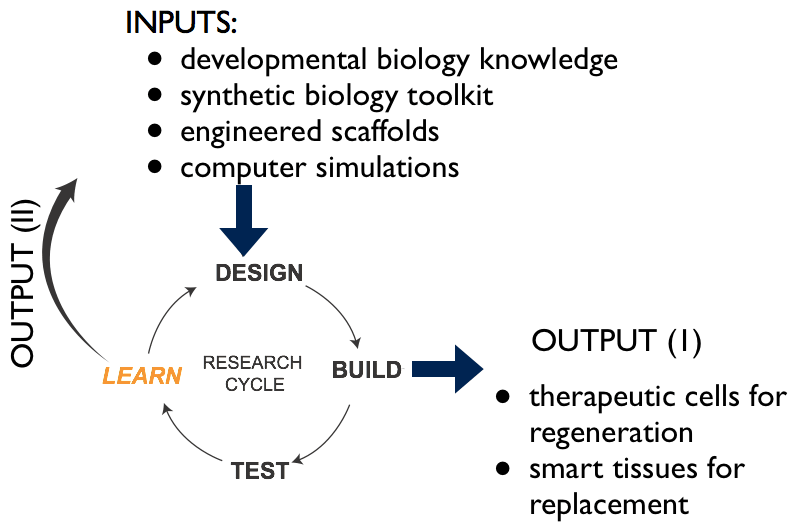
Leonardo Morsut is an Assistant Professor in the Department of Stem Cell Biology and Regenerative Medicine at the Keck School of Medicine, University of Southern California. His research focuses on synthetic biology and tissue engineering, aiming to program mammalian cells for controlled tissue morphogenesis and regeneration. He leads the Morsut Lab, which integrates computational modeling, protein engineering, and stem cell biology in an iterative framework to understand and manipulate tissue self-organization. University: University of Southern California School: Keck School of Medicine Department: Stem Cell Biology and Regenerative Medicine Academic Rank: Assistant Professor Research Interests: Dr. Morsut's work combines synthetic biology with developmental systems to engineer multicellular constructs. His lab specializes in synthetic Notch receptors, genetic circuit design, and controlling spatio-temporal patterning during tissue formation. Key areas include programmable material-to-cell pathways, juxtacrine signaling networks, and computational frameworks for morphogenesis modeling. Recent Publications Trends: His 2024-2025 studies emphasize precise spatial control of differentiation in organoids using synthetic Wnt organizers, programmable material interfaces, and dynamic cell growth feedback. Earlier works focus on transgene silencing mechanisms, mucin-driven morphogenesis, and density-dependent signaling in multicellular systems. Laboratory Mission: The Morsut Lab aims to build functional tissues through synthetic biology tools while training future regenerative medicine leaders. They utilize interdisciplinary approaches from engineering, computational biology, and developmental systems to create programmable multicellular structures.
Graeme Pettet is a Professor at Queensland University of Technology (QUT), specializing in mathematical biology and applied mathematics. His research focuses on modeling biological systems, including cell migration, tumor invasion, predator-prey dynamics, and biomedical applications such as retinal degeneration and tissue engineering. He has collaborated extensively with researchers in fields ranging from ecology to biomechanics, contributing to over 60 peer-reviewed publications since 2000. Key areas of research include haptotaxis, pattern formation in ecological models, and the application of partial differential equations to biological processes. His work integrates computational methods with experimental data to address questions in cancer biology, wound healing, and environmental systems. Recent projects involve modeling cholesterol regulation in age-related macular degeneration and developing computational tools for studying tumor spheroid growth. Pettet’s contributions span interdisciplinary collaborations, including studies on spinal biomechanics, bone remodeling, and the mechanical properties of intervertebral discs. His research emphasizes translating mathematical models into practical solutions for biomedical and ecological challenges.
Stephanie Smith is an Honorary Research Fellow and Clinical Research Fellow at the Norwich Medical School, University of East Anglia, and a Urology Registrar at the Norfolk and Norwich University Hospital. Her research focuses on translational clinical studies in prostate cancer, particularly urinary biomarkers and active surveillance protocols. She holds an NIHR Doctoral Research Fellowship (2023–2026) and an Honorary Research Fellowship from the Royal College of Surgeons of England (2023–2024). Education: MB BChir, University of Cambridge (2015) MA (Natural Sciences: Pharmacology), University of Cambridge (2012) MSc in Clinical Research, University of East Anglia (2023) MRCS, Royal College of Surgeons of England (2018) Research Interests: Prostate cancer diagnosis, urinary biomarkers, active surveillance protocols, patient/public involvement in clinical research, and surgical education. She leads the PURSuiT project investigating urinary biomarkers in prostate cancer progression. Awards: Andrew Ball Prize (2023) Best Quality Improvement Project (2024) British Association of Urological Surgeons Best ePoster (2025) Professor Sethia Prize (2025) The Urology Foundation Prize (2024) Grants & Projects: NIHR-funded doctoral fellowship supporting her PhD training. Active collaboration on the PURSuiT project (2023–2026). Labs/Teams: Involved in the Norwich Medical School’s translational cancer research group and the UEA Citizen’s Academy steering committee for public engagement.
Shane Hutson is a Professor at Vanderbilt University with dual appointments in the Department of Physics & Astronomy and Department of Biological Sciences since 2003. He currently serves as Deputy Director of VIIBRE and Director of VPROMPT , leading initiatives in predictive toxicology and biophysical instrumentation. PhD in Biophysics (University of Virginia, 2000) MS and BA in Physics (Wake Forest University) His research spans biophotonics , developmental biomechanics , and computational toxicology , combining laser microsurgery with finite-element modeling to study epithelial wound healing and morphogenesis. Recent work focuses on organs-on-chips for developmental toxicity analysis. The lab's publications emphasize mid-IR laser applications in ophthalmology, cellular force inference through CellFIT toolkit, and calcium signaling dynamics . Articles trend toward interdisciplinary approaches merging physics, biology, and engineering . Society of Toxicology Bridging Award (2013) NSF CAREER Award (2006) National Merit Scholar (1988) Best Paper Award (2019 Lab on a Chip) Hutson's lab has trained notable students including Alex Auner (Lab on a Chip publication) and Kazi Tasneem (Best Research Paper awardee), with ongoing NIH-funded work on wound-induced Ca²⁺ signals . The group maintains collaborations with biomedical engineers and molecular biologists globally.
Lamberto Rondoni serves as a Full Professor in the Department of Mathematical Sciences (DISMA) at the Polytechnic University of Turin, where he also participates in the Interdepartmental Center PolitoBIOMed Lab - Biomedical Engineering Laboratory. His academic profile spans theoretical mathematical physics with practical applications across multiple scientific domains, reflecting a distinguished career in statistical mechanics and dynamical systems. Professor Rondoni's research primarily focuses on Nonequilibrium phenomena , Biophysics , and Nanotechnology , with particular emphasis on disequilibrium processes in nano and biosciences, climate and environmental problems, and astrophysical observations. His work bridges fundamental mathematical theory with real-world applications through ERC sectors including Mathematical Physics (PE1_12), ODE and dynamical systems (PE1_10), and applications in sciences (PE1_20). His scientific approach integrates rigorous mathematical frameworks with computational methods to address complex physical phenomena across multiple scales. The trajectory of Rondoni's recent publications reveals a consistent focus on nonequilibrium statistical mechanics, with increasing interdisciplinary applications. His 2023-2025 works demonstrate sophisticated mathematical treatments of transport phenomena, fluctuation relations, and phase transitions across diverse physical systems - from gravitational wave detection to cellular dynamics and anomalous heat transport. This body of work shows a sophisticated integration of theoretical development with practical applications, particularly in biomedical contexts through the PolitoBIOMed Lab. Gordon Godfrey Professorship conferred by University of New South Wales, Australia (1999) Nonlinearity High-Profile Articles conferred by Nonlinearity, IOP (2008) Physica Scripta Highlights 2014 conferred by The Royal Swedish Academy of Sciences (2014) Highly Cited Paper awarded by Web of Science (2016) Professor Rondoni actively supervises approximately ten PhD students across multiple doctoral programs at both the Polytechnic University of Turin and University of Turin, spanning Mathematical Sciences, Pure and Applied Mathematics, and Engineering disciplines. His research leadership extends to numerous competitively funded projects including ANATOMY (2023-2026), MECCANICA STATISTICA DEL DISEQUILIBRIO A PICCOLE SCALE (2011-2013), and RARENOISE (2008-2013), demonstrating sustained research productivity and relevance. His organizational contributions include chairing major international conferences such as the 17th European Turbulence Conference (2019) and multiple workshops on nonequilibrium statistical mechanics. As a member of the Interdepartmental Center PolitoBIOMed Lab, Professor Rondoni contributes to interdisciplinary research at the mathematics-physics-biomedical engineering interface. His research aligns with UN Sustainable Development Goals 4 (Quality education), 9 (Industry, Innovation, and Infrastructure), and 13 (Climate action), reflecting the societal relevance of his work on mathematical applications in industry and environmental science.
Sean Eddy is the Ellmore C. Patterson Professor of Molecular and Cellular Biology and of Applied Mathematics at Harvard University. He leads a Howard Hughes Medical Institute (HHMI) laboratory within the Department of Molecular and Cellular Biology at Harvard's Cambridge campus. His lab is affiliated with the Harvard Data Science Initiative and the Center for Brain Science, reflecting the interdisciplinary nature of his work. Dr. Eddy's research focuses on deciphering evolutionary history through comparative analysis of genome sequences. His team develops computational methods for RNA, protein, and genome sequence analysis using probabilistic modeling approaches to build statistical models of biological features. They specialize in identifying remote evolutionary relationships between distantly related protein and RNA sequences. Notable contributions include the development of Codetta for predicting genetic codes, and software tools like HMMER, Infernal, Pfam, Rfam, and Dfam that have become standard resources in the field. Eddy's research spans computational biology, bioinformatics, evolutionary genomics, and RNA biology. His work combines theoretical advances in sequence analysis algorithms with practical applications to understanding genome evolution, non-coding RNA function, and genetic code variation. Recent publications show a continued focus on developing novel computational methods while applying them to diverse biological questions from phage genomics to mammalian brain evolution. His laboratory has produced numerous influential software tools and databases that are widely used in genomics research. The lab maintains strong connections with multiple Harvard graduate programs including Systems, Synthetic, and Quantitative Biology, Molecules, Cells, and Organisms (MCO), and Biophysics. Howard Hughes Medical Institute Investigator Dr. Eddy has mentored numerous PhD students who have gone on to make significant contributions in computational biology and genomics. His lab develops and maintains several widely used bioinformatics resources including HMMER (profile hidden Markov models), Infernal (RNA sequence/structure analysis), Pfam (protein family database), Rfam (RNA family database), and Dfam (repetitive DNA database). The lab has been instrumental in advancing methods for sequence homology search, RNA structure prediction, and genome annotation. The Eddy laboratory operates at the intersection of computer science, statistics, and molecular biology, developing novel algorithms while applying them to pressing biological questions. Current work continues to push the boundaries of what can be learned from comparative genomic analysis, with particular emphasis on non-coding RNA discovery, genetic code evolution, and the development of increasingly sophisticated probabilistic models for biological sequence analysis.
Geoffrey C. Fox is a Professor in the Biocomplexity Institute & Initiative and Computer Science Department at the University of Virginia. He holds a Ph.D. in Theoretical Physics from Cambridge University (1967), where he was Senior Wrangler. His career includes roles at Caltech, Syracuse University, Florida State University, and Indiana University, with postdoctoral research at Princeton’s Institute for Advanced Study and CERN. With an h-index of 85 and over 41,000 citations, he is a Fellow of the ACM and APS. His research focuses on AI for science, high-performance computing, deep learning surrogates, and earthquake nowcasting via machine learning. **Education**: Ph.D. in Theoretical Physics (Cambridge University, 1967). **Research Interests**: Network Systems Science High-Performance Computing and Clouds AI for Science Deep Learning Data Analytics & Simulation Surrogates Data Engineering-Science Interface **Awards**: ACM-IEEE CS Ken Kennedy Award (2019) HPDC Achievement Award (2019) ACM Fellow (2011) APS Fellow (1990) **Advising & Grants**: Supervised 75 Ph.D. students. Active in NSF-funded CyberTraining initiatives and collaborative projects like CINES. Leads efforts in MLCommons/MLPerf for AI benchmarking in science. **Labs/Teams**: Co-founder of MLCommons Science Working Group. Collaborates with Twister2, Cloudmesh, and FURY visualization frameworks.