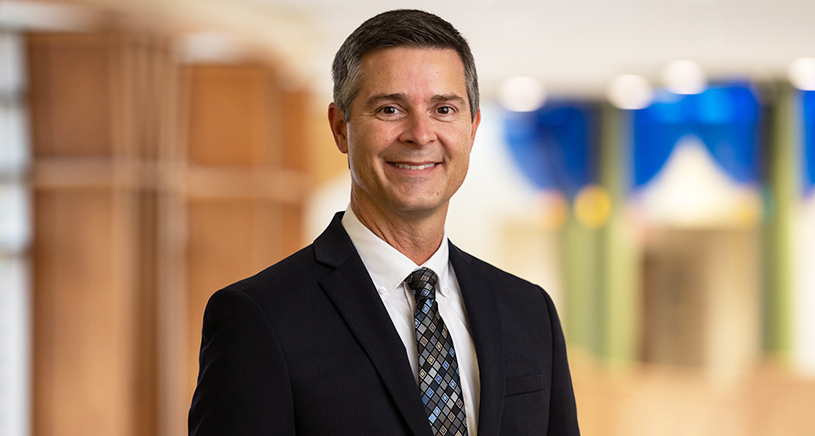
Jaap M.J. den Toonder is a Professor in the Department of Microsystems at Eindhoven University of Technology (TU/e), where he chairs the Microsystems research section. His work bridges technology and biology through biologically inspired innovations. Current research focus: Microfluidics, Soft Microrobotics Notable funding: ERC Advanced Grant (2019) Affiliations: hDMT Institute, ICMS Core Member Academic Background: MSc in Applied Mathematics (cum laude), Delft University of Technology PhD in Mechanical Engineering (cum laude), Delft University of Technology Research Trends: Recent articles emphasize magnetic microactuation, particle manipulation, and organ-on-chip cancer models. Collaborative work spans biomedical devices, energy applications, and sustainable technology. Scientific Awards: ERC Advanced Grant recipient (2019) Netherlands Academy of Engineering Fellow (2023) Education & Outreach: Authored over 140 papers, 45 patents, and 60+ invited lectures. Founded and directs TU/e's Microfab/lab facility for advanced microsystem development.
Vahé Nerguizian is a full Professor in the Department of Electrical Engineering at École de technologie supérieure (ÉTS) in Montreal, Canada, where he has established himself as a leading researcher in microelectronics, MEMS, and biomedical applications. Affiliated with the LACIME (Communications and Microelectronic Integration Laboratory), his work bridges engineering disciplines with healthcare innovations, particularly in cancer research and point-of-care diagnostics. His educational background includes a B.Ing. from Polytechnique Montréal, an M.Eng. from McGill University, and a Ph.D. from Concordia University. This strong foundation in electrical engineering has enabled his interdisciplinary research across multiple domains. Nerguizian's research focuses on the intersection of microfluidics, MEMS, and biomedical applications, with particular emphasis on cancer cell detection, liposome production for drug delivery, and microelectronic integration for healthcare solutions. His laboratory develops microfluidic devices for synthesizing nanoparticles and liposomes, with applications in cancer therapeutics and diagnostics. The work combines microwave engineering, bio-MEMS, and microelectronics to create innovative diagnostic tools and therapeutic delivery systems. His recent publications (2021-2025) demonstrate a clear trajectory toward increasingly sophisticated biomedical applications of microfluidic and MEMS technologies, with growing emphasis on cancer research, extracellular vesicle analysis, and therapeutic delivery systems. The research has evolved from fundamental MEMS and microwave engineering toward highly translational biomedical applications. 2015: Excellence in Teaching Award from the Board of Directors Nerguizian has supervised over 25 graduate students across doctoral and master's programs, with current projects focusing on microfluidic systems for nanoparticle synthesis and sensor systems for biomolecule detection. His research has received significant funding through collaborations with medical researchers, particularly with Julia Burnier's team at McGill University. The LACIME laboratory, where he conducts his research, provides state-of-the-art facilities for micro- and nanofabrication, integrated circuit design, and photonic microsystems. As part of the LACIME research group, Nerguizian contributes to a dynamic environment focused on both fundamental and applied research with strong industry connections. The laboratory's work spans from materials science to communication protocols, with particular strength in developing innovative solutions for healthcare applications.
Simone Schürle-Finke is an Associate Professor at ETH Zurich's Department of Health Sciences and Technology , where she leads the Medical Microsystems Lab . Her research develops nano- and microscale diagnostic/therapeutic systems to address healthcare challenges like cancer and infectious diseases. Focuses on responsive nanosystems, wireless drug transport, and cellular-level disease mechanisms Utilizes chemical synthesis, synthetic biology, and nanofabrication techniques Interdisciplinary approach combining chemistry, physics, computer science, engineering, and mathematics Awards & Fellowships: Ernst Th. Jucker Prize for Cancer Research Prix Zonta for Women in Science Fellowships from SNSF, DAAD, and Branco Weiss Foundation Top 10 winner of Falling Walls Breakthrough Award (2025) Recognized as World Economic Forum Young Scientist (2017) and World Laureate Forum Young Scientist (2020, 2021)
Dr. Kyla Sask is an Assistant Professor in the Department of Materials Science and Engineering and Associate Member of the McMaster School of Biomedical Engineering. Her research focuses on biomaterials development and surface modification strategies for medical devices, particularly blood-contacting applications and pediatric devices. Dr. Sask holds a B.Sc. in Chemical Engineering from Queen's University (2006) and a Ph.D. in Biomedical Engineering from McMaster University (2012). Her educational background combines engineering principles with biomedical applications. Her research examines biomaterial interfaces with biological systems, with specific interests in: Surface modification strategies for enhanced biocompatibility Protein and cell interactions at material interfaces Antithrombogenic biomaterials for blood-contacting devices Polymer functionalization using bioactive molecules Nanostructured biomaterials for medical applications Dr. Sask's publications focus on surface modification techniques including polydopamine coatings, covalent immobilization strategies, and nanostructured surfaces to control biological responses. Recent work explores multifunctional surfaces that combine antithrombotic and antimicrobial properties. She teaches courses on biomaterials synthesis and characterization, including MATLS 4LB2 (Synthesis and Characterization of Biomedical Coatings) and MATLS 4Y03 (Advanced Biomaterials: Applications and Device Design). Her industry experience includes previous work at Interface Biologics Inc. developing antithrombogenic polymer technologies.
Hazal Kutluk is a Researcher at the Institute of Microtechnology , Faculty of Mechanical Engineering , Technische Universität Braunschweig. Her work intersects biomedical engineering and microtechnology for health applications. Academic Background: B.Sc. in Mechanical (Automotive) Engineering, Hacettepe University (2010-2015) M.Sc. in Microsystems Engineering, Albert-Ludwigs-Universität Freiburg (2015-2018) Research Focus: Developing organ-on-chip systems and microfluidic biosensors to study cellular biomechanics in bacterial infections and enable rapid biomolecule detection. Her work combines microfabrication , biomedical diagnostics , and infection mechanisms within the university's Engineering for Health initiative. Selected Publications explore trends in lab-on-a-chip diagnostics , ECM integration , and single-cell analysis , reflecting interdisciplinary approaches in biosensing and tissue engineering. Research Funding: Participated in the project Decoding Lyme Disease: From Microtechnology to Biomechanics (08/2020-02/2022), funded by 12plus6 (Faculty 4, TU Braunschweig).
Linda Srbova serves as a Visiting Doctoral Researcher in the Department of Electrical Engineering and Automation at Aalto University's School of Electrical Engineering, where she contributes to the Microsystems Technology research group through interdisciplinary work at the nexus of biomedical engineering and materials science. Her research expertise centers on biomechanics and tissue engineering , with specialized focus on mechanical characterization of biological materials using Scanning Electron Microscopy (SEM) , Transmission Electron Microscopy , and advanced microrheometry techniques. She investigates viscoelastic properties of collagen matrices and 3D cell cultures, particularly examining how mechanical cues influence stromal environments and tumor-relevant stiffness levels for applications in regenerative medicine and cancer research. Dr. Srbova's publication record (2023-2024) reveals consistent innovation in quantifying cellular-scale mechanical properties, featuring novel methodologies for probabilistic viscoelasticity analysis and radiation effects on tissue mechanics. Her work bridges electrical engineering principles with biomedical applications, advancing understanding of biomechanical tumor microenvironments. Within the Microsystems Technology research ecosystem, she actively collaborates on developing microsystem platforms for precision biomechanical measurements, contributing to Aalto University's leadership in biomedical microtechnology research.
Miriam B. Goodman holds the Mrs. George A. Winzer Professorship of Cell Biology at Stanford University , with affiliations in the Department of Molecular and Cellular Physiology , Bio-X , and the Wu Tsai Neurosciences Institute . As Chair of the Molecular and Cellular Physiology Department (2017–present) and former Deputy Director of the Stanford Neuroscience Institute (2013–2017), she leads interdisciplinary research bridging neuroscience, biophysics, and molecular physiology . Education : Ph.D. in Neurobiology, The University of Chicago (1995) Sc.B. in Biochemistry, Brown University (1986) Her research focuses on molecular mechanotransduction using C. elegans to investigate touch sensation, temperature detection, and neuronal stress resilience . Key methodologies include quantitative behavioral analysis , CRISPR gene editing , and in vivo electrophysiology . Recent work explores mechanical forces in feeding through upconverting microgauges and chemosensory integration of plant-derived molecules. Her publications span neurobiological mechanisms , biomechanical sensor design , and ecological signal processing , with a 2025 Nature study on ingestible nanosensors and a 2024 Current Biology paper on mechanosensory complex organization . Scientific Awards : Distinguished Alumni Award, University of Chicago (2024) Landis Award for Outstanding Mentoring, NIH (2019) Michael and Kate Barany Award, Biophysical Society (2014) Klingenstein Fellow in Neuroscience (2005-2008) McKnight Scholar Award (2005-2008) Prize in Neurobiology, Eppendorf & Science (2004) As an advisor, she mentors doctoral candidates in the Biophysics , Molecular and Cellular Physiology , and Neurosciences Ph.D. programs , including Madeline Cooper and Caroline Arellano-Garcia. Her lab collaborates with UC San Diego's Vergassola Group on mechanosensory physics and Stanford Microsystems Lab on optical sensor design .
Dr. Adam Wood is an Assistant Professor of Engineering at Saint Vincent College since 2020. He holds a Ph.D. in Mechanical Engineering from Carnegie Mellon University, an M.S. from the University of Illinois at Urbana-Champaign, and a B.S. from the University of Pittsburgh. His research focuses on sustainable water purification, microfabrication, and plant biology, particularly exploring biomimetic solutions for desalination using plant-derived materials and food waste. He actively engages students in research projects and career development. Dr. Wood’s work emphasizes environmental sustainability through innovative materials science, including carbon electrodes from bread and mangrove roots. His publications span desalination technologies, microfluidic cell studies, and soft robotics. He teaches courses such as Statics, Materials Engineering, and Design with Modern Materials. While no awards are explicitly noted, his research contributions highlight interdisciplinary approaches to global challenges like water scarcity and renewable materials. His advising and grants section remains underdeveloped in available texts, but his labs focus on biomimetic engineering and sustainable systems. Collaborations include studies on tumor cell behavior in soft matrices and chemotactic cell responses in microfluidics.
Peter William Tinning serves as a Research Fellow in the Department of Electronic & Electrical Engineering at the University of Strathclyde's Faculty of Engineering. He is affiliated with the Centre for Microsystems and Photonics (CMP) where he develops advanced microscopy technologies, particularly focusing on miniaturized structured illumination systems using 3D printed components and MEMS. His research interests span biomedical imaging, optical microscopy, MEMS technology, and super-resolution imaging techniques. Tinning specializes in developing hardware solutions for live cell imaging, with particular expertise in structured illumination modalities, light sheet microscopy, and photoacoustic imaging systems. His work bridges physics, engineering, and biomedical applications. Analysis of his recent publications reveals a strong focus on practical microscope development using MEMS scanning mirrors, with applications in super-resolution imaging of cellular processes. His research shows a progression from fundamental optical techniques to increasingly miniaturized and specialized systems with clear biomedical applications. Scientific Awards: Stephen Young Entrepreneurship Award (2024) Tinning is currently leading the Northern Light Microscopy project as Principal Investigator, funded by the Royal Academy of Engineering (£78,250), and serves as Co-investigator on an Innovate UK project focused on MEMS super-resolution microscopy. His entrepreneurial activities include developing business models around his research innovations. Based at the Centre for Microsystems and Photonics, Tinning works within a multidisciplinary team focused on microsystems, photonics, laser gas diagnostics, and microfluidics for biomedical applications.
J. Tim Dvonch is an Associate Professor and Associate Chair in the Department of Environmental Health Sciences at the University of Michigan School of Public Health. His research focuses on exposure assessment and health effects of environmental pollutants, particularly air pollution, with emphasis on chemical composition of airborne particulates and source identification. Dr. Dvonch earned his academic degrees from the University of Michigan: PhD in Environmental Health Sciences (1998) MS in Environmental Health Sciences (1994) BS in Chemistry (1992) His expertise spans laboratory development and field evaluation of exposure assessment methodologies for air pollutants, including mass, number, and chemical composition of ambient particles at community, micro-environmental, and personal levels. He investigates health impacts of air pollution on vulnerable populations, exploring relationships between pollution exposure and adverse outcomes like respiratory/cardiovascular diseases. His work integrates atmospheric transport of toxicants across environmental systems and addresses socio-economic disparities in pollution-related health risks. Analysis of Dr. Dvonch's recent publications reveals three dominant research thrusts: (1) Development of wearable sensor technologies for personalized aerosol exposure monitoring, (2) Health effects studies of PM2.5 on respiratory/cardiovascular systems with focus on vulnerable subpopulations, and (3) Advanced source apportionment techniques using mercury isotopes and chemical speciation. His 2022-2025 work notably expanded into wastewater-based epidemiology for pathogen surveillance during the SARS-CoV-2 pandemic. Dr. Dvonch leads significant research initiatives including the Wearable Microsystem for Continuous Personalized Aerosol Exposure Assessment (collaborating with UM, MSU, and University of Missouri), the SEWER Network for campus pathogen detection, and contributions to the Michigan Center for Lifestage Environmental Exposures and Disease. His projects emphasize community engagement and interdisciplinary approaches to address environmental health disparities through the Community Engagement Core. He actively collaborates with research teams across the University of Michigan, Michigan State University, and University of Missouri, focusing on translating exposure science into actionable public health interventions. His work bridges laboratory innovation with real-world community applications in environmental health risk assessment.
Roman Voronov is an Associate Professor in the Department of Chemical and Materials Engineering at the New Jersey Institute of Technology (NJIT). He joined NJIT in 2013 and holds a Ph.D. in Chemical Engineering from the University of Oklahoma (2010). His research focuses on microfluidics, tissue engineering, and computational modeling, with applications in bioprinting and cell migration studies. His work emphasizes developing cost-effective materials and technologies for biomedical applications, including addressable microfluidic systems and scaffold optimization for tissue culture. Education: Ph.D., Chemical Engineering, University of Oklahoma, 2010 M.S., Chemical Engineering, University of Oklahoma, 2006 B.S., Chemical Engineering, University of Oklahoma, 2003 Research Interests: Dr. Voronov’s research combines engineering principles with biomedical applications, including: Development of low-cost microfluidic platforms for cell manipulation and tissue engineering Computational modeling of mass transport and fluid dynamics in biological systems Bioprinting and 3D fabrication of functional tissues and organs Analysis of cell migration cues and decision-making in microfluidic environments Labs and Teams: His research is supported through collaborations and access to advanced facilities, including his lab’s online presence at http://cell.engineering .
Devina Jaiswal serves as an Associate Professor of Biomedical Engineering at Western New England University, based in Sleith Hall with contact details including phone (413-782-1618) and email (devina.jaiswal@wne.edu). Her academic foundation includes advanced degrees from Pennsylvania State University and the University of Connecticut, establishing her expertise in biomaterials and cellular mechanics. Her educational background comprises: M.S. from Pennsylvania State University Ph.D. from the University of Connecticut Dr. Jaiswal's research centers on Tissue Engineering , BioMEMS , Drug Delivery , and Mechanobiology , with emphasis on mechanical micro-heterogeneity in biomimetic systems. She pioneers label-free characterization techniques and microtweezers-based stiffness analysis for 3D spheroids, bridging engineering principles with biological applications to advance regenerative medicine and cancer therapeutics through innovative biomaterial design. Her publication record (2012-2018) demonstrates consistent focus on mechanical properties of biomaterials and cellular microenvironments. Key themes include nanofiber matrix development for tissue scaffolds, osteoblast response to topographical cues, and micromagnetic cell manipulation systems. These works reveal strong interdisciplinary integration across biomedical engineering, materials science, and cell biology with direct applications in drug delivery optimization and tumor microenvironment modeling. No scientific awards are mentioned in the provided text. While specific advisees and grant funding details are not enumerated, her extensive co-authorship with researchers like Kazunori Hoshino and Kevin P. Claffey indicates active mentorship of graduate students and participation in collaborative research projects. The publication patterns suggest involvement in sustained grant-supported investigations into biomaterial mechanics and cellular response mechanisms. Dr. Jaiswal operates within a specialized laboratory environment focused on biomaterials characterization and cellular mechanics, utilizing microtweezers and micromagnetic systems for real-time single-cell analysis. Her research group maintains strong interdisciplinary connections with collaborators across multiple institutions, driving innovation in tissue engineering platforms and diagnostic microsystems.
Yang Lin is an Assistant Professor at the University of Rhode Island , affiliated with the Department of Mechanical, Industrial & Systems Engineering . His research focuses on Microfluidics , Acoustofluidics , and Organ-on-a-Chip technologies, with applications in Environmental Monitoring , Food Safety , and Human Health . Education : Ph.D. in Mechanical Engineering (2019) and M.S. in Mechatronic Engineering (2015) from the University of Illinois at Chicago, and B.S. in Mechanical Design Manufacturing and Automation (2012) from Beijing Information Science and Technology University. Research Interests include: Acoustofluidics : Developing non-invasive, biocompatible fluid manipulation techniques using acoustic bubbles and membranes. AI-Enhanced Diagnostics : Leveraging convolutional neural networks for sample-to-answer diagnostic systems in public health. 3D Printed Microfluidics : Expanding additive manufacturing for low-cost, complex physiological structures in healthcare. Environmental Microfluidics : Detecting microplastics and contaminants in water and food systems. Publications highlight advancements in 3D printed microneedles , machine learning for nanoplastic detection , and magnetofluidic biosensors . Lab Members include current Ph.D. students and alumni who have completed M.S. and B.S. degrees under his mentorship.
Professor Cheng Xing is a distinguished faculty member at the Department of Materials Science and Engineering within the College of Engineering at Southern University of Science and Technology (SUSTech). Since 2013 , he has served as a Professor and previously held a Director position at the Analytical Testing Center until 2020 , after which he became the Director of the Laboratory and Equipment Management Department . His academic journey includes a PhD in Electrical Engineering from the University of Michigan (2005), an MS in Geochemistry from Stanford University (1999), and a BS in Geochemistry from the University of Science and Technology of China (1997) Research Interests: Micro/Nanofabrication Techniques Nano-Optics and Photonic Devices Organic Semiconductor Materials Bio-MEMS and Digital Microfluidics Integrated Macroelectronics Publication Trends reflect expertise in Nanoimprint Lithography , High-Performance Semiconductor Devices , and Advanced Bio-MEMS Systems , with recent work focusing on Metasurface Applications , Flexible Electronics , and Cost-Effective Nanofabrication . His 15 Most Recent Articles (2023-2002) span Materials Science , Nanotechnology , and Optical Engineering . Scientific Recognition: 2011: NSF CAREER Award 2011: DARPA Young Faculty Award 2013: Shenzhen Peacock Project B 2014: Shenzhen Government Special Allowance 2018: Shenzhen Pengcheng Scholar Administrative Roles include leadership positions at SUSTech's Analytical Testing Center (2013-2020) and Director of Laboratory and Equipment Management Department (2020-present). His work bridges Academic Research and Industrial Application , with grants supporting innovations in Nanostructured Materials and Smart Sensing Systems .
Maria Tenje is a Professor of Microsystems Engineering at the Department of Materials Science , Uppsala University. Since July 2021, she has served as Director of the Department of Medical Technology. She leads the EMBLA research group , focusing on miniaturized systems for life science applications through advanced micro- and nanofabrication methods integrated into microfluidic platforms. Research Interests : Her work centers on biomedical engineering , microfluidics , organ-on-chip technology , and acoustophoresis . Key areas include droplet-based microfluidics, biomaterial evaluation, and developing cell culture systems with enhanced physiological relevance. Recent publications highlight innovations in 3D acoustic mixing , antibiotic resistance detection , and microfluidic platforms for single-cell respiration . Publications Trends : Her 15 most recent articles (2021-2025) span droplet microfluidics, organ-on-chip systems, and acoustic particle manipulation. These studies explore biomaterial biocompatibility , cellular response modeling , and microscale diagnostic tools , often in collaboration with interdisciplinary teams.