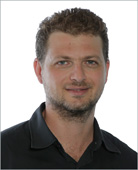
Janni Petersen is a Professor at Flinders University and a faculty member at the South Australian Health and Medical Research Institute (SAHMRI) within the Nutrition and Metabolism theme. She leads the Cancer Cell Metabolism Group at the Flinders Centre for Innovation in Cancer since 2015. Education: BSc in Biochemistry (1989–1992), University of Copenhagen MSc in Molecular Genetics (1992–1994), University of Copenhagen PhD in Cell Biology (1995–1998), University of Copenhagen Research Interests center on nutrient-sensing pathways in cancer and diabetes, particularly the Target Of Rapamycin (TOR) and AMP-activated Protein Kinase (AMPK) networks. Using Schizosaccharomyces pombe and mammalian models, her work establishes fundamental signaling principles before validating them in human systems. Recent Publications highlight: AMPK-TOR crosstalk mechanisms (2024) Metformin’s metabolic effects in cancer (2023-2025) Phosphoproteomic profiling of signaling substrates (2025) Honors & Grants include: 2024-2026: Lead Chief Investigator, ARC Discovery Project 2022-2024: Dual grants from NHMRC and ARC 2015-2019: Worldwide Cancer Research Award 2009-2015: Cancer Research UK Senior Fellowship 2006: Royal Society Award
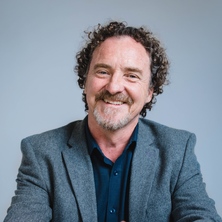
Associate Professor Orazio Vittorio is a Scientia Associate Professor at the School of Biomedical Sciences, University of New South Wales, and a Team Leader at the Children’s Cancer Institute within the Kids Cancer Alliance. He leads the Metal Targeted Therapy & Immunology Lab, focusing on copper metabolism in pediatric cancers. Scientia Associate Professor, UNSW Team Leader, Children’s Cancer Institute Lab Head, Metal Targeted Therapy & Immunology Research Interests: Dr. Vittorio investigates copper dependence in neuroblastoma, diffuse midline glioma (DIPG), lower-grade glioma, and glioblastoma. His work spans cancer immunology, nanomedicine, single-cell transcriptomics, and PET imaging for therapy monitoring. Copper metabolism in oncology Immune evasion mechanisms Development of copper-chelating therapeutics PET-based metallomics Epigenetic and metabolic targeting Scientific Awards: He has received prestigious accolades including the Cancer Institute NSW Outstanding Career Development Fellow (2020), Young Tall Poppy Science Award (2021), and Cure Cancer Australia Research of the Year (2022). Additional early-career awards include the SPOT Award (2015) and NanoMedicine Elevator Pitch Award (2017). Grants & Funding: Dr. Vittorio secured over $15 million in competitive research funding, including NHMRC Career Development Fellowships (2019–2023), Cancer Institute Program Grants (2020–2025), and international collaborations like the Australia-Germany Joint Research Scheme (2018–2019).
Anthony Kelleher is a Scientia Professor and Director of the Kirby Institute at UNSW Sydney, with joint appointments at St Vincent’s Hospital Sydney. He holds an MBBS, PhD, BSc, FRACP, FRCPA, and FAAHMS. His research spans HIV immunology, therapeutic vaccines, and SARS-CoV-2 pathogenesis, with significant contributions to clinical trials investigating siRNA-based therapies and immune reconstitution. Research Focus: Kelleher leads studies on HIV reservoir control, viral evolution, and long COVID immunopathology. His work utilizes advanced techniques like MHC tetramers, fine-needle lymph node biopsies, and neutralization assays to explore CD4+ T-cell reconstitution and antiviral immunity. Publications: His recent articles (2020-2025) emphasize RNA therapeutics, SARS-CoV-2 variant surveillance, and HIV cure strategies. Trends include multidisciplinary approaches combining virology, immunology, and gene therapy to address pandemic threats. Awards & Honors: Fellow, Australian Academy of Health and Medical Sciences (FAAHMS) Fellow, Royal Australasian College of Physicians (FRACP) Fellow, Royal College of Pathologists of Australasia (FRCPA) Leadership: He oversees the Kirby Institute’s Immunovirology Program and NSW State HIV Reference Laboratory, integrating basic research with clinical care for HIV and autoimmune diseases.
Professor Justin Cooper-White is Head of School and Professor of Bioengineering at the School of Chemical Engineering, University of Queensland. He holds affiliate appointments at the Australian Institute for Bioengineering and Nanotechnology (AIBN) and serves as Director of the Australian National Fabrication Facility-Queensland Node, Research Director of the Herston Biofabrication Institute, and co-Director of the Australian Organoid Facility. His leadership extends to past presidencies of the Australasian Society for Biomaterials and Tissue Engineering and Australian Society of Rheology. Cooper-White's research focuses on decoding microenvironmental cues governing stem cell behavior and tissue genesis, with emphasis on aging-related tissue dysfunction. His team develops innovative biomicrodevices, engineered surfaces, and advanced scaffolds for regenerative applications. Key research domains include: Smart biomaterials for tissue engineering Mechanotransduction signaling pathways Stem cell niche engineering Microfluidic platforms for high-throughput screening Nanoparticle-based tissue rejuvenation His publication portfolio demonstrates strong interdisciplinary integration across biomedical engineering, materials science, and computational biology. Recent work emphasizes multiscale tissue modeling, stem cell reprogramming, organoid systems, and advanced biomaterial characterization. Biomechanics and mechanobiology emerge as unifying themes, with significant focus on spinal disorders and cardiovascular aging. Awards and recognitions include: Fellowship in the International Union of Societies for Biomaterials Science and Engineering Fellowship in the Queensland Academy of Arts and Sciences CSIRO Office of the Chief Executive Science Leader Visiting Professorships at ETH Zurich and Politecnico di Milano He has secured over $57M in competitive funding, including ARC Discovery Projects and NHMRC grants. Current doctoral supervision spans regenerative engineering, stem cell biomanufacturing, and neural tissue regeneration. He leads international collaborations with institutions including MIT, Stanford, ETH Zurich, and Max Planck Institute, while maintaining industry partnerships with Unilever, Nestle, and Syngenta. As Editor-in-Chief of APL Bioengineering, Cooper-White shapes publication standards in the field. His laboratory develops transformative technologies including patented microbioreactor arrays and tissue engineering scaffolds commercialized through Australian and US ventures.
Sanna Barrand is a Research Fellow at Deakin University's School of Health and Social Development under the Faculty of Health. Her work bridges molecular biology, epigenetics, and clinical sciences to explore the developmental origins of health and disease. Research Focus: Epigenetic mechanisms in stem cells, maternal diet impacts on offspring organ development, and transgenerational inheritance patterns. Key Collaborations: Works with teams studying cardiovascular and renal health programming, including collaborations with researchers like Davis JA, Collas P, and Wood-Bradley RJ. Publications: Recent studies examine in utero dietary effects on kidney and cardiac development, hypothalamic transcriptome changes, and epigenetic regulation in stem cells.
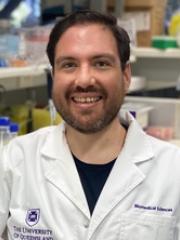
Dr. Eduardo Albornoz Balmaceda is a Research Fellow at the School of Biomedical Sciences , The University of Queensland , specializing in neuroinflammation and neurodegenerative diseases. He completed his PhD in 2019 under Prof Matthew Cooper at the Institute for Molecular Biosciences, focusing on NLRP3 inflammasome inhibitors for Parkinson's disease. Currently, he extends this research in the Woodruff Lab , investigating peripheral innate immune responses in amyotrophic lateral sclerosis, Huntington's disease, and Parkinson's disease. Education: MSc in Biochemistry, Universidad Andrés Bello PhD in Neurosciences, The University of Queensland Research interests center on pharmacological targeting of inflammasomes and complement cascade components as therapeutic strategies for neuroinflammatory diseases. His work bridges neuroscience, immunology, and pharmacology, with a focus on SARS-CoV-2 neurotropism, microglial activation, and preclinical drug validation. Publications (17 journal articles, 8 conference papers) highlight his contributions to understanding C5a receptor signaling in Parkinson's disease, spike protein-mediated inflammasome activation in microglia, and maternal thyroid function's impact on offspring autoimmune responses. Supervision: Associate advisor for PhD on Huntington's disease Funding history includes grants from Motor Neurone Disease Research Institute of Australia and UniQuest Pty Ltd for projects like inflammatory biomarkers in Parkinson's disease and C9orf72 dipeptide targeting.
Dr. Suja Pillai is a Senior Lecturer at the School of Biomedical Sciences , University of Queensland , with expertise spanning pathology, cancer biology, and medical education. Her research focuses on molecular mechanisms in cancers (particularly colorectal and breast cancer), tumor suppressor genes, and the role of microRNAs and cancer stem cells in disease progression. She has contributed extensively to educational innovation, including multidisciplinary assessment methods and hybrid teaching strategies during the COVID-19 pandemic. Research Themes : Cancer stem cell plasticity, molecular pathology, microRNA regulation, and medical education reform. Collaborations : Frequent co-authorship with researchers like Alfred K.-Y. Lam, Vinod Gopalan, and Farhadul Islam. Recent publications highlight her work on EPAS1 mutations in colorectal cancer and long noncoding RNA roles in triple-negative breast cancer. She actively engages in student-staff partnerships and curriculum development, emphasizing inclusivity and practical learning. No scientific awards are explicitly documented in the provided text.
Ashish Misra is a Researcher and Lab Head of the Atherosclerosis and Vascular Remodelling Group at the Heart Research Institute . He holds a PhD in Cell and Molecular Biology from Nanyang Technological University, Singapore, and a Master’s degree from the Indian Institute of Technology, Kanpur. Education Masters, Indian Institute of Technology, Kanpur, India PhD in Cell and Molecular Biology, Nanyang Technological University, Singapore (2011) His research focuses on blood vessel wall development and the pathogenesis of cardiovascular diseases. Key areas include NOTCH3 and TGFβ signaling pathways , plaque stability in atherosclerosis, and metabolic reprogramming of immune cells. He has pioneered studies on targeting these pathways to stabilize atherosclerotic plaques and reduce risks of heart attacks and strokes. Scientific Awards Yale Brown-Cox Postdoctoral Fellowship
Associate Professor Andrew Hoy leads the Lipid Metabolism Laboratory at the School of Medical Sciences, University of Sydney , with affiliations to the Charles Perkins Centre and Centre for Drug Discovery Innovation . His research bridges lipid metabolism, obesity, and cancer progression, focusing on fatty acid dynamics in prostate and breast cancers. BSc (Biomed Sc) & MSc (Research), University of Wollongong PhD, Garvan Institute of Medical Research Postdoctoral training, Monash University Research Themes: Cancer metabolism, lipid droplet regulation, and metabolic diseases (obesity, insulin resistance). Key projects explore nutrient pathway interactions, tumor microenvironmental influences, and therapeutic targeting of lipid enzymes. Recent Trends: Studies highlight lipid-cancer interactions, including fatty acid elongation in prostate tumors, peroxisomal β-oxidation in drug resistance, and cross-talk between glucose and lipid metabolism. His work identifies metabolic vulnerabilities for novel therapeutics. Scientific Awards: NHMRC Biomedical Australian Research Fellow (2010-2013) Grants: ARC Discovery Projects, US Department of Defence funding, Movember Revolutionary Team Awards, and university-specific pilot grants Teaching: Coordinated PHSI2X08 - Exercise Physiology and PHSI3X12 - Metabolic Diseases , integrating metabolic physiology into cancer contexts. Collaborations: Partnerships with institutions in Belgium (KU Leuven) and the US (UC Berkeley, University of Rochester) enhance his translational research. Current lab members include honors students Sarah Dakak and William Carraro.
Dr. Ning Liu is a Postdoctoral Research Fellow at the South Australian Immunogenomics Cancer Institute (SAiGENCI) within the Faculty of Health and Medical Sciences at the University of Adelaide. As a bioinformatician and computational biologist, Dr. Liu specializes in developing computational tools for epigenetics and transcriptomics research, with particular expertise in next-generation sequencing data analysis including ChIP-seq, ATAC-seq, Hi-C, RNA-seq, single cell RNA-seq, and spatial transcriptomics. Dr. Liu's research focuses on developing novel computational methods to study the human genome in the context of transcriptomics and epigenomics. Currently, Dr. Liu maintains three Bioconductor software packages: standR for spatial transcriptomics analysis of GeoMx DSP data, hoodscanR for cellular neighborhood detection in spatial transcriptomics, and scider for modeling global cell density in spatial transcriptomics data. With strong emphasis on translating biological insights to medical applications, Dr. Liu's work bridges computational methodology with clinical relevance in cancer research and immunology. Dr. Liu is eligible to supervise Masters and PhD students as a Co-Supervisor, reflecting their established expertise in bioinformatics and computational biology. Their research has resulted in numerous publications focusing on spatial transcriptomics, cancer immunology, and computational tool development, with applications in understanding tumor microenvironments and immunotherapy response. Dr. Liu's scholarly contributions demonstrate a consistent focus on spatial biology methodologies applied to cancer research, particularly head and neck cancer. Their publications reveal expertise in developing computational frameworks that address technical challenges in spatial transcriptomics while providing biological insights with potential clinical applications in immunotherapy. As a research supervisor, Dr. Liu contributes to the academic community by mentoring graduate students in computational biology techniques and applications. Their work environment at the Adelaide Health and Medical Sciences building on the West End Health Precinct provides access to state-of-the-art facilities supporting their computational research in cancer immunogenomics.