Cicek Cavdar is an Associate Professor at the School of Electrical Engineering and Computer Science (EECS) at KTH Royal Institute of Technology , Sweden. She leads the Intelligent Network Systems research group and specializes in Telecommunication Networks , with a focus on Beyond 5G/6G Mobile Networks , Energy Efficiency , and AI-Assisted Network Management . PhD in Computer Science (2009) from University of California, Davis and Istanbul Technical University Her research spans Cell-Free Massive MIMO , Reconfigurable Intelligent Surfaces (RIS) , UAV Communication Systems , and Green Network Technologies . She actively contributes to 6G Network Architecture and Non-Terrestrial Networks , including satellite and aerial systems. Recent publications highlight AI-driven network optimization for handover management, energy-aware resource allocation , and multi-agent reinforcement learning in complex communication environments. She teaches advanced courses in Communication Systems , Machine Learning , and Software Engineering at KTH.
Professor Marc Sorel is a faculty member in the Department of Electronic & Nanoscale Engineering at the University of Glasgow's School of Engineering. He holds a PhD from Università di Pavia (1999) and joined the Optoelectronics Research Group at Glasgow in 1998 with a Rotary Foundation fellowship. Appointed Lecturer in 2002 and Senior Lecturer in 2008, he is now a Professor specializing in integrated optics, silicon photonics, and semiconductor lasers. His research focuses on applications like quantum technology, mid-infrared optoelectronics, and nonlinear photonics. Notable projects include silicon nitride optical phased arrays and rubidium-based atomic systems. He leads a team advancing chip-scale sensors and photonic integrated circuits. Collaborations with institutions like the Quantum Technology Hub highlight his industry engagement. Research interests span semiconductor ring lasers, ultrashort pulse lasers, and coupled ring resonators on silicon-on-insulator platforms. His work integrates materials science (e.g., alumina/silicon nitride) with quantum and optical engineering innovations. Over 300 publications and presentations at conferences like CLEO and ECOC reflect his global impact. Current efforts emphasize mid-infrared sensing, cold atom systems, and high-precision laser development. His lab develops photonic components for atomic trapping, quantum communication, and biomedical sensing. Recent advancements include sub-kHz linewidth lasers and low-loss waveguides. Funding from UK Research and Innovation supports his exploration of next-generation photonic technologies.
Prof. Kai S. Exner is a Professor of Theoretical Inorganic Chemistry at the University of Duisburg-Essen's Faculty of Chemistry and a member of the Zentrum für Medizinische Biotechnologie (ZMB). His research focuses on electrocatalysis , particularly optimizing electrode materials for energy applications such as batteries, electrolyzers, and fuel cells. He employs computational methods like ab initio calculations and microkinetic modeling to bridge theoretical insights with experimental and industrial applications, emphasizing sustainable catalyst design without relying on noble metals. His work integrates basic research with applied medical biotechnology through ZMB collaborations, though his primary affiliation lies in the Faculty of Chemistry. Exner has pioneered concepts like the electrochemical-step asymmetry index and free-energy span model, which are critical for screening electrocatalysts. His research group, 'Theoretical Inorganic Chemistry,' actively explores mechanisms behind oxygen and chlorine evolution reactions, emphasizing selectivity control and reaction pathway complexity. Exner received the Gottschalk-Diederich-Baedeker-Preis (2024) for advancing the energy transition through foundational electrocatalysis research. He leads Aktuelles Projekt funded by third-party grants and collaborates with facilities like the Analytics Core Facility Essen (ACE) and Imaging Center Campus Essen (ICCE). His advisory role focuses on guiding theoretical and computational approaches in electrochemistry, and he has established a reputation for interdisciplinary research connecting computational chemistry with practical energy solutions.
Professor Thomas Bein is affiliated with the Department of Chemistry at Ludwig-Maximilians-Universität München (LMU) , where he leads the Functional Nanosystems research group. His work focuses on synthesizing and characterizing nanostructured materials with applications in energy, catalysis, and biomedical delivery. Mesoporous nanoparticles for drug delivery Semiconductor nano-morphologies for photovoltaics Photoelectrochemical water splitting Metal-organic frameworks (MOFs) Electroactive networks His research emphasizes atomic-scale control of material architectures using self-assembly, hydrogen bonding, and covalent interactions, enabling precise tuning of electronic, optical, and catalytic properties. A review of his recent publications reveals cutting-edge investigations into covalent organic frameworks (COFs), perovskite-inspired solar materials, and functional nanoparticle systems. Key trends include optimizing energy conversion efficiency, enhancing stability in optoelectronic devices, and exploring bio-compatible nanocarriers for targeted therapies. Professor Bein’s group actively contributes to interdisciplinary projects at the intersection of chemistry, physics, and biomedical engineering, with ongoing collaborations in solar energy, sustainable materials, and nanomedicine.
Richard M. Murray is the Thomas E. and Doris Everhart Professor of Control and Dynamical Systems and Bioengineering at the California Institute of Technology (Caltech). He holds a B.S. from Caltech (1985), M.S. from UC Berkeley (1988), and Ph.D. from UC Berkeley (1990). He has served in academic roles from Assistant Professor (1991–1997) to his current endowed professorship. He chaired the Engineering and Applied Science division (2000–2005) and Biology and Biological Engineering (2020–2024). His research focuses on feedback control in biological and autonomous systems, synthetic cells, and networked control systems. Collaborators include experts in robotics, synthetic biology, and systems biology. Key awards include the IEEE Control Systems Award and election to the National Academy of Engineering. His educational contributions span courses on control systems, robotics, and bioengineering. Current research projects include the Developer Cell initiative (Sloan Foundation), layered testing for autonomous systems (AFOSR), and microbiome-based environmental solutions (CHARMME, ARO). He advises numerous graduate students and postdocs, with notable alumni in academia and industry. Labs include facilities in Keck and Steele laboratories at Caltech. His work bridges control theory, synthetic biology, and autonomous systems to address societal challenges like environmental monitoring and safe autonomy.
Hang Lu is a Professor and holds the Cecil J. "Pete" Silas Chair of Chemical & Biomolecular Engineering at the Georgia Institute of Technology. Dr. Lu also holds a Love Family Professorship and leads the Lµ Fluidics Group, which focuses on engineering microfluidic systems and machine learning tools to address complex questions in neuroscience, developmental biology, and cell biology that are difficult to address with conventional techniques. Dr. Lu's research lies at the intersection of engineering and biology, with primary interests including: Microfluidic systems for high-throughput screens and image-based genetics and genomics Systems biology: large-scale experimentation and data mining Microtechnologies for optical stimulation and optical recording Big data, machine vision, and automation Developmental neurobiology, behavioral neurobiology, and systems neuroscience Cancer biology, immunology, embryonic development, and stem cells Her laboratory engineers microfluidic devices and BioMEMS to study neuroscience, genetics, cancer biology, and biotechnology. These miniaturized Lab-on-a-chip tools operate at scales comparable to biological systems, leveraging unique micro and nano-scale phenomena to gather large-scale quantitative data about complex biological systems. Current projects include Microfluidics for Life Sciences, Optical Neuron Recordings and Manipulations, Machine Learning Tools for Neuroscience, Measuring and Modeling Behavior, and High-throughput, High-content Cell-based Assays. Analysis of Dr. Lu's recent publications (2024-2025) reveals a strong trend toward integrating microfluidics with advanced computational methods: Development of deep learning frameworks for biological image analysis Advanced neuron tracking and functional imaging techniques Non-invasive characterization of 3D organoid cultures Sophisticated neuromechanical modeling of locomotion Microfluidic temperature control systems for in vivo studies Label-free imaging pipelines for neural development Dr. Lu's significant professional honors include: Cecil J. "Pete" Silas Chair of Chemical & Biomolecular Engineering Love Family Professorship The Lµ Fluidics Group actively mentors students and postdocs, currently accepting new postdoctoral researchers. The lab receives substantial funding for interdisciplinary projects at the engineering-biology interface, with research implications spanning fundamental biological understanding to therapeutic development. The group operates within Georgia Tech's School of Chemical & Biomolecular Engineering, with specialized facilities for microfluidic device fabrication, biological experimentation, and advanced imaging, maintaining strong collaborative ties across engineering, neuroscience, and biological disciplines.
John Oakey is a Professor and Graduate Coordinator in the Department of Chemical and Biomedical Engineering at the University of Wyoming, with additional affiliations to the INBRE Program, Molecular and Cellular Life Sciences Program, and Materials Science and Engineering Program. Education Postdoctoral Fellow, Center for Engineering in Medicine, Massachusetts General Hospital & Harvard Medical School (2007–2010) Ph.D. Chemical Engineering, Colorado School of Mines (2003) M.S. Chemical Engineering, Colorado School of Mines (1999) B.S. Chemical Engineering, Penn State University (1997) Research Interests Oakey’s laboratory integrates fluid dynamics, colloidal science and materials science to understand how biological systems behave under flow, on surfaces and within complex 3-D geometries. A unifying theme is the use of microfabrication and microfluidics to create new diagnostic, prognostic and therapeutic platforms. Current thrusts include: Heterogeneous biomaterials: self-assembled particulate tissue scaffolds whose mechanical and transport properties can be temporally programmed. Inertial microfluidics: exploiting lift forces for membrane-free particle sorting, enrichment and diagnostics. Multi-temporal analysis by flow cytometry: development of closed-loop, high-throughput microfluidic cytometers for longitudinal single-cell studies. Publication Trends From 2025 back to 2010, Oakey’s articles reveal a consistent trajectory that marries fundamental physics (microtubule mechanics, inertial focusing) with translational applications (cell encapsulation, tissue scaffolds, drug delivery). Recent work (2023-2025) increasingly targets injectable granular hydrogels, single-cell therapeutic delivery and sustainable carbon-sequestering living materials, demonstrating an evolution from microscale transport phenomena to macroscopic biomedical and environmental impact. Scientific Awards No named awards are listed in the supplied text. Advising & Coordination Roles As Graduate Coordinator for the Department of Chemical and Biomedical Engineering, Professor Oakey oversees graduate program development and student mentoring. While no individual students are named, his role implies active supervision of M.S. and Ph.D. advisees in chemical and biomedical engineering. Laboratory & Teams The Oakey Research Group operates from the Energy and Environmental Research Building (EERB 435A) at the University of Wyoming. The lab enjoys R1-level research infrastructure and collaborates broadly with the Wyoming INBRE network, the Molecular and Cellular Life Sciences Program, and the Materials Science and Engineering Program.
Moe Z. Win is the Robert R. Taylor Professor at the Massachusetts Institute of Technology (MIT), specializing in wireless communications, optical communications, and space communications systems. His research bridges theoretical and applied domains, including quantum sensing, network localization, and signal processing. B.S.E.E., Texas A&M (1987) M.S.E.E. & Ph.D., University of Southern California (1989, 1998) Recent work focuses on quantum-enhanced positioning, machine learning for localization, and next-generation (xG) non-terrestrial networks. He leads research at the Quantum neXus Laboratory (QX Lab), Wireless Information & Network Sciences Lab, and Laboratory for Information and Decision Systems. His career spans the Jet Propulsion Laboratory (1987-1995) and AT&T Research Laboratories (1998-2002). Key methodologies include soft information fusion, variational quantum sensing, and robust beam tracking for terahertz communications.
Bhaskar Reddy Sudireddy is an Associate Professor in the Department of Energy Conversion and Storage at the Technical University of Denmark (DTU). His research focuses on advanced materials for energy technologies, including solid oxide fuel cells, electrocatalysts, and ceramic processing. He contributes to UN Sustainable Development Goals related to affordable and clean energy (SDG 7) and industry innovation (SDG 9). His work emphasizes the development of high-performance electrodes, metal-supported solid oxide cells, and gas sensors. He leads projects on eco-friendly fabrication methods for energy storage systems and collaborates on piezoelectric materials sintered in humid air. His research group, Applied Ceramics and Processing, explores novel ceramic materials for applications in renewable energy and environmental monitoring. Advises five PhD students working on projects like high-temperature electrolysis cells and antiferroelectric materials. Supervises interdisciplinary research spanning electrochemistry, materials synthesis, and device fabrication. Located at DTU’s campus in Kgs. Lyngby, Denmark, with extensive international collaborations.
Dr. Shyh-Dar Li is a Professor and Tong Louie Chair in Pharmaceutical Sciences at the University of British Columbia's Faculty of Pharmaceutical Sciences, where he also serves as Chair of Nanomedicine and Chemical Biology. With a BSc in pharmacy from National Taiwan University (1998) and PhD in pharmaceutical sciences from UNC Chapel Hill (2008), followed by postdoctoral training at UC San Diego's Moores Cancer Center (2009), Dr. Li has established himself as a leading researcher in advanced drug delivery systems. His research focuses on developing innovative nanomedicine platforms for targeted delivery of biological therapeutics including peptides, proteins, antibodies, and nucleic acids. Dr. Li's laboratory has pioneered several novel drug delivery approaches, particularly in lipid-based nanoparticles, phospholipid-free vesicles, and polymer systems for cancer immunotherapy, pain management, and protein delivery. His work bridges fundamental nanotechnology with translational applications for difficult-to-treat diseases. Analysis of his recent publications reveals a strong emphasis on tumor microenvironment modulation, endosomal escape mechanisms for nucleic acid delivery, and non-invasive delivery routes for protein therapeutics. His research demonstrates increasing sophistication in nanocarrier engineering, with recent work incorporating machine learning approaches to optimize nanoparticle design and expanding into immunomodulatory therapies that harness the body's immune system to fight cancer. Scientific Recognition: 2014 AFPC New Investigator Award 2013 AAPS New Investigator Award in Pharmaceutics and Pharmaceutical Technologies 2013 CIHR New Investigator Award 2013 CSPS Early Career Award 2012 Prostate Cancer Foundation Young Investigator Award Dr. Li's research program has been consistently supported by major Canadian funding agencies including CIHR, NSERC, and MITACS. He actively collaborates across disciplines and accepts graduate students into his research program, focusing on cutting-edge approaches to overcome biological barriers in drug delivery. His laboratory, the Laboratory of Targeted Drug Delivery and Nanomedicine, serves as a hub for innovation in pharmaceutical nanotechnology.
Michael McAlpine is a Professor in the Mechanical Engineering department at the University of Minnesota . He also holds affiliations with the Biomedical Engineering and Electrical and Computer Engineering departments. His research focuses on 3D printing functional materials & devices , Nanoscale inks , Biomedical devices , Bioelectronics , and Flexible Microsystems . Research Interests : 3D Printing, Biomedical Engineering, Nanotechnology, Flexible Electronics, Microfluidics Labs : ME 361/363 Contact : mcalpine@umn.edu , (612) 626-3303, ME 117 Recent Research Trends include 3D Printed Biomedical Devices , Flexible Electronics , and Bioprinting Applications . His work spans from Spinal Organoid Formation to Programmable Drug Release Capsules . Scientific Award : Circulation Research 2020 Best Manuscript Award
Sumeet Kumar Gupta is an Associate Professor in the Department of Electrical and Computer Engineering at Purdue University. His academic career spans from his current role to a prior Assistant Professorship at Pennsylvania State University (2014-2017) and an engineering position at Qualcomm Inc. (2012-2014). He holds a PhD in Electrical and Computer Engineering from Purdue University (2012), an M.S. from the same institution (2008), and a B.Tech in Electrical Engineering from IIT Delhi (2006). B.Tech, Electrical Engineering, IIT Delhi (2006) M.S., Electrical and Computer Engineering, Purdue University (2008) PhD, Electrical and Computer Engineering, Purdue University (2012) Dr. Gupta's research focuses on neuromorphic computing, low power variation-aware VLSI design in emerging nanotechnologies, device-circuit co-design, and nano-scale device modeling/simulations. His work addresses challenges in ferroelectric materials, crossbar arrays for deep neural networks, and energy-efficient AI hardware. Recent publications (2025-2024) highlight trends in: Ferroelectric HfO2/HZO thin films Compute-in-memory architectures Variability/stochasticity analysis Machine learning for device optimization Interconnect resistance/temperature effects AI hardware fault tolerance Scientific Awards & Recognitions: DARPA Young Faculty Award (2016) Early Career Professorship, Penn State (2014) 6th TSMC Outstanding Student Research Bronze Award (2012) Magoon Award (Purdue) Outstanding Teaching Assistant Award (Purdue, 2007) Intel PhD Fellowship (2009) His professional journey includes academic appointments at Purdue University (2020-present, Associate Professor) and Pennsylvania State University (2014-2017, Assistant Professor) after industry experience at Qualcomm Inc. (2012-2014). He maintains IEEE and EDS membership while publishing over 100 refereed works.
Andrew M. Stuart is a Professor at the California Institute of Technology's Division of Engineering and Applied Science. His research bridges computational mathematics, machine learning, and physical modeling, focusing on inverse problems, partial differential equations, and multiscale systems. He has pioneered methodologies integrating Gaussian processes, Kalman inversion, and neural operators for scientific computing. His recent publications highlight innovations in competitive protein dimerization networks, nonlinear Bayesian inference, and operator learning. Articles span applications in materials science, geophysics, and biochemical signal processing, emphasizing data-driven discovery of differential equations and scalable algorithms for high-dimensional problems. Stuart's work addresses challenges in structural error modeling, uncertainty quantification, and graph-based learning, with implications for climate modeling and dynamical systems. Despite extensive contributions, the scraped data does not specify students, awards, or contact details.
Anthony Rollett is a Professor in the Department of Materials Science and Engineering at Carnegie Mellon University , where he has been a faculty member since 1995. He serves as the Principal Investigator and Co-Director of the NASA-supported Institute for Model-Based Qualification & Certification of Additive Manufacturing (IMQCAM) and co-director of the Next Manufacturing Center . Prior to CMU, he held leadership roles at Los Alamos National Laboratory (1991-1995). Education: Ph.D., Materials Engineering, Drexel University (1987) MA, Metallurgy and Materials Science, Cambridge University (1977) Research Interests: Rollett’s work focuses on microstructural evolution and microstructure-property relationships in 3D using experiments and simulations. His expertise spans additive manufacturing , metal 3D printing , materials for energy systems , grain growth , recrystallization , and stereology , with techniques like high-energy diffraction microscopy (HEDM) and dynamic x-ray radiography (DXR) . Scientific Contributions: He has over 320 peer-reviewed publications and an h-index >80 . His recent articles highlight machine learning for laser processing , fatigue analysis of additively manufactured alloys, and design optimization for heat exchangers in supercritical CO2 and solar thermal applications . Scientific Awards: Fellow of ASM International (1996) Fellow of the Institute of Physics (UK) (2004) Fellow of The Minerals, Metals & Materials Society (TMS) (2011) Cyril Stanley Smith Award (TMS, 2014) Member of Honor, French Metallurgical Society (2015) US Steel Professor (2017) Francqui International Professor (2020-2021) International FAME Award (2023) Leadership & Impact: Rollett co-led the development of a NASA Space Technology Research Institute for additive manufacturing and established a new master’s program in additive manufacturing (2018). His research group is funded by industry , federal agencies , and Pennsylvania state grants . He also serves on the Basic Energy Science Advisory Committee and Defense Programs Advisory Committee for the Department of Energy.
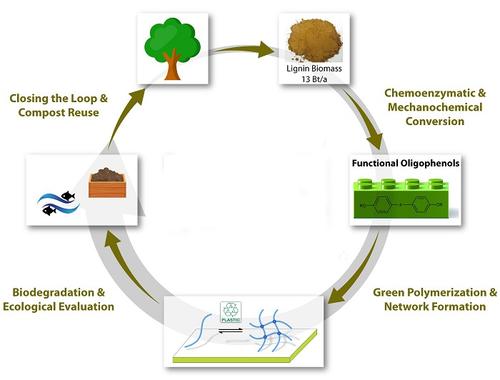
Rainer Haag is a Professor at the Department of Chemistry, Freie Universität Berlin, leading the Haag Group in the Institute of Chemistry and Biochemistry. His research focuses on biodegradable and sustainable materials, dynamic hydrogels, and polymeric nanosystems for biomedical applications. Department of Chemistry, Freie Universität Berlin Member of SFB 1449: Dynamic Hydrogels at Biointerfaces Collaborator in the StemGel startup project Co-founder of CSR|Berlin interdisciplinary research institute Research Interests: Development of stimuli-responsive polymers, multivalent virus inhibitors, and functional biointerfaces. Key projects include: Antiviral coatings using heteromultivalent polymers Thermoresponsive hydrogels for stem cell expansion Graphene derivatives for bacterial capture and disinfection Lignin upcycling for sustainable resin materials Supramolecular nanosystems for drug delivery Publication Trends highlight interdisciplinary work in polymer chemistry, nanotechnology, and biomedical applications. Recent articles focus on: 2D polyglycerols for virus interactions Redox-responsive nanogels Mucus-inspired adhesive hydrogels Tumor-targeting micelles Bacterial disinfection using graphene composites Labs & Collaborations include the Polymeric and Supramolecular Nanosystems subgroup, the Dynamic Hydrogels and Biointerfaces team, and partnerships with MIT in developing bioinspired adhesives. His group contributes to DFG-funded SFB 1449 and CSR|Berlin initiatives.