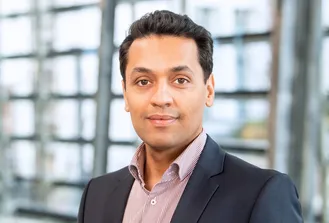
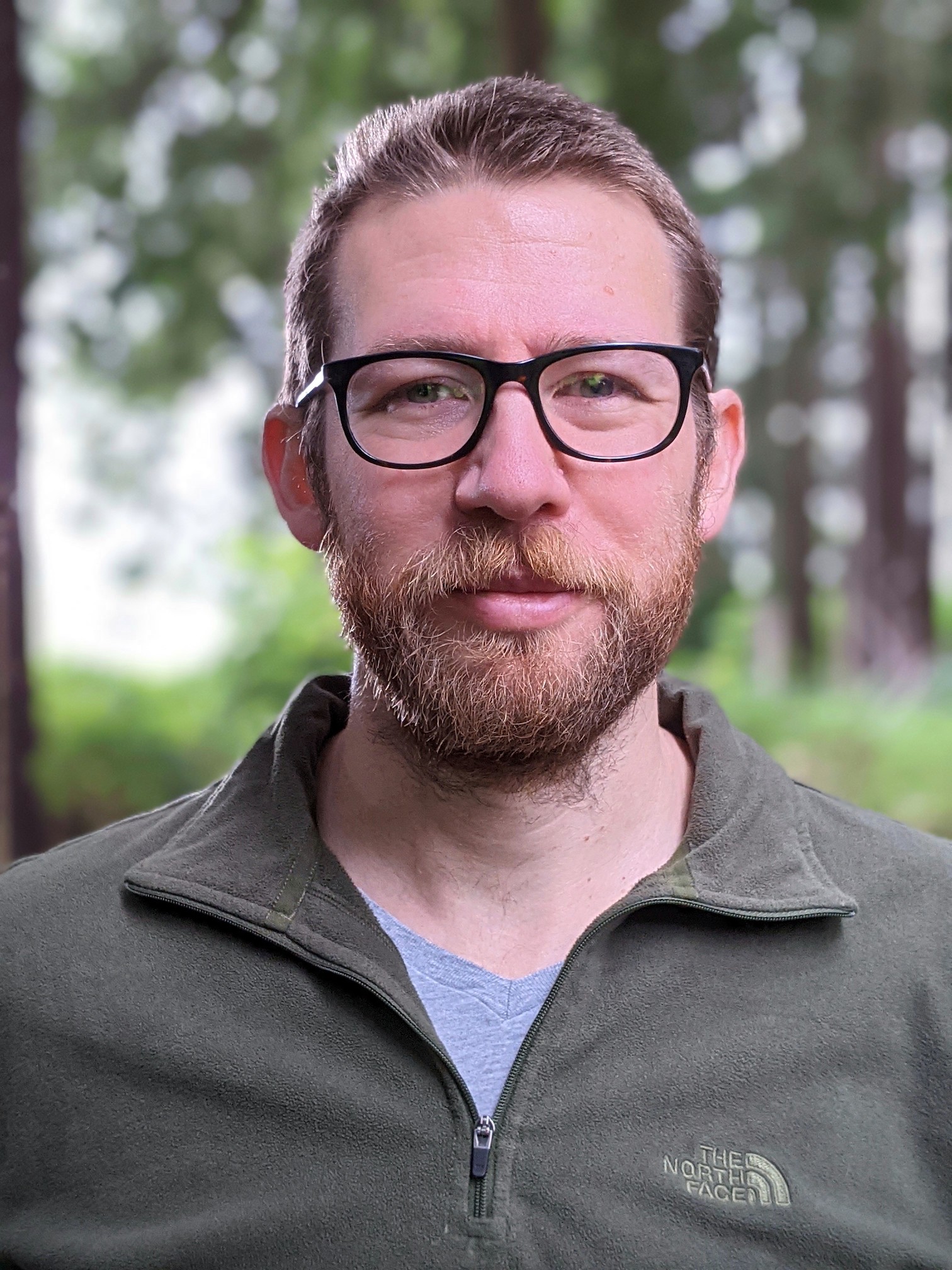
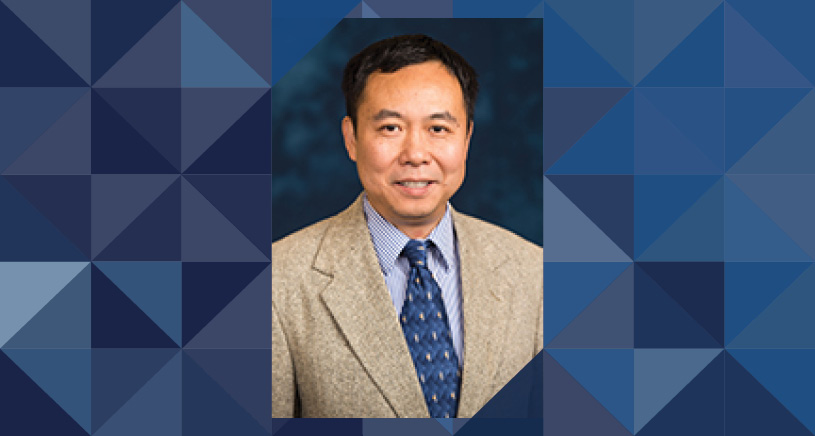
Prof. Jalal Etesami is an Assistant Professor in the Department of Computer Science at Technical University of Munich (TUM), leading the Decision Sciences & Systems group. He holds a Ph.D. in Industrial and Systems Engineering from the University of Illinois at Urbana-Champaign and was a Postdoctoral Fellow at EPFL in Switzerland. His research focuses on machine learning, causal inference, multi-agent systems, and game theory, with applications to systemic risk modeling and market design. He teaches advanced courses such as Causal Inference in Time Series , Algorithmic Game Theory , and Optimization, Learning, and Market Design . Notable contributions include work on causal structure learning, stochastic optimization, and non-Gaussian causal models. Recent research explores causal effect identification under confounding, neural networks for market analysis, and optimal experiment design. Prof. Etesami’s work appears in top venues like NeurIPS, AAAI, and IEEE journals. He actively contributes to the academic community, organizing seminars and workshops on topics ranging from causal reasoning to computational social choice.
Marcus Rogers is Professor and Associate Dean for Faculty at Purdue Polytechnic Institute, Purdue University, where he directs the Cyber Forensics Lab. He holds dual fellowships with the American Academy of Forensic Sciences (AAFS) and the Center for Education and Research in Information Assurance and Security (CERIAS). Previously, he served as Editor-in-Chief of the Journal of Digital Forensics Security & Law and Secretary of AAFS. Education includes: PhD in Forensic Psychology, University of Manitoba (2001) MA in Personality Psychology, University of Manitoba (1995) BA in Psychology/Criminology, University of Manitoba (1986) His research integrates behavioral science with digital forensics, focusing on: Psychological profiling of cybercriminals and online offenders Advanced cyber forensic methodologies including mobile/GPU forensics Predictive modeling of cyber threats and adversarial behavior IT insider threats and cyber terrorism dynamics This interdisciplinary approach advances evidence analytics and digital crime scene interpretation. His publications demonstrate consistent focus on cybercrime psychology, forensic methodologies, and digital evidence innovation, with recent work emphasizing behavioral analytics, adversarial modeling, and advanced data recovery techniques. Major scientific honors include: Paul H. Chapman Medal for justice innovation (2009) AAFS Digital Sciences Research/Case Study Awards (2012, 2013) Fellow distinctions from AAFS and CERIAS University Faculty Scholar (2008) He leads the Cyber Forensics Lab, developing novel investigative tools like SMIRK (SMS forensics) and TracHac (cell phone analysis). Secured multiple grants for digital evidence research from federal and industry partners. Extensive professional engagements include chairing NIST OSAC committees and FBI InfraGard membership.
Professor Javen Qinfeng Shi is a faculty member at the University of Adelaide, holding the position of Professor in the School of Computer and Mathematical Sciences under the Faculty of Sciences, Engineering and Technology. He serves as Founding Director of the Causal AI Group and as one of the directors at the Australian Institute for Machine Learning (AIML), based at the North Terrace campus location. His research centers on causation, artificial intelligence, mind and metaphysics, with Google Scholar rankings placing him 4th globally in causation and 7th in probabilistic graphical models. Shi develops causal AI methods to identify root causes, discover latent variables, eliminate spurious correlations, enhance cross-domain generalization, model intervention consequences, and solve counterfactual queries. His work focuses on optimizing intervention sequences for desired outcomes under resource constraints, applied to material discovery, agriculture, mining, sports, manufacturing, bushfire prediction, healthcare, and education. Professor Shi's industry impact includes the NOBURN bushfire prediction app (released 2023 with 50+ media coverages), energy material discovery via AI catalysts, and smart manufacturing logistics solutions. His work with the Responsible AI Think Tank (2022-2024) and current AI Industry Forum panellist role (2024 onward) demonstrates active contribution to national and state AI ecosystem development. His scientific awards include: 1st place at Open Catalyst Challenge (NeurIPS AI for Science 2023) Winner of AUS/NZ Bushfire Data Quest 2020 Citizen Science Grant 2021 Finalist in SA Department of Energy and Mining Gawler Challenge 2020 (2k+ participants from 100+ countries), recognized for "The most innovative modelling" 2nd place in Explorer Challenge 2019 (1k+ entries from 62 countries) 1st place at SAIC Volkswagen Logistics Innovation Day 2019 Shi is eligible to supervise Masters and PhD students and has secured research funding including the Citizen Science Grant 2021. His industry collaborations span energy, agriculture, mining, and emergency management, translating theoretical causal AI into practical tools like NOBURN. He leads the Causal AI Group at the University of Adelaide and directs research teams at AIML, focusing on causal inference frameworks for distribution shift resilience and intervention optimization. Current projects emphasize bushfire prediction, material science applications, and AI ethics implementation through the AI Industry Forum.
David Rossell is an Associate Professor at the Department of Economics, Universitat Pompeu Fabra (UPF) in Barcelona, Spain. He is affiliated with the Statistics@UPF research group and directs the Master in Data Science at the Barcelona School of Economics (BSE). Previously, he held positions at IRB Barcelona as head of the Biostatistics Unit and at the University of Warwick's Statistics Department. He obtained his PhD in Statistics from Rice University, Houston (USA), and conducted postdoctoral research at M.D. Anderson Cancer Center under Professors Valen Johnson and Veera Baladandayuthapani. Research Interests: Rossell specializes in high-dimensional statistical inference, Bayesian methods, computational statistics, and applications in biomedicine and social sciences. His work emphasizes methodology for complex data integration, variable selection, graphical models, and experimental design. Key areas include non-local priors, scalable Bayesian computation, and the development of R packages for statistical analysis (e.g., casper , chroGPS , gaga ). Publications: His recent work focuses on advancing Bayesian variable selection, graphical models with external data, and causal inference. Themes include leveraging external datasets for improved model accuracy, robustness to model misspecification, and applications in healthcare and complex mixture analysis. His contributions span methodological innovation and computational tools for high-dimensional problems. Funding & Grants: Rossell has secured funding through Spanish and European grants, including Juan de la Cierva Fellowships, AGAUR fellowships, and Marie Slodowska-Curie Actions. He supports PhD and postdoctoral researchers through programs like La Caixa InPhD and Beca Beautriu de Pinós. Labs & Teams: He leads the BSE Data Science Center and contributes to interdisciplinary collaborations at UPF and IRB Barcelona, bridging statistical theory and practical applications in genomics, epigenomics, and health data analysis.
Alex Kale is an Assistant Professor of Computer Science at the University of Chicago and a core member of the Data Science Institute. His research focuses on data visualization and human-computer interaction, emphasizing tools that explicitly represent users' cognitive processes during data analysis. He leads the Data Cognition Lab, exploring software for uncertainty visualization, causal inference, and decision-making support. Kale holds a PhD in Information Science from the University of Washington (2022), an MSc from UW (2020), and a BSc in Psychology with minors in Music and Philosophy (2015). Affiliations: University of Chicago, Data Science Institute, Data Cognition Lab Education: PhD, UW (2022); MSc, UW (2020); BSc, UW (2015) Research interests include human-computer interaction, statistical reasoning interfaces, and systems for managing large-scale data. He has developed tools like MetaExplorer for meta-analysis and EVM for exploratory visual modeling. Key awards include the Best Paper Honorable Mention at CHI 2023 and VIS 2021, and the Best Paper Award at VIS 2020. His work bridges visualization design, decision theory, and cognitive science, with applications in participatory budgeting, causal inference, and reproducible research. Courses taught include Visualization for Data Science and Statistical Rethinking.
Jonathan Ragan-Kelley is the Esther and Harold E. Edgerton Assistant Professor of Electrical Engineering & Computer Science at MIT and an Assistant Professor of EECS at UC Berkeley. He leads the Visual Computing group at CSAIL, focusing on high-efficiency visual computing, compilers, and architectures for image processing, machine learning, and 3D rendering. His research bridges systems, compilers, and hardware design, emphasizing scalable solutions for computational challenges. Education: PhD in Computer Science from MIT (2014), postdoc at Stanford University, and visiting researcher at Google. He co-created the Halide language and has developed multiple domain-specific languages (DSLs) and compiler systems. Research interests include compiler optimization, scheduling languages (e.g., Exo), and efficient computing frameworks. He has received awards such as the NSF CAREER Award and ACM SIGGRAPH’s Significant New Researcher Award. Awards: ACM SIGGRAPH Award, NSF CAREER, Intel Outstanding Researcher Award Key Contributions: Halide compiler framework, Exo scheduling language, machine learning acceleration techniques Labs/Teams: Visual Computing at MIT CSAIL
Sara Magliacane is an Assistant Professor at the University of Amsterdam and a Research Scientist at the MIT-IBM Watson AI Lab . She leads research at the intersection of causality and machine learning , focusing on improving AI robustness, generalization, and safety through causal reasoning. Her work spans causal representation learning , causal discovery , and causality-inspired ML in domains like reinforcement learning and dynamical systems. PhD in Artificial Intelligence (2017), VU Amsterdam MSc in Computer Engineering (2011), Politecnico di Milano/Torino BSc in Computer Engineering (2008), Università degli Studi di Trieste Her research explores causal variable identification from high-dimensional data (e.g., images, sequences) and causal graph discovery for domain adaptation. Methods include CITRIS , FANS-RL , and SNAP , with applications in embodied AI and biomedical data. The group emphasizes theoretical guarantees and scalable algorithms for real-world systems. Recent work trends include temporal causal modeling , intervention-efficient learning , and nonstationary reinforcement learning . Publications cover topics like causal discovery in partially observed settings , causal graph pruning , and sample-efficient concept learning , often combining neurosymbolic approaches with deep learning. Scientific Awards : ELLIS Scholar Sara supervises PhD students across universities (UvA, University of Pisa) and collaborates with institutions like TU Delft , Harvard , and IBM Research . She co-organizes workshops at premier conferences (NeurIPS, ICML, AISTATS) and teaches causality courses at the University of Amsterdam and Harvard Data Science Initiative. Her lab, Amsterdam Machine Learning Lab (AMLab) , investigates causal structure in embodied agents , safe reinforcement learning , and hybrid dynamical system modeling . The group maintains active partnerships with institutions such as MIT-IBM Watson AI Lab , Qualcomm , and Adyen .
Benjamin Bloem-Reddy is an Assistant Professor of Statistics at the University of British Columbia (UBC), affiliated with the Department of Statistics within the Faculty of Science. His research focuses on probabilistic approaches in statistics and machine learning, emphasizing symmetry, causality, and model-driven scientific knowledge acquisition. Prior to UBC, he completed his PhD under Peter Orbanz at Columbia University and a postdoc with Yee Whye Teh at the University of Oxford. He holds a physics background from Stanford and Northwestern Universities. Education: PhD in Statistics, Columbia University Postdoctoral Research, CSML Group, University of Oxford Physics degrees from Stanford and Northwestern Universities Research Interests: Bloem-Reddy explores symmetry in modeling and inference, causal discovery, and integrating scientific models with statistical frameworks. His work includes developing hypothesis tests for symmetry, causal inference via cocycles, and leveraging invariance properties in neural networks. He collaborates with scientists to apply statistical methods to domain-specific problems. Awards: Best Student Poster Award at NeurIPS 2014 Workshop on Networks Teaching & Advising: He teaches courses like STAT 460/560 (Statistical Inference) and advises a vibrant research group. His students include Boyan Beronov, Kenny Chiu, and Johnny Xi. He emphasizes recruiting curious, mathematically skilled students aligned with his research themes. Grants & Funding: Supported by NSERC, CANSSI, and UBC, with computational resources from ARC at UBC.
Gustav Henter is an Assistant Professor in Intelligent Systems at KTH Royal Institute of Technology, specializing in Machine Learning. He is affiliated with the Division of Speech, Music and Hearing (TMH) within the School of Electrical Engineering and Computer Science. His research focuses on deep generative models for applications like speech synthesis, 3D character animation, and human-computer interaction. He holds a Docent degree from KTH and has held post-doctoral positions at the University of Edinburgh and the National Institute of Informatics in Tokyo. Education: PhD in Electrical Engineering (KTH, 2013), MSc in Engineering Physics (KTH, 2007). He supervises doctoral students in areas like gesture synthesis and multimodal interaction. His work is supported by grants from the Wallenberg AI, Autonomous Systems, and Software Program (WASP) and South Korea's MOTIE. He co-founded Motorica AB to commercialize motion synthesis research. Awards include Best Paper Awards at ICMI 2020 and IVA 2020, and recognition for student theses. His research spans generative AI, perceptual evaluation, and robust statistical models. He organizes the GENEA Challenge and Workshop series for gesture generation benchmarking.
Yi Li is the M. Anthony Schork Collegiate Professor of Biostatistics at the University of Michigan School of Public Health. With a PhD in Biostatistics from the University of Michigan (1999) and postdoctoral training at Harvard (1999-2000), Dr. Li has established himself as a leading researcher in statistical methodology with applications across multiple biomedical domains. Dr. Li's research spans survival analysis, data science, high-dimensional inference, machine learning, deep learning, spatial data analysis, random-effects models, clinical trial design, and infectious disease modeling. His methodological work finds application in cancer genetics/genomics, radiomics, racial disparity analysis, chronic disease research, and opioid overuse studies. With over 230 publications in major statistical journals including JASA, Biometrika, JRSSB, and Biometrics, as well as premier subject matter journals like PNAS, JAMA, and JCO, Dr. Li's work has significantly impacted both statistical theory and biomedical applications. His research portfolio demonstrates consistent evolution from foundational methodological work in survival analysis and spatial statistics to cutting-edge applications in high-dimensional data, machine learning, and deep learning approaches for complex biomedical problems. The recent publications reveal increasing focus on integrating multiple data sources, causal inference in observational studies, and developing interpretable machine learning models for clinical applications. Dr. Li's work has been continuously supported by NIH funding since 2003, including multiple National Cancer Institute grants (R01 CA95747, 1P01CA134294-010002, R21CA157219, R01CA249096, R01CA269398) and a National Institute on Aging grant (R21AG058198). He actively collaborates with researchers from the University of Michigan and Harvard University on clinical and observational studies. As an educator, Dr. Li has taught advanced courses in survival analysis and statistical methods, mentoring the next generation of biostatisticians. His methodological contributions have been widely recognized through invitations to serve on NIH study sections (BMRD 2008-2012, EPIC 2015-2019) and as Associate Editor for leading statistical journals including Journal of the American Statistical Association, Biometrics, and Scandinavian Journal of Statistics.
Professor Rajen Shah is a faculty member in the Statistical Laboratory at the University of Cambridge, part of the Department of Pure Mathematics and Mathematical Statistics (DPMMS) within the Faculty of Mathematics. His research focuses on statistical methodology, particularly in high-dimensional data analysis, machine learning, and robust statistical inference. He is known for contributions to areas such as change-point regression, inverse propensity score weighting, and efficient estimation techniques in complex models. Key research interests include developing novel methods for variable selection, robust hypothesis testing, and scalable algorithms for large-scale data. He has collaborated on interdisciplinary projects, such as functional genomics studies (e.g., screening conserved genes of unknown function). His work often emphasizes theoretical rigor alongside practical applications in fields like causal inference and computational statistics. Prof. Shah has published extensively in top-tier journals like The Annals of Statistics , Bernoulli , and Journal of the Royal Statistical Society Series B . His recent articles address challenges in cross-validation for change-point detection, rank-transformed subsampling, and sandwich boosting methods. He is actively involved in the academic community, contributing to the Cambridge Statistics Clinic and supervising research in statistical methodology. His research group is affiliated with the Statistical Laboratory at the Centre for Mathematical Sciences, Cambridge. The lab focuses on advancing statistical theory and applications, with a strong emphasis on high-dimensional and assumption-lean methods.
Will Fithian is an Associate Professor in the Department of Statistics at the University of California, Berkeley. He holds a position in the College of Letters & Science, specializing in theoretical and applied statistics. His research focuses on post-selection inference, scalable algorithms for big data, high-dimensional data analysis, and ecological statistics. Fithian has taught courses such as Theoretical Statistics (Stat 210A), Forecasting, and industry-relevant statistical methods. His work bridges statistical theory with applications in fields like genomics, ecology, and machine learning. Education and Career: While specific educational details are not explicitly provided, his academic rank and research focus suggest advanced training in statistics. He previously taught at Stanford University and has held roles such as Assistant Professor before his current position at Berkeley. Research Interests: His interests include developing robust statistical methods for handling modern data challenges, including false discovery rate control, selective inference, and computational efficiency in high-dimensional settings. He collaborates across disciplines, applying statistical tools to ecological and biomedical problems. Awards: Fithian received the Teaching Award from the Berkeley Statistics Department in 2012 and the Centennial Teaching Award (University-wide) in 2015, reflecting his dedication to pedagogy. His research contributions have been recognized through publications in top journals and conferences. Teaching and Service: He leads advanced courses like Stat 210A, a core PhD-level theoretical statistics course. His teaching emphasizes foundational concepts while addressing contemporary challenges. He also contributes to Berkeley’s Industry Alliance Program, fostering academic-industry partnerships.
Kirsty Kitto is an Associate Professor at the University of Technology Sydney in the Learning Design and Technology Unit. With a background in theoretical physics and computer science, her research focuses on developing quantum-inspired models of contextuality to understand complex human behavior in educational systems. She explores the intersection of Artificial Intelligence (AI) , Learning Analytics , and Educational Theory , seeking to bridge the divide between big data and pedagogical frameworks. Current Appointments : Associate Professor (2020-present), Senior Lecturer (2017-2020) Past Academic Roles : Senior Research Fellow (QUT), Senior Lecturer (QUT), Associate Lecturer (Flinders University) Her funded research includes projects on: Quantum models in cognitive systems (ARC Fellowship DP1094974) AI literacy in digital workplaces (IEEE Transactions study) Contextual learning analytics (DVC Education and Students Division) Skills passports for lifelong learning (UMAP 2024 paper) Kitto's recent work examines human-AI interaction in writing assessment, data storytelling for teacher-centered analytics, and causal modeling to strengthen educational theory-data connections. She actively supervises Masters and PhD students and contributes to policy debates through government submissions on generative AI in education. Her methodology combines mathematical formalism with sociotechnical analysis to address educational complexity.
Ida Scheel is an Associate Professor in Statistics and Data Science at the University of Oslo , Department of Mathematics. She specializes in Bayesian hierarchical modeling, recommendation systems, and stochastic processes on networks. Her research interests include: Bayesian statistics and model diagnostics Data science applications in environmental and health domains Network-based machine learning Uncertainty quantification in predictive modeling Recent publication trends show a focus on Bayesian model validation, machine learning for product adoption prediction, and real-estate analytics. She contributes to interdisciplinary projects like BigInsight and CELS . Scientific awards : Sverdrup Prize for Young Researchers (2011) Advising : Supervised 8 PhD students (main/co-supervisor) in areas spanning Bayesian causal effects, neural network survival analysis, and model conflict detection. Key grants include participation in the Data Science@UiO and Integreat projects. Labs/teams : Active member of the Center for Computational Inference in Evolutionary Life Science (CELS) and the BigInsight center.
Qiang Ji is a Professor in the Department of Electrical, Computer, and Systems Engineering at Rensselaer Polytechnic Institute (RPI), directing the Intelligent Systems Laboratory (ISL). He holds IEEE and IAPR Fellowships. Dr. Ji's research focuses on AI, computer vision, Bayesian methods, and robotics, with contributions to causal discovery, 3D reconstruction, and Tibetan multi-dialect speech recognition. He previously served as an NSF program director managing machine learning and computer vision initiatives. His academic journey includes positions at the University of Nevada, Reno, and visiting roles at institutions like Carnegie Mellon's Robotics Institute. Education: PhD in Electrical Engineering from the University of Washington. Research interests span machine learning, probabilistic graphical models, and human-computer interaction. Notable contributions include Bayesian adversarial learning, knowledge-augmented deep learning, and physics-aware human motion prediction. His work bridges theoretical advancements with applied systems like gaze estimation and facial action unit detection. Awards: IEEE Fellow (202?), IAPR Fellow (202?). Professional roles include conference committee chairs and editorial board memberships. Key research themes include uncertainty quantification, causal inference, and cross-domain learning challenges.