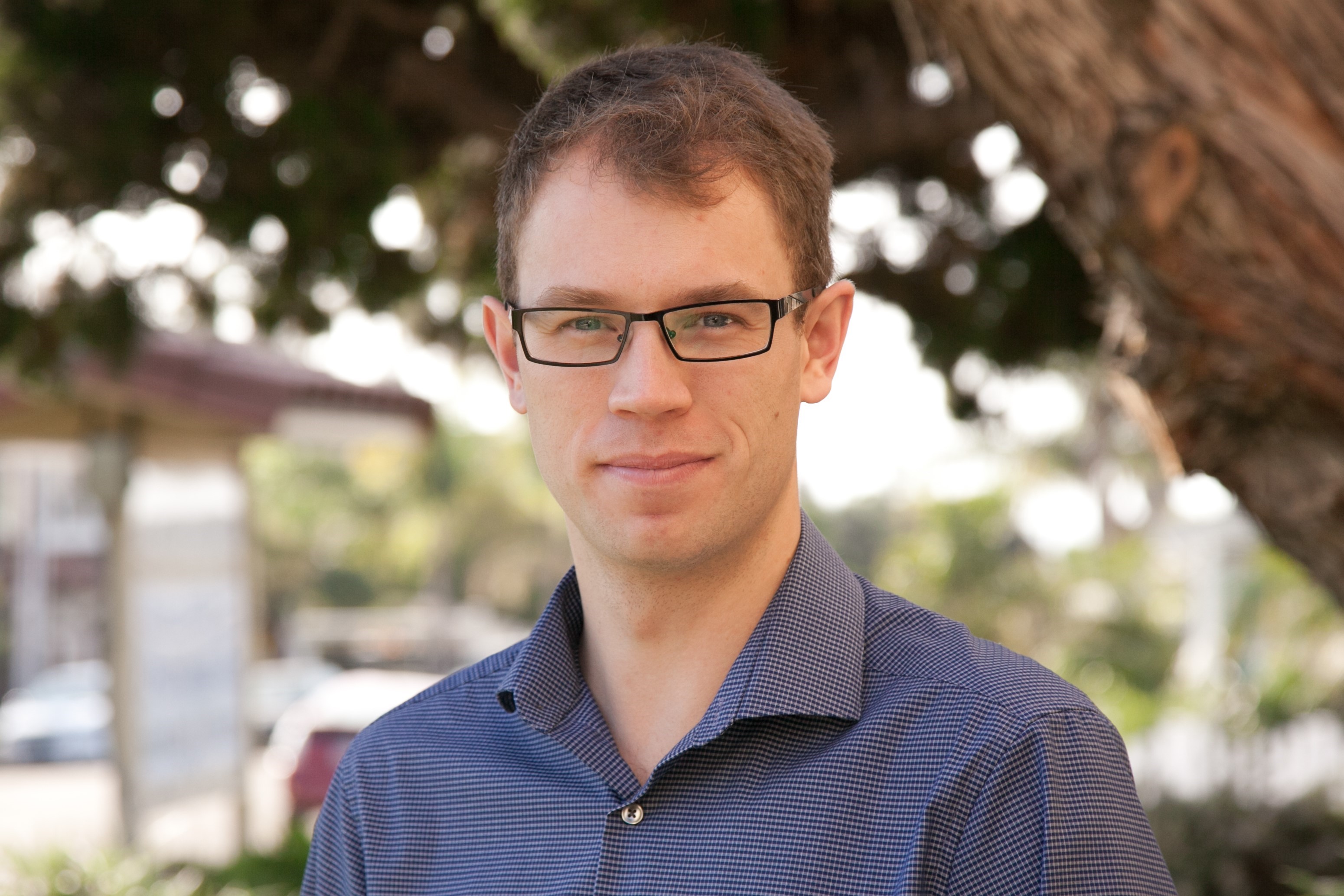
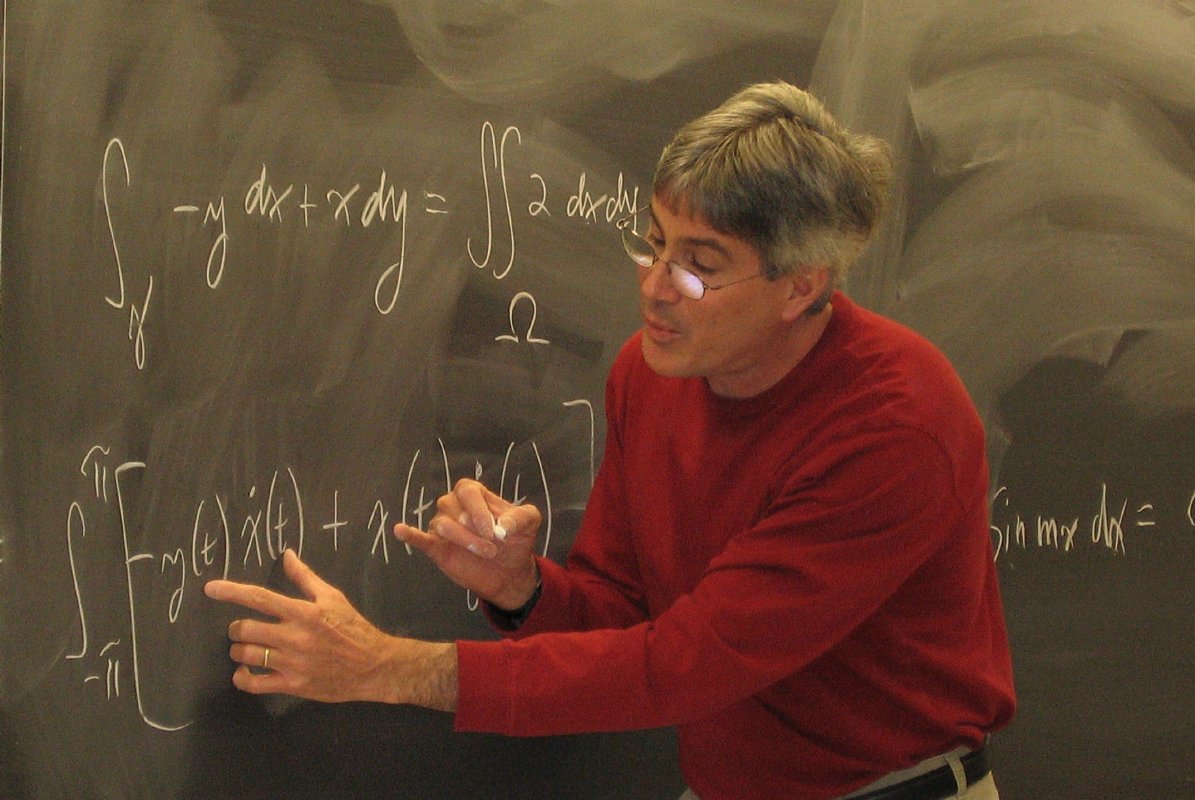
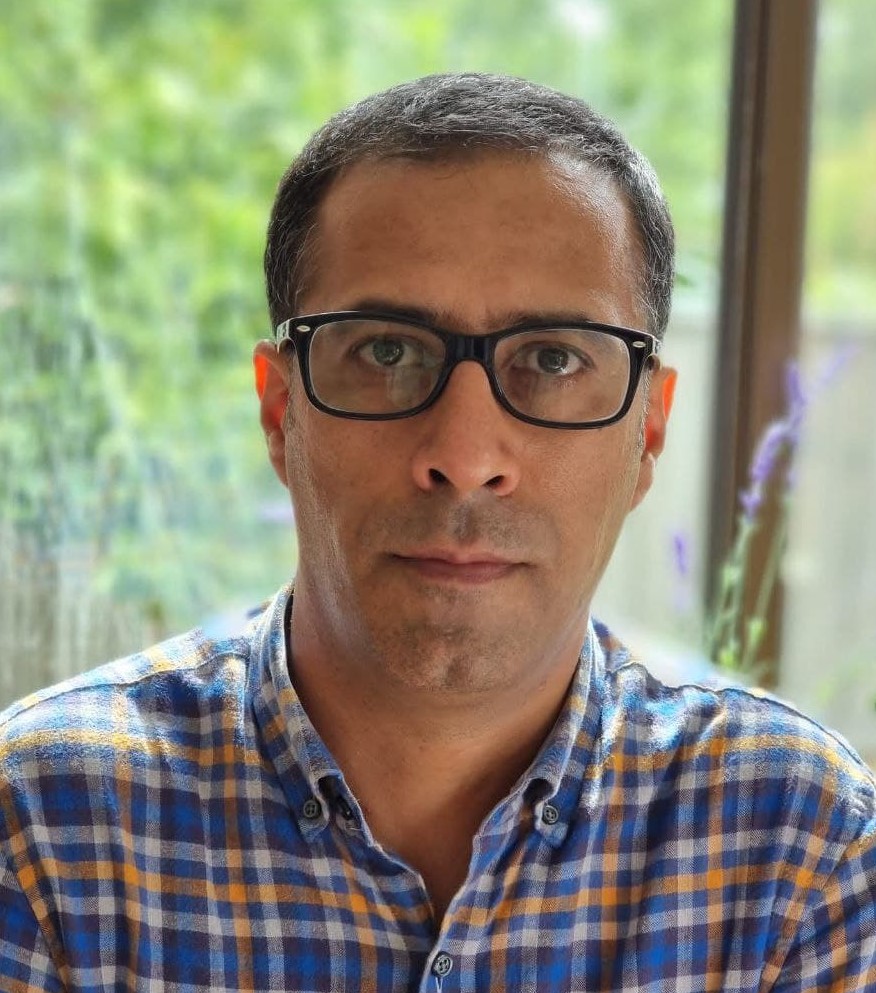
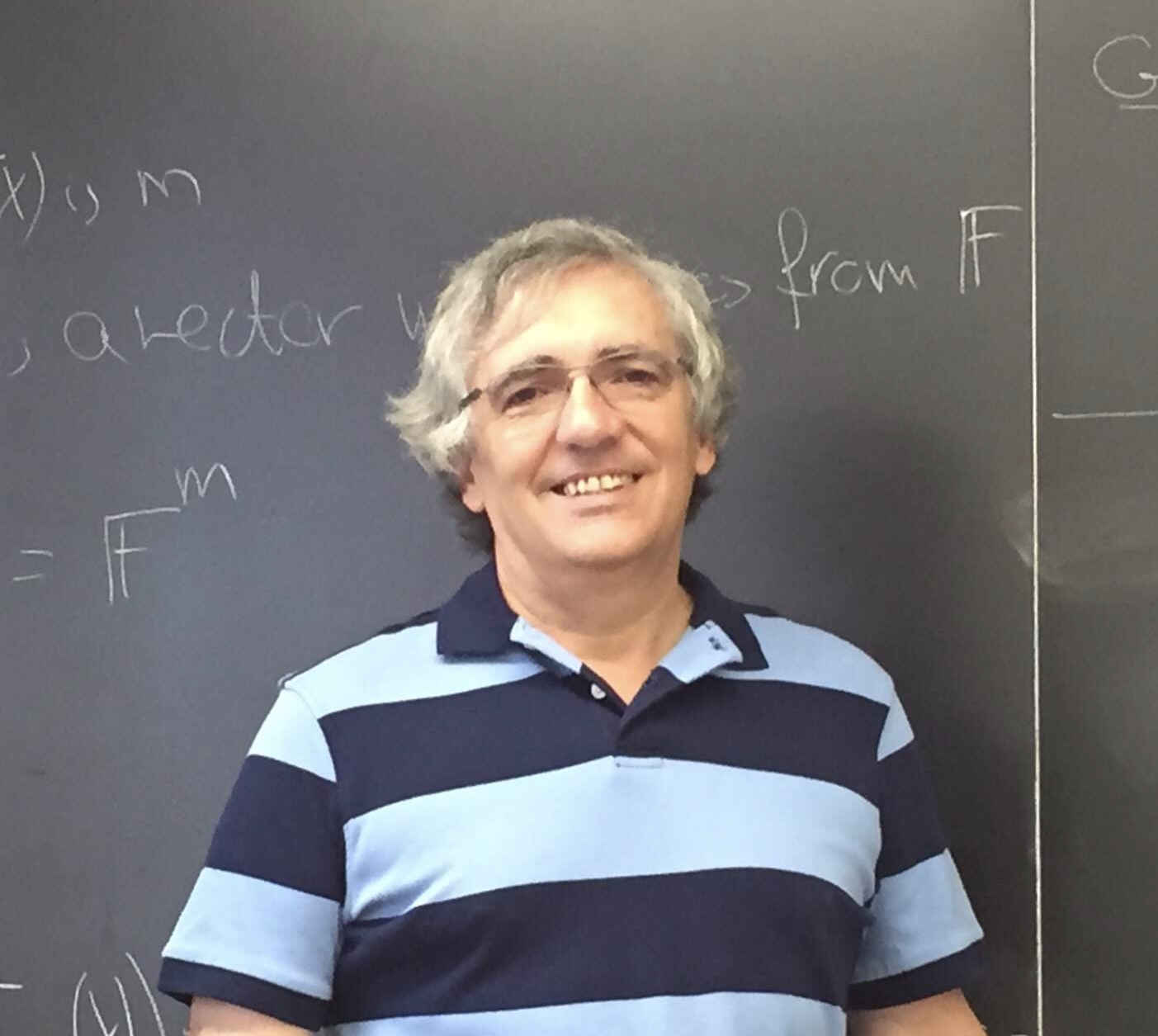
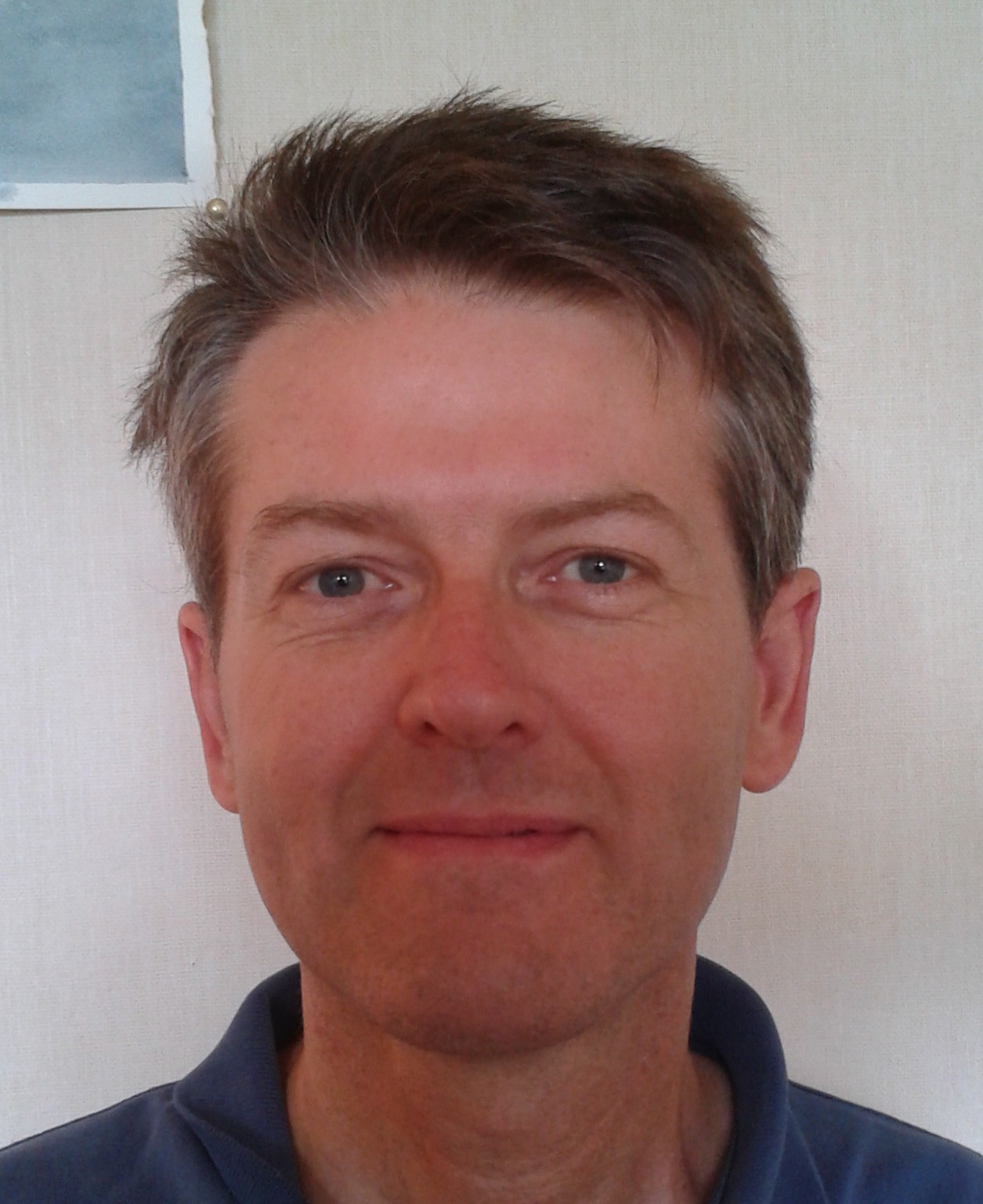
Filippo Salis is a Fixed-term Assistant Professor at the Department of Mathematical Sciences (DISMA) of Politecnico di Torino. His academic activities involve teaching, research in differential geometry, and collaboration with various engineering degree programs. Email: filippo.salis@polito.it Scientific Branch: MATH-02/B - Geometry (Area 0001 - Mathematical and Computer Sciences) Research Interests: His work focuses on the geometry of partial differential equations (PDEs), submanifolds in Lorentzian conformal geometry, and CR-geometry. This includes extremal Kähler metrics, Ricci-flat metrics, and geometric functionals on submanifolds. Teaching Roles: He serves as a course collaborator for Linear Algebra and Geometry across multiple academic years (2020/21 to 2025/26) in programs including Aerospace Engineering, Management Engineering, and Computer Science Engineering. Additionally, he holds teaching roles in PhD programs in Mathematical Sciences. Research Groups: Member of the Functional Analysis and Differential Geometry group at DISMA.
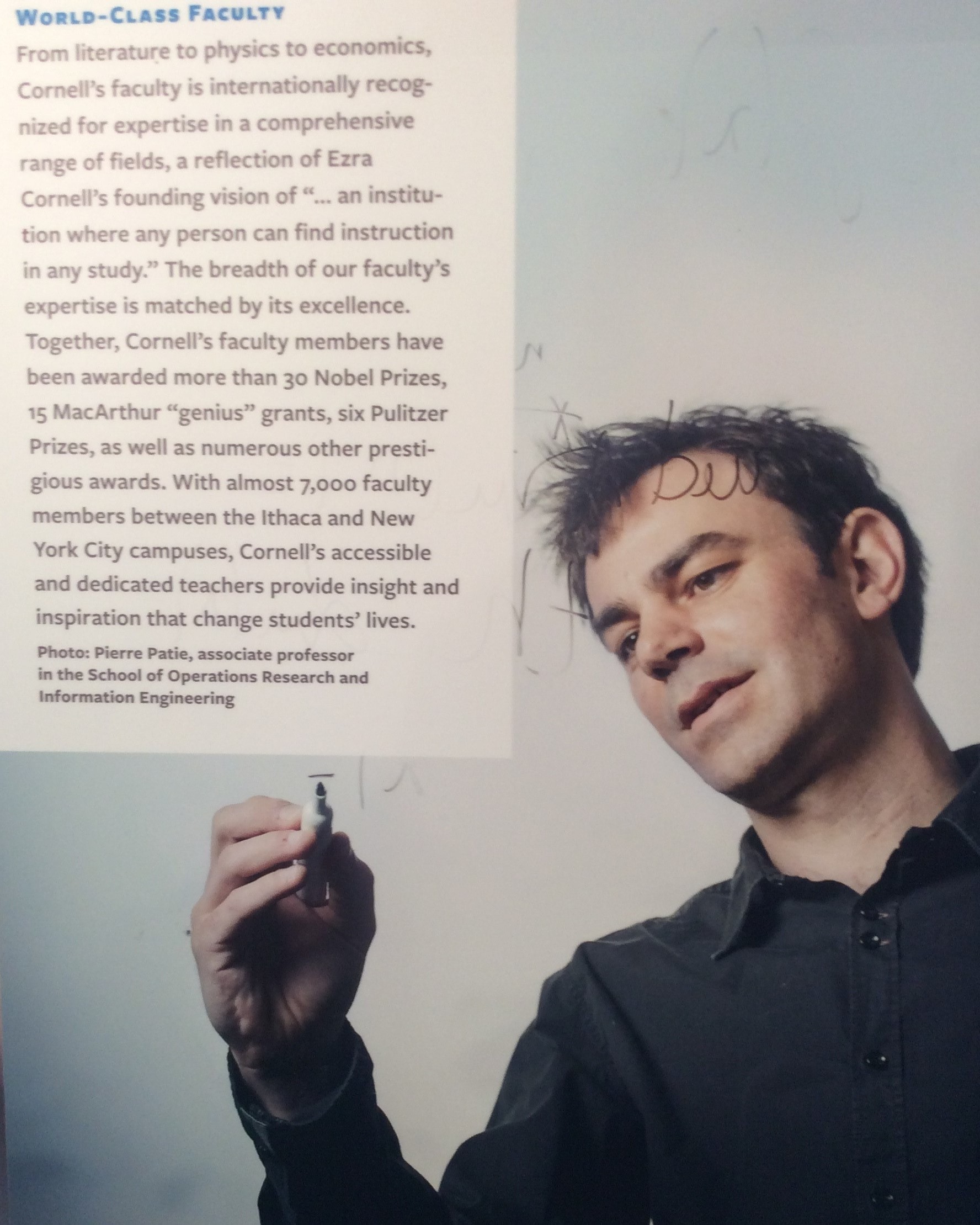
Pierre Patie is a Professor at Cornell University's School of Operations Research and Information Engineering (ORIE). His research focuses on stochastic processes, spectral theory, and their applications in financial mathematics, neurology, and mathematical physics. He explores topics such as isospectral classes of linear operators, first passage time problems, and hypocoercivity via spectral methods. His research interests include: Isospectral classes of linear operators (unitary conjugation, interweaving, weak similarity) Spectral theory of non-selfadjoint operators First passage time problems for Markov processes Subdiffusive processes and boundary crossing phenomena Financial mathematics and risk-neutral pricing Special functions and moment problems Pierre has advised numerous PhD students at Cornell and other institutions, including work on topics like non-reversible Markov chains, spectral expansions, and self-similar processes. He co-authored over 50 publications and collaborates with researchers globally. His work bridges probability theory, analysis, and applications in finance and neuroscience. Pierre co-organizes the Cornell Probability Seminar and the Finger Lakes Probability Seminar. He has contributed to conferences such as the Intertwining between Probability, Analysis and Statistical Physics workshop in Singapore (2024).
Assoc. Prof. Dr. Hatıra GÜNERHAN is an Associate Professor at Kafkas University's Dede Korkut Faculty of Education, Department of Mathematics and Science Education. She has held this position since 2021, previously working as a Doctoral Lecturer from 2017. Her academic career spans teaching various mathematics courses including Analysis, General Mathematics, and Computer Technologies across undergraduate and graduate programs. With over 80 publications and a strong research profile in applied mathematics, she contributes significantly to both education and mathematical research in Turkey. Dr. GÜNERHAN earned her PhD in Applied Mathematics at Atatürk University, Institute of Science, Turkey (2010-2013) following a Master's Degree from Islamic Azad University - Tabriz, Iran (2008-2010). Her primary research focus lies in Applied Mathematics , particularly Fractional Calculus and Differential Equations . She has made significant theoretical contributions to variable-order fractional differential equations and boundary value problems. Her work extends to practical applications in epidemiological modeling, including fractional-order models for smoking dynamics, COVID-19 transmission, and other disease modeling. She has also ventured into interdisciplinary research in medical imaging, machine learning, and mathematical education. Dr. GÜNERHAN's publication record demonstrates a consistent research trajectory with 81 publications including 68 articles, 12 conference papers, and 1 book chapter. Her most recent work shows an expansion into machine learning applications and interdisciplinary modeling approaches. With 1421 citations and an h-index of 19 on Google Scholar, her research has substantial academic impact. Dr. GÜNERHAN has supervised multiple master's theses including research on primary mathematics teacher candidates' views and nonlinear fractional disease models. She collaborates extensively with 146 researchers globally, reflecting successful research partnerships across disciplines. Her editorial work includes serving as guest editor for 'Special Topics in Differential Equations with Applications' (2022) and reviewing for numerous international journals. Though specific laboratory affiliations aren't detailed, Dr. GÜNERHAN's extensive collaboration network spans institutions worldwide, with research teams focusing on mathematical modeling applications across epidemiology, physics, finance, and medical imaging domains.
Sean Curry is an Assistant Professor in the Department of Mathematics at Oklahoma State University, where he teaches courses including Differential Equations and Complex Analysis. Previously, he held teaching positions at the University of California, San Diego and the University of California, Davis. Research Interests: Curry's work centers on differential geometry and complex analysis in higher dimensions, with core focus areas: Conformal geometry CR geometry Several complex variables Pseudoconvex domains Mathematical physics applications Manifold embeddings His research is driven by connections to mathematical physics and geometric analysis. Publication Trends: Curry's recent publications (2018-2025) demonstrate sustained focus on CR manifolds and conformal structures, with significant contributions to obstruction flat theory and pseudoconvex domain analysis. His work appears in top journals including Mathematische Annalen and Advances in Mathematics, often collaborating with leading researchers like P. Ebenfelt and A. R. Gover. Advising and Professional Service: He has mentored students including: Sari Ogami (Complex Analysis/CR Geometry) Hasan El-Hasan (Conformal mapping) Aditya Gadam (Poincaré-Einstein manifolds) Ibrahim Hajar (CR manifold embeddability) Curry co-organized major conferences such as the AMS Special Session on Several Complex Variables (JMM 2025) and SCAPDE 2018, demonstrating active community engagement.
Steven Bell is a Professor of Mathematics at Purdue University's Department of Mathematics within the College of Science. His research focuses on complex analysis, potential theory, and conformal mapping, with significant contributions to quadrature domains and the Riemann mapping theorem. He currently teaches MA 341: Foundations of Real Analysis and has supervised undergraduate research projects extending to collaborations with international scholars like Björn Gustafsson. Bell's work emphasizes simplifying complex regions for numerical analysis using algebraic methods, as seen in his improved Riemann mapping theorem. Supported by NSF grants (DMS 1001701), his research bridges classical analysis with modern computational techniques. He actively contributes to academic service, maintaining a robust publication record and advising students in real analysis and complex variables. Education: Advanced degrees in Mathematics (details not explicitly stated in provided texts). Grants: NSF Analysis Program and Cyber-enabled Discovery grants. Research Interests Bell's work centers on transforming complex planar regions into simpler forms (e.g., double quadrature domains) to solve analysis problems via finite methods. Notable contributions include advancing the Riemann mapping theorem, studying Szegő kernels, and exploring applications of the Cauchy transform. His recent papers address boundary value problems, kernel functions, and interdisciplinary models like spiral galaxy lensing. Publications Overview Recent trends in Bell's publications include refining potential theory complexity, kernel function applications, and bridging algebraic geometry with analysis. Key themes are conformal equivalence, quadrature domains, and computational methods for boundary value problems. His 2023 paper on the Poisson-Szegő-Bergman kernel exemplifies integrating multiple kernel theories for novel insights. Awards & Honors No explicit awards listed, though NSF grant support highlights recognition of his research impact. Teaching & Mentorship Bell teaches foundational real analysis courses and oversees student projects. His Spring 2024 MA 341 course includes rigorous exam preparation and lecture recordings, emphasizing student engagement through tablet PC notes and Piazza discussions.
Dr Adam Harris is a Lecturer in Mathematics at the School of Science and Technology, University of New England (UNE), where he has served since 2002. He holds key administrative roles as HBSc Coordinator and Postgraduate Coordinator for Mathematics, contributing significantly to curriculum development through the UNE Curriculum Committee. His academic foundation includes a BSc (Hons) and MSc from the University of Sydney, culminating in a PhD from Stony Brook University (1993). His pre-UNE career featured prestigious appointments: G.C. Evans Instructorship at Rice University (1993-1996), ARC Postdoctoral Fellowship at the University of Adelaide (1996-1999), JSPS Research Fellowship in Japan (1999-2000), and postdoctoral work at the University of Melbourne (2000-2002). Harris's research centers on pure mathematics with dual emphases in complex analysis and differential geometry. His investigations into complex analytic geometry and pseudoholomorphic curves bridge theoretical frameworks with physical applications, particularly in monopole field theory and geometric flows. Current work explores Riemann surface embeddings and stability properties in singular spaces, maintaining strong international collaborations forged during his Japanese fellowship. His 14 selected publications (1995-2020) reveal consistent thematic evolution: early work on vector bundle deformations matured into sophisticated analyses of Ricci-positive flows, geodesic structures, and singularity resolution. The trajectory demonstrates deepening integration of complex and Riemannian geometries, with increasing focus on physical applications like magnetic monopole fields. Harris's recognition includes: Australian Research Council Postdoctoral Fellowship (1996-1999) Japan Society for the Promotion of Science Fellowship (1999-2000) He currently supervises PhD candidate Barry Evans and previously guided Kumbu Dorji to completion (2019) on Sasakian manifold monopoles. As co-organizer of the Japanese-Australian Workshop on Singularities (2005-2017), he fostered cross-Pacific research networks. His teaching spans undergraduate calculus to advanced Riemannian geometry, reflecting his commitment to both foundational and specialized mathematical education. Active in professional communities through the American Mathematical Society and Australian Mathematical Sciences Institute, Harris maintains ongoing projects in stable surface embeddings and geometric flow dynamics, leveraging decades of singularities research to address contemporary challenges in geometric analysis.
Masoud Ganji is a Lecturer in Mathematics at the University of New England's School of Science and Technology, specializing in differential geometry and mathematical physics. Education: Ph.D. Mathematics, University of New England (2019) M.Sc. Mathematics, University of Ahvaz (Iran) B.Sc. Mathematics, Shahre-kord University (Iran) His research bridges CR geometry and general relativity, addressing fundamental questions about manifold embeddings and spacetime geometries. Current projects investigate embeddability conditions for abstract CR structures and geometric properties of Einstein metrics in relativistic contexts. Recent publications demonstrate consistent focus on Lorentzian manifolds, developing connections between complex structures and physical spacetime models. Methodologically, this work employs advanced techniques from differential geometry to solve embedding problems and characterize gravitational fields.
Dr. Alexander A. Katz serves as Professor of Mathematics and Computer Science at St. John's College of Liberal Arts and Sciences, St. John's University, where he contributes to both teaching and advanced mathematical research in theoretical domains. Dr. Katz earned his Ph.D. from the University of South Africa, Pretoria, Republic of South Africa, and completed his B.S./M.S. at Tashkent State University, Republic of Uzbekistan, establishing a strong foundation for his specialized work in mathematical structures. His research focuses on Functional Analysis, Operator Theory, Ergodic Theory, Operator and Topological Algebras , and applications of Logic to Analysis . Dr. Katz investigates Topological Algebras, their classification, structure theory, representation theory and applications across Analysis, Operator theory, Ergodic theory, Probability theory, Non-commutative Geometry and Topology. His scholarly approach connects abstract mathematical concepts with practical applications in multiple scientific disciplines, demonstrating the versatility of theoretical mathematics. Analysis of Dr. Katz's publication history reveals consistent specialization in operator algebras, with particular emphasis on locally C*-algebras and JB-algebras. His work shows progression from foundational theoretical investigations to increasingly sophisticated examinations of algebraic structures, with growing attention to real algebras and their distinctive properties. Many publications explore representation theorems, structural characteristics, and applications to ergodic theory and boundary value problems. Dr. Katz has published in respected mathematical journals including: Indian Journal of Mathematics Journal of Mathematical Analysis and Applications Malaya Journal of Matematik Mathematical Studies (Tartu) Though specific advising details aren't documented in available materials, Dr. Katz's extensive publication record spanning over three decades suggests significant mentorship of graduate students. His sustained research activity indicates consistent funding support for theoretical investigations in functional analysis and operator theory. Dr. Katz collaborates with researchers including G.Ya. Grabarnik, O. Friedman, R. Kushnir, and L. Shwartz, participating in mathematical research teams focused on operator algebras and ergodic theory. His work is primarily theoretical, conducted through rigorous mathematical analysis rather than experimental laboratory settings.
Gabor Francsics is an Associate Professor in the Department of Mathematics at Michigan State University's College of Natural Science. His office is located in D310 Wells Hall, and he can be reached at (517) 353-7962 or francsics@math.msu.edu. His research focuses on several interconnected mathematical fields: Partial differential equations Several complex variables Complex hyperbolic spaces Microlocal analysis Scattering theory Financial mathematics Dr. Francsics has established himself as a significant contributor to the study of Picard modular groups, with multiple publications analyzing their structure and geometry. His collaborative work with P. D. Lax, N. Hanges, E. Falbel, and J. R. Parker has produced influential results in complex analysis and geometry. His research on Bergman kernels, particularly for tubes and complex ovals, has contributed to our understanding of analytic singularities and multivariable hypergeometric functions. His notable publications demonstrate a progression from foundational work in complex analysis to more applied research in financial mathematics. The most recent publications (2011) focus on geometric aspects of modular groups, while earlier works (2001-1994) established his expertise in Bergman kernels and Cauchy-Riemann complexes. This trajectory shows his ability to bridge pure mathematics with practical applications. Dr. Francsics is actively involved in teaching and advising. He serves as Faculty Advisor for the Actuarial Science Club of MSU. His teaching portfolio includes both theoretical mathematics courses and applied financial mathematics courses. He was on sabbatical in Fall 2008 at the Mathematical Sciences Research Institute in Berkeley as a research member of the Analysis on Singular Spaces Program, demonstrating his standing in the mathematical research community.
Peter J. Olver serves as a Professor in the School of Mathematics at the University of Minnesota . His office is located in Vincent Hall 302 at 206 Church Street SE, Minneapolis, MN 55455. With an active research program spanning multiple mathematical disciplines, Professor Olver maintains a significant presence in both theoretical and applied mathematics. His primary research interests encompass Lie groups, differential equations, computer vision, applied mathematics, differential geometry, mathematical physics, and anthropology. These diverse interests reflect his interdisciplinary approach to mathematical problems, connecting pure theory with practical applications across multiple fields. An analysis of his recent publications reveals a strong focus on foundational mathematical concepts with practical implementations. His work shows particular emphasis on symmetry methods, differential equations, and computational approaches to mathematical problems. The integration of anthropology with mathematical analysis through the AMAAZE project demonstrates his innovative cross-disciplinary research. Professor Olver has developed extensive educational materials including numerous lecture notes covering topics from calculus foundations to advanced differential equations. His teaching resources include Mathematica programs for courses like Math 5587 and 5588, featuring interactive visualizations of mathematical concepts such as wave equations and heat diffusion. His research program includes the AMAAZE project (Anthropological and Mathematical Analysis of Archaeological and Zooarchaeological Evidence), which bridges mathematical techniques with anthropological research. This initiative demonstrates his commitment to applying mathematical methods to real-world problems beyond traditional academic boundaries.
Michel Rumin is a Lecturer at the Orsay Institute of Mathematics, University of Paris-Sud, France, with his office located in Building 307, Office 2N22 at the Orsay campus. He teaches advanced mathematics courses for engineering and physics students, including the Master M2 MSV deterministic modeling module and first-year Polytech engineering pathway covering linear algebra, differential equations, and numerical integration using Scilab practical work. Rumin's research centers on differential geometry and spectral theory, with specialized expertise in contact manifolds, sub-Riemannian geometry, and Carnot groups. His work explores cohomology, spectral invariants, and analytic torsions, bridging geometric structures with analytical methods. Key contributions include foundational results on differential forms for contact manifolds (1990) and recent advances in topological aspects of spectral invariants (2024). Analysis of his 13 publications from 1990-2024 reveals a consistent trajectory in geometric analysis: early work established frameworks for contact geometry, evolving through Carnot group cohomology (2018) toward dynamical/topological investigations of spectral invariants (2024). His research demonstrates persistent focus on non-Riemannian geometric structures, with increasing integration of topological and dynamical systems perspectives in recent years. Scientific awards: No awards or fellowships are documented in the available materials. Rumin actively mentors students through structured teaching materials including worksheets, test annals (2014-2016), and Scilab practical sessions for linear algebra and differential equations. His S2 PMCP course prepares students for physics competitive exams with comprehensive notes on vector spaces and matrix calculus. No research grants or laboratory affiliations are specified in the provided documentation.
Dr. Yifei Pan is a Professor of Mathematics at Indiana University-Purdue University Fort Wayne (IPFW), affiliated with the Department of Mathematical Sciences. His research focuses on Several Complex Variables, Partial Differential Equations, and their applications in geometry and analysis. He holds a Ph.D. from the University of Michigan (1990), an M.A. (1984), and a B.A. (1982) in Mathematics from Jiangxi Normal University, China. Education: Ph.D., University of Michigan, 1990 M.A., Jiangxi Normal University, 1984 B.A., Jiangxi Normal University, 1982 His research interests span complex analysis, differential equations, and geometric analysis. Notable contributions include studies on holomorphic mappings, unique continuation properties, and nonlinear differential systems. He has directed projects in Java-based mathematical visualization and distance learning technologies. Awards: Dr. Pan has received the Pippert Science Research Scholar Award (2001), Sigma Xi Researcher of the Year (2000), and multiple grants from NSF, Purdue Research Foundation, and international travel grants. Professional Roles: Director of the Java Technology Training and Research Centers at IPFW Guest Professor at Jiangxi Normal University (2004–present) Grants and Projects: Includes NSF funding for Java programs in mathematics, France Research Fellowships, and IPFW summer grants. His work integrates pure mathematics with computational tools, emphasizing educational technology. Labs/Teams: Java Technology Research Center and initiatives in web-enabled distance learning for mathematics.
Leonardo Abbrescia serves as an Assistant Professor in the Department of Mathematics at the Georgia Institute of Technology. His office is located in Skiles 266, and he may be contacted via email at abbrescia@math.gatech.edu or by phone at 404-894-5367. His research expertise spans: Partial Differential Equations Geometric Analysis Mathematical Physics Fluid Dynamics Hyperbolic Conservation Laws Singularity Theory Abbrescia's scholarly work centers on the geometric analysis of nonlinear PDEs arising in fluid mechanics and general relativity. He investigates compressible Euler flow, shock wave formation, and quasilinear wave equations through advanced geometric frameworks like the double-null foliation. His methodology integrates differential geometry with functional analysis to derive integral identities and study singularity propagation in multi-dimensional settings. Analysis of his 13 recent publications (2016-2025) reveals a consistent focus on geometric structures underlying hyperbolic systems. Key trends include the development of novel integral identities for fluid dynamics, stability analysis of wave maps, and applications of vector field methods to nonlinear evolution equations. His work demonstrates particular innovation in connecting geometric foliations to singularity formation in compressible flows. No scientific awards were documented in the provided materials. Information regarding student advising, research grants, and laboratory teams was not included in the source documentation.
Mihaela Vajiac is a Professor and Program Director for Mathematics at Chapman University's Schmid College of Science and Technology. She serves as Director of the Center of Excellence in Complex and Hypercomplex Analysis (CECHA) and organizes the Math/Physics/Computation Seminar. Her educational background includes a Ph.D. from Boston University and a B.S. from the University of Bucharest. Dr. Vajiac's research spans: Complex/Hypercomplex Analysis : Investigating Dirac-type operators, quaternionic systems, and applications in physics and engineering. Algebraic Computational Methods : Developing algebraic tools for PDEs including Maxwell and Cauchy-Fueter systems. Differential Geometry : Exploring integrable systems, curvature invariants, and symplectic structures. Her recent publications focus on bicomplex tensor products, spectral factorization in hypercomplex spaces, and geometric invariants, reflecting sustained innovation in operator theory and Clifford analysis. She co-organizes international workshops like IWOTA 2021 and maintains active collaborations with global researchers.
Stefanopoulos Vangelis is a Professor at the University of Patras, affiliated with the Division of Applications and Foundations of Computer Science. His research spans mathematics and computer science, focusing on theoretical and applied problems. University: University of Patras Department: Division of Applications and Foundations of Computer Science Academic Rank: Professor Research Interests: His work centers on Partial Differential Equations, Dynamic Systems, and Applied Analysis, with applications in mathematical physics, algorithmic modeling, and computational theory. Key areas include eigenvalue problems, universal series, and stability analysis. Email: vstefan@ceid.upatras.gr Office Hours: Tuesday (9:00-11:00, 10:00-11:00 when no meetings), Friday (12:00-14:00) or by appointment.