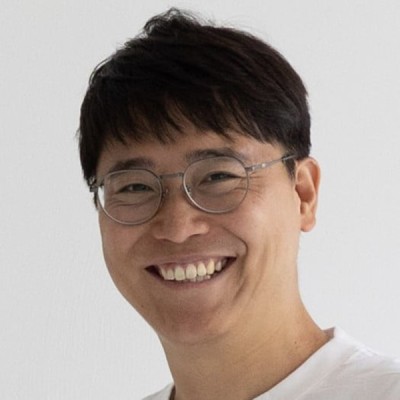
Dr. Xi Yu is a Lecturer in Chemical Engineering at the University of Southampton, affiliated with the Faculty of Engineering and the Environment. He holds a Bachelor's from Tianjin University and a Ph.D. from the University of Sheffield. His research focuses on low carbon fuels, granulation techniques, and computational fluid dynamics. He has supervised PhD students such as Jerin Jacob and is currently accepting new PhD applicants in these areas. Dr. Yu's educational background includes degrees in Chemical Engineering and prior academic roles at Aston University and the Energy and Bioproducts Research Institute (EBRI). His work spans bioenergy systems, particle technology, and multi-physics modeling. Key research projects include advancements in biomass gasification, biofuel production, and sustainable energy systems. His publications emphasize computational modeling, fluid dynamics, and biomass utilization. Recent articles explore topics like absorption chiller systems, fluidization validation, and bio-oil aging strategies. He contributes to teaching modules such as CHEG3000 and CHEG3004, reflecting his commitment to both research and education.
Dr. Scott Banks is a Lecturer in Chemical Engineering & Applied Chemistry at Aston University's College of Engineering and Physical Sciences. He is affiliated with the Energy and Bioproducts Research Institute (EBRI), where he researches thermochemical conversion technologies with a focus on sustainable bioenergy solutions. Education: PhD in Ash control methods to limit biomass inorganic content and its effect on fast pyrolysis bio-oil stability, Aston University (2014) Aston University Modular Award – Introduction to Learning and Teaching Practice (2020-2021) Research Focus: His work centers on catalytic pyrolysis, biomass ash control, bio-oil stabilization, and gasification char utilization. He develops advanced thermal conversion methods to create circular economy solutions and supports greenhouse gas reduction through renewable energy systems. Current work explores hydrogen production pathways from biomass derivatives. Publication Trends: Recent articles demonstrate a strong focus on biomass pyrolysis optimization, renewable policy frameworks, and sustainable feedstock development. His research employs experimental thermochemical analysis and reactor design to advance bioenergy conversion efficiency. Teaching: Module leader for Life Cycle Analysis, Renewable Energy, and Research Methods in the MSc Sustainable Engineering program.
Fabio H. Ribeiro is the William Nicholas and Elizabeth Holstein Delgass Distinguished Professor of Chemical Engineering at Purdue University's Davidson School of Chemical Engineering. He serves as Director of the Center for Innovative and Strategic Transformation of Alkane Resources (CISTAR). His research focuses on heterogeneous catalysis, particularly in catalytic combustion, NOx traps, biomass-to-fuels conversion, and low-temperature water-gas shift reactions. He has advised over a dozen graduate students and collaborates with industry partners. Education: B.S. Chemical Engineering, Instituto Militar de Engenharia, Brazil (1982) M.S. Chemistry, Instituto Militar de Engenharia, Brazil (1984) M.S. & Ph.D. Chemical Engineering, Stanford University (1986–1989) Research Interests: His group combines experimental and computational methods to study catalyst kinetics and design. Key areas include catalyst stability under dynamic conditions, industrial process optimization, and sustainable energy solutions. Techniques involve surface science, microkinetic modeling, and operando spectroscopy. Publications: Recent work emphasizes catalytic dehydrogenation of light alkanes, NOx selective catalytic reduction, and shale gas upgrading. Themes include catalyst structure-reactivity relationships and reaction mechanisms. Awards: Herman Pines Award (2015) AIChE Fellow (2014) Purdue Research Excellence Award (2014) Lab & Teams: Leads CISTAR, a NSF Engineering Research Center, and collaborates with the Purdue Catalysis Center. Active in developing catalysts for renewable energy and pollution control.
Dr. Heather Trajano is a faculty member in the Department of Chemical and Biological Engineering at the University of British Columbia's Faculty of Applied Science. Her research focuses on sustainable biomass fractionation and conversion processes, aiming to maximize economic and environmental benefits through innovative biorefining strategies. Research Interests: Fundamentals of biomass deconstruction to separate carbohydrates from lignin Recovery and purification of extractives from biomass Heterogeneous catalysis for chemical production Integration of biorefining opportunities with existing forestry operations Utilization of waste streams and by-products for sustainable processes Her work emphasizes the development of processes that complement traditional forestry operations by transforming waste materials into valuable chemicals and fuels. This research spans fundamental studies of biomass deconstruction mechanisms to applied process optimization using advanced modeling techniques including machine learning approaches. Research Trends: Dr. Trajano's recent publications demonstrate a strong focus on xylan and hemicellulose processing from birch and softwood sources, with particular attention to kinetic modeling of hydrolysis processes. Her work integrates experimental studies with computational modeling, including machine learning applications for yield prediction. The research also encompasses lignin valorization through depolymerization and upgrading of pyrolysis oils, cellulose hydrolysis optimization, and the development of sustainable catalytic processes for biomass conversion. Contact Information: Email: heather.trajano@ubc.ca
Professor Sai Gu is a distinguished academic and leader in Chemical Engineering, currently serving as Deputy Pro-Vice-Chancellor (East and South East Asia) at the University of Warwick. He holds a Professorship in Chemical Engineering and has held senior roles at institutions including the University of Surrey, Cranfield University, and Southampton. His expertise spans bioenergy, carbon capture, materials science, and digital transformation in industry. Prof Gu earned his PhD in Material Modelling from the University of Nottingham and has led over £100 million in EPSRC/EU-funded projects, pioneering innovations like Industry 6th Sense technologies and catalytic biomass conversion. Research interests include biomass fast pyrolysis, CO2 capture via novel solvents, thermal spray coatings, and AI-driven manufacturing. He established the Centre for Bioenergy and Resource Management and leads the EPSRC-funded DigitalMetal CDT to advance metals industry digitization. Prof Gu has published 200+ papers (20,000+ citations) and is a Fellow of the Royal Academy of Engineering. His work bridges academia and industry, fostering global collaborations in clean energy and sustainable technologies. Education: PhD in Material Modelling (University of Nottingham), Postdoc at University of Cambridge Awards: FREng (Royal Academy of Engineering) Key Projects: EPSRC CDTs in NetZero and Digital Metals, 'Stepping towards Industrial 6th Sense' Labs: Centre for Connected Plants of the Future (UoS), Centre for Bioenergy (Cranfield)
Geetanjali Yadav is a Researcher III at the National Renewable Energy Laboratory (NREL) in the Economic Sustainability and Market Analysis group. She joined NREL in 2022 as a Research Engineer, following postdoctoral work at NREL (2021–2022) and MITACS-Elevate Fellowships at Polytechnique Montreal and Domtar Inc. (2019–2020). Her work focuses on techno-economic analysis and life cycle assessment of bioenergy systems. Research Interests : Conceptual process design (Aspen Plus), techno-economic analysis, life cycle assessment, plastic upcycling, biomass conversion, and algae cultivation. Key Collaborations : Active in American Institute of Chemical Engineers (AIChE) and American Physical Society (APS) networks. Scientific Awards : Fulbright-Kalam Climate Fellowship (2017) Newton-Bhabha Fellow (2016) Her research outputs (6 total) emphasize sustainable plastic recycling technologies, thermochemical conversion of biomass, and environmental impact mitigation. Network citations include 207 Scopus citations for 2023 publications.
Dr. Kwang Ho Kim serves as an Assistant Professor in the Department of Wood Science within the Faculty of Applied Science at the University of British Columbia (UBC), having joined the institution in July 2024. Previously, he held positions as a Principal Researcher at the Korea Institute of Science and Technology (KIST) and as an Adjunct Professor at UBC from 2018 to 2021, where he collaborated extensively with campus researchers. His research centers on sustainable biorefinery processes for maximizing biomass carbon conversion into value-added products. Key focus areas include catalytic lignin valorization, deep eutectic solvent applications in biomass pretreatment, and waste plastic conversion technologies. His interdisciplinary work bridges chemical engineering, green chemistry, and materials science to develop circular economy solutions for biomass and polymer waste streams. Analysis of Dr. Kim's recent publications (2022-2024) reveals dominant trends in catalytic biomass conversion, particularly using deep eutectic solvents for lignocellulose fractionation and plastic glycolysis. His work demonstrates strong emphasis on hydrogenolysis techniques for lignin depolymerization, electrochemical battery material analysis, and machine learning applications in renewable energy systems. These publications collectively advance sustainable pathways for biofuels, biobased chemicals, and waste-to-value processes.
Hao Wang serves as a Courtesy Research Associate Professor in the Department of Mathematics within the College of Arts and Sciences at the University of Oregon. His interdisciplinary appointment bridges mathematical methodologies with sustainable engineering applications, particularly in energy and materials systems. Dr. Wang's research focuses on advanced biomass conversion technologies, with expertise in hydrothermal liquefaction, catalytic hydrodeoxygenation, and lignin valorization for biofuels and bioproducts. His work addresses critical challenges in sustainable recycling of lithium-ion batteries, corrosion in biomass processing reactors, and development of bio-lubricants from renewable feedstocks. This research integrates life cycle assessment and economic analysis to evaluate environmental impacts and commercial viability of emerging technologies. Analysis of his 2023-2025 publications reveals a consistent emphasis on optimizing thermochemical processes for biomass conversion, particularly hydrothermal liquefaction and catalytic upgrading of bio-oils. His work demonstrates strong interdisciplinary collaboration between mathematical modeling and chemical engineering, targeting sustainable solutions for energy storage, waste valorization, and green manufacturing. Scientific awards and honors are not documented in available sources. Information regarding student advising, research grants, and laboratory infrastructure is absent from current documentation, though his publication record suggests active collaboration with engineering research teams.
Mattia Biesuz is Associate Professor at the University of Trento , Department of Industrial Engineering, where he also obtained his B.Sc., M.Sc. (both 110/110 cum laude) and Ph.D. (Excellent cum laude, 2017). He teaches courses on Materials Science, Ceramic Materials, Materials for Energy and interdisciplinary laboratories, and has been teaching assistant continuously since 2014. Education: Ph.D. in Materials, Mechatronics and Systems Engineering, University of Trento, 2014-2017 M.Sc. in Materials Engineering, University of Trento, 2010-2013 B.Sc. in Industrial Engineering, University of Trento, 2007-2010 Research interests focus on advanced ceramic processing including flash sintering, cold sintering, ultra-fast high-temperature sintering (UHS), spark plasma sintering, entropy-stabilised ceramics, polymer-derived ceramics, field-assisted ion exchange and low-temperature ceramic joining. His group explores structure–property relationships in glasses and ceramics for energy, functional and structural applications. Recent publications (2023-2025) demonstrate a clear trend toward ultra-rapid sintering technologies (UHS, flash, cold sintering) combined with additive manufacturing , high-entropy ceramics , ceramic aerogels for thermal insulation and environmental remediation, and glass strengthening by field-assisted ion exchange. The work integrates fundamental science (diffusion, electromigration, nucleation) with technological demonstrators (batteries, thermal-barrier coatings, catalytic supports, space resources). Scientific awards & honours include the MRS Postdoctoral Award 2022 , two Pfeil Awards (2021 & 2022) from IOM3-UK, the Crystals 2022 Young Investigator Award , multiple Acta Journals Outstanding Reviewer distinctions, best-paper and travel awards from MDPI journals, and the Best Master Thesis Award of his Department in 2013. Funding & leadership: He coordinates/works in several EU and national projects on flash/cold sintering and high-entropy ceramics, serves as associate editor of the Journal of the American Ceramic Society and on the editorial boards of Materials and Frontiers in Materials , and regularly evaluates proposals for the Czech Science Foundation and ECerS. Labs & teams: He leads the “Field-Assisted Sintering & Advanced Ceramics” research line within the Industrial Engineering Department, hosting numerous international visitors (post-docs from Prague, Gdańsk, Izmir, Charles University) and coordinates shared labs equipped with flash-sintering rigs, UHS furnaces, SPS, DSC/TG-GC-MS, impedance analysers, and additive-manufacturing stations.
Dr. Eleni Heracleous serves as an Associate Professor in the Department of Science and Technology at the International Hellenic University (IHU) and as a Collaborating Member of the Chemical Process and Energy Resources Institute (CPERI/CERTH). Her administrative leadership includes roles as Head of Department, School Dean (2020-2021), and Director of MSc programs since 2016, alongside service on over 15 committees including IHU's Research Committee and the Administrative Council of the Hellenic Quality Assurance and Accreditation Agency. Her academic foundation includes: Diploma in Chemical Engineering, Aristotle University of Thessaloniki (2000) PhD in Chemical Engineering, Aristotle University of Thessaloniki (2005) Dr. Heracleous' research pioneers catalytic solutions for sustainable energy systems through biofuels upgrading, CO 2 conversion to fuels/chemicals, and selective oxidation of light alkanes. Her work integrates advanced catalyst design with process intensification to address critical environmental challenges in industrial applications, emphasizing circular economy principles and decarbonization pathways across multiple sectors. Analysis of her 2020-2022 publications reveals dominant themes in biomass/waste valorization (sewage sludge hydrothermal liquefaction, steel off-gas conversion) and precision catalyst engineering (zeolite modifications, Cu-Mo 2 C systems). These studies consistently bridge fundamental catalysis with scalable industrial processes for renewable fuel production and carbon utilization, demonstrating strong alignment with EU Green Deal objectives. No scientific awards or honors were specified in the source documentation. She actively mentors three PhD candidates while managing extensive research portfolios: as Principal Investigator for 17 projects (14 EU, 3 national) and Coordinator for 5 projects totaling €2M+, including flagship initiatives like BlackCycle (tire recycling), 3DInnovaCat (catalyst 3D printing), NextGenRoadFuels (urban waste biofuels), and CO 2 2MeOH (CO 2 -to-methanol technology). Her experimental work operates through the Laboratory of Environmental Fuels and Hydrocarbons (LEFH) at CPERI/CERTH, coordinating multidisciplinary teams across European institutions and industry partners to advance catalytic technologies for industrial decarbonization and circular resource management.
Hsi-Wu Wong is a Professor and Associate Chair for Graduate Studies in the Department of Chemical Engineering at the Francis College of Engineering, University of Massachusetts Lowell. He also serves as Associate Director of the Center for Energy Innovation. His research focuses on utilizing both experimental and theoretical techniques to study modern energy and environmental problems through the Sustainability and Reaction Engineering Laboratory (SuREL). Education: B.S. in Chemical Engineering from National Taiwan University, Taipei, Taiwan Ph.D. in Chemical Engineering from Northwestern University, Evanston, IL Postdoctoral Researcher at MIT, Cambridge, MA Dr. Wong's research expertise includes high temperature pyrolysis, gasification, and oxidation experiments along with molecular and detailed kinetic modeling. His primary focus is to uncover the fundamental interplay between chemical kinetics and transport phenomena to manipulate reaction pathways for producing high-value products from low-value hydrocarbon feedstocks including flared shale gas, lignocellulosic biomass, plastic waste, and food waste. His work spans reaction engineering, chemical kinetics, catalysis, sustainability principles, waste utilization and upcycling, alternative fuels, and process intensification. Analysis of his recent publications (2022-2025) reveals a strong focus on sustainable chemical processes, particularly in plastic upcycling and waste conversion. His research demonstrates significant work on cellulose fast pyrolysis, noncovalent interactions during biomass processing, enzymatic depolymerization of polyesters, and safer solvent development across multiple disciplines including sustainable chemistry, reaction engineering, polymer science, and environmental engineering. Scientific Awards and Honors: National Science Foundation CAREER Award (2019) North American Symposium on Chemical Reaction Engineering (NASCRE) Travel Award (2019) B. J. Martin Dissertation Year Fellowship, Northwestern University (2002) International Symposia on Chemical Reaction Engineering (ISCRE) Travel Award (2002) Dr. Wong has successfully mentored numerous graduate students to completion, with many receiving departmental and university-wide awards. His lab has secured significant funding from the National Science Foundation, Department of Energy, and other agencies to support research in waste conversion technologies. Current projects include copyrolysis of waste mixtures, upcycling of single-use multi-layer plastic films, upcycling HDPE waste using hybrid approaches, bioconversion of polyester wastes, and safer solvents for pharmaceutical applications. The Sustainability and Reaction Engineering Laboratory (SuREL) is equipped with advanced analytical instruments including Shimadzu GCMS, GC, Agilent HPLC systems, and a bench-scale fluidized bed pyrolysis reactor. The lab maintains active collaborations with multiple research groups at UMass Lowell and external institutions on projects related to sustainable energy and environmental solutions.
Fabio Ribeiro is the William Nicholas and Elizabeth Holstein Delgass Distinguished Professor in Chemical Engineering at Purdue University's College of Engineering. His research focuses on catalysis, heterogeneous catalytic processes, and energy transition technologies. He is affiliated with the Engineering Leadership Team and serves on committees such as the Engineering Named Professorships Committee and Moveable Dream Hire Committee. His work spans catalytic reactivity in metals and alloys (e.g., Pt, PdZn, Au/TS-1), propane dehydrogenation, shale gas valorization, and biomass conversion. He emphasizes safety in chemical laboratories and develops sustainable energy solutions through catalyst design and systems-level analysis. Key research themes include surface chemistry, reaction kinetics modeling, and catalyst optimization for industrial applications. His recent studies address challenges in energy transition, such as upgrading natural gas liquids and mitigating emissions via catalytic processes. Notable awards include his endowed professorship, reflecting recognition for his contributions to chemical engineering and catalysis. His interdisciplinary approach bridges computational chemistry, experimental catalysis, and real-world application in energy and environmental systems.
Foster Agblevor is a Professor in the Department of Biological Engineering at Utah State University, affiliated with the College of Engineering. His research focuses on bioenergy, biomass conversion, and catalytic pyrolysis. He holds a PhD in Chemical Engineering from the University of Toronto (1988) and has extensive experience in environmental and chemical engineering. Education: PhD in Chemical Engineering (Applied Chemistry), University of Toronto, 1988 MA in Chemical Engineering (Applied Chemistry), University of Toronto, 1984 BS in Chemical Engineering, University of Science and Technology, 1979 Research Interests: Biofuels production, catalytic pyrolysis of biomass, waste-to-energy technologies, and renewable resource utilization. His work emphasizes converting agricultural and industrial wastes into valuable biofuels and chemicals. Recent publications explore topics like catalytic pyrolysis of tires, bio-oil upgrading, and biomethanation optimization. His work highlights advancements in sustainable energy and waste valorization. 2023: USA Fulbright Distinguished Scholar 2021: World’s Top2 Scientists (Stanford University) 2015: Biological Engineering Researcher of the Year Teaching includes courses like Biological Engineering Design and Fluid Mechanics in Biological Engineering. He has mentored over 15 graduate students in biological engineering. Labs & Teams: Active in Utah State University’s biological engineering research groups, focusing on biomass conversion and catalytic processes.
Eleni Irakleous serves as Associate Professor at the Department of Science and Technology, International Hellenic University, and holds an Associate Faculty position at the Institute of Environmental and Social Sciences/CERTH. Education Diploma in Chemical Engineering, Aristotle University of Thessaloniki (2000) PhD in Chemical Engineering, Aristotle University of Thessaloniki (2005) Research Focus : Her work centers on catalyst development and process intensification for sustainable energy systems. Key areas include biofuels production/upgrading, CO 2 conversion to fuels/chemicals, and selective oxidation of light alkanes to olefins, emphasizing circular economy applications through innovative catalytic solutions. Publication Trends : Recent work (2020-2022) demonstrates concentrated expertise in waste valorization (sewage sludge, steel off-gases) and biomass conversion via advanced catalytic processes. Her research consistently bridges fundamental catalyst design with industrial-scale implementation, targeting high-value product streams from low-value feedstocks. Grants & Advising Coordinated 5 major projects (2 EU, 3 national) totaling >€2M Participated in 17 research projects (14 EU, 3 national) Currently supervising 3 doctoral candidates in biomass conversion and CO 2 utilization Laboratory Affiliations : Active in the Environmental Fuels and Hydrocarbons Laboratory (EPKY) at IRED and collaborates extensively with CERTH's Institute of Environmental and Social Sciences on catalytic process development.
Josephine Lübeck serves as a Researcher within the Section for Environmental Chemistry and Physics at the University of Copenhagen's Department of Plant and Environmental Sciences, Faculty of Science. Holding a Ph.D. in Environmental Sciences (awarded 2020), she maintains active research collaborations with the University of Copenhagen and international institutions as evidenced by her co-authorship network spanning Denmark, Italy, and the Netherlands. Her research expertise centers on advanced analytical methodologies for environmental contaminant characterization, with particular emphasis on non-target screening techniques, supercritical fluid chromatography, and high-resolution mass spectrometry applications. Dr. Lübeck specializes in developing complementary analytical platforms for identifying organic pollutants in complex matrices including urban sediments, sewage sludge, and bio-oils, with recent work focusing on circular economy applications for waste-to-energy conversion. Analysis of her publication record (2016-2025) reveals an evolving research trajectory from fundamental pollutant source apportionment toward innovative methodological developments for renewable energy feedstocks. Her 2023-2025 work demonstrates increasing focus on sewage sludge pyrolysis biocrude analysis and non-target screening prioritization strategies, reflecting growing interdisciplinary connections between environmental chemistry and sustainable engineering. Dr. Lübeck maintains active research collaborations with Professor Jan H. Christensen's group at the University of Copenhagen and international partners including researchers from the University of Amsterdam and University of Campinas. Her work has generated significant academic engagement with 30+ Mendeley readers per recent publication and social media mentions across Bluesky and X platforms.