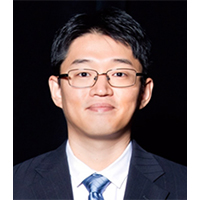
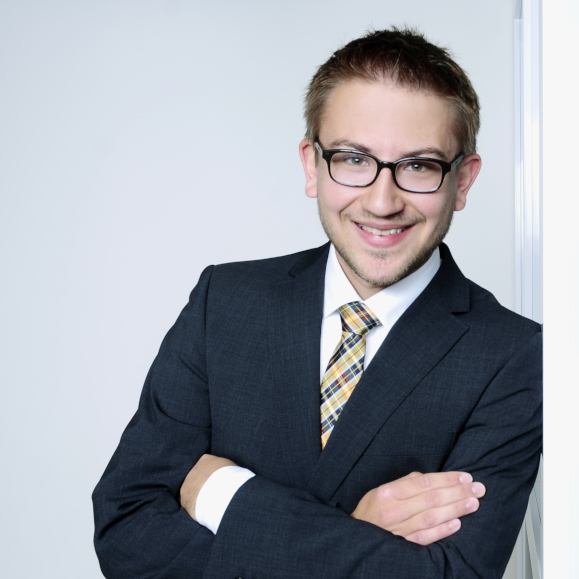
Alexander G. Agrios is an Associate Professor and holds the Al Geib Professorship in Environmental Engineering Research and Education at the University of Connecticut's College of Engineering, School of Civil and Environmental Engineering. He leads the Agrios Research Group focused on environmental applications of nanotechnology, particularly photoelectrochemical solar energy conversion and photocatalytic pollutant remediation. His research explores: Nanoscale semiconductors for low-cost solar energy conversion Novel architectures in dye-sensitized solar cells (DSSC) to maximize electron harvesting efficiency Perovskite solar cells (PSC) using advanced nanostructures Combined PV/thermal solar collectors and photocatalytic environmental cleanup Agrios's publication trends (2016-2025) reveal strong focus on: Advanced characterization of photovoltaic systems using impedance spectroscopy Nanomaterial development for solar cells and batteries Environmental implications of nanotechnology Novel synthesis methods for energy materials He directs laboratory research in Castleman Building Room 310 and maintains active collaboration through his research group. No awards or student advisees are mentioned in available materials.
Dr. Deven Estes is an Assistant Professor at the University of Stuttgart's Faculty of Chemistry, affiliated with the Institute of Technical Chemistry. His research focuses on surface chemistry, catalysis, and materials characterization with particular emphasis on immobilized metal complexes and hydride chemistry. Research interests include catalyst design for sustainable energy applications, surface immobilization techniques, and advanced characterization methods including solid-state NMR and X-ray spectroscopy. Recent work explores hydrogen storage, CO2 conversion, and electrocatalyst development. Publication analyses show strong focus on metal hydride characterization, surface confinement effects, and catalytic mechanisms of transition metal complexes, with emerging interests in green chemistry applications and analytical method development. His group develops novel catalytic systems for energy conversion and sustainable chemical synthesis.
Ajay K. Dalai is a Professor in the Department of Chemical and Biological Engineering at the University of Saskatchewan, holding a Professional Engineer license in Saskatchewan since 2000. His internationally recognized research focuses on sustainable energy conversion and catalytic processes, with significant contributions to biomass utilization and petroleum refining. His academic foundation spans multiple degrees earned in India and Canada: Ph.D. in Chemical Engineering, University of Saskatchewan, Canada (1990) M.Tech. in Chemical Engineering, Indian Institute of Technology, India (1984) B.Sc. Tech. in Chemical Engineering (Petro-chem Major), Nagpur University, India (1982) B.Sc. in Chemistry (Hons), Utkal University, India (1979) I.Sc. in Physics, Chemistry, and Math, Utkal University, India (1977) Professor Dalai's research integrates Chemical Reaction Design with Heterogeneous Catalysis to advance Biomass and Bioenergy conversion technologies. His work in Gasification and Fischer-Tropsch Synthesis enables sustainable fuel production, while Hydrotreating and Materials Synthesis innovations improve petroleum processing efficiency. These efforts collectively address global energy challenges through Nanotechnology -enhanced catalysts and Value-added processing of waste streams. His exceptional scientific contributions have earned numerous prestigious accolades: Miroslaw Romanowski Medal (Royal Society of Canada, 2020) R.S. Jane Memorial Award (Canadian Chemical Engineering Society, 2020) Fellow of the Royal Society of Canada (2014) Fellow of The Canadian Academy of Engineering (2012) Glory of India Award for Science & Technology (2012) Fulbright Fellowship (2012) Canadian Catalysis Lectureship Award (2011) DAAD Visiting Professor Fellowship (Germany, 2010) Petro-Can Young Innovator Award (1999) Professor Dalai has mentored award-winning graduate students whose research consistently excels at national competitions. His advisees have secured multiple Best Paper and Presentation Awards at Chemcon and Canadian Chemical Engineering Conferences, demonstrating exceptional skill in biomass gasification, catalyst design, and renewable fuel synthesis. Notable achievements include S. Nanda's Second Best Technical Paper (Chemcon 2017), G. Kamath's Best Oral Presentation (2019), and K. Jacobson's Auto 21 Workshop First Prize for wood pyrolysis oil upgrading. These successes reflect his commitment to developing next-generation chemical engineers through hands-on research mentorship.
Paul Topham is Professor of Chemical Engineering & Applied Chemistry at Aston University, where he directs the Aston Institute for Membrane Excellence. His research develops well-defined polymer systems including sustainable bioplastics, nanofibrous fabrics, and block copolymer nanomaterials. Honors include representation as Hydrogen in IUPAC's Periodic Table of Younger Chemists (2019) and MacroGroup UK Medal (2014). Current projects focus on biodegradable blends, controlled polymerization, and polymer characterization using neutron scattering methods.
Jude Onwudili is a Reader in Chemical Engineering at Aston University's College of Engineering and Physical Sciences. As an FRSC and Senior Fellow of HEA, he leads research in sustainable energy and circular economy approaches focusing on hydrothermal processing of biomass, catalytic valorization of waste streams, and CO2 utilization technologies. His educational background includes a PhD from the University of Leeds and BSc from the University of Ibadan. Onwudili teaches Chemical Process Design, Renewable Energy Technologies, and Advanced Process Design while supervising research students. Research explores thermochemical conversion pathways including gasification, pyrolysis and liquefaction of biomass, plastics and organic wastes. Current projects investigate catalytic routes to sustainable aviation fuels, biopropane production, and novel CO2 fixation methods through suspension-based carboxylation reactions. Publication analysis reveals strong emphasis on catalytic process optimization, reaction kinetics, and analytical method development for biofuel characterization. Recent work advances sustainable fuel production through innovative reactor designs and catalyst systems. Fellow, Royal Society of Chemistry Senior Fellow, Higher Education Academy Research leadership includes principal investigator roles on multiple UKRI, EU and industry projects including bio-LPG production, renewable energy from aqueous residues, and low-carbon fuels for glass manufacturing. He coordinates the sustainable fuels research team at Energy & Bioproducts Research Institute (EBRI). Laboratory facilities include advanced reactors for supercritical water processing and analytical capabilities for biofuel characterization. Professional activities include editorial roles for ACS Sustainable Chemistry & Engineering and RSC Sustainable Energy & Fuels journals.
Dr. Farshid Ramezanipour is an Associate Professor in the Department of Chemistry at the University of Louisville. He is a recipient of the NSF CAREER Award (2020-2025). His research focuses on solid-state inorganic materials for energy applications, including batteries, fuel cells, electrocatalysis, and magnetism. He employs advanced synthesis and characterization techniques such as diffraction, electron microscopy, and electrochemical studies. Educational Background: Ph.D. in Chemistry from McMaster University (2011) Postdoctoral Fellow at University of Calgary (2011-2013) NSERC Postdoctoral Fellow at University of California, Berkeley (2013-2015) Research Interests: The Ramezanipour Group develops complex oxide materials to enhance energy storage and conversion efficiency. Key topics include oxygen vacancies in perovskites, structural tuning of ionic conductors, and electrocatalytic properties of quasi-1D/2D oxides. Their work bridges materials synthesis, characterization, and device applications. Scientific Achievements: NSF CAREER Award for research on defect-ordered perovskites Pioneering studies on oxygen-deficient oxides for water-splitting catalysts Advising & Grants: Leads the Ramezanipour Research Group, which has produced over 50 publications since 2015. Active in securing federal grants for energy materials research. Labs/Teams: The Ramezanipour Group operates within the Chemistry Department's state-of-the-art facilities, focusing on advanced materials characterization and sustainable energy solutions.
Rosalie Hocking is an Associate Professor and ARC Future Fellow at Swinburne University of Technology, affiliated with the School of Science, Computing and Emerging Technologies. Her research focuses on developing electrochemical devices for sustainable energy production, utilizing solar-derived electricity to produce chemicals like hydrogen and ammonia. She extensively leverages synchrotron-based techniques, including X-ray analysis, to study material behavior and catalytic mechanisms. Her work also includes sensor technology for real-time chemical analysis, such as asbestos detection in construction materials. Education: PhD in Physical and Inorganic Chemistry from the University of Sydney (2004). Prior roles include positions at Stanford University, CSIRO Land and Water, Monash University, and James Cook University. She holds an ARC Future Fellowship. Research Interests: Electrochemical devices, renewable energy storage, catalyst design, synchrotron analysis, and sensor technology. Key areas include CO2 reduction, hydrogen production, and sustainable ammonia synthesis. Scientific Awards: ARC Future Fellow (2024–2028). Grants: Includes ARC-funded projects on liquid metal catalysis, synchrotron-based techniques, and green chemical manufacturing. Collaborates with industry on hydrogen electrolyser development and PFAS remediation. Professional Activities: Committee memberships in synchrotron user advisory groups (e.g., Australian Synchrotron’s XAS beamline). Active in advancing synchrotron infrastructure and applications. Labs/Teams: Leads research in electrocatalysis, liquid metal systems, and sensor development. Collaborates with interdisciplinary teams on energy transition and environmental solutions.
Matthias Waegele is an Associate Professor of Chemistry at Boston College, specializing in heterogeneous catalysis and electrochemical interfaces. His research focuses on designing efficient catalysts for renewable fuels by studying interfacial dynamics using advanced spectroscopic techniques like surface-enhanced infrared absorption and Raman spectroscopy. Key interests include CO₂ reduction, water oxidation, and understanding cation effects on reaction pathways. Education: B.S., Technical University Munich; Ph.D., University of Pennsylvania. Notable awards include the 2019 NSF CAREER Award and the 2012 John G. Miller Award for Outstanding Doctoral Thesis. Research emphasizes probing molecular events at electrified interfaces, such as copper electrodes in alkaline conditions, to uncover mechanisms behind product selectivity and catalytic activity. Recent work explores how hydrogen bonding and electric double-layer dynamics influence CO electroreduction to ethylene. Scientific awards highlight his contributions to catalysis and spectroscopy. His NSF-funded research project aims to elucidate interfacial control of CO₂ reduction selectivity, integrating experimental and theoretical approaches. Grants and advising details are not explicitly listed, but his NSF CAREER grant underscores sustained research support. His lab focuses on spectroscopic innovation for real-time reaction monitoring, with collaborations involving advanced materials and sustainable energy systems.
Qingfeng Li is a Professor at the Department of Energy Conversion and Storage, Technical University of Denmark (DTU). His research focuses on advanced electrochemical materials, fuel cell technologies, and sustainable energy systems. He contributes to the UN Sustainable Development Goals related to affordable and clean energy. Research interests include proton-exchange membrane fuel cells, polymer electrolyte membranes, electrocatalysts, and high-temperature energy storage systems. His work emphasizes material durability, electrochemical performance, and scalable production methods. Recent publications explore long-lasting polymer membranes for high-temperature fuel cells, physicochemical properties of advanced materials, and alkaline fuel cell performance optimization. Over 350 publications and 37 research projects highlight his impactful contributions. He supervises multiple PhD students in areas like electrochemical pyroprocessing of nuclear fuels and low-temperature fuel cell catalysts. Active in organizing workshops and serving as a guest lecturer, he promotes knowledge exchange in electrochemical energy technologies.
Chang Geun Yoo is an Associate Professor in the Department of Chemical Engineering at the State University of New York College of Environmental Science and Forestry (SUNY ESF) since April 2024, having previously served as an Assistant Professor from July 2018 to March 2024. His research focuses on developing sustainable technologies for biomass conversion, with particular emphasis on biological and thermochemical pathways to transform lignocellulosic biomass into valuable fuels, chemicals, and bio-based materials. He leads the ESF Biomass Engineering Laboratory (BEL), which investigates innovative approaches to lignocellulosic biorefinery processes and sustainable material applications. Ph.D. in Agricultural and Biosystems Engineering (Major), Biorenewable Resources and Technology (Minor), Iowa State University (2008-2012) M.S. in Chemical Engineering, Hanyang University, Seoul, Korea (2006-2008) B.S. in Chemical Engineering, Hanyang University, Seoul, Korea (1998-2006) Dr. Yoo's research centers on elucidating biomass and bio-product properties while developing advanced lignocellulosic biorefinery processes. His work spans thermochemical and biological conversion pathways, with particular focus on deep eutectic solvents for biomass processing, lignin valorization strategies, and innovative approaches for enhancing biomass digestibility. His laboratory investigates the fundamental mechanisms behind biomass recalcitrance and develops novel pretreatment methods to improve conversion efficiency. The research integrates experimental work with computational modeling to optimize biomass fractionation processes and maximize product yields from renewable resources. Dr. Yoo's recent publications reveal a strong focus on lignin valorization and biomass conversion technologies, with increasing integration of computational approaches to optimize processes. His work spans multiple dimensions including lignin-based polyurethane foams, deep eutectic solvent applications, catalytic processes for biomass conversion, and novel biorefinery approaches. There's growing emphasis on sustainability metrics, economic considerations, and practical implementation challenges in bio-based material development, reflecting the maturation of the field toward commercial applications. Dr. Yoo has received numerous prestigious awards recognizing his research excellence and teaching: SUNY Chancellor's Award for Excellence in Scholarship and Creative Activities (2025) ACS Energy & Fuels Rising Stars (2024) NSF CAREER Award (2023) ESF Exemplary Researcher (2023) ACS ENFL Early Career Investigator Spotlight (2023) ACS CNY Section Award (2021) Dr. Yoo actively mentors PhD students in Paper & Bioprocess Engineering and related fields, with current advisees including Nara Han, Seongsu Park, Jiae Ryu, and Chaehwi Yoon. His NSF CAREER Award (2023) supports innovative work in biomass conversion technologies, while his research group maintains strong collaborations with Oak Ridge National Laboratory, University of Wisconsin-Madison, and various industry partners to advance biorefinery concepts from laboratory to practical applications. His editorial roles with Advances in Industrial Engineering Chemistry, Frontiers in Chemical Engineering, and Applied Sciences demonstrate his leadership in the field. Dr. Yoo leads the ESF Biomass Engineering Laboratory (BEL), which maintains strong industry and national laboratory collaborations. His research group actively participates in outreach programs including the Water Research Spring Workshop and Sustainable Material Summer Workshop, engaging students and community members in sustainability research. The laboratory's work bridges fundamental science with practical applications, focusing on technologies that can transition from laboratory to commercial scale while maintaining environmental sustainability.
Chester Simocko is an Assistant Professor in Chemistry at San José State University, specializing in precision polymer synthesis and nanostructured materials. His laboratory focuses on metathesis polymerization techniques for creating functional block copolymers and surface-grafted polymer brushes. He teaches courses including Organic Chemistry, Physical Chemistry of Polymers, and laboratory modules, with an emphasis on practical synthetic methodologies. Research explores structure-property relationships in complex polymeric systems, with applications in nanotechnology and materials engineering. Key research themes: Design of stimuli-responsive polymer architectures Self-assembly mechanisms in multicomponent brush systems Sustainable polymerization processes using ionic media Publications demonstrate consistent focus on metathesis chemistry innovations and nanoscale characterization, with recent work advancing thermoresponsive micelle systems and e-waste upcycling methods.
Hemamala Karunadasa is a Professor of Chemistry at Stanford University and a Senior Fellow at the Precourt Institute for Energy. She leads an active research group focused on developing new materials for clean energy applications through synthetic chemistry approaches that bridge organic molecular tunability with inorganic solid properties. Education: Postdoc, California Institute of Technology (2011) - Molecular catalysts for activating hydrocarbons Postdoc, University of California, Berkeley and Lawrence Berkeley National Lab (2010) - Molecular catalysts for generating hydrogen from water PhD, University of California, Berkeley (2009) - Inorganic Chemistry AB, Princeton University (2003) - Chemistry Certificate, Princeton University (2003) - Materials Science and Engineering Professor Karunadasa's research program targets materials for environmental remediation (sorbents), solid-state lighting (phosphors), and renewable energy (solar cells). Her lab specializes in solution-state routes to new solid-state materials, with expertise in both solution- and solid-state synthetic techniques, structure determination through powder- and single-crystal x-ray diffraction, and various spectroscopic and electrochemical characterization methods. Analysis of recent publications reveals a strong focus on halide perovskites and their derivatives, particularly exploring how structural modifications affect electronic properties. Her group investigates organochalcogenide-halide perovskites, mixed-valence systems, and pressure effects on material properties. A notable trend is the exploration of alternative elements to address toxicity concerns in traditional lead-based perovskites while maintaining desirable optoelectronic properties for energy applications. Scientific Awards: Brown Investigator award (2022) ACS Inorganic Chemistry Lectureship award (2022) Stanford Chambers Fellowship (2021) Stanford Terman Fellowship (2015) Alfred P. Sloan Research Fellowship (2015) National Science Foundation CAREER award (2014) Professor Karunadasa has successfully mentored numerous students who have received prestigious fellowships including the Schmidt Science Fellowship, Miller Research Fellowship, and Stanford Knight-Hennessy Scholar. Her research is supported by multiple grants from the National Science Foundation, Department of Energy, and the Precourt Institute for Energy. She maintains productive collaborations with research groups across Stanford, including those in Applied Physics and SLAC National Accelerator Laboratory. The Karunadasa Lab employs a comprehensive suite of characterization tools including powder- and single-crystal x-ray diffraction, various spectroscopic and electrochemical probes, imaging methods, and film deposition techniques. Group members also characterize materials under extreme environments and in operating devices to optimize them for renewable energy applications, with recent work focusing on quantum science applications through a Stanford Q-FARM Quantum Science Seed Grant.
Dr. Christian R. Wick is a Principal Investigator and Coordinator of the EAM Unit Computational Advanced Materials and Processes (CAMP) at Friedrich-Alexander-University Erlangen-Nürnberg. He holds a Dr. rer. nat. in theoretical physics and focuses on multiscale modeling of materials, particularly in mechanochemistry, catalysis, and polymer networks. His research integrates computational methods like molecular dynamics and DFT to study reaction mechanisms in materials science and enzymology. He completed his education at FAU with a B.Sc. (2009), M.Sc. (2011), and Ph.D. (2015) in Molecular Science and Theoretical Physics. His work bridges theory and experiment, addressing challenges in low-temperature catalysis (e.g., water-gas shift reactions) and functional materials design. Notable contributions include advancements in SILP catalysts, epoxy resin modeling, and mechanochemical reactivity prediction. Wick has been recognized with the Lecture Award at the 28th Molecular Modelling Workshop (2014). His research outputs span over 28 publications, with key topics including ionic liquid behavior, polymer cross-linking dynamics, and computational enzyme modeling. He collaborates widely, contributing to projects like the GRK 2423 FRASCAL initiative on fracture mechanics across scales. Wick’s interdisciplinary approach involves teams in materials science, catalysis, and computational physics, with ongoing projects on advanced polymer materials, mechanochemical reaction engineering, and enzyme activity modeling. His lab (CAMP) emphasizes innovative methodologies for simulating complex material behaviors under mechanical and thermal stresses.
Dr. Maxim Shkunov is a Senior Lecturer at the University of Surrey's School of Computer Science and Electronic Engineering, affiliated with the Nanoelectronics Centre and Advanced Technology Institute. He serves as Programme Director for the Nanotechnology and Renewable Energy MSc, Academic Integrity Officer, and PGR Director at the ATI. His research focuses on printed electronics using solution-processable nanomaterials and organic semiconductors, particularly in flexible optoelectronics for bio-interfaces, organic-inorganic hybrid devices, and energy storage solutions. Key areas include conjugated polymers for artificial retinas, nanowire electronics, and high-performance lithium-gas batteries. Teaching responsibilities include modules such as Renewable Energy Technologies, Nanoelectronics and Devices, and Molecular Electronics. His work emphasizes synergies with industry and academic partners in chemical synthesis, sensor applications, and printable device development. Notable contributions include advancements in flexible printed electronics and bio-interfaces, with recent publications addressing full-color vision restoration and energy storage innovations. Dr. Shkunov’s research spans semiconductor physics, nanomaterial characterization, and device fabrication, with a focus on large-area electronics for health, energy, and environmental applications. His lab develops cutting-edge technologies like inkjet-printed supercapacitors and laser-patterned composite electrodes, reflecting a commitment to translating materials science into practical, scalable solutions.
Dr. Vlad Stolojan is an Associate Professor (Reader) at the Advanced Technology Institute, University of Surrey, within the School of Computer Science and Electronic Engineering. He holds additional roles as Fire Safety Officer and Academic Tutor for all years of undergraduate Electronic and Electrical Engineering students. His research focuses on nanotechnology, with expertise spanning nanomaterials synthesis, characterization techniques (e.g., electron microscopy), and applications in energy storage, biomedical engineering, and advanced composites. Dr. Stolojan’s work integrates cutting-edge methods such as electrospinning for creating functional nanofibers, catalytic growth of carbon nanotubes, and focused ion beam microscopy. Recent advancements include developing polar-nanofiber separators for lithium-sulfur batteries and biomimetic scaffolds for neural stem cell transplantation. He co-founded Radical Fibres Ltd (now Nanolayr UK), pioneering electrospinning R&D for industrial applications. His teaching contributions include coordinating the Nanofabrication and Characterisation module and co-teaching Nanoscience and Nanotechnology . He emphasizes practical skills like microscopy image analysis, nanotube growth mechanisms, and journal writing. His research portfolio reflects interdisciplinary innovation, with over 100 publications in high-impact journals and multiple patents. In 2021, his team secured a state-of-the-art microscope enabling atomic-level imaging, enhancing Surrey’s nanotechnology capabilities. His work bridges academia and industry, addressing challenges in sustainable materials, energy systems, and biomedical devices.