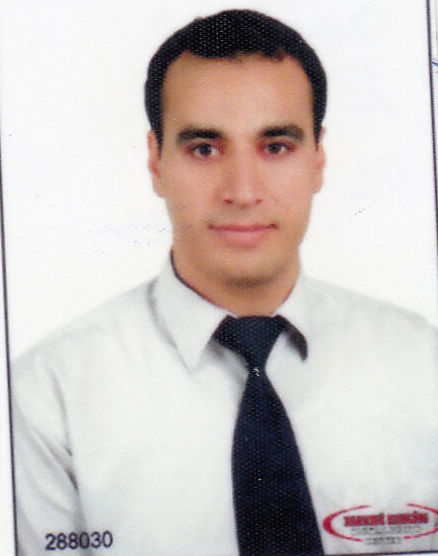
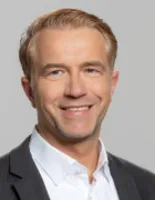
Max Hendriks is Professor in the Department of Structural Engineering at the Norwegian University of Science and Technology (NTNU), specializing in advanced structural analysis and assessment methodologies for concrete infrastructure. His work integrates computational modeling with experimental validation to address critical challenges in structural safety and durability. His research focuses on: Structural reliability assessment using proof load testing and monitoring data Acoustic emission techniques for concrete damage detection Nonlinear finite element analysis of cracking and shear behavior Durability mechanisms including alkali-silica reaction and corrosion Numerical modeling of structural response to extreme events Analysis of his 2021-2025 publications reveals a methodological evolution toward integrated experimental-computational frameworks, particularly in acoustic emission waveform modeling for fracture characterization and reliability-based assessment of aging infrastructure. His work consistently bridges theoretical advances with practical engineering applications, emphasizing probabilistic approaches for structural safety evaluation under complex degradation scenarios.
Yu Li is a Lecturer at the University of Picardie Jules Verne (UPJV) and a member of research unit UR 4290 “Optimization and Cryptography, AI – OCIA.” His office is located in room 302, reachable by internal telephone extension 5900. Research Interests Dr. Li’s research spans several inter-related domains: Optimization & Control Theory – developing dynamic optimization algorithms for industrial processes such as continuous casting in steel manufacturing. Cryptography & Security – investigating secure and dependable models for cloud and distributed systems. Artificial Intelligence & Robotics – integrating AI perception and decision-making into cloud-connected robotic platforms, including exoskeletons for rehabilitation and autonomous ground vehicles. Cloud & Fog Computing – designing middleware and domain-specific languages that seamlessly connect robotic devices with cloud and edge resources. Publication Trends Over the past decade, Dr. Li’s publication record reveals a clear evolution from foundational work in software architecture and component-based systems (2010-2016) toward cutting-edge applications in cloud/fog-enabled robotics and AI-driven cyber-physical systems (2017-2023). His studies increasingly emphasize real-world deployment, simulation-driven resource estimation, and human-centric interaction in rehabilitation robotics. Scientific Awards & Recognition No specific awards are listed in the provided materials. Advising & Funding No explicit information about supervised students or funded grants is available in the text supplied. Laboratories & Teams He carries out his research within the UR 4290 research unit “Optimization and Cryptography, AI – OCIA” at UPJV, focusing on collaborative projects that bridge mathematics, computer science, and robotics engineering.
Martin Roth is a Postdoctoral Researcher in the Geometry Assurance & Robust Design research group at Chalmers University of Technology, working within the Product Development department under the School of Mechanics and Maritime Sciences. His research focuses on geometry assurance of products with mega-cast parts, collaborating with the automotive industry to optimize methods and tools for advanced variation simulation and geometry assurance of complex assemblies. Dr. Roth's primary research interests include: Product Design Geometry Assurance Tolerancing Optimization Simulation His recent scholarly output demonstrates a strong trend toward integrating advanced computational methods with industrial applications, particularly in developing holistic frameworks for tolerancing in product design and closing gaps in the digital thread using the Quality Information Framework standard. His work combines sampling-based tolerance-cost optimization techniques with practical manufacturing challenges, especially for mega-cast aluminum parts in automotive applications. Dr. Roth is actively involved in two major VINNOVA-funded research projects: Digital synchronization of geometry data for efficient value chains (DigiSync) (2024-2027) Geometrical robustness for mega casted aluminum part (GROMCAP) (2023-2026)
David Johnson is an Associate Professor of Political Science and an Assistant Professor of Industrial Engineering at Purdue University's College of Liberal Arts. He holds a Ph.D. in Policy Analysis from the Pardee RAND Graduate School (2013), a MASt in Mathematics from the University of Cambridge (2005), and a B.S. in Mathematics from North Carolina State University (2003). His research focuses on developing simulation models, economic analysis tools, and decision support systems to address environmental policy challenges, particularly climate change adaptation and flood risk management. He leads the development of Louisiana’s Comprehensive Master Plan flood risk model and explores bioenergy, water scarcity, and agricultural sustainability. His interdisciplinary work bridges public policy, environmental science, and engineering systems. Dr. Johnson’s research emphasizes uncertainty analysis, tradeoff assessment, and policy evaluation. His recent studies include optimizing flood protection systems, evaluating bioenergy’s greenhouse gas impacts, and analyzing long-term agricultural practices. While no formal student advisees are listed, his work intersects with engineering and environmental disciplines. Awards or grants are not explicitly mentioned in the provided materials. His academic roles span political science and industrial engineering, reflecting his dual focus on policy analysis and technical systems. He collaborates across disciplines to address complex environmental challenges, leveraging mathematical and computational modeling expertise from his academic background.
Mohammad Islam is an Assistant Professor (Part-Time) in the Department of Health Research Methods, Evidence, and Impact. He specializes in advanced materials and manufacturing processes, with a focus on PVD coatings, tribology, and machining performance optimization. His research explores the interplay between coating deposition parameters, material properties, and wear behavior in aerospace and industrial applications. He teaches Regression Analysis ( HTHRSM 753 ) courses, emphasizing statistical methodologies in health research. Key research themes include PVD coating design for Ti6Al4V alloys, ultrasonic-assisted machining, and green cooling technologies. His work addresses challenges in tool longevity, surface roughness reduction, and sustainable manufacturing practices. Recent studies investigate multiscale numerical analysis of residual stresses and self-adaptive coatings for extreme machining conditions. No scientific awards or grants are explicitly mentioned in the provided texts. No advising roles or lab affiliations are detailed. His contributions span experimental and computational approaches to enhance material performance and machining efficiency.
Mary Ann Lundteigen is a Professor in instrumentation systems and safety at NTNU’s Department of Engineering Cybernetics, part of the Faculty of Information Technology and Electrical Engineering. She holds an MSc (1993) and PhD (2009) in Engineering Cybernetics from NTNU, with 15+ years of industry experience across Phillips Petroleum, Nidar AS, DNV, and SINTEF. She has led major research initiatives including SFI SUBPRO (2014–2023) and SFI Autoship (2019–2022), focusing on subsea production, autonomous ships, and cybersecurity for safety-critical systems. Her research emphasizes functional safety of industrial control systems, cybersecurity compliance with standards like IEC 62443, and the integration of AI in safety-critical environments. She leads projects such as APOS 2.0 (digital lifecycle management) and CyberBarrier Management, while supervising multiple PhD students and postdocs. Lundteigen co-authored over 100 publications and received the ExxonMobil Doctoral Prize (2009) for her thesis on SIS reliability. Professional roles include: Co-director of SFI SUBPRO Director of SFI Autoship’s initial phase Adjunct Professor at NTNU (2013) Member of IEC 61511 maintenance team and PDS forum organizing committee Current research focuses on: Cybersecurity threats to SIS AI applications in safety systems Digital twins for safety demonstration Industry 4.0 frameworks like OPC UA Her work bridges academia and industry, with active projects funded by the Norwegian Research Council and industrial partners like Equinor and DNV.
Mehran Koohgilani is a Principal Academic in Engineering at Bournemouth University, affiliated with the Department of Design, Engineering and Computing within the Faculty of Science and Technology. He holds a PhD from Bournemouth University and has been actively contributing to engineering education and research for decades. He is a Chartered Engineer (CEng) and a member of the Institution of Mechanical Engineers. PhD in Damage Accumulation in High Performance (Bournemouth University, 1998) MSc in Polymer Science & Engineering (University of North London, 1993) BEng (Hons) in Mechanical Engineering Design & Production (South Bank University, 1992) Mehran's research focuses on Composite Materials , Neural Networks in engineering applications , design methods , material selection , and applied technology . He has pioneered the integration of virtual reality in design education and has contributed significantly to curriculum development and accreditation of undergraduate programs in design engineering. His recent publications (2011–2025) reflect a strong trend in combining materials science with artificial intelligence for structural monitoring, particularly in marine composites. Other key themes include design education , surface engineering with nanomaterials , and corrosion protection . His work bridges theoretical modeling, experimental validation, and practical application in industry-relevant contexts. Mehran has been instrumental in supervising PhD students and is an active member of the Design Simulation Research Centre . He has led numerous teaching units in technological principles, materials & processing, and design management. His contributions extend to project supervision, particularly in final-year design engineering projects, and to co-creation in design education. His scientific leadership is evident in his role in developing and validating multiple undergraduate courses. He has also contributed to research grants and collaborative projects, though specific grant names are not listed in the provided text.
Jamal Naser is a Senior Lecturer in the School of Engineering at Swinburne University of Technology, where he actively contributes to research, teaching, and supervision. He holds the academic rank of Senior Lecturer and is involved in numerous research projects focusing on computational fluid dynamics (CFD), energy systems, and materials processing. Research Interests: His primary research areas include fluid mechanics, thermal engineering, chemical engineering, and extractive metallurgy. He specializes in CFD modeling applied to hydrogen use in steelmaking, wildland fire spread, composite manufacturing, and renewable energy systems such as wind turbines. His work bridges fundamental fluid dynamics with industrial applications in clean energy and sustainable manufacturing. The analysis of his recent publications reveals a strong trend in applying numerical modeling to environmental and industrial challenges—particularly decarbonization in steelmaking, fire safety in timber buildings, and bio-inspired wind turbine design. His research consistently employs advanced simulation tools like ANSYS Fluent and AVL FIRE, often incorporating user-defined subroutines for multiphase and reactive flows. Scientific Contributions: Lead and co-author of over 190 publications, with recent work appearing in high-impact journals such as Metallurgical and Materials Transactions B , Fire , and Energies . Active researcher in hydrogen-based steelmaking, fire dynamics, and composite preforming, contributing to sustainable development goals related to clean energy and climate action. Advising and Grants: Jamal Naser supervises multiple PhD and Master’s students and has secured several external research grants from organizations including CSIRO, Australian Mathematical Sciences Institute, and Lunar Resources. His grants support projects on hydrogen in steelmaking, lunar metal casting, and anaesthesia data analysis, demonstrating interdisciplinary collaboration and industry engagement. Labs and Teams: He collaborates with researchers in multiphase flow modeling, combustion, and materials engineering, often working with teams involving G. Brooks, W.D.S. Fernando, and S.M. Hayajneh. His work integrates experimental validation with computational modeling, ensuring robust and scalable solutions.
Erdal Öztürk is a Lecturer at Gaziantep University , affiliated with the Technical Sciences Vocational School and the Department of Motor Vehicles and Transportation Technologies . His academic career spans multiple institutions, including Kahramanmaraş Sütçü İmam University and Gazi University . Education Master in Materials Science and Engineering (2019) Bachelor in Mechanical Education and Mold Making Education (2005) His research focuses on mechanical engineering , composite materials , and production technologies , with significant work on injection molding, sheet metal forming, and CAD optimization. Erdal has contributed to 11 international/national proceedings, emphasizing defect minimization and parameter optimization. Key trends in his publications include: Injection molding process optimization Finite element analysis in metal/plastic forming Automotive component manufacturing Thermal and structural analysis using CAD tools
Prof. Dr.-Ing. Dirk Lowke is a Professor at the Department of Materials Engineering, Technical University of Munich. He specializes in materials and digital manufacturing in construction, focusing on 3D printing with concrete and clay, ecological material optimization, durability, circularity, and mobile robotics. Before joining TU Munich in 2023, he led the Building Materials Department at TU Braunschweig's Institute of Materials Science and Technology (iBMB) from 2017 to 2023 and was a board member of the Braunschweig Materials Testing Institute. He studied civil engineering at TU Cottbus and earned his doctorate from TU Munich. Academic Affiliation: Technical University of Munich Prior Employment: TU Braunschweig (2017-2023) His research emphasizes digital and sustainable construction, particularly through resource-efficient production and maintenance of mineral structures. He contributed to understanding the thixotropy of self-compacting concrete (SCC) and the zeta potential of cementitious suspensions. Recent work includes interlaboratory studies on 3D printed concrete properties and numerical modeling for particle bed 3D printing. He actively participates in RILEM conferences and co-edited proceedings on digital fabrication. Prof. Lowke's publications highlight advancements in selective cement activation, shotcrete 3D printing, and additive manufacturing applications for coastal biogenic structures. He investigates how process parameters affect material density, dimensional accuracy, and hardened state properties, aiming to enhance the practicality and sustainability of digital construction methods.
Mikael Ersson is a Professor at the Royal Institute of Technology (KTH) in Stockholm, Sweden. He holds a prominent role in the Department of Materials Science and Engineering, contributing to academic leadership and research in metallurgical processes and sustainable materials production. His work focuses on advancing fossil-free steel production through innovative metallurgical processes and numerical modeling of high-temperature systems. Professor Ersson leads the MSc programs in Materials Design and Materials Science at KTH, emphasizing education and training for the next generation of materials engineers. He is actively involved in teaching courses such as Fluid Mechanics and Heat Transport, Material Design I, and Thermodynamics I, reflecting his expertise in both theoretical and applied aspects of materials science. His research interests span metallurgical process optimization, steel production sustainability, fluid mechanics in casting systems, and electromagnetic stirring. He employs computational fluid dynamics (CFD) and numerical modeling to study phenomena such as melt pool dynamics, solidification behavior, and inclusion transport in steel and magnesium alloys. Recent projects include investigations into hydrogen-reduced iron production, swirling flow effects in casting systems, and decarburization processes in converters. Professor Ersson collaborates with industry partners to bridge academic research with industrial applications, driving innovation in environmentally friendly steel manufacturing. His contributions have impacted the Nordic and EU steel industry's transition to sustainable practices. He is also engaged in academic outreach, organizing events like the Library Fair and contributing to student development through KTH’s campus initiatives.
Dr. Viswanathan N Nurni is a Professor and currently serves as the Head of the Department of Metallurgical Engineering and Materials Science at the Indian Institute of Technology Bombay (IIT Bombay). He holds the Sajjan Jindal Steel Chair Professorship and has been a faculty member since 2000, progressing from Assistant to full Professor. Prior to his current role, he was a Professor at Luleå University of Technology, Sweden (2011–2013). His research is centered on process metallurgy and modeling, with key interests in blast furnace operations, steelmaking, iron ore agglomeration, and computational simulation of high-temperature processes. He has developed industrial-scale models, including a blast furnace simulation system deployed at Bokaro Steel Plant. The selected publications highlight a strong trend in mathematical and thermodynamic modeling of metallurgical processes, particularly in gas-liquid interactions, continuous casting, and thin-film deposition. His work bridges fundamental science with industrial application in the steel sector. Excellence in Teaching Award of IIT Bombay (2006, 2011, 2014) Visiting Professor, Royal Institute of Technology, Stockholm Editor, Transactions of the Indian Institute of Metals Advisory Board Member, Steel Research International, Germany Dr. Viswanathan has led significant research projects with industrial collaboration, such as the development of a computational model for blast furnace state simulation. While specific details of current grants are not listed, his role as Chair Professor and project deployments indicate sustained funding and advisory responsibilities. He contributes to academic leadership through editorial and advisory roles. He is actively involved in research and academic leadership within the Department of Metallurgical Engineering and Materials Science at IIT Bombay, leading initiatives in process modeling and industrial collaboration. His work is supported by strong ties with steel industries and international academic institutions.
Stefanie Elgeti is Associate Professor and Private Lecturer at the Chair for Computational Analysis of Technical Systems (CATS), Faculty of Mechanical Engineering, RWTH Aachen University. She previously held a professorship in lightweight design at TU Vienna starting in 2019. Her research integrates computational mechanics with manufacturing process optimization, focusing on plastics extrusion, injection molding, and high-pressure die casting. Diploma in Mechanical Engineering, majoring in 'Manufacturing Techniques for Microsystems' PhD (2011): 'Free-Surface Flows in Shape Optimization of Extrusion Dies' Habilitation (2016): 'CAD-Conforming Finite Element Methods in Engineering Design' Her research centers on solving inverse problems in manufacturing through numerical simulation. She employs advanced techniques such as free-surface flow modeling, non-Newtonian material models, spline-based finite elements, and PDE-constrained shape optimization. Her group simulates entire process chains from filling to solidification and warpage prediction, enabling design optimization of cavities and cooling systems. The recent publications (2022–2024) reveal a strong trend toward integrating artificial intelligence—particularly physics-informed neural networks and Bayesian optimization—into traditional simulation workflows. There is increasing emphasis on warpage compensation, shape optimization of extrusion dies, and modeling of biomedical and environmental systems, showcasing a broadening scope from industrial manufacturing to interdisciplinary applications. She is actively involved in academic service, having served as vice-spokesperson of GAMM-Juniors (2013–2014) and currently co-chairing the ECCOMAS Young Investigator Group. While no formal awards are listed, her leadership roles and editorial contributions reflect significant recognition in the computational mechanics community. Prof. Elgeti advises students and leads multiple research initiatives at CATS, including work groups focused on production engineering, fluid-structure interaction, and INTERESST. Her team develops model hierarchies and digital twins for industrial processes, aiming to bridge simulation and real-world manufacturing through intelligent, adaptive systems.
Professor Amarendra Kumar Singh is a distinguished faculty member in the Department of Materials Science and Engineering at Indian Institute of Technology Kanpur, specializing in process modeling and simulation of metallurgical processes. With over three decades of academic and industrial experience, he has established himself as a leading expert in steel refining, solidification processing, and computational materials engineering. PhD, IIT Kanpur, 2003 PG, IIT Kanpur, 1990 UG, IIT Kanpur, 1987 Dr. Singh's research focuses on Steel Refining and Casting, Extractive Metallurgy, Integrated Computational Materials Engineering, Solidification Processing, and Sustainable Manufacturing. His work bridges fundamental scientific principles with practical industrial applications, particularly in the steel industry. He employs advanced computational techniques to model complex metallurgical processes, enabling optimization of manufacturing parameters and improvement of material quality. His research has significant implications for energy efficiency, environmental sustainability, and cost reduction in metal production. His publication record demonstrates a consistent trajectory of research excellence, with a focus on mathematical modeling of steelmaking processes, solidification phenomena, and computational approaches to materials engineering. The publications span from fundamental studies of macrosegregation and solidification to applied research on ladle refining, electric arc furnaces, and inclusion engineering in steel. Recent work shows increasing integration of data science approaches with traditional materials modeling. Metallurgist of the Year Award, Ministry of Steel, Government of India, 2014 Distinguished Scientist Award, TCS, 2011 AICTE-INAE Distinguished Visiting Professor at IIT Bombay (2009-2012) Multiple Best Paper Awards from Indian Institute of Metals As a faculty member at IIT Kanpur, Dr. Singh has contributed significantly to academic programs, mentoring students, and advancing research in materials engineering. His professional affiliations with The Minerals, Metals and Materials Society (TMS), Indian Institute of Metals (IIM), Materials Research Society of India (MRSI), and Indian Society of Heat & Mass Transfer (ISHMT) reflect his standing in the academic community. His research has practical applications in industrial settings, particularly in the steel manufacturing sector where process optimization is critical for competitiveness.
Professor Monica Katiyar is a distinguished faculty member in the Department of Materials Science & Engineering at the Indian Institute of Technology Kanpur (IIT Kanpur). With a PhD from the University of Illinois at Urbana-Champaign, she has established herself as a leading researcher in organic electronics and thin film technology, holding the prestigious SBI Chair Professor position from 2011-2014. Her educational background includes a PhD from the University of Illinois at Urbana-Champaign (1994), an M.Eng. from McMaster University (1989), and a B.Tech. from the Indian Institute of Technology Kanpur (1987), demonstrating her strong foundation in materials science and engineering. Professor Katiyar's research spans fundamental materials science to practical device applications in the field of organic electronics. Her primary research interests focus on Organic Electronics, with expertise in Organic Light Emitting Diodes (OLEDs), Organic Thin Film Transistors, Printable Electronics, Organic Solar Cells, and Thin Film Technology. Her work on Electronic Materials and Devices encompasses advanced characterization and processing techniques that have significantly advanced the development of organic semiconductors and optoelectronic devices, particularly in solution-processed and printable electronics. Professor Katiyar's publications demonstrate a consistent research trajectory in developing novel fabrication methods and understanding device physics in organic electronics, with publications spanning materials characterization, device simulation, and novel device architectures. Her work bridges the gap between fundamental science and practical applications in flexible and printable electronics. 2011-14 SBI Chair Professor, IIT Kanpur 2002-03 BOYSCAST Fellowship, DST, Gov. of India 2001 INAE Young Engineer Award, Indian National Academy of Engineering 2000 Young Scientist Award, Council of Science and Technology, UP 1994 Nellie Yeoh Whetten Award, American Vacuum Society Professor Katiyar has mentored numerous students and researchers in the field of materials science and organic electronics. Her research has been supported by various national funding agencies, contributing significantly to India's capabilities in advanced electronic materials. She maintains active collaborations within India and internationally, advancing the field of organic semiconductors and their applications. Her laboratory at IIT Kanpur focuses on developing innovative fabrication techniques for organic electronic devices, with particular emphasis on solution-processed methods that enable low-cost manufacturing of flexible electronics. The research program addresses critical challenges in materials development, device architecture, and manufacturing processes for next-generation electronic and optoelectronic applications.