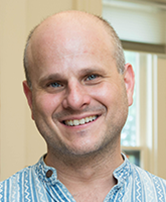
Dr. Andrew Newsham is a researcher at the Department of Development Studies (DEV), SOAS University of London. His work sits at the intersection of human geography , anthropology , and climate change policy . Key research areas: climate change adaptation , conservation and development , livelihoods , political ecology , and science and technology studies . Regional focus: Southern Africa and Latin America . Recent publications examine: Climate resilience in agricultural commercialization pathways (Tanzania/Zimbabwe) Reformulating sustainable livelihoods frameworks for the 21st century Critiques of ecosystems-based adaptation in Mexico Political economy of carbon forestry in Mozambique Linkages between social protection and climate risk management He convenes the MSc Environment, Politics and Development program at SOAS.
Kitty Stewart serves as Professor in the Department of Social Policy and Associate Director of the Centre for Analysis of Social Exclusion (CASE) at the London School of Economics and Political Science. With a PhD in Economics from the European University Institute in Florence, she brings over two decades of research experience to her role, having joined CASE as a post-doctoral researcher in 2001 after working at UNICEF's Innocenti Research Centre. Her educational background includes a PhD in Economics from the European University Institute, Florence, establishing her interdisciplinary approach that bridges economics and social policy analysis. Stewart's research focuses primarily on child poverty, social security policies, and early childhood education and care systems. Her work examines the impact of welfare reforms on family wellbeing, with particular attention to larger families and ethnic minority groups. She employs mixed methods approaches to investigate how cash support for children affects family finances, how benefit caps influence housing choices, and how welfare conditionality shapes parental behavior. Her research demonstrates how policy design affects both immediate family wellbeing and long-term intergenerational outcomes, with recent work highlighting the intersection of poverty, ethnicity, and welfare conditionality in the UK context. Analysis of her recent publications reveals a consistent focus on welfare conditionality and its consequences, particularly examining the two-child limit and benefit cap policies. Her research demonstrates how these policies create poverty traps, disproportionately affect ethnic minority families, and fail to achieve their stated employment incentives while increasing hardship. She has developed innovative conceptual frameworks, including the 'adult-behavior-orientated' policy category, to better understand contemporary welfare reforms. Fellow of the Academy of Social Sciences Trustee of the Education Policy Institute Trustee of the Child Poverty Action Group Stewart leads multiple significant research projects including 'Family finances: What difference does cash support for children make?' funded by the abrdn Financial Fairness Trust, which examines the Scottish Child Payment, and a four-year Nuffield Foundation study on 'Benefit changes and larger families' investigating the two-child limit and Benefit Cap. Her work frequently employs mixed methods approaches combining quantitative analysis with in-depth qualitative interviews to capture both statistical trends and lived experiences of policy changes. She regularly contributes to policy debates through CASEbriefs and engagements with organizations like the Child Poverty Action Group. As Associate Director of CASE (Centre for Analysis of Social Exclusion), Stewart works within one of the UK's leading research centers focused on poverty, inequality, and social exclusion. CASE operates within LSE's Department of Social Policy and maintains strong connections with policymakers, third sector organizations, and international research networks. The center's multidisciplinary approach enables comprehensive analysis of social policy issues from economic, sociological, and political perspectives.
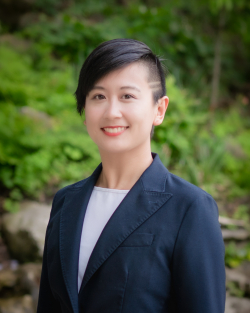
Sicong (Summer) Sun is an Assistant Professor of Social Welfare at the UCLA Luskin School of Public Affairs. Born in China as a first-generation immigrant and identifying as nonbinary queer, they hold a Ph.D. and MSW from Washington University in St. Louis. Previously, they served as faculty at the University of Kansas School of Social Welfare. Their research focuses on intersections of race, poverty, and health equity, with a particular emphasis on how structural racism influences wealth disparities and health outcomes. Sun’s work bridges quantitative analysis, policy advocacy, and interdisciplinary collaboration to address systemic inequities. Education: Ph.D. in Social Work, Washington University in St. Louis Master of Social Work, Washington University in St. Louis Research Interests: Racial/ethnic inequities in wealth and health Social determinants of health Financial capability and asset building Immigration and mental health Sun’s publications span journals like Annual Review of Public Health , SSM – Population Health , and Journal of Racial and Ethnic Health Disparities , emphasizing empirical and theoretical contributions to health equity. Their research highlights how wealth disparities rooted in structural racism exacerbate health inequalities across lifespans. Recent work examines racial differences in wealth-health relationships and evaluates interventions like cash transfers in global health contexts. Awards: Outstanding Doctoral Dissertation Award (Society for Social Work Research) Jane Aron Fellowship (National Association of Social Workers Foundation) Teaching: Courses include Foundations of Social Welfare Policy and Human Behavior and the Social Environment (HBSE). Dr. Sun advocates for data-driven policies to combat socioeconomic and racial inequities, with ongoing projects in Uganda and Hong Kong. Their interdisciplinary approach integrates public health, social work, and economics to foster actionable solutions.
Lilly Shanahan is an Associate Professor at the Department of Psychology , University of Zurich (UZH), and an Adjunct Professor of Psychology and Neuroscience at the University of North Carolina at Chapel Hill. She leads the Risk & Resilience Research Area and co-directs the z-Proso International Research Network . Her affiliations include the Jacobs Center for Productive Youth Development , the International Max Planck Research School on the Life Course , and Duke University's Center for Developmental Epidemiology . Her research focuses on: Social and biological risk factors for depression and anxiety Long-term developmental consequences of childhood mental/physical health issues Intersection of mental and physical health in adolescence Gender differences in developmental psychopathology Substance use and decision-making dynamics Recent publications analyze maternal mental health impacts, cannabis use trajectories, hormonal biomarkers, and digital mental health interventions. Scientific awards include a NICHD Postdoctoral Fellowship. She collaborates extensively with longitudinal cohort studies like the Zurich Project on Social Development and Great Smoky Mountains Study.
Ana De La O Torres is an Associate Professor of Political Science at Yale University, affiliated with the MacMillan Center for International and Area Studies, the Institution of Social and Policy Studies, and the Jackson Institute for Global Affairs. Her research focuses on the political economy of poverty alleviation, clientelism, and public goods provision in Latin America. She earned her PhD in Political Science from MIT in 2007. Her work combines experimental and comparative approaches to study how anti-poverty programs, electoral dynamics, and bureaucratic accountability shape political outcomes. Notable contributions include analyzing conditional cash transfer programs, corruption information effects on voter behavior, and the impact of audits on public service delivery. Her research trends emphasize experimental methodologies in governance contexts, with recent focus on clientelism's impact on state capacity and anti-corruption strategies in Mexico. She teaches courses on political economy frameworks, quantitative methods, and Latin American political systems. Ana is actively engaged in interdisciplinary collaborations, contributing to policy discussions on equitable development strategies. Her affiliations bridge multiple academic units at Yale to advance global policy research.
Santosh Anagol is an Associate Professor in the Business Economics and Public Policy Department at The Wharton School, University of Pennsylvania . His research focuses on financial markets in emerging economies , with emphasis on household finance , regulatory policy , and behavioral economics . Ph.D. in Economics (Yale University, 2009) B.A. in Economics with Minor in Mathematics (Stanford University, 2002) Fulbright Scholar to India (2002-2003) Anagol’s research spans topics like: Indian mutual fund regulation , including commission reforms and investor behavior Life insurance agent incentives and product mis-selling Endowment effects in IPO lotteries Consanguineous marriage impacts on genetic variation Political economy of elections via the 'runner-up effect' Economic returns of livestock in rural India His recent publications analyze: Global genetic patterns linked to marriage practices Investor responses to randomized IPO gains Regulatory impacts on mutual fund flows Scientific awards include: Fulbright Scholarship Wharton Teaching Excellence Award (2018-2019) Teaching focuses on: BEPP2030 - Business in Global Political Environment BEPP2800 - Applied Data Analysis using R Doctoral seminars on research methodology and empirical analysis
Sasha Indarte is an Assistant Professor of Finance at The Wharton School, University of Pennsylvania. His research focuses on Household Finance, Financial Intermediation, and Macroeconomics, with a particular interest in the intersection of social policy, consumer credit, and financial stability. PhD in Economics from Northwestern University His work examines how financial intermediaries’ reputations affect sovereign debt markets, the role of liquidity and moral hazard in household bankruptcy, and the impact of social insurance programs like Medicaid on household credit behavior. His recent research highlights racial disparities in bankruptcy outcomes and the design of optimal debt relief policies. Key trends in his publications include empirical analysis of historical financial systems, econometric modeling of consumer behavior, and policy evaluation of social programs. His articles have appeared in top journals such as the Journal of Finance and the Review of Financial Studies . Scientific Awards and Honors: National Science Foundation Grant (2021) Wharton Teaching Excellence Award (2020) NBER Small Grant (2020) Rodney L. White Center Grant (2020) Macro Financial Modeling Fellowship (2017) Susan Schmidt Bies Prize (2016) Marshall Blume Prize (1970) Brattle Prize (2024) Indarte teaches courses in Corporate Finance (FNCE1000, FNCE6110) and Empirical Methods (FNCE9260). His empirical research often leverages quasi-experimental designs and large datasets, including a race imputation model trained on 30 million observations.
Theresa L Osypuk is a Professor in the Department of Epidemiology & Community Health at the University of Minnesota , with affiliations to the Minnesota Population Center , Life Course Center , and Healthy Weight Research Center . Her work bridges social epidemiology, housing policy, and health disparities research. UN Sustainable Development Goals (SDGs) Focus : Poverty reduction (SDG 1), Good health and well-being (SDG 3), and Reduced inequalities (SDG 10). Collaborative Networks : Key collaborations include the NIH National Institute on Aging, University of California, Irvine, and National Institutes of Health (NIH). Research Interests : Osypuk specializes in social determinants of health, with a focus on housing policy, neighborhood context, and health equity. Her work examines how structural interventions (e.g., housing vouchers) affect long-term health outcomes across the life course, particularly for marginalized populations like LGBTQ+ youth and ethnic minorities. Article Trends : Recent publications center on randomized trials of housing and cash transfer programs, health disparities in ethnic enclaves, and policy impacts on mental health. Keywords highlight intersections between housing policy, social epidemiology, and health equity. Grants & Projects : Current projects include NIH-funded studies on Neighborhood Opportunity and Child Health (2022-2025), Housing Policy and Midlife Mortality (2023-2026), and a UCI/NIH collaboration (2022-2025). She leads the Minnesota Population Center projects (2001-2026).
Dr. Tanvir Huda is a Senior Lecturer in Public Health at the University of Sydney's Sydney School of Public Health, within the Faculty of Medicine and Health. He holds an NHMRC Senior Research Fellow position and has extensive experience in global health research, particularly in low-income settings. His work focuses on maternal and child health, nutrition, health equity, and universal health coverage. Dr. Huda has secured significant funding from agencies like NHMRC, Gates Foundation, and WHO, leading major studies such as the Shonjibon trial evaluating cash transfers and nutrition interventions in Bangladesh. Education: PhD in Public Health (University of Sydney, supported by Endeavour Postgraduate Award) MSPH from University of Alabama at Birmingham via AIDS International Training Research Fellowship (Fogarty NIH) Research Interests: Dr. Huda tests innovative solutions for health inequities, including nutrition-sensitive interventions, social safety nets, and mobile health technologies. Current projects include evaluating childhood stunting reduction in Bangladesh and exploring Lactoferrin applications for anemia. Grants & Awards: NHMRC grants totaling over $6 million Gates Foundation and MRC funding ($348k+) Teaching: Teaches in the Master of International Public Health program, emphasizing participatory learning in cluster randomized trials and health systems. Advising: Supervises research on maternal-child nutrition inequalities (e.g., Miranda HENDRY's project). Collaborates on grants like the SSEAC Ignition Grant for climate-sensitive undernutrition analysis.
Beth Moracco is an Associate Professor in the Department of Health Behavior and Associate Director of the UNC Injury Prevention Research Center at the University of North Carolina at Chapel Hill's Gillings School of Global Public Health. She specializes in violence prevention, particularly gender-based violence in global and domestic contexts. Her research emphasizes evaluating interventions, policies, and community engagement to address violence prevention and health disparities. Education: PhD in Health Behavior and Health Education, UNC-Chapel Hill, 1999 MPH in Health Behavior and Health Education, UNC-Chapel Hill, 1992 Certificate in African Studies, University of Florida, 1984 BA in Political Science, University of Florida, 1984 Research Interests: Focuses on primary and secondary prevention of violence, including domestic violence, firearm-related injuries, and gender-based violence. She also explores health policy, injury prevention, and global health interventions. Her work integrates qualitative and quantitative methods to design and evaluate programs and policies. Awards: Edward G. McGavran Award for Excellence in Teaching (2019) Edward Graham Kidder Faculty Service Award (2021) Grants & Projects: Leads studies funded by the National Institute of Justice and CDC, including evaluations of domestic violence protective orders, firearm surrender policies, and refugee support programs. She also evaluates sexual violence prevention initiatives like Wise Guys: The Next Level. Labs & Affiliations: Core faculty at the UNC Injury Prevention Research Center and a research fellow at the Center for New North Carolinians. Active in the North Carolina Administrative Office of the Court’s Domestic Violence Committee.
Giacomo De Giorgi is a Full Professor of Economics at the University of Geneva’s Geneva School of Economics and Management (GSEM), affiliated with the Institute of Economics and Econometrics. He previously held roles as Assistant Professor at Stanford University (2006–2013), Visiting Professor at UC Berkeley (2010–2011), Wesley Mitchell Visiting Professor at Columbia University (2012–2013), Research Professor at ICREA-MOVE Barcelona (2013–2014), Senior Economist at the New York Federal Reserve (2014–2016), and currently holds a Visiting Professorship at UC Irvine (since 2018). He is an Associate Editor of the Journal of the European Economic Association and a member of BREAD, CEPR, and IPA. Education: Ph.D., University College London. His research focuses on Economic Development, Labour Economics, Household Finance, and Entrepreneurship . Notable contributions include studies on cash transfer programs’ spillover effects, family networks’ impact on education, and credit market dynamics. He co-launched the Virtual Development Economics Seminar Series (VDEV/Channel) in 2020. Recent articles explore lifecycle inequality between racial groups, post-default economic dynamics, and SDG tracking in crises. His work appears in top journals like the American Economic Review, Review of Economic Studies, and Journal of Development Economics. Awards: Banamex Prize (2020). Teaching includes Development Economics, Labor Economics, and Advanced Econometrics. He has advised numerous institutions and co-authored influential papers on topics like informal firms’ formalization and consumption networks. He is actively involved in interdisciplinary collaborations, presenting globally on themes like refugees’ poverty, farming transitions, and financial crisis narratives.
Jeffrey Smith holds the Paul T. Heyne Distinguished Chair in Economics and Richard Meese Chair in Applied Econometrics at the University of Wisconsin-Madison. Previously, he served as Professor of Economics and Public Policy at the University of Michigan, with prior faculty positions at the University of Western Ontario (1994-2001) and University of Maryland (2001-2005). Education includes: B.A. Economics & B.S. Computer Science, University of Washington (1985) M.A. Economics, University of Chicago (1987) Ph.D. Economics, University of Chicago (1996) Research focuses on experimental and non-experimental methods for evaluating social and educational interventions, labor market impacts of university quality, and statistical treatment rules for government programs. Primary domains include Labor Economics, Public Economics, Econometrics, and Program Evaluation, with emphasis on causal inference methodologies and policy applications. Publications demonstrate consistent focus on econometric innovations in program evaluation, particularly quasi-experimental designs, treatment effect heterogeneity, and labor policy efficacy. Recent work examines conditional cash transfers, matching estimators, and behavioral incentives in welfare programs. Awards: Royal Economic Society Prize (1999) for contributions to evaluation methodology Consulting engagements include governments of the United States, Canada, United Kingdom, and Australia on evaluation frameworks and policy design.
Dean Karlan is the Frederic Esser Nemmers Chair in Economics and Finance at Northwestern University's Kellogg School of Management, and co-Director of the Global Poverty Research Lab. Previously, he held roles at Yale University and Princeton University. He is known for research in poverty-focused microeconomics, employing experimental and behavioral economics methods to evaluate interventions in sectors like agriculture, credit markets, and health. Karlan co-founded Innovations for Poverty Action (IPA), ImpactMatters, and the commitment-contract platform stickK.com. His academic credentials include a PhD from MIT and degrees from the University of Chicago and University of Virginia. Education: PhD in Economics, MIT, 2002 MBA and MPP, University of Chicago, 1997 BA in International Affairs, University of Virginia, 1990 Research Interests: Combining rigorous methodologies to assess poverty interventions, including randomized controlled trials. Key areas: savings and credit markets for low-income households, smallholder agriculture, entrepreneurship, and behavioral nudges for health and personal goals. His work spans over 20 countries, blending academic rigor with practical social impact. Notable Achievements: Author of influential books including More Than Good Intentions and The Goldilocks Challenge Recipient of Presidential Early Career Award, Guggenheim Fellowship, and Sloan Fellowship Former Chief Economist at USAID (2022–2025) Labs/Initiatives: Lead of Northwestern's Global Poverty Research Lab, Innovations for Poverty Action's finance programs, and MIT's Jameel Poverty Action Lab. Engages in scaling evidence-based interventions globally.
Dr. Saeed Taheri is a Senior Lecturer at Nottingham Business School, Nottingham Trent University, within the Department of Strategy, Analytics and Operations. With a background in Materials Science and Engineering, he transitioned to academia after a decade in Iranian manufacturing sectors as a production technology specialist and quality manager. PhD in Operations and Supply Chain Management (2018) MSc and BSc in Materials Science & Engineering Research Focus: Specializing in system dynamics modeling of socio-technical systems, with applications spanning humanitarian supply chains, healthcare operations, and lean product development. His work addresses complex organizational and policy challenges through simulation and optimization. External Engagements: Serves as MSc project supervisor at Warwick Manufacturing Group (WMG), maintains professional membership in the System Dynamics Society, and collaborates internationally on research projects. Teaches Operations & Supply Chain Management modules Supervises research across undergraduate to PhD levels Consultant for engineering management journals
Dr. Raquel Rojas serves as Teaching Associate in Gender and Reproduction at the University of Cambridge's Department of Sociology. Her research examines inequality, intersectionality, and labor relations with focus on transforming caregiving into public policy, conducting fieldwork on household workers in Uruguay/Paraguay, pandemic impacts on care responsibilities, and decolonizing sociological knowledge through Global South perspectives. Her academic credentials include: PhD in Sociology from Freie Universität Berlin MA in Social Sciences from Humboldt University of Berlin Rojas specializes in Gender Sociology, Social Reproduction, and Decolonial Theory, investigating how care work intersects with class, race, and migration in Latin America. Her work exposes systemic undervaluation of domestic labor while documenting organizing efforts among household workers and housewives, emphasizing how crises like COVID-19 exacerbate existing inequalities in care distribution. Her recent publications (2020-2024) reveal consistent focus on pandemic impacts on border economies, domestic workers' unionization, and decolonial knowledge production. Key patterns include centering Latin American case studies to challenge Eurocentric frameworks, analyzing how care responsibilities become sites of political struggle, and documenting transnational activist networks shaping labor rights. Her scientific recognition includes: Princeton PLAS Fellowship (2024) Mecila Fellowship (2021) CONACYT-Paraguay Level I Researcher (since 2018) DAAD Congress Participation Scholarship (2018) Doctoral Fellowship from International Research Training Group (2016-2019) Rojas supervises MPhil students in Social Inequalities, Gender, and Latin America while securing research funding through: DFG Grants: COVID-19 impact studies in Paraguayan border cities (2021/2022) Margherita von Brentano Center: Podcast production on Gender and Migration (2023) MECILA: Conviviality and Inequality research (2021) She actively contributes to FG DeKolonial e.V. for decolonial practice, CLACSO's Labor Working Group, LASA's Gender section, RITHAL's household work network, and co-founded Paraguay's APIF feminist research association.