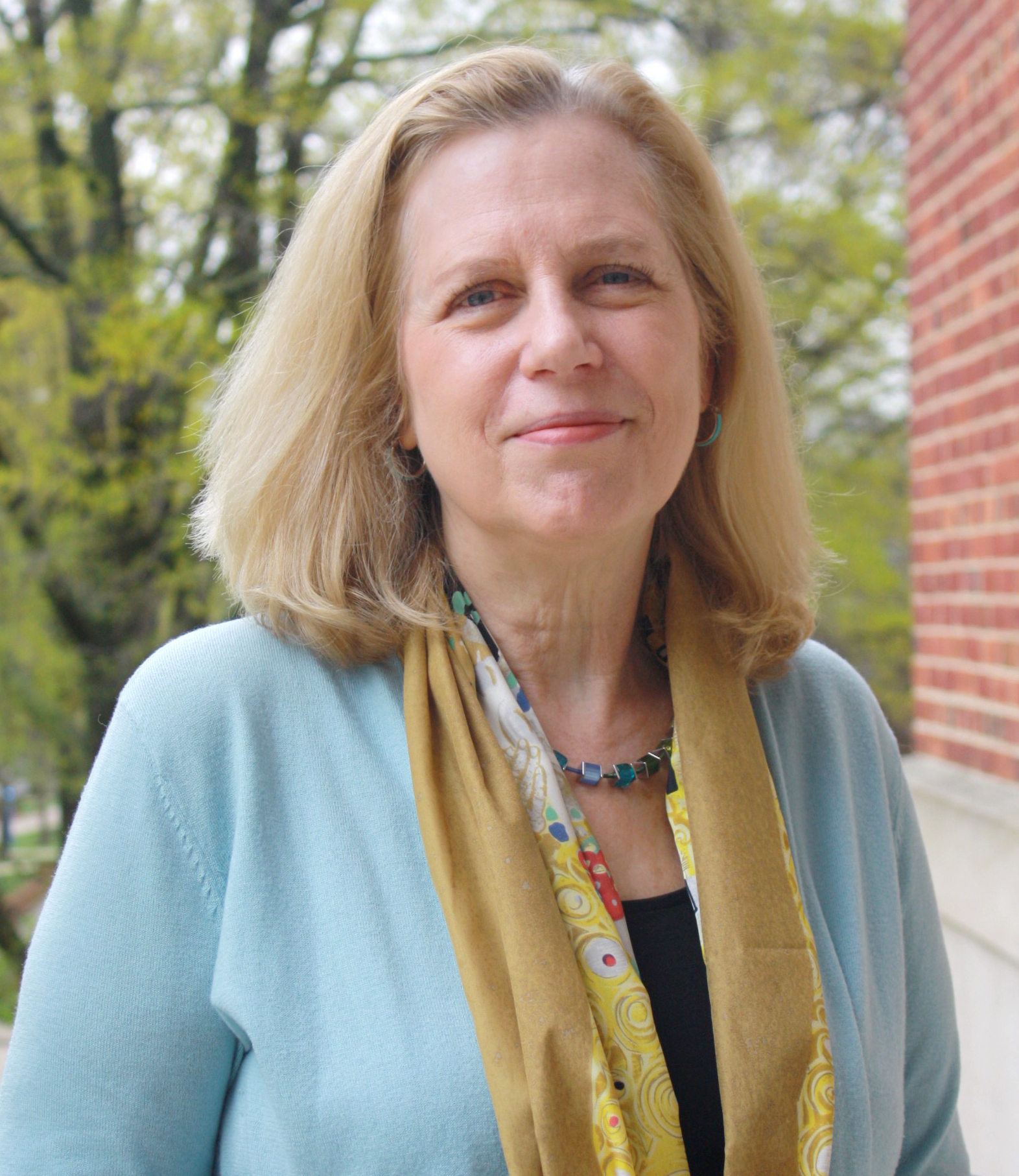
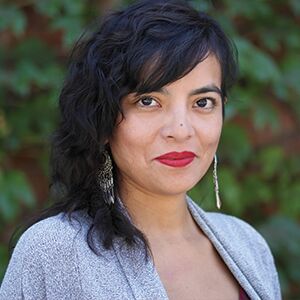
Glenda R. Carpio is the Powell M. Cabot Professor of English and Professor of African and African American Studies at Harvard University. She holds a Ph.D. in English from UC Berkeley and a B.A. from Vassar College. Her research focuses on African American literature, humor studies, and intersections of race, immigration, and cultural identity. She has published critically acclaimed works like Laughing Fit to Kill and co-edited African American Literary Studies . Her teaching spans Harvard, NYU, and Compton schools through Teach for America. Notable awards include the Harvard Abramson Teaching Award and a Fulbright Fellowship. She is affiliated with the W.E.B. Du Bois Institute and has advised initiatives like Fuerza Latina. Current projects explore immigration narratives in American literature. Her interdisciplinary work bridges literature, art, and historical memory, with contributions to Daedalus , American Literature , and Chronicle of Higher Education . She advises Harvard undergraduates and engages in public discourse on race and culture.
Julie Greene is a Professor of History and Affiliate Professor of American Studies at the University of Maryland, College Park. She directs the Center for Global Migration Studies, co-founded with Ira Berlin, which explores global migration and U.S. immigration politics. Her research focuses on labor history, transnational migration, and the intersection of capitalism with imperialism, particularly examining the Panama Canal’s construction and its impact on Caribbean workers. Greene has authored influential books like *The Canal Builders* (2009), recipient of the James A. Rawley Prize, and *Box 25: Archival Secrets, Caribbean Workers, and the Panama Canal* (2025). Her work bridges labor movements, diaspora studies, and empire, emphasizing how migration shaped U.S. global power. Recent articles analyze class formation, transimperial migration, and critiques of capitalist historiography. Greene’s research has been supported by major fellowships and awards, including from the NEH and ACLS. Research Interests: Labor migration, U.S. imperialism, transnational approaches, archival studies Key Projects: Current book project *Movable Empire* examines labor migrations’ role in U.S. global power (1890–1934). Greene has held leadership roles in academic societies, including president of the Society for Historians of the Gilded Age and Progressive Era (2013–2015) and the Labor and Working-Class History Association. She edits the *Labor: Studies in Working-Class History* journal and contributes to media outlets like *Time.com*.
Joshua B. Guild is an Associate Professor in the Department of African American Studies at Princeton University. He is also an Associated Faculty member in the Program in Urban Studies and has been involved with the Center for Digital Humanities. His scholarly work bridges historical research with public engagement and digital innovation. His education includes a PhD in History and African American Studies from Yale University and an undergraduate degree from Wesleyan University, where he was a Mellon Mays Undergraduate Fellow. Professor Guild's research centers on 20th- and 21st-century African American social and cultural history, urban history, and the modern African diaspora. His interests include migration, black internationalism, black popular music, and the black radical tradition. He is deeply engaged in the digital humanities and public scholarship, organizing seminars and contributing to podcasts and public exhibitions. The recent publications and projects reflect a strong focus on urban Black communities, transnational migration, and cultural politics. Themes include the Great Migration, postwar New York and London, New Orleans after Katrina, and the Black 1980s. His work combines historical analysis with cultural critique and social justice advocacy. Scientific Awards and Fellowships: Mellon Mays Undergraduate Fellowship Andrew W. Mellon Foundation Fellowship Ford Foundation Fellowship Woodrow Wilson National Fellowship Foundation Award Charles Warren Center Fellowship (Harvard University) W.E.B. Du Bois Institute Fellow (Harvard University) Professor Guild has advised graduate students through seminars and collaborative projects, though no individual students are named. He has led initiatives supported by institutional grants, particularly in digital humanities and public engagement. His leadership in the 'Black Studies in the Digital Age' seminar and editorial work on the 'Black 1980s' special issue demonstrates his commitment to advancing the field through interdisciplinary collaboration. He is affiliated with the Program in Urban Studies and the Center for Digital Humanities at Princeton, where he contributes to shaping curricula and research directions in African American Studies and digital scholarship.
Yvonne Fabella serves as Associate Director of Undergraduate Studies and History Undergraduate Advisor in the Department of History at the University of Pennsylvania's School of Arts & Sciences, where she guides curriculum development and student academic pathways. Her educational credentials include: B.A. in History and French from American University M.A. in History from University of Maryland at Baltimore County Ph.D. in History from State University of New York (SUNY) at Stony Brook Dr. Fabella's research centers on colonial Caribbean societies with rigorous analysis of race formation, gender dynamics, and revolutionary movements in the French Atlantic world. Her work examines how enslaved and free people of color navigated colonial hierarchies through legal challenges, cultural practices, and resistance strategies, particularly in pre-revolutionary Saint Domingue. Her publications reveal consistent thematic focus on creolization processes, whiteness construction, and citizenship debates that preceded the Haitian Revolution, demonstrating interdisciplinary methodology bridging social, cultural, and political history frameworks. As an educator, she teaches specialized courses including HIST 233 (Pirates, Rebels and Runaways: Unofficial Histories of the Colonial Caribbean; Race, Slavery and Revolution in the French Atlantic World) and HIST 248 (The Haitian Revolution), emphasizing marginalized perspectives in Caribbean historiography.
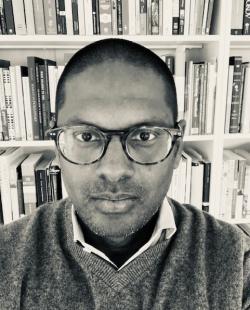
Desmond Jagmohan is an Assistant Professor of Political Science at the University of California, Berkeley, specializing in American Politics, Political Theory & Philosophy, and Race and Ethnic Politics. Born in Guyana and raised in Chicago after migrating at sixteen, he served in the U.S. military before pursuing academia. His research focuses on the politics of the oppressed, with particular attention to African American political thought under conditions of subjugation. Dr. Jagmohan's research interests span the History of American and African American Political Thought, Race and American Political Development, History of Conservatism, Property, Slavery, and Nationalism, and Caribbean Political Thought. His work examines how marginalized communities navigate oppression through strategies that often require deception and concealment, as evidenced in his forthcoming book Dark Virtues: Booker T. Washington's Tragic Realism which analyzes Washington's politics of deception under Jim Crow. His recent publications reveal a consistent focus on resistance strategies of the oppressed, with articles examining Harriet Jacobs, Marcus Garvey, Booker T. Washington, and theoretical frameworks for understanding racial oppression. His scholarship bridges historical analysis with contemporary political theory, particularly exploring how anger functions as a political emotion for oppressed communities. 2025 Social Science Distinguished Teaching Award at UC Berkeley Laurance S. Rockefeller Visiting Faculty Fellow at Princeton's University Center for Human Values (2022-23) National Fellow at the Hoover Institution at Stanford (2018) APSA Best Dissertation Award from the Race, Ethnicity, and Politics Section (2015) Before joining Berkeley, Dr. Jagmohan taught at Princeton as Assistant Professor of Politics and held the Laurance S. Rockefeller Preceptorship. He received his M.A. and Ph.D. in Government from Cornell University and his B.A. in Philosophy and History from Northeastern Illinois University. His teaching portfolio includes courses on the history of American and African American political thought, race and American political development, political culture, and a recurring seminar on resistance.
Marina Malli is a Lecturer in the Latin American and Caribbean Area Studies Program at Binghamton University. She contributes to the interdisciplinary undergraduate 4+1 degree program focusing on regional studies. Her work integrates academic and practical knowledge in Latin American and Caribbean cultures, history, and socio-political contexts. While specific research interests are not detailed in the provided text, her affiliation with the program suggests expertise in regional studies, cultural analysis, and educational program development. No awards, grants, or publications are explicitly mentioned here.
Juan Eduardo Wolf is an Associate Professor of Ethnomusicology at the University of Oregon's School of Music and Dance. He holds a PhD in Folklore and Ethnomusicology from Indiana University (2013), alongside degrees in Chemical Engineering and Art Studio from prestigious institutions. His research focuses on music-dance traditions of Afro-descendant and Indigenous communities in Latin America and the Caribbean, exploring decolonial methodologies and cultural equity. He directs the Latin American Studies Program and coordinates the World Music Series, which hosts global music performances. His awards include grants from UO's Center for Latin American and Latinx Studies (2018) and Global Oregon (2018). Wolf teaches courses like Decolonizing Music, Music in World Cultures, and directs World Music Ensembles focusing on Andean and Puerto Rican traditions. His research examines how marginalized groups use music-dance to resist colonial legacies, with fieldwork in Chile, Puerto Rico, and Bolivia. He is a core faculty member in Folklore and Public Culture Programs and advises on Latinx Studies initiatives. Notable publications include Styling Blackness in Chile (2019), analyzing Afro-Chilean music-dance, and Un Tumbe Ch’ixi (2021), integrating Afro-descendant ideas into Andean methodologies. His work challenges colonial frameworks and advocates for socially just music science practices. He performs as a percussionist/guitarist in global ensembles and mentors students through experiential learning.
University of North Carolina at Chapel HillUnited States
Louis A. Pérez, Jr. is the J. Carlyle Sitterson Professor of History at the University of North Carolina. His research focuses on 19th- and 20th-century Caribbean history, particularly Spanish-speaking Cuba, with emphasis on society, gender, and political economy. He holds offices in Hamilton Hall and teaches courses on Latin American and Caribbean history. Education: MA, University of Arizona, 1966 PhD, University of New Mexico, 1970 Research Interests: Pérez examines Cuban socio-cultural evolution through lenses of political economy, gender dynamics, and imperial discourse. His work analyzes colonial structures, national identity formation, and transnational relations. Publications: His seven major works span topics like Cuban food politics, civil-culture modernity, and revolutionary historiography. Recent publications emphasize economic structures and cultural narratives. Advising: Current advisees include Daniella McIvor and Anthony Rossodovito. He is not accepting new applicants for 2024-2025. Labs/Teams: No specific labs mentioned, but collaborates widely in Caribbean Studies networks.
Louis Nelson is Professor of Architectural History and Vice Provost for Academic Outreach at the University of Virginia, serving as Associate Dean in the School of Architecture. His scholarship focuses on the built environments of the early modern Atlantic world, with specialized expertise in the American South, Caribbean, and West Africa. His educational background includes a PhD and M.A. from the University of Delaware and a B.A. from The College of William and Mary. Nelson's research examines architecture's role in shaping human experience through material and textual evidence, particularly in contexts of slavery and empire. His work on spaces of enslavement spans West Africa and the Americas, including a major initiative documenting the University of Virginia as a landscape of slavery. He has directed decade-long fieldwork in Jamaica through the Falmouth Field School, resulting in systematic documentation of Caribbean architecture and Afro-Caribbean cultural transitions. His publications reveal consistent engagement with colonial religious architecture, material religion, and imperial power structures. The 2017 monograph Architecture and Empire in Jamaica synthesizes violence, empire, and identity in eighteenth-century British colonial contexts, while his earlier work on South Carolina Anglican churches explores regional identity through sacred spaces. Nelson's scholarly recognition includes: John Brickerhoff Jackson Prize (2017) Abbott Lowell Cummings Prize (2017) SESAH Best Book Prize (2010) SESAH Best Article Prize (2008) University-wide teaching award (2007) As an educator, he has mentored over one hundred students through Caribbean field programs and served as senior co-editor of Buildings and Landscapes . His research integrates archaeological collaboration and GIS documentation through the Falmouth Project. He leads the Falmouth Field School and Falmouth Project—a GIS-based repository for Caribbean architectural data—while continuing fieldwork across the American South and Caribbean to document landscapes of slavery and freedom.
University of California, Los AngelesUnited States
Barbara Fuchs is a Professor in the Department of English at the University of California, Los Angeles, specializing in early modern European literature across Spanish, English, French, and Italian traditions from the 15th to 17th centuries. Her work emphasizes transnational contexts, theater and performance studies, and cultural production within imperial frameworks, with significant contributions to Mediterranean and transatlantic studies. Education Ph.D. in Comparative Literature, Stanford University (1997) B.A./M.A. in Comparative Literature (English, French, Spanish), summa cum laude, Yale University (1992) Research Interests Professor Fuchs' scholarship centers on transnationalism in early modern literature, examining how theater and performance negotiated imperial identities across Mediterranean and transatlantic contexts. Her work critically engages with race and religion in the early modern world, picaresque traditions, and Cervantes studies, revealing how cultural encounters shaped literary production. She bridges historical analysis with contemporary relevance through public humanities initiatives focused on classical Hispanic theater. Publication Trends Her recent publications demonstrate interdisciplinary innovation, merging literary analysis with performance studies and material culture. Recurring themes include transnational exchange mechanisms, racial formation processes, and textual materiality, while recent work addresses pandemic-era digital performance and modern adaptations of classical works. This trajectory highlights her commitment to connecting historical scholarship with current social and artistic practices. Scientific Awards Premio Ñ from the Instituto Cervantes (inaugural award) for promotion of Spanish language and culture Advising and Leadership Professor Fuchs mentors undergraduate and graduate students in early modern studies, translation, and performance. She leads the UCLA "Diversifying the Classics" initiative and LA Escena festival, securing institutional support for these collaborative projects. Her editorial leadership includes serving as articles editor for Renaissance Quarterly and co-editing the Norton Anthology of World Literature , demonstrating field-wide influence. Projects and Teams She directs the "Diversifying the Classics" initiative, which collaborates with theater professionals to adapt Hispanic classical works for contemporary Los Angeles audiences, and founded LA Escena—the biennial festival of Hispanic classical theater. These projects unite scholars, artists, and communities to explore historical texts through modern performance lenses, emphasizing accessibility and cultural relevance.
Claudia Arteaga serves as Associate Professor of Spanish, Latin American, and Caribbean Literatures and Cultures and Chair of the Department of Spanish, Latin American and Caribbean Literatures and Cultures at Scripps College. Her academic profile centers on indigenous representation in Latin America through cinematic and literary analysis, with particular emphasis on Andean societies. Her educational background includes: Ph.D. and M.A. in Spanish from Rutgers University B.A. in Linguistics and Literature from Pontificia Universidad Católica del Perú Arteaga's research critically examines indigenous self-representation in Peru, Bolivia, and Guatemala, investigating race-gender intersections , popular environmentalism , and epistemological translation in post-colonial contexts. Her work bridges Decolonial Theory , Indigenous Film Studies , and Andean Cultural Analysis , with significant contributions to understanding how communitarian filmmaking challenges dominant narratives. She actively connects academic research with social movements through interdisciplinary approaches. Her publication trajectory reveals consistent focus on indigenous media as decolonial praxis , with recent works analyzing Mayan documentaries, Quechua poetry, and Amazonian film schools. The research demonstrates evolving methodology from textual analysis toward community-engaged film studies, particularly examining how film festivals and grassroots cinema reshape environmental and identity politics across Latin America. Notable recognitions include: Mary W. Johnson Faculty Achievement Award in Teaching (Scripps College, 2018-2019) Sabbatical Research Fellowship (Scripps College, 2018-2019) Rutgers Teacher-Scholar Fellowship (2013-2014) Adolfo Snaidas Best Graduate Student Essay Award (2009) Arteaga has secured significant research funding from CLAS and GAIA for faculty-student collaborations and academic events, including the initiative 'Sumak Kawsay & Bolivarianism Today.' Her teaching portfolio spans advanced literature courses and specialized seminars on indigenous women's struggles, reflecting her commitment to integrating research with pedagogy. She maintains active engagement with the Latin American Studies Interdisciplinary Group, fostering connections between academic work and community activism. Her current projects extend into contemporary indigenous media production, with ongoing analysis of how digital platforms transform testimonial practices and environmental advocacy among Quechua and Mayan communities.
Raquel E. Aldana is the Martin Luther King Jr. Professor of Law at UC Davis School of Law, where she rejoined as a full-time faculty member in 2020 after serving as Associate Vice Chancellor for Academic Diversity (2017–2020). She holds a J.D. from Harvard Law School and B.A. degrees in English and Spanish from Arizona State University (summa cum laude). Her academic career includes prior roles at the McGeorge School of Law and the University of Nevada, Las Vegas, as well as a Fulbright Scholarship in Guatemala (2006–2007). Her research focuses on transitional justice, criminal justice reform, sustainable development in Latin America, and immigrant rights. Aldana has authored or edited five books and over thirty law review articles, earning recognition through grants such as the UC Davis Academic Senate Interdisciplinary Grant for the project Building Bridges: Narrowing the Legal-Scientific Divide in Immigration Forensic Assessments . She teaches courses on immigration law, asylum, comparative forced displacement, and critical race theory. Aldana leads the Aoki Center for Critical Race and Nation Studies, co-directing its mission to advance interdisciplinary scholarship on race, ethnicity, and law. She co-founded the Critical Race Theory Book Series with UC Press, aiming to globalize and diversify critical race discourse. Her awards include the ABA’s Margaret Brent Women Lawyers of Achievement Award and the UC Davis Chancellor’s Achievement Award for Diversity. Her service includes roles on the American Law Institute, American Bar Foundation, and the Council on Foreign Relations. She chairs the ABA’s Latin America and Caribbean Council and co-chaired the UC Davis taskforce to achieve Hispanic Serving Institution (HSI) status, realized in 2024. Her work integrates legal education, policy reform, and grassroots advocacy to address systemic inequities in migration, criminal justice, and global development.
Gustavo Verdesio serves as an Associate Professor of Spanish within the Department of Romance Languages & Literatures at the University of Michigan. He maintains significant interdisciplinary affiliations as a faculty member of the Program in Native American Studies and as a Faculty Associate for Latina/o Studies. His academic credentials include: Ph.D. in Hispanic Studies or Latin American Studies from Northwestern University (1992) Verdesio's research critically engages with Colonial Studies, Native American Studies, and Material Culture, focusing on Indigenous materialities in Uruguayan history. His current project examines the re-emergence of Indigenous groups previously declared extinct in Uruguay and non-Indigenous responses to Indigenous bodies within settler colonial structures. He investigates objects, agricultural practices, monumentality, and the political implications of Indigenous bodily recognition. Analysis of his 2018-2021 publications reveals consistent thematic focus on settler colonialism in Latin America, Indigenous rights frameworks, and decolonial approaches to archaeology and historical knowledge, with concentrated attention on Southern Cone nations including Uruguay and Argentina. Scientific Awards: No awards, fellowships, or medals were documented in available materials No information regarding graduate student advising, dissertation supervision, or specific research grants was provided in the source documentation. His academic activities appear centered on independent research and interdisciplinary collaboration rather than directed mentorship or externally funded projects as described. The available texts contain no references to laboratories, research centers, or formal collaborative teams associated with Professor Verdesio's work.
Ernest Julius Mitchell serves as Assistant Professor of English and Humanities at Yale University, where he contributes to the Department of English within the Faculty of Arts and Sciences. His interdisciplinary work bridges literature, philosophy, and religion with methodological grounding in Black studies. Education: Ph.D., Harvard University, 2019 M.T.S., Harvard Divinity School, 2009 A.B., Princeton University, 2006 Professor Mitchell's research centers on the intersections of literature, philosophy, and religion, with particular focus on the Harlem Renaissance viewed expansively as integral to transatlantic modernism. His work spans aesthetics and phenomenology in German thinkers from Kant to Benjamin, and religious traditions from the ancient Mediterranean to the contemporary Caribbean. He is currently completing three major book projects: a biography of Jamaican writer Claude McKay for Yale University Press, a new edition of Jean Toomer's Cane for the Norton Library, and a study of theological elements in Zora Neale Hurston's work, all reflecting his interest in questions of literary style—charm, revision, and grace. His scholarly publications demonstrate consistent engagement with African American literary traditions, particularly examining figures from the Harlem Renaissance era. Mitchell's work shows strong interdisciplinary connections between literary analysis, philosophical inquiry, and religious studies, with particular attention to how these fields shape modern consciousness and identity formation within Black literary production. Current Teaching: ENGL 351: Fictions of the Harlem Vogue (HUMS 370 / AFAM 354) ENGL 127: Readings in American Literature HUMS 223: Claude McKay: Interpretations (ENGL 242) DRST 002: Directed Studies: Literature
Edmund T. Gordon is Professor of African and African Diaspora Studies and Executive Director of the Contextualization and Commemoration Initiative at The University of Texas at Austin's College of Liberal Arts. He previously served as founding chair of the department and Director of the Center for African and African American Studies. Education: Ph.D. in Social Anthropology, Stanford University M.A. in Anthropology, Stanford University M.S. in Marine Sciences, University of Miami Research Focus: His work critically examines power structures across the African diaspora, with concentrated expertise in Central Texas social formations and Caribbean spatial-resource economies. Key contributions explore how marginalized communities navigate cultural identity within contested geographies. His seminal 1998 book Disparate Diasporas analyzes identity politics in an African-Nicaraguan community, establishing foundational frameworks for diaspora studies through anthropological and historical lenses. Recent teaching includes asynchronous/synchronous courses on Texas power dynamics and place-making history. Dr. Gordon maintains active affiliations with the Warfield Center for African and African American Studies and the Institute for Urban Policy Research and Analysis, directing initiatives that contextualize historical narratives through contemporary social frameworks.