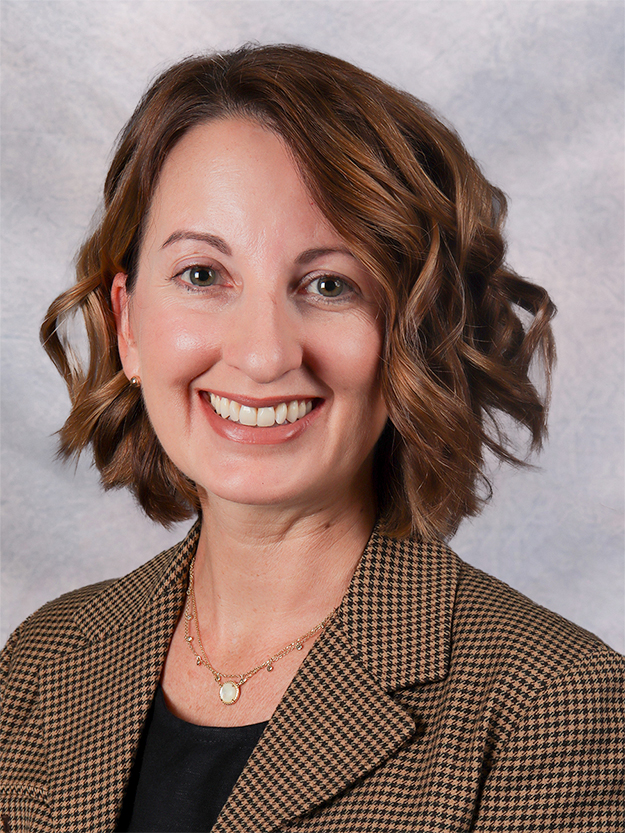
Beth King is an Associate Teaching Professor in the Department of Geography and Assistant Program Manager for Online Geospatial Education at the John A. Dutton e-Education Institute, Pennsylvania State University. She oversees the Master of Geographic Information Systems (MGIS) program, managing student progress, communication, and capstone projects. Her expertise spans GIS data management, geospatial analysis, and online education design. Education: M.Ed. Adult Education (2003) and B.S. Geography (1996), both from Penn State. Research interests focus on effective online education strategies, GIS pedagogy, and supporting adult learners in geospatial programs. She co-authored courses like GEOG 483 and GEOG 482, emphasizing problem-solving and practical GIS applications. Awards : Most Outstanding Online Teaching & Learning Program (Sloan-C, 2009) Special Achievement in GIS Award (ESRI, 2004) She actively advises MGIS students, coordinates program logistics, and mentors peers. Her service includes roles in the Penn State Faculty Senate and leadership in the Dutton Institute.
David Powell serves as Professor and Distance Learning Director in the Department of Public Policy and Administration within California State University, Long Beach's College of Health and Human Services. His dual role bridges academic leadership with innovative educational delivery systems in public administration. His educational foundation includes: Ph.D. in Political Science, Miami University M.A. in Political Science, Ohio University B.A. in Political Science, Baldwin-Wallace College Dr. Powell's research critically examines the intersection of governance and technology, specializing in distance learning infrastructure, student assessment validity in public affairs education, California Voting Rights Act implementation, and digital-era taxation policies. His work uniquely connects theoretical public administration frameworks with practical governmental challenges, particularly in municipal governance and educational accreditation. Analysis of his 14 publications (1996-2020) reveals three dominant trajectories: persistent investigation of student learning assessment methodologies for NASPAA accreditation; evolving focus on technology's impact on governance (from early internet taxation studies to contemporary m-government applications); and sustained examination of voting rights implementation in California local governments. His most recent work addresses privatization challenges in public health crises like the opioid epidemic.
David W Parent serves as Professor in the Electrical Engineering Department at San José State University's College of Engineering. He holds office ENGR 355 with contact (408) 924-3963 and email david.parent@sjsu.edu. As co-Principal Investigator and Project Coordinator for Project Engineering Success—a five-year, $5 million Department of Education grant—he leads initiatives to improve Hispanic and low-income student outcomes in engineering and computer science through partnerships with San Jose City College and Gavilan Community College. Professor Parent's research spans two critical domains: semiconductor device engineering and innovative engineering education. His technical work focuses on neuromorphic circuits, particularly ReRAM implementations, semiconductor fabrication, MOS devices, solar cells, and MEMS technologies. His education research targets student success mechanisms for underrepresented populations, including directed self-placement exams, transfer student pathways, and faculty development for inclusive teaching practices. The Microscale Process Engineering Laboratory under his direction supports hands-on semiconductor research. Analysis of his recent publications reveals a strategic shift toward addressing systemic barriers in engineering education while maintaining technical expertise. His work demonstrates growing emphasis on Hispanic student retention, community college transfer pathways, and faculty development programs—complementing his ongoing contributions to neuromorphic hardware design. This dual focus creates meaningful bridges between advanced technical research and practical educational interventions. As co-PI of Project Engineering Success, Parent manages multiple grant-funded activities including the 3-Day Summer Faculty Workshop (focused on active learning strategies for diverse classrooms), Model Transfer Curriculum Pathways development, and industry outreach programs with partners like SEMI. He provides critical leadership in creating structured support systems that help students rapidly progress through core engineering courses at SJSU and partner institutions. Professor Parent directs several key project components: Activity 3 (Faculty Development), Activity 4 (Transfer Pathways), and Activity 5 (Industry Outreach). His laboratory work in the Microscale Process Engineering Laboratory continues to advance semiconductor research while his educational innovations reach beyond campus through partnerships with community colleges and industry. He maintains active research profiles on Research Gate, ORCID, and Google Scholar while developing course materials for EE110/EE110L and providing student success guidance for electrical engineering coursework.
Heather Lewis is a Lecturer in Mechanical Engineering at Texas A&M University's College of Engineering. She focuses on engineering education pedagogy and manufacturing systems, with accolades for teaching excellence and outreach programs. Educational background includes: M.Eng. in Integrated Manufacturing Systems Engineering (NC State University, 2000) B.S. in Mechanical Engineering (Penn State University, 1996) Awards recognize her educational impact: Students' Choice Professor of the Year (ASME, 2018-2019) College of Engineering Outreach and Extension Excellence Award (2014)
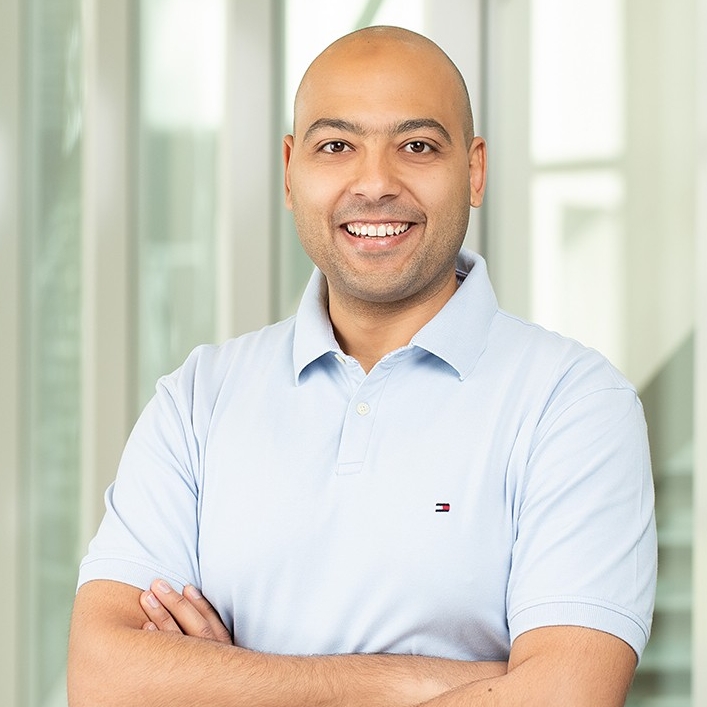
Karim Ali is an Associate Professor of Computer Science at New York University Abu Dhabi (NYUAD), where he leads research in programming languages, static analysis, security, and compilers. He is affiliated with the Department of Computer Science within the College of Arts and Science. Prior to joining NYUAD, he served as an Associate Professor at the University of Alberta. His academic training includes a BSc from The American University in Cairo, and MMath and PhD degrees from the University of Waterloo, completed in 2014. BSc: The American University in Cairo MMath: University of Waterloo PhD: University of Waterloo (2014) His research focuses on making static analysis tools more practical by enhancing their scalability, precision, and usability. He investigates program analysis techniques applicable to real-world software, with applications in security, just-in-time compilation, and mobile app development. His work spans theoretical foundations and tool development, including the SWAN framework for Swift and contributions to secure cryptographic API usage through CogniCrypt. The recent publications reflect a strong trend in developer-centric static analysis, secure coding, energy efficiency in mobile apps, and compiler optimization. His work combines empirical studies with tool-building, emphasizing usability and integration into developer workflows. Scientific Awards: Dahl-Naygaard Junior Prize (2021) ACM SIGSOFT Distinguished Paper Award ACM SIGPLAN Distinguished Paper Award Distinguished Artifact Award, ECOOP 2014 Karim Ali has mentored numerous students and collaborated extensively with researchers worldwide. His lab has contributed tools adopted by major static analysis frameworks like Soot, WALA, and DOOP. He has secured research recognition through awards and industrial impact, including helping Symantec fix a security vulnerability. He teaches core courses such as Computer Systems Organization and supervises capstone projects, guiding students in original research. His lab conducts research on programming languages and static analysis, with projects including SWAN for Swift analysis, usability studies of static analysis tools, and development of precise pointer analysis techniques. The team works on both academic research and practical tooling for developers.
John Grieco is a Research Professor in the Department of Biological Sciences and a joint faculty member at the Eck Institute for Global Health at the University of Notre Dame. He serves as Associate Director of the Eck Institute and co-director of the Belize Vector and Ecology Center (BVEC), where he leads a multidisciplinary research program focused on the ecology, behavior, and control of vectors of diseases such as malaria, dengue, Chagas, and Japanese encephalitis. University: University of Notre Dame School: College of Science Department: Department of Biological Sciences Position: Research Professor Joint Appointment: Eck Institute for Global Health Leadership Role: Associate Director, Eck Institute for Global Health; Co-Director, BVEC Dr. Grieco completed his Ph.D. at the Uniformed Services University, an M.S. at Texas A&M University, and earned his B.S. from the University of Notre Dame. His research spans vector behavior, spatial repellency, insecticide resistance, and disease risk modeling using GIS and remote sensing. He has led and collaborated on field studies in Belize, Thailand, Nepal, Peru, Mexico, and South Korea, and maintains partnerships with industry leaders such as BASF, SC Johnson, and Olfactor Laboratories. His recent publications highlight innovations in spatial repellent deployment, mosquito trap efficacy, and novel vector control strategies. The research consistently emphasizes translational outcomes for public health, particularly in low-resource settings. His work is supported by major initiatives including the Spatial Repellents Program, IMPACTS, AEGIS, and BRICC, often in collaboration with WHO, PAHO, and the Mayo Clinic. Dr. Grieco actively mentors undergraduate and Master of Science in Global Health students, supervising numerous capstone projects on vector-borne disease interventions. His lab, the Achee/Grieco Lab, is known for its field-based, interdisciplinary approach and commitment to training the next generation of global health scientists. Medical Entomology Vector Ecology and Behavior Vector Control Strategies Spatial Repellents and Irritants Infectious Disease Dynamics Disease Risk Mapping (GIS/Remote Sensing) Arbovirus and Malaria Transmission Scientific awards and honors are not explicitly mentioned in the provided texts. Dr. Grieco advises numerous students at both undergraduate and graduate levels, particularly through the Master of Science in Global Health program. His lab supports student research on topics including insecticide resistance, community perceptions of vector control, disease surveillance, and behavioral effects of repellents. He also leads the High-Throughput Screening System (HITSS) for evaluating vector behavioral responses. The Achee/Grieco Lab operates the Belize Vector and Ecology Center (BVEC), which conducts extensive field research, community outreach, and surveillance in Belize. BVEC collaborates with the Ministry of Health, University of Belize, and international partners. The lab also participates in global networks such as the Worldwide Insecticide Resistance Network (WIN) and the Remote Emerging Disease Intelligence NETwork (REDI-NET).
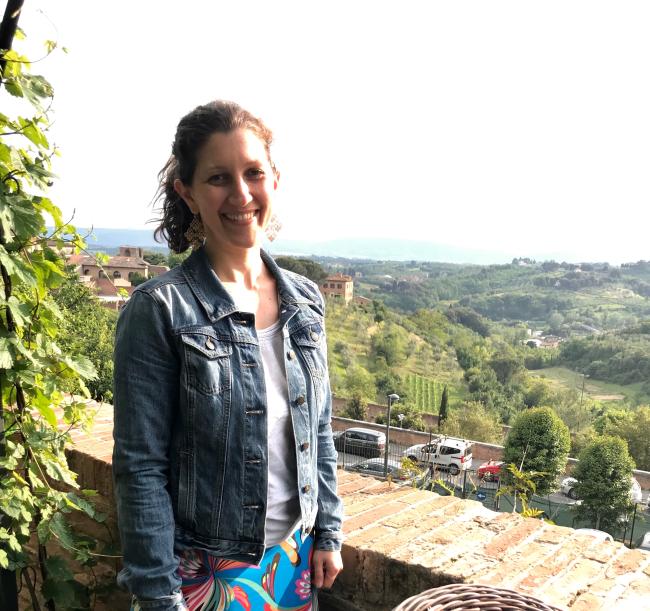
Holly McIlwee Golecki serves as a Teaching Assistant Professor in the Department of Bioengineering at the University of Illinois Urbana-Champaign . With advanced degrees in Materials Science and Engineering (BS, MS - Drexel University) and a PhD in Engineering Sciences from Harvard University, she specializes in Soft Robotics , Mechanics of Biomaterials , and Engineering Education . Education: BS, Materials Science and Engineering, Drexel University MS, Materials Science and Engineering, Drexel University PhD, Engineering Sciences, Harvard University Her research focuses on soft robotics education and medical device design , with particular emphasis on making human-centered design accessible through hands-on prototyping and interdisciplinary collaboration . She maintains active research groups that explore biomaterials in robotic systems , soft robotics education , and innovative engineering pedagogy . Recent publications highlight her work in soft robotics education with applications in pressure ulcer prevention , biofabrication , and soft underwater robotics . The ASEE and Soft Robotics journals feature her team's research on soft robotics curriculum development and medical device innovation . Scientific Awards: NSF funding as co-PI for Southern and Central Illinois Louis Stokes Alliance for Minority Participation Jump Arches Program funding for active wheelchair seat cushion development Clare Booth Luce Scholar Program mentorship Innovate & Iterate Prototyping Microgrant recipient As an advisor, Golecki mentors students in soft robotics , medical device design , and bioengineering education , with former students like Omolola Okesanjo and Cornell Horne pursuing graduate studies at Carnegie Mellon and UIUC. She co-organizes professional development workshops and maintains active collaborations with Conor Walsh's Harvard Biodesign Lab and Sandia National Labs .
James B. Higley is a Professor in the Mechanical Engineering Technology (MET) program at Purdue University Northwest's College of Technology. He has been at PNW since 1988, teaching courses like MET 46100 (Computer Integrated Design and Manufacturing) and MET 49500 (Senior Project), while managing the MET Program and conducting applied research with industry partners. Education: M.S. in Mechanical Engineering (Purdue University, 1987), B.S. in Mechanical Engineering (Purdue University, 1985). His research focuses on applied engineering technology collaborations with companies, particularly in packaging machinery and firearms fields. He holds five U.S. patents and emphasizes hands-on, project-based learning to bridge classroom theory with real-world applications. Recent publications highlight his work on evolving capstone projects for industry alignment and integrating ethics into engineering education. These articles reflect his commitment to practical pedagogy and professional responsibility. His teaching philosophy prioritizes minimizing lectures in favor of lab projects, where students build confidence through incremental challenges and group work. He leverages his industry experience to mentor students on technical and conceptual problem-solving.
Justin Harvey is a Lecturer at the University of Technology Sydney (UTS) within the Faculty of Design, Architecture and Building, specializing in Media Arts and Production. He is an active member of the Creative Practice Research Group and serves on the Faculty Board and Faculty Research Committee. Harvey holds a PhD in Media Art & Design from the University of New South Wales and a Bachelor of Arts in Communication (Media Arts & Production) with First Class Honors from UTS. Harvey's research interests focus on creative uses of generative Artificial Intelligence, experimental approaches to media art making, and creative practice led research. His artistic practice spans moving image, installation, and virtual reality experiences, with a particular fascination for human-machine interaction and the creative potentials of digital technologies. He explores glitch aesthetics, digital video feedback, and imagery generated using diffusion models, often collaborating with AI systems in unexpected ways. Harvey has exhibited his work internationally at venues including VIVID Sydney, ISEA (International Symposium on Electronic Art) in Vancouver, Hong Kong, and South Korea. His 2023 collaboration with generative AI, Unprompted Studies 1-3 , was a finalist in the Fisher's Ghost Art Award. In 2024, he was selected as a Scholar in the Sydney Powerhouse Museum's Research Scholars Program for the "Knit Forward" project, which reimagines historical garments using generative AI and seamless knitwear technology. His research on creative applications of GenAI directly informs his teaching in Experimental Media and Creative Project Development. Harvey has extensive studio-based teaching experience since 2010, covering subjects such as Situated Media Installation Studio, Drama Production, and Experimental Media. Fisher's Ghost Art Award (2023 finalist) Powerhouse Museum Scholars Program funding (2024) UTS ECR Capability Development Initiative funding (2024) FASS ECR Funding (2024) Harvey supervises PhD and Masters of Research students in creative practice research and has mentored hundreds of students through capstone projects in drama, documentary, animation, and media arts installation. His current research projects include collaborations with Dr. Doris Li on reimagining historical garments using AI, and exploring the intersection of Surrealist techniques with generative AI in works like Oneironaut , exhibited at VIVID Sydney 2025.
Ronald J. Glotzbach is an Associate Professor at Purdue University's West Lafayette campus within the School of Applied and Creative Computing . His work focuses on web programming and development , leading projects that integrate dynamic content, databases, and educational technologies . He has taught courses such as CGT 356 (Web Programming), CGT 353 (Interactive Media), and CGT 456 (Advanced Web Programming). B.S. in Computer Graphics Technology M.S. in Technology Ph.D. in Curriculum and Instruction (pursuing) His research explores leading-edge web technologies for delivering interactive content, emphasizing web-enabling software, dynamic media integration, and mobile programming . Key trends in his publications include RSS technologies in education , web-based evaluation systems , and geospatial data tools for environmental sciences. Scientific awards include: Outstanding Professor (2003, 2004) CGT Dwyer Award for Outstanding Undergraduate Teaching (2005) CGT Outstanding Un-Tenured Faculty Award (2008) Professor Glotzbach has led numerous student teams in CGT projects , served as SIGGRAPH Student Volunteer Chair (2003-2005) , and collaborated with industry partners like Boeing (F-15 Distributed Mission Trainer) and Microsoft (XML Documents Testing Team) . He also provided expert testimony in a copyright case (2006) for Wargo & French, LLP.
Dr. Christine King is an Associate Professor of Teaching in the Department of Biomedical Engineering at UC Irvine's Samueli School of Engineering. Her research focuses on innovative pedagogical approaches including active learning, VR clinical immersion, and STEM education reform. She directs the BioENGINE program integrating innovation and entrepreneurship into biomedical education. Education includes: Ph.D. in Biomedical Engineering, UC Irvine (2014) M.Sc. in Biomedical Engineering, UC Irvine (2010) M.Sc. in Mechanical Engineering, Manhattan College (2009) B.Sc. in Mechanical Engineering, Manhattan College (2008) Her research develops novel educational frameworks using active learning techniques, virtual reality simulations, and real-world clinical applications. Current projects investigate VR clinical immersion platforms for needs-finding training, AI integration in biomedical curricula, and culturally responsive engineering pedagogy. She creates hands-on learning experiences connecting engineering principles to healthcare challenges. Her publications demonstrate strong emphasis on educational innovation (65%), neurorehabilitation technology (20%), and medical device development (15%), with recent work focusing on VR/AI applications in education. Award recognition includes AIMBE Fellowship and best paper awards for educational innovation and medical technology. She leads the BioENGINE program fostering industry-academia partnerships and medical innovation. Laboratory facilities include VR clinical simulation environments and engineering education research labs supporting her pedagogical innovations and medical device prototyping.
Greg Harrington is a Professor in the Civil & Environmental Engineering Department at the University of Wisconsin–Madison, College of Engineering. His work focuses on drinking water treatment and distribution systems, including pathogen removal, disinfectant decay modeling, and energy efficiency improvements. He has contributed to regulatory frameworks and industry partnerships, notably aiding Madison Water Utility in operational enhancements. PhD, University of North Carolina at Chapel Hill (1997) MS, University of North Carolina at Chapel Hill (1987) BS, Chemical Engineering, Stanford University (1984) Research interests span waterborne pathogen removal , disinfectant decay modeling , energy use reduction , and water loss mitigation . Recent publications emphasize mathematical modeling of disinfection processes, microbial community analysis , and pedagogical innovations in environmental engineering education. 2021 AWWA Water Science Best Paper Award 2020 Harvey Spangler Award for Innovative Teaching 1999 NSF CAREER Award Multiple AWWA and university-level teaching and research recognitions Harrington has integrated professional engineers and community partners into curricula, influencing national capstone design standards. His service includes leadership roles at Madison Water Utility and the Pieper Family Foundation Endowment for Servant Leadership.
Di (Wendy) Wang serves as an Associate Professor of Instruction at the University of Texas at Austin, holding a joint appointment in the Department of Government and the International Relations and Global Studies (IRG) program within the College of Liberal Arts. Her teaching portfolio includes international political economy, globalization, and capstone research courses, complemented by leadership of a successful study abroad program in Singapore and Vietnam. Dr. Wang earned her Ph.D. from Texas A&M University, establishing her expertise in global economic-political dynamics. Her research program centers on international political economy with concentrated focus on sovereign wealth funds and foreign direct divestment politics, examining how geopolitical factors shape state investment strategies and corporate withdrawal from international markets. Recognition for her pedagogical excellence includes: Raymond Dickson Centennial Endowed Teaching Fellowship Government Department Teaching Excellence and Innovation Award Instructor Learning Community Grant Civil Discourse and Disagreement Course Development Award Provost's Teaching Fellow designation Fractalizing Pedagogy Fellowship Dr. Wang actively contributes to academic governance through university committee service and as faculty liaison to the US Department of State’s Diplomacy Lab program. Her extensive teaching record spans Globalization and Me (UGS 302), Capstone Research in IRG (IRG 378), and International Political Economy (GOV 360E) across seventeen course sections from Fall 2020 through Spring 2025, delivered in both traditional and synchronous online formats.
Dr. Jami Fisher serves as Senior Lecturer and Director of the American Sign Language (ASL) Program at the University of Pennsylvania's Department of Linguistics. Affiliated with the College of Arts & Sciences, their work focuses on documenting Philadelphia-area ASL variation, global deaf community collaborations (especially with Italian communities), and integrating sign language studies into broader linguistic curricula. Education includes an Ed.D. in Higher Education from UPenn (2014), M.S.Ed. (2002) and B.A. in Linguistics (1997). Their pedagogical innovations emphasize Academically Based Community Service (ABCS) partnerships with local organizations like the Pennsylvania School for the Deaf and Deaf-Hearing Communication Centre. Research interests bridge sociolinguistics and community engagement, analyzing the linguistic landscape's visual representation of sign languages and exploring how signed languages reflect cultural values. They co-lead the ASL/Deaf Studies minor program, integrating interdisciplinary coursework with field-based capstone projects. Program leadership includes developing UPenn's longest-running Ivy League ASL program, offering advanced courses in Deaf History, Culture, and Linguistics. Collaborative projects emphasize mutually beneficial partnerships with Deaf communities to ensure culturally responsive research and education.
Wenchao Ge is an Assistant Professor in the Department of Physics at the University of Rhode Island . Previously, he held faculty positions at Southern Illinois University (2020–2022) and was a postdoctoral researcher at institutions including Texas A&M University and the U.S. Army Research Lab. He earned his Ph.D. in Physics from Texas A&M University (2015) and a B.S. in Applied Physics from Xi’an Jiaotong University (2009). His research focuses on theoretical quantum optics and quantum information science , with emphasis on quantum sensing, quantum computing, and quantum communication. His group explores fundamental limits of quantum mechanics for information processing, including protocols for multi-parameter sensing, parametric amplification in trapped-ion systems, and quantum resource theories. He leads the Ge Quantum Theory Group , which collaborates with experimentalists to advance quantum technologies. Research interests: Quantum metrology, quantum computing, trapped-ion systems, and optomechanical systems. Notable achievements: Developed protocols for Heisenberg-limited quantum sensing and quantum-enhanced entangling gates. Published in Nature Physics , Phys. Rev. Lett. , and Phys. Rev. A . Teaching: Courses on quantum entanglement and quantum information science. He has received grants from NSF (ExpandQISE and quantum sensing programs) and the SIU Open Textbook Initiative. He was elected Secretary/Treasurer of the APS New England Section (2023) and actively participates in international conferences and quantum education initiatives. His group advises graduate and undergraduate students on projects spanning theoretical and applied quantum physics, including summer internships and capstone research.