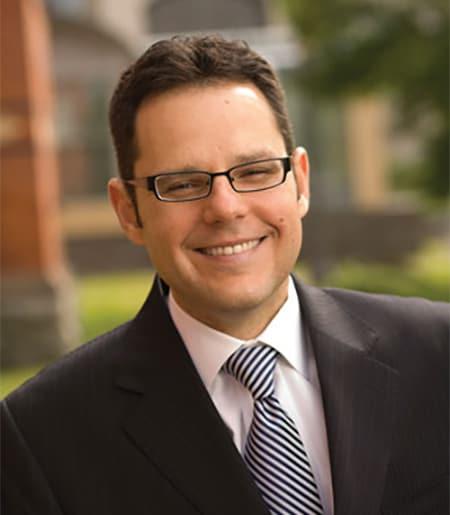
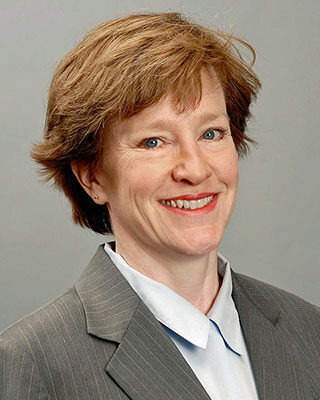
Murillo Campello is the Lewis H. Durland Professor of Management at Cornell University, affiliated with the Department of Economics in the College of Arts and Sciences. His research focuses on financial economics, corporate capital structure, monetary policy, and financial crises. Campello's work has been cited by the Federal Reserve, U.S. Supreme Court, and featured in major financial outlets like the Wall Street Journal. Education: Ph.D. in Finance, University of Illinois (2000) MS in Business Administration, Pontifical Catholic University of Rio de Janeiro (1995) BS in Economics, Federal University of Rio de Janeiro (1991) Research Interests: His studies explore market imperfections, corporate finance dynamics, and the macroeconomic implications of financial crises. Recent work emphasizes policy-relevant analyses of monetary policy transmission mechanisms and systemic risk. Editorial Roles: Co-Managing Editor, Journal of Financial Intermediation Associate Editor, Review of Financial Studies , Journal of Financial and Quantitative Analysis , and others Awards & Recognition: Named 'Distinguished Referee' twice by Review of Financial Studies Nominated for the Brattle Prize (Journal of Finance) Professional Affiliations: Research Associate at the National Bureau of Economic Research (NBER).
Andrew F. Newman serves as Professor of Economics at Boston University's Department of Economics within the College of Arts & Sciences. Previously holding positions at University College London, Columbia University, and Northwestern University, he maintains affiliations as a Research Fellow of the CEPR in London and Paris. His academic appointments include visiting positions at Harvard, Princeton, the Institute for Advanced Study, Yale, and Brown. Professor Newman's research focuses on economic theory applications to inequality, organizational structures, and economic development. Key contributions include pioneering contract theory applications to income distribution analysis and developing the concept of the inequality trap. His current projects examine affirmative action effects under contractual imperfections and social learning models of organizational evolution. Primary research areas encompass Organizational Economics , Matching Theory , Contract Theory , and Economic Development . His recent publications demonstrate sustained contributions to understanding firm boundaries, vertical integration, and market competition. Trends show increasing focus on institutional interactions with organizational structures and growing applications to educational systems and social mobility. Award highlights include: Fellow of the Econometric Society Fellow of BREAD (Bureau for Research and Economic Analysis of Development) Co-founder and Past President of ThReD (Theoretical Research in Development) Professor Newman actively mentors graduate students and secures research funding for projects analyzing inequality mechanisms and organizational dynamics. Current teaching includes Development Economics (EC 721), Industrial Organization (EC 731), and Organizational Economics (EC 436/536) for Spring 2025. His research group collaborates internationally through networks like the Inequality: Measurement, Interpretation, and Policy (MIP) initiative.
Benjamin S. Griffy is a Visiting Assistant Professor of Economics at the University at Albany, State University of New York, where he has been on faculty since August 2018, transitioning from Assistant Professor to Visiting Assistant Professor in August 2024. His research focuses on the impact of labor market frictions and other market imperfections on inequality and the aggregate economy. He teaches search theory at the graduate level and money and banking at the undergraduate level, including PhD Quantitative Macro-Labor and PhD Macro II courses. Dr. Griffy received his PhD in Economics from the University of California, Santa Barbara in June 2018, following an MA in Economics from the same institution in July 2013. He completed his undergraduate studies at the University of Oregon, earning a BS in Economics and Mathematics with Honors in June 2012. His primary research interests lie at the intersection of macroeconomics and labor economics, with a particular focus on search theory , inequality , wage dispersion , and human capital . His work frequently examines how labor market frictions affect economic outcomes across different segments of the population, especially regarding wealth and income inequality. He employs quantitative macro-labor models incorporating incomplete markets, endogenous human capital accumulation, and search externalities to analyze these complex dynamics. Dr. Griffy's publication record reveals a consistent research trajectory examining how labor market institutions interact with search frictions to affect economic outcomes. His work spans unemployment insurance effects, job polarization, wealth impacts on human capital development, and labor force participation dynamics. A unifying theme across his research is investigating how market imperfections amplify inequality and influence aggregate economic performance, with particular attention to life-cycle perspectives and policy implications. Faculty Research Award Program (FRAP), 2021 Andron Fellowship, 2012-2013 Block Grant, 2012-2013 Outstanding Teaching Assistant (PhD Macro I), Fall 2014 Graduate Student Research and Travel Grant, Spring 2015, Fall 2015, Spring 2016, Fall 2016 Dr. Griffy serves as a referee for numerous prestigious economics journals including the Review of Economic Studies, American Economic Journal: Macroeconomics, and International Economic Review. He has organized several academic conferences, including the Demographic Inequality and the Macroeconomy conference at University at Albany in April 2025, and multiple UCSB/LAEF Labor Markets and Macroeconomic Outcomes Conferences. His extensive conference presentation history includes appearances at the Society of Economic Dynamics, Federal Reserve Banks, and major university seminars across the United States and internationally.
Shaohua Lu is an Assistant Professor of Management at Santa Clara University’s Leavey School of Business. She holds a PhD in strategic management from The Ohio State University. Her research focuses on firm adaptation to technological changes, resource redeployment under uncertainties, and strategic interactions, particularly in renewable energy transitions within the U.S. electric power industry. Education: PhD in Strategic Management, The Ohio State University Research Interests: Dr. Lu examines how firms navigate technological shifts and uncertain environments. Her work emphasizes electric utilities’ transitions to renewable energy, strategic resource allocation, and prosumer roles in sustainability transitions. She integrates theories of resource management and strategic interactions to address industry-level adaptation challenges. Articles Trends: Her publications explore strategic responses to environmental and technological shifts, including IPO dynamics, competitor investments, and resource reallocation in solar/wind energy sectors. Common themes include organizational adaptation, value capture from innovations, and sustainability-driven transitions. Affiliations: Member of the Academy of Management and the Strategic Management Society. Teaching: Teaches courses in strategic analysis and management, including the business capstone.
Peter Klenow is the Landau Professor of Economic Policy in the Department of Economics at Stanford University and a Senior Fellow at the Stanford Institute for Economic Policy Research. He holds a B.S. from UC Berkeley (1986) and a Ph.D. in Economics from Stanford University (1991). His professional appointments include Professor at Stanford University (2003–present), Senior Economist at the Federal Reserve Bank of Minneapolis (2000–2003), and Associate/Assistant Professor at the University of Chicago Booth School of Business (1991–2000). His research focuses on Economic Growth , Productivity Analysis , and Development Economics , with significant contributions to understanding misallocation, trade dynamics, innovation economics, and welfare measurement. His recent work examines creative destruction, carbon tax impacts, and the relationship between population dynamics and welfare. Klenow has pioneered methodologies for measuring quality-adjusted growth and analyzing the microeconomic foundations of macroeconomic phenomena. Klenow's scientific contributions are reflected in his publications in top journals including American Economic Review , Econometrica , Journal of Political Economy , and Quarterly Journal of Economics . His work shows a consistent trend toward integrating micro-level firm and consumer data with macroeconomic frameworks, particularly in analyzing how resource misallocation affects aggregate productivity and growth. Member of the American Academy of Arts and Sciences (2015–present) Fellow of the Econometric Society (2014–present) Sir Richard Stone Lecture at University of Cambridge (2019) Kuznets Lecture at Yale University (2017) Multiple teaching awards at Stanford University American Economic Review Excellence in Refereeing Awards (2011, 2013) Klenow has served as Co-Director of the NBER Economic Fluctuations and Growth Program (2013–present) and held editorial positions at Econometrica , Quarterly Journal of Economics , and American Economic Review . His policy engagement includes advisory roles at the U.S. Census Bureau and Federal Reserve Banks. Current research projects examine e-commerce impacts, global warming effects on growth, and welfare measurement beyond GDP.
Hoang Pham is an Assistant Professor affiliated with the School of Public Policy and the Department of Applied Economics at Oregon State University. His research focuses on international trade, labor economics, and productivity growth, with particular emphasis on how trade policies and globalization affect labor markets, intergenerational mobility, and economic development. His work combines theoretical frameworks with empirical analysis, often using firm-level and regional data. Key research themes include the impact of export market access on labor market dynamics, the role of trade reforms in addressing labor market imperfections, and the multiplier effects of industrial jobs in local economies. His recent studies highlight Vietnam’s experience with trade liberalization, revealing pathways through which exports can enhance social mobility and productivity. No scientific awards or grants are explicitly mentioned in the provided materials. He has not listed advisees or lab affiliations, though his articles suggest active engagement in collaborative academic research.
Massachusetts Institute of TechnologyUnited States
Deborah J. Lucas is the Sloan Distinguished Professor of Finance at the MIT Sloan School of Management and Director of the MIT Golub Center for Finance and Policy . Her research focuses on the intersection of finance and public policy, particularly measuring the costs and risks of government financial activities. She evaluates government subsidies to state-owned enterprises, credit guarantees, energy sector policies, pension systems, and financial products like reverse mortgages. Current roles include visiting scholar at the IMF, Research Associate at the NBER, and editorial board member of Annual Review of Financial Economics . She also serves as an independent director of the Chicago Mercantile Exchange, P/E Investments, and NatureServe. Elected positions include membership in the National Academy of Public Administration and the National Academy of Social Insurance, alongside Fellowships at the Asian Bureau of Financial and Economic Research and the Econometric Society. Her previous roles include Chief Economist at the Congressional Budget Office, senior staff economist at the White House Council of Economic Advisers, and Professor at Northwestern University's Kellogg School of Management. She holds BA, MA, and PhD in economics from the University of Chicago. Key research areas include fiscal impacts of government interventions, macroeconomic effects of credit policies, and regulatory frameworks for systemic risk. Recent publications analyze central bank transparency, costs of government bailouts, and the social discount rate in policy evaluation. Awards: Fellow of the Econometric Society, Member of National Academy of Public Administration Grants/Advising: Extensive testimony before Congress on Fannie Mae/Freddie Mac, student loans, and financial institution regulation Labs/Teams: Leads MIT Golub Center initiatives on global financial institutions and fiscal policy research
Joseph J. Gerakos is the Bakala Professor of Business Administration at the Tuck School of Business, Dartmouth College . His research focuses on financial reporting, asset pricing, industrial organization , and financial services markets , with current work examining competition in the audit market and performance of the asset management industry . He teaches Managerial Accounting . PhD, University of Pennsylvania, 2007 MBA, The Wharton School, University of Pennsylvania, 2001 AB, Dartmouth College, 1991 His research explores financial markets through empirical analysis of audit industry competition , hedge fund performance , and corporate governance . Key themes include earnings management , investor behavior , and risk assessment . Publications span topics like market reactions to corporate disclosures , factor exposure analysis , and regulatory economics . Recent publications (2015–2021) highlight expertise in financial accounting , asset valuation , and market structure . His work often intersects machine learning applications in finance, corporate jets as signaling mechanisms, and audit market dynamics . Email: Joseph.J.Gerakos@tuck.dartmouth.edu
California State University, East BayUnited States
Sinan Goktan is a Professor in the Department of Accounting & Finance at California State University East Bay. His research focuses on venture capital dynamics, corporate governance mechanisms, ESG reporting practices, and information asymmetry in financial markets. He holds a terminal degree and his work bridges capital market behaviors with strategic organizational decisions. Research interests include venture capital imprinting on CSR practices, geographic influences on startup financing, IPO strategies of private equity-backed firms, and post-earnings market anomalies. His recent work examines how institutional characteristics across countries shape ESG compliance, and the role of digital footprints in market efficiency. Key publication themes include venture capital's impact on lobbying, corporate governance effects on firm survival, and the implications of accredited crowdfunding markets. His research demonstrates interdisciplinary approaches to understanding financial systems and organizational resilience. While no formal awards are listed here, his extensive publication record reflects sustained academic engagement in high-impact areas. Professional advising and grant details are available in his CV linked via profile. No specific laboratory affiliations are mentioned in the provided information.
Karen Lewis is the Joseph and Ida Sondheimer Professor in International Economics and Finance at the University of Pennsylvania’s Wharton School, where she has served since 1994, including roles as Co-Director of the Weiss Center for International Financial Research (2005–2011). She holds a secondary appointment as Professor of Economics in the School of Arts and Sciences. PhD, University of Chicago (1985) BA, University of Oklahoma (1979) Her research focuses on international asset pricing, macro finance, and risk management, with a particular interest in globalization of financial markets and firm financing. Recent work examines disaster risk, monetary policy spillovers, and exchange rate wedges. She has published extensively in top journals such as the Journal of International Economics , Review of Financial Studies , and Journal of International Money and Finance . Notable affiliations include the National Bureau of Economic Research (Research Associate since 1991), the Globalization and Monetary Policy Institute (Senior Fellow since 2010), and the Research Advisory Council of SAFE in Europe. She has served as a consultant to central banks and international organizations, including the International Monetary Fund and Federal Reserve Banks. Senior Fellow, Globalization and Monetary Policy Institute Research Associate, National Bureau of Economic Research Olin Fellow, National Bureau of Economic Research Research Advisory Council member, SAFE (Sustainable Architecture for Finance)
Johanna L. Francis is Associate Professor of Economics at Fordham University, serving as Department Chair and Director of Graduate Studies. Her research examines macroeconomic dynamics with emphasis on credit markets, banking stability, and labor networks. Education: Background in macroeconomic theory with doctoral training emphasizing financial-market interactions. Research investigates credit flow dynamics during financial crises, the impact of banking interventions like TARP, and network-based approaches to labor referral systems. Current projects model interactions between lending frictions, nominal rigidities, and productivity. Publications analyze gross credit flows during the 2008 crisis, reserve accumulation patterns, and wealth inequality determinants. Methodological approaches combine empirical analysis with dynamic stochastic general equilibrium modeling. Teaching: Develops curriculum for graduate/undergraduate courses including Macroeconomic Theory, Monetary Economics, and Mathematics for Economists. Previously taught at University of California, Santa Cruz. No information available regarding awards, student advising, or research grants.
Andrea Buffa is an Assistant Professor of Finance at the Leeds School of Business, University of Colorado Boulder. Prior to joining CU Boulder, he served as an Assistant Professor of Finance at Boston University. Buffa holds a Ph.D. in Finance from the London Business School and an M.Sc. in Finance and Economics from the London School of Economics. His research focuses on several key areas within finance: Asset pricing with frictions Financial institutions and institutional asset management Contract theory applications in finance Information economics and its implications for markets ESG funds and sustainable investing Volatility disagreement and asset pricing Buffa's research on asset management contracts and their impact on asset prices has garnered significant attention from major financial publications including The Economist, Financial Times, and Bloomberg Businessweek. His work spans theoretical models and empirical analyses examining how financial institutions operate within market structures and how contractual arrangements affect market outcomes. His recent publications demonstrate a strong focus on understanding the mechanics of fund management, ESG investing, and the implications of investor disagreement on market prices. Buffa has developed innovative measures for fund activeness and explored how different types of ESG funds operate in the marketplace. Buffa has received numerous prestigious awards for his research: 2013 Best Young Researcher Award by the Multinational Finance Society 2015 SFS Cavalcade Award for the Best Paper in Asset Pricing KRX Best Paper Award at the Asia-Pacific Association of Derivatives Conference (2024) Best Paper Award in Investments at the FMA Annual Meeting (2024) Best Paper Award at the Spring Finance Workshop (2025) Best Paper Award at the Colorado Finance Summit (2019) As a faculty member, Buffa contributes to the academic community through his membership in the Finance Theory Group (FTG), Macro Finance Society (MFS), and the Four Corners Center for Research on Index Investments. He is also the co-founder of the Italian Financial Economists Association (IFEA) and co-organizer of the Colorado Finance Summit.
Roles & Affiliations: Professor of Economics at Boston University and Director of The Institute for Economic Development. Holds Fellowships at BREAD, NBER, and CEPR. Serves on the Executive Committee of the Econometric Society and leads the India program for the International Growth Centre. Holds a PhD from the London School of Economics. Education: PhD in Economics, London School of Economics. Research Interests: Focuses on development economics, political economy, inequality, and organization theory. Current projects explore local governance, political clientelism, financial development, and entrepreneurship in Asia. Theoretical work addresses corruption, automation, and globalization impacts. Empirical studies include analysis of welfare programs, agricultural credit systems, and land reforms in India and Nepal. Recent Articles Trends: Recent work emphasizes misallocation in economies, entrepreneurial networks' welfare implications, and the dynamics of political clientelism. Studies compare development strategies in China and India, analyze microfinance interventions, and evaluate policy targeting mechanisms. Awards & Honors: Fellow of BREAD, NBER, CEPR Executive Committee Member, Econometric Society Lead Academic, International Growth Centre India Program Advising & Grants: Advises on projects related to agricultural credit, land reforms, and political economy. Collaborates with institutions like the World Bank and the International Growth Centre. Research grants focus on empirical development projects in Asia and theoretical models of economic institutions. Labs/Teams: Directs The Institute for Economic Development, fostering collaborative research on global development challenges. Engages in interdisciplinary teams analyzing policy impacts and institutional frameworks in developing economies.
Dr. M. Mark Walker is an Associate Professor of Finance at the University of Mississippi , specifically affiliated with the School of Business Administration and the Department of Finance . His academic and professional work spans corporate finance, business valuation, and financial markets. Education: B.S. in Civil Engineering, North Carolina State University (1978) M.B.A. in Business Administration, Pennsylvania State University (1981) Ph.D. in Finance, Michigan State University (1988) Dr. Walker's research focuses on corporate finance , business valuation , and economic damages estimation . His publications address topics such as mergers, corporate fraud impacts, and valuation models. His recent works emphasize strategic negotiations, financial constraints, and market-based valuation techniques. Scientific Awards: Chartered Financial Analyst (CFA) Certified Business Appraiser (CBA; inactive status December 2022) Dr. Walker serves as a financial consultant specializing in small business valuation and economic damages estimation . He is a member of several professional organizations, including the CFA Institute , National Association of Certified Valuators and Analysts (NACVA) , and the National Association of Forensic Economics (NAFE) .
Pricila Maziero is a Clinical Associate Professor in the Department of Economics at New York University's Stern School of Business. She specializes in political economy, public finance, and corporate finance with a focus on taxation, CEO compensation, and insurance economics. Her research explores topics such as sovereign debt dynamics, dynamic contract design, and the interplay between political institutions and economic policies. Her work addresses questions like how CEO incentives affect corporate capital structure, optimal tax policies for redistributing residual income inequality, and the role of non-exclusive contracts in insurance markets. She has published extensively on political-business cycles, sovereign lending arrangements, and the implications of imperfect information in political systems. Maziero's research also examines income distribution challenges, default incentives in debt markets, and labor market frictions. Her studies on credit card lending dynamics and executive turnover patterns reflect her interdisciplinary approach to understanding economic and institutional mechanisms.