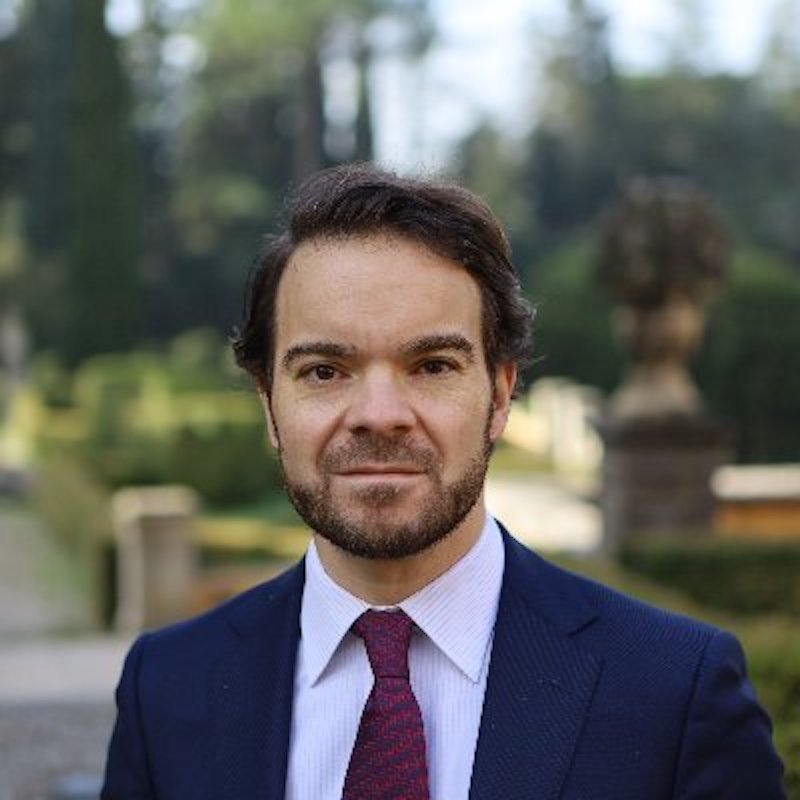
Nicolas Petit is a Full-time Professor and Head of the Department of Law at the European University Institute (EUI). His expertise lies in EU and US competition law, law and economics, and the intersection of law and technological change. He co-founded the Dynamic Competition Initiative (DCI) with UC Berkeley in 2022. Petit holds a PhD from the University of Liège, Belgium, where he was previously a Full Professor. He has held visiting roles at Harvard Law School, Stanford University, and the College of Europe. His research focuses on dynamic competition, digital markets, and the 'more economic approach' to antitrust. Key projects include analyzing platform regulation, AI governance, and the EU Digital Markets Act (DMA). Petit has advised the European Commission’s High-Level Expert Group on Artificial Intelligence and contributed to policy submissions for India, Brazil, and the EU. Publications span top journals like the Antitrust Law Journal and European Law Review , with an SSRN ranking of 23 among top legal scholars. He regularly engages in public discourse through platforms like Bluesky, addressing topics such as antitrust limits, AI regulation, and digital market dynamics. Current roles include Project Director at the EUI and leadership in initiatives like the Competition Law and Policy Workshop. His work integrates doctrinal, economic, and empirical methods to address modern regulatory challenges.
Yves Wautelet serves as an Associate Professor at the Faculty of Economics and Business at KU Leuven, where he conducts research in conceptual modeling, business process management, and digital transformation. His work addresses critical challenges at the intersection of information systems engineering and business strategy, with particular focus on sustainability-driven modeling approaches and IT governance frameworks. His primary research interests include: Conceptual modeling methodologies and frameworks Business process management and information systems design Digital transformation strategies and implementation IT governance and business-IT alignment Sustainability-driven modeling for circular economy Agile software development practices and methods Requirements engineering with user stories Wautelet's recent publication record demonstrates significant scholarly productivity with numerous 2024-2025 publications spanning conceptual modeling frameworks for sustainability (Circulise), tools for identifying ambiguity in user stories (AmbiTRUS), and approaches to align strategic and operational agility. His work bridges theoretical foundations with practical applications across diverse domains including healthcare, circular economy, software development, and organizational transformation. His research consistently applies model-driven approaches to solve complex real-world problems, often integrating sustainability considerations into information systems engineering. As a promotor and co-promotor, Wautelet currently supervises multiple doctoral research projects including: Automatic generation of conceptual models from textual descriptions (2024-2028) Sustainability-Driven Modeling Assistant for Twin Transition in Vietnam (2024-2028) Home Care Business Process Management using Distributed Ledger Technologies (2024-2028) Teaching Modeling Skills in BPMN formalism (2021-2025) His research is conducted through the Information Systems Engineering Research Group (LIRIS) at KU Leuven's Brussels campus, where he contributes to advancing model-driven approaches for addressing contemporary business and technological challenges.
Tiffany M Jamann is an Associate Professor in Crop Sciences at the University of Illinois, where she holds the Monsanto Fellowship in Plant Breeding. Her research program focuses on understanding and improving disease resistance mechanisms in maize through integrated genetic, genomic, and phenotypic approaches. Dr. Jamann's work spans multiple disease systems with particular emphasis on foliar diseases such as Northern Leaf Blight and ear diseases like Gibberella ear rot. Her research interests include: Quantitative trait locus (QTL) mapping for disease resistance in maize Development of near-isogenic line populations for gene discovery Comparative studies of resistance mechanisms across different pathosystems Investigation of pattern-triggered immunity in maize Standardization of pathogen inoculation and disease rating methodologies Analysis of Dr. Jamann's recent publications (2023-2025) reveals a strategic integration of traditional plant breeding with cutting-edge genomic approaches. Her work demonstrates increasing use of comparative genomics and transcriptomics to identify host-specificity genes in pathogens while maintaining strong focus on practical breeding applications. A notable trend is her development of standardized methodologies for pathogen inoculation across multiple disease systems, enabling more reliable resistance evaluation. Monsanto Fellow in Plant Breeding Multiple publications featured in news outlets and academic discussions Active research with significant social media engagement (46 X users mentioning her work) Dr. Jamann's research program likely involves extensive collaboration with other plant pathologists and breeders, as evidenced by her numerous co-authored publications. Her work on multi-environment trials suggests substantial field research across different geographical locations. The development of specialized maize germplasm, including near-isogenic lines, indicates long-term investment in genetic resources for disease resistance research. Her laboratory maintains sophisticated capabilities for pathogen characterization, high-throughput phenotyping using fluorescence microscopy, and genetic mapping approaches. The emphasis on both fundamental plant-pathogen interactions and applied crop improvement demonstrates a research program that bridges basic science with practical agricultural outcomes.
Markus Grillitsch is Professor in the Department of Human Geography at Lund University and Director of CIRCLE (Centre for Innovation, Research and Competence in the Learning Economy). His work spans EU member states, transition economies, and developing countries with focus on spatial transformation processes. His research interests include: Economic Geography and Innovation Studies Regional Development and Knowledge Institutions Place-Based Leadership and Institutional Entrepreneurship Network Analysis and Policy Implementation Recent publications demonstrate strong focus on energy justice transitions, innovation policy limitations, and multi-scale inequality analysis. His work connects theoretical frameworks with empirical studies of regional diversification and agency-structure dynamics. Key recurring themes include sustainable development pathways, capabilities approaches, and institutional transformation processes across diverse geographical contexts. Current research projects include: Multi-level learning journeys for green and just regional transformations (Vinnova-funded) Economic resilience through Swedish hidden champions study Circular value chains and policy dynamics research Klimatneutrala städer 2030 urban climate initiative Grillitsch's work actively contributes to UN Sustainable Development Goals through research on economic growth, reduced inequalities, sustainable cities, and climate action. His fingerprint analysis shows strongest connections to Innovation (100%), Knowledge (93%), and Regional Development (66%) research domains.
Paul Pollack serves as Professor and Director of Graduate Studies in the Mathematics Department at the University of Georgia, holding this administrative role since August 1, 2025. His academic career spans fundamental contributions to number theory and dedicated undergraduate instruction, recognized through prestigious university-wide teaching awards. His research centers on elementary and analytic number theory with strong emphasis on combinatorial approaches and statistical properties of algebraic structures. Key investigations include the arithmetic of polynomials over finite fields, value distribution of arithmetic functions, and probabilistic behavior of algebraic objects. This work bridges theoretical number theory with practical applications in arithmetic geometry, maintaining focus on accessible yet profound mathematical questions. Dr. Pollack has mentored eight graduate students to degree completion across Ph.D. and M.A. programs while maintaining active roles in professional societies including the MAA, AMS (lifetime membership), AMR, AWM, and HxA. His educational impact extends to the Ross Mathematics Program where he has taught since 2018 across international iterations including Ross/Asia, online sessions, and Indiana branch programs. His teaching excellence is formally recognized through: Russell Award for Excellence in Undergraduate Teaching (2022) Sandy Beaver Excellence in Teaching Award (2018) These honors specifically acknowledge his integration of world-class research capabilities into transformative classroom experiences.
Xian Wu, Ph.D., serves as a Research Assistant Professor in the Department of Pharmacology & Toxicology at East Carolina University's Brody School of Medicine. Her research leverages human stem cell models to investigate developmental vulnerabilities to environmental contaminants in cardiovascular and neural systems, with emphasis on epigenetic mechanisms and disease modeling. Dr. Wu's academic credentials include: Ph.D. in Toxicology from the University of Georgia M.S. in Biomedicine from East China Normal University B.S. in Biotechnology from Anhui University Her postdoctoral training comprised a Fellowship at the National Institute of Environmental Health Sciences and an ORISE Fellowship at the U.S. Food and Drug Administration. Research focuses on creating human stem cell-derived organoid systems to model developmental toxicology, particularly examining cardiac and neural development under chemical exposure. The laboratory employs fluorescence reporter systems and RNA-seq to identify critical vulnerability windows during early development, with recent work targeting Parkinson's disease mechanisms through dopaminergic neuron models and cardiac fibrosis via advanced organoids. Methodological innovations include high-content imaging for neurogenesis quantification and epigenetic pathway analysis. Publication trends (2016-2025) demonstrate consistent advancement in stem cell-based toxicology testing, with increasing emphasis on micro/nanoplastics risk assessment, arsenic neurotoxicity mechanisms, and doxorubicin cardiotoxicity modeling. The work bridges environmental health, epigenetics, and regenerative medicine through interdisciplinary approaches. Scientific recognition includes: 2025 SPARC Award (ECU) 2024 Top Abstract Award (Developmental Origins of Health and Disease Society) 2024 NIEHS P30 Center Travel Award 2023 ECU Research and Creative Activity Award Dr. Wu actively mentors graduate researchers including Ph.D. candidate Cate Duncan and M.S. students Kamilah Muhammad and Bailey Skeen, alongside undergraduate Bryce Tilghman. Former trainees McKyrah Brown and Monica Cross completed honors theses in the laboratory. Current grants include ECU's SPARC Award funding stem cell model development for environmental contaminant testing. The BSOM 6S-11 laboratory maintains specialized capabilities in cardiac and cerebral organoid generation, fluorescence-based toxicity screening, and RNA-seq epigenetic analysis. Collaborative networks include the National Institute of Environmental Health Sciences and ECU's Center for Human Health and the Environment, supporting translational research on developmental vulnerability periods.
Joé T. Martineau is an Associate Professor in the Department of Management at HEC Montréal, holding the Chair in Organizational Ethics and AI Governance. He also co-leads IVADO's R3 AI research program and is a regular member of OBVIA. His expertise spans organizational ethics, neuroethics, healthcare administration, and AI governance. He earned a joint PhD and M.Sc. in Management from HEC Montréal. His research focuses on the ethics and governance of AI, outcomes of ethics programs, and developing ethical competence in organizations. Recent work includes studies on AI in healthcare, crisis management in sports, and patient engagement in cancer care. Dr. Martineau has been recognized with the 2024 Best Practical Solutions Award (with Audrey-Anne Cyr), the 2022 HEC Montréal Pedagogical Innovation Award, and the 2020 Excellence in Teaching Award. He teaches courses on organizational ethics and responsible research conduct. He has supervised 13 graduate students and contributed to over 30 peer-reviewed articles, books, and case studies. His work bridges ethical theory with practical applications in management and AI development.
Karen Livescu is a Professor at the Toyota Technological Institute at Chicago (TTIC), a philanthropically endowed graduate institute for computer science located on the University of Chicago campus. She also serves as a courtesy faculty member in the Department of Computer Science at the University of Chicago and is an Affiliated Scholar at the Data Science Institute there. Her research focuses on advancing speech and language processing through innovative machine learning approaches. Education: PhD in Electrical Engineering and Computer Science from MIT (2005) S.M. from MIT Department of Electrical Engineering and Computer Science (1999) A.B. in Physics from Princeton University (1996) Karen's research spans multiple dimensions of speech and language processing with particular emphasis on speech recognition, spoken language understanding, and multimodal processing. She has made significant contributions to articulatory feature-based speech recognition, self-supervised learning for speech representation, and sign language processing. Her work consistently bridges machine learning techniques with linguistic and speech science knowledge, focusing on creating more robust, interpretable, and inclusive speech processing systems that can handle diverse languages and modalities. Her recent publication trajectory reveals a strong focus on self-supervised learning for speech representation, multilingual speech processing, and sign language understanding. She has been instrumental in developing benchmark frameworks like SUPERB and ML-SUPERB that have become standard evaluation tools in the speech community. Her work increasingly addresses critical challenges in low-resource language scenarios, language disparities in speech technology, and ethical considerations in real-world deployment. Scientific Awards: Best Paper award at EMNLP 2024 for 'Towards robust speech representation learning for thousands of languages' Best Student Paper Award at ASRU 2023 Best Short Paper Award at CRAC 2021 Top system at WMT-SLT 2023 Karen has successfully advised numerous PhD students and postdoctoral researchers who have gone on to faculty positions at institutions like University of Waterloo, University of Edinburgh, and Stellenbosch University, as well as industry roles at major technology companies including Google, Meta, and NVIDIA. Her research group has secured significant funding for projects including the development of the SLUE benchmark for spoken language understanding and the SUPERB framework for evaluating self-supervised speech models. She has been actively involved in organizing workshops and symposia that bring together researchers in speech and language processing. Karen leads the Speech and Language at TTIC (SL@TTIC) research group, which maintains a strong collaborative relationship with researchers at the University of Chicago and other institutions. The group has been particularly active in advancing sign language processing through projects like ChicagoFSWild and OpenASL, while also making significant contributions to spoken language understanding and multilingual speech recognition. Her team regularly participates in community challenges and benchmarks, helping to push the field forward through open science and collaborative evaluation frameworks.
Ethan Mollick is the Ralph J. Roberts Distinguished Faculty Scholar, Rowan Fellow, and Associate Professor of Management at the Wharton School of the University of Pennsylvania. He serves as Co-Director of the Generative AI Labs at Wharton, where he researches AI's impact on work, entrepreneurship, and education. His academic background includes a PhD and MBA from MIT's Sloan School of Management and a bachelor's degree from Harvard University. Mollick's research spans artificial intelligence applications in business and education, entrepreneurship dynamics, and innovation management. He explores how generative AI transforms classroom education through simulations like PitchQuest, and investigates startup funding disparities with a focus on gender representation. His work on the 'jagged technological frontier' demonstrates how humans integrate AI capabilities through Centaur and Cyborg approaches. His publications reveal consistent focus on practical AI implementation, with recent work examining prompt engineering for diverse idea generation, AI-assisted teaching strategies, and gender representation tipping points in venture capital. The research shows increasing emphasis on educational applications since 2022, coinciding with the ChatGPT breakthrough. MBA Professor of the Year Award, Poets & Quants (2024) Named to TIME Magazine's Most Influential People in Artificial Intelligence ASQ Award for Scholarly Contribution (2024) Greif Research Impact Award (2020) McGraw-Hill/Academy of Management Innovation in Entrepreneurship Pedagogy Award (2016) As Co-Director of Wharton's Generative AI Labs, Mollick leads prototype development and research on human-AI collaboration. His teaching includes Technology Strategy, Entrepreneurship, and Innovation courses where he implements AI simulations. He has advised numerous organizations and co-founded a startup prior to academia, bringing practical experience to his research on solo versus team ventures. Mollick directs Wharton Interactive's game development initiatives, creating educational simulations including PitchQuest (AI-powered VC simulator), The Saturn Parable (crisis management), and The Entrepreneurship Game. His lab work focuses on creating scalable AI educational tools that provide personalized learning experiences through simulated practice environments.
Laura Ascenzi-Moreno serves as Professor of Bilingual Education and Bilingual Program Coordinator in the Childhood, Bilingual and Special Education Department at Brooklyn College, City University of New York (CUNY), School of Education. Her academic leadership focuses on developing educators capable of serving linguistically diverse student populations through equity-centered pedagogical frameworks. Her educational foundation includes a B.A. in Anthropology and Education from Swarthmore College (1994), an M.A. in Individualized Studies in Education from Harvard Graduate School of Education (1999), New York State Permanent Certification for PreK-6 (2002), a Bilingual ESL and Teacher Leadership Program from Bank Street College (2004), and a Ph.D. in Urban Education from CUNY Graduate Center (2012). Dr. Ascenzi-Moreno's research pioneers translanguaging applications across literacy instruction, assessment, and computational learning environments. She investigates how emergent bilinguals' linguistic repertoires can transform reading development, teacher knowledge construction, and multimodal assessment practices. Her work consistently centers equity through frameworks like syncretic reasoning and accompáñamiento, challenging deficit ideologies while promoting asset-based approaches to multilingual education. Analysis of her 2020-2024 publications reveals an accelerating interdisciplinary trajectory where translanguaging principles increasingly intersect with computer science education. This evolution demonstrates strategic expansion from foundational literacy research into computational literacies, with growing emphasis on co-design methodologies and teacher agency in developing multilingual CS curricula. Her scientific recognition includes the 2024 NCTE Outstanding Elementary Educator Award, Language Arts Distinguished Article Award, and major NSF grants totaling $1.3 million for computational literacy projects. Additional honors encompass Fulbright Scholarship work in Colombia, PSC-CUNY research awards, and Westinghouse Science Talent Search distinction. As Principal Investigator of NSF-funded PiLa-CS and former CUNY-NYSIEB Associate Investigator, she secures substantial grant support while mentoring teacher candidates. Her service includes NCTE Elementary Steering Committee leadership (2022-2026), journal reviewing, and Brooklyn's New York Teacher Table participation addressing educator recruitment/retention. Dr. Ascenzi-Moreno co-directs the Participating in Literacies in Computer Science project and maintains active collaboration with NYC schools through translanguaging professional development initiatives. Her work with the CUNY-NYSIEB project established foundational frameworks now implemented across New York bilingual programs.
Dr. Anas Iftikhar is an International Lecturer (Assistant Professor) in Logistics and Supply Chain Management at Lancaster University's Management School, United Kingdom. He is affiliated with the Centre for Productivity and Efficiency and contributes to the Supply Chain Management department with research focusing on contemporary supply chain challenges. Dr. Iftikhar completed his Ph.D. in Economics, Management, and Quantitative Methods from the University of Salento, Italy in May 2021. During his doctoral studies, he held visiting researcher positions at Ghent University (Belgium) and Cardiff Business School at Cardiff University (UK), gaining valuable international research experience. Prior to his academic career, he accumulated industry experience in inventory planning and operations management. Dr. Iftikhar's research primarily investigates how supply chain capabilities enhance resilience in disruptive and complex environments. His work explores the intersection of supply chain complexity, digital technologies, and resilience strategies. He employs methodological approaches including systematic literature reviews, meta-analysis, and structural equation modeling. His research has significant implications for organizations navigating geopolitical uncertainties, digital transformation, and supply chain disruptions. His publication portfolio demonstrates a clear evolution from foundational work on network trust and ripple effects to more sophisticated examinations of digital transformation's role in supply chain resilience. Recent publications increasingly focus on the synergistic effects of multiple capabilities (network capability, innovation ambidexterity) in addressing complex challenges like geopolitical turmoil. The research trajectory shows a progression from single-factor analyses to more complex, integrated models that better reflect real-world supply chain dynamics. Dr. Iftikhar actively participates in the academic community through presentations at major conferences including the European Operations Management Association (EUROMA) annual conference, IFAC Conference on Manufacturing Modelling, Management & Control, and Industrial Engineering Operations Management (IEOM) society events. He has also delivered invited talks such as 'Contemporary Issues in Logistics Management' at Bukhara State University. As an educator, Dr. Iftikhar is willing to supervise PhD students in supply chain resilience, disruption management, supply chain complexity, and innovative technologies in supply chain management. His industry experience enriches his teaching approach, bridging theoretical concepts with practical applications. His research outputs have been published in leading Operations and Supply Chain Management journals including International Journal of Production Research, Production Planning and Control, Annals of Operations Research, and Journal of Business Research.
Michael Felsberg is a Professor and Head of Division at the Department of Electrical Engineering (ISY) at Linköping University, leading the Computer Vision Laboratory (CVL). His research focuses on artificial visual systems (AVS), including 3D computer vision, computational imaging, object tracking, and autonomous systems. He emphasizes HVS-inspired approaches to bridge the gap between human and machine vision capabilities. Notable achievements include over 20,000 citations (h-index 47), leadership roles in the Wallenberg AI, Autonomous Systems and Software Program (WASP), and recognition as Sweden’s top AI researcher by Vinnova. His work spans academic contributions, industry collaborations, and interdisciplinary projects like climate science applications of machine learning. Positions : WASP Executive Committee Member, WASP Area Cluster Leader for Machine Learning, and Vice-Head of Department (Electrical Engineering). Education : Extensive academic background in electrical engineering and computer vision (details not explicitly stated). Research trends in his articles reflect advancements in autonomous systems, multimodal AI, and robust vision models. His teams address challenges like object tracking, generative models for 3D simulation, and culturally diverse AI systems. Awards : Tracking Challenge Winner (OpenCV, 2015) Best Paper Awards (ICPR 2016, VISAPP 2021) Vinnova’s Highest-Ranked Swedish AI Researcher (2018) He advises numerous PhD students and oversees grants in WASP-funded initiatives. CVL collaborates on projects like disaster-response robotics and Berzelius supercomputer utilization for AI.
Professor Marie Griffiths is a distinguished academic and expert in digital transformation at Salford Business School, University of Salford. She holds the position of Professor of Digital Technologies in Organizations and serves as EDI Lead for Research (2023–present). Her academic career includes significant leadership roles such as PGR Director at Salford Business School (2019–2023) and Head of the Digital Business Research Centre. She previously served as President of the UK Academy for Information Systems (UKAIS) after her tenure as Vice President. Dr. Griffiths earned her PhD in Business Information Systems, establishing the foundation for her expertise in digital transformation. Her research spans multiple critical areas including digital transformation, information systems, gender and IT, AI and disruptive technologies, digital society, privacy and surveillance studies, family surveillance, productivity technologies, and digital education. Her work consistently bridges academic theory with practical business applications, focusing on how organizations respond to digital disruptions and how workforces adapt to emerging technologies. Her recent publications reveal a strong focus on strategic digital transformation, digital maturity assessment, and the intersection of technology with social impact. The 2025 second edition of her book 'Strategic Digital Transformation – A Results-Driven Approach' represents a significant contribution to the field. Her research increasingly addresses the gender dimensions of digital transformation, as evidenced by her 2024 work on closing the REF Gender Inequality Gap. She also explores the practical applications of digital technologies in specific sectors including government organizations, healthcare (particularly nursing), and financial technology. Vice-Chancellor's Distinguished Teacher Awards (multiple) Professor Griffiths has supervised 14 PhD completions and currently oversees doctoral candidates researching fintech, digital transformation, and sustainability. She established the PGR International Women's Network to support female researchers. Her grant leadership includes 11 Knowledge Transfer Partnerships (KTPs) with organizations like Manchester Chamber of Commerce, OPAL, and Hydro-X, securing significant funding from Innovate UK. She has also contributed to policy development through work with the British Standards Institute Steering Group for Digital Maturity. As Head of the Digital Business Research Centre, Professor Griffiths leads a team focused on practical digital transformation research with strong industry connections. Her approach emphasizes people-centric transformation, ensuring that people remain at the heart of any change. The centre's work spans multiple sectors including government, healthcare, finance, and small and medium enterprises, with a particular focus on developing practical tools like digital transformation canvases for different organizational contexts.
Florent Pouponneau is a Professor at Toulouse Capitole University, affiliated with the Institute of Space, Territorial, Cultural and Communication Law (IDETCOM). His research centers on political science, particularly focusing on French foreign policy, nuclear non-proliferation, bureaucratic dynamics in international interventions, and European security frameworks. 2015 : Published research on French nuclear non-proliferation policy. 2022 : Co-edited a book analyzing the French intervention in Mali through bureaucratic and political lenses. Repeated Collaborations : Frequently works with scholars like Johanna Siméant-Germanos and Grégory Daho on diplomatic and military policy topics. His publications highlight the intersection of domestic bureaucratic struggles and international policy outcomes, with a focus on France's role in nuclear diplomacy and military interventions. His methodological approach often integrates fieldwork and sociological analysis of institutions. Key themes across his work include: Nuclear non-proliferation and export policy French diplomatic practices in conflict zones Bureaucratic constraints on foreign policy decisions European Union security governance International intervention dynamics
Olga Kokshagina serves as an Associate Professor in Innovation & Entrepreneurship at The University of Sydney, with adjunct research appointments at Monash University's Emerging Technology Lab and the UNU Hub - Learning Planet Institute. She is also an active member of the French Digital Council. Her research program investigates technology-mediated collaboration in complex innovation systems, focusing on healthcare transformation, deep tech commercialization, and co-design methodologies. Kokshagina has led high-impact projects with global institutions including the World Health Organization, OECD, STMicroelectronics, Vall d’Hebron Hospital, and Roche, demonstrating strong translational research capabilities. Her scholarly work centers on value-based healthcare innovation, digital platform governance, and AI-enhanced collaborative systems. She examines how organizational capabilities evolve during technological transitions, particularly in healthcare ecosystems, and investigates regulatory frameworks for algorithmic control in digital markets. Kokshagina's research bridges theoretical innovation management with practical applications, evidenced by her co-founding of Ninti—an initiative advancing women's health in workplace environments—and her Open Covid-19 crowdsourcing campaign that mobilized global expertise during the pandemic. Analysis of her 2021-2025 publications reveals a cohesive trajectory examining innovation in socio-technical systems. Key themes include value digitalization in healthcare, mission-oriented interdisciplinary collaboration, and the impact of big data on technology management. Her work consistently addresses grand challenges through mixed-methods approaches, spanning conceptual frameworks in journals like Research Policy to applied studies in Technovation and R&D Management, with increasing focus on quantum readiness and AI-augmented learning systems. No scientific awards are documented in the provided materials. Kokshagina currently holds a 2025 research grant for "Co-designing societal readiness and scenario building for quantum" through the University of Sydney Nano Institute/Catalyst program. While no student supervision activities are mentioned, her collaborative projects involve multi-institutional teams across industry, government, and academic sectors. Kokshagina maintains active roles within the University of Sydney Nano Institute and contributes to international policy discourse through the French Digital Council. Her Ninti initiative exemplifies her commitment to human-centered innovation, while ongoing collaborations with healthcare providers like Roche and Vall d’Hebron Hospital demonstrate sustained engagement with real-world implementation challenges in value-based care systems.