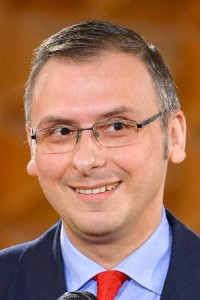
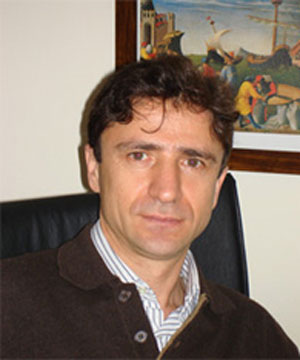
Radu Marinescu is a Professor of Software Engineering at the Politehnica University of Timisoara, affiliated with the Department of Computer Science and Engineering. He leads the LOOSE Research Group and is a senior researcher at the e-Austria Institute. His primary roles include teaching graduate courses like Foundations of Software Engineering and Research Topics in Software Engineering. Marinescu's research focuses on software quality assurance, metrics, and maintenance, emphasizing object-oriented systems. He co-founded Intooitus, a spin-off company that develops quality assessment tools like inFusion and inCode. Marinescu holds a Dr. Habil. Eng. and a joint PhD ('magna cum laude') from Politehnica University of Timisoara and University of Karlsruhe. He has authored over 30 international publications and co-authored the best-selling book Object-Oriented Metrics in Practice (Springer). His awards include the IBM John W. Backus Award (2009) and an IBM Eclipse Innovation Award (2006). Marinescu has served as General Chair for ICSM 2010 and on numerous conference program committees. His research projects include developing tools like iPlasma for software analysis and inCode for real-time design flaw detection. Marinescu has advised four PhD students and participated in consultancy projects for companies like Nokia, Alcatel-Lucent, and Siemens VDO Automotive. He actively contributes to the software engineering community through editorial roles, conference organization, and evaluations for EU research programs.
Dr Chen Li is a Lab Head at the Monash Biomedicine Discovery Institute (BDI), Monash University, where he is affiliated with the Department of Biochemistry and Molecular Biology and contributes to the Cancer and Immunity Programs. He is supported by an ARC Future Fellowship and an NHMRC Ideas Grant, driving research at the intersection of computational biology, proteomics, and immunotherapeutics. Monash Biomedicine Discovery Institute (BDI), Monash University Department of Biochemistry and Molecular Biology ARC Future Fellow NHMRC CJ Martin Early Career Fellow (2018–2022) Visiting Fellow at ETH Zurich Dr Li earned his PhD in Bioinformatics from Monash University in 2016 under the supervision of A/Prof Ashley Buckle and Prof Jiangning Song, focusing on bioinformatics algorithms for protein structure-function analysis. His research spans systems proteomics, immunopeptidomics, cancer, and personalized medicine. He develops computational pipelines integrating multi-omic data—transcriptomics, proteomics, and immunopeptidomics—using machine learning to decode human diseases and support novel immunotherapy development. His work contributes to UN Sustainable Development Goals in health and well-being. The recent publications highlight a strong trend in single-cell genomics, deep learning for chromatin analysis, immunopeptidome mapping in viral and autoimmune contexts, and development of specialized biological databases. These works reflect an integrative, data-driven approach to biomedical discovery. Scientific awards received include: Hans Neurath Outstanding Promise Travel Award (2017) Harnessing systems biology by integrating proteomics and immunopeptidomics to understand prostate cancer (2018) HUPO 2019 Early Career Research (ECR) Travel Award (2019) EMBO Travel Grant (2019) FAOBMB Young Scientist Program Award (2021) Dr Li has secured competitive research grants, including an NHMRC Ideas Grant and a Cure Cancer Australia grant, supporting his work on colorectal cancer neoepitopes and the 'dark immunopeptidome' in type 1 diabetes. He has served as Primary Chief Investigator on multiple projects and actively mentors early-career researchers. His peer-review contributions span journals such as Briefings in Bioinformatics, PLoS ONE, and BMC Bioinformatics. He also engages in public outreach, with media appearances discussing bioinformatics tools and immune system mechanisms. Dr Li leads a dynamic research group at Monash BDI, collaborating with experts in immunology, oncology, and systems biology. His lab integrates computational and experimental approaches, fostering interdisciplinary innovation in biomedicine.
Wayne Kelly is an Associate Professor in the School of Computer Science at Queensland University of Technology (QUT), Faculty of Science. He has over 25 years of academic experience and serves as the Academic Lead for Teaching and Learning and Course Coordinator for the Bachelor of Information Technology degree. PhD in Computer Science, University of Maryland, College Park, 1996 BSc (Hons) in Computer Science, University of Queensland, 1989 His research expertise lies in Programming Languages, Compiler Construction, and Parallel Computing, with significant contributions to High Performance Computing, Big Data, and Bioinformatics. His work has led to collaborations with Microsoft Research and over $2 million in external funding. His recent publications reflect a strong trend in parallel and distributed systems, embedded computing, bioinformatics data analysis, and remote sensing. Key themes include optimization of computational systems, memory management, and scalable data processing. Wayne Kelly has made impactful contributions to both teaching and research, guiding numerous postgraduate students and leading curriculum development in information technology. Optimizing I/O cost and managing memory for bioinformatics A communication model for streaming applications on MPSoC Ruby.NET: a compiler for the Common Language Infrastructure He is actively engaged in real-world technology development, including a project with a vision-impaired student to improve public transportation accessibility, currently trialed by transport authorities in Australia and the US.
Nicolas Debortoli is an evolutionary geneticist focused on molecular adaptation mechanisms in asexual organisms, particularly bdelloid rotifers and freshwater invertebrates. His research examines genetic mixing, desiccation resistance, and environmental DNA applications for biodiversity monitoring. He has contributed significantly to understanding horizontal gene transfer in asexual species and urban ecosystem impacts on microinvertebrates. Research Interests: Debortoli investigates: (1) Evolutionary dynamics of asexual reproduction in bdelloid rotifers, (2) Genetic hybridization in clam lineages, (3) Environmental DNA metabarcoding for ecological assessment, and (4) Urbanization impacts on microinvertebrate communities. His work integrates genomics, field ecology, and computational biology. Publication Trends: His recent articles (2016-2024) demonstrate a shift from fundamental rotifer genetics toward applied environmental genomics, including SARS-CoV-2 surveillance validation and machine learning applications in hematology. Over 50% of his output addresses sustainable development goals related to aquatic ecosystems and biodiversity conservation.
Professor Balas Costas is a full Professor and Director of the Electronics Lab at the School of Electrical and Computer Engineering, Technical University of Crete. His expertise spans optoelectronics, biomedical imaging, and medical device innovation. He earned his Ph.D. in medical physics from the University of Patras (1992) and has led pioneering research in hyper-spectral imaging and non-invasive diagnostics. Key roles include founder of DySIS-Medical, a medical device company, and inventor of the DySIS imaging system for cervical neoplasia detection. Awards include the 2013 Greece Innovates Applied Research & Innovation Competition. Research interests focus on optical biopsy, biomedical spectral imaging, and diagnostic device development. His work bridges academia and industry, with contributions to global health through cost-effective diagnostic tools. Notable projects include the development of the DySIS device, validated through multinational clinical trials, and hyperspectral imaging systems for art conservation. Publications span biomedical optics, diagnostic technologies, and material analysis. Grants and venture capital funding (€15M+) support his research. He is a member of IEEE Photonics Society, SPIE, and Optical Society of America.
Dr. Suzan Arslanturk is Associate Professor in Computer Science and Industrial & Systems Engineering at Wayne State University's College of Engineering. She directs the Machine Learning and Health Informatics Laboratory, focusing on predictive analytics for healthcare applications. Research domains include: Cancer subtyping through multi-omics data integration Biomarker discovery for prostate cancer using cross-cancer learning Drug repurposing for cancers with DNA-repair deficiencies Neonatal brain anomaly detection via MRI analysis Operational healthcare optimization during medical surges Leads the development of deep learning frameworks for medical imaging segmentation and clinical text analysis. Publications demonstrate innovations in multimodal data fusion, domain adaptation, and unsupervised abnormality detection. Advises PhD candidates in computational healthcare research and directs academic programs in data mining and intelligent systems.
Dr. Mirna Becevic is Assistant Professor in Dermatology at University of Missouri, focusing on telemedicine applications to improve healthcare access for rural and underserved populations. As lead evaluator for Show-Me ECHO, she develops virtual learning networks for primary care providers. Education includes doctoral training in health informatics. Research evaluates telehealth implementations for dermatology, pediatric care, and chronic disease management. Recent projects examine AI applications for skin lesion classification and telehealth impacts on opioid prescribing patterns. Awards include Ann K. Covington mentoring award (2021) and MU Top Faculty Achiever (2017). Research outcomes inform telehealth policy and implementation frameworks for improving specialty care access.
Niusha Shafi Abady is an Associate Professor at Charles Darwin University's Faculty of Science and Technology (Sydney Campus), specializing in Computational Intelligence and its real-world applications. Her expertise spans Machine Learning, Data Analytics, and Expert System Design, with a focus on bridging academia and industry through AI-driven solutions. She is the inventor of a computational optimization algorithm and founder of Ai-Labz (https://www.cognobit.com/ai-labz), a predictive analysis tool for businesses. Her research emphasizes smart decision-making systems for energy storage, healthcare, and sustainable development goals. Key research areas include Particle Swarm Optimization, Proton-Exchange Membrane Fuel Cells, Virtual Reality applications, and Fuzzy-Neural Systems. She has collaborated internationally on projects addressing energy efficiency, medical diagnostics, and agricultural monitoring. Awards: Fellow of the Higher Education Academy (UK) Labs/Teams: Ai-Labz (Cognobit) Grants/Advising: Supervised numerous HDR candidates and developed industry-academia partnerships. Her recent publications explore XAI in smart buildings, quantum machine learning, and AI ethics, reflecting her commitment to both technological innovation and societal impact.
Dr. Maitreyee Dey is a Senior Lecturer in Computer Science and Applied Computing at London Metropolitan University. She leads the GENESIS Research Lab and serves as Deputy Director in Business Engagement at the Cyber Security Research Centre. Her research focuses on machine learning applications in smart grids, healthcare technology, IoT security, and HVAC systems optimization. She has pioneered projects involving fault detection in HVAC terminal units, cybersecurity compliance for IoT devices, and non-invasive medical diagnostics using microwave technology. Her work integrates machine learning with domain-specific challenges such as voltage anomaly detection in solar farms, predictive modeling for early-stage diabetes, and grid stability analysis using micro-PMU data. She also explores educational technology innovations like the VEMeter tool for virtual classroom participation tracking and AI-driven student engagement strategies. Dr. Dey has contributed to international conferences and authored numerous papers on topics ranging from smart building automation to radiation-free medical imaging systems. Her interdisciplinary approach bridges computer science, engineering, and healthcare, with a focus on real-world impact through industry partnerships and technology commercialization.
Saeed Amal is an Assistant Research Professor at Northeastern University's College of Engineering and Department of Bioengineering. He leads the Amal Lab for Precision Medicine, focusing on AI-driven healthcare solutions. His primary affiliation is with Northeastern's Roux Institute and he holds academic leadership roles in cardiovascular and cancer research. Previously, he was a Postdoctoral Fellow at Stanford University School of Medicine and held industry roles as VP of R&D at Cardiacx Medical (cardiology startup) and Data Scientist positions at companies like General Electric and Dynamic Yield. Education: B.Sc. in Computer Science, Technion - Israel Institute of Technology (2005) M.Sc. in Computer Science (Information Retrieval), University of Haifa (2009) Ph.D. in Computer Science (Machine Learning), University of Haifa (2019) Postdoctoral Research, Stanford University (2021–Present) Research Interests: AI applications in healthcare, including deep learning for medical imaging, NLP for clinical text analysis, and multimodal data fusion for cardiovascular and cancer care. His work emphasizes precision medicine, automated disease diagnosis (e.g., prostate and breast cancer), and improving patient outcomes through AI-driven tools. Key Contributions: Developed AI tools for cardiovascular disease prediction using multimodal data fusion, led initiatives in digital pathology for cancer grading, and pioneered the use of generative AI in Gleason pattern segmentation. His lab has published extensively on machine learning models for adverse event prediction in surgery and healthcare decision-making visualization. Awards: Emerging Visionary Award (Northeastern University NAI, 2025) Grants and Collaborations: Partnered with Santovia Path AI and Prima CARE on AI tools for cancer diagnosis. His work is supported by Northeastern's research initiatives and collaborations with institutions like Stanford University School of Medicine. Labs/Teams: Director of The Amal Lab for Precision Medicine, focusing on AI and multimodal data integration for disease care.
M. Hassan Arbab is an Assistant Professor in the Department of Electrical and Computer Engineering at Stony Brook University. His research focuses on developing novel terahertz emission, detection, and imaging technologies with applications in biophotonics, medical imaging, non-destructive testing, and material characterization. Key projects include the PHASR (Portable Handheld Spectral Reflection) scanner for burn wound assessment and polarization-sensitive imaging of biological tissues. His work integrates electro-optic theory, instrumentation design, and advanced signal processing techniques. Research Highlights: Development of handheld THz imaging systems for clinical burn triage and material analysis Monte Carlo modeling of Mie scattering effects in tissue imaging Integration of physics-based deep learning models for automated wound classification Advancements in THz time-domain spectroscopy for material characterization Key Technologies: Polarization-sensitive THz spectral imaging Wavelet-based signal processing for scattering mitigation Telecentric optics for high-resolution THz imaging Labs/Teams: His research group collaborates with medical professionals and engineers to translate terahertz technologies into clinical and industrial applications.
K. Ann Horsburgh is an Associate Professor and Graduate Program Director in the Department of Anthropology at Florida State University (FSU). She leads the FSU Molecular Anthropology Research Group, which integrates modern laboratory techniques with classic anthropological questions to explore biocultural models of health and disease, particularly focusing on stress biomarkers. Her research employs interdisciplinary approaches from social and life sciences. She holds a Ph.D. in Anthropology from Stanford University (2008), alongside earlier degrees from the University of Auckland, New Zealand, including a B.A. in Anthropology, B.Sc. in Biological Sciences, and an M.A. (Hons) in Anthropology. Her research emphasizes the intersection of lived experiences and health, using endocrinological assays and epigenetic analyses to interrogate stress’s role in well-being. Current projects include genetic studies of Polynesian populations, ancient DNA analysis of domesticated species, and critical re-evaluations of archaeological faunal classifications. She actively recruits graduate students with interests in biocultural health dynamics. Publications highlight innovations in ancient DNA methodologies, challenges in interpreting genetic evidence, and cross-disciplinary approaches to human migration and domestication histories. The Molecular Anthropology Research Group’s work bridges anthropology, genetics, and environmental science, reflecting Dr. Horsburgh’s commitment to advancing biocultural perspectives in understanding human diversity.
Prof. Ibrahim Akduman is a Full Professor at Istanbul Technical University's Faculty of Electrical and Electronics Engineering, leading the Medical Devices Research, Development - Applications Group and Laboratory. His expertise spans microwave tomography, medical imaging, and electromagnetic applications in healthcare. He has held administrative roles including Dean of the Faculty and Vice-Rector, and has been a visiting professor at institutions like Polytechnic University (NY, USA) and University of Goettingen (Germany). Education: PhD (1990), MSc (1987), BSc (1984) in Electronics and Communication Engineering from ITU. Professional milestones include over 30 years of academic leadership, 20+ patents, and international awards including the Alexander von Humboldt Fellowship. Research focuses on microwave breast cancer imaging, brain stroke detection, and antenna design for medical applications. Advised 40+ students and authored 150+ publications. Key contributions include the SAFE microwave imaging system for breast cancer screening and the development of realistic breast models using MRI data. Labs: Medical Devices Research, Development & Applications Lab (www.erg.itu.edu.tr). Collaborations include EU-funded projects like EMERALD (2018-2021) and MiMed (2013-2017). Awards highlight contributions to medical electromagnetic technologies and innovation in Turkey.
Georgios D. Kyriakopoulos is an Associate Professor of International Law at the School of Law, National and Kapodistrian University of Athens (NKUA), serving as Vice-Dean since 2009. He holds a BA from NKUA, DEA degrees in International Law and Political Science from Paris 2 University, and a PhD in International Law focusing on aviation security. His roles include Legal Adviser to the Greek Ministry of Defense, Visiting Professorships at McGill University and University of Nice, and membership in prestigious organizations like the European Society of International Law and International Law Association. He represents Greece at ICAO and UNCOPUOS and serves as Rapporteur for the Greek Ministry of Foreign Affairs' Scientific Council. Education: BA (Law, NKUA), DEA (International Law, Paris 2), DEA (Political Science, Paris 2), PhD (International Law, Paris 2). Research focuses on Public International Law, Air Law, Space Law, Telecommunications Law, and Maritime Law. Key interests include international organizations, aviation security, and space governance. He authored 3 monographs, 2 manuals, and numerous articles, including works on airspace regulation, space treaties, and unilateral state acts. Awards: Prix de thèse from French Society of Air and Space Law (1999). Advising and Grants: Supervises students in international law and contributes to policy-making via international bodies. His grants and projects include contributions to ICAO environmental policies and space law frameworks. Labs/Teams: Active in interdisciplinary research on international legal frameworks for emerging technologies, collaborating with institutions like McGill’s Air and Space Law Institute.
Professor Valerie O'Donnell is a distinguished academic at Cardiff University's School of Medicine, where she serves as Professor of Biochemistry and Co-Director of the Systems Immunity Research Institute (SIURI), established in 2016 with £4.5M funding. She leads the internationally recognized LIPID MAPS project (www.lipidmaps.org) and Cardiff Lipidomic Facility, positioning her at the forefront of lipidomics research. With over two decades of academic leadership, she previously served as Director of the Division of Infection and Immunity (2017-2020) and Dean of Research for the School of Medicine (2012-2014). Professor O'Donnell earned her Ph.D. in Biochemistry from the University of Bristol (1990-1993) working with Prof. OTG Jones and Dr. PJ England of SmithKline Beecham Pharmaceuticals, following her B.Sc. in Human Nutrition & Dietetics (Hons. 2.1) from University of Dublin, Trinity College, Ireland (1985-1989). Her academic journey includes prestigious fellowships at the University of Alabama at Birmingham and University of Bern, Switzerland, before establishing her career at Cardiff University. Her research focuses on using mass spectrometry to discover and characterize bioactive lipids made by circulating vascular cells that regulate immune defense and blood clotting. Over the past 20 years, her lab discovered large families of enzymatically-oxidized phospholipids (eoxPL) and has worked extensively on their structures, signaling actions in thrombosis and innate immunity. Current research examines the role of bioactive lipids in vascular inflammation including abdominal aortic aneurysm, cardiovascular disease, dementia and wound healing. Analysis of her recent publications reveals a strong emphasis on lipidomics methodology development, clinical applications of lipid research, and the role of specific lipids in disease mechanisms. Her work spans analytical chemistry, cardiovascular biology, immunology, and clinical translation, with particular focus on procoagulant lipids, oxylipins, and specialized pro-resolving mediators. The research demonstrates increasing interdisciplinary collaboration and methodological standardization efforts in the lipidomics field. Professor O'Donnell's scientific achievements have been recognized with numerous prestigious awards: 2023: Honorary Officer of the Order of the British Empire (OBE) for services to biochemical research 2020: Fellow of the Academy of Medical Sciences 2019: Journal of Lipid Research Lectureship Award 2016: Wolfson Research Merit Award, Royal Society 2015: Fellow of the Learned Society of Wales 2013: Fellow of the Royal Society of Biology She currently serves as Principal Investigator for British Heart Foundation and Wellcome Trust funding, while also participating as co-Investigator for Medical Research Council (MRC), EU (Marie Curie ITN), and Welsh Government projects. Her panel memberships include Population Systems Medicine Board (MRC) and Biomedical Resources Committee (Wellcome Trust). With a Google Scholar H-index of 52, she has been included in UK national research assessments RAE2002, RAE2008, and REF2014. Professor O'Donnell leads the Systems Immunity Research Institute, a strategic research institute at Cardiff University, and directs the Cardiff Lipidomic Facility as part of the LIPID MAPS consortium. Her laboratory continues to make significant contributions to understanding how bioactive lipids regulate vascular inflammation and coagulation, with recent work focusing on the role of specific phospholipids in conditions ranging from cardiovascular disease to SARS-CoV-2 infection. In 2024, LIPID MAPS became an ELIXIR Core Data Resource and a member of the Global Biodata Coalition, with an MRC Partnership Grant commencing funding.