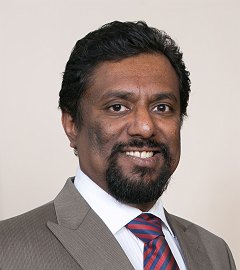
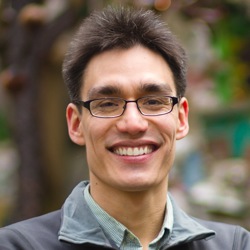
Hyesoon Kim is a Professor at the Georgia Institute of Technology , affiliated with the College of Computing and leading the HPArch research group . She co-directs the Center for Research into Novel Computing Hierarchies (CRNCH) . Her research focuses on Computer Architecture , GPU , Compilers and Runtime Systems , and Hardware Security , particularly for heterogeneous systems. Contact : hyesoon@cc.gatech.edu Location : 266 Ferst Drive, KACB 2344, Atlanta, GA Research Trends Her recent work spans RISC-V extensions for security, CUDA optimization on softcore GPUs, memory safety techniques, and energy-efficient deep learning architectures. Articles emphasize heterogeneous computing , GPU performance scaling, and IoT -oriented neural network methods. Open Source Projects She leads development of Macsim (heterogeneous architecture simulator) and Vortex (open-source GPU platform).
Yang Zhou is an Associate Professor in the Department of Computer Science and Software Engineering at Auburn University, part of the Samuel Ginn College of Engineering. His research focuses on big data algorithms, machine learning, data mining, and distributed computing. He has contributed to advancements in federated learning frameworks, graph mining tools, and spatial machine learning for environmental applications like flood mapping. Education includes a Ph.D. in Computer Science from Georgia Tech (2021), M.E. in Computer Application Technology from Chongqing University (2016), and B.E. in Engineering from Jiangnan University (2014). His work emphasizes scalable algorithms for large-scale systems, with tools like DirDense for dense subgraph mining and FedASMU for federated learning optimization. Recent publications explore adversarial robustness, blockchain strategies in IoT, and curriculum-based learning for large language models. He advises on interdisciplinary projects at the intersection of AI and environmental science.
Mike Giles is a Professor of Numerical Analysis at the University of Oxford's Mathematical Institute and serves as Head of the Numerical Analysis Group. He is also a Professorial Fellow at Balliol College and a Fellow of the Royal Society (FRS). His academic career spans computational mathematics, scientific computing, and computational finance. Professor Giles' research primarily focuses on Monte Carlo methods, with particular emphasis on the development and numerical analysis of multilevel Monte Carlo methods over the past 15 years. His work has significant applications in computational finance, uncertainty quantification, and solving stochastic differential equations. He has also made substantial contributions to high-performance computing, especially in the exploitation of many-core GPUs for scientific computing applications. His research bridges theoretical numerical analysis with practical computational implementations. Analysis of his publication record reveals a consistent trajectory of innovation in Monte Carlo methodology, evolving from foundational work on path simulation to sophisticated multilevel techniques that dramatically improve computational efficiency. His research spans multiple disciplines including numerical analysis, computational finance, and high-performance computing, with a clear focus on developing practical algorithms that address real-world computational challenges in science and finance. Fellow of the Royal Society (FRS) Professor Giles actively teaches courses in numerical methods for the MSc in Mathematical and Computational Finance and is a leading educator in GPU programming, organizing an annual intensive course on CUDA Programming on NVIDIA GPUs. He has been instrumental in establishing JADE, Oxford's GPU supercomputer facility, which supports research in machine learning and scientific computing. His leadership extends to the Numerical Analysis Group at Oxford and the Mathematical and Computational Finance Group, where he fosters interdisciplinary research connecting mathematics, finance, and computer science. Through his educational initiatives and research leadership, Giles has significantly influenced both academic research and practical applications of advanced computational methods.
Gene Cooperman is a Professor at the Khoury College of Computer Sciences at Northeastern University, with an affiliation in the College of Engineering. His research focuses on high-performance computing (HPC), transparent checkpoint-restart systems, and model checking. He leads the High Performance Computing Laboratory, where he explores checkpointing technologies like DMTCP, MANA for MPI, and CRAC for CUDA, aiming to enhance HPC workflows on supercomputers such as NERSC's Perlmutter. His work bridges distributed computing, parallel algorithms, and system software to address challenges in fault tolerance, scalability, and resource management. Cooperman has advised 10 PhD students and co-authored over 125 refereed publications, contributing to projects like Geant4-MultiThreaded and Roomy for disk-based computation. His teaching includes courses on computer systems and HPC seminars. Education: Background in computational algebra and parallel computing, transitioning to HPC systems and checkpointing. Research Themes: Transparent checkpointing, MPI agnostic solutions, CUDA integration, and HPC resource optimization. Recent articles emphasize MPI checkpointing, reversible debugging (FReD), and CUDA support, reflecting trends in distributed and GPU-accelerated systems. His grants include NSF, NERSC/DOE, and MemVerge funding. Cooperman collaborates with institutions like CERN and NERSC, advancing applications in particle physics simulations and supercomputing. Current students include Aayushi Gautam, Jiajun Cao, Rohan Garg, and Twinkle Jain.
John Hale, Ph.D., is a Professor and Chair of Computer Science at The University of Tulsa's Tandy School of Computer Science, where he holds the Tandy Endowed Chair in Bioinformatics and Computational Biology. He is a founding member of the TU Institute of Bioinformatics and Computational Biology (IBCB) and a faculty research scholar in the Institute for Information Security (iSec). Education: Ph.D., Computer Science, The University of Tulsa (1997) M.S., Computer Science, The University of Tulsa (1992) B.S., Computer Science, The University of Tulsa (1990) Dr. Hale's research spans cybersecurity , bioinformatics , cyber-physical systems , and applied formal methods . His work focuses on neuroinformatics, cyber trust, attack modeling, secure software development, and information privacy. Recent publications highlight trends in large-scale graph analysis for cybersecurity, attack graph generation on high-performance computing clusters, and security frameworks for nuclear reactor control systems. His research also explores hybrid attack graph modeling, reflective deception strategies, and compliance methods for cyber-physical infrastructures. Scientific Awards: 2000 National Science Foundation CAREER Award Dr. Hale has advised numerous research projects and received funding from the U.S. Air Force, Army, NSF, NIH, DARPA, NSA, and NIJ. He has testified before Congress on cybersecurity and holds a patent for anti-piracy technology. His lab work includes developing cyber-physical testbeds and science DMZ security solutions.
Dr. Ahmad Afsahi is a Professor in the Department of Electrical and Computer Engineering at Queen's University, Canada. He leads the Parallel Processing Research Laboratory (PPRL) and chairs the Graduate Studies committee in ECE. His research focuses on parallel processing, high-performance computing (HPC), and network-based systems, with emphasis on communication runtime systems, accelerated computing, and deep learning infrastructure. Education: Ph.D. (Electrical Engineering, 2000) from University of Victoria; M.Sc. (Computer Engineering, Sharif University of Technology); B.Sc. (Computer Engineering, Shiraz University). Research interests include parallel programming models, MPI optimization, GPU-aware communication, network-aware algorithms, and power-efficient HPC systems. He is a Senior Member of IEEE, ACM member, and licensed Professional Engineer in Ontario. Key Awards: Canada Foundation for Innovation Award, Ontario Innovation Trust Award. Over 50 publications in top venues like SC, EuroMPI, IPDPS, and IEEE journals. Current teaching includes cluster computing and digital systems. Labs/Groups: PPRL, Queen's Collaborative Graduate Specialization in Computational Science and Engineering, Data, Analytics, and Computing (DAC) Research Group.
Pascal BOUVRY is a full Professor of parallel computing and optimization techniques at the University of Luxembourg's Department of Computer Science , within the Faculty of Science, Technology and Medicine (FSTM) . He currently serves as the Dean of the FSTM and leads the Parallel Computing and Optimisation group . Additionally, he oversees the University's High Performance Computing (HPC) infrastructure. His research focuses on parallel computing, optimization algorithms, distributed systems, and their applications in bioinformatics and distributed environments. Prof. BOUVRY holds a Ph.D. in Computer Science from the University of Grenoble (France) and has extensive industry experience, including roles as CEO/CTO of tech firms and leadership in telecom and financial services sectors. He has pioneered initiatives like the Master in High-Performance Computing and Technopreneurship programs at the University of Luxembourg. His research interests span GPU programming paradigms , federated learning , distributed optimization , and trustworthy AI . Recent work includes advancements in HPC education frameworks, federated learning frameworks (e.g., FedPref), and quantum circuit optimization. He contributes to editorial boards of journals like IEEE Transactions on Sustainable Computing and IEEE Cloud Computing Magazine. Prof. BOUVRY has held international leadership roles, including as Honorary Chair of conferences and active participation in technical committees. His educational efforts emphasize bridging academic research with industrial applications, particularly in HPC and AI.
Rabi N. Mahapatra is a Professor in the Department of Computer Science & Engineering at Texas A&M University, within the College of Engineering. His research focuses on embedded systems, reconfigurable architectures, real-time systems, and semantic networks. He holds a Ph.D. in Computer Engineering from the Indian Institute of Technology (1992), an M.S. in Electrical Engineering (Sambalpur University, 1984), and a B.S. in Electronics & Communication (Sambalpur University, 1979). His research interests include Network-on-Chip (NoC), data analytic co-design, IoT protocols, and temperature-aware energy management. His work emphasizes hardware-software co-design for complex systems, with applications in many-core processors, semantic search engines, and real-time embedded systems. Key publications highlight contributions to collaborative filtering on many-core architectures, low-jitter clock distribution circuits, and energy-efficient scheduling. He has been recognized as an IEEE Computer Society Distinguished Visitor (2005–2007) and received the BOYS-CAST Indo-US Young Scientist Award. He leads the Codesign Embedded Systems group at Texas A&M, exploring cutting-edge topics such as photonics NoC, reservoir computing, and IoT security. His research bridges theory and practice, addressing challenges in scalable systems and embedded applications.
Xiaoming Li is an Associate Professor in the Department of Electrical and Computer Engineering at the University of Delaware , focusing on compiler optimization, GPU computing, and hardware-software interaction. His work bridges machine learning with code generation to enhance program efficiency. B.S. and M.E. from Nanjing University (1998, 2001) Ph.D. in Computer Science from University of Illinois at Urbana-Champaign (2006) Research interests include: Compiler optimizations for static and dynamic code transformation Machine learning-driven code generation techniques FFT algorithms for sparse and hybrid systems Non-traditional compilers for SAT solvers and virtual machines GPU acceleration for large-scale computational problems His publications span 15 years , emphasizing: FFT optimization across GPU/CPU architectures Compiler techniques for heterogeneous systems Adaptive scheduling and error resilience Integration of empirical and model-driven approaches Notable awards: NSF CAREER Award (2008) Best Paper Award at ADAPT Workshop (2013) Advising highlights: Current students: Ryan Taylor, Sha Li, Shuo Chen, Yuanfang Chen, Chao Yang, Chaoyu Chen Graduates: Liang Gu (FFT Libraries), Jakob Siegel (GPGPU Frameworks), Murat Bolat (Context-Aware Compilation)
Dr. John Wickerson is an Associate Professor in the Circuits and Systems group at the Department of Electrical and Electronic Engineering, Imperial College London. His research focuses on improving the reliability of high-performance computing through formal methods, with contributions to high-level synthesis, memory models, and concurrency verification. He holds leadership roles including Course Director for the Electrical and Information Engineering degree and Deputy Tutor for PhD students. Research Interests: Formal Verification of Hardware/Software Systems High-Level Synthesis (HLS) and FPGA Compilation Weak Memory Models and Concurrency Semantics Fuzz Testing for Hardware Tools Compiler Optimization and Correctness Digit Elision and Arbitrary-Precision Arithmetic Notable Achievements: Best Paper Award at EuroSys 2024 (database isolation validation) Pioneered formal methods for HLS tools (e.g., QuteFuzz, C4) Co-developed the C4 C compiler concurrency checker Published over 60 peer-reviewed papers across top venues (ASPLOS, PLDI, FPGA) Lab/Team: Part of the Circuits and Systems group at Imperial College, collaborating with industry partners like Kaihong Yann and ARM.
Dr. Tim Oates is a Professor in the Department of Computer Science and Electrical Engineering at the University of Maryland, Baltimore County . His research spans machine learning, artificial intelligence, and brain-machine interfaces, with a focus on weakly supervised methods, human-in-the-loop reinforcement learning, and grounded policy development for robotics. Ph.D., Computer Science, University of Massachusetts, Amherst, 2000 M.S., Computer Science, University of Massachusetts, Amherst, 1997 B.S., Computer Science and Electrical Engineering, 1989 Current research threads include: Developing non-invasive brain injury severity assessment via medical time series Modeling human brain development through computational frameworks Designing algorithms for autonomous robotic learning Recent publications highlight AI security mechanisms (backdoor detection via tensor decomposition, matrix factorization) Medical applications (3D artery reconstruction, skin lesion diagnosis, EEG denoising) Neuro-symbolic integration (holographic representations, language-guided reinforcement learning) Mathematical reasoning (schema-based problem solving, subitizing algorithms) Contact: oates@cs.umbc.edu | Office: 336 Information Technology and Engineering (ITE) Building
Professor Saman Amarasinghe is a full Professor in the Department of Electrical Engineering and Computer Science (EECS) at the Massachusetts Institute of Technology (MIT), and Principal Investigator at MIT's Computer Science and Artificial Intelligence Laboratory (CSAIL). He leads the Commit compiler research group, which focuses on programming languages and compilers that maximize application performance on modern computing platforms. His work spans multiple academic departments and research centers, with strong affiliations to both MIT's School of Engineering and CSAIL. Professor Amarasinghe's research interests center around high-performance domain-specific languages and compiler technology . His work combines language design with sophisticated compilation techniques to deliver unprecedented performance for targeted application domains. His research spans multiple areas including image processing (Halide), sparse tensor algebra (TACO), graph analytics (GraphIt), stream computations (StreamIt), and bioinformatics (Seq). A significant thread throughout his work is the application of machine learning for compiler optimizations, from Meta optimization in 2003 to the OpenTuner autotuner framework. Analysis of Professor Amarasinghe's recent publications reveals a strong focus on sparse computing , compiler vectorization , and domain-specific language implementation . His work consistently bridges theoretical compiler concepts with practical performance gains across diverse application domains. The progression from earlier work on StreamIt and Halide to more recent projects like GraphIt and TACO shows an evolution toward more specialized, high-performance DSLs targeting specific computational patterns. His 2020-2025 publications particularly emphasize sparse tensor operations, GPU acceleration, and machine learning integration with compiler technology. ACM Fellow (2019) Professor Amarasinghe has made significant contributions to academic entrepreneurship and student development. He founded Determina, Inc. (acquired by VMware) based on security research from his MIT lab and co-founded Lanka Internet Services, Ltd., Sri Lanka's first ISP. As faculty director of MIT Global Startup Labs, his programs across 17 countries have helped create over 20 successful startups. His teaching includes the popular Performance Engineering of Software Systems (6.172) course with Professor Charles Leiserson, as well as innovative project-based courses like the Open Source Software Project Lab and Bring Your Own Software Project Lab. His educational approach emphasizes hands-on experience with compiler and language design concepts. Professor Amarasinghe leads the Commit compiler research group at MIT CSAIL, which has produced numerous influential domain-specific languages and compilers including Halide, TACO, Simit, StreamIt, and GraphIt. The lab maintains strong industry connections through projects like OpenTuner and Determina, and collaborates with researchers worldwide on compiler technology. The group's work spans both theoretical compiler research and practical implementation, with a consistent focus on bridging the performance gap between high-level programming abstractions and hardware capabilities.
Marc Olano is an Associate Professor in the Department of Computer Science and Electrical Engineering at the University of Maryland, Baltimore County (UMBC), and serves as the Associate Dean of Academic Programs and Learning in the College of Engineering and Information Technology. He leads the Computer Science Game Development Track and co-directs the VANGOGH lab. His research focuses on interactive 3D computer graphics, programmable shading, graphics hardware, and surface appearance modeling, with contributions to foundational graphics technologies like procedural shading and normal mapping. Research Interests: Olano’s work spans real-time rendering, GPU algorithms, texture compression, and procedural shading. He has pioneered techniques such as LEAN mapping and variable bitrate texture compression, significantly impacting game development and real-time graphics. His research often explores the intersection of hardware capabilities and algorithmic innovation, with applications in medical visualization, visualization of scientific data, and haptic interaction. Key Contributions: Olano’s accomplishments include pioneering procedural shading on graphics hardware, developing homogeneous rendering techniques, and advancing normal mapping. His work on GPU-based curvature estimation and BT volumes for volume rendering exemplifies his focus on leveraging GPU parallelism for real-time visualization challenges. He has also contributed to standards in shading languages and GPU programming. Teaching & Mentorship: Olano teaches courses in computer graphics, game development, and advanced computer architecture. He mentors students in independent studies and has advised numerous MS theses exploring topics like GPU random number generation, volume rendering, and soft shadow algorithms. His students’ work often bridges theoretical research and practical GPU implementations. Labs & Projects: The VANGOGH lab under his co-direction focuses on advanced visualization and graphics research, including real-time rendering techniques, GPU algorithms, and interactive data visualization. His research collaborations span industry partners like Firaxis Games, contributing to titles such as Civilization V through texture compression innovations.
Dr. Shuangshuang Jin is an Associate Professor in the School of Computing with a joint appointment in the Department of Electrical and Computer Engineering at Clemson University's College of Engineering, Computing and Applied Sciences. Previously, she served as a Senior Research Scientist at Pacific Northwest National Laboratory. Her educational background includes a Ph.D. in Computer Science (2007), M.S. in Computer Science (2003) from Washington State University, and a B.S. in Computer Science (2001) from Wuhan University. Ph.D., 2007 - Washington State University, Computer Science M.S., 2003 - Washington State University, Computer Science B.S., 2001 - Wuhan University, Computer Science Dr. Jin specializes in high-performance computing (HPC), distributed and parallel computing, general-purpose computation on graphical processing units (GPGPU), and HPC-based big data analysis, machine learning, scientific computation, and visualization. Her research focuses on applying these technologies to electrical engineering (power and energy systems, power electronics), automotive engineering, systems biology, and computer graphics. She leads the High-Performance Computing Enabled Science and Engineering (HPCeSE) Lab, where she supervises six PhD students working on HPC implementations for power system dynamic simulation, GridPACK application development, data-driven model-based smart control of power electronics converters, and other cutting-edge projects. Her recent publications demonstrate expertise in accelerating power system simulations, PV inverter reliability assessment, edge computing for power systems, and virtual prototyping of vehicle powertrain systems. The research trends show increasing focus on GPU acceleration, real-time simulation capabilities, and integration of HPC with emerging power system challenges. Junior Faculty Excellence in Teaching award (2021) Churchill Carter Fellowship (2022-2023) Zucker Graduate Education Center PhD Grant (2023) Doctoral Dissertation Completion Award (2023-2024) Outstanding Masters Student in Computer Science award (2022) Dr. Jin has successfully secured multiple grants from DOE, DOD, and other agencies for projects including 'Vehicle Propulsion Digital Twins', 'GridPACK-Wind', and 'Tool for Reliability Assessment of Critical Electronics in PV (TRACE-PV)'. She has advised numerous PhD and Master's students who have gone on to positions at national laboratories and industry. Her HPCeSE Lab maintains strong connections with Pacific Northwest National Laboratory, Fermi National Accelerator Laboratory, and other research institutions, providing students with valuable internship opportunities. Dr. Jin leads the High-Performance Computing Enabled Science and Engineering (HPCeSE) Lab at Clemson University, which focuses on developing optimized HPC-based parallel programming algorithms and architectures to solve complex scientific and engineering domain problems. The lab works on smart grid modeling and simulation, power electronics reliability assessment, ground vehicle systems prototyping, and advanced grid analytics, utilizing OpenMP, MPI, Pthreads, and CUDA/OpenCL on various computing platforms.
Joseph Devietti is an Associate Professor in the Department of Computer & Information Science at the University of Pennsylvania. His research focuses on improving programmability and performance of multiprocessor systems through architectural and programming model innovations. He actively advises PhD students and has supervised numerous graduates now employed at leading tech companies and academic institutions. Education: PhD (2012), MS (2009) in Computer Science and Engineering from University of Washington; BSE (2006) in Computer Science and BA (2006) in English from University of Pennsylvania. Employment: Associate Professor (2020–present), Assistant Professor (2013–2020) at University of Pennsylvania; Principal Scientist & Co-founder at Cloudseal, Inc. (2018–2020). Devietti’s research spans computer architecture, parallel programming, and deterministic execution. Key areas include cache/memory optimization (prefetching, false sharing repair), GPU programming models (race detection, block-size independence), and hardware-software co-design for concurrency safety. His recent work addresses dynamic runtime prefetch tuning (RPG 2 ), online code layout optimization (OCOLOS), and intelligent BTB prefetching (Twig) for data center applications. His publications from 2024–2017 reveal trends in instruction/cache optimization (2024–2020), GPU determinism (2018–2017), and race detection (2018–2016). Awards include the 2024 Penn Engineering Ford Motor Company Award, Radhia Cousot Best Paper (2018), and IEEE Micro Top Picks recognition (2023, 2009, 2008). Scientific Awards : 2024 Penn Engineering Ford Motor Company Award Radhia Cousot Young Researcher Best Paper Award (SAS 2018) IEEE Micro Top Picks (2023, 2009, 2008) Intel Early Career Faculty Honor Program (2013) Intel Ph.D. Fellowship (2011) Advising : Supervised 15+ PhD/Master’s students with placements at Google, Microsoft, Amazon, NYU, and the United States Naval Academy. Collaborations : Works with industry leaders (NVIDIA, Facebook) and academic institutions (University of Washington, Penn).