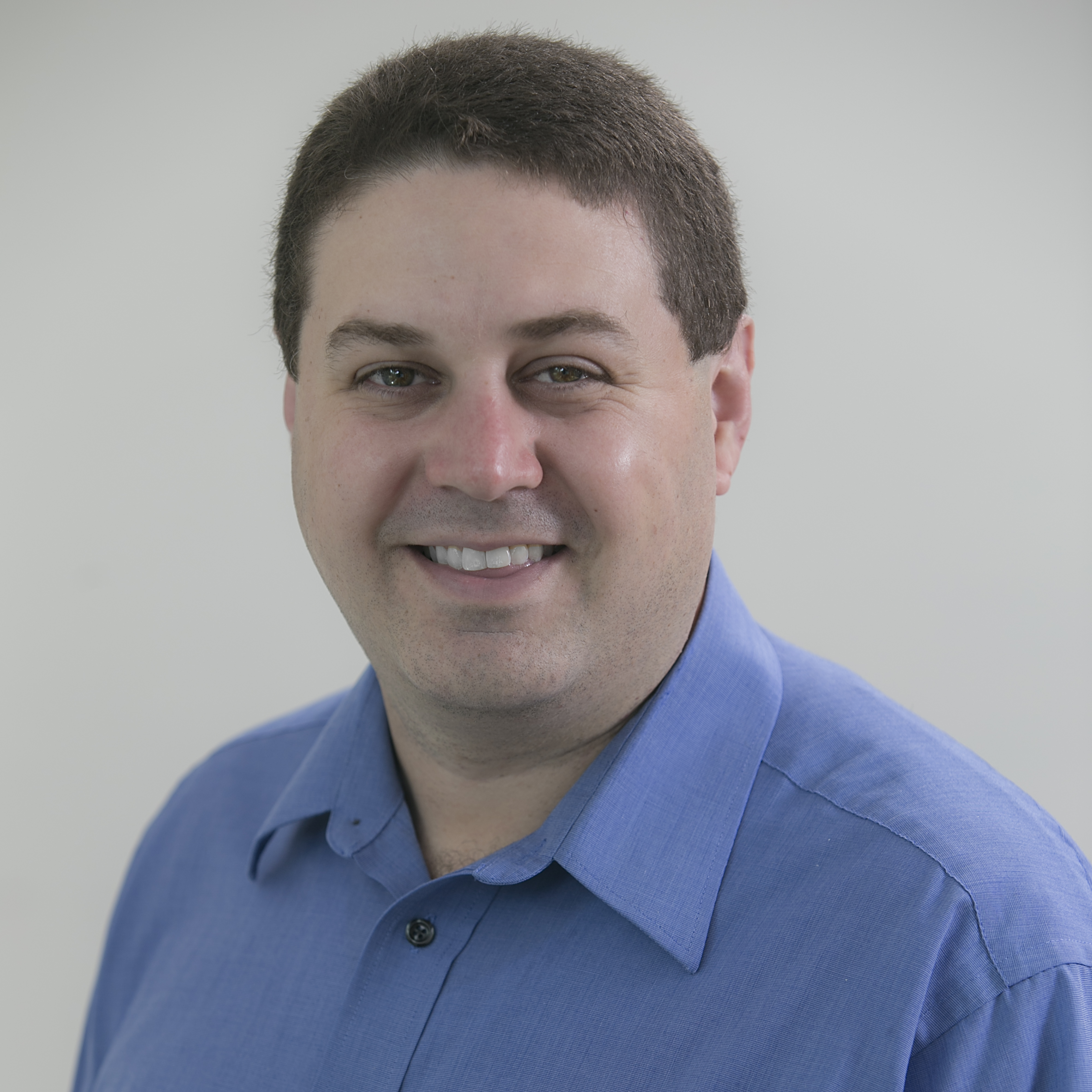
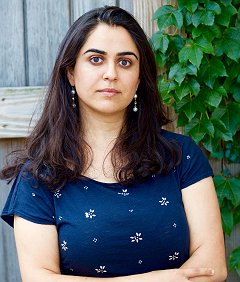
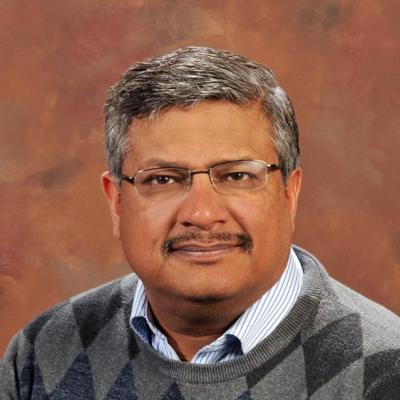
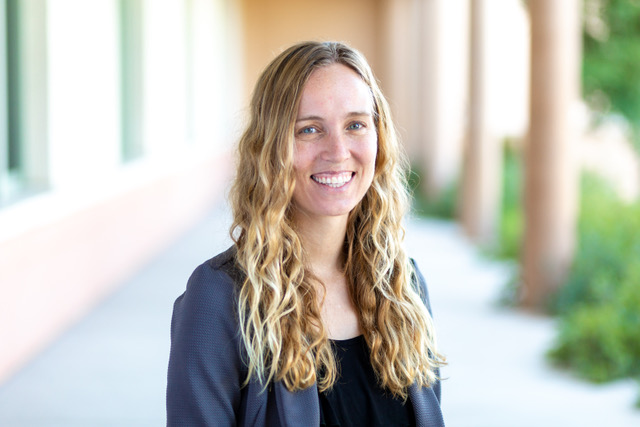
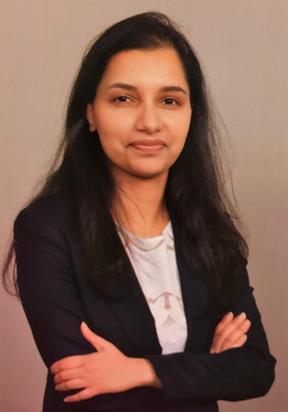
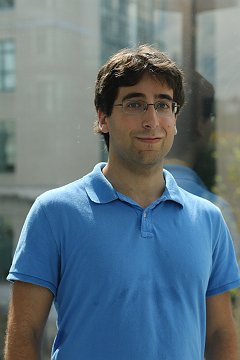
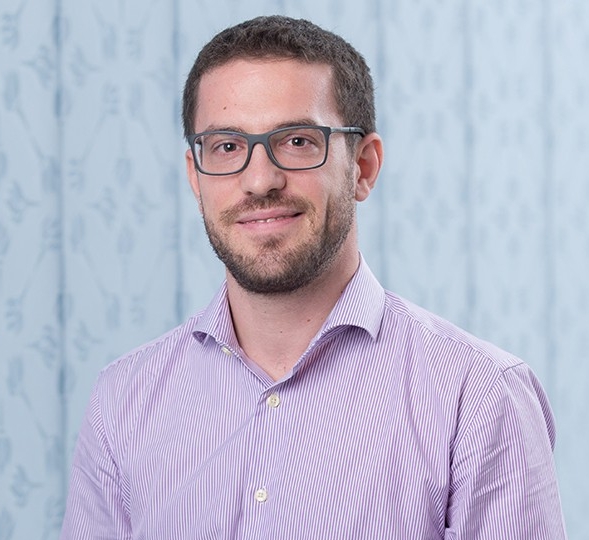
Prof. Dr.-Ing. Richard Membarth is a Research Professor for System-on-a-Chip and AI at the Edge Computing at Technische Hochschule Ingolstadt (THI). He is affiliated with the Hardware-Software Co-Design group and holds a secondary position at the German Research Center for Artificial Intelligence (DFKI) Saarbrücken. Co-creator of DSL frameworks like AnyDSL and Hipacc Key contributor to MetaDL (AI metaprogramming) and PRIME (predictive rendering) His research bridges GPU computing , domain-specific languages , and compiler technology , with recent work on Vulkan SPIR-V compilation and device-driven SpMV algorithms . Notable awards include the HiPEAC Paper Award (2018) and multiple Best Paper Awards for his compiler frameworks.
George Bosilca is a Research Professor at the University of Tennessee, Knoxville, affiliated with the Department of Electrical Engineering and Computer Science and the Innovative Computing Laboratory. He holds a PhD in Computer Science (University of Paris XI, 2004) and an MS in Math and Computer Science (University of Paris XI, 1999). His research focuses on distributed algorithms, parallel programming paradigms, performance modeling/optimization, and resilience in programming models. He contributes to exascale computing initiatives through projects like PaRSEC and Open MPI. Key research areas include task-based runtimes, MPI standardization for exascale systems, and fault-tolerant distributed computing. His work emphasizes scalable and portable constructs for high-performance applications. Bosilca is involved with the Innovative Computing Laboratory (ICL) and collaborates on projects like the EPEXA ecosystem and Argobots threading framework. Recent publications highlight advancements in asynchronous many-task systems, GPU-accelerated collective operations, and resilience strategies for HPC platforms. His contributions span theoretical frameworks and practical implementations, bridging algorithmic innovation with real-world HPC challenges.
Prof. Dr. Rolf Wanka is a Professor at the Department of Computer Science, Friedrich-Alexander-Universität Erlangen-Nürnberg (FAU), specializing in efficient algorithms and combinatorial optimization. His research focuses on swarm intelligence, discrete optimization algorithms, and scheduling problems, particularly in timetabling and robotics applications. Education : Sc.D. (Dr. rer. nat.) in Computer Science His work includes theoretical and experimental analyses of particle swarm optimization (PSO) algorithms, addressing runtime complexity, stagnation behavior, and convergence properties. He has developed novel heuristics for timetabling and sorting problems, with applications in multi-robot systems and medical imaging. Notable collaborations include studies on Markov chain-based PSO and fairness in academic scheduling. Key trends in his recent publications span swarm intelligence , discrete optimization , and scheduling heuristics , with a focus on robust timetabling , runtime analysis , and stochastic algorithm behavior . While no explicit scientific awards are listed, his mentorship in the Max Weber-Programm highlights his advisory role in academia. His publications demonstrate interdisciplinary applications of algorithms in robotics , medical imaging , and parallel computing , leveraging both theoretical rigor and practical experimentation. The full description below provides exhaustive details on his academic contributions and affiliations.
Jeffrey Young is a Principal Research Scientist at Georgia Institute of Technology, working with the Partnership for Advanced Computing Environments (PACE) and leading Georgia Tech’s Open Source Program Office. His research focuses on high-performance computing (HPC), computer architecture, and novel accelerators including GPUs, FPGAs, and Arm/RISC-V processors. He leads next-generation computing strategy at PACE and directs the NSF-funded CRNCH Rogues Gallery testbed, which explores post-Moore accelerators like neuromorphic and near-memory systems. His work bridges hardware-software co-design and scientific software engineering. Recent research trends show expertise in quantum programming (Qwerty/ASDF), heterogeneous computing (Cupbop), and memory system optimization across GPUs, FPGAs, and CPUs. He has contributed to exascale workflows (HIPLZ), safe HPC libraries, and UAV co-simulation frameworks. Scientific Awards: NSF-funded CRNCH Rogues Gallery testbed (2020-2024) Education: Ph.D. in Computer Architecture (2013), advised by Dr. Sudhakar Yalamanchili Labs & Initiatives: Director, CRNCH Rogues Gallery testbed Co-Director, Georgia Tech Center for Scientific Software Engineering Director, Georgia Tech Open Source Program Office
Maryam Mehri Dehnavi is an Associate Professor in the Department of Computer Science at the University of Toronto and a Principal Research Scientist at NVIDIA. She holds the Canada Research Chair in Parallel and Distributed Computing and leads the ParaMathics research group. Research focuses on high-performance computing , machine learning , sparse matrix optimizations , and compiler design for heterogeneous systems. Her work develops domain-specific languages , scalable numerical libraries , and auto-vectorization techniques for cloud and GPU platforms. Recent publications address LLM compression , sparse code translation , GPU kernel synchronization , and control flow optimization . Scientific recognition: Ontario Early Researcher Award (2021), NSF CRII Grant, NSERC New Frontiers in Research Fund. Current students: Mushegh Shahinyan , Martin Phan , Maryam Haghifam , and others. Former advisees: Kazem Cheshmi (NJIT), Zachary Blanco (MIT Lincoln Lab), Yuanxi Li (Amazon).
Professor Saman Amarasinghe is a faculty member in the Department of Electrical Engineering and Computer Science at the Massachusetts Institute of Technology (MIT), where he leads the Commit compiler research group at MIT's Computer Science and Artificial Intelligence Laboratory (CSAIL). His research focuses on programming languages and compilers that maximize application performance on modern computing platforms, with a particular emphasis on high-performance domain-specific languages. Professor Amarasinghe received his bachelor's degree in electrical engineering and computer science from Cornell University in 1988, followed by master's and PhD degrees in electrical engineering from Stanford University in 1990 and 1997, respectively. He joined the MIT faculty as an assistant professor in 1997 and has since become a world leader in his field. Professor Amarasinghe's research interests span programming languages, compiler design, and high-performance computing, with a particular focus on domain-specific languages. His group has developed numerous influential languages and compilers including Halide, TACO, Simit, StreamIt, StreamJIT, PetaBricks, MILK, Cimple, and GraphIt, which deliver unprecedented performance for application domains such as image processing, stream computations, and graph analytics. He has also pioneered the application of machine learning for compiler optimizations, from Meta optimization in 2003 to the OpenTuner autotuner framework. Professor Amarasinghe's publication history reveals a consistent research trajectory toward creating specialized language and compiler solutions that address performance challenges in specific domains while hiding complexity from application developers. His recent work focuses heavily on sparse computing, tensor algebra, graph processing, and the integration of machine learning techniques into compiler technology, demonstrating his ability to identify and address emerging computational challenges. ACM Fellow (2019) As an educator, Professor Amarasinghe has developed the popular Performance Engineering of Software Systems (6.172) class with Professor Charles Leiserson and created innovative project-based courses including the Open Source Software Project Lab, the Open Source Entrepreneurship Lab, and the Bring Your Own Software Project Lab. He also serves as the faculty director of MIT Global Startup Labs, which has helped create more than 20 startups across 17 countries. His research has translated into practical applications through startups like Determina, Inc. (acquired by VMware), demonstrating the real-world impact of his academic work. Professor Amarasinghe co-led the Raw architecture project with Professor Anant Agarwal, which did pioneering work on scalable multicores. His entrepreneurial activities include founding Determina, Inc. based on computer security research from his MIT lab and co-founding Lanka Internet Services, Ltd., the first Internet Service Provider in Sri Lanka, showcasing his ability to bridge academic research with commercial applications.
Gagan Agrawal is the UGA Foundation Professorship in Computing and a Professor at the School of Computing, University of Georgia. He serves as Director of the School and is affiliated with the Franklin College of Arts & Sciences. Agrawal holds a PhD and MS in Computer Science from the University of Maryland (1994-1996). His research focuses on high-performance computing, parallel algorithms, compiler optimization for deep learning, GPU acceleration, and interdisciplinary applications in health informatics. Notable contributions include frameworks like ForensiBlock (blockchain for data forensics) and DELITE (tensorized instruction compilation). Agrawal has secured over $2.5M in NSF grants for projects addressing extreme-scale computing challenges. Recent grants include: SHF: Small: Memory Hierarchy Optimizations Meet Transformers (MITTEN) ($600K, 2024-2027) DELITE compilation system for deep learning models ($600K, 2023-2026) Publications span parallel computing methodologies, cybersecurity frameworks, and health outcomes analysis. His work on social determinants of health in cancer survival has been systematically reviewed in top-tier medical journals. Agrawal leads UGA's computing initiatives, emphasizing interdisciplinary research and student mentorship in HPC and AI domains.
Yifan Sun is an Assistant Professor in the Department of Computer Science at William & Mary, leading the Scalable Architecture Lab. He holds a Ph.D. in Electrical and Computer Engineering from Northeastern University (2020). His research focuses on GPU architecture, simulation tools, and multi-GPU system design. Recent work includes TrioSim (a lightweight DNN workload simulator) and NetCrafter (optimizing multi-GPU network traffic). He has published extensively at top venues like ISCA, MICRO, and IEEE Vis. Educations: Ph.D. in Electrical and Computer Engineering, Northeastern University (2020); M.S. and B.S. not explicitly stated but implied through academic progression. Research Interests: Developing explainable architecture tools, improving simulation frameworks (Akita/MGPUSim), and addressing challenges in wafer-scale GPU design. His work bridges hardware-software co-design with visualization techniques to enhance human understanding of complex architectures. Grants: Awarded NSF CCRI and CRII grants for simulation-as-a-service and explainable architecture projects. Collaborations include UVA, NUS, and Northeastern University. Labs/Teams: Scalable Architecture Lab (SARCHLAB), focusing on GPU systems, simulation, and visualization. Active in organizing workshops and GitHub repositories (e.g., https://github.com/sarchlab).
Mohammad Zunoubi is an Associate Professor in the Department of Engineering Programs at SUNY New Paltz, part of the School of Science & Engineering. He holds an undergraduate degree from the University of Mississippi and a postgraduate degree from the University of Illinois at Urbana-Champaign. His research focuses on High-Performance Computing solutions for electromagnetic problems, Nonlinear Optics, and Microwave/Antenna Design. He has conducted extensive work in Computational Electromagnetics, utilizing methods like FDTD and FEM. His teaching interests span Electromagnetics, Numerical Methods, and EMC/EMI. He has been recognized with multiple awards, including the SUNY Provost’s Research Award (2005) and several United States Air Force Summer Faculty Fellowships (2009–2017). His research often involves collaboration with the Air Force, focusing on advanced electromagnetic modeling and high-power microwave effects. Dr. Zunoubi’s publications highlight contributions to antenna design, electromagnetic compatibility, and high-performance computing techniques. His work bridges theoretical electromagnetics with practical applications in aerospace, medical physics, and material science.
Amanda Bienz serves as an Assistant Professor in the Department of Computer Science at the University of New Mexico (UNM), where she leads the Scalable Solvers Lab and acts as faculty advisor for Women in Computing. Her academic roles include teaching operating systems and parallel computing courses while spearheading efforts to restructure New Mexico's CS4ALL curriculum for statewide computer science education expansion. Her research centers on overcoming communication bottlenecks in high-performance computing systems, specifically targeting the performance gap between emerging exascale hardware and real-world applications. Key focus areas include developing portable communication optimizations, enhancing MPI collective operations, creating topology-aware message passing extensions, and benchmarking heterogeneous architectures. Her work directly addresses critical challenges in scaling parallel applications through innovations in sparse solvers, neighborhood collectives, and node-aware communication strategies for GPU-accelerated systems. Analysis of her 2022-2024 publications reveals consistent emphasis on communication optimization across diverse HPC domains. Her research demonstrates particular expertise in irregular communication patterns, locality-aware algorithms, and performance modeling for heterogeneous architectures. Significant contributions include novel approaches to sparse dynamic data exchange, compressed linear algebra algorithms, and persistent communication techniques that reduce synchronization overhead in large-scale simulations. Scientific Awards: NSF CAREER Award for "Towards Exascale Performance of Parallel Applications" Dr. Bienz actively mentors students through the Scalable Solvers Lab, welcoming new researchers interested in high-performance computing. Her NSF CAREER grant provides substantial research funding supporting both technical innovation and educational initiatives. The CS4ALL curriculum restructuring project demonstrates her commitment to broadening computer science access throughout New Mexico's K-12 education system. The Scalable Solvers Lab develops open-source tools including the Raptor algebraic multigrid solver and MPI-Advance communication library. Current projects focus on benchmarking heterogeneous architectures (Summit/Lassen supercomputers), optimizing FFT implementations, and creating node-aware communication strategies for conjugate gradient methods. The lab maintains active GitHub repositories with substantial community engagement, including contributions to CUDA-aware MPI implementations and halo exchange libraries for multi-GPU systems.
Anjali Sandip is a Teaching Assistant Professor in the Mechanical Engineering Department at the University of North Dakota's College of Engineering and Mines. She holds a Ph.D. in Mechanical Engineering from the University of Kansas and maintains an active research program in computational mechanics, high-performance computing, and machine learning. Her educational background includes a Doctor of Philosophy and Master of Science in Mechanical Engineering from the University of Kansas, and a Bachelor of Engineering in Mechanical Engineering from Osmania University in Hyderabad, India. She previously served as a post-doctoral researcher at the University of Nebraska, where she developed patient-specific computational models for peripheral artery disease treatment. Dr. Sandip's research spans computational mechanics, high-performance computing, uncertainty quantification, physics-informed machine learning, and multi-physics modeling. Her work has significant applications in ice sheet dynamics, medical device modeling, and multi-phase flow simulations. She has developed open-source software frameworks that integrate finite element and finite volume methods with uncertainty quantification tools. Her recent publications demonstrate a strong focus on developing computational frameworks for multi-physics problems, with particular emphasis on GPU acceleration, uncertainty quantification, and machine learning integration. The research shows consistent application of these methods to challenging problems in earth sciences, biomedical engineering, and traditional mechanical engineering domains. Scientific Awards: NSF EPSCoR Research Fellow (2024-25) Dr. Sandip actively mentors both undergraduate and graduate researchers, and she is currently seeking Master's and Ph.D. students interested in computational mechanics, applied mathematics, scientific machine learning, and earth sciences. She serves as an active member of the Association of Computational Mechanics (USACM & IACM) and has delivered numerous presentations at professional conferences. Her research has received support from prestigious organizations including the National Science Foundation (NSF), Department of Energy (DOE), and NVIDIA. She teaches courses including Introduction to Mechanical Engineering, Thermodynamics, Machine Component Design Laboratory, Advanced Finite Element Methods, Modeling Glaciers and Ice Sheets, Statics, and Engineering Ethics, demonstrating her broad expertise across mechanical engineering disciplines.
Richard Membarth is a Research Professor at Technische Hochschule Ingolstadt (THI) since 2021, specializing in System on a Chip (SoC) and Artificial Intelligence for Edge Computing . Previously, he worked as a Senior Researcher and Team Leader at the German Research Center for Artificial Intelligence (DFKI) in Saarbrücken (2014–2021), a Postdoc at the Intel Visual Computing Institute (IVCI) at Saarland University (2013–2014), and as a Research Employee at Friedrich-Alexander University Erlangen-Nürnberg (2008–2013), where he earned his PhD in Computer Science with a focus on medical imaging. Research Focus: Membarth's work bridges GPU computing compiler optimization domain-specific languages edge AI architectures His expertise in CUDA programming and high-performance systems informs his leadership in THI's AI Mobility Node (AImotion). Awards: HiPEAC Network Member Email: Richard.Membarth@thi.de
Stefan K. Muller is the Gladwin Development Chair Assistant Professor in the Computer Science Department at Illinois Institute of Technology. He previously served as a Postdoctoral Researcher at Carnegie Mellon University from 2018-2020 following completion of his PhD there under advisor Umut A. Acar. His academic journey began with an AB from Harvard University in 2012 under Stephen Chong. Dr. Muller's research centers on programming language techniques to improve correctness and efficiency of software, particularly in parallel computing domains. His work spans language and type system design, static resource analysis, and parallel computing methodologies. He leads the Responsive Parallelism research project which extends implicit parallelism models to handle features of consumer software like user interaction and responsiveness requirements. His publication record shows consistent output in top-tier venues including PLDI, POPL, ICFP, and SPAA, with recent work focusing on graph types, responsive parallelism, and resource-aware GPU programming. His research has been supported by NSF grant CCF-2107289. Current advisees include Marelle León (BS), Godha Pallavi Bhogadi (MS), and Alex Friedman (PhD) Former students have gone on to positions at Apple, Amazon, Bloomberg, American Express, and PhD programs at UPenn Teaching responsibilities at Illinois Tech include graduate courses CS534 (Types and Programming Languages), CS536 (Science of Programming), CS440 (Programming Languages and Translators), and CS443 (Compiler Construction). Previously at CMU, he taught Principles of Functional Programming.
Michail Maniatakos is a Global Network Associate Professor of Electrical and Computer Engineering at NYU Tandon and a Research Associate Professor at NYU Abu Dhabi, serving as Program Head of Computer Engineering. He holds a PhD in Electrical Engineering from Yale University. His primary affiliations include the NYU Center for Cybersecurity (CCS) and directs the Modern Microprocessor Architectures (MoMA) Lab. Education: B.Sc. in Computer Science (University of Piraeus, 2006), M.Sc. in Embedded Systems (University of Piraeus, 2007), M.Sc. in Computer Engineering (Yale, 2008), M.Phil. in Electrical Engineering (Yale, 2009), and Ph.D. in Electrical Engineering (Yale, 2012). Research focuses on encrypted computation, industrial control systems security, and 3D printing security. His work is funded by the U.S. Office of Naval Research, DARPA, and Abu Dhabi's Department of Education and Knowledge. He has authored numerous IEEE/ACM publications, holds patents on privacy-preserving data processing, and serves on conference technical committees. Recent articles explore hardware security, adversarial machine learning, and privacy-preserving computation. His teams have developed secure microprocessor architectures and frameworks for ICS vulnerability analysis. Awards include Senior Member of IEEE. Teaching includes courses like Computer Organization and Architecture and Hardware Security , emphasizing design, security, and ethical implications of emerging technologies. Active in research initiatives such as the NYUAD secure microprocessor project and ICSFuzz framework development. Labs/Groups: MoMA Lab (specializing in microprocessor architectures and security), affiliated with NYU CCS. Collaborates on projects like TREBUCHEt (FHE accelerators) and ICSML (industrial control ML frameworks).
Hadi Tabatabaee is an Assistant Professor at the School of Computer Science, University College Dublin (UCD), leading the Sustainable Orchestration in Computing Continuum (SOC² Lab). His research focuses on sustainable orchestration of services across edge-cloud environments, emphasizing energy efficiency, carbon-aware systems, and AI-driven applications like large language models (LLMs). Key roles include Associate Editor for IEEE Access and Management Committee member of COST Action CA22151 (CYPHER). He holds a PhD in Computer Engineering from the University of Isfahan and has held academic positions at Maynooth University, Shahid Beheshti University, and Trinity College Dublin's CONNECT research program. Education: PhD (Computer Engineering, University of Isfahan), MSc (Computer Engineering), with a research visit at TU Delft (2010-2011). Certifications include Epigeum's Research Leadership and Research Integrity courses. Languages: Persian (fluent), Azerbaijani (spoken). Research Interests: Edge-cloud continuum, dynamic service placement, distributed AI workloads, LLM optimization, and sustainable resource management. Recent work includes zero-trust vehicular networks, parallel algorithms for recommender systems, and geospatial event processing. Awards: None explicitly listed, though his contributions include over 20 journal articles in IEEE/Elsevier/Springer venues. Professional Activities: IEEE Senior Member, TPC member for IEEE conferences, and reviewer for multiple journals. Teaching: Coordinates/teaches Cloud Computing, Computer Networks, and Principles of Computer Organization at UCD.