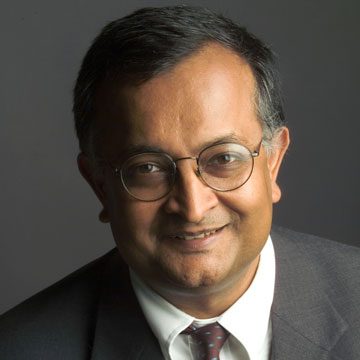
Sandip Tiwari is the Charles N. Mellowes Professor in Engineering at Cornell University, leading the School of Applied and Engineering Physics. He holds a B.Tech in Electrical Engineering from IIT Kanpur (1976), M.Eng from Rochester Institute of Technology (1977), and a Ph.D. in Electrical Engineering from Cornell (1980). His research bridges semiconductor electronics/optics and nanotechnology, emphasizing cross-scale integration of devices and systems. He directs the U.S. National Nanotechnology Infrastructure Network (NNIN) and has held visiting roles at Stanford, Harvard, Columbia, and the University of Paris-Sud. Notable honors include the IEEE Cledo Brunetti Award, APS Fellowship, and IIT Kanpur's Distinguished Alumnus Award. Education: IIT Kanpur (B.Tech), Rochester Polytechnic Institute (M.Eng), Cornell (Ph.D.) Affiliations: NNIN Director, IEEE Transactions on Nanotechnology (founding editor), multiple visiting professorships Research focuses on nanoscale device physics, quantum phenomena in electronics, and societal applications of nanotechnology. His work integrates engineering principles with physical sciences to address challenges in scalable electronic systems and MEMs. Awards highlight his contributions to semiconductor physics and nanotechnology, including recognition from IEEE, APS, and IIT Kanpur. He also promotes global scientific collaboration through education initiatives and NNIN.
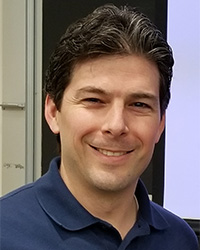
Stephen Y. Chou is the Joseph C. Elgin Professor of Engineering and Professor of Electrical and Computer Engineering at Princeton University. He is affiliated with the Princeton Materials Institute (PMI) and leads the Nano, Meta, and Bio-Health Laboratory (NMBH Lab), previously known as the Nanostructures Lab. His work spans nanotechnology, bioengineering, and photonics, integrating interdisciplinary approaches to address challenges in health, electronics, and manufacturing. Ph.D., Massachusetts Institute of Technology, 1986 M.A., Physics, State University of New York at Stony Brook, 1982 B.S., Physics, University of Science and Technology of China, 1978 Chou's research focuses on nano-bioengineering for diagnostics and health, nanophotonics (meta-optics and subwavelength elements), and nanofabrication techniques. His work has revolutionized nanoimprint lithography, enabling breakthroughs in semiconductor devices, optical sensors, and biomedical tools. The NMBH Lab's innovations include ultra-sensitive biosensors (D2PA), the iMOST™ diagnostic platform, and foundational contributions to gate-all-around (GAA) transistors for sub-3 nm CMOS technology. His publications reflect advancements in plasmonic biosensors, organic solar cells, nanofluidics, and scalable nanoimprint methods. Key themes include nanoscale light manipulation, low-cost diagnostic systems, and quantum electronic devices. Member, National Academy of Engineering (2007) IEEE Cledo Brunetti Award (2004) IEEE Nanotechnology Pioneer Award (2014) Nanoimprint Pioneer Award (2015) Packard Fellow (1991) Fellow, IEEE (2000) Inductee, New Jersey High Tech Hall of Fame (2004) MIT Technology Review Emerging Technologies (2003, 2007) Chou has founded three companies (Nanonex, NanoOpto, Essenlix) and co-founded BioNano Genomics (NASDAQ: BNGO). His work bridges academic research and industrial impact, with over 700 publications (H-index 97) and 400 patents, influencing global nanotechnology and diagnostics. The NMBH Lab develops transformative technologies in nano-bioengineering, nanophotonics, and nanofabrication, emphasizing practical applications for healthcare and electronics.
Jaime Cardenas serves as an Assistant Professor at The Institute of Optics and holds a joint appointment as Assistant Professor of Physics at the University of Rochester. He joined the faculty in July 2016 after earning his Ph.D. in Optical Science and Engineering from the University of Alabama in Huntsville and gaining industry experience as a process engineer followed by research at the Cornell Nanophotonics Group. His educational background includes: Ph.D. in Optical Science and Engineering, University of Alabama in Huntsville Professor Cardenas' research centers on integrated photonics, nanophotonics, and nonlinear photonics, with current projects targeting photonic packaging, 2D materials integration, nonlinear optical phenomena, and on-chip quantum photonics. His group develops nanostructured photonic devices that manipulate light within chip-scale platforms, enabling applications in precision sensing, communications, and quantum technologies. This work bridges fundamental optical physics with practical engineering solutions for real-world implementation. Analysis of his recent publications reveals dominant themes in chip-scale photonic systems, particularly advancements in silicon nitride and lithium niobate platforms. Key research trajectories include weak-value amplification for ultra-precise optical gyroscopes, adiabatic frequency conversion in microring resonators, photonic packaging innovations via laser fusion splicing, and multispectral imaging sensor development. His work consistently emphasizes translating theoretical concepts into manufacturable integrated photonic devices with applications spanning navigation systems, spectroscopy, and quantum information processing. Professor Cardenas leads the Cardenas Lab, which specializes in creating photonic devices that fit on the tip of a needle. The lab's research portfolio spans from fundamental nonlinear optical phenomena to applied educational initiatives, including hands-on photonic kits designed to train the next generation of integrated photonics engineers. Current projects focus on developing robust, manufacturable photonic systems for industrial and defense applications while maintaining strong connections to quantum photonics research.
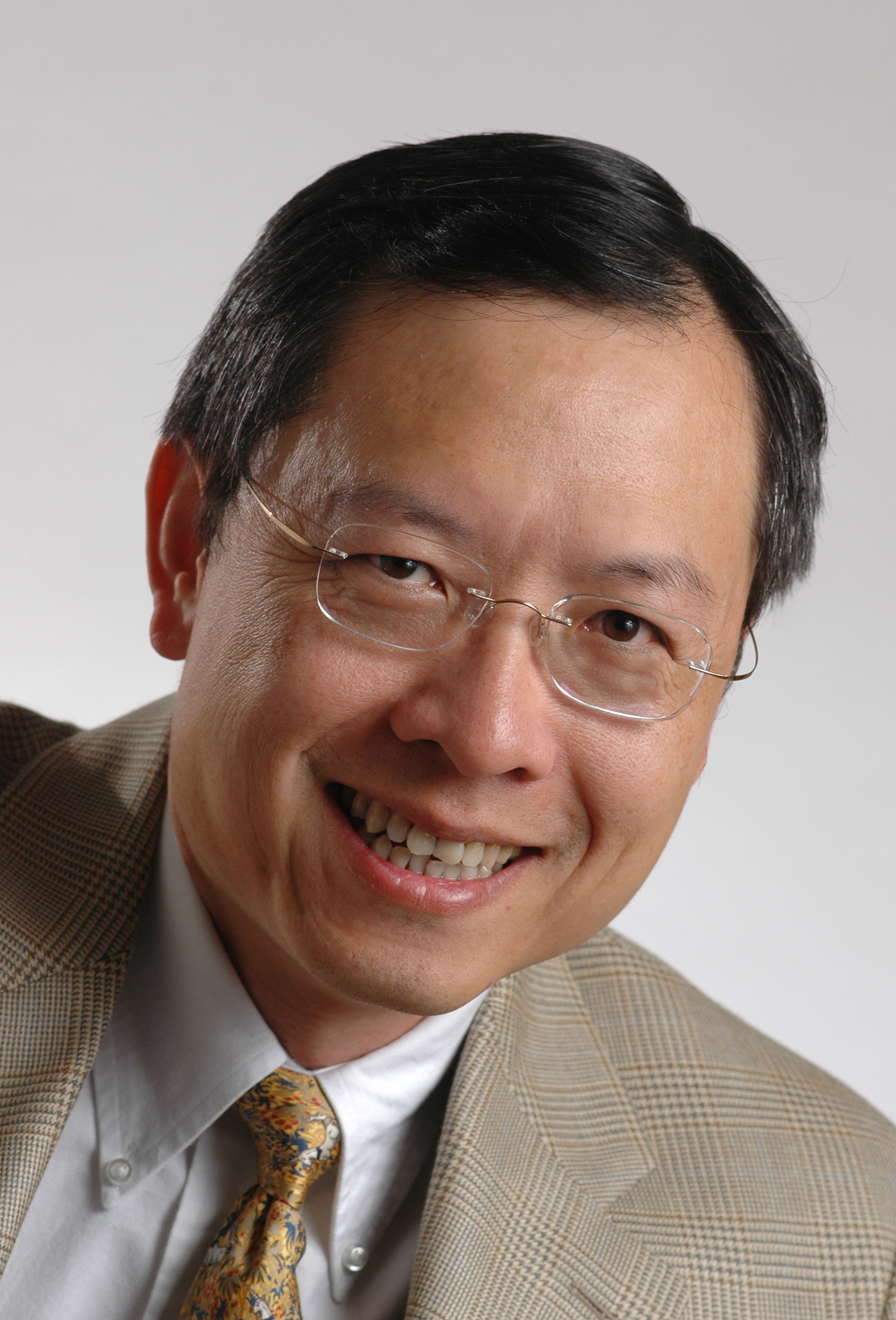
Dr. Chih-Hung (James) Chen is a Professor in the Department of Electrical & Computer Engineering at McMaster University. His research focuses on noise-related issues in semiconductor devices, low-noise circuit design for medical and communication applications, and thermal noise characterization in nano-scale transistors. He holds senior member status in IEEE and is a licensed Professional Engineer in Ontario. Education: Ph.D., McMaster University, 2002 M.A.Sc., Simon Fraser University, 1997 B.Sc., National Central University, Taiwan, 1991 Research interests include biomedical technologies, microelectronics & VLSI, and digital/smart systems. He has collaborated with companies like Sony Corporation, United Microelectronics Corporation, and Focus Microwaves. His work is supported by grants from the Canada Foundation for Innovation (CFI), NSERC, and the Ontario Innovation Trust (OIT). Notable achievements include serving on the International Advisory Committee of the International Conference on Noise and Fluctuations (2015) and as an editor for the Journal of Low Power Electronics and Applications since 2022. Teaching includes courses like Analysis and Design of RF ICs for Communications and Electronic Devices and Circuits 2. His research lab focuses on advancing noise measurement techniques and designing ultra-low-power analog circuits for emerging applications.
Ming C. Wu is the Nortel Distinguished Professor of Electrical Engineering and Computer Sciences at the University of California, Berkeley. He co-directs the Berkeley Sensor and Actuator Center (BSAC) and the Berkeley Emerging Technologies Research Center (BETR), and is affiliated with the NSF Challenge Institute for Quantum Computation. He earned his B.S. from National Taiwan University in 1983 and Ph.D. from UC Berkeley in 1988, following a postdoctoral stint at AT&T Bell Laboratories (1988–1992) and faculty role at UCLA (1992–2004). Research Areas: Silicon Photonics Optoelectronics Nanophotonics Optical MEMS Optofluidics Prof. Wu's recent publications focus on scalable photonic systems, including wafer-scale silicon photonic switches, MEMS-based LiDAR, and quantum technologies. His work bridges fundamental research and commercialization, exemplified by co-founding OMM, Inc. (MEMS optical switches) and Berkeley Lights, Inc. (optoelectronic tweezers). Scientific Awards: Paul F. Forman Engineering Excellence Award (OSA 2007) William Streifer Scientific Achievement Award (IEEE Photonics Society 2016) C.E.K. Mees Medal (OSA 2017) Robert Bosch MEMS Award (IEEE EDS 2020) Bakar Prize (UC Berkeley 2021) IEEE Fellow (2002) Packard Fellow (1992) He leads the Integrated Photonics Laboratory , which develops technologies for optical communication, sensing, and biomedical applications.
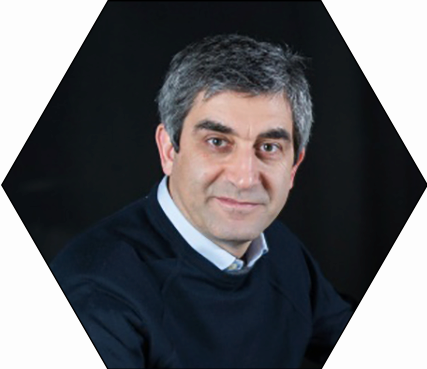
F. Levent Degertekin is a Regents' Entrepreneur and the George W. Woodruff Chair in Mechanical Systems and Professor at the George W. Woodruff School of Mechanical Engineering at Georgia Institute of Technology. His office is located in Love Building, room 311B, and his contact email is levent.degertekin@me.gatech.edu. Dr. Degertekin's academic journey includes a Ph.D. in Electrical Engineering from Stanford University (1997), an M.S. in Electrical Engineering from Bilkent University, Turkey (1991), and a B.S. in Electrical Engineering from Middle East Technical University, Turkey (1989). Dr. Degertekin's research focuses on micromachined ultrasonic devices and systems for medical applications, particularly in intravascular ultrasound imaging, therapeutic ultrasound, and acousto-optical sensors for MRI. His work spans from fundamental research on novel transduction methods to complete catheter-based imaging systems close to commercialization. He has made significant contributions to capacitive micromachined ultrasonic transducers (CMUTs), developing diffraction grating based optomechanical sensing methods now commercialized by Silicon Audio, novel atomic force microscopy imaging probes, and micromachined ultrasonic ejector structures for cell transfection commercialized by OpenCell Technologies. His research integrates acoustics, optics, and their combinations for various medical applications, utilizing conventional microfabrication (MEMS) and integrated circuit technologies. The Degertekin lab exposes students to applied physics, electrical, mechanical and biomedical engineering, biology, and biomimetic systems, providing them with thorough theoretical and experimental education in acoustics and optics while learning interdisciplinary research. Dr. Degertekin's work has received significant media attention, including coverage in IEEE Spectrum, Wired Magazine, The New York Times, and Fox Business News, highlighting innovations such as handheld ultrasound probes, MRI safety sensors, and minimally invasive cardiac imaging technologies. IEEE Fellow for 'Contributions to micromachined ultrasonic and optomechanical transducers and systems,' 2022 IEEE UFFC Society Inaugural Carl Hellmuth Hertz Ultrasonic Achievement Award, 2014 George W. Woodruff School Outstanding Achievement in Commercialization and Entrepreneurship Award, 2024 National Science Foundation CAREER Award, 2004-2009 Whitaker Foundation Biomedical Engineering Research Grant Award, 2001 66 US and 6 International Patents Dr. Degertekin has mentored numerous students who have gone on to make significant contributions in the field. Several of his students have received IEEE Ultrasonics Symposium Best Student Paper Awards, including Jeff McLean (2003), Sheng-Yu Peng (2006), Rasim O. Guldiken (2005 and 2007), and Toby Xu (2014). His research has been supported by various grants including the NSF CAREER Award and Whitaker Foundation grant. His work has led to multiple commercial ventures including Silicon Audio and OpenCell Technologies. The Degertekin Group at Georgia Tech focuses on transducers and systems for medical imaging and sensing, with current projects including capacitive parametric transducers, acousto-optic sensors for MRI, novel transducer methods for focused ultrasound in the brain, microsystems for intravascular and intracardiac ultrasound imaging, and CMUT-on-CMOS systems for IVUS imaging.
David Blaauw is the Kensall D. Wise Collegiate Professor of Electrical Engineering and Computer Science (EECS) at the University of Michigan. His research focuses on ultra-low-power analog/mixed-signal circuits, mm-scale sensors, neural networks, and biomedical applications. He leads the Blaauw Lab, which has pioneered innovations like the Michigan Micro Mote (M^3) and neural recording probes. His work emphasizes real-world deployability, with applications in environmental monitoring (e.g., monarch butterflies), medical devices, and robotics. Education: B.S. in Physics and Computer Science, Duke University (1986) Ph.D. in Computer Science, University of Illinois Urbana-Champaign (1991) Research Interests: Blaauw’s lab explores ultra-low-power computing, mm-scale systems, RF communication, in-memory computing, and genomics acceleration. Key projects include: Millimeter-scale computers (e.g., 0.04mm³ temperature sensors) Wireless neural interfaces for brain-machine communication Energy-efficient accelerators for edge AI and genomics Micro-robotics with sensing/actuation/computation Awards: IEEE Fellow 2016 SIA-SRC Faculty Award Motorola Innovation Award Best Paper Awards at ISSCC, ISCA, and RFIC Advising & Impact: Over 600 publications, 65 patents, and 4 startup companies spun from his lab. Current research includes genome sequencing accelerators (GenAx) and neural recording dust for brain mapping. He directs the Michigan Integrated Circuits Lab and chairs major conferences like ISSCC and DAC. Labs/Teams: Blaauw Lab (University of Michigan) Michigan Integrated Circuits Lab (MICAL)
Hua Chen is an Associate Researcher and PhD Supervisor at the School of Quantum Science and Engineering at Southern University of Science and Technology (SUSTech), with extensive experience in quantum computing circuit design and MEMS sensor interfaces. Previously, he served as an Associate Researcher at the Institute of Microelectronics, Chinese Academy of Sciences (2021-2022) and as an Assistant Researcher there from 2017-2021, building on his industry experience as an RF/Analog IC Design Engineer at Southwest Integrated Circuit Design Co., Ltd (2007-2010). Education: Ph.D. in Microelectronics and Solid-State Electronics, University of Chinese Academy of Sciences (2014-2017) M.Eng. in Electronic and Communication Engineering, University of Chinese Academy of Sciences (2011-2014) B.Eng. in Microelectronics, Chongqing University of Posts and Telecommunications (2003-2007) Dr. Chen's research focuses on interface circuit design for quantum computing and MEMS sensors, with particular expertise in high performance analog/RF/mixed-signal IC design. His recent work has shifted toward cryogenic circuit design for quantum bit control and readout systems, representing a strategic pivot toward China's national priority in quantum information technology. His publications reveal a consistent trajectory from MEMS gyroscopes and oscillators toward quantum computing hardware support circuits, demonstrating his ability to adapt expertise to emerging technological frontiers. Dr. Chen's research output shows a clear evolution from traditional MEMS sensor interfaces toward quantum cryogenic electronics, with his 15 most recent publications heavily concentrated in cryogenic circuit design for quantum applications. This represents a strategic shift aligning with China's substantial investment in quantum computing research, particularly in the development of control and readout electronics for scalable quantum systems. His significant honors include: Special talent of Shenzhen's Pengcheng Peacock Plan (January 2024) IEEE Senior Member (February 2022) Intellectual Property Specialist of Chinese Academy of Sciences (January 2020) Outstanding Employee (Top 10%) at Institute of Microelectronics CAS (2020) Multiple Graduate Student Scholarships from Institute of Microelectronics CAS (2015-2017) As a PhD Supervisor at SUSTech, Dr. Chen mentors graduate students in quantum circuit design while leading research funded through multiple sources including a Beijing Natural Science Foundation General Project (RMB 200,000) for RF MEMS disk oscillator drive circuits and a Youth Project (RMB 100,000) for MEMS gyroscope phase alignment. He has also participated in major national projects totaling over RMB 27 million, demonstrating his integration into China's strategic research initiatives. Dr. Chen leads a research group at the International Quantum Academy in Shenzhen focused on cryogenic CMOS integrated circuit design for quantum computing applications. His team develops specialized low-temperature measurement and control chips that address critical challenges in scaling quantum computing systems, with particular emphasis on MEMS-based quantum frequency references and cryogenic amplifiers that operate at temperatures near absolute zero.
Charles J. Taylor is Professor of Chemistry and Chair of the Chemistry Department at Pomona College, where he has served since 2002. An analytical chemist specializing in instrumental techniques for volatile organic compound (VOC) analysis, his work bridges medical diagnostics, environmental monitoring, and chemical sensing applications. His educational background includes: Ph.D. from University of Minnesota Bachelor of Arts from Macalester College Taylor's research focuses on developing rapid diagnostic methods through VOC analysis, leveraging microhotplate arrays, Raman spectroscopy, and polymer-carbon composites. His work spans biological systems (nematode chemotaxis, wine fermentation flavor compounds) and environmental applications (trace element profiling in coffee beans). Students in his lab gain hands-on experience with advanced analytical instrumentation and multivariate data analysis. Analysis of his publications reveals consistent themes in chemical sensing materials development, with strong emphasis on microsensor arrays, NASA-collaborative electronic nose projects, and applications in medical/environmental diagnostics. His work demonstrates interdisciplinary integration of materials science, analytical chemistry, and data analysis. His scientific achievements have been recognized with: NASA Board Award for Copolymers for Sensors (2013) NASA Board Award for SO 2 Detection (2012) Provisional U.S. Patent #60/861-617 (2007) Multiple NASA Tech Brief Awards (2007) Taylor actively mentors undergraduate researchers, with students co-authoring publications on diverse projects from medical diagnostics to environmental trace analysis. His teaching includes Advanced Analytical Chemistry, Environmental Chemistry, and General Chemistry, emphasizing practical laboratory experience. Research funding has supported instrumentation development and NASA-collaborative sensor projects. His laboratory focuses on chemical sensing materials development, particularly microhotplate-based sensor arrays and VOC analysis systems, with ongoing collaborations with NASA's Jet Propulsion Laboratory for electronic nose applications and environmental monitoring solutions.
Susana Paton Alvarez is an Associate Professor at the Department of Electronic Technology within the College of Engineering at the Universidad Carlos III de Madrid. She is affiliated with the Microelectronic Design and Applications (DMA) research group and the University Institute on Gender Studies . Her contact information includes email addresses susana.paton@uc3m.es and spaton@ing.uc3m.es , and her office is located at 1.2.C06 - Agustin De Betancourt in Leganés. Her research focuses on analog and mixed-signal circuit design , with a particular emphasis on capacitance-to-digital converters , voltage-controlled oscillators (VCO) , and biomedical sensors . Recent work includes advancements in time-encoded sensors for physiological monitoring and noise analysis in multi-bit SigmaDelta modulators. She also explores applications in flexible electronics and edge computing for biosignal acquisition. Notable publications include contributions to IEEE Sensors Letters , IEEE Transactions on Circuits and Systems II , and IEEE Sensors Journal , reflecting her expertise in microelectronic design and biomedical engineering. Her research often bridges theoretical circuit analysis with practical implementations in nanometer CMOS technologies. Dr. Paton Alvarez actively participates in collaborative projects and conferences, such as Modularos and Short Range Wireless Front-Ends initiatives. While no scientific awards are explicitly listed, her publications highlight sustained contributions to the field of analog and biomedical circuit design. Her academic roles include teaching Computer Science and Electronics subjects. She is involved in the University Institute on Gender Studies , indicating an interest in interdisciplinary research or outreach in gender-related academic issues.
Bertan Bakkaloglu is the On Semiconductor Professor in the School of Electrical, Computer and Energy Engineering at Arizona State University (ASU), where he has been since 2004. Prior to ASU, he worked at Texas Instruments focusing on analog, mixed-signal, and RF SoC development for communication transceivers. His research expertise spans RF and mixed-signal IC design, wireless/wireline communication systems, and broadband communication systems. Education: Ph.D. in Electrical Engineering, Oregon State University (1995) M.S.C. in Electrical Engineering, University of Houston (1992) Research Interests: RF and mixed-signal integrated circuits Power management ICs (including LDO regulators and DC-DC converters) High-efficiency power delivery systems Radiation-hardened electronics for space applications MEMS-based sensor systems Biomedical circuits for implantable devices Grants & Collaborations: Over 40+ funded research projects with institutions like NASA/JPL, BAE Systems, and NSF, focusing on power electronics, space systems, and biomedical applications Key projects include radiation-hardened converters, self-calibrating DACs, and implantable medical device circuits Industry partnerships with Texas Instruments, Space Micro, and FLIR Professional Activities: Technical committee member for IEEE Radio Frequency Integrated Circuits Conference Founding chair of IEEE Solid-State Circuits Society Phoenix Chapter
Alyssa B. Apsel is a Professor of Electrical and Computer Engineering at Cornell University since 2002 and a Visiting Professor at Imperial College London. She became the IBM Professor of Engineering in 2023 and Director of Electrical and Computer Engineering at Cornell in 2018. Education: B.S., Electrical Engineering, Swarthmore College (1995) M.S., Electrical Engineering, California Institute of Technology (1996) Ph.D., Electrical Engineering, Johns Hopkins University (2002) Research Focus: She specializes in power-aware mixed-signal circuits for scaled CMOS and modern systems. Her group explores cost-effective designs addressing device scaling challenges (variation, noise, reduced analog performance) through analog/mixed-signal innovation, particularly in IoT radios and reconfigurable multi-standard wireless systems. Key areas: RF circuits, VLSI integration, biomedical telemetry, and low-power design. Publication Trends: Her 2016 work spans RF transceiver design, thermometer DAC calibration, biomedical ICs with UWB telemetry, and jitter-measurement circuits. These reflect her expertise in low-power wireless systems, analog/mixed-signal design, and biomedical electronics. Awards: IEEE Fellow (2020) IEEE CAS Distinguished Lecturer (2018-2019) ISLPED Design Contest Second Place (2010) Multiple Student Paper Awards (2000, 1995) Fellowships: Abel Wolman (1997), Caltech Institute (1995) Grants & Leadership: She founded EchoICs, which received a $275,000 NSF STTR Phase I Award (2024) for flexible spectrum radios. Her lab focuses on RF interfaces for implantable electronics and photonic integration.
Dr. Scott Chen is an Assistant Professor in the Department of Electrical & Computer Engineering at McMaster University, where he focuses on teaching and research in embedded systems, RF technologies, and biomedical sensors. He previously held roles as a lecturer at the University of Waterloo and program coordinator at Conestoga College, alongside industry experience in embedded systems engineering and sensor development. Education: B.A.Sc. (Simon Fraser University, 2007) and Ph.D. (University of Waterloo, 2015), followed by a MITAC postdoctoral fellowship. His industry experience includes roles at Thalmic Labs/North, Sober Steering Sensors, and Equustek Solutions. Research interests span embedded systems for IoT, RF biomedical sensors, cleanroom micro/nano-fabrication, and game design in Unity. Notable achievements include a 2018 US patent for ethanol sensing technologies and a 2021 teaching award nomination. Current courses taught include Principles of Programming (COMPENG 2SH4), Data Structures and Algorithms (COMPENG 2SI3), and Introduction to Electrical Engineering (ELECENG 2CI4). Awards: US Patent 9,958,444B2 (2018), nominated for Aubrey Hagar Distinguished Teaching Award (2021). His work bridges academia and industry, emphasizing practical applications in wearable sensors, quantum computing components, and interdisciplinary engineering solutions.
Kyojin Choo is a Tenure Track Assistant Professor at the Swiss Federal Institute of Technology Lausanne (EPFL) in the School of Engineering , affiliated with the Mixed-Signal Integrated Circuits Lab (MSIC-LAB). He also holds teaching roles in Microengineering and Electrical and Electronics Engineering at EPFL. B.S. and M.S. in Electrical Engineering from Seoul National University (2007, 2009) Ph.D. in Electrical Engineering from the University of Michigan (2018) His research focuses on charge-domain analog/mixed-signal circuits , low-power sensor interfaces , and compact ADCs for IoT, wearables, and millimeter-scale systems. He has pioneered charge-injection cell techniques for energy-efficient circuits in energy management, sensor front-ends, and communication. His work emphasizes reducing power consumption to nanowatt levels while enabling ultra-compact designs. His recent publications highlight advancements in compact SAR ADCs , low-power MEMS accelerometers , millimeter-scale imaging systems , and ultra-low-power timing generators . His research integrates charge-domain circuit design with sensor interface optimization , energy harvesting , and high-speed link architectures . He holds over 20 US patents and has taught courses in Microengineering and Electrical Engineering at EPFL. His group (MSIC-LAB) addresses challenges in battery-free sensor design, power-constrained system scaling, and commercialization of wearables with unconventional form factors.
Amy C. Foster is an Associate Professor in the Department of Electrical and Computer Engineering at Johns Hopkins University, affiliated with the Whiting School of Engineering. She leads the Integrated Photonics Laboratory, focusing on nanoscale design of silicon-based photonic devices for optical communication systems and security applications. Her work emphasizes CMOS-compatible fabrication techniques for integrated photonic devices with applications in sensing, imaging, and high-speed processing. Education: BS (Electrical Engineering, University at Buffalo, 2003); MS & PhD (Electrical and Computer Engineering, Cornell University, 2007 & 2009) Postdoctoral Research: Cornell University (2009–2010) Professional Roles: Associate Editor of Optics Express (OSA), Chair of OSA Frontiers in Optics Committee, IEEE Photonics Conference Committee Member Her research interests center on silicon photonics, nonlinear optics, and photonic physical unclonable functions (PUFs). Key areas include developing secure authentication systems using chaotic microcavities, optimizing high-index materials like NbTiOx for visible light photonics, and advancing integrated photonic interconnects for multi-layer systems. Recent work explores machine learning-resistant PUFs and parametric nonlinear effects in sputtered metal oxides. Foster's publications highlight advancements in optical frequency combs, autofluorescence analysis of waveguides, and GHz-rate optical parametric amplifiers. Her lab’s innovations address challenges in quantum photonics, secure communications, and ultra-low-power signal processing. Awards: 2016 Johns Hopkins Catalyst Award, 2012 DARPA Young Faculty Award Grants: IARPA, NSF, APL, DARPA Her lab develops cutting-edge photonic devices for applications in space communications, neural stimulation, and security. Current projects aim to enhance multi-layer photonic integration and leverage nonlinear effects for novel signal processing architectures.