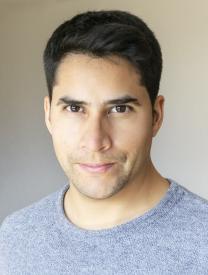
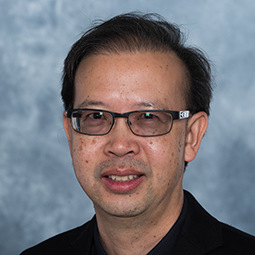
Professor Jiyuan Tu is a Professor in the Department of Mechanical and Automotive Engineering at RMIT University's School of Engineering. He specializes in computational fluid dynamics (CFD), multiphase flows, and their applications in renewable/nuclear energy, biomedical engineering, and built environment systems. His research has led to over 500 peer-reviewed articles, 9 books, and $10M+ in ARC grants. He has supervised over 50 postgraduate students and received prestigious awards such as the RMIT Research Excellence Award (2012) and Fulbright Senior Scholar Award (2008). Research interests include CFD modelling of bioaerosol transport, drug delivery systems, and thermal energy storage. He pioneered numerical models for multiphase flows, contributing to software implementations in industries. Notable works include books on CFD and multiphase flow analysis, and leadership in international conferences like COBEE 2018. He holds honorary professorships at Tsinghua University and is Editor-in-Chief of the Experimental and Computational of Multiphase Flow journal. Industry experience includes roles at ANSTO (1996-2001). Awards span fellowships from JSPS, KOSEF, and Fulbright programs. Grants include ARC Discovery, Linkage, and LIEF projects. His work ranks him among the world’s top researchers in pebble bed reactors and airborne infection studies (SciVal 2016-2025).
Yali Tang is an Assistant Professor in the Department of Mechanical Engineering at Eindhoven University of Technology (TU/e), specializing in fluid dynamics and transport phenomena within multiphase flows and physicochemical conversions . Her work targets Iron Power technology , green steel production , and alkaline water electrolysis for hydrogen generation, combining advanced computational models with experimental validation . Education: Master's in Chemical Engineering from Sichuan University (2011) PhD in Mechanical Engineering at TU/e (2015) with Prof. Hans Kuipers Research Interests: She focuses on interphase interactions , interfacial transport mechanisms , and high-resolution simulations (down to 40 nm mesh) to predict bubble coalescence and film dynamics. Her studies on hydrogen bubble growth , dendritic iron formation , and gas distribution in electrolyzers aim to refine reactor design and industrial processes. Collaborations with industrial partners ensure practical applicability of her computational models. Recent Publications: Her 2025 work includes dimensional analysis of liquid film formation, solutal Marangoni effects in electrolysis, and X-ray validation of gas distribution models. Earlier studies (2020–2023) cover defluidization behavior of iron fines, CFD-DEM modeling of raceways, and acoustic field applications in particle dynamics. Labs & Collaborations: She leads computational efforts within the Power & Flow group under Prof. Niels Deen, contributing to the EIRES Research cluster. Her work bridges academic research with industrial innovation in fluid dynamics and energy transition technologies.
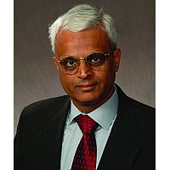
N.K. Anand is a Distinguished Professor of Mechanical Engineering at Texas A&M University, holding the James J. Cain III Regents Professorship. He leads research in advanced computational methods and thermal-hydraulic systems, with affiliations to Multidisciplinary Engineering and Nuclear Engineering programs. His work focuses on physics-informed machine learning, finite volume methods, and aerosol transport in nuclear reactor contexts. Education: PhD (Mechanical Engineering, Purdue University, 1983), M.S. (Kansas State University, 1979), and B.E. (Bangalore University, 1978). Awards include the ASME James Harry Potter Gold Medal (2020) and multiple teaching/administrative excellence awards from Texas A&M. Research emphasizes fluid dynamics modeling (e.g., PINNs for periodic flows, turbulent deposition studies), heat pipe systems, and nuclear reactor thermal-hydraulics. His Versatile Test Reactor (VTR) contributions include cartridge loop designs and aerosol transport experiments. Active in high-temperature reactor safety, with facilities studying pebble beds, helical coil exchangers, and HTGR upper plenum dynamics. Publications span physics-informed ML applications, finite volume techniques, and nuclear thermal systems. Grants supported development of advanced CFD tools and reactor safety infrastructure. His lab collaborates on international nuclear energy projects and emerging AI-driven simulation methodologies.
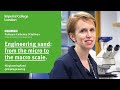
Prof. Catherine O'Sullivan is a Professor of Particulate Soil Mechanics at Imperial College London's Department of Civil and Environmental Engineering, part of the Faculty of Engineering. She leads the Geotechnics Section and serves as Editor-in-Chief of the ASCE Journal of Geotechnical and Geoenvironmental Engineering. Her research focuses on particulate soil mechanics, employing Discrete Element Modelling (DEM) and micro-CT imaging to study sand behavior, reservoir sandstones, and internal erosion. Notable recognitions include the 2016 Shamsher Prakash Research Award and the 2021 President’s Teaching Innovation Award. Education : PhD in Civil Engineering, University of California, Berkeley (2002) MEngSc in Civil Engineering, University College Cork (Ireland) BEng (Civil Engineering), University College Cork (Ireland) Research Interests : Prof. O'Sullivan's work integrates computational and experimental methods to explore granular material behavior. Key areas include DEM validation, μCT analysis, and pore network modeling. Her group collaborates across disciplines, involving physicists and mechanical engineers alongside civil engineers. Awards & Recognition : 2015 Geotechnique Lecture Student Choice Supervision Award (nominated twice) 2023 Alert Geomechanics Special Lecture Advising & Grants : She supports PhD and postdoctoral researchers through Imperial scholarships and fellowships. Her students often explore particulate soil behavior, with many securing prestigious awards. Labs & Teams : Leads the Geotechnics Section at Imperial, fostering interdisciplinary research in geomechanics and computational modeling.
Professor Hak-Kim Chan of the Sydney Pharmacy School at the University of Sydney is a world-renowned expert in respiratory drug delivery, particularly pulmonary aerosols and inhalation therapies. With over 480 publications and 17,580+ Google Scholar citations, he has pioneered advancements in powder formulation , in silico modeling , and clinical applications of inhalation technologies. His work includes the development of FDA-approved diagnostics like Aridol™ (inhaled mannitol for asthma) and Bronchitol™ (for cystic fibrosis), and groundbreaking research on inhaled bacteriophage therapy to combat antibiotic-resistant respiratory infections. Education: BPharm (University Medal, 1983), PhD (1988), DSc (2009) from University of Sydney Professional Experience: Postdoc at University of Minnesota (1988–89), Scientist at Genentech Inc. (1992–95) Leadership: Executive Editor of Advanced Drug Delivery Reviews , Fellow of AAPS and RACI His research spans in vitro production methods, computational modeling of inhaler design, and in vivo imaging of aerosol deposition. Current projects focus on nanomedicine , phage therapy , and combating superbugs via inhalation routes. He has secured significant recognition for his work, including NHMRC case studies highlighting public health impacts. Professor Chan has supervised numerous researchers, including PhD student Grace YAU studying pulmonary probiotic delivery . His team's 10 patents (7 as first inventor) reflect practical innovations in dry powder inhalers , antimicrobial formulations , and drug stabilization technologies.
Terese Løvås serves as Vice Dean of Research and Innovation at the Faculty of Engineering, Norwegian University of Science and Technology (NTNU), where she leads strategic development of research and innovation activities. She concurrently holds the position of Professor of Combustion and Thermodynamics within the Department of Energy and Process Engineering. Her leadership responsibilities include oversight of Centers of Excellence, Horizon Europe projects, and PhD researcher training. Her research focuses on combustion engineering and alternative fuel technologies , particularly investigating ammonia and hydrogen combustion for zero-emission engines, biomass gasification processes, and reactive multiphase flow modeling. She heads the Engine Lab at NTNU and teaches Thermodynamics, Heat, and Combustion courses. Her work bridges theoretical modeling with experimental validation in sustainable energy systems. Løvås actively contributes to major research initiatives including LowEmission (SFI center), ACTIVATE (ammonia-powered agricultural vehicles), AMAZE (ammonia zero-emission), and CAHEMA (marine ammonia/hydrogen engines). Her publications reveal strong trends in ammonia combustion chemistry , emissions reduction , and advanced computational modeling for sustainable fuel systems, with increasing focus on nitrogen oxide formation mechanisms and dual-fuel strategies. Member of the Board of Directors, Combustion Institute (2022–present) Joint Editor, Proceedings of the Combustion Institute (2019–present) Alumni Fellow in Engineering, Churchill College, Cambridge University As Vice Dean, she manages NTNU's Research and Innovation Committee and represents the faculty in NTNU's Research and Innovation Committee. She supervises multiple PhD candidates and leads international collaborations through projects funded by the Norwegian Research Council, Nordic Energy Research, and EU programs. Her laboratory work focuses on optical engine diagnostics and advanced combustion testing. Løvås maintains active industry engagement through her leadership in the ComKin Research Group and membership in the Institute of Physics and Scandinavian-Nordic Section of the Combustion Institute. Her current work emphasizes practical implementation of ammonia-fueled engine technologies for marine and agricultural applications.
Dr. Xuzhen He is a Senior Lecturer at the School of Civil and Environmental Engineering, University of Technology Sydney (UTS). He holds a BSc from Tsinghua University and a PhD from the University of Cambridge, where he received the John Winbolt Prize (2015). His research focuses on geotechnics, geomechanics, and numerical methods, with an emphasis on AI integration. Notable contributions include studies on soil erosion, particle segregation, and tunnel engineering. He leads projects funded by ARC, including DECRA (2021) and a Discovery grant (2023). His work bridges experimental and computational approaches, addressing challenges in geotechnical infrastructure and environmental stability. Education: Bachelor of Science, Tsinghua University, China PhD in Civil Engineering, University of Cambridge, UK Research Interests: AI-driven geotechnical analysis (slope stability, tunnelling) Multiscale geomechanical modelling (hypoplasticity, multiphase systems) Numerical methods (DEM, SPH, material point method) Awards: ARC DECRA (2021) John Winbolt Prize (2015) Grants: "Modernise geotechnical investigation and analysis with machine learning" (ARC DP230100678) "Multiscale modelling of fluid–particle transport in porous media" (ARC DE220100763) Labs/Teams: Member of UTS Transport Research Centre (TRC) Associate member of Centre for Advanced Modelling and Geospatial lnformation Systems (CAMGIS)
Dr. Youngchul Ra is an Associate Professor in the Department of Mechanical and Aerospace Engineering at Michigan Technological University. He holds a PhD from MIT (1999) and degrees from Seoul National University. His expertise includes computational fluid dynamics (CFD), combustion modeling, chemical kinetics, and alternative fuel research. His work focuses on advanced combustion strategies like Gasoline Compression Ignition (GCI), engine CFD code development, and high-performance computing. Education: PhD in Mechanical Engineering, Massachusetts Institute of Technology (1999) Masters and Bachelors in Mechanical Engineering, Seoul National University Research Interests: Developing multi-component fuel models for real-world applications Optimizing six-stroke GCI engines with advanced valve technologies Reducing emissions via combustion control and injection strategies Parallel computing techniques for large-scale engine simulations Recent work emphasizes oxygenated fuels in GCI engines and parametric studies of combustion efficiency. His CFD models are validated against experimental data for accuracy. His research has led to advancements in low-temperature combustion and emission reduction without explicit awards listed. He collaborates on engine design optimization and fuel formulation projects.
Falah Alobaid is a Full Professor (Tenured) at LUT School of Energy Systems, LUT University, specializing in energy systems engineering. He holds a Ph.D. from the Technical University of Darmstadt (2013), recognized with the university's Energy Special Prize (2014), and completed habilitation in Energy Systems (2018) with the title of Privatdozent (2019). His research focuses on power plant technologies, including combustion, gasification, and CO₂ capture, with expertise in modeling, simulation, and pilot-scale experimentation. Education: Ph.D. (Energy Systems), Technical University of Darmstadt, Germany (2013) Habilitation (Energy Systems), Technical University of Darmstadt, Germany (2018) Research interests emphasize sustainable energy solutions: Fluidized bed combustion and gasification CO₂ capture and storage technologies Renewable energy integration Process simulation and dynamic modeling of power systems Thermal energy storage systems His work bridges experimental and computational approaches, with contributions to EU projects such as SCARLET and OptiMaDyn. Publications reflect advancements in fluidized bed systems, CFD-DEM modeling, and operational flexibility of thermal power plants. Recent trends include integrating artificial intelligence for process optimization and exploring novel materials for carbon capture. Awards include the Energy Special Prize (2014) and recognition for his habilitation work. He leads the Institute of Energy Systems and Technology research group, focusing on bioenergy, waste-to-energy systems, and low-carbon technologies. Grants and collaborations span EU-funded initiatives and national projects. Advising focuses on graduate students in energy systems, though no specific names are listed. Laboratory work includes managing the Institute of Energy Systems and Technology, where experimental setups for fluidized beds and solar thermal systems are developed. Future research targets net-negative CO₂ emissions via chemical looping gasification and enhanced renewable energy storage.
Hugo N. Ulloa is an Assistant Professor in the Department of Earth & Environmental at the University of Pennsylvania School of Arts & Sciences . His research focuses on geophysical and environmental fluid dynamics, particularly transport and mixing processes in natural waters such as lakes and coastal seas. He integrates theory, numerical modeling, laboratory experiments, and field observations to develop mathematical models explaining aquatic environment dynamics. Education: Ph.D. (2015): Fluid Dynamics, Universidad de Chile Civil Engineer Diploma (2011), Universidad de Chile B.Sc. Engineering Sciences & Geophysics (2010), Universidad de Chile Research Interests: Study of mechanically and buoyancy-driven flows in rotating/stratified environments, confinement effects on fluid dynamics, suspended/dissolved tracer behavior, and thermal siphon dynamics in stratified basins. His work emphasizes practical applications to climate change impacts on waterbodies and cryospheric systems. Teaching: Hydrology (EESC 4630/5630) Environmental Fluid Dynamics (4360/6360) Independent Study: Geophysical/Environmental Fluid Dynamics Affiliations: Regular member of AGU, EGU, IAHR, and EUROMECH. Key Research Themes: Thermal convection in ice-covered lakes, buoyancy-driven flows in superconfined systems, and hydrodynamic interactions in aquatic ecosystems. His computational models address both fundamental physics and real-world environmental challenges.
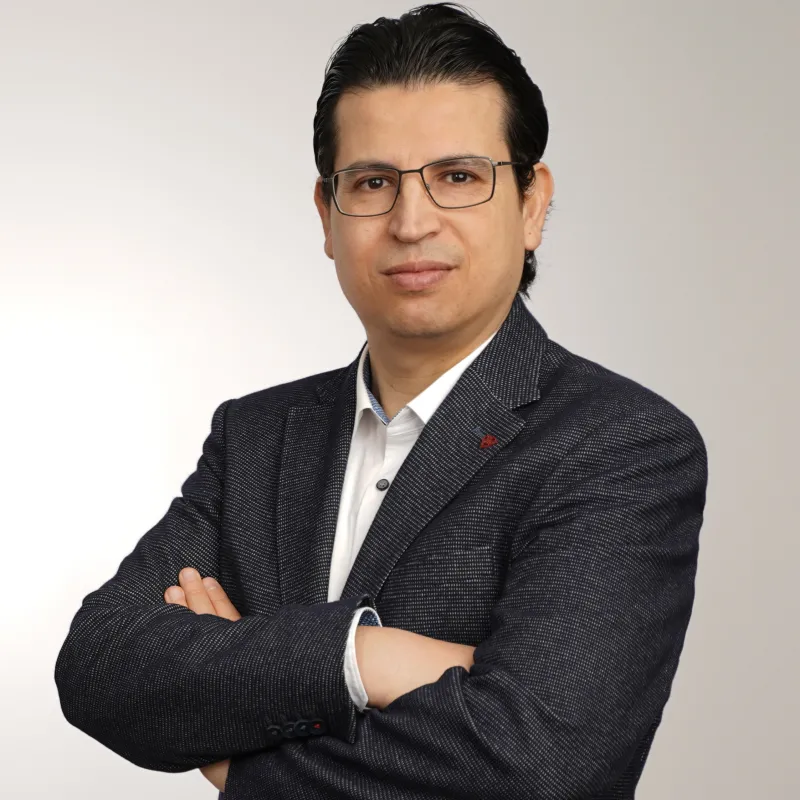
Dr. Budi Zhao is a Lecturer/Assistant Professor in the School of Civil Engineering at University College Dublin since August 2020. He holds a PhD from City University of Hong Kong (2017) and has held academic positions at Imperial College London (Research Associate, 2019–2020) and King Abdullah University of Science and Technology (Postdoctoral Fellow, 2017–2019). His research focuses on multi-physics processes in soil and rock, employing advanced techniques like X-ray micro-tomography (μCT), microfluidics, and numerical modeling (e.g., DEM and CFD-DEM). Key areas include crushable sands, desiccation cracking, fines migration, and energy geotechnics. He serves on ISSMGE committees TC105 and TC308, and is a member of the editorial board of the Journal of Rock Mechanics and Geotechnical Engineering . His research outputs span topics such as 3D printed composites, microplastic transport, and internal erosion mechanisms. Notable projects include grants on multi-scale analysis of clays and salt precipitation effects. Dr. Zhao coordinates modules like Geotechnical Engineering and Soil Mechanics at UCD, emphasizing innovative teaching methods like flipped classrooms. His work bridges fundamental science and engineering applications, with a focus on sustainable geotechnical solutions. Education: PhD (City University of Hong Kong, 2017), B.Eng (Chongqing University), Professional Certificate in University Teaching (UCD). Grants: Includes funding for offshore wind energy anchors and carbon geological storage projects. Advising: Supervises multiple PhD students in geomechanics and energy geotechnics. Labs/Teams: Leads research using state-of-the-art facilities for μCT imaging and microfluidics.
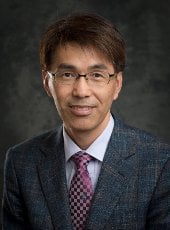
Kazuyoshi Miyagawa is a Professor at Waseda University's Department of Applied Mechanics and Aerospace Engineering within the Faculty of Science and Engineering, School of Fundamental Science and Engineering. With a Doctor of Engineering from Osaka University, he has maintained a continuous academic career at Waseda University since 2011, progressing from Associate Professor to full Professor. His educational background includes undergraduate and graduate studies in Mechanical Engineering at Waseda University, followed by specialized research at Osaka University's Graduate School of Engineering Science. Professor Miyagawa's research focuses on Fluid Engineering, Fluid Machinery, Cavitation, and Flow Induced Vibration . His work bridges theoretical fluid dynamics with practical applications in turbomachinery, particularly in hydraulic turbines, pumps, and rocket turbopumps. His research demonstrates a consistent emphasis on improving efficiency, stability, and reliability of fluid machinery through innovative design and thorough understanding of complex flow phenomena. His extensive publication record (107 papers with 683 Scopus citations and 1543 Google Scholar citations) reveals a strong focus on draft tube flow in hydraulic turbines, cavitation phenomena, and unsteady flow characteristics in various turbomachinery applications. His recent work shows increasing attention to computational fluid dynamics validation through experimental methods and practical engineering solutions for flow instability problems. Scientific Awards Multiple Technical and Paper Awards from the Turbomachinery Society of Japan (2001-2021) Recognition for development of new water turbines, high-efficiency turbochargers, and low-noise pumps Research on Francis turbine performance and cavitation phenomena Professor Miyagawa actively contributes to the engineering community through leadership roles including President of the Turbomachinery Society of Japan (2023-present) and Board Director of The Japan Federation of Engineering Society (2025-present). His professional memberships span multiple international and Japanese engineering societies including ASME, IAHR, and The Japan Society of Mechanical Engineers.
Tian Li is an Adjunct Associate Professor at the Department of Energy and Process Engineering, Faculty of Engineering, Norwegian University of Science and Technology (NTNU). Based at the Varmeteknisk building on the Gløshaugen campus, Dr. Li is affiliated with the ComKin Group and has been actively involved in numerous research projects focused on biomass conversion and combustion technologies since 2011. Dr. Li's research primarily focuses on: Biomass gasification and combustion technologies Computational Fluid Dynamics (CFD) modeling of energy conversion processes Multiphase flow and reaction kinetics in thermochemical processes Turbulence modeling in combustion systems Development of simulation tools for bioenergy applications Over the past decade, Dr. Li has led or contributed to multiple significant research projects funded by the Norwegian Research Council and industrial partners, including BioCarbUp, GASPRO, GrateCFD, GAFT, BioCarb+, CenBio, and GasBio. These projects have focused on optimizing biomass conversion processes for sustainable energy production. Dr. Li's publication record shows consistent contributions to high-impact journals in the energy and combustion fields, with a strong emphasis on computational modeling approaches. The research demonstrates expertise in developing and validating models for biomass conversion processes, with applications ranging from industrial-scale biomass furnaces to fundamental particle-level phenomena. Dr. Li has developed significant expertise in various computational tools and programming languages: Software: OpenFOAM, ANSYS Fluent, ANSYS ICEM CFD, Star-CD, MFiX, CHEMKIN, LOGEsoft, LabVIEW Programming: C/C++, Python, Fortran, Matlab Through participation in major research centers like CenBio (Bioenergy Innovation Centre), Dr. Li has contributed to advancing Norway's bioenergy research capabilities and fostering collaboration between academia and industry in the sustainable energy sector.
Dr. Saidul Islam is a Senior Lecturer at the School of Mechanical and Mechatronic Engineering, University of Technology Sydney (UTS), Australia. He joined UTS as a Senior Lecturer on July 5, 2024, having previously served as a Lecturer (May 2022-July 2024), Scholarly Teaching Fellow (May 2019-May 2022), and Postdoctoral Research Fellow (January-December 2018) at the same institution. Dr. Islam completed his PhD in Mechanical Engineering from Queensland University of Technology (QUT), Brisbane, Australia. Dr. Islam's research spans multiple critical areas in engineering and environmental science. His primary expertise lies in computational fluid dynamics (CFD), Discrete Element Method (DEM), machine learning applications in fluid systems, thermofluids, thermal management, energy storage technologies, phase change materials, and biomedical modeling. His work addresses pressing global challenges including sustainable energy systems, air pollution impacts on respiratory health, and advanced thermal management solutions for electronics and industrial applications. His research has significant implications for clean energy technologies (SDG 7), industrial innovation (SDG 9), and climate action (SDG 13). Analysis of Dr. Islam's recent publications reveals a strong focus on energy storage systems, particularly metal hydride hydrogen storage and phase change materials for thermal management. His work integrates computational modeling with experimental validation, increasingly incorporating machine learning techniques to optimize thermal systems. There's a clear trajectory toward addressing environmental sustainability through low-GWP refrigerants and clean energy technologies, while simultaneously advancing biomedical applications through sophisticated modeling of particle transport in human airways. Best Early Career Researcher (ECR) Paper Award (2019) High-Achiever HDR Student Award QUT (2017) Best Paper Award (2015) Nomination for Outstanding PhD Thesis Award (2018) Nomination for Vice-Chancellor Teaching Award-QUT (2017) Dr. Islam actively supervises Masters and PhD students in research areas including multiphase flow, CFD-DEM, human lung modeling, energy storage, PCM, hydrogen energy, heat and mass transfer, bush fire and air quality, and thermofluids. His funded research projects include 'Decarbonising commercial and industrial process heating in Australia' (2024-2025), 'Caloric heat management space technology' (2023-2024), 'Enabling Resilient Space Computing with Advanced Thermal Management' (2023-2024), and 'Mechanical Ventilation of Stenosis Airway and Targeted Drug Delivery' (2019-2021). He serves as a guest editor for special issues on occupational respiratory health and heat wave impacts, and as an editor for International Journal of Fluid Engineering and PLoS ONE.
Sirivatch Shimpalee is a Research Professor in the Department of Chemical Engineering at the University of South Carolina's Molinaroli College of Engineering and Computing. He serves as Director of the Hydrogen and Fuel Cell Center. His research focuses on renewable energy systems, including fuel cells, energy storage technologies, and bioenergy. Shimpalee holds a Ph.D. in Mechanical Engineering from the University of South Carolina (2001), an M.S. from Bradley University (1998), and a B.S. from Chiang Mai University (1992). His work emphasizes multi-scale modeling of electrochemical systems, particularly in transport phenomena and electrochemical kinetics. Recent studies include lithium-ion battery microstructure analysis, PEM electrolyzers, and hydrogen production via anhydrous HCl electrolysis. Shimpalee has over 100 peer-reviewed publications and has been recognized with awards such as the 2017 Outstanding Alumni Award and the 2004 Crystal Flame Innovation Award. Shimpalee collaborates extensively with industry (e.g., Palmetto Fuel Cell Analysis & Design, LLC) and oversees a research team addressing challenges in energy conversion and storage. His lab's innovations contribute to automotive battery systems, fuel cell durability, and sustainable bioenergy processes.