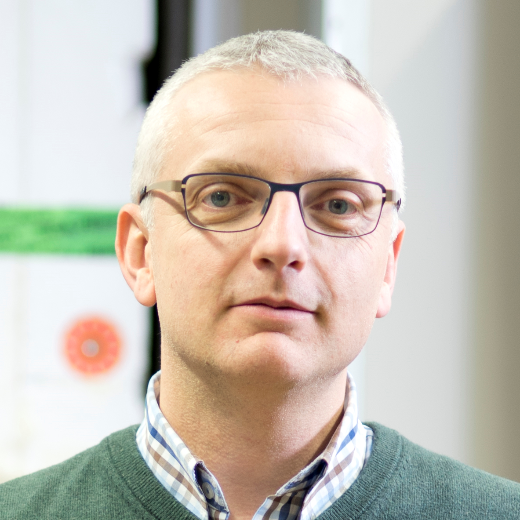
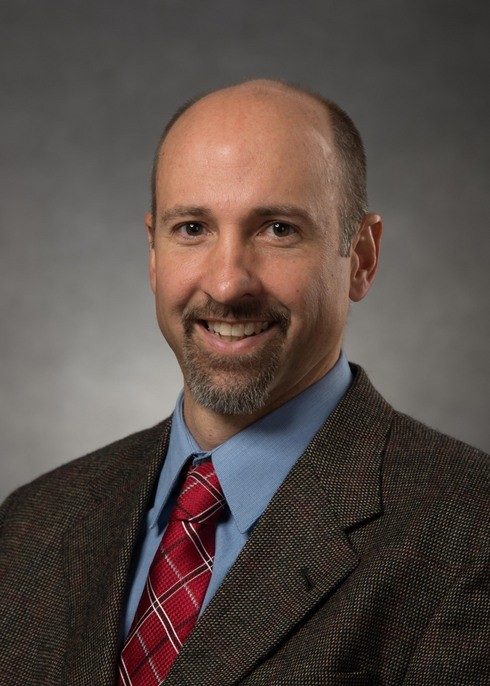
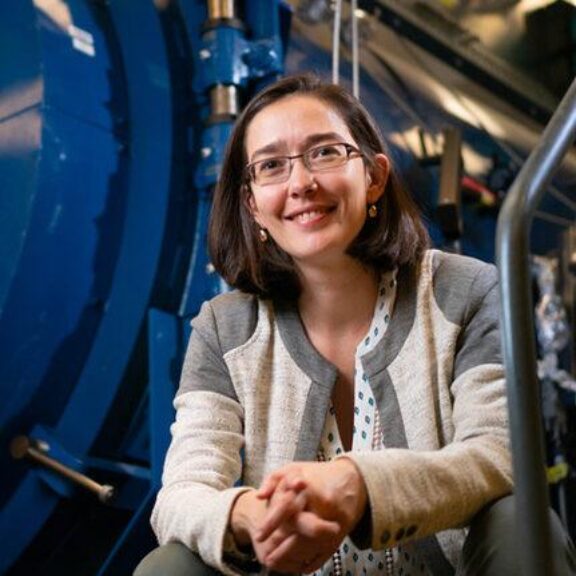
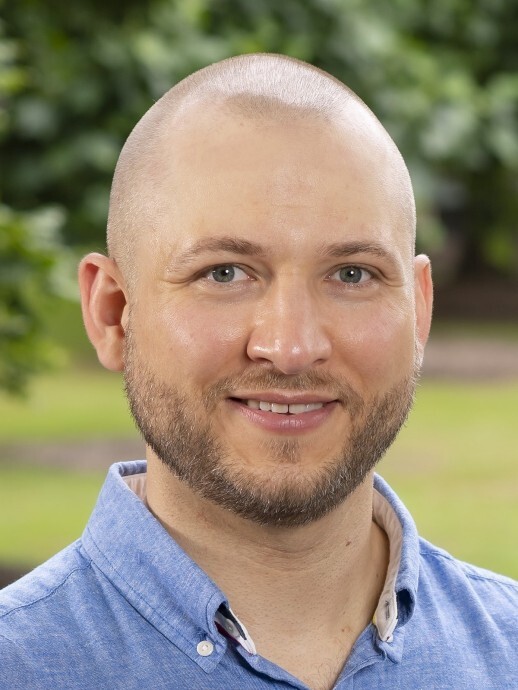
Lars Davidson is a Professor in the Department of Fluid Dynamics at Chalmers University of Technology. His research focuses on numerical simulations of fluid flow and heat transfer, with an emphasis on turbulence modeling for Large Eddy Simulation (LES) and hybrid LES/RANS methods. He has developed computational codes CALC-BFC and CALC-LES based on finite-volume techniques, and recently integrated machine learning to enhance wall functions and turbulence models. Key projects include Hybrid LES/RANS for wall-bounded flows Machine learning applications in fluid dynamics Aeroacoustic noise reduction in automotive and aerospace systems Wind turbine load analysis in forested regions . His publications span 302 articles in journals and conferences, with recent work on Neural networks for turbulence closure Plasma actuators for drag reduction Lattice Boltzmann wall-modeled LES . Collaborations include teams at Volvo, Siemens, and international research groups.
Prof. Uner Colak is a Professor at Istanbul Technical University's Energy Institute, specializing in nuclear reactor engineering, computational fluid dynamics, and thermal hydraulics. His research focuses on high-temperature reactors, neutron flux analysis, and reactor safety. He has led numerous projects on nuclear fuel management, hydrogen production, and energy systems optimization. Colak has received the TÜBA Scientific Copyright and Translated Works Awards Program (TEÇEP) in 2015. His work spans reactor core design, neutron transport analysis, and droplet dynamics, with over 49 publications and 12 projects since 2001. Research interests include nuclear reactor core physics, computational modeling for reactor safety, and advanced energy systems. His recent work involves validating reactor analysis codes, optimizing load dispatch algorithms, and investigating droplet-surface interactions for heat transfer applications. Projects include developing pebble flow dynamics for high-temperature reactors and assessing nuclear power localization strategies. His articles highlight contributions to reactor physics, fluid dynamics, and energy policy. Current activities include active projects on hydrogen technologies and sustainable energy solutions until 2027. Colak collaborates internationally, contributing to global nuclear energy advancements and training future researchers through ongoing theses supervision.
Leonard Wesley is an Associate Professor in the Department of Computer Science at the College Of Science, San Jose State University. His research spans interdisciplinary domains at the intersection of Bioinformatics , Computational Biology , and Machine Learning , with specific applications in Pharmaceutical Drug Discovery , Genomic Data Analysis , and Autonomous Robotics . Education: Ph.D. in Computer Science, University of Massachusetts M.S. in Computer Science, University of Massachusetts B.A. in Physics and Math, Northeastern University Research Interests include Approximate Reasoning (probabilistic, evidential, and fuzzy logic), Agent-Oriented Systems , and Sensor Fusion . His work applies these methodologies to Drug Portfolio Management , Protein Structure Scoring , and Medical Diagnostics . Publication Trends show a consistent focus on Computational Biology , Robotics , and Uncertainty Quantification over four decades. Early work in Computer Vision evolved into modern applications in Pharmaceutical Analytics and AI in Aerospace . Key Projects include SVM-based drug affinity prediction, evidence-driven decision support systems for biopharma, and real-time agent development frameworks like ROADS. He has contributed to CFD code control and Mobile Network Congestion solutions. Collaborations with institutions like NASA, Los Alamos National Laboratory, and international conferences (WMSCI, ICINCO, AIAA) highlight his cross-disciplinary impact. His teaching includes Artificial Intelligence and Bioinformatics courses.
Fahim Hasan Khan is an Assistant Professor in the Computer Science and Software Engineering Department at California Polytechnic State University, San Luis Obispo (Cal Poly). His research focuses on computer vision, applied machine learning, and citizen science applications, with a special emphasis on environmental monitoring and education. He holds a PhD in Computer Science and Engineering from UC Santa Cruz, where he was advised by Professors Alex Pang and James Davis, and a Master's in Computer Science from the University of Calgary. Key research contributions include real-time rip current detection systems (RipFinder, RipScout), mobile citizen science platforms (SmartCS), and educational tools to engage high school students in STEM research. His work has received media attention for innovations in drowning prevention and environmental safety. Notable awards include the Best Poster Presentation Award at ICIAR 2019 and the Best of the Baskin School of Engineering Award at UC Santa Cruz in 2022. Dr. Khan collaborates extensively with industry and academic partners to develop practical solutions for challenges in marine safety, autonomous systems, and healthcare diagnostics. He actively mentors students and seeks to democratize access to machine learning tools through no-code platforms.
Andrea Gasparella is a Tenured Full Professor and Dean of the Faculty of Engineering at the Free University of Bozen-Bolzano, located at NOI Techpark in Bozen-Bolzano, Italy. His research focuses on building physics, energy systems, and inclusive design, with a particular emphasis on indoor environmental quality for neurodivergent individuals and sustainable urban development. He leads projects like the Flexibots initiative (biodegradable medical microrobots) and BeSENSHome (autonomy support for neurodivergent people). His work integrates advanced modeling (e.g., CFD, machine learning) with real-world applications in energy efficiency, climate adaptation, and human-centered design. Key research areas include thermal and acoustic comfort, renewable energy integration, and smart building technologies. He collaborates with industry partners like Galileo High School and regional institutions to advance automation and robotics. Notable contributions include studies on urban heat islands, energy retrofit strategies for historic buildings, and the impact of ventilation on contagion risks in educational settings. As Dean, he promotes innovation through interdisciplinary initiatives at NOI Techpark, including new engineering programs and infrastructure like the university canteen. His publications span over 50 peer-reviewed articles in journals and conferences like Building Simulation Applications (BSA), addressing topics ranging from solar irradiance prediction in mountain regions to the psychophysical needs of neurodivergent populations. He actively contributes to policy discussions on decarbonization and energy equity in Alpine contexts. Professional activities include organizing events such as the 'nextFSE' fire safety conference and engaging with local organizations like Rotary Clubs to foster community ties. His work bridges academic research with practical solutions for climate resilience, accessibility, and technological advancement.
Satya Prakash Saraswat is a Postdoctoral Researcher at KTH Royal Institute of Technology's Nuclear Science and Engineering Unit in Stockholm, Sweden. He holds a Ph.D. from the Indian Institute of Technology Kanpur, with expertise in thermal-hydraulics, nuclear reactor safety, computational fluid dynamics (CFD), and system code development. His work spans fission and fusion reactor analysis, including contributions to the VALIDATIO project (University of Pisa) for fusion safety tools and the ATLAS project (Khalifa University) for advanced reactor safety enhancements. Research interests focus on computational modeling, AI integration in nuclear safety, and experimental validation of safety systems. He has developed skills in both experimental and numerical techniques, addressing challenges in multiphase flow, reactor core dynamics, and material compatibility. Key projects include validation of ASYST and SIMMER codes for condensation phenomena and lead-lithium interaction studies. Publications highlight advancements in burn-up wave characterization, code stability analysis (RELAP5/SIMMER), and thermal-hydraulic safety assessments for reactors like ESBWR and ITER systems. His work emphasizes enhancing safety tools through rigorous validation and innovative methodologies.
Dr. Christopher Roy is a Professor and Assistant Department Head for Graduate Studies in the Aerospace and Ocean Engineering Department at Virginia Tech (since 2013). He holds a Ph.D. from North Carolina State University (1998) and has held roles at Sandia National Laboratories and Auburn University. His research focuses on Computational Fluid Dynamics (CFD) , Verification and Validation , Turbulence Modeling , and Uncertainty Quantification , with notable contributions to CFD validation frameworks and error estimation techniques. He leads the CFD Research Group and co-teaches courses like Computational Fluid Dynamics and Verification and Validation in Scientific Computing . Education : Ph.D., 1998, Aerospace Engineering, North Carolina State University M.S., 1994, Aerospace Engineering, Texas A&M University B.S.E., 1992, Mechanical Engineering and Materials Science, Duke University Research Interests : Dr. Roy’s work emphasizes advancing CFD methodologies for complex flows, including turbulence modeling for hypersonic and high Reynolds number flows, and validation strategies for non-equilibrium boundary layers. He explores computational acceleration techniques (e.g., GPU-CPU hybrid systems) and error transport equations to improve simulation accuracy and efficiency. His team collaborates with NASA and industry on challenges like the VT-NASA CFD Validation Challenge and BlueRidge CFD solver development. Awards : Presidential Early Career Award for Scientists and Engineers (2006) Associate Fellow, AIAA (2006) Faculty Fellow Award, Virginia Tech (2009) Advising and Grants : Dr. Roy oversees graduate studies and has secured grants for research in CFD validation and turbulence modeling. His work bridges academic, industrial, and federal collaborations, including projects with Sandia National Labs and NASA. He actively contributes to AIAA technical committees and organizes CFD validation workshops. Labs and Teams : He leads the CFD Research Group at Virginia Tech, focusing on code development, validation experiments, and computational methodologies. His team develops tools like the SENSEI and BlueRidge solvers and participates in NATO-AVT349 projects for naval applications.
Carmen Guerra-Garcia is the Charles Stark Draper Associate Professor of Aeronautics and Astronautics at MIT. She leads the Aerospace Plasma Group, focusing on the intersection of aerospace engineering, low-temperature plasma technologies, and gas discharge physics. Massachusetts Institute of Technology (PhD, SM) 2007-2014 Polytechnic University of Madrid (Ingeniero Aeronautico) 2007 Her research spans aircraft safety (lightning interaction, wind turbines, and charge control systems), plasma-assisted combustion , and space propulsion . She combines multi-physics modeling , computation , and experimentation to address challenges in carbon-free energy and aerospace electrification. Key trends in her recent work include plasma-assisted ignition of sustainable fuels , CO2 conversion for Mars ISRU , and dynamic interactions between plasmas and flames . Her articles highlight advancements in nanosecond pulsed discharges , self-pulsating streamers , and lightning risk mitigation . NSF CAREER Award (2024) Junior Bose Award for Excellence in Teaching (2024) Office of Naval Research Young Investigator Award (2021) International Fulbright Science and Technology Award (2009) First National Award in Aeronautical Engineering, Spanish Ministry of Education (2007) Guerra-Garcia’s grants include NSF CAREER funding for plasma-assisted combustion and ONR support for aerospace safety. She advises PhD students and collaborates with the Space Propulsion Lab and APS/AIAA technical committees.
Huadong Yao is an Assistant Professor at the Department of Marine Engineering, Chalmers University of Technology. His research spans renewable energy , fluid-structure interaction (FSI) , and transportation systems , with a focus on offshore wind farms, wave energy, and aero/hydroacoustics. Multi-University Collaboration : Guest professorships at international institutions Leadership Roles : Coordinator of Horizon 2020 projects (e.g., IVANHOE) and guest editor for journals Key Organizations : Member of AIAA, SAE International, RINA, ICNMT, and ICES Working Group on Offshore Renewable Energy His research integrates CFD and FSI coding (OpenFOAM, in-house codes) with turbulence modeling (LES, SNGR) to address problems in marine hydrodynamics (e.g., rim-driven thrusters, wind-powered ship propulsion) and terrestrial transportation (high-speed train aerodynamics, urban air mobility). Recent work explores biomechanics (whiplash injury hydrodynamics) and battery cooling systems for electric vehicles. Current projects focus on: Optimization of wave energy converter farms (hexagon layouts, mooring fatigue) Hubless rim-driven thruster design (gap geometry, concave cavities) Hydrographic impacts of offshore wind turbines on marine environments Urban air mobility (UAM) aerodynamics Multidisciplinary Design Optimization (MDO) using machine learning He collaborates with institutions like AIAA, SAE, and ICES, and has received funding from Horizon 2020 and Swedish national agencies.
Niclas Jansson is a researcher at the PDC Center for High Performance Computing at KTH Royal Institute of Technology. He holds an M.S. in Computer Science (2008) and a Ph.D. in Numerical Analysis (2013) from KTH. His career spans roles such as postdoctoral researcher at RIKEN Advanced Institute for Computational Science (2013-2016) and visiting scientist at RIKEN (2018-2021), where he contributed to the Japanese exascale program Flagship 2020. A core focus of his research involves extreme-scale computing and numerical method development. He is a key developer of RIKEN's multiphysics framework CUBE , the HPC branch of FEniCS , and the spectral element flow solver Neko . His work is currently supported by a Swedish Research Council Starting Grant aimed at enhancing high-order spectral element methods for exascale fluid simulations. Niclas has published extensively on topics such as GPU acceleration , adaptive finite element methods , in situ visualization , and extreme-scale turbulence modeling . He also teaches Computational Fluid Dynamics (SG2212) at KTH.
Armin Wehrfritz is an Assistant Professor in the Department of Mechanical Engineering at the University of Turku. His research focuses on high-fidelity numerical simulations of multiphase and chemically reacting flows, particularly involving low-carbon fuels like hydrogen. He holds a Master's degree from the University of Kaiserslautern and a Ph.D. from Aalto University. During his doctoral studies, he was a visiting researcher at Eindhoven University of Technology, and later worked as a Research Associate at the University of New South Wales in Sydney. His expertise spans computational fluid dynamics (CFD), turbulence modeling, combustion physics, and high-performance computing (HPC), with a growing interest in machine learning applications for numerical methods. Education: Doctoral Degree: Aalto University, Finland Master's Degree: University of Kaiserslautern, Germany Research interests include: Direct numerical simulation (DNS) and large-eddy simulation (LES) of combustion processes Hydrogen integration in compression-ignition engines Development of advanced micro-mixing models for transported PDF methods Data-driven approaches for optimizing combustion systems His recent work emphasizes reducing carbon emissions through hydrogen-diesel dual-fuel systems and improving simulation accuracy for engine-relevant conditions. Collaborations have involved institutions in the Netherlands, Australia, and the U.S., focusing on topics like plasma-ignited hydrogen jets and NOx reduction mechanisms.
Elia Distaso is an Assistant Professor at the Department of Mechanics, Mathematics & Management, Politecnico di Bari, Italy. His research focuses on fluid dynamics, hydrogen combustion, and computational modeling. University: Politecnico di Bari Department: Mechanics, Mathematics & Management Academic Rank: Assistant Professor Email: elia.distaso@poliba.it His work spans hydrogen engines , CFD simulations , and hydraulic systems , with recent publications addressing auto-ignition mechanisms, cavitation phenomena, and sustainable aviation technologies. He specializes in leveraging numerical methods for combustion and fluid flow analysis. His 15 most recent publications highlight trends in computational fluid dynamics, including boundary condition modeling, pressure-velocity coupling, and OpenFOAM® applications. Key subfields include hydrogen combustion dynamics , lubricant oil reactivity , cryogenic heat exchanger design , and piezohydraulic pump analysis .
Stefano Markidis is a leading researcher in High-Performance Computing (HPC) and quantum computing. His work focuses on developing advanced simulation frameworks, such as the Neko framework for computational fluid dynamics, and optimizing algorithms for heterogeneous architectures. He collaborates extensively with institutions and researchers globally, contributing to fields like plasma physics, quantum systems, and machine learning applications. His research emphasizes scalability, performance optimization, and the integration of cutting-edge technologies like GPU acceleration and quantum computing. Key research interests include extreme-scale simulations, quantum algorithms, and in-situ data analysis techniques. He has published over 200 articles, with recent work addressing challenges in NISQ systems, tensor network simulations, and CUDA-based performance enhancements. His contributions span theoretical and applied domains, bridging computational methods with real-world applications in fusion energy, materials science, and space exploration. Notable collaborations include projects with Philipp Schlatter, Niclas Jansson, and the NISQ application development community. Markidis also explores hybrid frameworks combining classical and quantum computing, aiming to leverage emerging hardware for scientific breakthroughs.
Andrea Missaglia is a Researcher with expertise in nuclear engineering and thermal-hydraulics, focusing on small modular reactors (SMRs), passive safety systems, and radiation therapy technologies. Their work integrates experimental validation, computational modeling (CFD/system codes), and photonuclear reactions for nuclear waste management. Collaborations include ANSALDO NUCLEARE and Thales Alenia Space under the Italian Recovery and Resilience Plan (PNRR). Research activities span from 2013-2018 as a Research Assistant at NRGroup, focusing on submerged SMRs and Euratom proposals, to their current R&D role (2022–present) addressing SMR thermal-hydraulics and safety. Missaglia co-supervised 4 Industrial PhD fellowships (2022) requiring 6 months abroad in European R&D centers. Key technical areas include SMR safety analysis, DYNASTY facility modeling, parametric dynamic mode decomposition, and prompt gamma imaging for carbon ion therapy. Their publications (2021–2025) highlight interdisciplinary work blending nuclear engineering with medical physics and computational methods. No scientific awards are listed, but their contributions to SMR validation and photonuclear research demonstrate significant technical impact. Missaglia’s advising role in PNRR-funded fellowships reflects ongoing engagement with future nuclear energy professionals.
Antonio Froio is an Associate Professor at the Department of Energy (DENERG) at Politecnico di Torino. His academic career focuses on Industrial and Information Engineering (Area 0009), particularly in Nuclear Power Plants (IIND-07/D). He is an active member of the American Nuclear Society (2021-), Nuclear and Reason Committee (2021-), and Italian Nuclear Association (2020-). Research Interests: Antonio's work centers on breeding blankets , controlled thermonuclear fusion , and thermal-hydraulic analysis . He applies computational engineering (ERC PE8_4) to advance affordable and clean energy (SDG 7). His research includes Design of tritium extraction systems CFD co-simulation for nuclear plants Multiphysics modeling of fusion reactors Uncertainty quantification in nuclear data Recent Publications: His academic output spans thermal-hydraulic assessments, limiter system designs, and computational tools for fusion reactors. Notable contributions include work on EU DEMO systems, PbLi loops, and transient accident simulations. Scientific Awards: Effective member - American Nuclear Society (2021-) Effective member - Nuclear and Reason Committee (2021-) Effective member - Italian Nuclear Association (2020-) Teaching and Supervision: Antonio teaches Computational heat and mass transfer , Monte Carlo methods , and Nuclear fusion reactor engineering courses. He supervises PhD students in the NEMO Research Group including Mauro Spro', Antonio Zurzolo, Marco Caravello, Fabrizio Lisanti, and Alex Aimetta.