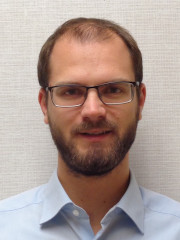
Dr. Philipp Grete is a postdoctoral research associate at the Hamburg Observatory (University of Hamburg), previously holding a Marie Skłodowska-Curie Fellowship at the same institution and a postdoctoral position at the Department of Physics & Astronomy, Michigan State University . His interdisciplinary research bridges astrophysics and computational methods , focusing on: Magnetohydrodynamic turbulence in astrophysical systems Performance-portable exascale simulation frameworks (Parthenon, AthenaPK) Cosmic ray transport mechanisms Anisotropic transport processes in weakly collisional plasmas Supercomputer-driven AGN feedback analysis He leads the XMAGNET project using DOE INCITE allocations on exascale systems and recently secured DFG funding for three years. His work has been recognized with the Postdoctoral Excellence in Research Award (MSU), SC23 Best Paper nomination, and CUG23 Best Paper Runner-up award.
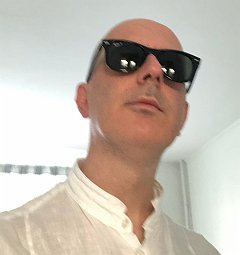
Stefano Markidis is a Professor of Computer Science specializing in high-performance computing systems at KTH Royal Institute of Technology in Sweden. He works in the Division of Computational Science and Technology, focusing on supercomputers, quantum computers, and computational methods for scientific simulations. His research spans multiple domains including plasma physics, computational fluid dynamics, and quantum computing. Markidis holds an MS degree from Politecnico di Torino and a PhD in Nuclear Engineering from the University of Illinois at Urbana-Champaign. Prior to joining KTH, he was a graduate research assistant at Los Alamos National Laboratory and Lawrence Berkeley National Laboratory, followed by a postdoc at KU Leuven. His academic journey reflects a strong foundation in both engineering and computational science. His primary research interests include High-Performance Computing , Heterogeneous Systems , and Quantum Computing . Markidis develops computational methods for plasma physics, particle-in-cell simulations, and fluid dynamics. His work bridges theoretical physics and practical computing, with applications in space physics, fusion energy, and materials science. He is particularly known for contributions to parallel computing, GPU acceleration, and the development of scalable simulation frameworks like Neko for computational fluid dynamics. His research increasingly integrates machine learning techniques with traditional numerical methods. Analysis of Markidis' recent publications reveals a strong focus on quantum-classical hybrid computing, advanced particle-in-cell methods, and high-fidelity computational fluid dynamics. His work demonstrates expertise in programming models for heterogeneous architectures including GPUs and quantum processors, with growing emphasis on AI-enhanced scientific computing. R&D100 award (2005) for the CartaBlanca project R&D100 award (2017) for the SHIELDS project Markidis teaches multiple courses at KTH including Applied GPU Programming, Quantum Computing for Computer Scientists, and High-performance Computing for Computational Scientists. He has supervised numerous degree projects across various specializations in computer science and electrical engineering. His research has been supported by various grants related to high-performance computing and quantum technologies, with applications spanning from space physics to medical treatments. Markidis leads research in computational science with a focus on developing frameworks like Neko for extreme-scale computational fluid dynamics. His team works on integrating traditional HPC methods with emerging technologies including quantum computing and AI, contributing to advancements in scientific simulation across multiple disciplines.
Cung Nguyen is a Lecturer in Civil Engineering at the University of Salford, within the School of Science, Engineering & Environment. His research focuses on Wind Engineering and Structural Dynamics, with particular emphasis on modeling and simulations of typhoon wind fields, wind loading, wind-induced structural vibrations, and infrastructure resilience to wind hazards. His research interests include: Wind Engineering Structural Dynamics Infrastructure resilience to extreme events Climate change Dr. Nguyen's research employs analytical, numerical and probabilistic modeling, wind tunnel testing, and Computational Fluid Dynamics (CFD) simulations. His work has been funded by prestigious organizations including the Royal Society, the Engineering and Physical Sciences Research Council (EPSRC), Newton Fund, and UK Turbulence Consortium. His recent publications (2019-2024) show a strong focus on vortex shedding, wake dynamics, building clusters, and structural responses to wind loading, reflecting his expertise in wind engineering applications. Dr. Nguyen contributes to the UN Sustainable Development Goals related to resilient infrastructure, sustainable cities, and climate action. He teaches several modules including: Mathematics for Civil Engineering (Level 4-5) Highway Design and Analysis (Level 5) Case studies in Environment Engineering (Level 6) Finite Element Methods with Applications in Seismic Engineering (Level 7) Tall buildings (Level 7)