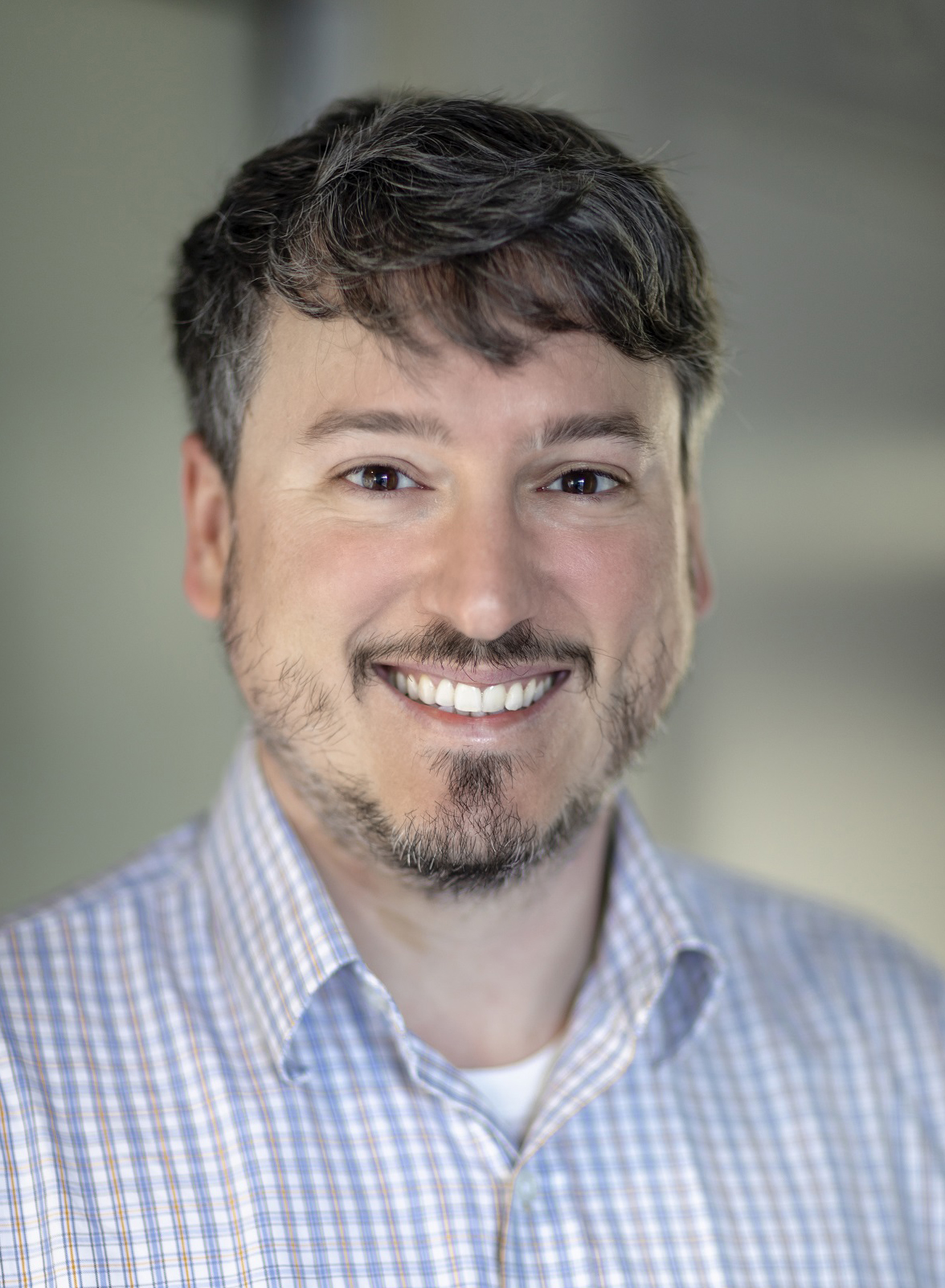
Elliott Ash is an Associate Professor of Law, Economics, and Data Science at ETH Zurich's Center for Law & Economics. He holds a Ph.D. in Economics and J.D. from Columbia University, a B.A. in Economics, Government, and Philosophy from the University of Texas at Austin, and an LL.M. in International Criminal Law from the University of Amsterdam. His research focuses on empirical legal studies using econometrics, NLP, and ML, examining topics like judicial behavior, legislative impact, and AI-driven governance. He has been funded by the ERC, Swiss NSF, and others. Research Interests: Elliott explores automation of legal decisions, text-as-data analysis in law, and the intersection of AI with legal systems. He develops tools like BallotBot and LePaRD to enhance legal transparency and public understanding. His work bridges law, economics, and computer science, with publications in top journals like the American Economic Journal and Review of Economics and Statistics . Teaching: Courses include Building a Robot Judge , Natural Language Processing for Law , and Big Data for Public Policy . He co-organizes the Zurich Workshop in AI+Economics and Monash-Warwick-Zurich Text-as-Data Workshops. Awards: European Research Council Starting Grant, Swiss National Science Foundation Grant, and multiple grants from U.S. and Swiss institutions. His work has been featured in NPR , VoxEU , and Georgetown Law Journal . Labs/Teams: Leads the Swiss AI Initiative's Human-AI Alignment team, collaborates with the CEPR on Political Economy research, and serves as an Economic Journal Associate Editor.
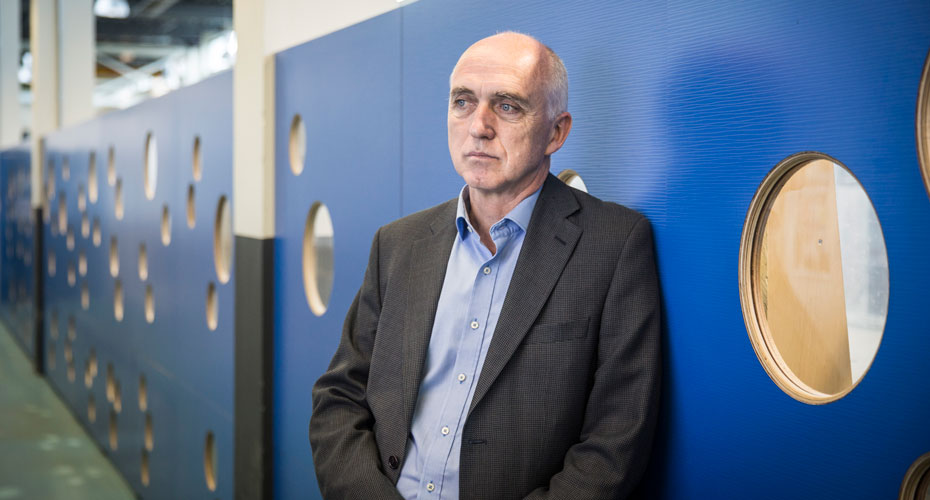
Professor Eugene O'Brien serves as Professor of Civil Engineering within the School of Civil Engineering at University College Dublin's College of Engineering and Architecture. His research focuses on critical structural assessment methodologies for long-span bridges, with particular expertise in traffic load modeling and bridge safety evaluation. His research interests center on structural engineering challenges related to bridge infrastructure, specifically traffic load assessment for long-span bridges , structural health monitoring systems , and sustainable infrastructure management . Professor O'Brien pioneered camera-based monitoring techniques to overcome limitations of traditional Weigh-in-Motion sensors during congested traffic conditions, enabling more accurate safety assessments of aging bridge infrastructure. His work addresses the critical gap in quantifying traffic loading on bridges with spans up to 2 kilometers, where conventional methods fail during stop-and-go traffic scenarios. Analysis of his 15 most recent publications reveals a consistent research trajectory focused on probabilistic modeling of traffic loads, with increasing sophistication in handling extreme events and long-term infrastructure performance. His work spans fundamental statistical methods for load effect prediction, practical applications in real-world bridge assessments, and environmental considerations regarding infrastructure carbon footprints. The research demonstrates strong methodological evolution from basic traffic modeling to comprehensive lifetime assessment frameworks incorporating sustainability metrics. As co-founder and director of Roughan O'Donovan's subsidiary Innovative Solutions (ROD-IS), Professor O'Brien has translated research into practice through significant projects including the Malahide Railway Viaduct assessment (2009), EU-funded bridge lifespan simulation tools (2011), vibration reduction systems for bridge cables, and structural assessments for major international projects including the Ting Kau Bridge in Hong Kong, the Forth Road Bridge in Scotland, and the Chacao Channel Bridge in Chile. His consultancy work demonstrates direct application of academic research to critical infrastructure challenges worldwide. Professor O'Brien's research group operates at the intersection of structural engineering and sustainable infrastructure management, with particular emphasis on extending bridge service life through accurate safety assessment. Their work on the Chacao Channel Bridge demonstrates practical implementation of traffic monitoring systems using toll data to manage truck loads, while their environmental impact analysis shows how accurate safety assessments reduce unnecessary bridge replacements, thereby lowering the carbon footprint of transportation infrastructure through extended service life of carbon-intensive materials like concrete and steel.
Ashli Owen-Smith is a behavioral scientist affiliated with the School of Public Health at Georgia State University , where her research focuses on mental health disparities, suicide prevention, and integrative/complementary approaches for complex mental-physical health conditions. She works with underserved populations including refugees/immigrants, incarcerated individuals, and LGBTQ+ communities through community-based participatory research and mixed-methods frameworks. Her current projects are funded by CDC , DBHDD , and DPH . Education: Ph.D. in Behavioral Sciences (Emory, 2009), S.M. in Public Health (Harvard, 2005), B.A. in Psychology (Smith College, 2001) Her research spans mental health , trauma , suicide prevention , and mindfulness-based interventions . Recent work examines telehealth adaptations for chronic pain and mental health, vaccine hesitancy in refugee communities, and social determinants of suicide . She leads studies on gender-affirming care and health disparities in LGBTQ+ populations. Key article trends include epidemiological analysis of suicide risk factors, COVID-19 impacts on mental health, ICD-10 coding for autism, and complementary medicine in trauma recovery. Subfields span telehealth , health equity , mental-physical comorbidity , and community engagement . Students she has mentored include C.A. Scarlett , T. Griner , and M.M. Sesay . Her work integrates public health policy , clinical research , and health systems analysis .
Douglas K. Snyder is a Professor in the Department of Psychological and Brain Sciences within the College of Liberal Arts at Texas A&M University. He previously served as Director of Clinical Training from 1991 to 2012 and has been internationally recognized for his research on marital assessment and outcome research on marital therapy, particularly through his development of the Marital Satisfaction Inventory. Dr. Snyder earned his bachelor's degree from Wittenberg University in 1974, received his doctoral degree from the University of North Carolina at Chapel Hill in 1978, and completed his internship at Duke University Medical Center. Prior to his appointment at Texas A&M, he served on the faculty at Wayne State University in Detroit and at the University of Kentucky in Lexington, where he also served as Director of Clinical Training and Associate Dean in the College of Arts and Sciences. Dr. Snyder's research emphasizes the assessment, treatment, and prevention of couple relationship distress. His work centers on the Marital Satisfaction Inventory, a multidimensional measure of relationship accord now published in several languages and used worldwide. His treatment research focuses on tailoring therapy to specific partner and relationship characteristics by integrating cognitive, behavioral, emotion-focused, and insight-oriented interventions. His specific clinical interests include treating difficult couples with emotional, behavioral, and health problems, with particular attention to military and veteran couples and those dealing with infidelity. Dr. Snyder's recent publications demonstrate continued leadership in couple therapy, with emphasis on evidence-based approaches, treatment of infidelity, military couples, and cross-cultural applications of couple assessment tools. His work spans theoretical advancements and practical clinical applications. Outstanding Research Publication Award, Association for Marriage and Family Therapy, 1991 Professor of the Year Award, Texas Psychological Association - Division of Students, 1993 Award for Distinguished Contributions to Family Psychology, American Psychological Association, 2005 Outstanding Contributions to Science Award, Texas Psychological Association, 2008 Distinguished Alumnae Award, University of North Carolina (Chapel Hill), 2012 Distinguished Psychologist Award for Lifetime Contributions to Psychotherapy, American Psychological Association, 2015 Fellow of the American Psychological Association (Divisions 5, 12, 19, 29, 43) Fellow of the Association for Behavioral and Cognitive Therapies Fellow of the Society for Personality Assessment Dr. Snyder has served as Editor of the Clinician's Research Digest and as Associate Editor for the Journal of Consulting and Clinical Psychology and the Journal of Family Psychology. His research has been supported by the National Institute of Mental Health, with significant focus on military couples and relationship distress. He has developed evidence-based approaches for assessing and treating relationship problems across diverse cultural contexts. Dr. Snyder is affiliated with the Personality Processes research cluster at Texas A&M University, focusing on objective personality assessment and clinical assessment of couples and families. His work bridges research and clinical practice, with emphasis on developing practical assessment tools and treatment approaches for clinicians working with distressed couples.
Dr. Sarah Benson is an Associate Professor in the Department of Disability, Inclusion and Special Needs at the University of Birmingham, based at the Dubai Campus. She serves as Programme Lead for the Inclusion and Special Education Needs PGCert and Masters in both the UK and Dubai, and is affiliated with the School of Education. Educational Background: PhD in Special Education, University of Virginia, 2020 MA in International Education, The George Washington University, 2010 BA in English and Special Education, James Madison University, 2002 Her research focuses on inclusive education policy and practice, particularly in the Middle East and North Africa (MENA) region. She explores teacher development, inclusive science curriculum for primary students, and autism support in Gulf countries. Her work is deeply informed by cross-cultural experiences, including Peace Corps service in Jordan and a Fulbright year in Norway. Dr. Benson's recent publications reveal a strong trend in inclusive teaching strategies, policy analysis in Jordan and the UAE, and the integration of science education with special needs pedagogy. Her research emphasizes practical implementation, teacher preparedness, and equity in educational access. Scientific Awards and Honors: Fulbright Scholar (2013) President, Curry School of Education and Human Development (University of Virginia) Dr. Benson is actively involved in research leadership, serving as Principal Investigator for the ESRC-GCRF Bhutan Inclusive Employment and Social Participation Project and Co-Investigator on the Disability Under Siege Network and a study on teachers' perceptions of autism in Ras Al-Khaimah. She currently supervises PhD candidates and contributes to international scholarly communities such as the Council for Exceptional Children and the Comparative International Education Society. She is also engaged in commissioned research, including a report on autism teaching preparedness in Ras Al-Khaimah, and teaches modules on cross-cultural special education, inclusion, and policy analysis.
Paulo Blikstein serves as Associate Professor of Communications, Media and Learning Technology Design at Columbia University. Previously, he was Assistant Professor of Education and (by courtesy) Computer Science at Stanford University and co-founded the Lemann Center for Brazilian Education (2008-2018). Education: Ph.D. in Learning Sciences, Northwestern University (2009) M.A. in Media Arts & Sciences, MIT Media Lab (2002) M.Eng. in Electronic Engineering, University of São Paulo (2000) B.S. in Metallurgical Engineering, University of São Paulo (1998) His research pioneers constructionist learning environments through digital fabrication, educational robotics, and tangible interfaces—focusing on equitable access for underserved communities. Inspired by Paulo Freire and Seymour Papert, he develops open-source tools like the GoGo Board robotics platform and leads the global FabLab@School initiative establishing fabrication labs in schools across four continents. Current work emphasizes multimodal learning analytics to study student interactions in maker-centered classrooms. Publications reveal strong focus on democratizing invention through maker education, with recurring themes in constructionist theory application, multimodal assessment, and context-specific technology adaptation. Brazilian education reform and low-cost computational solutions form significant threads, particularly in 2016-2017 publications. Scientific Awards: Two Google Faculty Awards National Science Foundation Early Career Award (highest U.S. government honor for early-career scientists) Blikstein directs the Transformative Learning Technologies Lab (TLTL) and co-founded Stanford's Center for Educational Entrepreneurship and Innovation in Brazil. His FabLearn conference established the first academic forum on Maker Movement applications in education. While specific grant details aren't listed, the NSF CAREER Award signifies major federal research funding. He spearheads the FabLab@School project deploying advanced fabrication labs in K-12 institutions worldwide and founded the FabLearn conference series. His work integrates teams of engineers, educators, and designers to create scalable solutions for resource-constrained learning environments.
Dr. Farha Sattar is a Lecturer in Education (Mathematics) at the Faculty of Arts and Society, Charles Darwin University. With over thirty years of teaching experience in Mathematics, Science education, GIS, Remote Sensing, and e-Learning technologies at undergraduate and postgraduate levels, Dr. Sattar brings extensive expertise to her academic role. She holds a PhD in Geospatial Science from Charles Darwin University, focusing on Spatial Mathematical Modelling for 3D Gully Mapping and Erosion Quantification. Her educational background includes: PhD in Geospatial Science (Three Dimensional Gully Mapping and Erosion Quantification within a Geoinformatics Framework), Charles Darwin University (2012) Prior academic experience at several Asian and European universities Dr. Sattar's research spans multiple interdisciplinary fields with a strong focus on the intersection of education and technology. Her primary research interests include Mathematics Education, STEM Education, Geoscience Education, Spatial Mathematical Modelling, Drone Technology, Remote Sensing, Geographic Information Systems, and Innovative Pedagogies such as experiential learning and inquiry-based approaches. She has developed expertise in cognitive development, particularly in fostering critical and creative thinking skills through iSTEM approaches. An analysis of Dr. Sattar's recent publications reveals a consistent trajectory toward integrating emerging technologies like drones, augmented reality, and geospatial artificial intelligence into educational contexts. Her work demonstrates a progression from foundational geospatial research on erosion mapping to innovative applications in STEM education. Recent publications increasingly focus on drone technology for educational purposes, spatial data infrastructure for policy development, and computational thinking development through technology-enhanced learning. Dr. Sattar has received numerous accolades for her contributions to education and research: NT Science Week Awards – Inspired NT STEM Hero of the Year award (2021) Long Service Recognition Award (2023) Finalist, CDU Alumni Award (2023) Multiple Best Presentation Awards (2008, 2010, 2017) Australian College of Educators - 2021 College Medal Nominee As a supervisor, Dr. Sattar mentors postgraduate research students including Ayesha Farhan, who is working on "A Framework for Cognitive Development: Fostering Critical and Creative Thinking Skills, Using iSTEM Approach." She actively secures research funding through various projects such as "DBELaSTEM: Drone-Based Experiential Learning and STEM Education," "STEM_D & VR: Youth STEM Learning and Empowerment with Drones and VR," and "CodProg Drone Lab." Her research is supported by grants from NT Government projects and other external funding sources. Dr. Sattar leads the CodProg Drone Lab, an innovative research space exploring drone technology applications in education. She is a certified drone pilot and aeronautical radio operator, which enables her to bridge theoretical knowledge with practical applications. Her work with the "Flying Forward: Drones, STEM Equity, and Indigenous Empowerment" initiative demonstrates her commitment to community engagement and addressing educational disparities through technology.
Linyi Li is an Assistant Professor in the School of Computing Science at Simon Fraser University (SFU), leading the Trustworthy Artificial Intelligence (TAI) Lab. His research focuses on certifiably trustworthy deep learning systems, combining machine learning and computer security. He holds a PhD from the University of Illinois Urbana-Champaign (UIUC) and a B.Eng. from Tsinghua University. Affiliations: Simon Fraser University, TAI Lab Education: PhD in Computer Science, UIUC, 2023 B.Eng (Cum Laude), Tsinghua University, 2018 His research interests include deep learning , trustworthy machine learning , large language models , and software engineering . He emphasizes rigorous certification of robustness, fairness, and numerical reliability in AI systems. Recent work includes the InfiBench benchmark for evaluating code LLMs and advancements in neural network verification. Recent Research Trends: His publications span certified robustness, fairness guarantees, and scalable verification techniques for deep learning models. He also explores scientific evaluation of foundation models and adversarial defense mechanisms. Awards: Rising Stars in Data Science AdvML Rising Star Award Wing Kai Cheng Fellowship Finalist: Qualcomm Innovation Fellowship (2022) Winner: VNN-COMP'23 Competition (Team α, β-CROWN) Advising & Grants: As a PI, he oversees the TAI Lab's research. Though no specific grants are listed, his work is funded through competitive awards and university resources. Labs/Teams: Leads the TAI Lab at SFU, focusing on foundational and applied research in trustworthy AI.
Professor Robert McLaughlin is a faculty member in the School of Biomedicine at the University of Adelaide, affiliated with the Faculty of Health and Medical Sciences. He leads the Bioengineering Imaging Group and serves as Managing Director of the start-up Miniprobes. His research focuses on developing optical imaging technologies, including non-invasive tools for blood flow assessment and miniaturized imaging probes. He has secured over $14M in research grants and holds an h-index of 45 with 98 journal papers, 7 patents, and 2 book chapters. Prof. McLaughlin’s career includes roles at the University of Oxford and Siemens Medical Solutions, followed by academic leadership since 2007. His innovations span optical coherence tomography (OCT), fluorescence imaging, and dual-modality systems for clinical applications. Awards include the 2014 WA Innovator of the Year, 2015 Australian Innovation Challenge, and 2016 South Australian Premier’s Research Fellowship. His research emphasizes practical medical solutions, such as imaging needles for deep-tissue diagnostics and optical devices for real-time surgical monitoring. The Bioengineering Imaging Group collaborates with industry and academia to translate technologies into clinical practice.
Gerold Schneider is an Associate Professor at the University of Zurich , affiliated with the Department of Computational Linguistics under the Faculty of Arts and Social Sciences and Faculty of Business, Economics and Informatics . He leads the Text Crunching Center (TCC) , focusing on interdisciplinary research at the intersection of NLP, Digital Humanities, and Health Data Science. Research Interests His work spans Text Analytics , Digital Humanities , Corpus Linguistics , and Health Data Science , with applications in: Biomedical NLP (e.g., Alzheimer’s detection, clinical trials) Digital Humanities projects (e.g., analyzing Charles Dickens, UN archives) Migration discourse framing across languages Adversarial data collection for hate speech detection Interdisciplinary methodologies for digital unstructured data Recent Publications 2025–2024 research highlights include annotated corpora for preclinical and neurological studies, AI-driven analysis of historical linguistic variation, and innovative tools for language learners. His NLP applications address health diagnostics, ethical AI, and cross-lingual political discourse. Labs & Teams As TCC leader, he spearheads collaborative projects within the Digital Society Initiative (DSI) communities (AI & Law, Health, Ethics, etc.), integrating computational methods with humanities and health research.
James B. Rawlings is the Mellichamp Process Control Chair in the Department of Chemical Engineering at the University of California, Santa Barbara, and holds the rank of Professor. His research focuses on chemical process control, reaction engineering at the molecular level, and computational modeling with tools like Octave. He has held prominent roles, including the Paul A. Elfers Chair at UW Madison and the Steenbock Professor of Engineering. Education: PhD in Chemical Engineering from the University of Wisconsin-Madison (1985), BS in Chemical Engineering from The University of Texas at Austin. Postdoctoral training at the Institute for System Dynamics and Process Control, University of Stuttgart (1985-1986). Research interests include nonlinear systems, model predictive control (MPC), moving horizon estimation (MHE), and stochastic reaction engineering. His work bridges theory and industrial applications, emphasizing robustness and practical implementation. Awards: Elected Fellow of the National Academy of Engineering (2016), IFAC (2016), and IEEE (2012). Recipient of the Process Automation Hall of Fame (2016), Vilas Distinguished Achievement Professor (2015), and numerous AIChE awards. Honorary doctorate from Technical University of Denmark (2011). Grants & Leadership: Led NSF-funded projects on MPC and control systems. Developed Octave, a widely used computational tool. Active in academic leadership and curriculum development, recognized with teaching awards including the Chancellor’s Distinguished Teaching Award (2013). Labs & Teams: Directs research groups focused on control theory, computational tools, and industrial process optimization. Collaborates with industry on MPC implementation and disturbance modeling.
Prof. Dr. Halis Aydemir is a Professor at the Department of Basic Islamic Sciences in Dumlupınar University's Faculty of Theology. He holds concurrent administrative roles including Vice Rector (2015–2019), Dean of the Faculty of Islamic Sciences (2015–2020), and Head of the Hadith Department. His academic journey includes a BSc in Electrical Engineering (Istanbul Technical University, 1995) and a PhD in Basic Islamic Sciences (Uludağ University, 2004). His research focuses on applying probability theory to Hadith transmission systems, developing mathematical models for inheritance calculations in Islamic law, and Arabic language education. Notable projects include the 'Al-Musnad al-Sahih' manuscript verification (2002–2012) and multiple inheritance calculation software projects. He has authored over 80 publications including critical editions of Hadith collections and theoretical works on Hadith reliability. Awards: No scientific awards explicitly mentioned. Administrative roles include leadership in religious affairs projects and educational software initiatives. Research highlights include probabilistic analysis of narrator reliability, isnad model evaluation, and digital tools for Islamic legal calculations. His work bridges traditional Islamic scholarship with modern quantitative methods.
Dag Henrik Tuastad is a Professor of Middle East Studies at the Department of Culture Studies and Oriental Languages (IKOS) at the University of Oslo. His research focuses on kinship dynamics in Palestinian politics, rebel governance (notably Hamas rule in Gaza 2007–2023), political representation crises, and the intersection of sports and politics in the Middle East. Current projects include senior research at Football and Religion in the Middle East (FORM) , funded by the Norwegian Research Council (2021–2026) Former project leader for Rebel Governance in the Middle East (2017–2021) PhD in Social Anthropology (2008) on kinship in Palestinian politics His recent publications analyze Hamas’s symbolic authority, football’s role in Jordanian-Palestinian identity formation, and the erosion of legal frameworks in the West Bank. He critiques media bias (e.g., in Qatar World Cup coverage) and explores how football culture reflects broader political tensions. Teaching: Courses on Middle East history, cultural anthropology, and conflict resolution Regional Focus: Palestine, Jordan, Gaza, and the Levant
David L. Schwartz serves as the William G. and Virginia K. Karnes Research Professor of Law at Northwestern University's Pritzker School of Law, where he joined the faculty in 2015 and served as Associate Dean of Research & Intellectual Life from 2019-2022. His interdisciplinary work bridges legal scholarship, data science, and technology policy with emphasis on patent systems and judicial transparency. His educational foundation includes a BS from the University of Illinois at Urbana-Champaign and a JD cum laude from the University of Michigan Law School. Professor Schwartz specializes in empirical analysis of intellectual property systems , particularly patent litigation dynamics and court record accessibility. His research leverages computational methods to transform legal scholarship through projects like SCALES OKN, where he examines how technological interventions can democratize access to justice. This work situates him at the nexus of legal informatics , patent policy , and court system innovation , challenging traditional methodologies in legal academia. His publication trajectory reveals a decisive shift toward technology-driven legal transparency since 2018, with recent work focusing on large-scale court record analysis and open justice infrastructure. The 2024 Northwestern University Law Review article represents the culmination of his NSF-funded SCALES initiative, demonstrating how machine-readable litigation data can reshape legal scholarship and practice. As Co-Principal Investigator of the NSF-funded Systematic Content Analysis of Litigation EventS Open Knowledge Network (SCALES OKN), he leads a multidisciplinary consortium developing tools to convert opaque court records into structured, analyzable datasets. This $1.2M grant supports collaboration between legal scholars, computer scientists, and data engineers to build public infrastructure for judicial transparency. The SCALES OKN project operates as a cross-institutional research collective involving Northwestern faculty, data scientists from multiple universities, and partnerships with legal technology organizations. It maintains active development teams for natural language processing pipelines, litigation event databases, and public-facing analytical interfaces serving legal practitioners and researchers.
Karoline Faust is an Associate Professor at KU Leuven, affiliated with the Laboratory of Molecular Bacteriology (Rega Institute) and the Faculty of Medicine . She contributes to the iSi Health and Leuven One Health institutes, and serves on senior academic councils. Her research spans microbial systems biology, focusing on community dynamics and network analysis. Education: PhD in bioinformatics (2010, KU Leuven) Affiliations: KU Leuven, ISME Journal editorial board, Belgian Society for Microbiology Her research investigates microbial community dynamics , systems biology approaches to microbiomes, and bioinformatics tool development . She specializes in modeling human gut microbiota , synthetic microbial communities , and environmental microbiomes (e.g., microplastic impacts on Daphnia microbiomes). Her work integrates metabolic modeling , network analysis , and experimental systems to understand microbial interactions. Recent publications highlight her contributions to microbial network inference , 16S rRNA sequencing protocols , microfluidics , and ecological modeling of microbiomes. She develops tools like manta , miaSim , and CoNet to analyze community structures. Teaching: Karoline co-teaches courses in microbiology, bioinformatics, and network analysis at KU Leuven, and has contributed to international workshops on microbial network inference. Scientific Engagement: She serves as Senior Editor at ISME Journal and Secretary of the Belgian Society for Microbiology .