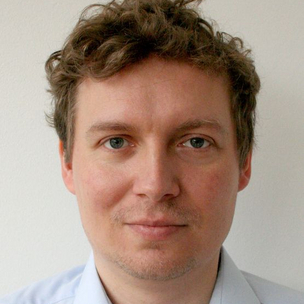
Zihan Zhou is an Assistant Professor at the College of Information Sciences and Technology, Penn State University, specializing in computer vision, machine learning, and 3D reconstruction. His research bridges geometric modeling, image processing, and human-computer interaction, with applications in assistive technology and creative design. Email: zuz22@psu.edu His work focuses on robust face recognition, sparse representation, and vision-language approaches for converting 2D CAD drawings into 3D parametric models. Recent projects include neural rendering for wireframe-to-image translation and data-driven 3D scene modeling. The 15 most recent publications highlight his contributions to end-to-end floorplan generation, depth estimation, trajectory prediction, and structured 3D modeling. These works integrate convolutional neural networks, graph construction, and optimization algorithms. Projects like Building Energy Savings by Tuning Indoor Lighting underscore his interdisciplinary approach, combining computer vision with environmental sustainability.
Richard Johannes Mahlmann is a Lecturer at the Salzburg University of Applied Sciences, affiliated with the Department of Design and Green Engineering. His teaching responsibilities include courses in design awareness, CAD, and digital prototyping methodologies. Based at Campus Kuchl, his work focuses on integrating sustainable practices into engineering design and visualization techniques. Teaching Responsibilities: Design Awareness 1 (WS 2025) CAD and Digital Prototyping 3 & 4 (WS 2025) Rendering Methodology 3 & 4 (WS 2025)
Murat Bengisu is a Professor at the Department of Industrial Design, Izmir University of Economics, where he has been employed since March 2008. He holds a Ph.D. in Materials Science from New Mexico Tech, USA, and has an academic career spanning Turkey, Northern Cyprus, and Italy. His research focuses on ceramic and glass materials, innovation management, and design for disabled individuals. M.S. in Materials Science, New Mexico Tech Ph.D. in Materials Science, New Mexico Tech His research interests bridge traditional material science with contemporary design challenges, including: Development of smart, color-changing materials Historical analysis of Beykoz glassware Biocomposite integration in computational design Radioactive waste immobilization techniques Design management strategies for accessibility His publications span interdisciplinary topics, with a focus on sustainable materials, assistive technologies, and structural performance analysis. While not explicitly listing awards, his 33 refereed journal articles and four books highlight significant scholarly contributions.
Rabih Younes is an Associate Professor of the Practice in the Department of Electrical and Computer Engineering at Duke University's Pratt School of Engineering. He also serves as the Associate Director of Undergraduate Studies and is a Faculty Network Member of the Duke Institute for Brain Sciences. Additionally, he is the Duke FRC Program Director for team 8429, Valence Robotics, and Head of the Duke KEEN Leadership Team. Dr. Younes received his PhD in Computer Engineering from Virginia Tech in 2018, following his MSE in Computer Engineering from the Lebanese American University in 2013 and his BE in Computer Engineering from the same university in 2011. He speaks nine languages (fluent in three) and holds various certificates including Engineering Education and Future Professoriate, Cisco Networking Academy certifications (CCNP, CCNA, ITE Instructor Trainer), National Instruments CLAD, and USPA A-Licensed Skydiver. His research spans wearable computing, ubiquitous/pervasive computing, activity recognition, context awareness, machine learning, engineering education, and Middle Eastern politics. Dr. Younes has published extensively on topics ranging from wearable health monitoring systems to innovative approaches in engineering education. His recent work demonstrates a growing integration of machine learning techniques with wearable sensor data for health applications, activity recognition, and educational assessment tools. Dr. Younes' scholarly output shows a consistent trajectory from fundamental wearable computing research toward practical applications in health monitoring and educational technology. His publications reveal an increasing focus on real-world implementation challenges, data augmentation techniques, and educational assessment tools that bridge engineering theory with practical classroom applications. Tau Beta Pi honor society member Eta Kappa Nu honor society member Phi Kappa Phi honor society member Golden Key honor society member KEEN Annual Support grant (2024-2026) Dr. Younes actively mentors students through various programs including EGR 393: Research Projects in Engineering and ECE 899: Special Readings in Electrical Engineering. He has received grant support through the KEEN Annual Support program for 2024-2026, focusing on innovative engineering education approaches. His teaching philosophy emphasizes student development beyond academics, incorporating life skills and critical thinking. As Director of Valence Robotics (team 8429), Dr. Younes leads high school robotics initiatives that have earned state championship qualifications. His lab work focuses on wearable computing systems with applications in health monitoring (including pet emotional health tracking), activity recognition, and educational technology tools. He utilizes agile project management frameworks like Scrum in his courses and implements tools to enhance student learning retention.
Professor Gerard (Gerry) Lacey is Professor of Electronic Engineering at Maynooth University within the Faculty of Science and Engineering. He also serves as Head of the Department of Electronic Engineering and is affiliated with the Hamilton Institute and ALL Institute at Maynooth. Education BE in Computer Engineering – Trinity College Dublin PhD in Robotics – Trinity College Dublin MBA – University College Dublin Research Focus Professor Lacey’s research integrates robotics, real-time computer vision and human-machine systems with healthcare applications. His work spans assistive robotics for the elderly and visually impaired, augmented-reality surgical simulation, and technology-enabled infection prevention. Key themes include psychomotor learning in digital training tools, AI-driven hand-hygiene monitoring, and the design of user-centred healthcare technologies. Publication Trends Recent publications (2020-2021) concentrate on leveraging augmented reality and artificial intelligence to improve hand-hygiene compliance among healthcare workers, reflecting a translational trajectory from vision-based algorithms to large-scale hospital deployment. Earlier work (1995-2014) laid foundational contributions in mobility aids for the blind, endoscopic image enhancement, and robotic guidance systems. Awards & Recognition RESNA PVA Design Award for Robotics EU IST Award Irish Software Association Innovation Award Enterprise Ireland Technology Commercialisation Award Trinity College Innovation Award Entrepreneurship & Impact Professor Lacey has founded two university spin-outs: Haptica (2000), which created mobile healthcare robots and AR surgical simulators (acquired by CAE Healthcare in 2011), and SureWash (2010), whose hand-hygiene training systems are deployed internationally in hospitals. These ventures bridge academic research and clinical practice, securing real-world impact for his innovations. Laboratories & Collaborations He leads research activities within the Electronic Engineering Department and participates in interdisciplinary initiatives at the Hamilton Institute (systems modelling) and ALL Institute (assisted living and learning). His teams bring together engineers, healthcare professionals and industry partners to advance assistive and medical technologies.
Adam Misik is a researcher at the Chair of Media Technology (Prof. Steinbach) within the College of Engineering at the Technical University of Munich. He earned a B.Sc. in 2019 and M.Sc. in 2022 in Electrical Engineering and Information Technology, with study visits at EPFL and Télécom ParisTech. Since June 2022, he has been an external PhD student at Siemens AG. His research focuses on multimodal sensor data analysis using computer vision and deep learning techniques, particularly for 3D reconstruction and localization problems. His work intersects with fields like haptic communication , indoor mapping , and human activity understanding . Key publication trends include point cloud registration , hyperbolic learning , and equivariant neural networks . Recent works address surface material classification (2025), CAD model retrieval (2025), and SLAM systems (2024). Education: B.Sc. (2019), M.Sc. (2022) in Electrical Engineering and Information Technology, TU Munich Current Role: External PhD student at Siemens AG since 2022 Research Affiliation: Chair of Media Technology at TU Munich, part of the Munich Institute of Robotics and Machine Intelligence (MIRMI)
Dr. Onur KILIÇ serves as a Lecturer in the Department of Interior Architecture at Cukurova University's Faculty of Architecture, Turkey, focusing on sustainable design innovation and digital technologies in architectural practice and education. His research spans waste material utilization in architecture, virtual reality applications for design education, and cinematic interior space analysis—particularly in horror and science fiction genres. He investigates texture composition techniques, ergonomic design in confined environments like submarines, and corporate identity expression through retail spatial design, with emphasis on material science applications including wood composites. Analysis of his 28 publications reveals consistent exploration of sustainable material cycles, educational methodologies for detail design, and psychological impacts of spatial narratives in media. His recent 2024 works demonstrate evolving focus on circular economy principles in architecture and cross-disciplinary connections between film studies and interior spatial psychology. Scientific awards: No awards documented in available sources. Advising and grants: No information available regarding student supervision, research grants, or funded projects. Labs and teams: No specific research laboratories, collaborative teams, or institutional partnerships are referenced in the provided materials.
Svitlana Anatoliivna Bovkun is a Senior Lecturer at the Department of Integrated Technologies of Welding and Modeling of Structures within the Engineering Faculty of Zaporizhzhia Polytechnic National University. With academic activities since 2005, she specializes in engineering graphics and descriptive geometry, contributing to educational materials and interdisciplinary research at the intersection of design, mathematics, and technical visualization. Education: Electrical Engineer from V.Ya. Chubar Mass Media (1987) Her research focuses on geometric principles in technical representation, including linear perspective techniques and spatial modeling. She has authored textbooks and conference papers exploring dimensional constraints in manufacturing, geometric illusions, and biomimetic design applications. Scientific Activities: Though no formal awards are listed, her work spans 15+ publications, including two major textbooks. She actively participates in the university’s Science Week conferences, presenting research on geometric forms in architecture and bionics in design. Languages: English (with dictionary assistance) Contact: Room 341, 64 Zhukovsky St., Zaporizhzhia, Ukraine Phone: +380(61)769-82-60
Vahidin Hadžiabdić is a full professor in the Department of Mathematics at the Faculty of Mechanical Engineering, University of Sarajevo. Born on October 30, 1980, in Olovo, Bosnia and Herzegovina, he has built a distinguished academic career spanning nearly two decades. Beyond his primary appointment, he collaborates with multiple faculties at the University of Sarajevo including the Faculty of Natural Sciences and Mathematics, Faculty of Traffic and Communications, Faculty of Electrical Engineering, Faculty of Forestry, and Faculty of Economics. He also maintains academic connections with the University of Zenica and University Džemal Bijedić in Mostar. Hadžiabdić completed his educational journey at the University of Sarajevo, earning his bachelor's degree in Mathematics in 2004 with exceptional grades (10/10, average 8.44). He continued with postgraduate studies, completing his master's thesis titled 'Retraction method in qualitative analysis of differential equations and its application to some linear and nonlinear problems' in 2010, and defended his doctoral dissertation 'Invariant curves and global dynamics of certain quadratic fractional systems of differential equations in the plane' in 2016. His research primarily focuses on differential equations, difference equations, and dynamical systems, with significant contributions to qualitative analysis and mathematical modeling. His work spans theoretical mathematics with applications in engineering, ecology, and various scientific domains. Hadžiabdić has developed sophisticated methods for analyzing stability, bifurcations, and global behavior of nonlinear systems, particularly those with quadratic and polynomial nonlinearities. Analysis of his 15 most recent publications reveals a consistent research trajectory centered around discrete dynamical systems, particularly rational difference equations. His work demonstrates increasing sophistication in analyzing global behavior, stability properties, and bifurcation phenomena. Recent publications show expansion into interdisciplinary applications including biomechanics, energy systems, and educational technology, while maintaining strong theoretical foundations in mathematical analysis. University of Sarajevo award for scientific work results (2021) Hadžiabdić has mentored numerous graduate students across mathematics and engineering disciplines, guiding research on topics ranging from hyperbolic geometry to injection molding tools. He has led multiple research projects including 'Application of nullcline method to a model of competitive species' (2018), 'Optimization of the distribution of electric stresses within medium voltage cable terminals' (2019), and 'Research on air pollution in the Sarajevo Canton' (2020). His collaborative approach is evident in the diverse range of co-authors from mathematics, engineering, and environmental science backgrounds. While not explicitly detailed in the provided materials, his extensive work on mathematical modeling, differential equations, and interdisciplinary applications suggests active involvement in research groups focused on applied mathematics and computational modeling at the University of Sarajevo. His publications in engineering journals indicate strong connections with mechanical engineering research teams, particularly in areas requiring sophisticated mathematical analysis.
Dr. Yoana Ivanova is an Associate Professor at the Department of Telecommunications of the New Bulgarian University (NBU), where she has taught since 2016. Her academic career began at the Institute of Information and Communication Technologies of the Bulgarian Academy of Sciences (2014-2018). Education BSc in Engineering Physics , specialization in Communications and Electronics (2000-2004), Faculty of Physics, Sofia University MSc in Communication and Information Systems in Security and Defense (2012-2013), Military Academy "G. S. Rakovski" PhD in Automated Systems for Information Processing and Management (2020), Military Academy "G. S. Rakovski" Research Interests: Focus on cybersecurity for critical infrastructure, 3D modeling for aerospace engineering, microwave technology , and artificial neural networks for steganalysis and digital recognition. Her work bridges digital transformation with security applications in telecommunications and defense. Publications: Authored a 2024 monograph on crystal optimization for telecommunications , 10+ peer-reviewed papers in Web of Science journals (IJITS, MATEC Web of Conferences), and conference proceedings in NATO and defense-related symposia. Key topics include cyberattack simulations , 3D printing for radio devices , and AI-driven security solutions .
Trevor Coward is a Professor and Consultant in Maxillofacial & Craniofacial Rehabilitation at King's College London's Centre for Oral, Clinical & Translational Sciences. With over 35 years of experience, he specializes in facial prosthetics for patients with defects from cancer, trauma, or congenital conditions. He founded the Academic Centre of Reconstructive Science (ACRS) in 2015, integrating academic research with NHS clinical services to advance translational applications. His global collaborations include the University of Alberta, Hong Kong University, and institutions in Italy, India, and the USA. Education : PhD in Digitised Technology (University of London, 2004); MPhil in Artificial Ears (University of London, 1996). Trevor Coward's research focuses on digital technology integration in facial prosthesis design, including CT/MRI/Laser scanning, CAD/CAM, and stereophotogrammetry. He pioneered computerized color formulation for silicone prostheses to match diverse ethnic skin tones and developed innovative 3D printing techniques for anatomical parts. His work spans biomaterials testing, vascular engineering, and social perception studies aimed at reducing bias toward facial differences. Recent publications emphasize 3D morphable modeling for prosthetic design, color stability of silicone materials, and automated workflows for transparent facial orthoses. His team's clinical trials compare digital and conventional manufacturing methods for orbital and nasal prostheses, while collaborations explore bioactive PEEK functionalization for bone regeneration. These studies intersect with UN Sustainable Development Goals (SDGs) through education and healthcare innovation. Scientific Recognition : Clinical Research Fellow at the University of Alberta; Honorary Clinical Professor at Hong Kong University. As an educator, he established unique MSc programs at King's College London, attracting global students. His grants include EPSRC-funded projects like AMFaces (2023-2028) and ScanSeal (2020-2021). Coward actively participates in conferences as a keynote speaker, focusing on craniofacial implants and digital planning techniques. His lab, ACRS, serves as an international hub for maxillofacial prosthetic research and training.
Mathew Gillings is Assistant Professor at the Institute for Language and Discourse in Business at WU Vienna University of Economics and Business. He earned his PhD in Linguistics from Lancaster University and previously served as an Associate Lecturer there. Current teaching: Qualitative and Quantitative Research Methods & Data Analysis; Applied Research Projects; Critical Perspectives on Management Communication Professional memberships: International Pragmatics Association (IPrA), International Association for Media and Communication Research (IAMCR), Research Committee for Association for Business Communication (ABC) Research Interests include: Corpus linguistics with focus on deception detection and digital discourse analysis Critical discourse analysis of climate change, business, political, and media narratives Sociopragmatics of (im)politeness across cultural and regional boundaries Methodological innovation through integration of corpus techniques with qualitative and quantitative approaches Interdisciplinary applications in humanities, social sciences, and business contexts Scientific Contributions demonstrate expertise in combining corpus methods with discourse analysis, LLMs, and forensic linguistics. His 2024 monograph Corpus Linguistic Approaches to Deception Detection established foundational work in this field. Advising & Collaboration includes mentoring through WU's in-house faculty training, academic proofreading services, and cross-sector consultancy in UK and DACH region. He actively collaborates with international scholars like Gerlinde Mautner and Jonathan Culpeper.
Hana Koutná serves as an Assistant Professor at the Department of Drawing within the Faculty of Architecture at Brno University of Technology (VUT Brno). Her institutional role centers on integrating digital technologies into architectural education, with specific expertise in computer-aided design systems and three-dimensional visualization techniques. Her research focuses on the application of Building Information Modeling (BIM) and Computer-Aided Architectural Design (CAAD) in academic settings, emphasizing practical implementation of e-learning platforms for CAD instruction and 3D graphics. Koutná pioneered specialized computer graphics workstations and developed foundational courses including '3D Computer Graphics' and 'Presentation of Architectural Design' since the early 2000s. Analysis of her publication history (1999-2003) reveals consistent exploration of internet-based architectural visualization, with recurring themes in 3D model presentation, data visualization techniques, and the impact of information technologies on design methodologies. These works established frameworks later implemented in her educational projects. Between 2001-2019, Koutná secured multiple university-funded initiatives including the implementation of BIM systems (2018-2019), e-learning platforms for CAD instruction (2008-2009), and the modernization of computer graphics curricula through specialized workstations and new course development. These projects demonstrate sustained institutional commitment to evolving architectural pedagogy through digital tools.
Ingela Nyström is a Professor in Visualization at Uppsala University's Department of Information Technology. She serves as the node coordinator for InfraVis and as Director of Postgraduate Studies at the Department of Information Technology. Her interdisciplinary work bridges Uppsala University's three academic domains through collaborations with the Centre for Image Analysis (CBA), Centre for Women's Mental Health (WOMHER), Uppsala Centre for Digital Humanities (CDHU), and Medtech Science & Innovation (MTSI). Medical image analysis 3D visualization Haptics in surgery planning Interactive segmentation Digital geometry Biomedical engineering Her recent research focuses on rotation-equivariant neural networks for biomedical image classification, interactive segmentation tools for cranio-maxillofacial surgery planning, and precision evaluation of intraoral scanning technologies. Publications since 2023 demonstrate continued work on 3D imaging protocols for implant dentistry and surgical applications. 2024: Equivariant CNNs for rotation-invariant biomedical imaging 2023: In vivo precision studies of full-arch implant scans 2021: Virtual surgical planning with haptic assistance 2016-2017: Multimodal robotics perception and 3D segmentation tools 2014: Orbital morphology analysis in craniosynostoses 2005-2011: Foundational work in 3D skeletons and fuzzy object measurements
Prof. Dr. Kristian Hildebrand is a Professor of Computer Graphics and Interactive Systems at Berlin University of Applied Sciences and Technology since 2015, leading the Intelligent Interactive Systems research group. His work bridges computer graphics, VR/AR, computer vision, and machine learning. PhD in Computer Graphics (Technical University of Berlin, 2013) Diploma in Computer Science and Media (Bauhaus University Weimar) Academic experience: University of British Columbia, Max Planck Institute Saarbrücken Industry experience: ART+COM Studios Berlin, Disney Research Zurich, co-founder of kunstmatrix Research Interests span computer graphics , AR/VR systems , computer vision , and digital fabrication , with applications in: Medical therapy (AnorexiaVR, PAN-Assistant, VITALAB.mobile) Human-robot interaction (Digit gestures, Non-verbal communication) Machine learning (Domain adaptation, GAN-based medical image synthesis) Digital fabrication (Optimized 3D printing, crdbrd fabrication) Publications show trends in: Medical VR applications for mental health and geriatrics GAN-based medical image generation and segmentation Redirected walking and spatial navigation techniques Domain adaptation for industrial object classification Scientific Contributions : Principal investigator in multiple DFG-funded projects (tele.interaction, Manipulation of virtual self-perception) Recipient of Best Student Paper Award (ECML-PKDD 2023) Key role in BMBF projects: Vitalab.mobile, BewARe, SynthNet Academic Leadership includes: Supervision of PhD students (Christopher Kümmel, Tabea Kossen) Teaching: Computer Vision, Game Programming, Scientific Computing Founding director of Human.VR.Lab (interdisciplinary computer science/life science collaboration)