Bo Liu is a Professor of Electronic Design Automation at the University of Glasgow, specializing in AI-driven electronic design. He holds a B.Eng. from Tsinghua University (2008) and a Ph.D. from KU Leuven (2012). Previously, he was a Humboldt Research Fellow (2012–2013), Lecturer at Wrexham Glyndŵr University (2013–2020), and promoted to Reader (Associate Professor) in 2016 before joining Glasgow in 2020. Research focuses on AI-driven methodologies for analog ICs, antennas, and microwave systems. Key contributions include pioneering AI-assisted optimization in RF design and first industrial-use AI tools for mm-wave ICs. His work bridges machine learning and domain knowledge, addressing bottlenecks in electromagnetic simulations and antenna design complexity. He leads the AIDAC lab and collaborates with industry on EDA tools. Scientific awards include Fellow of IET and Senior Member of IEEE. He serves as an associate editor for IEEE Transactions on CAD and Complex and Intelligent Systems. Current research explores AI-driven design tools, including funded PhD projects on microwave filters, analog IC optimization, and 5G antennas.
Dr. Feng Ju is an Associate Professor and Program Chair of Industrial Engineering at the School of Computing and Augmented Intelligence, Arizona State University (ASU). He joined ASU in 2015 and holds additional roles as a Senior Global Futures Scientist at the Julie Ann Wrigley Global Futures Laboratory. His research focuses on stochastic modeling, optimization of production systems, additive manufacturing, healthcare delivery systems, and battery management for electric vehicles. He is affiliated with IEEE, IISE, and INFORMS, and serves as an associate editor for multiple journals. Dr. Ju has received numerous awards, including the Dr. Hamed K. Eldin Outstanding Early Career IE Award and SME Outstanding Young Manufacturing Engineer Award. He advises students in Industrial Engineering and collaborates on projects funded by NIST, Boeing, and NSF. Education: Ph.D. Industrial and Systems Engineering from University of Wisconsin-Madison; M.S. Electrical and Computer Engineering from UW-Madison; B.S. Electrical and Computer Engineering from Shanghai Jiao Tong University. Additional training includes a visiting scholar position at Carnegie Mellon University’s Robotics Institute. Research Interests: Stochastic modeling of production systems, semiconductor manufacturing, healthcare logistics, machine learning in additive manufacturing, and battery management systems. His work emphasizes real-time control, simulation optimization, and smart manufacturing integration. Awards: Over 15 honors including Best Paper Awards at IEEE CASE, IISE Transactions, and NIST competitions. Mentored students in winning hackathons and competitions, including ASME-CIE Hackathon 2021 and Tesla Factory collaborations. Service: Organized conferences including IEEE CASE 2019 and served as track chair for IISE Annual Conference 2019. Active in editorial roles for IISE Transactions and IEEE Robotics and Automation Letters. Labs: Leads the Manufacturing and Service Automation Lab, focusing on interdisciplinary research in smart manufacturing, healthcare systems, and sustainable production.
Chi-Wing FU, Philip is a Professor in the Department of Computer Science and Engineering at The Chinese University of Hong Kong (CUHK). He holds dual roles in research and education, including Associate Editor-in-Chief of IEEE Computer Graphics and Applications. His research focuses on computer graphics, 3D vision, and human-computer interaction, with over 100 publications in top venues like SIGGRAPH, CVPR, and IEEE Visualization. Education: B.Sc. (1st Hons), Computer Science & Engineering, CUHK M.Phil., Computer Science & Engineering, CUHK PhD, Indiana University, Bloomington Research Interests: Dr. Fu's work spans 3D shape generation, computational LEGO design, AR visualization, and robotic interaction. He has pioneered projects like Make-A-Shape (large-scale 3D modeling) and DreamStone (text-driven 3D creation). His team also develops tools for medical data visualization and hand-object pose estimation. Recent Trends in Articles: Recent work emphasizes AI-driven creativity (e.g., LEGO art, text-to-3D systems) and real-time AR applications. His publications often bridge theory (e.g., generative models) with practical systems (e.g., user interfaces for design). Awards: Postgraduate Research Output Award (2023) MSRA Fellowship Nomination (2022) Best Associate Editor (IEEE CG&A) Outstanding Reviewer (ICCV 2021, CCF CAD/CG 2023) Advising & Grants: Supervised over 40 PhD/Master students and postdocs. Active in securing grants for projects like computational LEGO design (with Autodesk), medical AR visualization, and 3D generative AI. Collaborates with industry partners like Adobe and Huawei. Labs & Teams: Leads the Computational Design and Visualization Lab, focusing on 3D systems, robotics, and creative AI. Key projects include the LEGO Sketch Art toolchain and the HandShadowPoser AR system.
Dr. Hadrien Courtecuisse is a Researcher (Chargé de Recherche) at CNRS, affiliated with the AVR/ICube team in Strasbourg since 2013. He holds a Ph.D. in Computer Science from Inria (2011), specializing in parallel architectures for medical simulations. His postdoctoral work at Cardiff University (2012) focused on biomechanical modeling of soft tissues. He later contributed to the Institut Hospitalo-Universitaire (IHU) as a research engineer. His expertise spans sparse linear algebra, real-time simulations, GPU computing, and medical robotics, particularly in surgical training systems and robotic control using inverse finite element models. Education: Ph.D., SHAMAN Team, Inria (2011) Postdoctoral Research, IMAM, Cardiff University (2012) Research Interests: Courtecuisse’s work emphasizes real-time computational methods for medical applications, including deformable object simulation, haptic feedback, and robotic assistance. He develops algorithms for contact response, topological changes, and parallel computing to enhance surgical training and robotic precision. His contributions address challenges in needle insertion, soft tissue interaction, and real-time error control in surgical simulations. Awards & Recognition: No specific scientific awards mentioned. Key Projects: MIMESIS Project (Inria): Focuses on medical robotics and real-time simulation for therapy planning. SOFA-FrameWork: Contributed to open-source simulation software for deformable objects and haptics. Calipso: Image editing via physics-based CAD models. Labs & Teams: Active in the AVR/ICube team at CNRS, collaborating with Inria and international institutions like Cardiff University.
Maria João de Oliveira is an Integrated Researcher at ISTAR-Iscte (Research Center in Information Sciences, Technologies and Architecture) and teaches Design at ISS - International Sharing School. She holds a PhD in Architecture from ISCTE-University Institute of Lisbon, specializing in Biomimetic Design and Contemporary Metropolitan Territories, along with postgraduate qualifications in Digital Architecture and pedagogical training. Her research integrates biomimetic methodologies into architectural education and practice, focusing on: Responsive shading systems and passive environmental controls Parametric design and digital fabrication workflows Sustainable material applications (e.g., cork composites) Transdisciplinary approaches linking biology, computation, and design Publications demonstrate strong emphasis on performance-based biomimetic solutions, with recurring themes of environmental simulation, adaptive structures, and computational prototyping. Notable trends include methodological frameworks for nature-inspired design (e.g., Bioshading System Design Method) and material-driven fabrication processes. She has organized international conferences/workshops including KINE[SIS]TEM and contributed to scientific committees. As a reviewer for architectural journals, she engages with emerging research in biodigital design. No awards or formal student advising relationships are documented.
Petrus H Pretorius serves as an Associate Professor in the Department of Radiology at UMass Chan Medical School, with dual affiliation to the T.H. Chan School of Medicine and the Division of Nuclear Medicine. His work bridges clinical cardiology and medical physics through advanced imaging research focused on cardiac perfusion studies using SPECT technology. Education: BSC Physics & Geography, University of Stellenbosch, South Africa BS Medical Physics, University of the Orange Free State, South Africa MS Nuclear Medicine & Physics, University of the Orange Free State, South Africa PhD Physics, University of the Orange Free State, South Africa Research Interests: Dr. Pretorius specializes in nuclear medicine imaging physics , particularly cardiac SPECT perfusion studies. His work addresses respiratory motion artifacts , attenuation/scatter compensation , partial volume effects , and radiation dose reduction . Recent research incorporates deep learning denoising for low-count imaging, aiming to maintain diagnostic accuracy while minimizing patient exposure. He investigates the intersection of physics modeling and clinical cardiology outcomes through quantitative image analysis. Publication Trends: Publications spanning 2001-2023 reveal an evolution from fundamental compensation techniques to AI-driven solutions. Early work (2001-2009) established physical principles for attenuation correction and motion compensation in cardiac SPECT, while recent studies (2020-2023) focus on deep learning for dose reduction and denoising. All six publications center on cardiac imaging applications, predominantly in the Journal of Nuclear Cardiology, reflecting sustained specialization in optimizing SPECT/CT protocols for myocardial perfusion studies. Awards: No scientific awards documented in provided text Advising and Grants: The text contains no information about graduate students or grant funding. His consistent co-authorship with King MA and Dahlberg ST suggests collaborative project leadership within institutional frameworks. Labs and Teams: Dr. Pretorius operates within the Nuclear Medicine Division, collaborating with a dedicated team including Michael King (primary co-author), Seth Dahlberg, Matthew Parker, and Robert Licho. Departmental colleagues listed include Scott Britz-Cunningham, Elisa Franquet Elia, and Lacey McIntosh, while physical neighbors include Manas Das. His work appears integrated within UMass Chan's cardiac imaging research infrastructure.
Dr. med. Johannes Tobias Neumann is a researcher at the Cardiology Clinic and Polyclinic of University Medical Center Hamburg-Eppendorf. His work focuses on cardiovascular biomarkers, machine learning applications in cardiac diagnostics, and risk prediction models for older adults. Research Interests: Cardiology, geriatric cardiovascular risk stratification, high-sensitivity troponin diagnostics, polygenic risk scores, and machine learning in clinical decision-making. Publication Trends: Recent articles emphasize sex-specific biomarker thresholds, aging-related cardiovascular outcomes, and comparative analytics of diagnostic algorithms. Labs/Teams: Collaborates with international consortia including ASPREE investigators and European cardiology research groups.
Boegli Alexis is an Associate Professor at Haute Ecole Arc - Ingénierie (HES-SO) since 2018, with a PhD in Science from the University of Neuchâtel. Specializing in embedded systems, RF technologies, and energy-efficient electronics, he focuses on applications requiring high constraints such as energy autonomy and compactness. His research spans BLE-based localization, dielectric elastomer actuators, and energy harvesting for biomedical devices. His educational background includes a BSC in Computer Science and Communication Systems from HES-SO and advanced studies in Microengineering at EPFL. He teaches courses like Electrotechnics I and co-supervises doctoral students in interdisciplinary projects. Key research areas include: RF Localization Systems (BLE AoA/AoD) High-Voltage Electronics for Capacitive Actuators Zero-Power Wearable Energy Harvesting Smart Sensor Networks Recent work demonstrates sub-meter accuracy in IoT localization systems using BLE and developed ultra-high-voltage (7kV) converters for dielectric elastomer actuators. His 2025 research explores inverted actuation cycles for facial prosthetics, reducing energy consumption by 1.5%. Patents include a BLE-based access control system combining RF positioning and video analysis (2022) and a real-time regulatory compliance method for wireless transmitters (2013). Collaboration with EPFL and CSEM drives technology transfer in industrial and biomedical applications. His projects often involve Innosuisse, SNSF, and industry partners.
Prof. Carlo L. Bottasso is the Chair of Wind Energy and Founding Director of the Wind Energy Institute at the Technical University of Munich (TUM). He holds a PhD in Aerospace Engineering from Politecnico di Milano (Italy), where he rose to Full Professor of Flight Mechanics before joining TUM in 2013. He previously served as Associate Professor at the Georgia Institute of Technology (USA) and held visiting positions at NREL, NASA Langley, and Danish institutions. Education: PhD in Aerospace Engineering, Politecnico di Milano (Italy) Key Roles: Editor-in-Chief, Wind Energy Science journal Former President & Vice-President of the European Academy of Wind Energy (EAWE) His research focuses on wind energy systems, aero-servo-elasticity, control strategies, and turbine design. Over 500 publications include 150+ peer-reviewed articles and contributions to international conferences. His work emphasizes bridging theory and practical applications, such as optimizing turbine performance and advancing wind farm control. Awards include the EAWE Science Prize (2023) for pioneering work in wind turbine modeling and the Bavarian Energy Prize (2016). He has advised numerous students and contributed to industry-academia collaborations. Prof. Bottasso leads the Wind Energy Institute, fostering interdisciplinary research in experimental testing, wind sensing, and turbine control. His team actively engages in global initiatives to address energy transition challenges.
Emmanuel Alby is a Lecturer in the Civil Engineering and Topography Department at the University of Strasbourg, affiliated with INSA Strasbourg. He is a Researcher in the ICUBE Research Unit's TRIO Team and a member of the PAGE team. His work focuses on integrating geomatics technologies such as photogrammetry, laser scanning, and 3D modeling for archaeological and cultural heritage documentation. Research Interests: Alby's research emphasizes digital documentation of archaeological sites, 3D modeling of heritage structures, and the development of low-cost solutions for artifact and site recording. His work bridges traditional archaeological methods with cutting-edge technologies like UAV imagery, point cloud processing, and semantic segmentation for heritage preservation. Key Contributions: Alby has pioneered methodologies for combining photogrammetry and laser scanning data to create comprehensive 3D models of sites such as the Bronze Age cave "Les Fraux" and the Monastery of Saint Hilarion in Gaza. He has also developed open-source tools for real-time 3D visualization and semantic analysis of archaeological data. Articles Trends: His publications highlight advancements in 3D reconstruction techniques, artifact identification algorithms, and the application of machine learning to architectural heritage. Recent work includes real-time smartphone-based depth mapping and long-term monitoring of excavation sites in Jordan and France. Labs/Teams: Active in ICUBE's TRIO and PAGE teams, Alby collaborates on projects involving heritage preservation, archaeological surveying, and interdisciplinary geomatics applications.
Adrien Bousseau is a Senior Researcher at Inria within the GraphDeco group at Université Côte d'Azur. He earned his PhD from Inria Rhône-Alpes under Joëlle Thollot and François X. Sillion, with internships at Adobe and MIT. His postdoctoral research at UC Berkeley focused on computational design and graphics. Notable roles include leading the ANR DRAO project (2012–2015) and coordinating the CRISP associate team with UC Berkeley. He has received prestigious awards such as the Eurographics 2011 PhD Award and ERC grants for projects on 3D design and circular design. Research interests span image creation, stylization, vector graphics, and sketch-based modeling. Recent work explores computational methods for circular design and AI-driven design tools. He has supervised over 13 PhD students, including Nicolas Rosset (aerodynamics) and Emilie Yu (VR sketching). Key projects include ERC-funded initiatives on drawing interpretation and material acquisition. Service contributions include co-chairing Eurographics 2025 and EGSR 2021, and editorial roles at Computer Graphics Forum. Publicly accessible tools include Photoshop watercolor filters and academic resources like BendFields tutorials.
Leah Chong is an Assistant Professor in the Walker Department of Mechanical Engineering at the University of Texas at Austin. She holds a BS from Rice University (2017), MS and PhD from Carnegie Mellon University (2020-2022), and previously worked as a postdoctoral associate at MIT's Ideation Lab. Her research focuses on human-AI collaboration in engineering design, exploring how computational tools impact designer cognition and creativity, and developing frameworks for effective human-centered design. Education: Bachelor of Science in Mechanical Engineering, Rice University (2017) Master of Science in Mechanical Engineering, Carnegie Mellon University (2020) Doctor of Philosophy in Mechanical Engineering, Carnegie Mellon University (2022) Research Interests: Dr. Chong investigates AI-assisted decision-making, artificial empathy in design, and qualitative design methodologies. Her work combines computational modeling with human-subject experiments to understand how AI integration influences design processes, creativity, and decision-making. Key themes include trust dynamics between humans and AI, confidence calibration, and optimizing collaborative workflows. Awards: ASME Design Theory and Methodology Best Paper Award Carnegie Mellon's Milton Shaw Ph.D. Research Award Carnegie Mellon Presidential Fellowship Research Group: Dr. Chong leads a team exploring cutting-edge topics like LLM-based empathic inference and CAD-prompted generative models. She actively seeks motivated students (undergraduate, MS, PhD) to join her lab, emphasizing innovative research ideas and alignment with her focus areas.
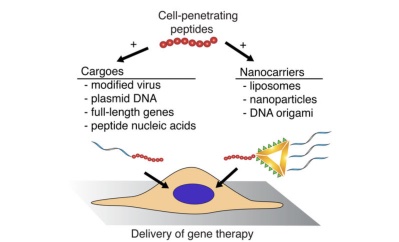
Rebecca Taylor is a Professor in the Department of Mechanical Engineering at Carnegie Mellon University's College of Engineering, with courtesy appointments in Biomedical Engineering and Electrical and Computer Engineering. Her research spans DNA nanotechnology, advanced manufacturing, and bio-inspired micro/nanosystems, focusing on integrating self-assembly with top-down microfabrication. 2013 Ph.D. in Mechanical Engineering (minor in Bioengineering), Stanford University 2010 MS in Mechanical Engineering, Stanford University 2001 BS in Mechanical Engineering with Robotics Certificate, Princeton University Her research centers on: (1) DNA nanotechnology for molecular and cellular mechanobiology (AFOSR YIP, NIH R21), (2) bio-inspired materials using gammaPNA (NSF CAREER), and (3) biomanufacturing with DNA robotics. She also develops workforce training tools like voice assistants for skill mastery. Recent publications highlight DNA microswimmers, compliance in colloidal assemblies, and generative design for origami nanostructures. Awards include the NSF CAREER Award and Ansys Career Development Chair. She advises interdisciplinary students and leads the Microsystems and Mechanobiology Lab, collaborating with Biomedical Engineering, Chemistry, and Cardiovascular Medicine teams. NSF CAREER Award Ansys Career Development Chair Lab members include postdocs (Grace Rohaley, Sarah Weintraub), Ph.D. students (Taryn Imamura, Vismaya Walawalkar), and undergraduates (Irene Yap). She teaches courses like Nanoscale Manufacturing Using Structural DNA Nanotechnology and Modern Manufacturing in Steeltown , emphasizing design and automation.
Christopher McComb is an Associate Professor in the Department of Mechanical Engineering at Carnegie Mellon University's College of Engineering. He leads research in sociotechnical systems, machine learning for engineering design, and human-AI collaboration. He is affiliated with the Block Center for Technology and Society, Manufacturing Futures Institute, NextManufacturing Center, and Wilton E. Scott Institute for Energy Innovation. Previously, he was an assistant professor at Penn State, where he directed the Center for Research in Design and Innovation and led the Technology and Human Research in Engineering Design Group. Ph.D., Mechanical Engineering, Carnegie Mellon University M.S., Mechanical Engineering, Carnegie Mellon University B.S., Civil Engineering and Mechanical Engineering, California State University-Fresno His research centers on human-AI teaming , sociotechnical systems , and computational design , with applications in additive manufacturing, STEM education, and energy systems. He explores how machine learning can enhance engineering design processes, particularly through human-centered AI, generative design, and agent-based modeling. His work emphasizes the integration of human cognition and behavior into AI systems to improve collaboration and innovation. The 15 most recent publications (2025) demonstrate a strong trend in AI-driven design automation , neural surrogate modeling , human-AI interaction , and data generation for engineering simulations . Topics span from using large language models for material selection and design concept generation to developing datasets and benchmarks for advanced manufacturing and CAD systems. There is a clear emphasis on real-world applications in aerospace, finance, and global manufacturing, particularly in Africa. National Science Foundation Graduate Research Fellow McComb has received research funding from NSF, DARPA, and private corporations, and has collaborated with Boeing through their Visiting Professorship Program. He advises students in mechanical engineering and design, and leads the Human+AI Design Initiative and the Design Research Collective. His research has been applied in partnerships with NASA and in addressing manufacturing challenges in Africa. He leads or contributes to interdisciplinary research teams focused on AI in design, additive manufacturing, and energy systems. His labs and initiatives include the Human+AI Design Initiative and the Design Research Collective, which foster collaboration between human-centered design and artificial intelligence.
Dr. Binayak Bhandari is a Research Associate at the Automated Manufacture of Advanced Composites (AMAC) Research Centre at the University of New South Wales (UNSW Sydney). He previously served as Assistant Professor & Department Chair at Woosong University, South Korea, and earned his PhD in Mechanical Engineering from Seoul National University (2014). His research spans interdisciplinary engineering domains including artificial intelligence, advanced composites, renewable energy systems, robotics, and manufacturing processes. Bhandari has led projects such as the National Research Foundation grant (2017–2020) on AI-driven robotics for object identification. He has been recognized for contributions in renewable energy and teaching, including the 2022 Young Researcher Award and the 2020 Special Achievement Award. Education: PhD in Mechanical Engineering (2014, Seoul National University). Research Interests: Dr. Bhandari’s work focuses on integrating AI with manufacturing and energy systems. Key areas include nondestructive evaluation of composites using deep learning, optimization of hybrid renewable energy systems, and smart manufacturing processes. His expertise spans computer vision applications for quality assurance, acoustic emission analysis, and sustainable energy solutions for remote regions. Key Contributions: Over 50 peer-reviewed publications across journals like Journal of Composite Materials and International Journal of Precision Engineering . Notable works include studies on hybrid energy models, composite material characterization, and machine learning-based anomaly detection. Awards: Recipient of multiple accolades including the 2022 Young Researcher Award (ASAT), 2018 IJPEM-GT Most Cited Article Award, and 2010 Grand Prize for precision engineering innovation. Grants & Activities: Led a $150,000 National Research Foundation grant (2017–2020) on AI-based robotics. Collaborates on projects involving automated fiber placement, renewable energy integration, and smart factory systems. Labs & Teams: Principal researcher at AMAC Centre, UNSW, focusing on advanced composite manufacturing and AI-driven solutions for industry challenges.