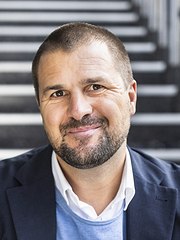
Mehdi Khamassi is a Research Director at the French National Center for Scientific Research (CNRS), assigned to the Institute of Intelligent Systems and Robotics (ISIR) at Sorbonne University in Paris, France. He holds an engineering background in computer science (specializing in AI and statistical modeling) from the National School of Computer Science for Industry and Business (2003), a Cogmaster in cognitive science from Pierre and Marie Curie University (2003), and a PhD in cognitive neuroscience from UPMC/Collège de France (2007). Recruited by CNRS in 2010, he co-organizes the Symposium of Biology of Decision-Making (SBDM) and co-directs the modeling major for the Cogmaster program. His research integrates computational modeling , neuroscience experiments , and robotic systems to study decision-making and learning mechanisms. Key interests include: Reinforcement learning in biological and artificial systems Role of social/non-social rewards in adaptive behavior Ethical implications of autonomous decision-making in AI Neuro-robotic models of hippocampal-prefrontal interactions Recent publications (2023-2025) demonstrate strong focus on reinforcement learning paradigms, AI alignment with human values, neurorobotics, and computational neuroscience. Work frequently bridges machine learning theory with empirical validation in biological systems or robotic platforms. He leads research within the ACIDE team at ISIR, exploring adaptive coordination of learning strategies in brains and robots. Current collaborations include NTUA (Greece), University of Oxford, and University of Trento.
Professor Farookh Hussain is a distinguished academic at the School of Computer Science , University of Technology Sydney , specializing in Artificial Intelligence , Cloud Computing , and Software Engineering . His research spans diverse sectors including agriculture, manufacturing, healthcare, and transportation. Affiliated with the Australian Artificial Intelligence Institute (AAII) , he leads impactful work in business intelligence and carbon credit systems. Key research areas: AI applications, blockchain for provenance, carbon credit analytics Active in Masters/PhD supervision and cloud computing education Research Highlights : Developed KACINO framework for carbon dynamics modeling Created hybrid cybersecurity frameworks for supply chain risk management Advanced chatbot dialogue breakdown solutions through systematic reviews Proposed hypercomplex knowledge graph recommenders Published extensively on carbon credit price prediction and blockchain storage methods Contributions to water demand forecasting and collaborative robotics adoption Grant Activities : Secured funding from Hampton Capital Asset Management , Innovation Connections , and Science and Industry Endowment Fund Projects include LLM-driven text-to-SQL conversion , blockchain for melanoma data , and AI for storm water management
Arnoldo Frigessi is Professor of Statistics at the University of Oslo, where he leads the Oslo Center for Biostatistics and Epidemiology and serves as director of BigInsight—a Centre of Excellence for Research-Based Innovation. This consortium unites industry, business, public actors, and academia to develop model-based machine learning methodologies for big data, with strong emphasis on health applications. His research centers on statistical methodology driven by real-world scientific challenges, specializing in stochastic models for complex dependence structures and computationally intensive inference algorithms. Core application domains include: Genomics and personalized cancer therapy (particularly breast and lung cancer) Infectious disease modeling (including pandemic response) eHealth, sensor data analysis, and recommender systems Personalized marketing and viral diffusion dynamics Analysis of his 15 most recent publications (2024-2025) reveals dominant themes in cancer systems biology , where he integrates multi-omics, single-cell transcriptomics, and computational modeling to decode tumor evolution under therapy. Parallel work advances infectious disease epidemiology through time-varying reproduction number estimation and mobility-based transmission modeling, while methodological innovations span synthetic data generation (TVineSynth), causal inference via target trial emulation, and Bayesian ranking models for recommender systems. Scientific Awards: No specific awards mentioned in source materials Frigessi actively supervises graduate students, including a Department of Informatics project on "Utilizing covariate information in recommender systems." His leadership of BigInsight—funded as a Research-Based Innovation Centre by the Research Council of Norway—secures major grants supporting interdisciplinary collaborations with industrial partners (e.g., Telenor, DNB) and public health institutions. Current projects integrate real-world clinical data with mechanistic models for treatment optimization. He directs BigInsight's multidisciplinary team of statisticians, computer scientists, and domain experts, while leading the Oslo Center for Biostatistics and Epidemiology's efforts in developing statistical frameworks for complex health data. These initiatives drive Norway's national strategy for data-driven health innovation.
Scott Shane is the A. Malachi Mixon III Professor of Entrepreneurial Studies and Professor of Economics at the Weatherhead School of Management, Case Western Reserve University, where he has been faculty since 2003. As the school's most highly cited researcher, his work bridges entrepreneurship, economics, and neuroscience with over 94 scholarly articles and 16 books including award-winning titles like Illusions of Entrepreneurship and Fool's Gold . Education: PhD, University of Pennsylvania (1992) Master of Science, University of Pennsylvania (1991) Master of Science, Georgetown University (1988) AB, Brown University (1986) Research Focus: Shane's work centers on five interconnected domains: (1) opportunity discovery and evaluation processes; (2) university spin-offs and technology commercialization; (3) business format franchising dynamics; (4) angel investment mechanisms; and (5) the genetic and neural underpinnings of entrepreneurial behavior. His research uniquely integrates biological perspectives with traditional entrepreneurship theory, challenging conventional wisdom through rigorous empirical analysis. Publication Trends: Recent work shows increasing interdisciplinary convergence, particularly in neuroscience applications to investor decision-making and founder behavior. His 2020-2025 publications demonstrate heightened focus on pitch dynamics, pandemic economic impacts, and genetic factors, while maintaining his signature critical analysis of entrepreneurship myths. The consistent appearance in top journals like Management Science and Academy of Management Journal underscores his field leadership. Scientific Recognition: Global Award for Entrepreneurship Research (2009) Weatherhead Enduring Impact Award (2015) Case Western Faculty Distinguished Research Award (2017) Multiple Best Business Book Awards for Illusions of Entrepreneurship and Fool's Gold Academy of Management Best Paper Award (2020, 2021) Professional Engagement: Beyond academia, Shane serves as Managing Director of the Comeback Capital Fund (investing in Heartland startups) and previously held board positions at JumpStart Inc. (2008-2009) and NorthCoast Angel Fund (2006-2018). He has consulted globally for organizations seeking innovation strategy guidance and taught executive education programs worldwide, while his classroom instruction focuses on entrepreneurial finance and technology strategy. Research Infrastructure: Shane's work is supported through the Greif Center for Entrepreneurship at Weatherhead, where he has directed major projects on technology commercialization and new venture finance. His current research leverages fMRI technology and genetic data to explore biological foundations of entrepreneurship, collaborating with interdisciplinary teams across economics, psychology, and neuroscience departments.
John Paul Stephens is the Theodore M. and Catherine C. Alfred Professor of Management and Associate Professor of Organizational Behavior at Case Western Reserve University's Weatherhead School of Management. He joined the faculty in 2010 and has established himself as a leading researcher in positive organizational scholarship with a distinctive focus on the aesthetic dimensions of organizational life. Dr. Stephens received his Doctor of Philosophy and Master of Science in Organizational Psychology from the University of Michigan (2009 and 2006 respectively), and his Bachelor of Science in Psychology from Morgan State University (2004). His research focuses on the roles of perception, knowledge, and relationships in organizing, particularly in the performance of musical ensembles. He explores how individual perception involves aesthetic knowledge of the beauty of group coordination and motivates constant adaptation to preserve collective performance quality. His work also examines how character strengths relate to person-job fit and how strengths-based feedback influences leadership development. Dr. Stephens employs diverse methodologies including ethnography, video analysis, experiments, and surveys to study organizational phenomena. His publications span top journals including Administrative Science Quarterly, Academy of Management Review, Journal of Applied Behavioral Science, and Journal of Positive Psychology. His recent work increasingly focuses on mindfulness at work, relational coordination, and the aesthetic experience of collective performance. Outstanding Reviewer Award 2020 (Group & Organization Management) Best Paper Award 2013 (University of California-Davis Conference on Qualitative Research) Ethics Table Fellow 2015 (Beamer-Schneider Professorship in Ethics) ACES+ ADVANCE Opportunity Grant Award 2012 Multiple Outstanding Reviewer Awards from Academy of Management divisions Dr. Stephens serves on the editorial boards of Group & Organization Management and previously served on the Academy of Management Review board. He is actively involved with the Relational Coordination Research Collaborative and the Center for Positive Organizations. His teaching focuses on organizational psychology/behavior, positive organizational scholarship, qualitative research methods, and negotiations and bargaining behavior. He has been nominated for multiple teaching and mentoring awards at both university and Weatherhead School levels.
Professor Tatsuya Kimura serves at Waseda University's Graduate School of Business and Finance, holding a Ph.D. from Waseda University and an MBA from Lancaster University (UK). His academic appointments include Professor at the Faculty of Commerce and Graduate School of Business and Finance, with additional affiliations at the Global Education Center. His research spans Consumer Economics and Society , Marketing , Internal Marketing , and Service Management , with particular focus on Japanese market adaptations of customer satisfaction metrics. Kimura pioneered the Promoter Score Japan (PSJ) as a culturally adapted alternative to Net Promoter Score (NPS), demonstrating through empirical studies that Japanese consumer response patterns differ significantly from Western models. His publication trends reveal evolving specialization from foundational marketing theory (1990s-2000s) toward culturally-specific metric development (2010s-2020s). Recent work analyzes care worker motivation through internal marketing frameworks and examines service industry dynamics through Japanese cultural lenses. His research consistently bridges academic theory with practical business applications across manufacturing and service sectors. Nikkei Advertising Award Category Award Winner (since 1990) Fujisankei Advertising Award (since 1986) Kimura leads multiple Japan Society for the Promotion of Science research projects including Research on the promotion requirements for internal marketing (2018-2023) and Internal Marketing (2011-2013), with findings published in Routledge's Internal Marketing: Another Approach to Marketing for the Growth (2016). His international collaborations include research at Columbia University (2012-2013) on global marketing strategy. He teaches core graduate courses including Marketing & Brand Management , Service Marketing & Management , and Marketing Management , with particular emphasis on case-based learning methodologies for Japanese business professionals.
Darko Etinger is an Associate Professor and currently serves as the Dean of the Faculty of Informatics at Juraj Dobrila University of Pula in Croatia. His academic career spans over two decades with significant contributions to the fields of information systems, educational technology, and artificial intelligence. He teaches undergraduate courses including Artificial Intelligence, Business Information Systems, Business Process Management, ICT Fundamentals, Information Systems, Introduction to Artificial Intelligence, and Multimedia Systems. At the graduate level, he teaches Development of IT Solutions, IT Management, Modelling and Simulation, and Project Management. He also supervises doctoral research in Management of Information Technologies in Education. Dr. Etinger's research interests span several key areas in computer science and education technology. He has made significant contributions to understanding how information and communication technologies can support children with special educational needs, as evidenced by his 2024 and 2025 books on the topic. His work also focuses on business process management, educational data mining, and the application of artificial intelligence in educational contexts. His 2024 book 'Introduction to R and RStudio' demonstrates his commitment to data science education. Analysis of his recent publications shows a strong focus on practical applications of technology in education and business. His work spans educational robotics, learning management systems analysis, business process modeling, and the application of large language models in healthcare. He has a particular interest in how technology can be made accessible and beneficial for diverse learner populations, including those with special needs. His research often takes a human-centered approach, examining not just the technology itself but how it's adopted and used by end users. His 2025 bibliometric analysis of metaverse security demonstrates his ability to tackle emerging technological challenges. Associate Professor at Faculty of Informatics, Juraj Dobrila University of Pula Current Dean of Faculty of Informatics Author of multiple publications on educational technology and information systems Supervisor for numerous graduate theses on educational technology topics Active participant in EDIH Adria project as evidenced by 2025 publications Researcher in educational robotics implementation in Croatian schools Dr. Etinger has advised numerous students completing their theses, with a focus on educational technology applications. His research has been published in various international conferences and journals including IEEE Engineering Management Review, Procedia Computer Science, and System Dynamics Review. His current research appears to be heavily focused on the EDIH Adria project, which is a European Digital Innovation Hub initiative focusing on technology transfer and business innovation. He maintains an active research program with publications spanning from 2003 to the present, demonstrating sustained scholarly contribution to his fields of expertise.
Andreas Weber is an Associate Professor at the University of Twente's Digital Society Institute , specializing in the Knowledge, Transformation & Society (KiTeS) research group . His work examines the long-term historical and global relationship between Science, Technology, and Society , with particular focus on colonial histories of natural history, chemistry, and sustainability , as well as computational technologies for contextualizing digitized archives . He leads the HAICu project (2023–2029) on digital cultural heritage and coordinates STS PhD training for the Netherlands Graduate Research School (2019–2024). MA & PhD in History (2005 & 2012), Leiden University Assistant Professor (2017–2023), University of Twente Andreas' research integrates digital humanities with colonial science history , emphasizing global histories of minerals , digital humanism , and AI's societal context . His 15 most recent publications (2016–2025) explore topics like colonial bias in natural history collections , FAIR data implementation , and semantic annotation of handwritten archives , spanning disciplines from history of science to computer science and museum studies . He has received 7 scientific awards , including multiple Best Teacher Awards (2020–2023) and the IEEE eScience Best Poster Award (2018). Andreas supervises PhD and postdoctoral projects while engaging in media commentary on colonial heritage issues and co-organizing international conferences like Hydrogen Pasts and Futures (2024).
Royce G. Yudkoff serves as the MBA Class of 1975 Professor of Management Practice of Entrepreneurial Management at Harvard Business School. He is also a General Partner and co-founder of ABRY Partners, LLC, a Boston-based private equity firm. At Harvard Business School, Yudkoff co-teaches two courses with Professor Richard Ruback: 'The Financial Management of Smaller Firms' and 'Entrepreneurship through Acquisition,' which focus on acquiring, financing, and operating smaller firms. Yudkoff's research interests center on entrepreneurial management, particularly the acquisition of small businesses. His work explores the practical aspects of finding, evaluating, negotiating, and financing the purchase of established businesses, providing an alternative path to entrepreneurship. He has co-authored the book HBR Guide to Buying a Small Business: Think Big, Buy Small, Own Your Own Company (2017) and the Harvard Business Review article 'Buying Your Way into Entrepreneurship' (2017), which established him as a leading expert in the search fund and small business acquisition space. His recent scholarly output has been remarkably prolific, with numerous case studies published in 2025 covering diverse business acquisition scenarios across various industries including manufacturing, healthcare, technology, and consumer products. These works examine critical aspects of business acquisition including valuation, due diligence, financial modeling, and post-acquisition management. Baker Scholar (Harvard Business School, 1980) Yudkoff has significant practical experience to complement his academic work. In 1989, he co-founded ABRY Partners, a private equity firm specializing in media, communications, and business information services. Over his career, the firm has completed over $27 billion in leveraged transactions involving approximately 450 properties. Yudkoff has also served on numerous private and public corporate boards, bringing real-world perspective to his teaching and research. His educational background includes graduating from Harvard Business School in 1980 as a Baker Scholar and earning honors as an undergraduate at Dartmouth College. This combination of academic excellence and practical business experience informs his approach to entrepreneurial education.
Nick Lee is an Associate Professor in the Education Studies department at the University of Warwick, Faculty of Social Sciences. With over 30 publications across Science Studies, Education, and the Sociology of Childhood, his work has appeared in prestigious journals including The Lancet: Infectious Disease, Science, Technology and Human Values, and Sociology. Dr. Lee's research interests span: Childhood, youth and technology Biosocial relationships and imaginations Climate change and sustainability Life processes, learning and innovation His interdisciplinary research examines power dynamics between youth and generation within biotechnological innovation and climate change contexts. In his 2013 book "Childhood and Bio-politics: Climate change, life processes and human futures" (Palgrave Macmillan), he develops theoretical frameworks connecting childhood experiences with environmental challenges. Dr. Lee pioneered the concept of 'residual childhoods' examining how children navigate the material residues of economic growth and technological development. Dr. Lee's publication record reveals consistent interdisciplinary engagement with childhood studies intersecting technology, environmental issues, and biosocial relationships. Recent work (2021-2023) shows expansion into sustainable development education, gender dynamics in STEM, and innovative plant science communication through art. Earlier work established theoretical foundations in biosocial relationships and childhood biopolitics, with increasing applied focus on environmental challenges and technological innovation. Dr. Lee has secured significant research funding from: ESRC (Economic and Social Research Council) BBSRC (Biotechnology and Biological Sciences Research Council) MRC (Medical Research Council) European Neuroscience and Society Network Department for Children, Schools and Families Department for Business, Innovation and Skills As ELSA (Ethical, Legal and Social Aspects) lead for Warwick's Institute for Synthetic Biology, he bridges scientific innovation with societal implications. Dr. Lee has consulted for a global hygiene corporation on antibiotic resistance and the UK Cabinet Office on future prospects for children. Current research projects include: Global Gardens: Co-Learning in Synthetic Biology (with Professor Anne Osbourn) Children, Sexting and Co-Learning (with Birmingham universities) Residual Childhoods (examining children's relationship with technological residues)
Professor Susanne Braun is a distinguished faculty member in the Department of Management and Marketing at Durham University's Faculty of Business. Her academic work focuses on leadership identity dynamics, narcissism in leadership contexts, and authentic leadership development. Braun maintains an active research program with numerous publications spanning leadership theory, organizational psychology, and identity studies. Her research interests center on leader and follower identity dynamics , examining how individuals' perceptions of themselves as leaders evolve and influence their behavior. She extensively investigates narcissism in leadership , differentiating between grandiose and vulnerable forms and exploring their contextual manifestations. Her work on authentic leadership examines how leaders can develop genuine self-expression in organizational contexts. Braun's research employs diverse methodologies including multi-study investigations, quasi-experimental designs, and dynamical systems approaches to capture the fluid nature of leadership identities. Braun's publication record reveals consistent scholarly output with a notable concentration in 2023-2025, demonstrating her active research trajectory. Her work spans multiple publication types including journal articles, book chapters, and authored books. Thematically, her research shows progression from foundational work on narcissism and motivation to lead toward more complex investigations of identity dynamics in response to organizational events and contexts. She frequently collaborates with international scholars, indicating strong global research networks. Braun has supervised nine doctoral students, including both PhD and Doctor of Business Administration candidates. Her supervision portfolio shows consistent activity from 2015 to present, with five current students and four completed degrees. She frequently serves as Director of Studies and collaborates with other faculty members as second supervisors, demonstrating integration within her academic community.
Daniel Klerman is the Edward G. Lewis Chair in Law and History at USC Gould School of Law, where he serves as Director of the Center of Law & Social Science (CLASS). He teaches Civil Procedure, Property, Concepts in American Law, and English Legal History, and was honored with the Student Bar Association Faculty Appreciation Award in 2014 for his outstanding teaching. Klerman's scholarly work bridges legal history and law and economics, focusing on civil procedure, English legal history, and the economic analysis of legal institutions. His research examines how legal systems evolve, how litigation and settlement function across different jurisdictions, and the historical development of common law institutions. He has made significant contributions to understanding jurisdictional competition, forum shopping, and the selection effects in litigation. His work demonstrates a consistent pattern of integrating historical analysis with rigorous economic modeling, particularly in examining how reputation mechanisms function in legal markets and how historical legal developments can inform contemporary legal problems. Klerman's scholarship often employs empirical methods to test theoretical propositions about legal institutions and their evolution. Sutherland Prize from the American Society for Legal History (2004) David Yale Prize from the Selden Society (2001) Student Bar Association Faculty Appreciation Award (2014) Klerman has held significant leadership roles in the academic legal community, serving as co-president of the Society for Empirical Legal Studies (2008-09) and on the Board of Directors of the American Law & Economics Association (2009-2012). He is a founding Editor-in-Chief of the Journal of Law & Empirical Analysis and serves on the editorial boards of Law & History Review and the Journal of Legal Analysis. As a member of the American Law Institute, he contributes to the development of legal principles. His extensive visiting professorships at institutions including Harvard, Stanford, Chicago, and international universities demonstrate his scholarly prominence. As Director of the Center of Law & Social Science, Klerman leads interdisciplinary research initiatives that connect legal scholarship with social science methodologies, fostering empirical approaches to legal questions across multiple domains of law.
Jan Christof Recker is Nucleus Professor and holder of the chair for Information Systems and Digital Innovation at the University of Hamburg Business School, funded through the Excellence Strategy of the Federal and State Governments. He also holds adjunct professor positions at the University of Agder (Kristiansand, Norway) since 2022 and at the QUT Business School (Brisbane, Australia) since 2018, and has previously served as Professor for Information Systems and Systems Development at the University of Cologne (2018-2021) and Full Professor for Digital Innovation at QUT Business School. Dr. Recker holds bachelor's and master's degrees in information systems from the University of Münster and a PhD in Information Systems from the Queensland University of Technology. His educational background forms the foundation for his expertise in bridging technical and organizational aspects of digital transformation. His research focuses on how organizations deal with digital innovation, digital transformation, and digital entrepreneurship. As a field researcher, he has collaborated with large organizations including Woolworths, SAP, Hilti, Commonwealth Bank, Federal Police, Lufthansa, and Ubisoft, as well as various startups. Dr. Recker employs quantitative, qualitative, and mixed field methods in his research and is also competent in design research. His current research interests include technology analysis and design in the digital age, digital entrepreneurship and new venture creation, digital innovation and transformation in large organizations, digitalization of products, services, and processes, and digital solutions for sustainable development. His work aligns with multiple UN Sustainable Development Goals including Industry, Innovation and Infrastructure (SDG 9), Responsible Consumption and Production (SDG 12), and Reduced Inequalities (SDG 10). Dr. Recker's recent publications demonstrate a sophisticated exploration of the intersection between physical and digital experiences, generative AI development methodologies, societal impacts of crises on business growth patterns, and responsible digital innovation frameworks. His work spans multiple high-impact journals across information systems, management science, and entrepreneurship disciplines, consistently addressing practical organizational challenges with theoretically grounded approaches. His notable awards and honors include: AIS Fellow Award (2018) Outstanding Associate Editor Award by MIS Quarterly (2019) SIGGreen Best Paper Award (2021) Best Paper Award by the Journal of Information Technology Theory and Application (2014) Vice Chancellor's Award for Excellence (2014) Dr. Recker has secured significant research funding for projects related to digital innovation and transformation, including the HIVESOUND start-up scholarship (2024-2025) and research on how digital products are created through hardware-software interactions (2022-2024). As Editor-in-Chief for Communications of the Association for Information Systems (2015-2020) and current Senior Editor for the MIS Quarterly, he has shaped scholarly discourse in the field. His supervision of doctoral students has been recognized with multiple awards, reflecting his commitment to developing the next generation of information systems scholars. His Management Transfer Lab at the University of Hamburg serves as a nexus for academic-industry collaboration, focusing on translating theoretical insights into practical solutions for digital transformation challenges. The lab maintains strong partnerships with major corporations and startups alike, ensuring research relevance while providing students with real-world experience in digital innovation contexts.
Ann Vereecke is a Full Professor and Partner at Vlerick Business School, concurrently serving as a Professor at Ghent University. She holds a Doctorate in Management from Ghent University, an MBA from Vlerick, and a Masters in Engineering. As Director of the Research Centre for People in the Smart Digitised Supply Chain, she focuses on Industry 4.0, digital technologies, and global supply chain strategies. Her expertise spans operations management, logistics, and strategic manufacturing networks. She teaches MBA, Master’s, and executive programs at Vlerick, emphasizing practical applications for industry. Her research explores supply chain digitization, international manufacturing strategies, and the integration of digital twins and Industry 4.0 technologies. Recent work highlights trends in smart supply chains and the transformative impact of AI-driven solutions. She actively advises companies across industries through executive education and research projects. Ann serves on corporate boards (WhatsCooking?, bpost, North Sea Port, Tessenderlo Group) and editorial boards (International Journal of Operations and Production Management). Her board roles reflect her expertise in operational excellence and strategic governance. Her articles analyze supply chain collaboration, social responsibility in logistics, and the dynamics of global manufacturing networks. Recent insights address digital twins in supply chain resilience and Industry 4.0 adoption strategies.
Dr. Alessandro Inversini is an Associate Professor at the EHL Hospitality Business School, part of HES-SO University of Applied Sciences Western Switzerland. His primary role involves teaching and researching in the Department of Global Hospitality Business, focusing on marketing, digital transformation, and sustainability within the hospitality and tourism sectors. Educational Background: No explicit educational details provided in the text. Research Interests: Explores the transformative impact of emerging technologies (e.g., AI, ChatGPT) on hospitality operations and customer experience. Advocates for regenerative and net-positive approaches to sustainability in the hospitality industry. Investigates CSR communication strategies on social media and cross-cultural dynamics in tourism reviews. Analyzes digital media’s role in B2B relationships and customer-centric frameworks. Article Trends: Recent works emphasize AI-driven changes in tourism, ethical digital transformation, and CSR practices. Key themes include regenerative hospitality, cultural review differences, and leveraging social media for transformative learning. Awards: No scientific awards explicitly listed. Advising & Grants: Guided research on regenerative hospitality in Lebanon and transformative homestay experiences in Malaysia. Contributed to international conferences like ENTER2016 and EuroCHRIE 2024. Labs/Teams: Collaborates with interdisciplinary teams on projects involving digital tools for rural development and ethical technology integration in hospitality.