Associate Professor Jun Jo is Director of Griffith Robotics Lab and President of the Australian Robotics Association. His research spans machine learning, satellite image analysis, UAVs, and robotics, with applications in bushfire detection, healthcare, and intelligent systems. Leadership & Projects Chair of International Robot Olympiad Committee Principal investigator on $894k Aus4Innovation project for AI in sustainable agriculture Developed satellite image processing systems for ETRI and KARI He teaches robotics, game programming, and automation, supervising students in crack detection systems, conversational AI, and deepfake detection. His industry collaborations include projects with Gilmour Space Technologies and CSIRO.
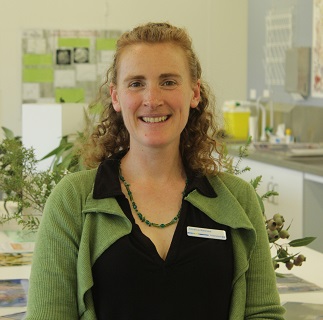
Dr. Madeline Carins-Murphy is a Research Fellow at the School of Natural Sciences, University of Tasmania. Her work focuses on plant water transport systems under environmental stress, particularly drought and heat, with applications to climate change resilience in natural vegetation and crops. Education: B.Sc. (1st Class Hons., 2010) and Ph.D. (2016) from the University of Tasmania. Her research explores xylem vulnerability, stomatal coordination, and hydraulic recovery mechanisms, leveraging advanced imaging techniques like X-ray microtomography. Key projects include studying drought thresholds in plants and optimizing irrigation strategies for growers. She has secured competitive funding, including an ARC Linkage Project (2018), and collaborated with industry partners. Recent publications highlight her contributions to understanding xylem embolism, floral hydraulics, and hydraulic recovery in Eucalyptus. Her work has been cited extensively, with a field citation ratio indicating high impact. Scientific Awards: Travel grant to attend the Gordon Research Conference on Multiscale Plant Vascular Biology (Society for Experimental Biology). She has supervised doctoral students on topics like hydraulic vulnerability and plant water potential monitoring. Her current consultancy with TasNetworks Pty Ltd investigates drought-driven flammability to improve bushfire modeling.
Enrico Valdinoci is a Professor at the University of Western Australia (UWA), affiliated with the School of Physics, Mathematics & Computing and the Department of Mathematics and Statistics. He holds a PhD from the University of Texas at Austin (2002) and has held positions at institutions including the Scuola Normale Superiore in Pisa, University of Rome Tor Vergata, University of Milan, Weierstrass Institute in Berlin, and University of Melbourne. His research focuses on partial differential equations, nonlocal equations, calculus of variations, and dynamical systems. Key research areas include fractional Laplacian, nonlocal minimal surfaces, free boundary problems, and integro-differential equations. Recent work explores mixed local/nonlocal operators and regularity properties of solutions. His publications often address topics like superposition principles, Fredholm alternatives, and continuity of minimal functions. He has secured grants from the ARC Australian Research Council for projects on nonlocal PDEs, minimal surfaces, and bushfire modeling. Awards: 2023 Research Mentorship Award, 2022 Senior Research Award, 2021 Highly Cited Researcher, 2018 JMAA Prize Grants: Non-local PDE approach to moving fronts (2025–2028), Minimal surfaces project (2019–2025)
Professor Andrew Peters is a veterinary pathobiologist at Charles Sturt University's School of Agricultural, Environmental and Veterinary Sciences. He holds a VSc (USyd), MACVS (Avian Health), and PhD (CSU). His research focuses on wildlife health, infectious protist ecology, and avian biology, with particular attention to viral and parasitic threats to endangered species. Key projects include studying beak and feather disease virus (BFDV) in parrots and developing training programs in Papua New Guinea. Education: Veterinary Science (USyd), PhD in Veterinary Pathobiology (CSU) Research Interests: Avian virology, protozoal flora in wild birds, phylogenetics, and spillover infections Teaching: Undergraduate veterinary histology, reptile husbandry, and graduate research supervision His work bridges ecological and clinical research, emphasizing solutions for conservation challenges. Recent studies highlight viral evolution in endangered parrots and the role of calcium supplementation in livestock health. He collaborates internationally on disease surveillance and capacity-building initiatives. Publications span avian virology, parasite genomics, and wildlife health frameworks, demonstrating interdisciplinary approaches to ecological health challenges.
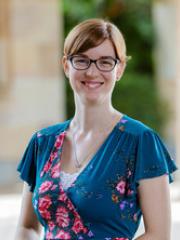
Jessica Reeves is a Senior Lecturer in Environmental Science at Federation University Australia's Institute of Innovation, Science and Sustainability, based at the Gippsland Campus. She serves as co-chair of the Resilient Landscapes and Aquatic Ecosystems Research Theme within the Future Regions Research Centre and actively contributes to regional environmental governance through the Gippsland Lakes Coordinating Committee and former roles with the Gippsland Climate Change Network. Her educational background includes a Bachelor of Science (Honours) from the University of Melbourne (1998), a PhD in Earth and Environmental Sciences from the University of Wollongong (2004), and professional certification from the Australian Institute of Company Directors. Prior academic positions include a Post-Doctoral Fellowship at the Australian National University (2004-2006) and part-time Research Associate role at RMIT University (2006-2011), before commencing full-time at Federation University (formerly University of Ballarat) in 2012. Reeves' research integrates geological expertise with community-centered approaches to address sustainability challenges. Her work spans paleoenvironmental reconstruction of industrial pollution legacies, contemporary climate adaptation strategies, and innovative knowledge brokerage models that elevate community voices in environmental stewardship. She specializes in place-based methodologies that incorporate multiple ways of knowing, particularly in Gippsland's complex socio-ecological systems, with significant contributions to understanding estuarine contamination, landscape recovery post-bushfires, and regenerative agricultural systems. Analysis of her publication record reveals consistent focus on transdisciplinary solutions to environmental challenges, with increasing emphasis on community-led recovery frameworks and Sustainable Development Goals implementation since 2015. Her work bridges paleoenvironmental science with contemporary policy applications, demonstrating strong regional engagement in Victoria while contributing to international collaborations through the EU Jean Monnet Network. Her scientific recognitions include: Fellowship at the Rachel Carson Center for Environment and Society (Munich) Veski Sidebyside Award for Women in STEM (2020) Selection for Homeward Bound Women in Science Leadership Program (inaugural 2016 cohort) Reeves has secured over $1.2 million in competitive research funding, including projects such as 'Highlighting the value of local Landcare groups to community led recovery' ($69,579), 'Defining economic benefits of regenerative farming systems' ($258,000), and 'Assessing community values around Latrobe Valley pit voids' ($103,000). Her grant portfolio emphasizes community co-design in climate adaptation, contaminant mobility studies, and sustainable regional development. She maintains active roles in the EU Jean Monnet Network on Social and Scientific Innovation for Sustainable Development Goals and the Institute of Australian Geographers, while directing community-focused initiatives like the 'Living Bung Yarnda' CoastCare project and contributing to the Gippsland Climate Change Adaptation Plan.
Prof. Dianne Cook is a Professor of Business Analytics at Monash University's Department of Econometrics and Business Statistics, affiliated with Impact Labs. A Fellow of the American Statistical Association and Editor of the Journal of Computational and Graphical Statistics, her research focuses on data visualization, exploratory data analysis, and statistical graphics. Her work bridges statistical inference and visualization, leveraging crowd-sourcing and eye-tracking to validate visual discoveries. Major contributions include software tools like ggobi and cranvas, and methodologies like the 'tour' for high-dimensional data exploration. Current projects include spatio-temporal bushfire visualization and Melbourne pedestrian data analysis. Key collaborations span physics data visualization and multidimensional analysis. Awards include ASA Fellowship. Projects include Accessibility Enhancements for the R Journal and Multivariate Spatio-Temporal Visualization for bushfire risk. Teaching and advising emphasize open-source software and reproducible research. She leads RiskLab projects on econometrics and explores applications in climate change, education, and health. Her work contributes to UN SDGs like Sustainable Cities (Goal 11) and Quality Education (Goal 4).
Professor Dale Nimmo is an Associate Professor in Environmental Science at the Gulbali Institute, affiliated with the College of Agricultural, Environmental and Veterinary Sciences. His research focuses on understanding how large-scale disturbances like fire, drought, and habitat fragmentation impact biodiversity. He holds a PhD from Deakin University (2011) and has held postdoctoral fellowships, including an Alfred Deakin Postdoctoral Fellowship. His work integrates ecological resilience, fire regimes, and predator-prey dynamics, with a particular emphasis on Australia's semi-arid regions and threatened species conservation. Education: PhD in Environmental Science, Deakin University (2011) Bachelor of Environmental Science (Hons), Deakin University (2005) Research Interests: Fire ecology and megafire impacts Ecological resilience and climate extremes Conservation strategies for threatened species Food web dynamics and predator interactions Awards: AIPS Tall Poppy (2016) Ecological Society of Australia ‘Next Generation Ecologist’ Award (2016) Nancy Mills Science in Parks Award (2015) Advising & Grants: Supervised 7 research projects, focusing on wildlife monitoring and conservation. Contributed to initiatives like the Wildlife and Threatened Species Bushfire Recovery Expert Panel. Labs/Teams: Collaborates with interdisciplinary teams on global biodiversity projects, including studies on camera trap networks and Indigenous fire practices.
Dr. Jessica Meade is a Researcher at the Hawkesbury Institute for the Environment (HIE) at Western Sydney University, working part-time (3 days/week) on flying-fox movement ecology. She holds a PhD in Animal Behaviour from the University of Oxford and has conducted postdoctoral research at the University of Sheffield and UNSW. Her work focuses on navigation, spatial ecology, and cooperative breeding in animals, with recent emphasis on grey-headed flying-fox conservation and the impacts of climate change and bushfires on biodiversity. Educations: PhD in Animal Behaviour, University of Oxford (UK) Postdoctoral Research: University of Sheffield (UK), UNSW (Australia) Research Interests: Animal navigation mechanisms using GPS tracking Spatial ecology of flying-foxes in urban and natural landscapes Effects of extreme weather and bushfires on wildlife Conservation strategies for threatened species Cooperative breeding dynamics in birds Grants/Projects (2021-2023): Grey-headed Flying-fox Conservation: Heat Stress Mitigation Population Monitoring and Foraging Resource Mapping Post-Megafire Roost Site Assessment Labs/Teams: HIE Bushfire Research Team Flying-Fox Movement Ecology Group
Gregory Hancock is an Associate Professor - Research in the School of Engineering (Earth Sciences) at the University of Newcastle, Australia. With over two decades of academic experience, he specializes in geomorphology, environmental modeling, and mine site rehabilitation. His research has significant implications for sustainable land management and post-mining landscape restoration, with extensive publication record and substantial research funding from both government and industry sources. PhD, University of Newcastle Bachelor of Science (Honours), University of Newcastle Dr. Hancock's research spans three primary areas: mine and disturbed landscape rehabilitation, applied and theoretical geomorphology, and environmental modeling. His work focuses on understanding erosion processes, landscape evolution, and developing computer-based models to predict long-term geomorphic stability of rehabilitated landscapes. He has made significant contributions to the field of landscape evolution modeling, particularly through the application of the SIBERIA model to assess post-mining landforms. His research integrates field measurements with computer simulations to address practical environmental management challenges, with applications spanning from mine rehabilitation to soil carbon dynamics and erosion control. Dr. Hancock's publication record demonstrates consistent productivity and increasing international collaboration. His recent work shows an expanding scope from pure geomorphology to broader environmental systems, particularly in soil organic carbon dynamics and erosion processes. The research shows strong practical applications, especially in mine rehabilitation projects, with notable collaborations on European projects like LIFE RIBERMINE. His work increasingly integrates multiple disciplines including hydrology, soil science, and carbon cycling, reflecting a holistic approach to environmental systems. ARC Discovery grants for carbon, nutrient and sediment dynamics ARC Linkage grants AINSE Grants for cosmogenic nuclide measurement Research consultancies with mining companies (XStrata Copper, Rio Tinto, Western Mining Corporation) Appointed Associate Editor for Journal of Geophysical Research-Earth Surface Appointed as an International Expert by the IAEA Dr. Hancock supervises honours, Masters, and PhD students in geomorphology and environmental modeling topics. His grant history is extensive, including leadership of the National Airborne Field Experiment (NAFE) and multiple projects related to mine site rehabilitation and erosion prediction. He has coordinated undergraduate courses and served on various university committees. His research demonstrates strong industry engagement, with numerous consultancies for mining companies to address practical environmental challenges at mine sites across Australia. Dr. Hancock has been involved with the Centre of Environmental Dynamics (COED) at the University of Newcastle. His research often involves interdisciplinary teams combining geomorphologists, soil scientists, hydrologists, and environmental engineers. He has collaborated extensively with international researchers, particularly through his work as Associate Editor for the Journal of Geophysical Research-Earth Surface. His recent work on the LIFE RIBERMINE project demonstrates his leadership in applying geomorphological principles to mine closure challenges across international contexts.
Dr. Tariq Nazir is a Vice Chancellor’s Postdoctoral Research Fellow at RMIT University’s School of Engineering, Australia, and holds an ARC Early Career Industry Fellowship for his flame-retardant coating research. He is an Associate Editor of High Voltage , a Fellow of the Higher Education Academy (FHEA), and a member of IEEE DEIS. His research focuses on high-voltage engineering, fire-safe materials, superconductivity, and nanodielectrics. He has held roles at Florida State University (Fulbright Scholar), UNSW Sydney (Adjunct Lecturer/Postdoc), and Qassim University (Lecturer). Key awards include a 2022 Recognition of Excellence Award and listing as a top 2% global scientist (2023). Teaching: Coordinates courses in Protection & High Voltage Engineering at RMIT and has extensive experience in power systems, electrical measurements, and superconductivity. Supervises projects on insulation condition monitoring, energy storage materials, and fire-resistant polymers. Research Themes: Prioritizes sustainable energy systems, dielectric materials innovation, and bushfire-resistant electrical infrastructure. Collaborates with industry on pole-top fire prevention and superconducting ship propulsion systems. Active in IEEE DEIS committees and CIGRÉ Australia. Grants & Awards: Secured ARC funding (IE240100221), Fulbright scholarships, and multiple university fellowships. Recognized for contributions to High Voltage journal development (2022 Contribution Award).
Dr. Gemma Irving is a Senior Lecturer at the University of Queensland (UQ) Business School, specializing in workplace design, hybrid work dynamics, and organizational behavior. Her research focuses on how physical and virtual environments influence professional collaboration, learning, and well-being, with particular attention to healthcare settings and emergency departments. She is a founding member of the Next Generation Workspace Research Network, bridging academia and industry to address workspace challenges. Education: PhD in Business (2016), UQ Business School Bachelor of Arts (Honours) in Social Science (2009), The University of Queensland Research Interests: Hybrid work environments and their impact on collaboration Serendipity in online and offline spaces Healthcare workplace design Decolonizing management education Threshold concepts in learning Publications reflect a strong focus on workplace innovation, emergency department management, and educational pedagogy. Notable works include systematic reviews of space-place-organizational change linkages and explorations of open-plan office dynamics. Awards: UQ Citation for Outstanding Contributions to Teaching and Learning UQ Business School Award for Enhancing First-Year Experience 2020 UQ Above and Beyond Honour Roll Teaching emphasizes connecting theory to real-world events like the 2020 bushfires. She pioneered the Table Case Method to enhance group learning in large classes. Current projects explore managerial responses to hybrid work tensions between flexibility and collaboration.
Sarah Clement is an Associate Professor in Environmental Policy at the Fenner School of Environment & Society , part of the ANU College of Science. She holds affiliations with the University of Western Australia (Adjunct Associate Professor) and the University of Liverpool (Honorary Senior Research Fellow). Her research focuses on governance and policy responses to environmental challenges, including biodiversity conservation, climate change, and urban sustainability. She has extensive experience in interdisciplinary research, spanning academia, government, and private sectors. Education : BSc and PhD in Environmental Science and Policy. She is part of the 2025 Superstars of STEM programme. Research Themes : Governance and the Anthropocene : Examines transformative governance for biodiversity, wildfires, and climate change. Projects include 'Fire and Transformation: Building capacity to manage Australian Bushfires' (ARC DECRA) and public perception studies on prescribed burning. Nature-Based Solutions (NBS) : Focuses on urban green infrastructure, equitable access to greenspaces, and health outcomes. She co-led the Urban GreenUP project (EU Horizon2020) and contributed to the IUCN NBS standards. Publications & Engagement : Over 40 peer-reviewed articles and book chapters, including her 2021 monograph Governing the Anthropocene . Her work bridges science-policy interfaces, emphasizing participatory approaches and equity. Grants & Projects : ANU Futures Scheme 2023–2028: $1.5M for wildfire governance research. Australian Research Council DECRA (2021–2025): $450K for bushfire policy analysis. Students & Collaborations : Supervised over 70 students, including 8 HDR completions. Active in initiatives like GroundsWell (urban health equity) and the Global Biodiversity Framework reforms. Awards : 2025 Superstars of STEM (Science and Technology Australia).
Hugh Forehead is an Honorary Senior Fellow at the University of Wollongong's School of Science. His research focuses on low-cost environmental monitoring technologies, particularly in water quality, air pollution, and biodiversity. He specializes in real-time sensing solutions for aquaculture and urban environments, including initiatives like the SMART Fire Hydrants map, which won the 2017 IoT Service Innovation Award. His work integrates agent-based modeling, spatial data analysis, and web mapping across disciplines such as marine ecology and public health. PhD: University of Western Australia/CSIRO BSc (Hons): University of Tasmania Research interests include pollution reduction using plastic waste, community engagement in environmental stewardship, and the ecological benefits of aquaculture. He has led projects on green infrastructure for urban cooling and air quality improvement, funded by organizations like the Future Drought Fund and South32. Notable achievements include developing the iOyster sensor system for aquaculture and investigating native vegetation's role in mitigating urban heat and air pollution in Wollongong and Liverpool. He has supervised two PhD students to completion and currently oversees research on microplastics biodegradation. Awards: 2017 Service Innovation Award (IoT category) Grants include the 'iOyster: Drought Resilient Oyster Farming' project and studies on PFAS contamination post-bushfires. He contributes to interdisciplinary collaborations, bridging engineering, environmental science, and public health initiatives.
Dr. Richard Crabbe is a Lecturer in Remote Sensing within the Faculty of Science and Technology, specializing in environmental and agricultural applications of Earth observation technologies. His work focuses on LiDAR, SAR, and AI-driven analysis for vegetation monitoring, invasive species detection, and carbon accounting. He leads the Remote Sensing and Earth Observation research group, collaborating with Indigenous communities in Australia's Kimberley region to enhance remote sensing capabilities for land management. Education: PhD in Synthetic Aperture Radar Remote Sensing for Vegetation Monitoring (University of New England) Research Interests: Carbon flux modeling, bushfire monitoring, aboveground biomass assessment, and SAR applications for land ecosystems. His lab actively integrates Indigenous knowledge with geospatial tools for sustainable environmental monitoring. Key Projects: Beetaloo Regional Monitoring Program (2023–2026): SAR and remote sensing for vegetation and GHG assessments. Water Security for Northern Australia (CRCNA WSP): Collaborative ecohydrology research. Desert/Savanna Ecosystem Monitoring via UAV and satellites (2024–2026). Labs/Teams: Remote Sensing and Earth Observation Group, collaborating with Indigenous organizations like Yawuru and Karajarri for capacity-building in remote sensing.
Professor Joanna Batstone serves as the inaugural Director of the Monash Data Futures Institute and holds a Professor position in the Faculty of Information Technology at Monash University. She is a recognized thought leader at the intersection of artificial intelligence, data science, and social impact, with a career spanning both technical research and strategic leadership roles. Her research portfolio demonstrates a remarkable evolution from foundational work in materials science during the 1980s-1990s to her current focus on AI applications for social good. Early in her career, she conducted significant research in semiconductor physics, crystallization processes, and thin film materials. More recently, her work has pivoted to applying AI technologies to address pressing societal challenges in healthcare, Indigenous community health, climate change, and ethical AI frameworks. Analysis of her publication history reveals two distinct but connected phases of her academic career. The early phase focused on materials science with numerous publications on semiconductor crystallization and silicide formation. The more recent phase demonstrates a strategic shift toward AI applications for social impact, with publications on AI-assisted clinical trial recruitment, Indigenous community health programs, and food security initiatives in remote Australian communities. Healthcare Innovation: Developing AI solutions for clinical trial recruitment and drug discovery Social Equity: Designing benchmarking systems for healthy food stores in Indigenous communities Environmental Applications: Using AI to monitor and address climate-related challenges like bushfire impacts Ethical Frameworks: Establishing governance models for responsible AI implementation As Director of the Monash Data Futures Institute, Professor Batstone leads interdisciplinary research that bridges technical innovation with real-world social impact. She emphasizes the importance of preparing future technologists to engage with AI responsibly, recognizing that 'AI is not going to go away' and that society must 'optimise for benefit' and 'optimise for social good' while addressing inevitable challenges.