Professor Hongdong Li is a Tenured Professor at the School of Computing, Australian National University (ANU), within the College of Engineering and Computer Science. His research focuses on 3D Computer Vision, Machine Learning, and their applications in dynamic environments. He has held visiting roles at Carnegie Mellon University and has contributed to significant projects like the Australia Bionic Eyes initiative. Education: PhD (Electrical Engineering). Research Interests : 3D Computer Vision fundamentals and applied AI systems Learning-based 3D perception for plant sciences Robot navigation in unfamiliar environments Awards : Marr Prize Honourable Mention CVPR Best Paper Award Advising & Grants : Supervised 40+ PhD students, with funding from ARC, CSIRO, Microsoft, and firms like OPPO/Tencent. Active in projects such as bushfire detection via video analytics and sign language translation systems. Labs/Teams : Co-founder of the Australian Centre for Robotic Vision (ACRV). Collaborates globally on cross-view localization and autonomous systems.
Dr. Dmytro Matsypura is an Associate Professor in the Discipline of Business Analytics at the University of Sydney Business School. He holds a BA (Hons) from Kyiv Polytechnic Institute (KPI), an MS (Hons) from KPI, and a PhD from the University of Massachusetts Amherst. His research focuses on optimization methodologies, network science, and their applications in finance, transportation, ecology, and graph theory. He is a recipient of multiple teaching awards, including the Wayne Lonergan Outstanding Teaching Award (Early Career) in 2010. Education: PhD in Management Science, University of Massachusetts Amherst (2006) MS (Hons) in Information Systems, Kyiv Polytechnic Institute (2000) BA (Hons) in Business Administration, Kyiv Polytechnic Institute (1998) Research Interests: Dr. Matsypura’s work spans operations research and management science, with a focus on mathematical optimization and network science. His methodological contributions include developing efficient optimization algorithms, while his applied research addresses real-world challenges in finance, engineering, and ecology. Notable applications include wildfire fuel management, portfolio margining, and credit card fraud detection via graph-based models. Awards and Recognition: Teaching Excellence Award (2008, 2013, 2018) Wayne Lonergan Outstanding Teaching Award (Early Career) (2010) Grants and Projects: Current projects include Bushfire Analytics: Optimization of Fuel Reduction (2023, ARC Discovery Project). His research frequently integrates interdisciplinary collaborations, such as applying graph theory to biomedical problems and cybersecurity. Labs/Teams: Active in the Sydney Environment Institute, contributing to projects at the intersection of analytics and sustainability. Collaborates with industry on fraud detection and supply chain optimization.
Salman Durrani is a Professor and Associate Director Education at the School of Engineering, Australian National University. He holds a PhD in Electrical Engineering from the University of Queensland and a BSc (First Class Honours) from the University of Engineering & Technology, Lahore, Pakistan. His research spans Internet of Things networks, satellite/UAV communications, machine learning applications in wireless systems, early wildfire detection, and backscatter communications. Current projects focus on terahertz communication security, UAV-assisted networks, and IoT-based environmental monitoring. His recent publications demonstrate strong emphasis on wireless security, terahertz technology optimization, UAV network design, and IoT applications for environmental protection. Technological innovations include novel beamforming techniques and lightweight authentication protocols. AI 2000 Internet of Things Most Influential Scholar (2020, 2022, 2023) IEEE ComSoc Asia Pacific Outstanding Paper Award (2016) Australian Council of Graduate Research Excellence Award (2019) ANU Vice-Chancellor's Awards for Supervision (2018) and Education (2012) He has supervised 15 PhD students to completion and secured $1.9M in research funding as chief investigator for six grants. Current projects include participation in the ANU Optus Bushfire Research Centre of Excellence.
Dr. Weihao Li is a Research Fellow at The Australian National University's School of Computing, specializing in computer vision and machine learning. His research focuses on object detection, image segmentation, open-set recognition, and point cloud segmentation. He holds a Dr. rer. nat. (PhD equivalent) and is registered to supervise research students. His research interests revolve around advancing techniques for dynamic instance segmentation, open-set learning, and 3D point cloud analysis. Notable projects include the ANU bushfire smoke dataset and contributions to generalized semantic segmentation and anomaly recognition. His work emphasizes data augmentation strategies and weakly-supervised learning methods. Key technical areas include synthetic dynamic instance copy-paste for video segmentation, curved geometric networks for anomaly detection, and cross-modal fusion in building facade analysis. He collaborates on computing-for-social-good initiatives, such as environmental monitoring via hyperspectral imaging. Dr. Li's publications span 2016–2024, with a focus on advancing computer vision through innovative architectures and methodologies. His recent work explores open-set recognition, few-shot learning with reinforced attention, and geometric prior-based segmentation techniques.
Dr. Husam Al-Najjar is a Lecturer at the School of Computer Science within the Faculty of Engineering and Information Technology at the University of Technology Sydney (UTS). He serves as the Course Director for the Bachelor of Information Systems (BIS) program. With expertise in geospatial technology and machine learning, Dr. Al-Najjar focuses on predicting and mitigating natural hazards and environmental issues to contribute to a sustainable digital earth. Dr. Al-Najjar earned his PhD from the University of Technology Sydney. Before joining academia, he worked in project management and has received numerous prestigious awards, scholarships, and grants throughout his career. Dr. Al-Najjar's research primarily centers on the application of machine learning techniques to address complex environmental challenges. His work spans geospatial AI, natural hazard prediction (particularly landslides and bushfires), and sustainable development. He has developed innovative approaches that integrate physical models with machine learning algorithms to improve prediction accuracy in data-scarce environments. His research also extends to remote sensing applications, urban planning, and smart city technologies, with a strong emphasis on practical solutions for real-world problems. Analysis of Dr. Al-Najjar's recent publications reveals a strong focus on applying explainable AI techniques to natural hazard prediction, particularly landslides. His work consistently bridges the gap between theoretical machine learning approaches and practical geospatial applications. He has made significant contributions to integrating physical models with AI, developing methods for handling imbalanced data through generative adversarial networks, and improving feature selection for remote sensing applications in environmental monitoring. Best Paper Award at the ISPRS Geospatial Week in Enschede, the Netherlands As an educator, Dr. Al-Najjar is actively involved in mentoring and teaching. He serves as Course Director for the Bachelor of Information Systems program and teaches courses in GIS, Information Systems, IS development methodologies, Design & Innovation, and Project Management. He welcomes prospective PhD candidates interested in his research areas and emphasizes the importance of detailed research proposals that demonstrate novelty and significance. His teaching philosophy focuses on fostering an engaging and inclusive learning environment that promotes student success and well-being. Dr. Al-Najjar is affiliated with 'The Trustworthy Digital Society' concentration at UTS and serves as a referee and holds editorial roles in respected journals. His work contributes to the development of geospatial AI frameworks that support decision-making in environmental management and disaster preparedness.
Samsung Lim serves as an Associate Professor of geographic information systems (GIS) in the School of Civil and Environmental Engineering at the University of New South Wales (UNSW) Sydney. With expertise spanning data science, artificial intelligence, and machine learning, Lim applies geospatial technologies to critical real-world challenges in natural disaster management and public health research. Lim's interdisciplinary work bridges engineering, computer science, and public health domains to develop practical decision-making tools for emergency response and disease surveillance. Ph.D. in Aerospace Engineering and Engineering Mechanics, University of Texas, Austin, TX, USA M.A. in Mathematics, Seoul National University, Seoul, South Korea B.A. in Mathematics, Seoul National University, Seoul, South Korea Lim's research focuses on applying GIS to natural disaster management and public health challenges. Key areas include machine learning methods for bushfire susceptibility mapping, spatial clustering for landslide susceptibility analysis, city-scale evacuation management in flood scenarios, and social media-based natural disaster assessment. In public health, Lim investigates geo-correlations between environmental factors and asthma occurrence, computational approaches to avian influenza outbreaks, emerging hot spot analysis of COVID-19, and early detection systems for emerging infectious diseases. This work combines advanced spatial analytics with machine learning to address complex environmental and health challenges. The recent publication record demonstrates a clear interdisciplinary trajectory where geospatial science intersects with public health emergency response and natural hazard management. Lim's work consistently applies machine learning techniques to geospatial data, with particular emphasis on disaster susceptibility mapping, disease outbreak detection, and infrastructure monitoring. The research spans multiple continents and addresses both immediate emergency response needs and long-term environmental health challenges, reflecting a commitment to practical applications of geospatial science. Associate Editor of Geospatial Information Science National Delegate of Commission 3 of International Federation of Surveyors (FIG) National Representative of the International Cartographic Association (ICA) Commission on Sensor-driven Mapping Senior Member of Institute of Electrical and Electronics Engineers (IEEE) Lim actively contributes to the development of early warning systems for emerging infectious diseases through collaborations with public health researchers. The work on EPIWATCH demonstrates how AI can enhance surveillance capabilities for outbreak detection. Lim's research on cruise ship transmission of diseases and the spread of avian influenza through bird migration patterns and poultry trade networks shows strong engagement with real-world public health challenges. These projects often involve multidisciplinary teams spanning engineering, computer science, epidemiology, and veterinary medicine. Lim's work integrates multiple geospatial data sources and analytical techniques to address complex environmental and public health challenges. This includes developing frameworks for performance analysis of OpenStreetMap data, creating specialized road datasets for pedestrian navigation, and applying Persistent Scatterer Interferometry for land motion monitoring. The research combines traditional geospatial methods with cutting-edge machine learning approaches to extract meaningful insights from complex spatial datasets.
Associate Professor Eleanor Bruce is an academic at the University of Sydney, affiliated with the Sydney Environment Institute and Sydney Institute of Agriculture. As Deputy Node Leader of the University of Sydney's SpaceNet program, her work integrates Earth observation data with socio-ecological research to address environmental change and sustainability challenges. Her research focuses on coastal management, climate adaptation, remote sensing, and geospatial technologies. Her expertise includes spatial analysis of marine ecosystems, disaster risk assessment, and climate-smart agricultural systems in the Pacific region. She leads interdisciplinary projects involving partnerships between academia, policy, and communities. Notable contributions include developing frameworks for youth engagement in climate adaptation and creating open-source geospatial tools for smallholder farmers. Eleanor has secured grants such as the 'Identifying High-Risk Communities for Climate-Sensitive Child Undernutrition in Maluku Province, Indonesia' (2024) and 'Detecting Flooding in Fiji's Croplands' (2022). Her work emphasizes practical applications of geospatial data to enhance resilience in vulnerable coastal communities. She has collaborated on projects like the 'More Than Maps' framework for youth research capacity building and pioneered UAV techniques for whale observation. Her research also addresses historical vegetation changes in protected areas like the Angkor World Heritage Site. Eleanor holds leadership roles in environmental policy and has contributed to initiatives like the Sydney Southeast Asia Centre. Her teaching and supervision span environmental GIS applications and climate change mitigation strategies.
Professor Sergio Garcia (Yani) is a globally recognized expert in dairy science at the University of Sydney. He holds the title of Professor of Dairy Science and leads key roles including Director of the Dairy Research Foundation and Group Leader of the Dairy Science Group. His affiliations include membership in the Sydney Environment Institute, Sydney Institute of Agriculture, and Charles Perkins Centre. He earned his Agr. Eng (B.Ag.Sc) from Universidad de Mar del Plata, Argentina, and a PhD from Massey University, New Zealand. Research focuses on pasture-based dairy systems, including grazing management, forage utilization, crop-pasture integration, and automation in dairy farming. He supervises the FutureDairy Project and explores innovations like robotic milking and remote sensing technologies. His work addresses sustainability challenges such as reducing greenhouse gas emissions and optimizing feed efficiency. Recent grants include projects on dairy business resilience post-bushfires and climate-adaptive farming strategies. He has authored over 100 publications, with recent topics covering methane emissions monitoring, Napier grass applications, and automated feeding systems. Garcia’s labs and teams collaborate on platforms like FutureDairy and DairyUp, advancing precision agriculture and livestock systems.
Grant Hamilton is a Professor in Ecology at Queensland University of Technology (QUT), affiliated with the School of Biology & Environmental Science within the Faculty of Science. His research focuses on ecological analytics, conservation science, and the application of unmanned aerial systems (UAVs) for wildlife surveillance, invasive species management, and agricultural systems. He holds a Doctor of Philosophy from QUT and is a member of the Ecological Society of Australia and the Modelling and Simulation Society of Australia and New Zealand. Research interests include detection and surveillance technologies, spatial analytics, and the integration of artificial intelligence with ecological monitoring. Notable projects include the Yurol Ringtail State Forest Koala Baseline and Monitoring Project, Agri-Intelligence in Cotton Production Systems, and automated wildlife detection using drones. His work bridges ecological theory with practical applications in conservation, agriculture, and biosecurity. Publications span topics like UAV-based wildlife detection, statistical modelling for pest surveillance, and Bayesian networks for environmental management. He has advised multiple PhD and master’s students on projects related to pest invasions, agricultural systems, and biodiversity monitoring. Current grants include Australian Competitive Grants focusing on digital agriculture and cotton production systems.
Dr. Yifei Dong is a Research Fellow at the Data Science Institute , University of Technology Sydney, with expertise in LLM-assisted agent systems , explainable AI , and multimodal artificial intelligence . Holding a PhD in Computer Science from UNSW Sydney and over a decade of fintech industry experience including CTO roles, he has secured $2.4 million in competitive funding for AI solutions bridging academia and real-world applications in healthcare, education, and finance. Education : PhD in Computer Science from UNSW Sydney Current Role : Research Fellow at UTS Data Science Institute (2023–present) Past Academic Appointments : Lecturer at Southern Cross University and Western Sydney University Dr. Dong’s research focuses on making AI systems transparent and socially beneficial , with contributions to adversarial AI, trustworthy digital societies, and wireless sensor networks. His recent work includes: Developing AICAttack (2025) for adversarial image captioning attacks Creating the QMAD fairness metric (2025) for dynamic environments Advancing explainable ECG diagnosis systems (2025) via multimodal LLMs As a scientific awardee (2025 RegTech Social Impact of the Year), he has pioneered AI solutions for vulnerable populations, such as NDSI participants through the "My Complaint Assistant" tool. His supervision of PhD and Honours students emphasizes technical rigor and ethical responsibility.
Dr. Elle Bowd is a Postdoctoral Research Fellow at the Fenner School of Environment & Society, Australian National University. She is an ecologist specializing in plant and fungal ecology in Australian eucalypt forests and woodlands, with a particular focus on above and below-ground interactions and ecosystem responses to disturbance. Dr. Bowd's research spans several key areas: Understanding how ecosystems respond to wildfire and logging in forests and the pathways that generate ecological change Plant and fungal ecology in Australian eucalypt forests and woodlands in NSW and Victoria Cross-cultural projects partnering with First Nations Peoples to support the re-emergence of Indigenous-led cultural burning Creating interfaces between First Nations knowledge and management and Western science Her recent publications demonstrate significant contributions to fire ecology, forest regeneration, and cultural burning practices. Her work often involves long-term empirical studies and landscape-scale data analysis, with highly cited papers on fire and logging impacts on forest ecosystems. She has published 35 research outputs with over 566 citations and an h-index of 12. Dr. Bowd is actively involved in several significant research projects: 'Re-emergence of First Nations burning in contemporary grassy woodlands' (2024-2028) as Co-Investigator 'Bushfire risk-reduction through cultural burning in travelling stock routes' (2022-2024) as Principal Investigator Multiple projects on soil ecology and forest recovery after disturbance Her work has important implications for forest management policy, particularly regarding cultural burning integration and ecosystem recovery following major disturbances in the context of climate change.
Cassandra Cross is a prominent academic at Queensland University of Technology (QUT), specializing in cybercrime, online fraud, and victimology. Her work focuses on understanding fraud victimization, responses to cybercrime, and digital security measures. She has authored over 100 publications, including peer-reviewed articles, book chapters, and policy briefings. Affiliations: QUT Centre for Justice, Criminology Research Key Research Areas: Romance fraud, sextortion, cybercrime victimization, fraud prevention strategies, and policing responses to digital crime. Her research highlights the psychological and financial impacts of fraud on victims, emphasizing systemic gaps in victim support. Cross has contributed to policy submissions and public awareness campaigns, addressing issues like bushfire scams, recruitment fraud, and cybersecurity during crises. Recent work analyzes trends in cryptofraud, juvenile online fraud offending, and the evolution of romance fraud tactics (e.g., 'pig butchering'). She advocates for improved fraud justice networks and victim-centric approaches to policing cybercrime.
Ambarish Kulkarni is an Associate Professor at Swinburne University of Technology's School of Engineering, specializing in mechanical design, virtual/augmented reality (VR/AR), and electric vehicle (EV) technologies. His research focuses on product design, EV drivetrains, battery packaging, medical devices, and bushfire shelter design. He holds a PhD from Swinburne, a Master's from Queensland University of Technology, and a Bachelor's from the Indian Institute of Industrial Engineering. Research interests span finite element analysis, bio-mechanical modeling, and Industry 4.0 applications. Notable projects include Bombardier Tram development, therapeutic sleep systems, and smart manufacturing frameworks. He has supervised over 20 HDR students on topics ranging from predictive maintenance to extended reality in education. Awards include the Teaching Excellence Award (2016) and Premier's Design Awards for medical and safety innovations. He is a Fellow of the Institution of Engineers (Australia) and actively involved in professional bodies like SAE International. Grants funded projects on hydrogen generators, smart manufacturing systems, and graphene supercapacitors. His work bridges academia and industry through collaborations with firms like Bambach Wires and iMOVE Australia.
Dr. Xiangmin Zhou is a Senior Lecturer at the School of Computing Technologies, RMIT University, located at City Campus Australia. His research focuses on artificial intelligence, data management, distributed computing, and multimedia systems. He actively supervises Masters and PhD students in areas such as fairness-aware task recommendation in spatial crowdsourcing and adaptive multi-participant analytics. His teaching interests include social media analysis, multimedia databases, query optimization, and cloud data management. Dr. Zhou’s research interests span information systems, AI-driven recommendation frameworks, privacy-preserving techniques, and distributed computing solutions. His work emphasizes context-aware systems, ethical AI, and scalable data processing. Recent publications highlight innovations in federated learning, privacy preservation, and social media-based disaster detection. He is open to supervising students interested in his core research areas and collaborative projects. Dr. Zhou’s academic contributions include developing novel algorithms for recommendation systems, social media analysis, and real-time event detection. His projects often bridge theory and practice, addressing challenges in spatial crowdsourcing, video novelty detection, and multi-platform coordination. His work aligns with RMIT’s focus on technology-driven solutions for societal challenges.
Swiss Federal Institute of Technology in LausanneSwitzerland
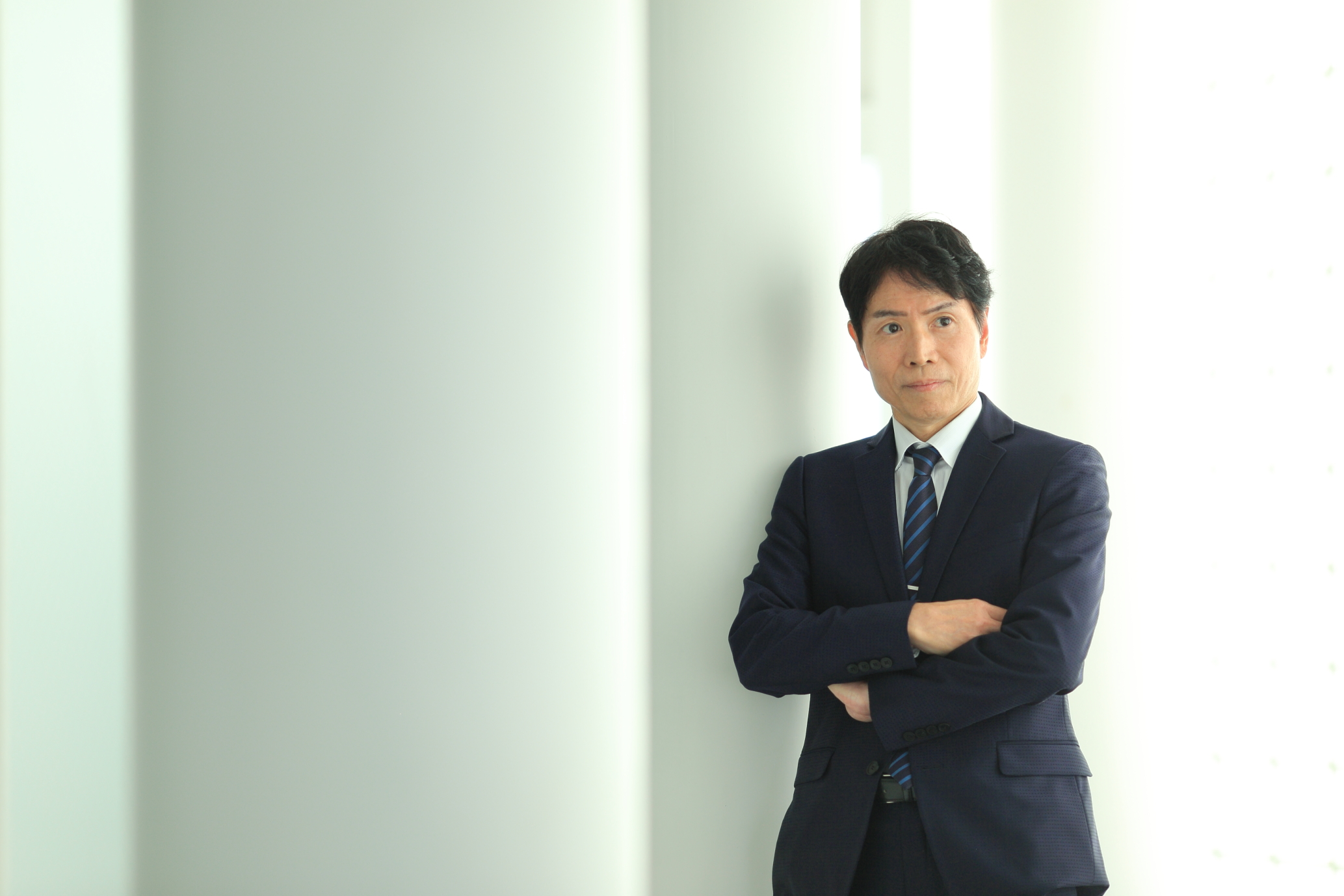
Naonori Ueda is a Research Professor and Deputy Director at RIKEN Center for Advanced Intelligence Project. He also serves as a Visiting Fellow at NTT Communication Science Laboratories, Research Supervisor for Mathematical Information Platform at Japan Science and Technology Agency (JST), and Visiting Professor at Kobe University's Graduate School of System Informatics. His distinguished career spans academia, government research institutions, and industry collaboration, with significant contributions to advancing artificial intelligence and machine learning applications across multiple scientific domains. Dr. Ueda's research interests focus on the intersection of machine learning, artificial intelligence, and physical sciences. He specializes in physics-informed deep learning approaches that integrate governing physical equations with neural network architectures. His work spans geophysical data analysis, remote sensing applications, computational seismology, and environmental monitoring systems. He has pioneered methods for crustal deformation modeling, earthquake prediction, tsunami inundation forecasting, and satellite imagery analysis using advanced machine learning techniques. His research demonstrates how AI can solve complex scientific problems by bridging the gap between data-driven approaches and physical domain knowledge. His publication record reveals a strong trend toward applying machine learning to solve real-world geophysical and environmental challenges. His recent work shows increasing sophistication in physics-informed neural networks that incorporate domain-specific knowledge into deep learning architectures. The publications span high-impact journals like Nature Communications, demonstrating the interdisciplinary significance of his work. His research consistently focuses on practical applications of AI for disaster prevention, environmental monitoring, and scientific discovery. Fellow of IEICE (Institute of Electronics Information and Communication Engineers) Member of Japan Prize field review committee Selection Committee Member for Brilliant Female Research Award (The Jun Ashida Award) Member of Kyoto Prize Selection Committee Dr. Ueda has secured substantial research funding through multiple government-sponsored projects including RIKEN Pioneering Project 'Prediction Science,' JST AIP Acceleration Research projects on weather prediction and drug discovery, and AMED-funded medical research initiatives. His leadership extends to serving as Sub-project Director for Japan's Moonshot R&D Project. He actively mentors researchers through his roles at RIKEN, NTT, and various academic institutions, fostering the next generation of AI scientists. As Deputy Director of RIKEN Center for Advanced Intelligence Project, Dr. Ueda leads one of Japan's premier AI research initiatives. He also serves on the Advisory Board of Kobe University's Mathematical and Data Science Center and Kyoto University's Graduate School of Informatics. His leadership extends to coordinating the AI Seminar at Osaka Industrial Association and supervising the Keihanna 'Edison Society' at the International Institute for Advanced Studies, demonstrating his commitment to bridging academic research with industrial applications.