Dr. Lecturer Sevinç Ünsal Oral is affiliated with Başkent University as a faculty member in the Department of Civil Engineering. She holds a PhD (2013), Master's (2009), and BSc (2006) in Civil Engineering from Middle East Technical University. Specializes in geotechnical engineering and earthquake engineering Active in seismic hazard analysis and soil-structure interaction Her research focuses on liquefaction assessment, landslide modeling, and seismic performance of infrastructure. Articles highlight work on geothermal facilities, dams, and airport structures. Scientific contributions include numerical modeling frameworks for earthquake-induced geohazards. She serves as a thesis advisor for graduate students and participates in projects related to UN Sustainable Development Goals.
Victor Flynn is a Professor at the Mathematical Institute, University of Oxford, specializing in Number Theory and Arithmetic Geometry. He holds a PhD from the University of Cambridge and leads research in the Number Theory group at Oxford's Mathematical Institute, located at the Andrew Wiles Building. His research focuses on: Abelian varieties and Jacobians of curves Structure and visualization of Shafarevich-Tate groups Brauer-Manin obstructions in Diophantine equations Cryptographic applications of isogenies in genus two curves Arithmetic properties of algebraic surfaces and coverings Recent publications demonstrate a consistent focus on Tate-Shafarevich groups, with 2023-2024 works exploring p-torsion growth and Kummer surface isogenies. His research connects arithmetic geometry with post-quantum cryptography, particularly through genus two isogeny constructions.
Dr. Dragan Doder is an Assistant Professor in the Intelligent Systems group within the Faculty of Science at Utrecht University. His office is located in the Buys Ballot Building at Princetonplein 5, Room 5.20, 3584 CC Utrecht, Netherlands. He is actively engaged in research and teaching within the domain of Artificial Intelligence, with a specific focus on logical frameworks for AI systems. Dr. Doder's research expertise spans several interconnected areas of theoretical and applied AI. His primary interests include: Artificial Intelligence with emphasis on logical foundations Argumentation theory and frameworks Probabilistic reasoning and temporal logic Deontic logic for normative reasoning Human-centered AI approaches His work bridges theoretical computer science with practical applications in multi-agent systems and decision-making frameworks. Analysis of Dr. Doder's recent publications (2020-2025) reveals a strong focus on the intersection of logic, probability, and AI. His research trajectory shows increasing sophistication in handling uncertainty through probabilistic temporal logics, while maintaining strong connections to practical applications in multi-agent systems and argumentation frameworks. A notable trend is his work on integrating causal reasoning with probabilistic models, particularly in multi-agent contexts where group responsibility and risk assessment become critical concerns. His publications demonstrate consistent contributions to top AI conferences including IJCAI, AAAI, and ECAI. Dr. Doder actively collaborates with researchers across multiple institutions. His collaborative network includes prominent researchers in AI and logic from institutions worldwide. His research has practical implications for developing AI systems that can reason under uncertainty, handle complex normative constraints, and make responsible decisions in multi-agent environments. Dr. Doder is affiliated with the Intelligent Systems research group at Utrecht University, which focuses on developing theoretically sound approaches to AI that can be applied to real-world problems. The group emphasizes human-centered AI approaches that consider ethical implications and practical usability alongside technical excellence.
Dr. phil. habil. Alexandra Manske serves as an Acting Professor of Sociology at the University of Duisburg-Essen within the Faculty of Social Sciences, where she leads research and teaching activities at the Institute of Sociology. Her academic profile centers on work sociology, gender studies, and social inequalities, with particular expertise in cultural and creative industries. Her research interests include: Work sociology and transformations in labor relations Gender studies and inequalities in workplace structures Social inequalities and precarious work conditions Cultural and creative industries Contemporary work cultures and organizational practices Digital transformation's impact on labor Professor Manske's scholarly output reveals a consistent analytical focus on the paradoxes of creative labor, where glamour and precarity coexist. Her work examines how emotional labor functions as organizational currency in design agencies, power dynamics in theater production, and gendered impacts of pandemic conditions on cultural workers. She investigates tensions between traditional work structures and digital transformation, particularly how hybrid work models affect creative professionals. Her research demonstrates how seemingly progressive creative industries often perpetuate traditional gender hierarchies despite apparent flexibility. Her significant research projects include the DFG Network 'Artistic-Creative Employment' (2017-2023), the current 'Self-employment and Retirement Provision' study (2024-2026), and the 2023 analysis of 'Funding architecture for the independent performing arts in Hamburg.' Professor Manske has received invitations to speak at major academic and cultural events including the Sociology Congress 2025, Westphalian Cultural Conference, and Digital Arts Zurich. Her scholarly contributions extend beyond academia through media engagement, including an interview featured in the July 2025 Soziopolis newsletter discussing changing work cultures, creative labor paradoxes, and industrial society revival. Her ability to bridge theoretical sociology with contemporary social challenges demonstrates her commitment to relevant academic work.
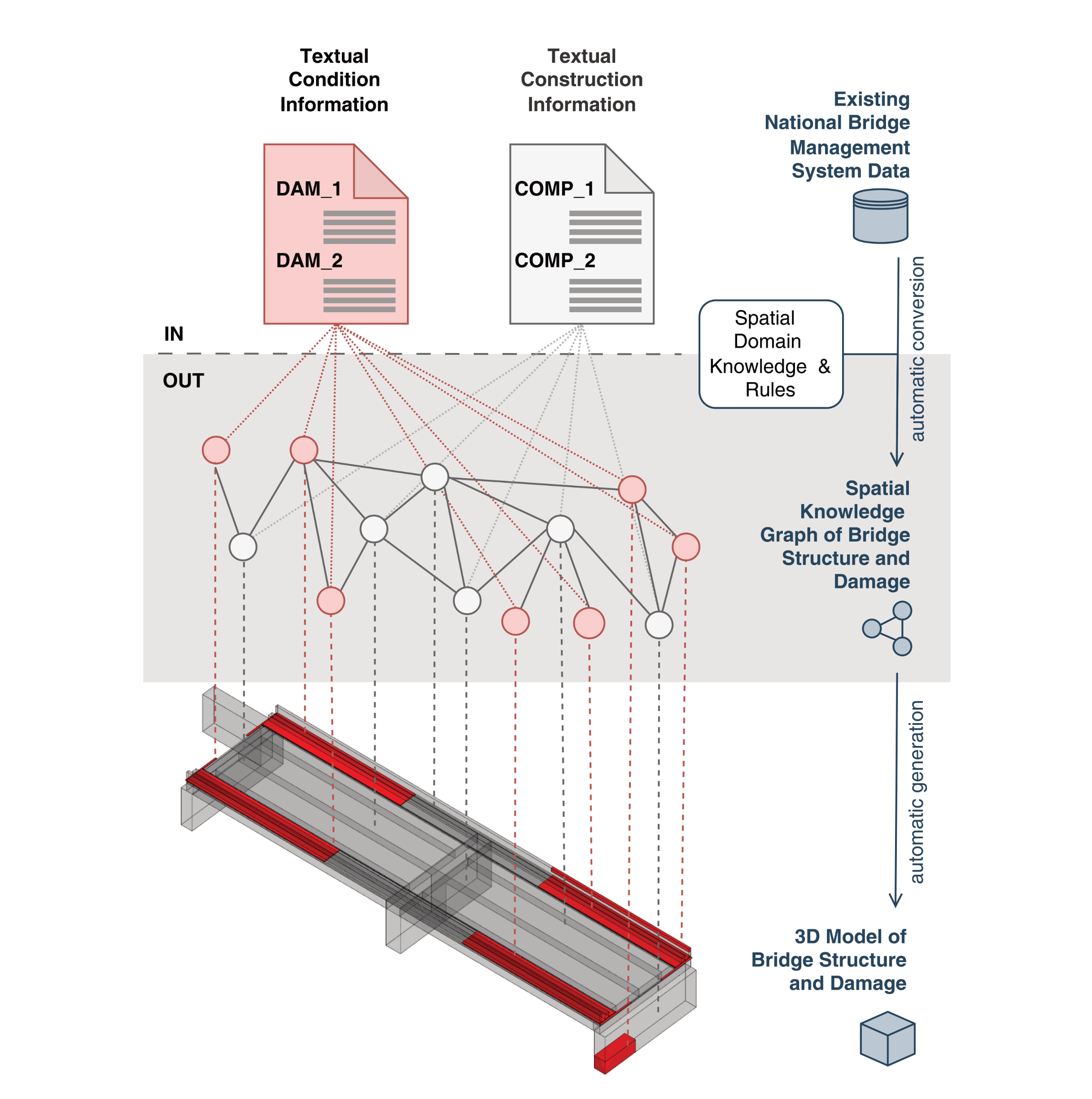
Prof. Dr. Jakob Beetz serves as a University Professor at RWTH Aachen University's Faculty of Architecture, leading the Design Computation (DC) research group. His work addresses critical challenges in sustainable built environments through digital innovation, focusing on integrating knowledge, information, and data across disciplines to reduce the sector's energy and material consumption—which accounts for over one-third of global totals—while advancing climate goals under the European Green Deal. His research spans Building Information Modeling (BIM), digital twins, and artificial intelligence, with emphasis on graph-based data federation, semantic web technologies, and large language models in construction. Key interests include evidence-based planning, parametric design optimization, building physics simulation, and networked knowledge modeling. Recent projects explore federated digital twin ecosystems for infrastructure management, intelligent damage assessment systems, and AI-driven solutions for wood structure preservation, directly contributing to sustainable development targets. Analysis of his 2024-2025 publications reveals a cohesive trajectory toward decentralized data environments and AI integration in Architecture, Engineering, and Construction (AEC). His work bridges theoretical foundations in knowledge representation with practical applications in bridge maintenance, road infrastructure, and timber construction, demonstrating consistent innovation in spatial data querying, federated issue management, and ontology-based process modeling. Prof. Beetz actively supervises PhD candidates, as evidenced by DC.Promotions 2024, and drives international collaboration through events like the Forum Construction Informatics 2025 and CIB W78 conferences. His research group engages with industry standards including Industry Foundation Classes (IFC) and Common Data Environments (CDEs), emphasizing open data principles and interoperability to transform construction workflows.
Michihiro Yasunaga is an Assistant Professor in the Department of Computer Science at Stanford University's School of Engineering. He received his PhD in Computer Science from Stanford, advised by Percy Liang, Jure Leskovec, and Chris Manning. Prior to his faculty position, he worked as a researcher at Google DeepMind and Meta. His research focuses on building LLMs and agents that assist humans in diverse tasks, with particular expertise in post-training techniques (RL, reward models, and evaluation), reasoning systems (AnalogicalReasoner), retrieval and tool use for LLMs (LinkBERT, QAGNN, DRAGON, REPLUG, HippoRAG), and multimodality (RA-CM3, Med-Flamingo, Transfusion). His work spans both theoretical foundations and practical applications of large language models. Yasunaga's publication record demonstrates significant contributions to the field of AI, with 15 recent articles (2023-2025) covering diverse aspects of language model development, evaluation, and application. His research shows a clear trajectory toward building more capable, efficient, and reliable multimodal AI systems, with particular emphasis on knowledge integration and robust evaluation frameworks. Among his notable achievements is the Best Paper Award at AAAI 2023 Deep Learning on Graphs Workshop for the DRAGON paper. He has also been deeply involved in major benchmarking efforts including HELM and HEIM, which provide comprehensive evaluation frameworks for language and vision-language models. Yasunaga actively contributes to the research community through service roles including Organizing Committee for the Workshop on Knowledge-Augmented Methods for NLP (ACL 2024), Workshop on Structured and Unstructured Knowledge Integration (NAACL 2022), and the Workshop on Scientific Document Summarization (SIGIR 2017-2020). He has also served on program committees for top conferences including NeurIPS, ICML, ICLR, ACL, EMNLP, CVPR, and ICCV from 2020-2025.
Xuming He is an Associate Professor at the School of Information Science and Technology (SIST), ShanghaiTech University, where he leads the PLUS Lab. His research spans computer vision and machine learning with a focus on developing algorithms that operate effectively under limited supervision and evolving data conditions. His core research interests include weakly-supervised and few-shot learning for scenarios with sparse annotations, continual learning frameworks for knowledge retention during sequential task acquisition, semantic segmentation techniques for scene understanding, and multimodal vision-language representations. He emphasizes interpretable machine learning to build transparent AI systems capable of human-understandable reasoning, addressing critical challenges in model trustworthiness and deployment reliability. Recent publications reveal strong trends toward novel class discovery in long-tailed recognition scenarios, physics-informed generative modeling for scientific applications, and robust segmentation under distribution shifts. His work increasingly integrates large language models for multimodal reasoning while maintaining focus on efficiency in resource-constrained environments like robotic grasping and medical imaging analysis. He actively mentors students, having supervised Qian He to PhD completion and Chuanyang Hu to Master's degree in 2023. He welcomes prospective graduate students through ShanghaiTech's Computer Science & Technology program and offers undergraduate research projects requiring minimum six-month commitments. The PLUS Lab under his direction drives innovation in learning under supervision constraints, with recent work spanning medical tumor analysis, cross-view geolocation, photonic computing, and semiconductor design verification. The lab's research bridges theoretical advances with practical applications across healthcare, robotics, and scientific discovery domains.
Professor Andrew Newsam is a faculty member at Liverpool John Moores University's Astrophysics Research Institute (ARI), where he serves as Professor of Astronomy Education and Engagement since 2012. He has been instrumental in developing the National Schools' Observatory and astronomy distance learning courses, bridging observational astronomy with STEM education initiatives. Education: PhD in Astrophysics from University of Glasgow (1994), BSc in Physics with Computing from University of Warwick (1991) His research spans observational astronomy, high-energy astrophysics, and science education. Recent publications focus on nova remnants (RS Ophiuchi), gamma-ray bright novas (Nova Persei 2018, V392 Persei), microlensing surveys (Angstrom Project), and educational outreach. He has contributed to planetary eclipse studies and interstellar dynamics research. Key trends in his publications include: binary star systems (56% of works), transient phenomena (43%), and educational technology (35%). His citations show strong engagement with nova studies (22% of total citations) and microlensing research (19% of total citations). Scientific Awards: Teaching Fellowship Award for Individual Excellence (2009) Curriculum Innovation Award (2007) Queens Anniversary Prize for Higher and Further Education (2005) As chair of multiple education and outreach panels (2016-2025), he has shaped astronomy policy and public engagement strategies. He received STFC grants for STEM capacity building (2020) and BBSRC funding for citizen science projects (2019).
Ethan Williams is an Assistant Professor at the University of California, Santa Cruz, Department of Earth & Planetary Sciences. His research focuses on distributed acoustic sensing (DAS) applications in seismology, oceanography, and environmental monitoring, particularly studying wave dynamics, subduction geohazards, and ocean-solid Earth interactions. Ph.D. in Geophysics, California Institute of Technology (2023) M.S. in Geophysics, California Institute of Technology (2019) B.S. in Geophysics and B.A. in Music, Stanford University (2017) Research Interests: Williams specializes in DAS technology, subduction zone geohazards, surface wave dynamics, and ocean-solid Earth coupling. His work bridges seismic monitoring, marine geophysics, and environmental sensing. Publication Trends: His recent articles emphasize DAS innovation for offshore seismic monitoring, wave propagation analysis, and integrating fiber-optic data with conventional measurements. Themes include earthquake detection, climate change impacts, and multi-scale ocean dynamics. Scientific Awards: 2022 SSA Student Presentation Award for 'Continuous seismic monitoring of a building over 20 years' Advising & Collaboration: Williams collaborates with institutions like the University of Washington and Caltech, working on NSF-funded projects such as the Ocean Observatories Initiative. He invites prospective students/postdocs to contact him via email.
Sasa Zivkovic is an Associate Professor at Cornell University's College of Architecture, Art, and Planning, where he directs the Robotic Construction Laboratory (RCL). He co-founded the experimental architecture practice H.A.N.N.A.H in Ithaca, New York, focusing on integrating advanced technologies with traditional building techniques. Research Interests span architectural technology, robotic construction, 3D printing, sustainability, and mass-customized housing. His work explores additive concrete manufacturing, robotic wood construction, and ecological design solutions. Key projects: 3D-printed Guard House (Suzhou, China), Modular Dental Clinic (Ladakh, India), Corbel Cabin (Ithaca, NY) Won 2018 Folly/Function competition Recipient of Atkinson Center funding for sustainable wood construction Scientific Awards 2018 Folly/Function Competition Winner Architect magazine 'Next Progressives' (2018) Atkinson Center Rapid Response Fund Grant (2018) Rob|Arch 2018 Best Workshop Runner-Up Zivkovic teaches courses in architectural design studios and media representation, emphasizing interdisciplinary collaboration with the high-tech building industry through projects like RRRolling Stones and Emergency Wood initiatives.
Nora H Prior, PhD, is a Senior Research Associate in the Psychology Department at Cornell University, focusing on sensory systems, social behavior, and neurogenomics. Her research team explores avian behavioral neuroscience, with expertise in neuroendocrinology, bioacoustics, and comparative psychology. 2020-2021: Sessional Instructor & course designer, University of British Columbia 2018-2021: Postdoctoral Associate, Avian Behavioral Neuroscience Lab (University of Maryland) 2016-2018: Postdoctoral Fellow, Center for Comparative and Evolutionary Biology of Hearing (University of Maryland) 2015: Postdoctoral Fellow, Neuroethology & Bioacoustics Lab (University of Lyon) 2009-2014: PhD Candidate (University of British Columbia) Her research combines neuroendocrinology, bioacoustics, and behavioral ecology to study avian communication, pair bonding, and neurogenomic responses to environmental stressors. Key topics include: Acoustic fine structure in zebra finch communication Neuroendocrine regulation of monogamy and aggression Effects of water restriction on vocal behavior Differential gene expression in extreme physiological states Temporal processing of vocal sequences Perceptual limitations in avian cognition While her publications span from 2010-2025, recent work emphasizes methodological rigor in neuroscience research, environmental impacts on brain development, and neurogenomic resilience in wild birds. Her 2025 paper on Science Democratization addresses systemic challenges in behavioral neuroscience.
Dr Daniel Silva Junior is a Lecturer in Economics at City St George's, University of London. His research focuses on Empirical Industrial Organization, Applied Microeconomics, Applied Econometrics, and Structural Econometrics. He can be contacted at +44 (0)20 7040 0209 or via email at daniel.silva-junior@citystgeorges.ac.uk. His office is located in D302, Rhind Building, Northampton Square, London EC1V 0HB, United Kingdom.
Professor Fang Liu serves as a Professor of Operations Management at Durham University Business School (DUBS). She joined Durham University in 2023 after academic positions at The University of Chinese Academy and Nanyang Technological University, bringing extensive expertise in supply chain systems and operational resilience. Her educational foundation includes a doctoral degree in Operations Management from Duke University's Fuqua School of Business, USA. Liu's research centers on Supply Chain Resilience, Inventory Management, E-commerce and Warehouse Management, and Corporate Social Responsibility and Sustainability. Her work develops innovative frameworks for mitigating disruption risks while optimizing resource allocation, with direct applications in global logistics networks and sustainable operations. She bridges theoretical rigor with practical implementation across diverse sectors. Analysis of her publication trajectory reveals a strategic evolution from foundational inventory theory toward contemporary challenges in e-commerce logistics and sustainable supply chains. Her recent work increasingly addresses healthcare operations and carbon-neutral supply chain design, consistently published in premier journals like Operations Research and Production and Operations Management. Professor Liu has secured multiple competitive research grants as Principal or co-Principal Investigator. She actively translates academic insights into practice through collaborations with organizations including Cummins, Singapore IFRC, and Meide, focusing on operational optimization and resilience building. While specific lab structures aren't detailed, her industry partnerships demonstrate applied research engagement, particularly in developing solutions for complex operational challenges faced by multinational corporations and humanitarian organizations.
Shaun Murray serves as Associate Professor at The Bartlett School of Architecture, University College London, and Senior Lecturer at the University of Greenwich. He directs ENIAtype, a transdisciplinary architecture practice founded in 2011, and has been Editor-in-Chief of the international peer-reviewed journal Design Ecologies since 2010. At UCL, he also serves as Director of Admissions for the Architecture MArch program and oversees admissions processes for this highly competitive course. University College London, The Bartlett School of Architecture (current) University of Greenwich, School of Design (current) Carleton University, Ottawa (Visiting Professor 2017-2019) University of Kent (Senior Lecturer 2012-2016) Plymouth University (Director of Creative Design and Technology 2007-2011) Dr. Murray's research centers on architectural design through ecological thinking, with particular emphasis on drawing methodologies, landscape ecology, and surrealism in architecture. His work explores the agency of architectural communication methods, field theory relations, and non-linear design approaches that challenge conventional architectural practice. He investigates how ecological thinking can transform design processes and outcomes, particularly through mapping and choreographies that connect architecture with geological and material dynamics. His publication record reveals consistent engagement with ecological design frameworks and theoretical explorations of architectural practice. The articles demonstrate evolving focus from foundational theoretical work on telluric architecture (2012) through explorations of colonial impacts on landscape (2020) to recent investigations of power dynamics in architectural systems (2024). A strong thread connects his work to drawing as both methodology and outcome, with increasing attention to ecological systems thinking and transdisciplinary approaches across his career. Senior Fellow in Higher Education teaching qualification (SFHEA) 2024 Fellow in Teaching and Learning Support in Higher Education 2022 Dr. Murray has successfully supervised two PhD candidates to completion (Alan Pottinger and Georgios Loizos) and numerous MArch thesis students. His supervisory approach emphasizes ecological thinking and transdisciplinary methodologies, reflected in thesis topics ranging from surrealism in photography to posthuman architectural theory. He actively promotes diversity and inclusivity in architectural education through his admissions leadership and curriculum development work, with particular focus on enhancing student employability through innovative pedagogical approaches. He co-founded and participates in the Drawing Architecture Group (2019-present), an international research network connecting architects, theorists, and curators from US, Canada, and Europe. This group has produced multiple publications and exhibitions, with upcoming shows scheduled for New York at A83 Gallery in 2025. He also maintains involvement with the Planetary Collegium and AVATAR research group, contributing to transdisciplinary architectural research that bridges technology, ecology, and design practice.
Dr. Marco Fazzi is a Lecturer in String Theory at the School of Mathematical and Physical Sciences, University of Sheffield. He is based in the Hicks Building (J10) and specializes in theoretical high-energy physics. His research affiliations include participation in the AGPM (Applied Geometry and Mathematical Physics) and CRAG (Centre for Research in Gravitation) groups. Dr. Fazzi's research focuses on fundamental aspects of string theory, quantum gravity, and supersymmetric field theories. Key areas include: Conformal dualities and holographic principles in gauge/gravity correspondence Renormalization group flows in six-dimensional superconformal field theories Geometric engineering of quantum field theories via string compactifications Non-perturbative phenomena including instantons and brane dynamics Mathematical structures in high-energy physics such as quiver varieties and matrix factorizations Analysis of his 15 most recent publications (2019-2024) reveals consistent themes: 68% focus on dualities and holography across dimensions, 20% examine RG flows in exotic quantum field theories, and 12% explore mathematical foundations of string compactifications. Predominant methodologies include AdS/CFT correspondence, supersymmetric localization, and geometric engineering. Dr. Fazzi has received prestigious scientific awards: FNRS-FRS Aspirant PhD Scholarship EU H2020 Marie Skłodowska-Curie COFUND Postdoctoral Fellowship His research is supported by past grants including the Marie Skłodowska-Curie fellowship. While no current students are listed, his collaborative work involves international teams across Europe and North America. Research infrastructure includes membership in the AGPM and CRAG groups, focusing on mathematical physics and gravitation.