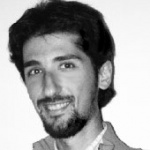
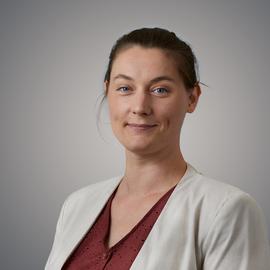
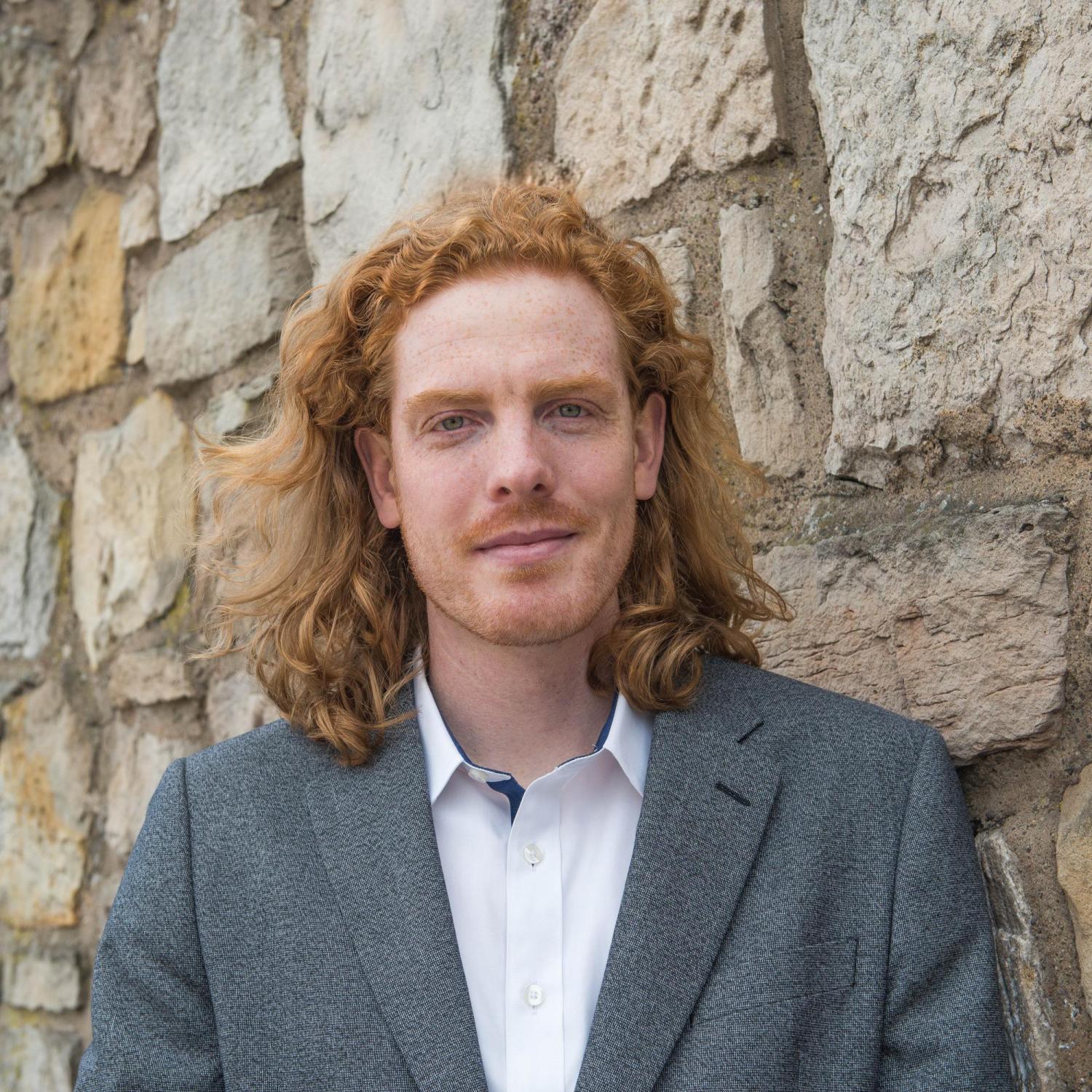
Enrico Fabrizio is an Assistant Professor at the Department of Agricultural, Forest, and Food Sciences (University of Turin). His research focuses on building energy performance, indoor environmental quality, and sustainable design. Key areas include PCM-based thermal energy storage, multi-energy system optimization, and low-temperature heating systems. He has contributed to advancing methodologies for nearly Zero Energy Buildings (nZEBs) and energy-efficient livestock housing. Research domains include HVAC systems, energy-efficient building design, and dynamic simulation tools for energy performance assessment. His work integrates renewable energy technologies, such as solar thermal and photovoltaic systems, with district heating networks and smart grid applications. He has developed frameworks for personalized environmental control systems (PECS) and energy certification protocols for agricultural buildings like pig houses. His recent publications emphasize decarbonization strategies for heat pumps, cryocooler prototypes, and zero-power building paradigms. Collaborations span academic and industry partners, addressing challenges in energy poverty, climate control in greenhouses, and retrofitting historic buildings to nZEB standards.
Gorkem Bostanci is an Assistant Professor of Economics at the University of British Columbia, affiliated with the Vancouver School of Economics within the Faculty of Arts. His office is located in Room 201E Iona Building. Dr. Bostanci's primary research focuses on Macroeconomics, specifically examining how market frictions impact aggregate productivity through distortions in the allocation of workers and capital across firms. His work spans several interconnected fields including Firm Dynamics, Labor Economics, and Economics of Information. His research employs both theoretical modeling and empirical analysis to address fundamental questions in macroeconomic theory. His recent publications demonstrate a consistent focus on market frictions and their macroeconomic implications. His work spans multiple high-impact journals including Management Science (2023), Journal of Banking and Finance (2020), and he has several papers under review at top journals like Journal of Political Economy Macroeconomics and Quarterly Journal of Economics. His research often combines theoretical modeling with empirical testing, using sophisticated econometric techniques to validate his theoretical predictions. Dr. Bostanci teaches Intermediate Macroeconomic Analysis I (ECON 302) at UBC, where he instructs multiple sections of this core economics course. He obtained his Ph.D. from the University of Pennsylvania and maintains an active research agenda with several working papers in progress. His research has practical implications for understanding economic policy responses to inflation, financial market functioning, and international economic linkages.
Dr. Honglei Xu is an Associate Professor of Industrial Optimization and Engineering at Curtin University, specializing in industrial system optimization for net-zero transition. He serves as Node Leader of ATN Industry Doctoral Training Centre and Mathematics Honours Coordinator. His research spans automation in mining, hybrid systems control, and optimization in construction and energy sectors. Recent publications demonstrate interdisciplinary approaches combining operations research, AI, and control theory for sustainable industrial solutions. Honors include IEEE Senior Membership and JSPS Fellowship. Current projects focus on public transport optimization, renewable energy forecasting, and intelligent control systems for mineral processing. Dr. Xu teaches courses in mathematical modeling and production planning while serving as associate editor for multiple international journals including Complexity and Energies.
Brett van Poorten is an Assistant Professor in the School of Resource & Environmental Management at Simon Fraser University. He holds a BSc in Biology from the University of Guelph, an MSc in Fish Ecology from the University of Calgary, and a PhD in Fisheries from the University of British Columbia. His research focuses on fisheries management decisions, integrating recreational/commercial fisheries with human dimensions and management science. Prior to SFU, he was Senior Aquatic Scientist at the BC Ministry of Environment, addressing fisheries and aquatic system challenges such as social-ecological system management, invasive species, and hydroelectric impacts. His research interests include decision analysis, structured decision-making, novel fishing effort monitoring techniques, and social-ecological systems modeling. He leads the Fisheries Management Lab ( www.fisheriesmanagementlab.ca ), emphasizing applied solutions for sustainable resource management. Brett teaches REM 412 (Environmental Modeling) and REM 612 (Simulation Modelling in Natural Resource Management). His work bridges ecological and human dimensions, with a focus on creating actionable frameworks for complex management challenges.
Professor Satu Huuhka leads Tampere University's efforts in sustainable renovation and circular economy transition in construction. As the inaugural Professor of Sustainable Renovation (appointed 2024), she heads the multidisciplinary ReCET research group, focusing on decarbonizing the built environment through building reuse. Her work demonstrates that renovating existing structures reduces carbon emissions more effectively than new construction, challenging industry norms. Education: MSc Architecture (2010), PhD (2016), both from Tampere University of Technology. Prior roles include Adjunct Professor (2018), Senior Research Fellow (2019–2021), and leadership in the EU-funded ReCreate project (2021–present). Recognized with the 2023 TunnustusPAANU Award and 2024 Order of the Lion of Finland medal. Research emphasizes deconstruction of precast concrete, policy frameworks for circularity, and adaptive reuse strategies. Current projects include ReCreate's pilot deconstruction of Tampere office buildings and analysis of material flows in urban environments. Collaboration with firms like Skanska drives industry adoption of reuse practices. Teaching involves training next-generation researchers through doctoral supervision and interdisciplinary teamwork. Personal passion for restoration extends to home renovations and kintsugi-inspired ceramics repair, reflecting her professional commitment to preserving and revitalizing existing structures.
Atanas Mihov serves as Associate Professor of Finance and Capitol Federal Fellow at the University of Kansas School of Business, where he teaches International Finance and Commercial Credit Analysis at the undergraduate level. Since joining KU in 2020, he has maintained visiting positions with the Federal Reserve Banks of Dallas and Richmond, building on his prior role as Senior Financial Economist leading operational risk modeling for the Federal Reserve's stress-testing program. Education: Ph.D. in Finance, University of Florida Warrington College of Business (2014) B.S. in Business Administration – Finance, Ramapo College of New Jersey Research Focus: Dr. Mihov's scholarship centers on international finance, banking systems, operational risk dynamics, supply chain financial interactions, and corporate innovation mechanisms . His work bridges theoretical finance with regulatory applications, particularly examining how operational risk manifests across banking institutions and interacts with macroeconomic conditions. Current investigations explore AI's role in loss prediction, climate risk transmission, and payment timeliness effects on market returns. Publication Trends: Recent work (2023-2025) demonstrates concentrated exploration of operational risk in banking through 15 high-impact studies. Key themes include B2B payment analytics' relationship to stock returns, AI-driven operational loss modeling, climate risk quantification, workforce policy impacts on risk, and corporate espionage effects on innovation. These studies leverage unique datasets from banking institutions and regulatory filings, frequently appearing in top-tier journals like the Journal of Financial Economics . Scientific Recognition: Capitol Federal Fellow designation at University of Kansas Professional Engagement: Dr. Mihov serves as Associate Editor for Emerging Markets Review , reflecting his scholarly influence. While specific grant details aren't documented in source materials, his research trajectory indicates sustained support through Federal Reserve collaborations and university resources. His prior leadership of quantitative teams at the Richmond Fed demonstrates capacity for managing complex research initiatives. Research Infrastructure: Current work leverages KU's business school resources alongside ongoing Federal Reserve partnerships. His prior operational risk modeling team at the Richmond Fed established foundational methodologies now informing banking regulation, while KU collaborations continue advancing supply chain finance and innovation research through the Finance area's academic ecosystem.
Maud Lanau is an Assistant Professor at Chalmers University of Technology's Department of Building Technology within the School of Architecture and Civil Engineering. Her research focuses on sustainable built environments, integrating industrial ecology, socioeconomic metabolism, and circular economy principles to reduce environmental impacts. She specializes in material stock and flow analysis, carbon accounting, and urban resource cadasters. Education: PhD in Environmental Engineering (2020), University of Southern Denmark MSc in Industrial Ecology (2014), Chalmers University of Technology Mastère in Housing Engineering (2011), University Paul Sabatier of Toulouse BSc in Mathematics, Physics, and Chemistry (2012), University Paul Sabatier of Toulouse Research Interests: Lanau’s work examines how built environment stocks can support circular economy transitions. She develops methods for material stock modeling, integrates data collection frameworks for construction practitioners, and explores urban morphology-material stock relationships. Her projects include the NUMMS initiative linking urban form to material stocks and the Future URCs project addressing circular logistics in construction. Collaborations & Teaching: She co-supervises PhD students on topics like construction plastics circularity and sustainable mass handling. Lanau teaches the master’s course 'Sustainability Analytics and Visualization,' emphasizing industrial ecology tools and visualization techniques. She actively participates in interdisciplinary projects like CREATE and the Swedish Circular Economy Colloquium.
Dr Mahsan Sadeghi is a Research Scientist at CSIRO and an Honorary Senior Research Fellow at the University of Sydney's School of Architecture, Design and Planning . She leads Australia’s national project on the Australian Residential Overheating Model , addressing urban heat impacts on health and energy use. Her work bridges architecture, climate adaptation, and public health. PhD in Architecture (University of Sydney, 2018) CSIRO Early Research Career (CERC) Fellow (2021–2024) NHMRC Postdoctoral Fellow (2019–2021) Affiliate of NHMRC Centre of Research Excellence for Safe Air Her research focuses on climate-sensitive building design , urban heat mitigation , and health impacts of overheating . Key projects include greening infrastructure analysis, ventilation systems for thermal comfort, and policy development for housing air-conditioning. 2023–2024: Funded by Australian National University for indoor environment and sleep studies 2019–2020: Industry grants for zero energy residences and wind tower design 2017–2019: CRC-funded studies on urban heat island mitigation and CO2 reduction Scientific awards include: NHMRC Postdoctoral Fellowship Climate Change, Human Health, and Social Impacts Node Grant Commissioned by Western Australia Government for housing policy She contributes to public policy through parliamentary submissions and co-authored a position paper on clean air legislation.
Dr. Karthik Akkiraju serves as Assistant Professor in the Department of Materials Engineering within UBC's Faculty of Applied Science, maintaining an active research program at the intersection of materials science and socio-environmental systems. His office (FF 011) and contact email (karthik.akkiraju@ubc.ca) reflect his current institutional affiliation. His research pioneers a techno-social paradigm for planetary health through three synergistic foci: (1) Establishing material poverty benchmarks using household survey data to identify resource-deprived communities; (2) Quantifying socio-environmental impacts across material supply chains; (3) Integrating well-being metrics into heterogeneous catalyst design frameworks. This work fundamentally reimagines materials engineering by centering human well-being within ecological boundaries, developing design methodologies that balance material requirements with equitable environmental constraints. Analysis of his publication trajectory reveals consistent interdisciplinary innovation spanning computational catalysis, environmental policy, and social metrics. His recent work demonstrates particular strength in perovskite catalyst engineering for sustainable chemistry and novel methodologies for spatial well-being assessment, reflecting a unique fusion of traditional materials science with computational social science. Dr. Akkiraju directs the Sustainable Materials Lab (SMAL), where his team develops frameworks connecting material consumption patterns to human development outcomes, creating pathways for resource allocation that simultaneously address poverty alleviation and environmental sustainability.
Jay Arehart is an Assistant Teaching Professor and Faculty Director for Architectural Engineering at the University of Colorado Boulder, specializing in Building Systems Engineering. He holds a PhD, MS, and BS in Architectural Engineering from the same institution. His research focuses on life cycle assessment of buildings, embodied carbon reduction, industrial ecology, and engineering education through service learning. PhD in Architectural Engineering, University of Colorado Boulder (2021) MS in Architectural Engineering, University of Colorado Boulder (2017) BS in Architectural Engineering, University of Colorado Boulder (2016) Dr. Arehart’s work emphasizes sustainable building practices, including embodied carbon measurement, material sequestration potential, and decarbonization strategies. His research bridges environmental science and civil engineering, with notable contributions to carbon sequestration in construction materials like hempcrete and transparent wood composites. He actively promotes service learning in engineering education through projects like global footbridge construction. His recent publications address structural material demand projections, embodied carbon benchmarks, and probabilistic modeling of building materials. Notable awards include the AREN Faculty Appreciation Award (2023). Dr. Arehart is affiliated with the ASCE Structural Engineering Institute (SEI) and ASCE Architectural Engineering Institute (AEI). His advising and grants focus on advancing sustainable building systems and climate-resilient infrastructure. He is based in Office ECOT 417 at CU Boulder.
Dr. Hossein Derakhshan is a Senior Lecturer in the School of Civil & Environmental Engineering at Queensland University of Technology. His research focuses on seismic risk assessment of unreinforced masonry structures using advanced technologies like AI and finite element analysis. He leads projects on community resilience against earthquakes and green concrete applications. PhD (Civil Engineering) - University of Auckland MSc (Civil/Structural) - University of Tehran MSc (Civil) - Shiraz University Research interests include: Seismic Evaluation of Masonry Components Artificial Intelligence in Structural Assessment Heritage Building Conservation Computational Mechanics Applications Recent publications analyze: 2025: Compressive strength models for grouted masonry 2025: Seismic fragility functions for reinforced masonry 2024: Vulnerability assessment of historical buildings 2023: Numerical modeling of masonry interactions Scientific recognition includes: 2018: ARC DECRA Fellowship 2016: F. Stan Shaw Best Paper Award 2015: Otto Glogau Practice Paper Award 2009: H.W.H. Timber West Award He supervises multiple PhD candidates and collaborates with the Centre for Materials Science , while serving as Associate Editor for the Structures journal.
Gregor Henze is an endowed professor at the University of Colorado Boulder and a Contingent Worker at the National Renewable Energy Laboratory (NREL) , with a joint appointment since 2013. His expertise spans building energy systems , model predictive control , and reinforcement learning applications in architectural engineering. Education: Master of Mechanical Engineering, Oregon State University Master of Energy and Process Engineering, Technical University of Berlin PhD in Civil Engineering, University of Colorado Boulder Henze’s research focuses on advanced controls for building energy systems , including sensor fusion algorithms , district energy systems , and building-to-grid integration . He has authored over 200 publications and holds three patents , with recent work emphasizing machine learning and real-time optimization . Recent publications highlight reinforcement learning in building control (2023) and optimization frameworks for district thermal energy systems (2022). His work intersects energy analytics , occupancy detection , and smart building technologies . Scientific Awards: 4 Best Paper Awards Research and Commercialization Award from Colorado Cleantech Industry Association (2011) Fellow of the Renewable and Sustainable Energy Institute Henze is a co-founder and Chief Scientist of QCoefficient, Inc. , developing real-time control solutions for grid-interactive buildings. He served as the Fulbright Distinguished Chair at CSIRO, Australia (2022).
Benjamin Kromoser is a Professor for Resource Efficient Structural Engineering at the Institute of Green Civil Engineering (BOKU Vienna). He leads research projects on sustainable construction methods, including additive manufacturing of biobased materials, timber-concrete composites, and topology optimization of structural elements. His work bridges digital fabrication, circular economy principles, and industry 4.0 in civil engineering. Head of Institute of Green Civil Engineering (2022–present) Speaker of Doctoral School Build.Nature (2021–2022) University Professor for Biobased Design (2018–2022) His research focuses on reducing environmental impacts through automated design, 3D printing of concrete, and non-metallic reinforcement. Recent projects include 3DP Biowalls (biobased recyclable walls) and prestressed carbon-UHPC elements. Scientific awards include the fib Achievement Award (2019) , Inits Award (2016) , and Bundespreis für Ecodesign (2016) .
D. Frantz is an Assistant Professor at Trier University , leading the Geoinformatics - Spatial Data Science lab. Their research focuses on transforming Earth Observation (EO) data into actionable environmental insights through preprocessing, data cubes, and machine learning. Current Position : Assistant Professor for Geoinformatics - Spatial Data Science, Trier University (2021–today) Former Role : PostDoctoral Researcher at Earth Observation Lab, Humboldt-Universität zu Berlin (2017–2021) Education : PhD in Environmental Remote Sensing and Geoinformatics, Trier University (2013–2017) Frantz's research emphasizes open science , with all software and methods published as open source ( FORCE ). Key research areas include: EO data preprocessing to analysis-ready data Multi-sensor data integration (Sentinel, Landsat) Land cover fraction mapping and time series analysis Material stock quantification in buildings/infrastructure Climate change mitigation through urban-rural gradient analysis Recent publications highlight work on global material stock mapping , tree species classification in temperate forests, and temporally transferable crop mapping using deep learning. While no explicit awards are listed, their open-source contributions and leadership in the Geoinformatics lab underscore significant academic impact.
Dr Choo yoon Yi is an AXA Postdoctoral Fellow at the School of Architecture and Landscape, University of Sheffield, specializing in Building Physics and Liveability research. Her work focuses on sustainable 'Healthy Ageing' resilient to climate change, with particular emphasis on optimizing indoor environments for older people in care homes while transitioning to net zero energy systems. She collaborates with Professor Darren Robinson and Dr Chengzhi Peng on innovative modeling approaches to balance heat stress mitigation with carbon reduction goals. Dr Yi earned her PhD at Sheffield School of Architecture in 2019, preceded by an MSc in Sustainable Architectural Studies at the same institution and a B.Sc. in Architectural Engineering from Hanyang University in South Korea. Her educational background bridges engineering fundamentals with sustainable architectural applications. Her research program addresses critical challenges in climate change adaptation for vulnerable populations through housing stock energy modeling, computational urban microenvironment analysis, and bioclimatic design frameworks. Current projects focus on developing reliable modeling tools to identify effective space cooling measures that mitigate indoor heat stress risk in care homes while meeting net zero CO 2 emission targets by 2050. Analysis of Dr Yi's publication record reveals a clear progression toward increasingly applied research with direct policy implications. Starting with fundamental building physics and urban microclimate modeling, her work has evolved to address specific challenges for elderly populations in care settings, demonstrating strong interdisciplinary integration between architectural science, public health, and climate policy. Dr Yi has secured substantial research funding including: AXA Fellowships (2023-2025) for 'Renovating care homes fit for the future: balancing indoor heat stress risk mitigation with net zero ready by 2050' Higher Education Innovative Fund (2021-2022) for 'Co-producing an environmental performance guidelines framework for care homes fit for the future' ESRC Postdoctoral Fellowships (2020-2021) for 'Thermal stress vulnerability and resilience: Housing stock transformation fit for an ageing society in future climate' She is an active member of the Architectural and Urban Science research group at Sheffield.