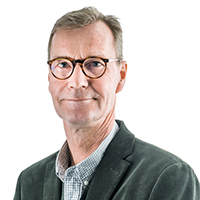
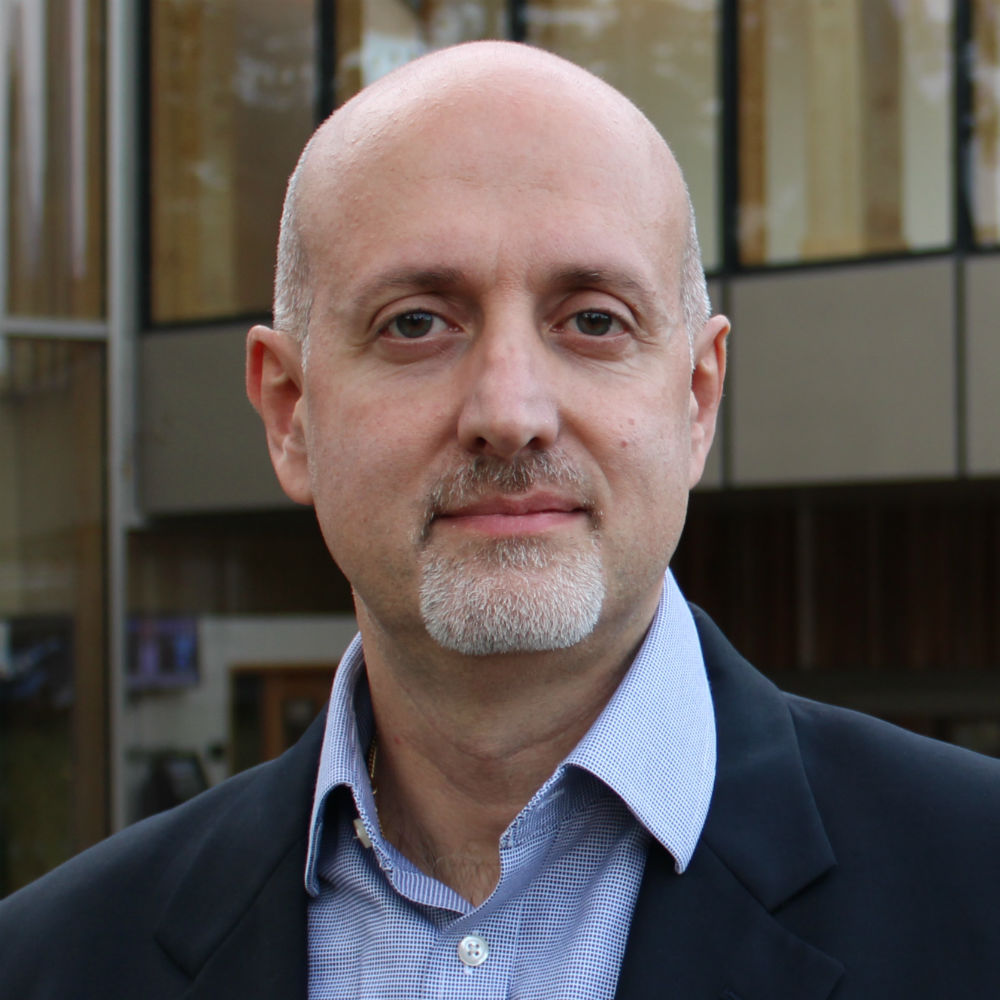
Dr. Philip Brabazon is a Senior Lecturer at the University of Portsmouth, affiliated with the School of Organisations, Systems and People and the Centre for Operational Research & Logistics. His work focuses on operational research, logistics, and mass customization in industries such as automotive and manufacturing. He has published extensively on topics including order fulfillment systems, supply chain management, and production economics. Dr. Brabazon is currently accepting PhD students and has supervised 7 theses. His research explores themes like automotive order-to-delivery processes, virtual build-to-order systems, and the application of simulation in operational systems. He has contributed to understanding mass customization strategies, risk analysis in offshore operations, and safety case frameworks. His work bridges theoretical models with practical industry applications, particularly in optimizing supply chains and production systems. Notable publications include analyses of automotive logistics, long-tail retail dynamics, and Markovian approximations in fulfillment systems. His research has been cited over 100 times in key journals like the European Journal of Operational Research and Production and Operations Management.
Kai Du is an Associate Professor of Accounting at The Pennsylvania State University's Smeal College of Business. He specializes in economics-based research at the intersection of financial accounting, capital markets, and information economics. His work has been published in top journals such as The Accounting Review, Journal of Accounting and Economics, and Review of Accounting Studies. He currently serves on the editorial board of The Accounting Review. Education: Ph.D. in Accounting from Yale University (2012). Office: 319 Business Building; Phone: 814-865-6123; Email: kxd30@psu.edu. Research interests include financial accounting, information economics, investment companies, decentralized finance (DeFi), and machine learning applications in finance. His studies explore topics like sustainability-linked loans, big data in accounting, and the impact of geotargeting on information acquisition. Publications focus on themes such as earnings quality, market efficiency, strategic experimentation, and the role of technology in financial reporting. Recent work highlights trends in sustainable finance, machine learning in asset management, and regulatory transparency. Grants and advising: No current grants or students listed. Active in editorial and academic leadership roles.
James O'Donnell is an Associate Professor in the School of Mechanical and Materials Engineering at University College Dublin (UCD). He joined UCD in 2013 after working at Lawrence Berkeley National Laboratory. His research focuses on multi-scale energy modeling, interoperable BIM solutions, and sustainable building design. He contributes to buildingSMART’s Energy Modelling Expert Panel and teaches modules on building physics and energy analysis. Education: B.E. Civil and Environmental Engineering, University College Cork Ph.D. in Holistic Building Performance Analysis, University College Cork Professional Diploma in University Teaching & Learning, University College Dublin Research Interests: James specializes in energy informatics, building energy simulation, and semantic web technologies for the built environment. His work bridges BIM integration with energy modeling to optimize urban-scale performance. Grants & Funding: PROBONO (2022–2026): Integrator-centric approach for energy-efficient buildings NexSys (2022–2026): Next-Generation Energy Systems ALIVE (2020–2024): Indoor Environmental Quality in Energy-Efficient Buildings Teaching & Editorial Roles: James coordinates courses like Energy Systems in Buildings and serves as an Associate Editor for Journal of Building Engineering and editorial board member of Advanced Engineering Informatics . Professional Affiliations: Member of Engineers Ireland, International Building Performance Simulation Association (IBPSA), and European Council on Computing in Construction.
Juliana Felkner is an academic affiliated with ETH Zurich, primarily associated with the Department of Architecture within the School of Architecture, Civil and Environmental Engineering. Her research focuses on integrating structural efficiency with energy performance in tall buildings, emphasizing multi-objective optimization and sustainable design principles. Key contributions include studies on embodied vs. operational energy in buildings, structural design frameworks balancing sustainability and efficiency, and interactive optimization techniques using NURBS curves and Particle Swarm Optimization (PSO). Her doctoral thesis (2016) explored multi-objective design strategies addressing structural, environmental, and architectural considerations. Felkner has published extensively on topics such as energy lifecycle analysis, natural ventilation potentials, and computational design methods. Her work highlights the importance of reducing operational energy in existing building stocks to mitigate greenhouse gas emissions. Awards and grants are not explicitly mentioned in the provided texts, but her peer-reviewed publications indicate active engagement in academic research and collaboration across disciplines.
Andrew J. Patton is a Professor in the Department of Economics at Duke University's Trinity College of Arts & Sciences, with a secondary affiliation at Singapore Management University's School of Economics. His office is located at 213 Social Sciences Building, Box 90097, Durham, NC 27708-0204, United States, and his professional website is available at http://econ.duke.edu/~ap172/. Dr. Patton's research focuses on financial econometrics, with particular expertise in volatility modeling, high-frequency data analysis, and dependence structures in financial markets. His work spans several key areas including realized variance methods, copula modeling for financial time series, risk management techniques, and forecast evaluation methodologies. He has made significant contributions to understanding market microstructure, hedge fund risk exposures, and the dynamics of financial correlations. His publication record demonstrates consistent output in top finance and econometrics journals, with recent work exploring machine learning applications in volatility forecasting, granular risk measures, and the impact of high-frequency data on asset pricing models. The research shows a clear trajectory toward increasingly sophisticated modeling of financial dependencies and risk structures. Dr. Patton has received recognition for his scholarly contributions, ranking among SSRN's top 1,427 authors by total paper downloads and top 1,090 by total paper citations. His work is frequently cited in the field of financial econometrics, indicating substantial influence on contemporary research. He maintains active research collaborations with leading economists including Tim Bollerslev, Kevin Sheppard, Tarun Ramadorai, and Robert Engle, among others. These collaborations span multiple institutions and have produced influential work on volatility modeling, risk measurement, and financial market dynamics.
Professor Max Schulze is a faculty member in the Department of Economic History at the London School of Economics (LSE). His primary research focuses on European economic history, particularly the economic development of the Habsburg Empire, market integration processes, long-run economic growth, and historical economic geography. He holds a professorial appointment with active involvement in teaching and research. Research & Grants Leverhulme Trust-funded project: 'Integration and Growth: Capital and Goods Markets in 14th to 18th Century Europe' (with Oliver Volckart) ERC-funded 'Market Integration and the Welfare of Europeans' (with Giovanni Federico) ESRC grant: 'Market Access, Endowments, Industrial Location: The Habsburg Economy, 1870-1913' Fritz Thyssen Stiftung project: 'Das Handelsnetz Zentraleuropas: Preisintegration und interregionaler Handel' Teaching Recent courses include EH312: 'Knowledge, Technology and Economy from the Middle Ages to Modernity.' Publications His work spans analyses of Habsburg economic structures, post-WWI regional inequality, and comparative industrialization patterns. Key themes include border effects, capital market integration, and the economic legacies of imperial systems.
Ole Arve Misund serves as a Professor at the Norwegian Fisheries College within UiT The Arctic University of Norway, Tromsø. His research spans polar science, Arctic marine ecology, fisheries management, and international relations in polar regions, with particular focus on Norway-Russia scientific cooperation dynamics following geopolitical shifts in 2022. His research interests center on climate change impacts on Arctic marine ecosystems, acoustic monitoring of marine organisms, and the geopolitical dimensions of polar research. Recent work examines boreal species migration into the Central Arctic Ocean, machine learning applications for backscatter analysis, and management frameworks for the Central Arctic Ocean. Analysis of his recent publications reveals strong interdisciplinary trends, integrating marine ecology with political science through studies of Russian-Norwegian scientific collaboration under sanctions, illegal fishing enforcement, and policy-relevant polar research. His work consistently bridges academic research with practical fisheries management and geopolitical considerations. Misund actively engages in science communication through Norwegian media outlets like Nordlys and Fiskeribladet, addressing topics from climate policy contradictions to Antarctic hydrological changes. His expeditionary work includes North Pole 2022 aboard the "Kronprins Haakon" research vessel. Professional activities demonstrate significant leadership in polar research infrastructure development and international scientific collaboration, particularly through the Norwegian Polar Institute where he contributes to strategic planning and policy advice. His work emphasizes evidence-based approaches to Arctic governance amid evolving geopolitical landscapes.
Professor Franco Fiordelisi is a leading academic in Banking and Finance at the University of Essex's Essex Business School, where he directs the Financial Technology Centre EsseX (FinteX). He serves as President of the Financial Intermediation Network of European Studies (FINEST) and holds a fellowship at the Wells Fargo Advisors Center for Finance & Accounting Research. With a PhD in Economics from Bangor University, his expertise spans financial risk management, banking regulation, and fintech innovation. His research, ranked in the top 5% globally by IDEAS/RePEc, focuses on bank governance, climate finance, and regulatory frameworks. He has advised institutions like the ECB, World Bank, and Federal Reserve of New York. Prof. Fiordelisi's work has been published in top journals such as Journal of Financial and Quantitative Analysis and presented at major conferences including the NBER Summer Institute and American Finance Association meetings. He currently supervises PhD students in financial intermediation and fintech, having previously guided Merve Demirbas Ozbekler (awarded 2023). His awards include recognition for both research and teaching excellence, alongside his 2023 ranking among the world's top 350 finance scholars. Prof. Fiordelisi's professional roles include associate editorships at Journal of Financial Stability and Economic Modelling , reflecting his influence in academic publishing. His research highlights include analyzing ECB climate stress tests, post-pandemic lending models, and cooperative bank performance. He remains active in policy circles, contributing to debates on banking union structures and crisis management strategies.
Dr. Pamela Fennell is a Lecturer in Urban Energy Modelling at the Bartlett School of Environment, Energy & Resources, University College London (UCL). With a PhD in Building Energy Modelling from UCL (2018) and expertise spanning civil engineering, architecture, and policy, she leads high-impact research projects like UBASE, CITES, and ConceptIM while co-investigating the GEMDev initiative. As Deputy Director of UCL’s MSc in Smart Energy and the Built Environment, she teaches advanced modules on urban energy systems. Education: PhD (Building Energy Modelling), UCL (2018) MRes (Energy Demand Studies), UCL (2014) MBA, Imperial College (2007) MA and BA in Architecture, University of Cambridge (2000, 1997) Her research focuses on integrating real-world urban data with high-resolution dynamic simulations to address energy poverty in the Global South. She specializes in uncertainty analysis for large-scale models and develops open-source tools like her QGIS plugin to democratize access to urban energy modeling. Her work has been cited in policy frameworks such as Da Nang City’s Climate Action Plan. Recent publications analyze thermal comfort in Peruvian informal settlements, retrofit optimization methodologies, and non-domestic building stock modeling. Her projects combine technical rigor with social equity concerns, particularly in South-North research collaborations. She chairs the education committee of IBPSA and leads UCL’s Energy and Development Group.
Yannis Dafermos is a Reader in Economics at SOAS University of London, where he serves as Research & Knowledge Exchange Convenor of the Economics Department. He is a Senior Fellow at the SOAS Centre for Sustainable Finance and a Fellow at the Forum for Macroeconomics and Macroeconomic Policies (FMM). Dafermos holds editorial positions as Associate Editor of the Journal of Post Keynesian Economics and Review of Evolutionary Political Economy, and serves on the Editorial Board of Ecological Economics. He is also a Committee member of the Post-Keynesian Economics Society (PKES). Dr. Dafermos's research focuses on financial macroeconomics, climate finance, ecological macroeconomics, climate-aligned development, inequality, and the political economy of the green transition. His work bridges the gap between macroeconomic theory and environmental sustainability, with particular emphasis on how financial systems can be restructured to support climate action. He has developed frameworks for analyzing the interactions between macrofinancial, institutional and political processes in the context of climate change. His recent publications demonstrate a clear trend toward examining the role of central banks and financial institutions in addressing climate change. Through analyses of capital requirements, collateral frameworks, and monetary policy tools, Dafermos explores how financial regulation can be 'greened' to support climate transition. His work consistently emphasizes the need to move beyond mere risk assessment to fundamental transformation of financial systems to address climate justice and socio-ecological sustainability. Dafermos has acted as Principal Investigator and Co-Investigator in multiple projects examining macroeconomic and financial policies in the green transition. He has conducted capacity building programs on climate change for numerous central banks worldwide and has served as consultant for organizations including Banco Central do Brasil, ClientEarth, Greenpeace, UNCTAD, and the New Economics Foundation. His advisory work bridges academic research with practical policy implementation in the climate finance domain.
Dr. Vangelis Marinakis is an Assistant Professor at the School of Electrical and Computer Engineering (ECE) of the National Technical University of Athens (NTUA). His academic background includes an Electrical and Computer Engineering degree and a PhD in Decision Support Systems for Sustainable Energy Planning from NTUA. PhD in Decision Support Systems for Sustainable Energy Planning (NTUA) Electrical and Computer Engineer (NTUA) His research focuses on designing methodologies for intelligent energy management across Smart Homes, Buildings, Cities, and Districts, leveraging technologies like IoT, AI, and Big Data. He has contributed to over 25 European (Horizon Europe, H2020) and national projects, with more than 50 journal publications and book chapters. Key research areas include Decision Support Systems , Energy Efficiency , and Renewable Energy Integration . He has led research in AI-driven energy forecasting, federated learning for privacy-preserving data models, and blockchain applications in energy markets. His work explores the intersection of Smart Grids , Building Informatics , and Climate Resilience . Dr. Marinakis has developed frameworks for: Decarbonization-as-a-Service in building renovations Scalable Big Data architectures for smart buildings Multi-criteria optimization of EV charging stations Explainable AI in energy decision-making Climate resilience assessment for urban housing
Lauri Lihtmaa is a Researcher at the Department of Civil Engineering and Architecture , University of Tallinn College of Engineering . His work spans energy efficiency in building stock renovation , urban sustainability , and policy-driven environmental economics , with a focus on Estonian housing dynamics and modernist district revitalization . Education : Research Master's in Maakorraldus (2004) from Estonian University of Life Sciences; PhD studies in Renovation Patterns (ongoing at Tallinn University of Technology, and Sustainability Assessment (interrupted at Estonian University of Life Sciences). His research interests center on: Energy-efficient building renovation (particularly multifamily structures) Climate-resilient urban development for post-WWII districts Policy analysis of subsidy distribution in environmental economics Strategic environmental assessment in local governance Current projects include leading roles in: European Commission-funded Collaborative Pre-Fabricated District Reinvention (2024-2027) CINEA-supported Heritage Home Renovation Services (2023-2026) Ministry of Education-backed Energy Efficiency Center of Excellence (2024-2030)
Maria Sameiro Faria Brandão Soares Carvalho is an Associate Professor at the Department of Production and Systems of the School of Engineering, University of Minho, Portugal. She serves as a Senior Researcher with PhD at the Centro ALGORITMI and was Associate Director of the ALGORITMI Research Centre from 2018 to 2024. She is an active member of both the Industrial and Engineering (IEM) R&D Group and the SLOTS (Supply chain, Logistics and Transportation Systems) R&D Lab. Educational Background: Graduated in Computer and Systems Engineering at the University of Minho, Portugal MSc degree in Transportation Planning and Engineering PhD degree in Transportation Planning from the University of Leeds, UK Dr. Carvalho's primary research interests focus on Logistics and Supply Chain Management, with specific emphasis on techniques and applications of Operations Research in transportation, logistics, and supply chain contexts. Her work spans theoretical frameworks, empirical studies, and practical applications across various industries including automotive, construction, healthcare, and manufacturing. She has developed decision support systems for supply chain optimization, risk management, and transportation planning, with particular attention to the impacts of globalization and pandemic disruptions on supply chain performance. Her publication record shows a consistent research trajectory with 105 publications spanning from 2007 to 2025. Her recent work demonstrates an evolution from traditional operations research methods toward integrating artificial intelligence and machine learning approaches. Key research themes include supply chain quality management 4.0, explainable AI for business decision-making, service-oriented supply chains, risk propagation in global networks, and sustainable logistics solutions. Her publications appear in high-impact journals across operations research, supply chain management, and transportation fields. Scientific Contributions: h-index of 16 81 publications (according to profile, though the list shows 105) 23 publications in Q1/Q2 journals 1157 total citations Dr. Carvalho has supervised a large number of MSc dissertations and doctoral theses throughout her career, demonstrating her commitment to mentoring the next generation of researchers. She has served on the Director Board of the Doctoral Program in Industrial and Systems Engineering and contributed to the AESI (Advanced Engineering Systems for Industry) PhD program. Her professional service includes reviewing more than twenty papers for scientific journals and conference proceedings, reflecting her active engagement with the academic community. Her research is conducted within the ALGORITMI Research Centre, where she leads the SLoTS R&D Lab focused on Supply chain, Logistics and Transportation Systems. This lab serves as a hub for interdisciplinary research that bridges theoretical operations research with practical industry applications, particularly in the automotive, construction, and healthcare sectors.
Steven Purcell is a Professor of Marine Science and Management at the School of Environment, Science and Engineering , Southern Cross University, based at the National Marine Science Centre in Coffs Harbour. He is a member of the Reefs and Oceans Research Cluster and has published over 70 scientific articles. His work bridges marine ecology, fisheries management, and conservation biology. Specializes in sea cucumber ecology, trade, and fishery management Focuses on marine conservation and coral reef dynamics Active in community engagement and sustainable livelihoods in the Pacific Islands His research integrates ecological and socioeconomic aspects of fisheries, with key projects in Fiji, New Caledonia, and Samoa. Recent work analyzes thermal tolerance in corals and sustainable harvesting strategies. Scientific awards include: Inspiring Educator Award (2024) Excellence in Teaching Award (2022) Excellence in Community Engagement (2018) He supervises graduate students in reef ecology, fisheries, and marine conservation, contributing to capacity-building initiatives in Pacific Island nations.
Professor Stuart Marsden is a conservation ecologist at Manchester Metropolitan University, specializing in threatened species and the impacts of human activities on wildlife. He leads research on tropical birds, mammals, amphibians, and UK biodiversity, emphasizing conservation strategies and capacity building in developing countries. His work integrates field surveys, citizen science, and advanced technologies like acoustic monitoring. Key projects include studies on urban Stock Doves in Manchester and biodiversity assessments in Java's montane forests to inform protected area expansion. Collaborations with NGOs like Rainforest Trust and Chester Zoo highlight his commitment to applied conservation. Research Interests: Conservation of threatened taxa (birds, mammals, amphibians) Human impacts: land use change, wildlife trade Urban ecology and green infrastructure Tropical forest biodiversity and management Capacity building in conservation research Grants & Collaborations: Newton Fund Workshop on Dry Forests (Peru) Rainforest Trust project for Java's mountain wildlife Rainforest Trust and Chester Zoo funding Partnerships with Burung Indonesia and local communities His research group's blog documents fieldwork in Java, Peru, and Manchester, emphasizing interdisciplinary approaches to global conservation challenges.