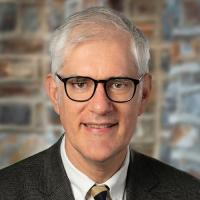
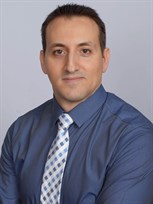
Nicholas P Jones is a Professor in the Department of Civil and Environmental Engineering at the University of Illinois. His research focuses on wind engineering, structural dynamics, and bridge engineering, with expertise in aerodynamics, forensic analysis, and coastal hazard mitigation. Key Affiliations: University of Illinois (College of Engineering) Email: npjones@illinois.edu Research interests include: Vortex-induced vibrations in bridges Wind-induced failure mechanisms Aerodynamic modeling of long-span structures Multi-hazard resilience for coastal infrastructure Seismic retrofitting of historic buildings Atmospheric boundary layer dynamics His publications span 1989–2013, with a focus on wind engineering, structural health monitoring, and disaster forensics. Key contributions include studies on the Dallas Cowboys Practice Facility collapse (2013), hurricane wind modeling (2004), and seismic retrofits for Santa Cruz historic buildings (1991).
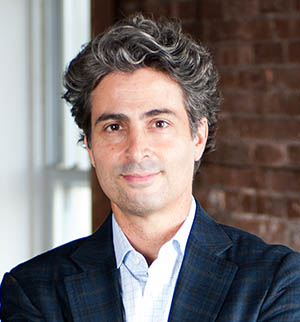
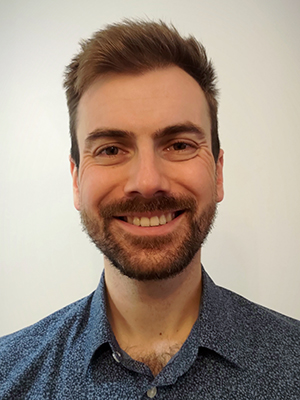
Henri Gavin is a Professor in the Department of Civil and Environmental Engineering. His research focuses on developing innovative solutions for structural resilience, control systems, and earthquake engineering. He leads interdisciplinary projects integrating sensor technology, IoT systems, and machine learning for real-world applications such as earthquake early warning systems. Research Interests: Professor Gavin's work spans earthquake engineering, structural dynamics, vibration isolation, robotics, optimization, and machine learning applications in civil infrastructure. His signature project—Pilot Earthquake Early Warning in Kathmandu (Data+, 2022)—demonstrates his approach to combining AI models with geophone sensors and IoT networks for on-site seismic alerts. Publication Trends: His recent articles (2020-2024) emphasize structural reliability, decentralized control of robotic systems (UAVs/swarms), optimization algorithms, and seismic protection strategies. This reflects a consistent focus on theoretical rigor applied to practical engineering challenges, particularly in nonlinear dynamics and multi-agent coordination. Projects and Advising: He mentors students through Duke's Data+ program, guiding projects in energy data analytics and earthquake early warning systems. Notable funded initiatives include instrumentation and modeling of seismic isolation systems (EAGER, 2012) and performance analysis of base-isolated structures during seismic events.
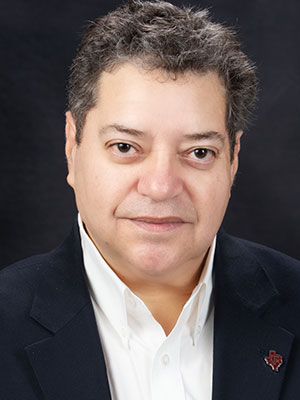
Dominick Pilla is an Associate Professor with tenure at the City College of New York's Spitzer School of Architecture, where he has been teaching since 2010. Previously, he served as an Adjunct Associate Professor at CCNY (2004-2010) and as a Lecturer at Rensselaer Polytechnic Institute (2017-2021). He is also the Principal of DRPILLA, PC, an engineering firm specializing in structural, site/civil, geotechnical, and architectural engineering services. Education: M.S., Civil Engineering, New Jersey Institute of Technology, 1991 B.S., Civil Engineering with a Minor in Architecture and Planning, Rensselaer Polytechnic Institute, 1990 Dominick Pilla's research and professional interests span structural engineering, building design, and construction. His expertise includes structural analysis, building retrofitting, sustainable design, and the adaptive reuse of historic structures. He has particular focus on innovative solutions for urban environments, including sliver buildings, rooftop developments, and affordable housing projects. His work bridges theoretical engineering principles with practical construction applications. Pilla's publications demonstrate consistent focus on practical structural engineering solutions for urban environments. His research shows progression from fundamental structural analysis (as evidenced by his 2016 textbook) to specialized applications in building expansion, retrofitting, and sustainable design. Many of his works address New York City-specific challenges, reflecting his deep engagement with urban construction constraints and opportunities. Professional Memberships and Accreditations: American Institute of Steel Construction American Concrete Institute American Society of Civil Engineers LEED Accredited Professional National Council of Examiners for Engineering and Surveying National Council of Structural Engineers Association New York Society of Architects New York Building Congress Structural Engineering Council Board Structural Engineering Institute As an educator and practitioner, Pilla bridges academic theory with real-world engineering practice. His firm, DRPILLA, PC, has completed numerous projects ranging from single-family residences to large-scale affordable housing developments. His research project on 'Effects of Wind' conducted with the New York City Mayor's Office of Recovery and Resiliency demonstrates his engagement with critical urban infrastructure challenges. His work often addresses the intersection of structural integrity, sustainable design, and urban constraints. Through DRPILLA, PC, Pilla leads a multidisciplinary team providing integrated engineering solutions across all project phases. The firm specializes in innovative structural systems for challenging urban sites, including waterfront properties, constrained lots, and historic building renovations. Their portfolio demonstrates expertise in creating efficient structural solutions that accommodate both architectural vision and practical construction requirements.
Ihsan Engin Bal is a Lecturer in Construction Safety & Earthquakes at the Hanze University of Applied Sciences , affiliated with the Research Centre for Built Environment – NoorderRuimte . With a background in Civil and Structural Engineering from Karadeniz Technical University (2000), his work bridges seismic risk mitigation, timber-masonry structural systems, and digitalization of construction processes. Education: BEng in Civil and Structural Engineering (1996-2000), Karadeniz Technical University. His research focuses on earthquake engineering , particularly unreinforced masonry (URM) walls, timber structural connections, and low-cost sensor applications for construction safety. Recent projects include Hysteresis (hybrid testing of timber buildings) and Trust in Timber (bio-based construction workforce development). He explores applying digital tools like automated crack detection and vibration monitoring to enhance structural resilience. Key themes in his 2024-2025 publications include seismic performance of URM walls, noise-resistant crack segmentation via machine learning, and climate-proof infrastructure. He collaborates extensively with researchers like E. Smyrou and O. Arslan. Professor Bal actively engages in public discourse, notably analyzing Turkey-Syria earthquake vulnerabilities and advocating for improved construction practices. His work spans practical experiments, computational modeling, and policy-oriented insights for disaster prevention.
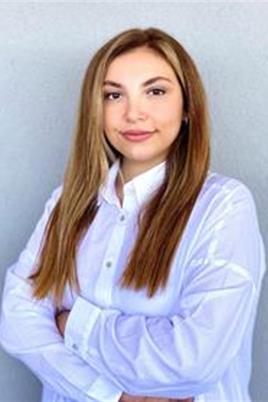
Merve ATMACA is an Assistant Professor at Beykent University within the Faculty of Engineering and Architecture , Department of Interior Architecture. She has been actively contributing to academic duties since 2016, teaching courses such as Design Studio, Physical Environmental Control, and Smart Indoor Systems. Academic focus: Energy efficiency, smart building systems, and climate-responsive design Active in international conferences (e.g., REHVA World Congress, Clima, ICEBO) Her research explores sustainable design solutions, including passive cooling strategies, energy retrofitting of historical buildings, and renewable energy integration in commercial structures. She has supervised master’s theses on topics like healthcare facility transformations and corporate identity in interior design. Key article trends include energy performance analysis, climate-balanced architectural parameters, and post-pandemic adaptable design. She frequently collaborates with researchers like Ayşe Zerrin YILMAZ and Gülten MANİOĞLU.
Lydell Andree Wiebe is a Professor in the Department of Civil Engineering at McMaster University's Faculty of Engineering. He specializes in earthquake engineering, seismic design of steel structures, and resilient infrastructure systems. His academic credentials include a BASc (2005) and PhD (2013) in Civil Engineering from the University of Toronto, and an MSc in Earthquake Engineering (2008) from the ROSE School in Pavia, Italy. His research focuses on developing innovative structural systems such as controlled rocking braced frames and masonry walls to enhance seismic resilience. Key areas include performance-based design, structural dynamics, and risk assessment of infrastructure under seismic loads. He actively contributes to professional committees, including the CSA S16 Technical Committee (Steel Structures) and the Canadian Association for Earthquake Engineering. Dr. Wiebe's recent publications (2020–2025) emphasize seismic loss mitigation, optimization of controlled rocking systems, and machine learning applications in structural engineering. His work integrates experimental testing with advanced computational models to improve design methodologies for earthquake-resistant structures. Awards & Honors: GJ Jackson Fellowship Award (2005) HA Krentz Research Award (2015) McMaster Faculty of Engineering Teaching Excellence Award (2017) McMaster Students Union Teaching Award (2014, 2017) He teaches courses including Steel Structures , Seismic Design and Analysis , and Introduction to Civil Engineering , reflecting his commitment to education and mentorship.
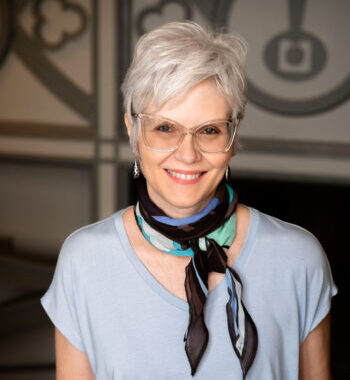
June Williamson is a Professor and Director of the Master of Architecture and Master of Science in Architecture Programs at the Spitzer School of Architecture, City College of New York (CUNY). Her career spans teaching, research, and professional practice focused on urban design and suburban retrofitting. Educational Background: M.U.P. in Urban Design, City College of New York, CUNY (2005) M.Arch., Massachusetts Institute of Technology (1994) B.A., Yale University (1989) Williamson's research centers on transforming suburban landscapes through sustainable urban design, adaptive reuse, and addressing urban sprawl. Her work explores suburban retrofitting , transit-oriented development , and public space innovation , informed by historical and contemporary planning challenges. Recent publications highlight suburban redevelopment models, historic urban narratives, and critiques of suburban design. Key themes include mixed-use zoning , community engagement , and environmental sustainability . Scientific Awards: Fellow, Urban Design Forum She has organized influential competitions like the ParkingPLUS Design Challenge and Build a Better Burb Ideas Competition , fostering dialogue on suburban transformation. Her professional experience includes roles at firms such as Cooper Carry Inc. and Mary Miss Studio, blending academic inquiry with real-world application.
Prof. Dr.-Ing. Uwe Rüppel is an academic leader at the Institute for Numerical Methods and Informatics in Civil Engineering at Technische Universität Darmstadt. His work bridges civil engineering with cutting-edge digital technologies, focusing on Building Information Modeling (BIM) , Virtual Reality (VR) , and Digital Twins for construction and environmental applications. Research Interests: BIM, Digital Twins, VR/AR, GIS integration, IoT in construction, Blockchain applications, emergency response systems, structural data analysis, energy retrofit strategies. Teaching: Courses include Fundamentals of Engineering Informatics, Geometric Modeling, BIM projects, and Management procedures in construction. Recent Publications: 15+ works (2023-2025) on BIM-GIS integration, low-cost VR systems, blockchain for AEC, sensor data analysis, and digital construction logistics. Key Trends: His recent research emphasizes open-source solutions , multi-image documentation , and machine learning for automating BIM workflows and cross-domain data fusion. Collaborative platforms and extended reality (XR) are recurring themes in both academic and practical contexts. Collaborations: Active in international conferences (ICCCBE, eCAADe, ECPPM) with teams from TU Darmstadt, universities in Japan, Canada, and Switzerland. Projects span building safety, energy systems, and disaster management frameworks.
Dr. Petros Sideris is an Associate Professor in the Zachry Department of Civil and Environmental Engineering at Texas A&M University . He holds the E.B. Snead '25 Career Development Professorship and leads the Structural Engineering and Mechanics (SEM) Research Group, focusing on seismically resilient and sustainable infrastructure through novel materials and computational methods. Ph.D., University at Buffalo-SUNY (2012) Research Hub: Gulf Resilience Coastlines and People GAANN Program: 3D Printed Construction Research Interests center on resilient infrastructure systems , integrating computational mechanics , experimental testing , and advanced materials like polyurethane and hempcrete. His work addresses aging infrastructure , performance-based engineering , and accelerated construction for seismic regions. 3D Printed Concrete and Hempcrete Hybrid Sliding-Rocking (HSR) Bridge Columns Gradient Inelastic Beam Theory Thermo-Chemo-Hygro-Mechanical Concrete Modeling Scientific Awards include: E.B. Snead '25 Career Development Professorship NSF Grant CMMI 1538585/1748031 NIST Disaster Resilience Research Grant Advising and Grants highlight collaborations with students on seismic retrofit , 3D construction , and hempcrete sustainability . His group has secured funding from NSF, NIST, HUD, and BASF. Notable projects include polyurethane-enhanced bridge columns and large-scale structural testing of 3D-printed buildings.
William Pollalis serves as an Instructional Assistant Professor in the Department of Civil and Environmental Engineering at Texas A&M University, specializing in structural engineering with a focus on seismic resilience. His educational background: Ph.D. in Civil Engineering, Purdue University (2021) M.S. in Civil Engineering, Purdue University (2018) B.S. in Civil Engineering, Purdue University (2016) His research centers on advanced structural systems for earthquake-prone regions, investigating reinforced concrete behavior, innovative retrofitting techniques, and low-damage design methodologies. This work addresses critical challenges in building safety and infrastructure durability during seismic events through experimental and analytical approaches.
Mario Medina is a Professor in Multidisciplinary Engineering at Texas A&M University and serves as Director of Architectural Engineering. His work focuses on thermal performance and energy efficiency in building systems. He has extensive research on phase change materials (PCMs) for thermal management in building envelopes. Research Interests His research spans Phase Change Materials (PCM) integration in building systems Thermal performance optimization of building envelopes Passive cooling and energy conservation strategies Heat transfer modeling and experimental validation Research Trends Recent publications emphasize PCM applications in diverse building types, climate-specific performance analysis, and numerical/experimental validation of thermal models. Key themes include energy load reduction, thermal regulation, and material characterization. Contact Email: mmedina@tamu.edu
Prishati Raychowdhury is a Professor in the Department of Civil Engineering at the Indian Institute of Technology Kanpur (IIT Kanpur), specializing in Geotechnical Engineering with a focus on Soil Dynamics, Geotechnical Earthquake Engineering, and Seismic Soil-Structure Interaction. She has been at IIT Kanpur since 2009, progressing from Assistant Professor to Associate Professor and currently serving as Professor since 2022. Her educational background includes a PhD from the University of California, San Diego (2008), M.Tech from IIT Kanpur (2003), and B.E. from Bengal Engineering College (1999). Prior to joining IIT Kanpur, she worked as a Staff Engineer at Earth Mechanics, Inc. in California and as an Assistant Engineer at Kerr & Associates in Kolkata. Prof. Raychowdhury's research focuses on geotechnical earthquake engineering, soil-structure interaction, dynamic soil behavior, and railway infrastructure geotechnics. She has made significant contributions to understanding soil dynamics, seismic behavior of foundations, and the application of waste materials like pond ash in geotechnical structures. Her work bridges theoretical developments with practical engineering applications, particularly in the Indian context. Her recent publications (2022-2025) demonstrate a strong emphasis on railway bridge engineering, seismic performance of earth retaining structures, composite foundation systems, and the behavior of alternative materials like pond ash. These works show a consistent trend toward addressing practical engineering challenges through advanced numerical modeling and experimental validation. Best Paper Award in Computational, Analytical and Numerical Modelling in the Indian Geotechnical Conference - 2021 Sir M. Visvesaraya Fellowship from IIT Kanpur (2017-2020) Young Scientists Research Award from BRNS (2013-2016) Fast-track grant for young scientists from DST (2013-2016) Prof. Raychowdhury has successfully led multiple sponsored research projects funded by SERB (DST), Northern Railway, Eastern Railway, and NRDMS (DST), focusing on seismic performance assessment, railway infrastructure monitoring, and landslide monitoring. Her professional affiliations include Life membership in the Indian Geotechnical Society (IGS), Indian Society for Earthquake Technology (ISET), Institute of Engineers, and membership in the American Society of Civil Engineers (ASCE).
Takahiko Kiso is a Senior Lecturer (Associate Professor) in Economics at the University of Aberdeen Business School. He specializes in environmental economics, energy economics, and public policy. PhD in Agricultural and Resource Economics, University of Maryland, College Park MSc in Applied Mathematics, University of Illinois, Urbana-Champaign MA and BA in Economics, University of Tokyo His research examines how environmental policies influence technological innovation, energy adoption, and market dynamics. Key topics include pricing mechanisms, subsidy effectiveness, and sustainable investment strategies. Late-breaking research trends include: natural experiments in energy policy evaluation, design of corrective subsidies for climate action, and analysis of corporate sustainable investment behavior. His work spans empirical studies in renewable energy, transportation policy, and institutional analysis. 2020: Honourable mention, EAERE Award for Best Paper Kiso has received research funding from the Leverhulme Trust, Scottish Government/ClimateXChange, and the University of Aberdeen. He teaches undergraduate and postgraduate courses on natural resource economics, quantitative methods, and energy transition economics.
apl. Prof. Dr.-Ing. Benno Hoffmeister is Associate Professor at the Chair for Steel and Lightweight Metal Construction , Institute of Steel Construction, RWTH Aachen University, Germany. His work integrates experimental and numerical approaches to develop safe, economical and repairable steel, composite and hybrid structures under extreme loads. Research Interests Hoffmeister’s core interest is seismic-resistant steel and composite construction . He investigates dissipative connections (replaceable shear links, laser-cut joints), performance of moment-resisting frames, hybrid coupled wall systems, and the seismic behaviour of industrial rack-supported warehouses and bridges. Additional topics encompass fatigue of thin-walled steel details, sandwich-panel cladding interaction, timber-steel hybrid systems, and life-cycle asset management of steel bridges. Across 50+ publications since 2020 he consistently couples large-scale laboratory testing with advanced nonlinear simulations, targeting practical design guidance for moderate-seismicity regions and retrofit of existing facilities. Scientific Awards No specific awards are listed in the supplied sources. Advising & Research Funding While individual student names are not provided, Hoffmeister leads experimental campaigns within publicly funded projects such as HYCAD, LASTEICON, STEEL-EARTH, ROBUSTIMPACT and SeDIF, involving numerous doctoral and master researchers. His laboratory hosts full-scale frame tests, component studies and long-term bridge monitoring programmes. Labs & Teams He operates within the Institute of Steel Construction’s testing hall at RWTH Aachen, equipped with 6 MN strong-floor reaction wall, servo-hydraulic actuators and environmental chambers, enabling cyclic, dynamic and fatigue testing of large steel, composite and hybrid specimens.
Yahya Kurama is a Professor in the Department of Civil and Environmental Engineering and Earth Sciences at the University of Notre Dame's College of Engineering. His research focuses on seismic performance of concrete buildings, precast/prestressed concrete systems, fire effects on structures, and sustainable construction materials. A registered engineer in Indiana and Michigan, he leads advanced structural testing initiatives. Ph.D., Civil Engineering, Lehigh University (1997) M.S., Civil Engineering, Lehigh University (1993) B.S., Civil Engineering, Bogazici University (1990) Prof. Kurama investigates seismic resilience , structural energy dissipation , and material efficiency in concrete systems. His work spans experimental testing, numerical modeling, and sustainable design innovations. His recent publications examine precast posttensioned walls, shear wall comparisons, and material strength impacts on nuclear structures. Key trends include earthquake-resistant systems and transformative wind/sustainable nuclear applications. Precast/Prestressed Concrete Institute (PCI) Charles C. Zollman Award (2015, 2018) ASCE State-of-the-Art of Civil Engineering Award (2012) National Science Foundation CAREER Award (1999) PCI Distinguished Educator Award (2014) Notre Dame Joyce Award for Undergraduate Teaching (2013, 2008) As a Kaneb Center Faculty Fellow (2010), he integrates education innovation with structural engineering advances. His research receives funding from federal agencies and industry partners like PCI, supporting both academic and practical applications in earthquake and fire resilience.