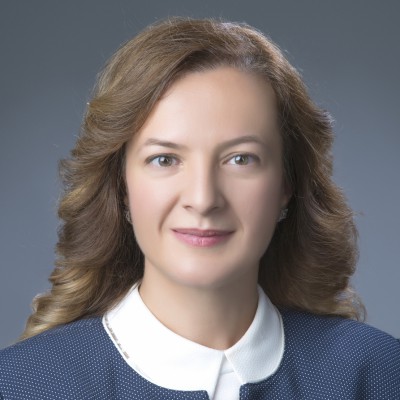
Assoc. Prof. Dr. Sema Alaçam Doğan has been affiliated with Istanbul Technical University since 2014, serving as an Associate Professor in the Department of Architecture . She has held administrative roles including Deputy Head of Department and Erasmus Coordinator. Education : PhD in Informatics in Architectural Design (2008-2014), MS in Informatics in Architectural Design (2005-2008), and BS in Architecture (1999-2005) from Istanbul Technical University. Her research explores Computational Design , Artificial Intelligence in Architecture , and Sustainable Material Innovation . She investigates digital tools for heritage preservation, daylight optimization in BIM, and cognitive development in architecture students. Recent publications analyze AI-assisted design literacy , machine learning for Sinan mosques , and environmental comfort in Harran houses . Her work integrates algorithmic frameworks with sustainable practices. Scientific awards include multiple ITU Publication and Performance Awards (2021-2024), FABFEST Prizes , and the 2024 Artemis Educator Award from NASA. Active projects like "Physical Computation in Architectural Drawing" and "Robotic Fabrication with Recycled Wind Turbine Blades" demonstrate her leadership in computational and sustainable research.
Dr. Ayşe Nihan AVCI is an Assistant Professor at the Department of Interior Architecture, Faculty of Architecture at Çankaya University. She holds a PhD in Design (2022), Master's in Interior Architecture (2017), and Bachelor's in Interior Architecture (2010) from the same institution. Her research focuses on lighting design's impact on health and well-being, biophilic design principles, and OLED/LED lighting technologies. She has been a full-time faculty member since 2015, progressing from Research Assistant (2015-2022) to Doctoral Researcher (2022-2024) before her current role. Education: PhD in Design, Çankaya University (2017-2022) MSc in Interior Architecture, Çankaya University (2014-2017) BSc in Interior Architecture, Çankaya University (2005-2010) Research Interests: Her work integrates lighting science with human-centric design principles, emphasizing: Salutogenic lighting strategies for health promotion OLED technology's circadian rhythm effects Biophilic daylighting in historical buildings Visual comfort in workplaces Publications: Over 15 peer-reviewed articles (2016–2025) focus on OLED/LED lighting applications, circadian rhythms, and daylighting in heritage buildings. Recent work explores salutogenic design in coffee shop environments and workplace environmental quality. Awards: No specific awards listed, but active in academic service: Member of Aydınlatma Türk Milli Komitesi since 2017 Member of TMMOB İç Mimarlar Odası since 2010 Reviewer for journals including PLANARCH Grants & Projects: Led a university-supported research project (2020–2021) on lighting design's health impacts. Currently teaches courses on lighting design, materials science, and interior design fundamentals.
Prof. Dr. Ercan Yüksel is a full Professor in the Department of Civil Engineering at Istanbul Technical University (ITU), College of Engineering. He has been a faculty member at ITU since 1990, progressing from Assistant Professor to Professor in 2017. His research focuses on earthquake engineering, structural dynamics, and numerical modeling, with applications in seismic design, energy dissipation, and structural health monitoring. PhD, Civil Engineering, Istanbul Technical University MS, Structural Engineering (with thesis), Istanbul Technical University BS, Civil Engineering, Istanbul Technical University His research interests are centered on earthquake engineering , particularly seismic input energy analysis , energy dissipation systems , reinforced and precast concrete structures , and seismic isolation . He actively investigates the dynamic behavior of structures under earthquake loads and develops innovative solutions for improving structural resilience. His work integrates advanced numerical modeling with experimental validation. Recent publications (2023–2025) highlight a strong focus on energy-based seismic design, performance of mechanical couplers, damping systems for high-voltage insulators, and fatigue behavior of railway tracks. These works are closely tied to real-world seismic events like the 2023 Kahramanmaraş earthquake, demonstrating applied and impactful research. His scientific recognition includes: Notable Work Award, Turkish Academy of Sciences (TÜBA), 2012 Golden Beam Award, Turkish Prefabricated Association, 2011 Prof. Yüksel is an active Principal Investigator on multiple research projects funded by ITU’s BAP program, covering topics such as smart sleepers for railway monitoring, novel seismic input energy spectra, and earthquake isolation for racking systems. He has supervised numerous theses and is involved in professional organizations including UNESCO-IPRED and the Turkish Earthquake Foundation. He leads research on structural health monitoring of ballasted railway lines using smart sleeper technology and is developing earthquake isolation systems for industrial storage racks. His lab integrates experimental testing with numerical simulation to validate new structural components under cyclic and biaxial loading.
Prof. Dr. Hakkı Polat Gülkan is a Professor at Başkent University's Civil Engineering Department. With a PhD (1971) and Master's (1968) from the University of Illinois in Civil Engineering and a Bachelor's (1966) from METU, his career spans over five decades in earthquake engineering, structural dynamics, and disaster management. PhD: University of Illinois, Civil Engineering (1971) Master's: University of Illinois, Civil Engineering (1968) Bachelor's: Middle East Technical University, Civil Engineering (1966) His research focuses on seismic risk assessment, structural behavior under extreme loads, and disaster mitigation strategies. Key contributions include earthquake simulator development, ground motion analysis, and retrofitting techniques for masonry and reinforced concrete structures. He has published extensively on deformation limits, response spectra, and historical building preservation. Recent work includes 15+ articles from 2024-2012 analyzing Istanbul's seismic hazards, Marmara region dynamics, and post-earthquake structural integrity. Conference papers address Turkey's endemic building vulnerabilities and deformation thresholds for seismic isolation systems. Scientific Achievements: Elected to U.S. National Academy of Engineering (2023) As an active journal reviewer for 13+ publications (2023-2024), he contributes to advancing earthquake engineering discourse. His teaching portfolio includes advanced structural analysis, concrete mechanics, and seismic design courses.
Professor Atilla Ansal is a distinguished academic in Civil Engineering at Özyeğin University's School of Engineering, where he has served as a full-time professor since March 2012 and previously as the Founding Chair of the Civil Engineering Department from 2012-2019. With an extensive career spanning over five decades, Professor Ansal has held prominent positions at Istanbul Technical University, Bogaziçi University's Kandilli Observatory and Earthquake Research Institute, and has served as a visiting professor at numerous international institutions including Northwestern University, University of California, and Tokyo University. Northwestern University, 1978 (Doctorate) Civil Engineering, Istanbul Technical University, 1969 (Master's) Civil Engineering, Istanbul Technical University, 1969 (Bachelor's) Professor Ansal's research focuses on Earthquake Geotechnical Engineering, Soil Dynamics, Seismic Hazard Analysis, Landslide hazard analysis, Seismic Microzonation, and Laboratory and In-Situ Testing of Soil Properties. His work has significantly advanced our understanding of soil behavior under seismic loading, site response analysis, and seismic microzonation methodologies. His research has direct applications in urban planning, earthquake risk mitigation, and performance-based seismic design. Professor Ansal has pioneered approaches to site-specific earthquake characterization and developed methodologies for seismic microzonation that have been implemented in numerous Turkish cities and adopted internationally. His extensive publication record demonstrates consistent contributions to earthquake engineering, with recent work focusing on probabilistic seismic microzonation, 2D basin effects, site-specific response analysis, and performance-based design approaches. His research shows a clear evolution from fundamental soil behavior studies to practical applications in urban risk assessment and mitigation. 7th Prof.N.Ambraseys Lecturer (2024), European Association for Earthquake Engineering 15th Nonveiller Lecturer (2017), Croatian Geotechnical Society Third Prof.Dr. Rıfat Yarar Lecturer (2015), Turkish Civil Engineers Association Third Ord.Prof.Dr. Hamdi Peynircioglu Lecturer (1988) Professor Ansal has advised 15 PhD students and 27 Master's students, shaping the next generation of earthquake engineers. His leadership extends to editorial roles as Editor-in-Chief of the Springer journal 'Bulletin of Earthquake Engineering' since 2002 and Editor-in-Chief for the Springer book series on 'Geotechnical, Geological and Earthquake Engineering'. He served as Secretary General (1994-2014), President (2014-2018), and Vice President (2018-2022) of the European Association for Earthquake Engineering, significantly influencing the field internationally. His work has been supported by numerous grants from Turkish government agencies, international organizations including UNESCO, and collaborative research projects across Europe. Professor Ansal has been instrumental in establishing geotechnical monitoring systems in Istanbul, including vertical arrays for site response analysis. His leadership in the 'Earthquake Master Plan for Istanbul' and 'Seismic Microzonation for Municipalities' projects has created critical infrastructure for earthquake risk management in Turkey's most populous city. His work with GeoIst, Geotechnical Earthquake Engineering and Consultancy Inc. has translated academic research into practical engineering solutions for seismic risk mitigation.
Alipaşa Ayas is a Professor and Dean of the Faculty of Education at Bilkent University, where he also serves as Chair of the Department of Educational Sciences. His research focuses on science education, teacher training, conceptual understanding, and inclusive education. He has led numerous national and international projects, including UNICEF- and EU-supported initiatives. Ph.D., University of Southampton M.A., University of New Brunswick MSc., Karadeniz Technical University BSc., Karadeniz Technical University His research interests span teacher education, science education (particularly chemistry), concept development, curriculum design, and assessment strategies. He employs both qualitative and quantitative methods to explore these areas. His publications emphasize inquiry-based learning, conceptual change strategies, and the effectiveness of interventions such as the 5Es model, constructivist activities, and analogies in enhancing science learning. These works often address misconceptions in chemistry and methods to improve scientific process skills. He has contributed to projects supported by the World Bank, EU, and UNICEF, including initiatives on lifelong learning, education development, and inclusive teacher training. His administrative roles include a 6-year deanship at Karadeniz Technical University and leadership of Bilkent University’s Graduate School of Education since 2017.
Dr. Lecturer Sevinç Ünsal Oral is affiliated with Başkent University as a faculty member in the Department of Civil Engineering. She holds a PhD (2013), Master's (2009), and BSc (2006) in Civil Engineering from Middle East Technical University. Specializes in geotechnical engineering and earthquake engineering Active in seismic hazard analysis and soil-structure interaction Her research focuses on liquefaction assessment, landslide modeling, and seismic performance of infrastructure. Articles highlight work on geothermal facilities, dams, and airport structures. Scientific contributions include numerical modeling frameworks for earthquake-induced geohazards. She serves as a thesis advisor for graduate students and participates in projects related to UN Sustainable Development Goals.
Prof. Dr. Eda Taşçı is a faculty member at the Faculty of Engineering, Dumlupınar University, specializing in Metallurgical and Materials Engineering. With a career spanning over two decades, she has held positions including Research Assistant (2002-2010), Associate Professor (2011-2022), and Professor (2022-present). She served as Deputy Head of Department (2017-2018) and Vocational School Directorate (2018-2021). Education: PhD in Ceramic Engineering (2004-2010), Master's (2001-2004), and Bachelor's (1997-2001) from Anadolu University. Her research focuses on inorganic materials like ceramics and cement, emphasizing production processes, surface properties, and sustainable applications. Key projects include enhancing glaze chemical resistance, pozzolan-cement interactions, and industrial metallic glaze development. Her publications span topics from ancient mudbrick materials to modern ceramic processing, highlighting interdisciplinary work in material science, environmental engineering, and industrial chemistry. She received the Turkish Cement Manufacturers Association Trailblazers Scholarship in 2008. Email: eda.tasci@dpu.edu.tr
SumeYYE Aydin Gurler serves as an Associate Professor in the Department of Mathematics and Science Education at Gaziantep University's Nizip Faculty of Education since 2024, following her promotion from Doctor Lecturer (2018-2024). Her academic career builds upon prior experience as a Science Teacher at Turkey's Ministry of National Education (2008-2018). Her educational foundation includes: Doctorate in Science Education, Firat University Institute of Educational Sciences (2011-2016) Master's in Science Education, Firat University Institute of Science and Technology (2008-2011) Bachelor's in Science Teaching, Firat University Faculty of Education (2004-2008) Professor Gurler's research centers on Science Education with specialized focus on STEM/STEAM integration, educational assessment methodologies, teacher development, and environmental education. Her work investigates critical thinking cultivation, student attitudes toward science, curriculum evolution in Turkish contexts, and identification of science misconceptions. She has produced significant analyses of historical developments in Turkish science education across multiple eras (1938-2020) through book chapters. Analysis of her 15 most recent publications (2018-2023) reveals consistent emphasis on innovative assessment tools (rubrics, achievement tests), STEM/STEAM attitude measurement, and contextualized science teaching. Her work spans primary/middle school levels, addressing Turkish educational challenges including Syrian student integration, sustainable development awareness, and TIMSS performance evaluation. Her scientific recognition includes: TÜBİTAK Direct Domestic PhD Scholarship (2211), 2011 TÜBİTAK Domestic Master's Scholarship (2210), 2009 Triple First Place Awards at Firat University (Department, Faculty, and University-wide), 2008 Professor Gurler actively mentors three master's students on science concept understanding, educational game efficacy, and environmental awareness. She has secured Horizon 2020 funding for public science engagement projects including Researchers' Night events and the Sustainable Environment and Climate Change Science Festival. Her service extends to TÜBİTAK-funded school science fairs and teacher training workshops on context-based assessment. She maintains active scholarly engagement through scientific committee memberships, session chairing at national congresses, and organizing international symposia on science education developments.
Sevil Yazıcı is an Associate Professor at the Department of Architecture , Istanbul Technical University , with a focus on computational design, material efficiency, and structural performance in architecture. She previously served as a Doctor Lecturer at Ozyegin University (2013–2020). Educational background: PhD in Building Sciences (2009–2013), Istanbul Technical University Degree in Architecture from Architectural Association School of Architecture (2004–2006) Research interests span computational design, bio-inspired material organization, and sustainable construction. Her recent work explores VR-driven spatial performance analysis, demolition waste reuse, and microstructure-informed shell topologies. Selected trends in publications include: Integrating environmental/structural data in early design Material-efficient generative models Biomimetic computational analysis AI-assisted architectural creativity Scientific awards highlight her achievements: 2024 Best Article Award (Frontiers of Architectural Research) 2018 Gold Medal (Istanbul International Invention Fair) 2016 UK Graduate Professional Achievement Award 2014 ITU Most Successful Doctoral Thesis Award Advising includes theses on reversible structures, sustainable façades, AI-driven design, and material-efficient fabrication. She served on the Executive Board of the Informatics in Architectural Design Graduate Program (2021–present) and was Deputy Head of Department (2022).
Dr. Cem Demir is a Lecturer in the Department of Civil Engineering at Istanbul Technical University (ITU), specializing in Structural Engineering with a focus on earthquake engineering, reinforced concrete structures, and historical building restoration. He holds a PhD in Structural Engineering from ITU (2004) and has extensive experience in seismic assessment, retrofitting, and failure analysis of existing buildings. His research emphasizes sustainable structural solutions, including the use of FRP composites and novel mortars for enhancing seismic resilience. He has contributed to major projects like the Istanbul Building Stock Seismic Risk Assessment and post-earthquake analyses of recent Turkish earthquakes (e.g., 2023 Kahramanmaraş). His work bridges historical preservation and modern seismic safety, with notable studies on structures like the 13th-century Divrigi Hospital and Hirka-i Serif Mosque. Education: PhD (Structural Engineering, ITU, 2004); Master's (Structural Engineering, ITU, 2001); Bachelor's (Civil Engineering, ITU, 1997). Research Interests: Seismic retrofitting of sub-standard RC columns, masonry structures, historical monuments, and cost-benefit analyses for urban resilience. His studies integrate experimental testing (e.g., full-scale building tests) with computational modeling to improve structural performance under seismic loads. Recent Work: Focus on sustainable materials (e.g., glass fiber-reinforced mortar), rapid assessment frameworks (PERA method), and post-disaster damage evaluation. He collaborates internationally, presenting at conferences like WCEE 2024 and SMAR 2024. His contributions address critical issues like Istanbul's seismic vulnerability and post-2023 earthquake building performance.
Prof. Dr. Göksel N. Demirer is a Professor at the Department of Environmental Engineering, Middle East Technical University (METU), Ankara, Turkey. His academic career spans over two decades, holding roles from Lecturer to Chairperson of the Department (2006-2012). He specializes in Anaerobic Biotechnology, Wastewater Engineering, and Sustainable Production systems. Education: Ph.D. in Environmental Engineering, Vanderbilt University (1996) M.Sc. and B.Sc. in Environmental Engineering, METU (1991, 1989) Research Interests: Focuses on anaerobic digestion of organic wastes, bioenergy generation, cleaner production, nutrient recovery (struvite precipitation), and industrial symbiosis. His work bridges environmental biotechnology with sustainable industrial practices, emphasizing waste-to-resource转化 and pollution prevention. Awards & Recognition: Recipient of METU's Academic Performance Award (2001-2012) Mustafa Parlar Educator of the Year Award (2000-2001, 2005-2006) Australian Endeavour Research Fellowship (2007) Professional Roles: President of Water Environment Association of Turkey (2001-2003) Editorial Board Member of Journal of Cleaner Production and International Journal of Environmental Sciences Lead over 25 research projects as PI, including EU-funded collaborations on nutrient recovery and bioenergy Advising & Capacity Building: Supervised 26 Ph.D./M.Sc. theses, developed METU's Cleaner Production course, and conducted nationwide training programs for municipalities and industries. Labs & Collaborations: Active in anaerobic digestion and bioenergy research through METU's Environmental Engineering labs. Collaborates with institutions like RMIT University (Australia), Trier University (Germany), and Villanova University (USA).
Osman Kaya is a Professor in the Department of Civil Engineering at Muğla Sıtkı Koçman University's Faculty of Engineering, Turkey. He has extensive experience in structural engineering, earthquake engineering, and composite materials for retrofitting applications. His educational background includes a PhD in Civil Engineering from Boğaziçi University (2010), with prior degrees from Boğaziçi University (MS, 2003) and Pamukkale University (BS, 1998). Education : PhD (Boğaziçi University, 2010), MS (Boğaziçi University, 2003), BS (Pamukkale University, 1998). Dr. Kaya's research focuses on seismic retrofitting of concrete structures using composite materials (CFRP), torsion analysis of reinforced concrete members, structural rehabilitation techniques, and earthquake resilience. His work includes analytical and experimental studies on beam-column joints, full-scale testing of concrete beams, and FRP-based reinforcement systems. His recent publications (2003-2025) emphasize composite retrofitting solutions, epoxy repair methodologies, torsion behavior in concrete beams, and seismic upgrading of existing structures. Key trends include CFRP sheets for shear-deficient joints and columns, chemical epoxy for joint rehabilitation, and full-scale experimental testing. Scientific Awards : Not explicitly mentioned. Dr. Kaya has supervised 6 graduate theses on topics like base isolation systems, torsion testing, and steel fiber applications in concrete. He has led 2 research projects funded by higher education institutions and participated in TÜBİTAK and other initiatives. He teaches advanced courses in structural analysis, reinforced concrete, and composite systems.
Bahattin Kimençe is a Lecturer in the Civil Engineering Department at Istanbul Technical University (ITU). He holds a PhD in Civil Engineering from ITU (1993–1997), an MSc in Structural Engineering (1985–1989), and a BSc in Civil Engineering (1982–1986). His research focuses on Solid Body Mechanics, Structural Dynamics, and Numerical Modeling with applications to masonry structures, seismic performance, and anisotropic material behavior. He has been a member of the Chamber of Civil Engineers from 1987 to 2018. Education: PhD in Civil Engineering, Istanbul Technical University (1993–1997) MSc in Structural Engineering, Istanbul Technical University (1985–1989) BSc in Civil Engineering, Istanbul Technical University (1982–1986) His research interests emphasize the analysis of masonry structures, mortar thickness effects, seismic performance of multi-story steel buildings, and tunnel-structure interactions. His work combines numerical methods like the Boundary Element Method with anisotropic modeling to assess structural integrity and dynamic behavior. He has published extensively on topics such as historical building preservation, load distribution irregularities in multi-story systems, and soil-structure interaction for foundations. His articles consistently explore structural dynamics, material behavior under stress, and innovative numerical techniques. Recent trends focus on earthquake-resistant design and historical masonry preservation through advanced modeling. He has contributed to understanding geometric and load asymmetries in buildings and optimizing container structures over variable soil conditions. Notable Activities: Doctorate Lecturer in Disaster Management (Master’s Program) at ITU since 2024 Academic duties spanning over three decades at ITU No scientific awards were explicitly mentioned in the provided information. His work involves advising students in structural engineering and disaster management, though specific grants or lab affiliations were not detailed.
Prof. Dr. Seden Acun Özgünler is a faculty member at the Faculty of Architecture, Istanbul Technical University , where she has served as Professor since 2021. Her research spans material science in architecture, focusing on durability, maintenance, and sustainable building technologies . She has supervised numerous theses and led projects on natural binders, thermal insulation, and historical preservation . Education: PhD in Building Science (Dr), Istanbul Technical University. Academic Roles: Department Head (2023), Associate Professor (2013-2021), Research Assistant (1999-2003). Research Trends include: Material Innovation: Mycelium-based composites, natural hydraulic binders, and geopolymer concrete. Sustainability: LCIA models, waste material utilization, and energy-efficient designs. Historical Preservation: Volcanic tuff conservation, grouting methods for masonry repair, and adaptive reuse of structures. Scientific Awards: 2nd Young Türkiye Summit Academy Award (2017) for Mimar Sinan Cultural Wealth Preservation. Publication-based Academic Performance Awards (2022, 2025) from Istanbul Technical University. Key Projects involve biocomposite materials, natural cement reproduction, and chromic glass applications in facades. Her work bridges traditional building techniques with modern sustainability through experimental and computational approaches.