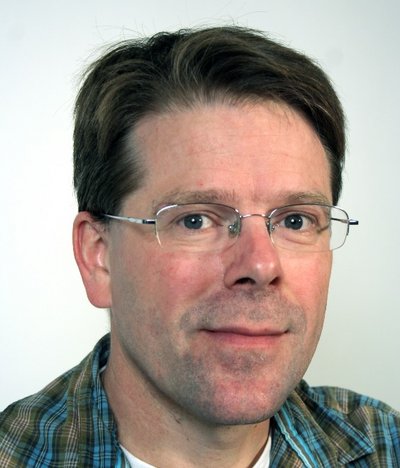
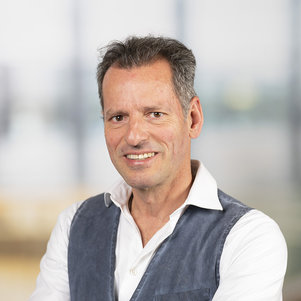
Theo Arentze is a Full Professor at Eindhoven University of Technology (TU/e) in the Department of the Built Environment, leading the Real Estate Management and Development group. He is affiliated with EAISI Health and EAISI Mobility research institutes. Education: MSc in Psychology (Cognitive Psychology & AI) from Groningen University, PhD from TU/e Urban Planning Research: Spatial choice behavior, decision support systems, activity-based modeling, agent-based simulation His research integrates bounded rationality into spatial choice models to enhance behavioral realism, with applications in real-estate management , neighborhood development , healthy cities , and hybrid work environments . Recent work includes child-friendly urban planning and energy-efficient housing impacts . Prominent article themes include: Hybrid work location decisions Urban public space affective experiences Child friendliness in residential choices Sustainable energy preferences Spatial decision support systems Social network modeling Scientific recognition includes: Best Poster Award (2025) - Computational Urban Planning Conference Long Paper of Distinction (2021) - Healthy Buildings Europe EuroFM Best Paper Award (2017) Pyke Johnson Award (2016) As an educator, he teaches courses in Urban Planning , Housing Economics , and Quantitative Research Methods . His multidisciplinary team combines expertise from psychology, sociology, and urban economics to create high-quality built environments through behavioral research.
Dr. Stella Boess is a Researcher at the Department of Industrial Design Engineering, Faculty of Industrial Design Engineering at Delft University of Technology. She focuses on interdisciplinary research bridging social sciences and engineering, particularly in sustainable renovation, accessibility, and health technology. Her work emphasizes user-centered design in residential environments, addressing challenges such as heat pump adoption and inclusivity for visually impaired individuals. She teaches courses like Inclusive Design and Prototyping for Interaction , and has collaborated on projects including the HiPP initiative for optimized patient experiences and the NWO usability project. She appeared in media such as NPO's Programme Reference Man in 2022. Her research interests include human-technology relations, sustainable building practices, and co-creation methodologies. She explores how design interventions impact occupant behavior and satisfaction, advocating for holistic approaches to integrate technology with human practices. Recent projects also address mobility design improvements for automotive interiors and inclusive medical solutions for the Global South. Research Projects: HiPP: Optimizing orthopedic patient care pathways NWO design for usability project REIL project: Enhancing rehabilitation interactions AAL project MyGuardian: Supporting aging populations Stella’s publications from 2022 to 2025 reflect a trend toward analyzing socio-technical dynamics in sustainable housing and mobility systems. She highlights the importance of stakeholder collaboration and participatory frameworks to ensure equitable outcomes. No scientific awards are listed, but her contributions to inclusive design and zero-energy renovation are notable.
Roel C.G.M. Loonen is an Associate Professor at the Unit Building Physics and Services within the Department of the Built Environment at Eindhoven University of Technology (TU/e), Netherlands. He holds joint appointments with EAISI High Tech Systems and EIRES Research groups, focusing on building performance simulation and energy systems. His work bridges academic research with practical applications through collaborations with SMEs in the building industry. Loonen received his BSc and MSc (cum laude) in Building Services from Eindhoven University of Technology, followed by a PhD in 2018 with a dissertation on 'Approaches for computational performance optimization of innovative adaptive facade concepts.' His educational background has positioned him as a leading expert in building performance simulation and sustainable building technologies. His research interests center on developing and applying modeling and simulation strategies to support decision-making for designing buildings that combine high indoor quality with minimal environmental impact. Key areas include adaptive facades, building-integrated renewable energy systems, and energy-efficient building envelopes. He specializes in creating and validating new building performance simulation models to advance innovative building technologies. His recent publications demonstrate a strong focus on practical applications of building performance simulation, with emphasis on residential energy efficiency, photovoltaic systems, and occupant-centered approaches to building design. The work shows increasing integration of machine learning techniques with traditional building simulation methods, particularly for sensitivity analysis and optimization of building performance. REHVA Young Scientist Award (2021) Best PhD supervisor award from Department of the Built Environment, TU/e (2018) First prize - REHVA International student competition (2011) Smart daylight control for optimal building performance (NWO Take-off award, 2018) Best paper award (2021) Loonen actively supervises PhD and Master's students, evidenced by his Best PhD Supervisor Award in 2018. He manages multiple research projects including Sustainable Summer Comfort (2024-2027), Modeling Innovative Use Scenarios for Future Domestic Comfort (2023-2026), and Just Prepare (2022-2026), with funding from sources including the Dutch Research Council (NWO). His professional service includes being a board member of the Dutch-Flemish IBPSA affiliate and co-chair of IBPSA World's website committee, plus reviewing for 35 academic journals. He leads research within the Building Performance group, focusing on creating practical tools and methodologies that bridge the gap between theoretical building performance models and real-world implementation in the construction industry. His work particularly emphasizes the integration of occupant behavior and practices into building performance models, recognizing that human factors are critical to achieving sustainable building performance in practice.
Prof. Dr. Ir. Andy van den Dobbelsteen is a Professor of Climate Design & Sustainability at Delft University of Technology's Faculty of Architecture and the Built Environment . His work focuses on integrating sustainable energy systems , climate adaptation strategies , and urban development through innovative design solutions. Department: Architectural Engineering + Technology Expertise: Energy systems, climate-responsive architecture, urban sustainability He actively translates research findings into actionable concepts for heritage building retrofitting , data center energy alternatives , and vertical urban farming , emphasizing interdisciplinary collaboration and knowledge transfer. His recent publications explore parametric modeling for energy efficiency, renewable backup systems , and synergetic urban design . He received prestigious awards including the edX Prize and Knight of the Netherlands Lion . 2020 edX Prize for Zero-Energy Design MOOC 2020 Golden Heron for educational film 'Energy Slaves' 2019 Solar Decathlon Europe 2nd prize As a dedicated educator, he supervises students in user-centred sustainability projects while maintaining active industry partnerships through secondary roles as speaker and columnist.
Lada Hensen Centnerová is an Assistant Professor in the Building Physics and Services unit at Eindhoven University of Technology (TU/e). She serves as Operational Director of the PDEng program Smart Buildings & Cities and leads the Dutch chapter of ISIAQ. Her research focuses on indoor environmental quality (IEQ), particularly thermal comfort and air quality, emphasizing their impact on occupant health and wellbeing. Education: Civil Engineering (Building Services Systems) at Slovak University of Technology Academic Career: PhD from Czech Technical University in Prague (2001), Assistant Professor at TU/e since 2018 Her work investigates how adaptive thermal comfort models affect energy consumption in temperate climates and develops Program of Requirements (PoRs) for healthy dwellings. Recent publications address IEQ classification systems, verification protocols, and occupant behavior impacts in residential buildings. Current projects include the Healthy Dwellings PoR launched in 2022, building on prior frameworks for offices and schools. She collaborates with TNO, BBA Binnenmilieu, and REHVA, exploring user-driven IEQ optimization in smart cities.
Roel Loonen is an Associate Professor at the Unit Building Physics and Services within Eindhoven University of Technology's Department of the Built Environment. Since October 2024, he has joined the EIRES Management Team, leading the Energy Transition in the Built Environment focus area alongside Lenneke Kuijer. His work emphasizes integrating energy efficiency with occupant comfort through advanced building simulation techniques. Academic Affiliation: Eindhoven University of Technology Management Role: EIRES Management Team Research Focus: Adaptive facades, building-integrated renewable energy, and occupant behavior modeling Loonen’s research explores modeling and simulation strategies for buildings that reconcile high indoor quality with minimal environmental impact. Key projects include collaborations with eyrise on solar shading glass and TNO on the ZIEZO project, which experiments with insulated glazing units that combine solar shading with bifacial photovoltaics at the SolarBEAT facility. His work spans computational methods for urban irradiation, occupant-facade interaction frameworks, and multi-domain thermal comfort modeling. The ZIEZO project exemplifies his approach to energy-efficient design by redirecting reflected light to enhance photovoltaic output while maintaining daylight comfort. His publications address challenges in adaptive façade systems, PV integration, and sensitivity analysis for heating demand. Loonen advocates for interdisciplinary collaboration to bridge technical innovation with societal implementation needs. Loonen’s educational contributions include co-teaching the interdepartmental master course Sustainable Energy Technology and developing interactive simulation-based teaching tools. He emphasizes connecting energy-related research to practical implementation through stakeholder engagement with municipalities, building companies, and grid operators. Key facilities involved in his research include SolarBEAT (for testing solar technologies) and TU/e’s simulation laboratories. His work addresses urban energy transitions by combining building physics with grid interactions, occupant behavior, and scalable PV system optimization.
Tiziano De Matteis is an Assistant Professor in the @Large Research group at Vrije Universiteit Amsterdam's Faculty of Science, Department of Computer Systems. He also holds an affiliation with the Network Institute. His research focuses on overcoming post-Moore architecture challenges through parallel and distributed computing, high-performance systems, energy efficiency, and FPGA applications. Previously, he was a PostDoc at ETH Zurich's SPCL Group and earned his MSc/PhD from the University of Pisa. Education PhD in Computer Science, University of Pisa MSc in Computer Science, University of Pisa Research Interests Post-Moore architectures for distributed ecosystems Energy-aware parallel computing High-level abstractions for parallel software development FPGA-based hardware acceleration Data stream processing and distributed systems Recent Research Trends Recent work emphasizes: Data center risk analysis and sustainability Optimizing microservices and distributed scheduling LLM model offloading to NVMe storage Python-based data-centric programming productivity GPU interconnect performance in supercomputing Grants & Projects Participates in the EU-funded 'Extreme and Sustainable Graph Processing' project (2023-2025), exploring scalable graph algorithms and energy-efficient computing systems. Teaching Accelerator-Centric Computing Ecosystems Computer Organization Distributed Systems Systems Seminar
Sandra Bellekom is a Lecturer-researcher at Hanze University of Applied Sciences, working within the Entrance – Center of Expertise Energy. Her work focuses on system integration in the energy transition, with particular expertise in renewable energy systems, solar power optimization, and smart grid technology. She contributes significantly to research projects related to sustainable energy solutions and environmental systems analysis. Education: Ph.D. in Electrical Engineering from Delft University of Technology (1993-1998) Master's degree in Energy and Environmental Sciences, cum laude, from University of Groningen (2002-2005) Basic Teaching Qualification (BKO) from University of Groningen (2010-2011) Master's degree in Electrical Engineering (ir), cum laude, from Delft University of Technology (1989-1993) Sandra Bellekom's research interests span the critical areas of energy transition and sustainable systems. Her work emphasizes practical applications of renewable energy technologies, particularly focusing on system integration challenges. She investigates how solar energy systems perform under real-world conditions, examining factors like panel contamination and cleaning effectiveness. Her research also extends to hydrogen energy systems, smart grid integration, and the economic optimization of renewable energy solutions. Through her work, she addresses key challenges in making the energy transition technically feasible and economically viable, with a strong focus on data-driven analysis and system modeling. Her recent publications (2019-2025) demonstrate a clear trend toward applied research in solar energy optimization and hydrogen systems. The research shows increasing focus on practical field studies examining how real-world factors like bird droppings, dust, and other contaminants affect solar panel performance. There's also a notable shift toward system-level analysis, particularly in hydrogen energy configuration and the integration of multiple renewable sources. Her work consistently bridges technical analysis with practical implementation considerations, making it highly relevant for industry applications. Sandra actively participates in multiple research projects including 'Effect of pollution and cleaning of solar parks,' 'Hydrogen Works,' and studies on sensible heat storage systems. Her collaborative approach is evident in her numerous co-authored publications across various energy domains. While specific mentoring relationships aren't detailed in the available information, her background includes supervising master's students during previous academic positions. Her research laboratory and team work primarily through the Entrance – Center of Expertise Energy, focusing on practical field studies and system modeling. Current projects involve monitoring solar parks across the Netherlands, developing hydrogen configuration tools, and optimizing energy storage solutions for buildings. The team employs a combination of field measurements, data analysis, and system modeling to address real-world energy challenges.
Dr. Thaleia Konstantinou is an Associate Professor at the Department of Architectural Engineering+Technology, Faculty of Architecture, Delft University of Technology. She holds a PhD from TU Delft and a MSc from University College London. Her research focuses on energy efficiency, façade design, sustainable building renovation, and circular economy principles. She is editor of the Journal on Façade Design and Engineering and actively involved in the European Façade Network (EFN). Education: PhD in Architecture and the Built Environment, TU Delft (2014) MSc in Environmental Design and Engineering, University College London Bachelor's Degree in Architecture, National Technical University of Athens Research Interests: Decarbonisation of built environment Industrialised façade systems Low-carbon renovation strategies Building energy performance Equitable energy transitions Smart materials integration Her recent work explores solar cooling façades, low-temperature heating systems, and thermal resilience to extreme heat. She has contributed to international initiatives like the IEA EBC Annex 75 and leads projects such as the AEGIR research program. Awards include the 46000th repository upload recognition. Key Projects: AEGIR: Digital renovation packages for sustainable building upgrades Circular Built Environment Hub: Integrating circularity into education and practice Future Envelope initiative: Advancing façade innovation
Dr. Steffen Frey is an Assistant Professor in the Scientific Visualization and Computer Graphics group within the Bernoulli Institute at the University of Groningen's Faculty of Science and Engineering. He also maintains an affiliation with the Faculty of Medical Sciences/UMCG in the Robotics and image-guided minimally-invasive surgery (ROBOTICS) research group. His work bridges computer science with practical applications in medical and geoscientific domains. His research interests focus on scientific visualization, computer graphics, and interactive visualization techniques. Dr. Frey specializes in developing novel methods for flow estimation, temporal interpolation, parameter sensitivity analysis, and visualization of complex scientific data, particularly in porous media and fluid dynamics. His work often involves creating scalable solutions for big data visualization problems and applying visualization techniques to medical applications such as bone cement simulation. Analysis of his recent publications reveals a strong focus on machine learning approaches to scientific visualization, particularly in temporal interpolation and ensemble data analysis. His work combines traditional computer graphics techniques with modern deep learning methods to solve challenging visualization problems in scientific domains. The research demonstrates increasing sophistication in handling complex multi-dimensional datasets while maintaining interactive performance. 2019 IEEE Scientific Visualization Contest Winner Dr. Frey actively collaborates with researchers internationally, as evidenced by his co-authorship with scientists from various institutions worldwide. His work contributes to multiple Sustainable Development Goals, particularly those related to clean water and sanitation through his porous media flow research. He has supervised multiple students through research projects and thesis work, though specific names are not listed in the provided materials.
Olivia Guerra-Santin is an Assistant Professor in the Department of the Built Environment at Eindhoven University of Technology (TU/e). Her research focuses on designing energy-efficient and healthy built environments, emphasizing user-centered and data-driven approaches. She specializes in building monitoring, occupant behavior analysis, and Living Lab methodologies for socio-technical systems. Guerra-Santin holds a PhD from TU Delft and has extensive experience in academic roles across institutions like Cardiff University and The Hague University of Applied Sciences, alongside consulting for EU H2020 smart cities projects. Her academic background includes a MSc in Urban Environmental Management from Wageningen University and an Architecture degree from the UAEMex. Current projects include the MAI-HOME initiative (AI-driven solutions for energy poverty) and B4B (Bringing Brains to Buildings for energy systems optimization). She teaches courses such as Smart Building Methodology & Technology and Master Projects in Architecture. Research interests span building management systems, occupant behavior modeling, and ethical use of building data. Key contributions include studies on zero-energy renovations, dementia care environments, and thermal comfort modeling. She actively engages in interdisciplinary initiatives bridging social sciences and engineering to address energy performance challenges.
Institute for Atomic and Molecular PhysicsNetherlands
Tom Veeken is a Researcher at AMOLF, the Netherlands Institute for Nanotechnology, specializing in photonic control over light absorption and emission in photovoltaic systems. He holds a PhD from the University of Amsterdam (UvA), awarded in 2022, where his thesis focused on optimizing light-matter interactions in solar cells. His work spans advancements in perovskite materials, radiative cooling techniques for solar modules, and quantum dot integration for enhanced energy conversion efficiency. Veeken’s research interests include nanophotonics, solar energy materials, and optical engineering, with a focus on improving solar cell performance through novel material designs and light management strategies. He collaborates with interdisciplinary teams to address challenges in energy harvesting, such as reducing reabsorption losses in textured silicon and enhancing luminescent solar concentrator efficiency. His publications highlight contributions to perovskite-based solar cells, radiative cooling via photonic silica microcylinders, and quantum dot emission control. Veeken’s work aligns with AMOLF’s LMPV (Light and Matter for Photonics and Energy) group, advancing sustainable energy materials and photonic technologies. No scientific awards or student advisement records are explicitly listed in the provided texts. His role as a Program Officer at AMOLF suggests involvement in project coordination and technical leadership within the institute’s research infrastructure.
Jeremiah van Oosten serves as a Lecturer at the Academy for AI, Games & Media in Breda, Netherlands, focusing on game engine development and graphics programming within the institution's Frontier building location. His research spans critical areas in interactive technology: Game Engine Architecture and Optimization GPU-Accelerated Parallel Computing (CUDA) Cross-Platform Graphics Rendering (OpenGL) Mathematical Foundations for 3D Systems Immersive Therapy Applications (VR/AR) Van Oosten's influential 2012 publications on 3dgep.com established comprehensive resources for game engine programming, emphasizing practical implementation of GPU techniques, real-time rendering pipelines, and mathematical frameworks. His work bridges theoretical computer graphics with industry-ready development practices, particularly benefiting independent game developers. Scientific recognition includes: No major awards or fellowships documented in current sources He actively contributes to healthcare innovation through research collaborations: ARET Project (2022-2024): Co-Investigator for Augmented Reality Exposure Therapy targeting Alcohol Use Disorder RECOVRY Project (2019-2021): Co-Investigator developing Virtual Reality solutions for alcohol addiction treatment VIBE Project (2018-2022): Co-Investigator creating virtual human systems for economic applications These EU and nationally funded initiatives demonstrate his commitment to applying game technology in therapeutic contexts through interdisciplinary teams spanning computer science, psychology, and healthcare.
Andrea Giuntoli is an Assistant Professor at the Micromechanics group within the Faculty of Science and Engineering at the University of Groningen . He holds a PhD in Computational Soft Matter and Polymer Physics from the University of Pisa (2018), followed by postdoctoral work at NIST (2018-2019) and Northwestern University (2019-2021) under the ChiMaD project (part of the Material Genome Initiative). His research focuses on theoretical and computational modeling of nanoscale building blocks for advanced polymer composites , particularly in controlling mechanical properties, impact resistance, and self-healing through polymer architecture and graphene dispersion. He has secured significant grants including a VENI grant (2022) and an NWO-XS grant (2022). Key research trends from his recent publications (2021-2025) include machine learning-optimized coarse-graining , energy renormalization methods , impact-resistant coatings , graphene-polymer interfaces , and self-healing polymer glasses . His work bridges materials science , computational physics , and applied polymer engineering . Scientific Awards: VENI Grant (2022) NWO-XS Grant (2022) He actively collaborates across institutions (USA, Netherlands) and disciplines, with research impacts in medical devices , advanced materials , and surface science . His lab at the Zernike Institute for Advanced Materials integrates multi-scale modeling with experimental validation to enhance polymer composite performance.
Dr. Annemarie Spruijt serves as an Associate Professor in the Department of Clinical Sciences at Utrecht University's Faculty of Veterinary Medicine, specializing in Internal Medicine of Companion Animals with a focus on reproduction. As an EBVS® European Veterinary Specialist in Animal Reproduction, she combines clinical practice, teaching, and research in veterinary medicine education. Her educational expertise spans veterinary education, small animal reproduction, interdisciplinary teaching and learning, and curriculum development. She has pioneered courses on first-line veterinary medicine where students complete 5- and 10-week extramural practices to facilitate their transition to becoming responsible veterinarians. Her research interests include small group learning, teacher development, student-staff partnerships, and curriculum development and evaluation. Analysis of her recent publications reveals a strong focus on educational innovation, particularly examining curriculum viability, student-teacher partnerships, and the integration of problem-based learning in online environments. Her work bridges medical and veterinary educational literature with practical workplace implementation. Her scientific contributions also include significant research in canine reproduction, particularly hormonal regulation and castration methods. EBVS® European Veterinary Specialist in Animal Reproduction As a clinician-educator-researcher, Dr. Spruijt works to build connections between medical and veterinary educational literature, external veterinary practices, and practical education implementation. She teaches multiple veterinary bachelor's courses including 'blood', 'digestion', 'respiration', 'reproduction', and other systems-based courses, as well as overseeing outpatient education in reproduction of companion animals in the Master of Veterinary Medicine program. Her work in veterinary education extends to faculty development, clinical reasoning instruction, and quality improvement initiatives across medical and veterinary education domains.