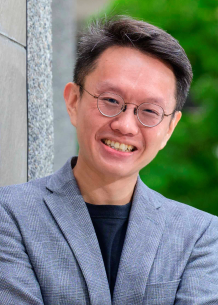
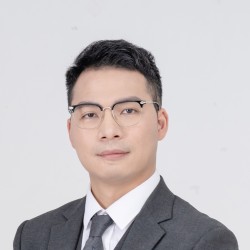
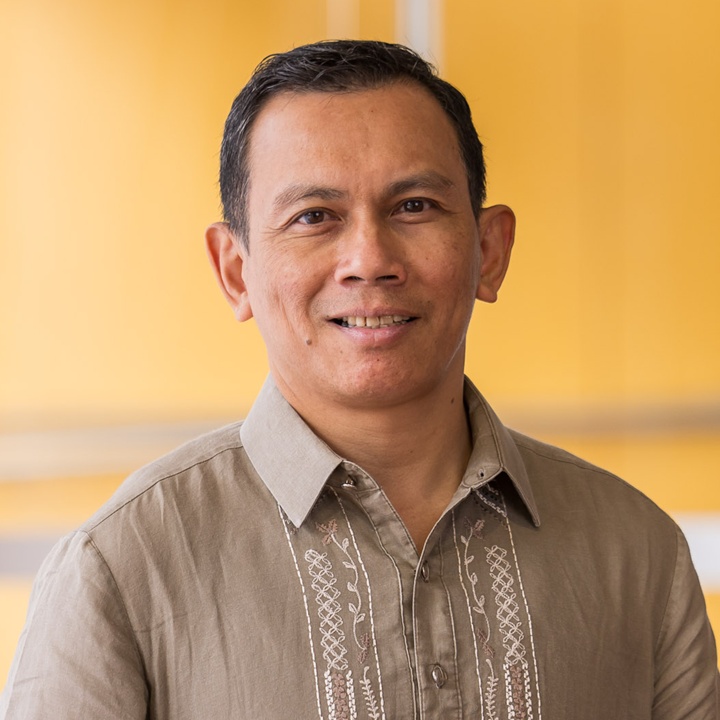
Professor Gregor Verbic is a faculty member at the University of Sydney in the School of Electrical and Computer Engineering , where he serves as Director of the Centre for Future Energy Networks . Previously, he held an assistant professor position at the University of Ljubljana and was a NATO-NSERC Postdoctoral Fellow at the University of Waterloo. His career spans academic research, industry leadership as Head of Interenergo's Investment Department, and extensive collaboration with IEEE. PhD in Electrical Engineering (University of Ljubljana) Senior IEEE Member Research Interests focus on transforming power systems to zero-carbon grids through: Aggregation and control of distributed energy resources (DERs) Frequency control with wind generation and electric vehicles Stochastic optimization for multi-energy systems Smart home energy management with phase change materials Notable Contributions include: 2006 IEEE prize paper for voltage instability prediction 2010-2024: 15 recent publications on DER coordination, network tariffs, and low-inertia grid stability Teaching includes courses on: ELEC3203/ELEC9203: Electricity Networks ELEC5213: Engineering Optimisation ELEC5206: Sustainable Energy Systems Labs & Initiatives Centre for Future Energy Networks The Net Zero Institute
Professor Phil Purnell is a Professor of Materials and Structures at the School of Civil Engineering, University of Leeds. His expertise spans materials science, infrastructure systems, circular economy, and interdisciplinary research. He leads projects addressing decarbonization, waste-to-resource systems, and sustainable construction materials. His roles include Deputy Head of School and advisor to UKRI, DEFRA, and the UK Government’s Circular Economy Taskforce. He holds visiting positions at the Royal College of Art and University of Cambridge. Education: PhD, BEng (Civil), and teaching qualifications (PCPCE, ACTLHE). His research focuses on circular economy applications in textiles, offshore wind, and foundational industries. Notable projects include the Textiles Circularity Centre, Yorkshire Circular Economy Living Lab, and Complex Value Optimisation for Resource Recovery (C-VORR). He advocates for systemic approaches to sustainability, integrating economic, technical, and environmental values. Research outputs emphasize decarbonization pathways, material lifecycle assessments, and robotics in infrastructure management. Collaborations with industry and policy bodies drive practical solutions for resource efficiency. His work bridges engineering, economics, and environmental science to address global challenges like waste management and climate change.
Shu-Jung Sunny Yang is a Professor and Chair in Operations Management at the School for Business and Society, University of York. He has held faculty positions at institutions including the University of Melbourne, University of Essex, and National Taiwan University, alongside administrative roles such as department head and research centre director. He earned his PhD in Management from the Australian Graduate School of Management (AGSM) at the University of Sydney and University of New South Wales. His research focuses on Supply Chain Resilience, Sustainable Operations, and Data-Driven Operations, combining formal theory, data science, and operational research. Recent work includes modeling supply chain collaboration for medical mask distribution during disruptions and exploring altruistic venturing through community-based approaches. His book Building Resilience: Consistent Re-rationalisation in Digital Transformation and Business Inheritance won the 2022 Golden Book Award in Taiwan. Awards: 2022 Golden Book Award (Taiwan) 2004 Sasakawa Young Leader Fellow (Japan) 2019 Ta-Yu Wu Memorial Award (Taiwan) Yang leads the Human futures in the digital transformation interdisciplinary cluster. His teaching includes Operations Management and Supply Chain Management. He currently serves as a guest editor for Transportation Research Part E and holds editorial roles at Journal of General Management and Journal of Management and Systems . Research grants include the British Academy-funded project on Optimising Product Line Design in Professional Service Operations . He actively collaborates with industry and academia, emphasizing practical applications of operations strategy.
Dr. Nagham Saeed is an Associate Professor in Electrical and Electronic Engineering at the School of Computing and Engineering, University of West London, where she has been actively engaged in teaching and research since 2007. She holds a PhD in Intelligent MANET Optimisation from Brunel University and leads the Industrial Internet of Things (IIoT) research group. Her academic service includes editorial and technical committee roles for IEEE and MDPI, and she is a Chartered Engineer (CEng), Senior Member of IEEE, Member of IET, and Senior Fellow of the Higher Education Academy (HEA). PhD in Intelligent MANET Optimisation System, Brunel University (2011) Her research focuses on intelligent systems for smart cities, applying artificial intelligence to telecommunications, energy modeling, and industrial applications. She explores AI-driven optimization in next-generation networks, smart grid integration, battery management systems, and sustainable ICT. Her work also extends to engineering education, particularly feedforward teaching methods and student engagement. The recent publications reveal a strong trend in applying AI and machine learning to solve real-world challenges in energy systems, IoT, transportation, and environmental sustainability, often with a focus on smart cities and renewable integration. Dr. Saeed has been recognized with several awards, including: 2021 University of West London Student Union Best Supervisor/Tutor Award 2022 IEEE Region 8 Outstanding Women in Engineering Section Volunteer Award She mentors early-career engineers and academics and actively promotes electrical and electronic engineering among young girls. She has served as the 2023 IEEE Women in Engineering UK & Ireland Chair and is currently the Vice Chair (Chair-Elect) for the IEEE UK & Ireland Section (2024–2025). Her leadership spans technical innovation, academic service, and diversity advocacy in engineering. She teaches across a range of programs, including MSc Industrial Internet of Things, BEng and MSc Electrical and Electronic Engineering, and supervises PhD research in related fields.
Dr. Behrang Vand Alimohammadisagvand is a Lecturer at the School of Computing, Engineering and the Built Environment, Edinburgh Napier University. His research focuses on sustainable energy systems, building performance, and smart energy management, with strong international collaboration across Iran, China, Finland, and the UK. B.Sc. and M.Sc. in Mechanical and Energy Engineering Ph.D. in Energy and Building Technology His research interests include sustainable development, low-carbon technologies, energy policy, thermal comfort in buildings, and energy management systems at multiple scales. He actively investigates model predictive control (MPC), demand response, energy sharing in communities, and low-temperature heating networks. His work bridges theoretical modeling and practical implementation in real-world buildings. Dr. Vand's recent publications highlight trends in integrated energy management , smart grid optimization , and decarbonization of building heating systems . His articles emphasize mathematical modeling, simulation, and control strategies to improve energy efficiency and reduce carbon emissions in the built environment. He supervises doctoral students working on smart IoT systems and low-temperature heat networks. His research is supported by funders such as the Academy of Finland and Energy Technology Partnership. Active supervisor for PhD project on smart IoT systems with real-time deep learning (since 2022) Director of Studies for PhD on heating Scottish public buildings with low-temperature networks (2018–2024) He is affiliated with the Institute for Sustainable Construction and contributes to the research theme Culture and Communities . His work aligns with global efforts toward net-zero emissions and sustainable urban development.
Trisha Rajput is an Assistant Professor at the School of Business, Economics and Law , University of Gothenburg , where she teaches international trade law to both law and management students. Her research focuses on international economic law, with particular emphasis on trade facilitation, global value chains and the intersection of law and digital technology in international commerce. Education Doctor of Laws (PhD), University of Leeds, UK – thesis on WTO coordination with non-WTO regimes in public international law. LL.M. in European and International Business Law, University of Leeds, UK. LL.B., India – prior lecturing experience at Rajiv Gandhi National University of Law. Research Interests Dr Rajput’s work lies at the nexus of international trade law , public international law and emerging digital technologies . Current projects investigate how digital infrastructures—ranging from AI-based transport systems to blockchain-enabled single-window environments—can enhance supply-chain finance for SMEs along the China-Europe railway corridors. Her scholarship also critically examines normative conflicts between WTO rules and other specialist international regimes. Publications Overview Spanning 2013-2024, her publications reveal a consistent focus on (i) trade-facilitation mechanisms (single-window reforms, paperless trade initiatives), (ii) regulation of risk in multimodal transport, and (iii) technology governance such as AI transparency in customs and blockchain adoption in export-oriented firms. Collaborative work with scholars from law, logistics and management disciplines underlines an interdisciplinary approach. Research Funding & Projects European Union funded project on trade facilitation and global value chains. Principal investigator, “Role of Digital Infrastructures in Financing SMEs” (2019-2022). Co-investigator, “Transition to AI-based Transport Systems” (2020-2021). Contact & Location Room C620, Department of Law, Vasagatan 1, SE-411 24 Göteborg, Sweden. Email: trisha.rajput@law.gu.se
Sonja Wogrin is a University Professor (Univ.-Prof.) at Graz University of Technology (TU Graz), where she has been heading the Institute for Electricity Economics and Energy Innovation since August 2021. She holds a Dipl.-Ing. in Technical Mathematics from TU Graz (2008), a Master of Science in Computation for Design and Optimization from MIT (2008), and a doctorate in Electricity Systems from Universidad Pontificia Comillas (2013). Her educational background includes: Doctorate in Electricity Systems, Universidad Pontificia de Comillas (June 2013) Dipl.-Ing. in Technical Mathematics, Graz University of Technology (October 2008) Master of Science in Computation for Design and Optimization, MIT (June 2008) Professor Wogrin's research focuses on decision support systems in the energy sector, optimization methodologies, and particularly the problem of generation capacity expansion. Her work spans several key areas including bilevel programming, capacity expansion planning, energy storage systems, and time series aggregation for energy system optimization. She has made significant contributions to understanding how to integrate renewable energy sources into power systems while maintaining economic efficiency and grid stability. Her research often addresses the challenges of decarbonizing electricity systems through advanced mathematical modeling and optimization techniques. Her recent publications demonstrate a strong focus on improving the computational efficiency of energy system models while maintaining accuracy, with particular attention to the integration of renewable energy sources, energy storage systems, and the development of resilient energy communities. She has pioneered work on time series aggregation methods that balance computational tractability with model accuracy, which is crucial for long-term energy planning under uncertainty. Professor Wogrin has received several prestigious awards and fellowships including: 4th EASE Student Award for "Co-Optimisation of energy storage technologies in tactical and strategic planning models" (2019) Beca de movilidad para investigadores "NILS Ciencia y Sostenibilidad" (2015) Beca Erasmus "Personal Docente/Investigador" de formación (2016) Beca Iberdrola de ayuda a la investigación en energía y medio ambiente (2020) She leads multiple significant research projects including EU - NetZero-Opt, RINGs, iKlimET, V2G-QUESTS, and CIDEAL, which focus on optimizing energy systems for net-zero emissions, resilient energy networks, climate and energy system modeling, vehicle-to-grid integration, and industrial decarbonization. Her work has substantial practical implications for energy policy and grid operations in Austria and beyond. Professor Wogrin collaborates extensively with industry partners including Austrian Power Grid AG, KELAG, and Netz Niederösterreich, ensuring her research addresses real-world energy challenges. Professor Wogrin leads the research group at the Institute for Electricity Economics and Energy Innovation, which develops advanced optimization models for energy systems. Her team has created the LEGO (Low-carbon Expansion Generation Optimization) model, an open-source tool for energy system optimization that has gained international recognition. The group's work spans from fundamental optimization methods to practical applications in energy system planning and operation, with a strong emphasis on computational efficiency and model accuracy.
Farooq Azam is a Research Fellow at the Department of Mechanical Engineering , University College London , focusing on Modelling and Optimisation of Sustainable and Smart Technical Textiles . He works in the Roberts Engineering Building, London, United Kingdom (WC1E 7JE). Research Interests: Architected materials, Metamaterials, Additive manufacturing, Structural Imaging, Structural optimisation, AI/Machine Learning, Applied Mechanics, Mechanics of Materials Email: farooq.azam.20@ucl.ac.uk Recent Research Trends : His work spans additive manufacturing applications in biomedical components, structural optimization of architected materials, turbulence modeling in engines, and machine learning-driven metamaterial design. Key areas include Ti6Al4V scaffolds, hexagonal honeycomb configurations, and carbon microlattices. Scientific Awards : FHEA (Fellowship of the Higher Education Academy), 2024 Teaching : He has taught modules such as Group Manufacturing Challenges (MECH0099) , Micro/Nano Architected Composite Materials (MECH0096) , and Elasticity and Plasticity (MECH0026) at UCL.
Professor Karim Hadjri is a distinguished academic and architect at the School of Architecture and Landscape, University of Sheffield. With a DipArch, MPhil, and PhD in housing studies from Oxford Brookes University, he has over 30 years of teaching experience in architecture and urban design. He has led major academic units and research groups, including a self-funded center in Colombia, and currently supervises PhD research on people-environment studies and sustainable design. Chair of Architecture, University of Sheffield Academic career since 1993 Research focus on age-friendly environments and dementia-friendly design His educational background includes: DipArch MPhil in Housing Studies PhD in Housing Studies from Oxford Brookes University Professor Hadjri's research spans inclusive and sustainable design of the built environment, with a particular emphasis on housing and health. His work addresses: Age-friendly environments for older adults Design of dementia-supportive housing Sustainable urban development in desert and tropical contexts Participatory design in social housing Cognitive health impacts of architectural design Architectural conservation in arid regions His recent publications analyze: Live-work housing in Bangkok (2024-2025) Co-design methodologies in social housing retrofit (2025) Green infrastructure in Bogotá (2022) Hospital courtyard gardens in Malaysia (2021-2022) Ageing-in-place strategies for China (2019-2021) Scientific recognition includes: Fellow of the UK Higher Education Academy Member of ESRC Peer Review College Newton Fund Social Sciences Review Panel member RIBA Validation Board member He currently supervises PhD students researching: Esra Can - Social housing mapping Suyee Jung - Housing for aging populations Aya Elghandour - Informal settlement design Mahmoud Alsaeed - Urban design challenges As principal investigator, he has managed grants including: £100,000 AHRC GCRF Urgency Grant for Bangkok housing €3.88M Horizon 2020 project on European housing His research group Design, Engagement and Practice and involvement in the ODESSA project demonstrate his commitment to applied research.
Ali Karrech is a Professor at the University of Western Australia (UWA), affiliated with the School of Engineering and the Department of Civil, Environmental and Mining Engineering (CEME). He previously held roles as Senior Research Scientist at CSIRO (until 2012) and Assistant Professor at the Petroleum Institute of Abu Dhabi (2007–2009). His expertise spans materials science, geomechanics, mineral processing, and sustainable resource engineering. He serves as Graduate Research Coordinator in CEME and has led the Structures Laboratory (2015–2016). Education: He holds a Higher Doctorate (Habilitation) in Engineering Sciences from École Normale Supérieure Paris-Saclay (2014), a PhD in Structures and Materials from École des Ponts ParisTech (2008), and a Multidisciplinary Master's from Tunisia Polytechnic School (2001). Research Interests: Focus on computational geomechanics, resource engineering (surface mining, in-situ leaching), mineral processing (hydrometallurgy), waste repurposing, and thermal-hydraulic-mechanical-chemical coupling. His work aligns with UN Sustainable Development Goals related to education, energy, and the built environment. Awards: Recognitions include the School of Engineering Teaching Excellence Award (2021), Prize of Best Paper in Concrete Research (2021), and CEEC High Commendations (2023). His research has produced over 194 publications and 20 grants. Teaching: Coordinates units like Engineering Materials (ENSC1004), Finite Element Method (GENG5514), and Surface Mining (MINE4503). Engages in interdisciplinary projects, including the ARC Training Centre in Critical Resources and the FBI-CRC for Future Batteries.
Dr. Yinglong He is a Lecturer in Automated Electrified Transport (AcT) Systems at the School of Mechanical Engineering Sciences, University of Surrey, UK, and an Honorary Assistant Professor at the School of Engineering, University of Birmingham. His research focuses on intelligent transportation systems, energy management, vehicle dynamics, and AI-driven optimisation. He has held positions including Postdoctoral Research Associate at the University of Cambridge and Technology Expert at the European Commission's Joint Research Centre (JRC). Research interests include autonomous vehicle control, traffic simulation, hybrid/electric vehicle dynamics, and sustainable transport solutions. Notable contributions include advancing microscopic traffic models for automated vehicles and optimising energy systems for hybrid powertrains. His work integrates machine learning, multi-agent systems, and data-driven approaches to address challenges in transport decarbonisation and safety. Recent publications highlight advancements in hybrid vehicle dynamics simulation, lithium-air battery modelling, and energy mapping of urban buildings. He has received the Chinese Government Award for Outstanding Self-Financed Students (2022) and is a Fellow of the Institute for Sustainability (IfS). His expertise spans interdisciplinary collaborations in automotive engineering, energy systems, and smart infrastructure.
Associate Professor Mariano Jr Reyes Ramirez serves as Senior Lecturer and Discipline Director of Industrial Design at the University of New South Wales School of Built Environment. With over 70 publications on design for sustainability and presentations at more than 30 international conferences, he has established himself as a thought leader in sustainable industrial design. Dr. Ramirez has contributed as a Visiting Academic to 24 universities across 10 countries including China, India, Korea, Mexico, and Brazil, and serves as a PhD Examiner in 5 Australian universities as well as in Sweden and Italy. His research concentrates on the environmental sustainability and social responsibility aspects of industrial design, with particular focus on promoting circular economy through waste minimisation and resource optimisation, enabling responsible consumption behaviours through product design, and leveraging industrial design innovation to tackle the United Nations Sustainable Development Goals. His work spans sustainable product development, product-service systems, design for a circular economy, and disaster risk reduction. Dr. Ramirez has secured significant research funding including Transport for NSW's $120,000 grant for enhancing public space safety, NSW Circular Challenge Program's $200,000 grant for hospital polypropylene waste recycling, and multiple international collaboration grants. His 15 most recent publications reveal a consistent focus on human-centered sustainable design approaches applied across diverse contexts from prison rehabilitation programs to water solutions in Jakarta slums and cultural heritage integration in electric vehicle design. Emerald Literati Network Award for Excellence 2007 for paper 'Sustainability in the education of industrial designers: the case for Australia' UNSW Built Environment Learning & Teaching Excellence Award, 2017 UNSW Built Environment Dean's Research Excellence Award, 2012 Multiple UNSW Built Environment Associate Dean Teaching Commendations (2007-2011) Dr. Ramirez actively supervises BID honours, MPhil and PhD students at UNSW while examining dissertations from multiple Australian and international universities. He serves on editorial boards for Sustainability (MDPI) and scientific review committees for several leading design and sustainability journals. His research supervision focuses on dematerialization of contemporary lifestyles, fostering sustainable behaviors through design, optimization of product lifetimes, sustainability integration in design education, and industrial design as a tool for achieving UN Sustainable Development Goals. As Regional Convenor for Oceania of the Learning Network on Sustainability since 2006 and Project Leader of the South-to-South initiative activating Australian-Latin American Cooperation through Design for Sustainability Education, Dr. Ramirez demonstrates significant leadership in building international research networks focused on sustainable design education and practice.
Professor Robert Mason is a Professor of Logistics in the Logistics and Operations Management section at Cardiff Business School, Cardiff University. He has over 25 years of experience in academia and is actively involved in research, teaching, and leadership. He supervises PhD and dissertation students and is available for postgraduate supervision. University: Cardiff University School: Cardiff Business School Department: Logistics and Operations Management Academic Rank: Professor Email: MasonRJ@cardiff.ac.uk Phone: +44 29208 75511 Office: Aberconway Building, Second Floor, Room C46, Colum Road, Cathays, Cardiff, CF10 3EU Robert Mason holds a PhD (2009) from Cardiff University on 'Collaborative Logistics Triads in Supply Chain Management' and an MBA with distinction (2000) from Cardiff Business School, focusing on e-commerce in the UK grocery industry. He has been recognized with multiple awards, including the Best Dissertation Supervisor award in 2012 and multiple National Transport Awards from the Chartered Institute of Logistics and Transport (Wales) between 2008 and 2013. His research focuses on the decarbonisation of logistics, supply chain optimisation, inter-organisational relationships (vertical and horizontal), and the organisation of enterprise to deliver customer value, with a particular emphasis on retail logistics. He has published over 100 papers and co-authored three books, including The Lean Supply Chain , which won the prestigious Les Plumes des Achats - Prix des Associations in 2016. His recent publications explore topics such as lean projects in SMEs, supply chain resilience amid geopolitical risks, freight driver behaviour, and distributed manufacturing. These works reflect a strong trend toward sustainable, technology-integrated, and collaboratively managed supply chains. His scientific accolades include: Les Plumes des Achats - Prix des Associations (2016) James Cooper Cup for best PhD (2015) Best Cardiff Business School Dissertation Supervisor (2012) National Transport Award Winner (2008, 2009, 2011, 2013) Robert Mason has supervised several doctoral students, including Dong-Wook Kwak (winner of the James Cooper Cup), and currently mentors Yingkai Wang, Seungmin Lee, and Zhuowu Zhang. He has also served as an internal and external PhD examiner and has extensive experience in external examining and course validation for UK and international universities. His leadership roles include Head of the Logistics and Operations Management section (2019–2023), Chair of the Shadow Management Board (2018–2019), and Programme Director for MSc Logistics and Sustainable Supply Chain Management. He is affiliated with: British Academy of Management (BAM) Chartered Institute of Logistics and Transport (CILT)
Rosario Ceravolo is a Full Professor in the Department of Structural, Building and Geotechnical Engineering (DISEG) at the Polytechnic University of Turin , where he conducts cutting-edge research in structural dynamics, earthquake engineering, and structural health monitoring with a focus on architectural heritage. He is a member of the Interdepartmental Center R3C (Responsible Risk Resilience Center) and the University Quality Assurance Committee, reflecting his leadership in academic and research governance. His research interests include: Dynamic identification of structures Seismic assessment and protection of cultural heritage Structural health monitoring (SHM) Natech (natural-technological) risk Earthquake engineering and structural control His recent publications demonstrate a strong trend toward integrating advanced computational techniques, satellite data, and experimental monitoring for assessing historical and modern structures. Key themes include modal tracking, digital twinning, ferrocement durability, and data fusion for heritage conservation. His work bridges civil engineering and heritage science, often involving interdisciplinary collaborations. Scientific Awards and Recognitions: Keeping it Modern Implementation Grant, Getty Foundation (2019) Fellow, ICOMOS (2024–) Fellow, ISCARSAH (2014–) Fellow, American Society of Civil Engineers (1999–) Evaluator, Rita Levi Montalcini Program (2018) Advising and Grants: He supervises multiple PhD students in architectural and civil engineering programs and leads several major research initiatives, including EU-funded and national projects such as REcube (Erasmus+), OPTIMISE, SAT4SHM, and CAMELOT. He serves as Scientific Director for numerous research contracts with public and private institutions, including long-term monitoring projects at the Vicoforte Sanctuary and Torino Esposizioni. Research Labs and Teams: He leads activities in the Dynamics and Seismic Laboratory (DISEG) and is involved in research networks such as ICOMOS-ISCARSAH and IASS-WG17, fostering international collaboration in structural analysis and heritage conservation.
Erik Ahlgren is Professor of Energy Technology at Chalmers University of Technology, Sweden. His research centres on energy-system transitions across scales, integrating techno-economic and systems-dynamics modelling to address urban and rural energy challenges in both Nordic and East African contexts. Research focus Energy-system transitions connecting technology, economy and environment Urban energy systems and sector coupling Rural electrification and mini-grid planning in East Africa District heating and cooling futures Clean cooking with biogas He leads or co-leads 25 projects funded by the Swedish Energy Agency, Swedish Research Council (VR), SIDA, the EU and other bodies, and collaborates closely with Addis Ababa University, University of Rwanda and Eduardo Mondlane University. Teaching & outreach Responsible for the public digital evening course Climate – the science, measures and policy . Grants & projects Buildings in the integrated energy system (2024–2028, Swedish Energy Agency) A multiperspective analysis of cost-efficient batteries in rural mini-grids (2023–2026, VR) PhD Programme in Electrical Power and Control Engineering with Addis Ababa University (2018–2025, SIDA) BREEMRES – research training partnership programme (2018–2025, SIDA) Flexibility for Smart Urban Energy Systems (FlexSUS, 2019–2024) Collaborations & networks Active in international consortia including the Strategic Research Centre for 4th Generation District Heating (4DH), FutureGas, and numerous East African capacity-building initiatives.