Dr.-Ing. Andreas Witte is a Senior Researcher at the Institute of Urban and Transport Planning , Faculty of Civil Engineering, RWTH Aachen University. He holds a doctorate in Spatial Planning from TU Dortmund University (1990-1996) and has been affiliated with RWTH Aachen since 1990. Education : Spatial Planning (Diploma), TU Dortmund University (1985-1990); Doctorate (Dr.-Ing.) in Transportation Planning, RWTH Aachen University (1996) Research Focus: Climate change adaptation in urban and transport planning Green-blue infrastructure for water-sensitive cities Quality management systems for regional climate resilience Interdisciplinary approaches to urban development Notable Contributions: Co-author of 15+ publications addressing climate adaptation, including the 2023 Klimabericht NRW and design guidelines for climate-resilient public spaces in Eschweiler. Led projects like KlimaSicher analyzing business climate risks and inkasPortal for municipal climate data management. Collaboration Trends: Works extensively with interdisciplinary teams across urban planning, environmental engineering, and policy domains. Publications emphasize transdisciplinary methods (e.g., Rainwater Living Lab) and municipal implementation strategies.
Wolfram Wingerath is a Professor for Data Science at the University of Oldenburg (since 2022) and previously served as Head of Data Engineering & Research at Baqend GmbH (2018-2022). He earned his PhD in Computer Science (2019) from the University of Hamburg, focusing on scalable push-based real-time query systems (InvaliDB). His research interests include: Real-time databases and stream processing NoSQL and polystore systems Web performance optimization Probabilistic data management Cloud computing and distributed systems Key publication trends show expertise in real-time data architectures, caching mechanisms, and performance engineering. Notable collaborations include Benjamin Wollmer and Felix Gessert . He has advised 49+ student theses and served on PC committees for ICDE, VLDB, and EDBT. His editorial roles include membership on Datenbank-Spektrum and organizing the BTW 2025 Data Science Challenge .
Daniele Bernardini is a researcher at the School of Engineering and Design, Technical University of Munich (TUM), contributing to Healthcare and Rehabilitation Robotics under Prof. Cristina Piazza. He co-founded and leads Cognivix, a startup focused on industrial automation for high-variability/low-volume production. Education : M.Sc. in Theoretical Physics, University of Florence (1997) Ph.D. candidate in Computation, Information and Technology, TUM (since 2022) Research Focus : Robotic perception for manipulation tasks Deep learning in grasping systems 6D pose estimation techniques Photovoltaic energy management frameworks Recent Publication Trends : His 2022-2024 work spans robotics (6D pose estimation, bionic hands), machine learning (deep reinforcement learning), and energy systems (photovoltaic optimization), reflecting interdisciplinary efforts between AI and industrial applications.
Prof. Dr. Michael Wolf holds the Chair of Mathematical Physics at the Technical University of Munich (TUM), within the TUM School of Computation, Information and Technology and the Department of Mathematics. His research focuses on quantum information theory, quantum many-body physics, and mathematical physics, with significant contributions to undecidability problems in quantum systems and quantum tomography. Wolf studied physics at LMU Munich and Heidelberg University, completing his first degree in experimental physics (1999) followed by a doctoral degree in mathematical physics at TU Braunschweig (2003). He subsequently worked at the Max Planck Institute of Quantum Optics before holding positions at the Niels Bohr Institute in Copenhagen, where he served as Ole Roemer professor. His research spans quantum information theory with emphasis on quantum tomography, entanglement properties, spectral gap problems, and undecidability in quantum systems. Recent publications demonstrate sustained contributions to quantum circuit complexity, quantum channel discrimination, and fundamental limitations in tensor network purifications, reflecting his leadership in connecting mathematical rigor with quantum information challenges. Notable awards include the German Krupp Foundation grant (2011), Young Elite Researcher’s Award from the Danish Council (2008), Ole Roemer professorial fellowship (2007), and the QIPC European Young Investigator Award (2007). Grant from German Krupp Foundation (2011) Young Elite Researcher’s Award (2008) Ole Roemer professorial fellowship (2007) QIPC European Young Investigator Award (2007) Wolf leads the Quantum Information Theory research group at TUM, collaborating with institutions including the Munich Center for Quantum Science and Technology, Munich Quantum Center, and International Max Planck Research School. His current projects include CRC TRR 352: Mathematics of Many-Body Quantum Systems, building on previous collaborations with EU projects (COQUIT, QUEVADIS), Spanish Ministry of Science, and the John Templeton Foundation. Based at Boltzmannstr. 3, Garching, his group maintains active research in quantum information theory with ongoing supervision of advanced projects including Lieb-Robinson bounds, universal quantum gate sets, and entanglement-breaking evolutions.
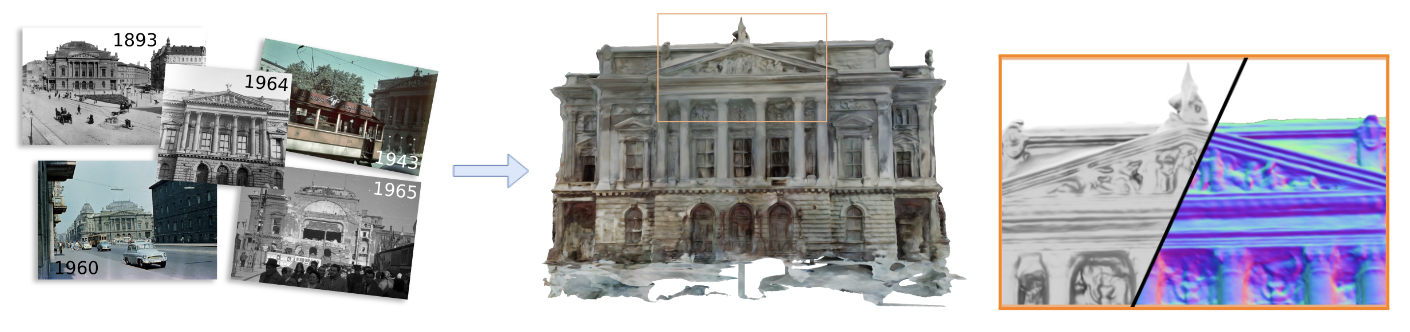
Dávid Komorowicz is a researcher at the Computer Vision Group within the School of Computation, Information and Technology at the Technical University of Munich (TUM). He is affiliated with Computer Science Department IX, working under the supervision of Prof. Dr. Daniel Cremers in the field of computer vision and 3D reconstruction. His research interests focus on computer vision, 3D reconstruction, neural rendering, historical building reconstruction, deep learning, and image-based modeling. His work bridges traditional computer vision techniques with modern neural approaches to solve complex reconstruction problems. His recent publication at GCPR 2024 demonstrates expertise in applying neural methods to historical building reconstruction from archival photography, showing how computer vision can be applied to cultural heritage preservation. This work combines photogrammetry, neural rendering, and geometry processing techniques to create accurate 3D models of historical structures from limited archival photographic sources. As part of the Computer Vision Group at TUM, he contributes to research areas including Visual SLAM, Photometry-Based Reconstruction, Geometry Processing, and Deep Learning applications in computer vision.
Michel T. Ivrlac is a Senior Researcher at the Chair of Signal Processing Methods within the School of Computation, Information and Technology at the Technical University of Munich (TUM). His research focuses on: Physically consistent modeling of communication systems Compact MIMO systems Electromagnetic principles of information technology Space/time coding with coarse quantization of the received signal Interference in cellular mobile communications Dr. Ivrlac teaches several key courses at TUM including: Adaptive and Array Signal Processing (winter semester) Circuit Theory and Communications (winter semester) Electrical Engineering I and II for Teacher Training Physical Principles of Electromagnetic Fields and Antenna Systems Systems and Circuit Technology Practical Course His research connects theoretical signal processing with practical applications in communications technology, particularly focusing on physical layer aspects of wireless communications. His work spans from fundamental electromagnetic principles to advanced signal processing techniques for next-generation communication systems, aligning with TUM's research in Machine Learning for Physical Layer Wireless Communications and Intelligent Reflecting Surface Systems. Dr. Ivrlac maintains regular office hours by appointment and is based in Room N1115 at Theresienstrasse 90, Building N1, 1st Floor at the Technical University of Munich.
Michael Baur is a Research Assistant at the Chair of Signal Processing Methods at the Technical University of Munich (TUM) . Research Areas: Machine Learning for Physical Layer Wireless Communications Teaching: Courses include Signal Processing Systems and the International Seminar on Signal Processing Contact: Email: mi.baur@tum.de , Room N1120, Building N1, Theresienstrasse 90, Munich, Germany His work intersects Machine Learning , Signal Processing , and Wireless Communications , with methodological expertise in Array Processing , Optimization , and Quantum Signal Processing .
Benedikt Hofer is a researcher at the Technical University of Munich (TUM), affiliated with the Professorship for Thermofluid Dynamics. His work focuses on the intersection of civil engineering, computer science, and digital modeling. University: Technical University of Munich Role: Researcher Contact: benedikt.hofer@tum.de Hofer’s research interests include Digital Twin , Building Information Modeling (BIM) , Graph Rewriting , and Parametric Modeling . His work emphasizes automated model generation, infrastructure digitization, and optimization through AI-driven methods. Recent publications highlight advancements in BIM collaboration , point cloud analysis for bridges , and graph-based design systems . These studies focus on scalability, version control, and integration of digital fabrication with BIM. The Technical University of Munich’s Thermofluid Dynamics group, led by Prof. Wolfgang Polifke, supports Hofer’s research in thermoacoustic interactions and fluid dynamics.
Prof. Dr. Alexander Braun serves as Professor of Physics at Düsseldorf University of Applied Sciences within the Faculty of Electrical Engineering & Information Technology. His office is located in Building 5, Room 05.2.054, and he can be reached at alexander.braun@hs-duesseldorf.de. His teaching responsibilities include physics courses for engineering students, with a focus on Newtonian mechanics as evidenced by his "Physics for KIT" course (WS 15/16). His academic background includes: Education at Hackettstown High School in New Jersey, USA Physics studies in Göttingen with specialization in Optics and Lasers Research stay at École Supérieure de Physique et Chimie Industrielle in Paris Diploma thesis at Laser-Laboratorium Göttingen on "Laser spectroscopic measurement methods for temperature determination in sprays" (collaboration with Bosch and VW) Doctoral work at Institute for Laser Physics in Hamburg on quantum computing, completed at University of Siegen Prof. Braun's research focuses on physically-realistic optical simulation for autonomous driving systems. Unlike conventional photorealistic approaches, his work emphasizes physically accurate modeling of optical properties, particularly point spread functions (PSF). His research group employs linear system theory combined with artificial neural networks to model measured PSFs, enabling accurate simulation of real-world optical effects on camera systems. This approach allows for creating convolution kernels that transform synthetic scenes into images matching specific camera system characteristics. His publication record shows a clear progression from quantum computing research to applied optics for automotive applications. The 15 most recent publications demonstrate significant focus on how optical aberrations impact AI performance in vision systems, with particular attention to automotive applications. His work bridges traditional optical engineering with modern AI, developing metrics and simulation tools that account for real-world optical imperfections. Key contributions include SOLAS (Superpositioning an Optical Lens in Automotive Simulation) and research on how windshield quality affects AI algorithm performance. Prof. Braun has been active in IEEE P2020 Automotive Image Quality standardization efforts, presenting at conferences like Automotive Glazing 2019. His research has direct practical implications for automotive camera system validation, production quality control, and development of more robust vision systems that can handle real-world optical conditions. His work on quantum annealing and digital annealing also shows continued interest in computational optimization methods, with potential applications in traffic flow optimization and logistics.
Prof. Dr. Jürgen Böhner is a Full Professor at the University of Hamburg's Department of Earth System Sciences, where he leads research on climate-environment interactions. His office is located in the Geomatikum building (Room 814), with regular office hours on Thursdays from 3-4 PM. He coordinates the Climate, Climate Change and Society (CliCCS) Cluster of Excellence and directs the SAGA-GIS development initiative. His research focuses on: Regional climate modelling with emphasis on high-mountain and tropical systems Climate impact assessments for Himalayan treelines and Amazonian ecosystems Advanced geospatial methods through Geoinformatics and remote sensing SAGA-GIS software development for environmental applications Process-based analysis of land degradation and soil conservation His publications demonstrate interdisciplinary approaches combining climate modelling, geoinformatics, and field validation. Recent work emphasizes: High-resolution climate projections for forest inventories Glacial lake mapping using CubeSat technology Social-ecological tipping points in the Amazon Novel validation methods using social media data Irrigation impacts on regional climate systems He leads an extensive research portfolio including: TREELINE-II (DFG, 2023-2026): Himalayan treeline sensitivity to warming PRODIGY 2/BMBF (2023-2025): Amazon tipping point management CliCCS/DFG Excellence Cluster (2019-2025): Climate-society interactions LANDMATE (2018-2023): Human land surface modification feedbacks CHELSA (ongoing): High-resolution global climatologies He advises 17 researchers and students working on climate modelling, remote sensing, and environmental process analysis. His team collaborates with institutions across Europe, South Asia, and South America.
Dr. Stefan Scholz serves as Senior Scientist and Deputy Head of the Department Bioanalytical Ecotoxicology at the Helmholtz Centre for Environmental Research - UFZ in Leipzig, Germany. Having joined UFZ in 2002 as a PostDoc and senior scientist, he has steadily advanced within the institution, serving as Acting Head of his department from 2022-2023 before assuming his current leadership role. His research program focuses on developing and applying innovative methods in ecotoxicology, with particular emphasis on zebrafish embryo models for chemical safety assessment and the development of alternatives to animal testing. Dr. Scholz's primary research interests center around mechanisms of chemical action, high-content analysis and automation of bioassays, and the development of alternative testing methods for effect assessment of chemicals and biomonitoring. His work spans neurotoxicity assessment through behavioral endpoints like spontaneous tail coiling and photomotor response, developmental toxicity assessment with focus on vascular disruption, and the application of Adverse Outcome Pathways in chemical risk assessment. He has pioneered advanced imaging techniques, transcriptomics, and metabolomics approaches to investigate chemical effects at molecular and organismal levels, establishing robust methodologies for data-driven toxicology. Analysis of Dr. Scholz's recent publications (2023-2025) reveals a strong progression toward increasingly sophisticated, integrated approaches in toxicological assessment. His work demonstrates a clear trajectory from basic mechanistic understanding toward practical regulatory applications, with significant contributions to developing quantitative Adverse Outcome Pathways, implementing high-content screening workflows, and establishing zebrafish embryo models as regulatory testing tools. A unifying theme across his research is the development of data-rich, mechanistically informed approaches that enhance the predictive power of chemical safety assessment while reducing reliance on traditional animal testing. OECD Cooperative Research scholarship (2015) Scholarship of the University of Nagoya, Japan (2004) Throughout his career, Dr. Scholz has been actively involved in numerous collaborative research projects, including major initiatives like the Eco-exposome research program (2021-2027), Proxies of the Eco-exposome (2018-2022), InCeTo (2019-2023), and several recently launched projects including MibiTox (2020), nanoINHALE (2024), and SafePol (2025). His work has been supported by various national and international funding mechanisms, including collaborations with regulatory agencies like the US-EPA. He has contributed significantly to the development of standardized testing guidelines, particularly for zebrafish embryo toxicity testing, through participation in OECD validation studies. Based in the UFZ facilities in Leipzig (Permoserstr. 15, Building 6.0, Room 327), Dr. Scholz leads a research team that operates state-of-the-art laboratories for zebrafish husbandry, automated imaging systems, and molecular analysis. His group has developed specialized software tools like EmbryoMotion for analyzing spontaneous tail contraction and photomotor response of zebrafish embryos. The research environment emphasizes interdisciplinary collaboration, with strong connections to computational biology, environmental chemistry, and regulatory science groups both within UFZ and across international networks.
Prof. Dr. Andreas Gut serves as Professor of Social Work and Head of the Social Work Youth, Family and Social Welfare Programme at Baden-Wuerttemberg Cooperative State University's Faculty of Social Work in Villingen-Schwenningen. His leadership focuses on integrating practice-based learning with theoretical rigor in child and youth welfare systems. His educational trajectory includes: Doctorate in Philosophy (University of Siegen, 2014) on lifeworld orientation in family therapy Systemic couple/family therapist certification (DGSF, 2001-2004) Diploma in Social Pedagogy (Catholic University of Applied Sciences Freiburg, 1989-1994) Theological studies (Universities of Freiburg/Tübingen, 1987-1996) Research centers on systemic approaches to child welfare with specialization in outreach family support, foster care transitions, and trauma-informed practice. His work bridges clinical therapy and social work through lebensweltorientierung (life-world orientation), emphasizing contextual understanding of family dynamics. Key contributions address care leaver professional development and parental support in foster systems. Recent publications (2022-2025) demonstrate evolving focus from methodological frameworks (2022 outreach family support compendium) toward specialized applications in grief counseling (2025) and ethical practice dilemmas. The corpus reveals consistent engagement with systemic therapy integration, rural service challenges, and quality development in mobile interventions. Professional involvement includes active membership in the German Society for Systemic Therapy (DGSF) and extensive field experience as social-pedagogical consultant for foster care (2007-2021). His practice background informs curriculum development in reflection methods and individual assistance techniques. Current work emphasizes developing practice-theory seminars for youth/family welfare with focus on trauma education and foster family support systems. The outreach family support research cluster represents his primary scholarly contribution to the field.
Christian Müller is a Professor at the Technische Hochschule Wildau (University of Applied Sciences Wildau) since 1994, specializing in Business Information Technology. He serves as Dean of the Faculty of Economics, Computer Science, and Law, with a focus on planning and implementing IT services in the service sector. His research emphasizes modeling and optimization of business processes, simulation technologies, internet systems, and virtual reality applications. Research Interests: Business Process Optimization Simulation & Modeling (EPC, DESMO-J) Internet Technologies Virtual Reality Java-based Systems Contact: Office: Building 100, Room 206 Phone: +49 3375 508 956 Email: christian.mueller@th-wildau.de
Jeni Tennison is an expert in data governance, policy, and open data who serves as an Associated Researcher at the Bennett Institute for Public Policy at the University of Cambridge. She is also the founder and Executive Director of Connected by Data, a Shuttleworth Foundation Fellow, and co-chair of the Data Governance Working Group at the Global Partnership on AI. Her research focuses on challenging traditional notions of data ownership and consent, advocating for collective governance of data when processed in aggregate. She has a long-standing interest in open and web standards, having served on the W3C's Technical Architecture Group and co-chaired the W3C's CSV on the Web Working Group. Her work bridges academic research with practical implementation, having previously served as CEO of the Open Data Institute for nine years. Tennison's publications reveal a consistent focus on agent-based modeling of information economies, data governance frameworks, and the societal implications of data monopolies. Her work spans disciplines including computer science, economics, public policy, and information science, with particular emphasis on creating practical tools and frameworks for better data governance. OBE for services to technology and open data Shuttleworth Foundation Fellow As Executive Director of Connected by Data, she leads initiatives that put community at the heart of data narratives, practices, and policies. She serves on the Boards of Creative Commons, the Global Partnership for Sustainable Development Data, and the Information Law and Policy Centre. Her work involves substantial collaboration with governments, international organizations, and private sector entities to build trustworthy data ecosystems. She is also known for co-creating Datopolis, an open data board game that helps people understand data infrastructure concepts through gameplay.
Tristan Kurt Fabian Niermann is affiliated with the University of Bielefeld as a lecturer in the Faculty of Chemistry, specifically within the Theoretical Chemistry department. He holds a dual role as both a Master's student and lecturer at the institution. His academic focus appears to be within theoretical and computational chemistry, working within Bielefeld University's research ecosystem that emphasizes interdisciplinary approaches to scientific questions. The university's strategic research areas include the 'Material World' which examines structures and processes at the interfaces of physics, chemistry, biology and bioinformatics. Mr. Niermann's work connects with the university's focus area ANBauEn (Architecture of Nature), which investigates how complex systems with emergent properties arise from fundamental building blocks - research that intersects with theoretical chemistry approaches. Contact Information: Office: H-Building F4-111 Phone: +49 521 106-2084 Secretary: +49 521 106-2074