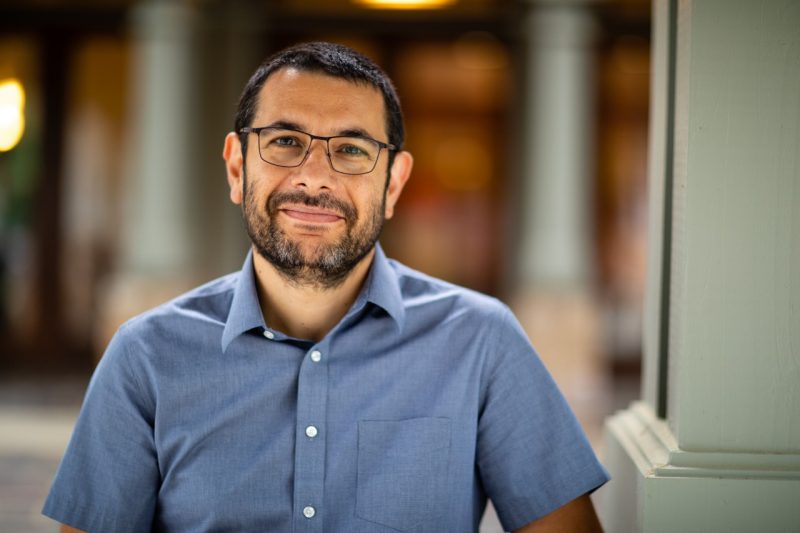
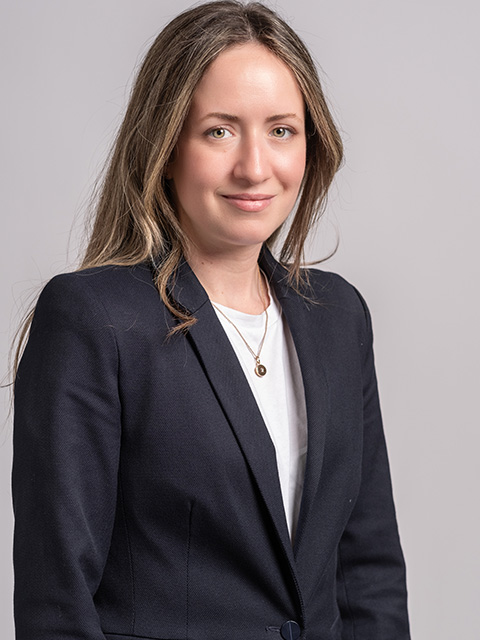
Andre Filiatrault is an Adjunct Professor at the Department of Civil Engineering within McMaster University . His research spans seismic engineering, structural dynamics, and performance-based design, focusing on nonstructural components, damping systems, and wood/steel structures. Key contributions include seismic isolation, passive energy dissipation, and experimental validation of building systems. Research Interests: Earthquake Engineering, Structural Dynamics, Performance-Based Seismic Design, Nonstructural Components, Steel and Wood Structures, Seismic Retrofit Recent Trends: Advanced studies on viscous dampers, seismic loss estimation for acceleration-sensitive elements, and integration of building information modeling with seismic analysis.
Dr. Timothy O. Adekunle is an Associate Professor at the University of Utah School of Architecture , where he serves as Interim Chair since 2023. He holds degrees including a Ph.D. in Architecture from the University of Kent, UK, and professional architecture degrees from Nottingham and [B.Arch institution]. A Fellow of the UK Higher Education Academy and member of AIA Utah Board, his work focuses on sustainable building practices and thermal comfort analysis. Ph.D. in Architecture, University of Kent M.Arch, University of Nottingham PGCHE, University of Kent His research interests span thermal comfort in historic and modern timber buildings, building energy efficiency , and urban environmental physics , with a particular focus on climate adaptation in diverse building typologies. Recent publications explore energy demands in CLT buildings , urban traffic CO2 impacts in Jakarta , and gender variations in thermal perception . His work has been recognized with multiple Outstanding Reviewer Awards from journals like Automation in Construction and Energy and Buildings . As a educator , he leads graduate architecture programs and teaches courses in sustainable design , building technology , and energy efficiency . His professional activities include leadership roles in AIA Utah and editorial board service. Current research grants support campus sustainability initiatives like CLT building evaluation and passive design strategies.
Mariëlle Aarts serves as an Assistant Professor in the Department of the Built Environment at Eindhoven University of Technology (TU/e), specializing in human-centered lighting research. Her work spans multiple research groups including Building Lighting and the Intelligent Lighting Institute, with office location at Vertigo 6.11. She also chairs the Board at the Light and Health Research Foundation SOLG at TU/e, where she promotes awareness of light's impact on human health and connects researchers in this field. Her research focuses on the intersection of lighting with human wellbeing, particularly examining daylight, electrical lighting, comfort, and energy considerations within the built environment. Aarts maintains special expertise in lighting applications for working environments and elderly populations, recognizing the distinct requirements for these groups compared to general populations. Her work extends to therapeutic applications of light for affective disorders and lighting conditions in medical facilities. Analysis of her recent publications reveals a strong emphasis on translational lighting research connecting engineering principles with health outcomes. Her work spans building science, environmental psychology, and public health domains, with particular attention to methodological improvements in light measurement, the impact of light on vision development, and the psychological effects of natural versus artificial lighting patterns. Aarts demonstrates consistent collaboration across international research teams, particularly with colleagues at TNO and other European institutions. Chairman of the Board, Light and Health Research Foundation SOLG at TU/e Former researcher at TNO (2001) Member of the Daylight Committee of the Dutch Lighting Foundation Aarts teaches multiple courses including 'Advancing light for human functioning', 'Physics of light and lighting design', and 'Healthy & sustainable living environments'. Her educational activities emphasize the practical application of lighting principles for human benefit, connecting theoretical knowledge with real-world implementation. Her research laboratory environment includes the Intelligent Lighting Institute where she collaborates on projects examining lighting's physiological and psychological impacts.
Jens Forssén is an Assistant Professor in the Department of Technical Acoustics , Vibroacoustics research group at Chalmers University of Technology . His work focuses on outdoor sound propagation , community noise , and urban acoustics , with a particular emphasis on the influence of meteorology , terrain , and soil properties on noise levels. Research Interests: Outdoor acoustics, urban soundscapes, road and train traffic noise, wind turbine noise, noise barriers, auralization techniques, and health impacts of environmental noise. Recent Trends: Analysis of low-frequency noise in urban environments, 3D noise mapping , digital twinning for urban design, and sonic crystal applications in noise reduction. Scientific Contributions: Publications on noise propagation models , auralization methods , traffic noise assessment , and health impact studies related to urban sound environments. Labs & Collaborations: Collaborates with the LISTEN project , SONORUS project , and HOSANNA project to develop urban noise mitigation strategies. His work includes partnerships with researchers like Wolfgang Kropp , Leon Müller , and Maarten Hornikx .
Mark E. Benden is a Professor and Director of the Center for Worker Health at Texas A&M University's Department of Environmental & Occupational Health. His research focuses on ergonomics and occupational health interventions targeting sedentary behavior, obesity, and workplace design across office and educational settings. Education: PhD in Interdisciplinary Engineering, Texas A&M University MS in Industrial Engineering, Texas A&M University BS in BioEngineering, Texas A&M University Dr. Benden's work pioneers stand-capable workstation implementations, demonstrating measurable impacts on physical activity, productivity, and health outcomes. His research spans childhood obesity interventions in classrooms, remote worker ergonomics, and digital human modeling applications. He has developed patented ergonomic solutions including adjustable footrests and deployable floor mats that address workplace sedentariness. His 2024-2025 publications reveal expanding focus areas: accessibility of assistive technology, health equity in obesity interventions, and specialized ergonomic challenges in dental professions. Recent work increasingly integrates digital human modeling for remote work solutions while maintaining core emphasis on sedentary behavior reduction. Scientific Awards: Fellow, National Academy of Inventors (2023) Innovation Award, Texas A&M System (2018) Inc 5000 Company Honor, Stand2Learn (#567 Fastest Growing Company) (2018) Aggie 100, Stand2Learn (#5) (2018) US Top 10 Most Innovative Product Designer, Healthcare Design Magazine (2008) Buildings Magazine Editor's Top 100 for Ntune Seating System (2007) Platinum ADEX Award for NeXtepTM and BalanceTM Chair (2005-06) Platinum ADEX Award for AbStoolTM (2004-05) As Director of the Center for Worker Health, Dr. Benden leads research translating ergonomic principles into commercial products through Stand2Learn, which achieved national recognition as a top-growing company. His work informs ANSI/HFS 100 computer workstation standards and drives evidence-based interventions for worker health improvement.
Dr. Adam Barton is a Senior Research Fellow in the Physics Department at Lancaster University, specializing in experimental high-energy physics through his work with the ATLAS detector at CERN's Large Hadron Collider (LHC). His research focuses on Higgs boson properties, top quark dynamics, and searches for new physics phenomena. Position: Senior Research Fellow Institution: Lancaster University Department: Physics Research Groups: Experimental Particle Physics Barton's research interests span: Heavy flavour production and decay mechanisms Electroweak interaction studies through W/Z boson analyses Jet physics and track reconstruction in high-energy collisions Searches for dark matter and magnetic monopoles ATLAS detector performance optimization His recent publications analyze jet-track correlations, Higgs boson decays, and top quark mass measurements using advanced reconstruction techniques. Barton contributes to ATLAS software development and detector commissioning for future LHC runs. He is based in the Physics Building (B043b, B-Floor) and can be contacted via a.barton1@lancaster.ac.uk .
Patrick Brewick is an Assistant Professor in the Department of Civil and Environmental Engineering and Earth Sciences at the University of Notre Dame. His research bridges data analytics, mechanics, and computational modeling to address challenges in structural resilience and material behavior under extreme conditions. Ph.D., Columbia University (2014) M.S., Civil Engineering and Engineering Mechanics, Columbia University (2010) B.S., Civil Engineering, University of Notre Dame (2009) Professor Brewick’s work focuses on transforming noisy or incomplete data into accurate predictive models. Key research areas include: System Identification : Uncovering physics of seismic protection systems. Uncertainty Quantification : Developing Bayesian frameworks for model calibration. Damage Detection : Identifying nonlinear structural transitions. Microstructural Modeling : Investigating corrosion and material heterogeneity. Hybrid Modeling : Balancing high- and low-fidelity simulations. Wind Energy Applications : Using distributed fiber optics for turbine monitoring. His publications span disciplines like structural mechanics, materials science, and biomedical engineering, emphasizing multi-fidelity approaches and probabilistic methods. Current projects address infrastructure resilience against climate change, naval structural reliability, and microstructural impacts on corrosion. The Brewick Group collaborates extensively, offering open-source tools and inviting partnerships. Students in his lab, such as Ph.D. candidates Reza Farzad and Jichuan Tang , explore cutting-edge applications in structural dynamics and material modeling. Before Notre Dame, Prof. Brewick conducted research at the U.S. Naval Research Laboratory, focusing on predictive modeling for heterogeneous systems, including marine structures and brain tissue mechanics.
Dr Kevin Nolan is a Researcher at the UCD School of Mechanical and Materials Engineering , University College Dublin, specializing in fluid dynamics , aerosol transmission , and medical engineering . His work spans surgical safety , renewable energy systems , and microfluidic technologies , with a focus on real-world applications like infection control and wind turbine aerodynamics . Recent research includes modeling surgical smoke leakage , developing standards for face coverings , and analyzing wind turbine blade erosion using advanced fluid dynamic techniques. Collaborations with Mater Hospital , Cisco Systems , and NUI Galway highlight the interdisciplinary impact of his work. Key contributions: Schlieren optical technique for visualizing airflow, European standard development for community face coverings Current projects involve IoT-based air quality monitoring , 3D facial mapping for mask design , and reducing dead spots in air purification Publications address gas leaks in laparoscopy , reusable cloth mask efficacy , and flow friction dynamics , with a strong emphasis on computational fluid dynamics (CFD) and practical mitigation strategies across medical and engineering domains.
Professor Zhixiong Guo is a distinguished faculty member in the Department of Mechanical and Aerospace Engineering at Rutgers, The State University of New Jersey. He serves as Editor-in-Chief for the Journal of Enhanced Heat Transfer and Heat Transfer Research, and has made significant contributions to thermal sciences and engineering. His research spans multiple domains including radiative heat transfer, ultrafast laser-tissue interactions, and nanoscale thermal phenomena. Professor Guo received his educational foundation at Tsinghua University in Beijing, China, where he earned a B.S., M.S., and Dr. Eng. in Engineering Physics. His academic excellence was evident as he graduated first in his class (1/28) for his B.S. and completed his M.S. one year ahead of schedule. He then pursued and completed his Ph.D. in Mechanical Engineering from Polytechnic University (now Polytechnic School of Engineering, New York University) in just two years. Professor Guo's research interests center on advanced heat transfer phenomena, with particular expertise in radiative transfer in participating media, ultrafast laser-tissue interactions, and nanoscale thermal transport. His work bridges theoretical modeling with practical applications in energy systems, biomedical engineering, and materials science. He has pioneered computational methods for solving complex radiation transfer problems and developed innovative optical sensing techniques using whispering-gallery mode resonators. Analysis of Professor Guo's recent publications reveals a strong focus on emerging thermal technologies, including machine learning applications in heat transfer prediction, nanofluid thermal properties, and advanced materials for thermal management. His work demonstrates a clear trajectory from fundamental radiative transfer research toward practical applications in energy efficiency, biomedical diagnostics, and advanced manufacturing. Professor Guo has received numerous prestigious honors including: Fellow of the American Society of Mechanical Engineers (ASME), 2011 Fellow of the American Society of Thermal and Fluids Engineers (ASTFE), 2021 Rutgers, The Board of Trustees Award for Excellence in Research, 2018 As Editor-in-Chief of two leading journals in the field, Professor Guo has significantly shaped the direction of thermal sciences research. His laboratory at Rutgers focuses on cutting-edge research in optical thermal sensing, ultrafast radiation phenomena, and advanced computational methods for heat transfer analysis. Current research directions include machine learning applications in thermal systems and novel approaches to energy conversion and storage.
Graham D. Kribs is a Professor of Physics at the University of Oregon within the College of Arts and Sciences, where he has been a faculty member since 2005. During 2019-2025, he served as the first Director of the Institute for Fundamental Science. His academic journey began with a Ph.D. from the University of Michigan in 1998. Kribs' research focuses on Theoretical High Energy Physics, specializing in Physics Beyond the Standard Model. His work spans multiple frontiers including dark matter phenomenology, supersymmetry, extra dimensions, grand unification, and early universe cosmology. He has made significant contributions to stealth dark matter models, dark photon research, and effective field theory approaches to new physics. His publication record demonstrates a consistent trajectory from foundational work on supersymmetry and little Higgs models to cutting-edge research on long-lived particles and dark sector phenomena. Recent work shows increasing emphasis on experimental signatures that could be detected at the LHC and future colliders, with particular attention to unconventional dark matter candidates and their detection strategies. Fellow of the American Physical Society (2015) Kribs has organized numerous conferences and workshops worldwide at prestigious institutions including the Aspen Center for Physics, the Mainz Institute for Theoretical Physics, and the Institute for Nuclear Theory. His research has been supported by various grants, though specific funding details aren't provided in the source material. He has held significant research positions including a Ben Lee Fellowship at Fermilab (2010-11) and a Membership at the Institute for Advanced Study in Princeton (2013). His work bridges theoretical development with experimental testability, particularly through collaborations with experimental groups designing searches for new physics at major facilities like the LHC.
Xiaoyin Wang is an Associate Professor in the Department of Computer Science at the University of Texas at San Antonio, with affiliations to the College of AI, Cyber and Computing. She previously held a PostDoc position at UC Berkeley's Department of Electrical Engineering and Computer Science. Ph.D. in Computer Science, Peking University (2012) B.Eng. in Computer Science, Harbin Institute of Technology Her research focuses on Natural Language Processing , Program Analysis , Software Engineering , and Software Security . Key sub-areas include: Software migration and compatibility Build system automation Testing and debugging methodologies Privacy policy enforcement in mobile apps Deep learning for software analysis Augmented/Virtual Reality testing Recent publications (2022-2024) emphasize automated oracle prediction for AR/VR testing, data-sensitive analysis, and DevOps toolchain optimization. Trends include: Adaptation of program analysis to immersive environments Privacy-preserving software engineering Empirical studies on testing frameworks Academic accolades include: NSF CAREER Award (2019) President's Research Achievement Award (UTSA, 2019) Multiple best paper awards at ICSE, TOSEM She has advised 7 graduate students, including: Current: Rodney Rodriguez, Xueling Zhang, Sunzhou Huang Graduated: Xue Qin (Villanova), Foyzul Hassan (UM-Dearborn), Shaikh Mostafa (Amazon/Microsoft) Laboratory work involves tools like: TranStrL: Software internationalization Hima: API mapping for framework evolution NetworkProfiler: Android app fingerprinting DOVAR: AR/VR visualization for education Uniloc: CI failure diagnosis
Dr Andrew Timmis is a Lecturer in Transport and Director of Undergraduate Studies at the School of Architecture, Building and Civil Engineering at Loughborough University. His research focuses on sustainable transportation systems, airport operations, and stakeholder engagement in infrastructure projects. He leads the Transport Studies Group and has expertise in life cycle assessment (LCA), mobility hub implementation, and aviation policy. His academic interests include exploring environmental practices in aviation, urban development around airports, and the application of AI in traffic safety. Notable research areas include public acceptance of EV infrastructure, disruptive passenger behavior analysis, and post-COVID airport operations. Dr Timmis has published extensively on topics such as air cargo loyalty schemes, mobility hub integration, and predictive modeling for traffic conflicts. His work bridges theoretical research with practical applications, emphasizing interdisciplinary approaches to transportation challenges. He advises on aviation regulatory frameworks and collaborates with industry partners to advance sustainable transport solutions. His research has contributed to policy recommendations for airport urban development and green logistics strategies.
Professor David Allinson leads the Building Energy Research Group (BERG) at Loughborough University, focusing on transforming building performance for a zero-carbon future. He holds a BEng (Hons), MSc (Eng), PhD, and PGCAP, and is a Fellow of the Higher Education Academy (FHEA). His work integrates measurement and modeling to evaluate energy efficiency, thermal performance, and moisture management in buildings. Key projects include developing the Standard Assessment Procedure (SAP) 11 and evaluating technologies like SMETER through large-scale field trials. Research emphasizes test houses with synthetic occupants, the Loughborough Hygrothermal Test Facility, and post-occupancy evaluations. Completed doctoral researchers include studies on zonal heating controls, energy flexibility in buildings, and community energy schemes. His expertise spans ventilation optimization, hygrothermal simulation, and policy-driven energy feedback systems. Notable projects include the EPSRC-funded Active Buildings Centre and SCENe (Sustainable Community Energy Networks), alongside Innovate UK initiatives. He collaborates internationally through IEA EBC Annex71 and advises on retrofitting strategies for solid wall dwellings. His work bridges academic research with practical solutions for decarbonizing the built environment.
Dimitrios Nikolopoulos is the John W. Hancock Professor of Engineering at Virginia Tech's College of Engineering, within the Department of Computer Science. His research focuses on high-performance computing, systems runtime systems, memory management, and edge computing. He holds a Chartered Engineer (CEng) certification. Education: M.Eng., University of Patras, Greece (1996) M.Sc., University of Patras, Greece (1997) Ph.D., University of Patras, Greece (2000) Research Interests: His work spans transprecision computing, parallel programming paradigms, efficient inference frameworks for large language models (LLMs), and energy-efficient server ecosystems. Recent efforts emphasize optimizing edge computing systems, GPU resource sharing, and adaptive memory management in cloud-edge environments. Recent Trends in Publications: Recent studies highlight advancements in edge-serving frameworks (e.g., SLED), multi-agent systems for HPC code optimization (MARCO), and novel approaches to GPU and memory resource utilization in constrained settings. Themes include reducing latency, improving scalability, and integrating AI-driven techniques into HPC workflows. Grants & Advising: Details on current grants and advisees are not explicitly listed in the provided materials. Labs/Teams: His research is conducted through collaborative groups within Virginia Tech's Department of Computer Science, focusing on systems, parallel computing, and AI/ML infrastructure.
Dr. Vanda Dimitriou is a Senior Lecturer specializing in Digital Engineering and Building Performance at an unspecified university. She serves as Ethics Lead and Deputy Lead for Architectural Engineering programs. Her research focuses on building performance modelling, digital technologies in construction, and sustainable design strategies, particularly integrating Building Information Modelling (BIM), energy simulation, and computational methods. She leads projects on thermal model calibration, BIM interoperability, and digital twins for sustainable built environments, collaborating closely with industry and government bodies. Her research interests include dynamic thermal modelling using real-world data, BIM energy modelling at building and district scales, and retrofit solutions for residential and commercial buildings. She has supervised multiple PhD students in areas like HVAC digital twins, grey-box modelling, and net-zero retrofitting. Her recent projects include the Design4Energy FP7 EU project and the EPSRC-funded REFIT initiative, demonstrating expertise in interdisciplinary energy research. Dr. Dimitriou’s work emphasizes data-driven approaches to building energy systems, including smart metering and sensor integration. She has pioneered decision support tools for retrofitting and authored numerous publications on energy efficiency and thermal modelling techniques.