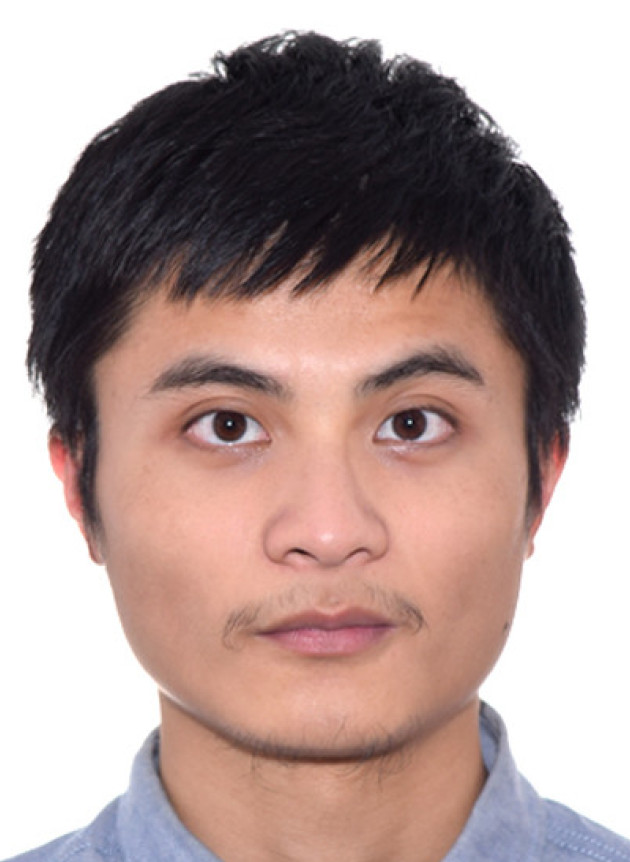
Dr. Long Chen is a Lecturer at the School of Architecture, Building and Civil Engineering, Loughborough University. He holds a PhD and BEng, with professional affiliations including MCIOB and A.M.ASCE. Previously, he was a Postdoctoral Research Associate at Imperial College London's Centre for Systems Engineering and Innovation (CSEI), where he contributed to the CDBB-funded project 'Analysing Systems Interdependencies using a Digital Twin' and the Alan Turing Institute/Lloyd’s Register Foundation's 'Grand Challenge III: Data-Driven Design Under Uncertainty'. His research focuses on digital twin-driven approaches for design change management in complex systems and image-based digital twinning for as-built buildings. Key research areas include Systems Engineering, Data-Centric Engineering, and Building Information Modeling. Dr. Chen's publications primarily explore machine learning fairness, Bayesian computation, and computer vision techniques, with recent works addressing algorithmic bias mitigation, transformer calibration, and semantic segmentation robustness. His research demonstrates consistent applications in probabilistic modeling and adaptive systems. He maintains active collaborations with Imperial College London and the Alan Turing Institute, leveraging his expertise in systems interdependencies and digital twin implementations.
Dr Ryan Cunningham serves as a Lecturer in Data Science within the Department of Computing and Mathematics at Manchester Metropolitan University. His academic profile centers on developing advanced deep learning systems for medical image analysis, with particular focus on real-time skeletal muscle assessment via ultrasound and facial expression recognition in video sequences. His work bridges computer science and healthcare to address neurological disorders including motor neuron disease and dystonia. Education: Ph.D in Computing, Manchester Metropolitan University (2012-2015) BSc in Artificial Intelligence, Manchester Metropolitan University (2009-2011) HND in Computing, The Manchester College (2007-2009) Dr Cunningham's research spans machine learning, deep learning, computer vision, and medical image analysis with consistent application to healthcare challenges. His primary focus involves developing convolutional neural networks for ultrasound-based muscle segmentation and real-time analysis to enable early disease diagnosis. Recent work extends to facial expression recognition using 3D-CNNs and generative models for both macro and micro-expressions in long-duration videos, demonstrating interdisciplinary innovation at the intersection of AI and clinical medicine. His technical expertise includes MATLAB, Python, Java, and C/C++ for implementing complex algorithms into practical software solutions. Analysis of his 15 most recent publications reveals a strong trajectory in medical AI applications, with 60% focused on ultrasound-based muscle analysis for neurological disorders and 40% on facial expression recognition systems. Key technical trends include progression from foundational segmentation models to efficient lightweight architectures (2021), integration of temporal modeling for video sequences (2021), and recent exploration of generative approaches for expression synthesis (2023). The research consistently targets real-world clinical utility through real-time processing capabilities and automated diagnostic tools. Scientific Awards: No scientific awards or fellowships are documented in the provided materials. Dr Cunningham currently supervises a PhD candidate investigating deep learning applications for macro and micro facial expressions in high spatiotemporal resolution videos. His teaching responsibilities include postgraduate instruction in High Performance Computing and Big Data, specifically covering TensorFlow as a deep learning framework. Previous teaching experience includes advanced undergraduate programming courses, demonstrating commitment to both research and pedagogy. While no specific grants are mentioned, his research output suggests active engagement with medical imaging and AI funding streams. His work is conducted within Manchester Metropolitan University's Department of Computing and Mathematics, leveraging institutional resources including the Dalton Building facilities. The research direction indicates collaboration with medical professionals and neurology specialists, though specific lab affiliations or research teams are not explicitly documented. Current projects focus on extending deep learning capabilities for real-time ultrasound analysis and advancing facial expression recognition systems for clinical applications in neurological assessment.
Dr. Connah Kendrick is a Senior Lecturer in the Department of Computing and Mathematics at Manchester Metropolitan University. His research focuses on applying computer vision techniques to healthcare challenges, particularly in 3D imaging for medical applications such as diabetic foot ulcer segmentation, facial expression analysis, and anatomical reconstruction. He holds a PhD in computer vision involving 3D+RGB sensors and has developed web-based tools for data annotation. His work emphasizes interdisciplinary collaboration to advance healthcare solutions through explainable AI. Education: PhD in Computer Vision (3D+RGB sensors and model building) Research Interests: Dr. Kendrick specializes in AI-driven healthcare solutions using 3D technologies. Key areas include: Computer vision applications in medical imaging (e.g., diabetic foot ulcers, prostate segmentation) Facial micro/macro-expression analysis for health monitoring Development of interpretable machine learning models for clinical use Integration of wearable technologies in exergames for health Article Trends: Recent work centers on diabetic foot ulcer segmentation (e.g., DFUC challenges), 3D facial expression analysis, and robust ML models for stress/anxiety detection via heart signals. His contributions span medical imaging standards, dataset curation, and novel neural network architectures. Advising/Grants: No specific grants or student advisees listed. Collaborates on projects like railway passenger detection systems and 3D anatomical reconstruction (e.g., bone, breast, prostate). Labs/Teams: Works within multi-disciplinary teams at Manchester Metropolitan University, focusing on healthcare AI and medical imaging innovation.
Dr Fateme Dinmohammadi is an Associate Professor and Senior Lecturer in AI & Robotics at the University of West London (UWL) , serving as Course Director for the MSc Software Engineering program within the School of Computing and Engineering . Her research focuses on AI, Machine Learning, Robotics, Predictive Analytics, and IoT-driven systems, with applications in energy efficiency, healthcare, and infrastructure monitoring. She has contributed to over 50 peer-reviewed articles and industry-funded projects through EPSRC, InnovateUK, H2020, and industry collaborations. Previously, she held senior research roles at University College London (UCL) , Cranfield University , and the Edinburgh Robotics Centre . Her work spans AI-driven solutions for smart buildings, battery management in EVs, structural health monitoring of wind turbines, and medical imaging applications like echocardiography. Projects emphasize real-world deployment through digital twins, Bayesian networks, and edge computing. Dr Dinmohammadi teaches across undergraduate and postgraduate programs, including BSc Computer Science, Cyber Security, and AI-focused degrees. Her expertise bridges academic research and industry needs, addressing challenges in Industry 4.0, sustainable energy systems, and autonomous robotics.
Sandhya Patidar is an Associate Professor at the School of Energy, Geoscience, Infrastructure and Society, Heriot-Watt University. She holds editorial roles in journals like Geosciences and Frontiers in Environmental Engineering, and is a member of the Royal Academy of Engineering. Her research focuses on interdisciplinary applications of data science (mathematical/statistical/machine learning) to energy, water, climate change, and environmental impact assessment. She has led projects funded by grants like EP/F038240/1 and EP/K013513/1, and developed novel methodologies in stochastic processes, complex networks, and bifurcation analysis. Education & Early Career: Previously affiliated with Shri RGP Gujarati Professional Institute (2001–2004), DAVV Indore, and RGPV Bhopal. Holds expertise in programming (Python, R, MATLAB) and has over 70 peer-reviewed publications. Three outputs won best paper awards, including recognition at climate change and low-energy architecture conferences. Research Interests: Machine learning applications in energy systems, flood risk modeling, and climate change adaptation. Specializes in techniques like Hidden Markov Modeling, time series analysis, and deep learning frameworks for energy demand forecasting and hydrological prediction. Key Contributions: Developed a physics-aware machine learning framework for hydrological models, error correction models for reservoir levels, and AI-driven heat pump usage classification. Pioneered methodologies linking climatic trends to energy demand via stochastic modeling and covariance approaches. Awards: Robert Alfred Carr Prize (2022) Sir David Wallace Prize (2008) Best Paper Awards (2011, 2019) Advising & Grants: Supervises interdisciplinary PhD projects on data analytics in climate-energy-water nexus. Collaborates on initiatives like the CEDRI project for community energy demand reduction in India. Actively engages in grant-funded research on flood inundation modeling and probabilistic climate projections. Labs & Teams: Part of the Institute for Infrastructure & Environment, leading cross-disciplinary teams in energy performance assessments, resilience planning, and environmental risk management.
Heather Chamberlain is a Senior Enterprise Fellow at the University of Southampton, affiliated with the Faculty of Environmental and Life Sciences. Her research focuses on geospatial technologies applied to public health challenges, including population distribution modeling, disaster response, and urban planning in sub-Saharan Africa. She has collaborated on projects funded by the Bill & Melinda Gates Foundation and contributed to high-impact studies published in journals like Nature Communications and Scientific Data. Her work emphasizes innovative uses of spatial data, such as integrating building footprint analysis with epidemiological surveys to improve health intervention targeting. Awards include the Faculty of Environmental and Life Sciences Dean’s Award for Enterprise (2018) and the Vice-Chancellor’s Research Impact Award (2018). She is part of interdisciplinary teams addressing global challenges through geospatial solutions, including the GRID3 initiative for spatial data innovation. Notable research outputs span population estimation methods, disaster displacement analysis, and geostatistical tools for aid distribution. Her expertise bridges academic research with practical applications in public health and urban development.
Dr. Christopher Lloyd is a Senior Research Fellow in Geographic Information Systems (GIS) within the WorldPop Programme at the University of Southampton. His high-impact research focuses on developing geospatial datasets using open-source methods, particularly building classification via machine learning. These datasets support population modeling and inform development policy in low/middle-income countries regarding urban planning and resource allocation. His research interests span: GIS and remote sensing for spatial demography Machine learning applications in settlement classification Glacial geomorphology and landscape evolution Publications demonstrate strong emphasis on geospatial data harmonization, population mapping, and machine learning techniques applied to urban infrastructure analysis. Recent work includes glacial landform studies and high-resolution population distribution models. Awards: Fellow of the Geological Society (2003) BEST SHORT PAPER (2020) Vice-Chancellor's Award (2018) Co-supervises PhD students and contributes to training materials for GIS professionals. Leads geospatial data production for international development projects funded by organizations including the Bill & Melinda Gates Foundation. Affiliated with the WorldPop research group which focuses on developing open geospatial methods for population mapping in low/middle-income countries.
Jason Taylor is a Lecturer in the Division of Psychology Communication and Human Neuroscience at the University of Manchester. He directs the EEG Lab in Dover Street Building and serves as Principal Investigator of the Multimodal Neuroimaging and Memory Lab (MNML). His academic qualifications include a PhD in Experimental Psychology from Brown University, an ScM from the same institution, and a BA (Hons) in Psychology from the University of Manitoba. Taylor's research focuses on human memory systems using multimodal neuroimaging approaches including fMRI, MEG, and EEG. Key areas include: Neurocognitive changes in ageing and dementia Episodic and semantic memory mechanisms Optimization of neuroimaging methodologies Cognitive impairments in neurological disorders His recent publications (2022-2023) demonstrate strong focus on EEG applications in clinical neuroscience, working memory studies, and cognitive ageing research. The work frequently involves quantitative analysis of neural oscillations and their relationship to cognitive functions. Taylor actively advises PhD candidates and supervises doctoral research projects. Current students include researchers investigating neural bases of false memory, episodic memory augmentation, and multimodal neuroimaging of semantic memory. He maintains collaborations with institutions including Royal Northern College of Music, MRC Cognition and Brain Sciences Unit, and Northwestern University. His laboratory (MNML) supports grant-funded research and student projects, with specialized facilities for EEG experimentation. Taylor teaches extensively in neuroimaging methodology across undergraduate and postgraduate programs, including courses on SPM M/EEG analysis and cognitive neuroscience.
Dr. Binod Bhattarai is a Lecturer (equivalent to Assistant Professor in the US) in the School of Natural and Computing Sciences at the University of Aberdeen, UK. He is also an Honorary Lecturer at University College London and a Co-founder and Adjunct Research Scientist at NAAMII, Nepal. Dr. Bhattarai heads the Multimodal Learning Lab, a cross-border initiative between the University of Aberdeen and NAAMII, Nepal. His educational background includes a PhD in Computer Science from Universite de Caen, France, and previous work experience as a Senior Research Fellow at University College London, a Postdoctoral Research Associate at Imperial College London, and a Data Scientist at Telenor Group, Norway. Dr. Bhattarai's research focuses on developing robust and interpretable machine learning algorithms that can reason across complex, heterogeneous data. His work spans multiple domains including surgical videos, medical imaging, and low-resource languages, with applications in healthcare, energy, and global agriculture. He follows a core philosophy of building AI that is not only powerful but also trustworthy and explainable, with a belief that true intelligence lies in the ability to seamlessly integrate diverse data sources. His publications demonstrate strong trends in multimodal learning, particularly in medical applications. A significant portion of his recent work focuses on gastrointestinal image analysis, out-of-distribution detection in medical contexts, and federated learning approaches for healthcare data. His research often bridges computer vision, natural language processing, and medical imaging to create practical AI solutions for healthcare challenges. Best Paper Award Finalist, MIUA 2025 Runner-up, ARCADE Challenge, MICCAI 2023 Google Cloud Research Innovator, 2022 Outstanding Reviewer Award, BMVC, 2021 Winner FetReg Endoscopic Vision Challenge at MICCAI 2021 Outstanding Reviewer Award, BMVC, 2019 Best Student Paper Award of Image, Video and Multidimensional Signal Processing, ICASSP, 2016 Best Paper Award Runner up, ACM ICVGIP, 2016 DAAD Postdoc Net-AI-Fellow, 2020 (top 22 out of 192) Dr. Bhattarai actively mentors PhD students and research assistants through the Multimodal Learning Lab. Current PhD students include Jardin Ruari (Assessing AI algorithms for Capsule Endoscopy) and Krit Duangprom (Surgical Tool and Hand Pose Estimation). His lab has successfully guided numerous researchers who have gone on to PhD programs at prestigious institutions including MILA, Dartmouth College, University of Utah, and RIT. He has secured multiple research grants including a Co-PI role for "Non-constrast CT Head Image Analysis" funded by The Ronald Sutton Academic Trust (30.8K GBP, 2024-27), and a PI role for "Frontiers Seed Funding" by the Royal Academy of Engineering (20K GBP, 2023-2024). The Multimodal Learning Lab, which Dr. Bhattarai heads, is a cross-border initiative between the University of Aberdeen and NAAMII, Nepal. The lab focuses on developing robust and interpretable machine learning algorithms that can reason across complex, heterogeneous data. Current research projects include explainable anomaly detection in GI endoscopy, surgical vision world models, multimodal federated learning, surgical data science, and synthetic data generation. The lab operates with a global research pipeline that fosters talent and innovation across borders.
Eleni Akrida is an Associate Professor in the Department of Computer Science at Durham University and serves as Deputy Executive Dean (Academic Student Experience) in the Faculty of Science. She joined Durham in 2019 after studying Mathematics at Patra, Greece, and Computer Science at Liverpool, UK. Between 2020-2025, she held the role of Director of Undergraduate Studies for Computer Science. Research Focus Her research bridges theoretical computer science and education, with primary interests in: Computer Science Education : Pedagogical frameworks, neurodiversity inclusion, and abstraction skill development Algorithms & Complexity : Temporal networks, graph optimization, and stochastic processes Applied AI : Paraphrase generation/identification using deep learning She leads the Pedagogical Innovations in Computer Science and Algorithms & Complexity research groups. Publication Trends Recent works (2022-2025) demonstrate a dual focus: education research (developing pedagogical frameworks and addressing multi-track programming challenges) and technical innovations (temporal graph algorithms and NLP applications for plagiarism detection). Earlier work (2016-2021) established expertise in temporal network optimization and stochastic graph theory. Grants & Supervision Awarded grants include: CPHC Special Project (2025/26): Exploring Neurodivergent Student Experiences in UK CS Education CPHC Special Project (2022/23): Building a Theoretical CS Commons for hybrid learning She currently supervises postgraduate students Arwa Al saqaabi and Saira Richardson.